Home Cardiology Pulmonary Hypertension

Pulmonary Hypertension

📋 Key Information Summary

📋
  • Pulmonary hypertension (PH) is defined as mean pulmonary arterial pressure (mPAP) >20 mmHg at rest, measured by right heart catheterisation (RHC); pulmonary vascular resistance (PVR) ≥3 WU further characterises pre-capillary disease.
  • The WHO Classification divides PH into five groups: Group 1 (PAH), Group 2 (LHD), Group 3 (lung disease), Group 4 (CTEPH), Group 5 (multifactorial); correct classification is critical as therapies are group-specific.
  • Group 1 PAH-specific therapies (e.g., Epoprostenol, Sildenafil, Bosentan, Selexipag) are NOT indicated for Groups 2–5 PH and may cause harm if used inappropriately.
  • Transthoracic echocardiography (TTE) is the first-line screening tool; RHC is the gold standard for definitive haemodynamic assessment and vasoreactivity testing.
  • V/Q scan is mandatory to exclude chronic thromboembolic pulmonary hypertension (CTEPH — Group 4) in all patients with unexplained PH.
  • PAH risk stratification uses REVEAL 2.0 or ESC/ERS criteria (low/intermediate/high risk) to guide initial combination therapy decisions.
  • Initial dual combination therapy (ERA + PDE5i) is now standard for newly diagnosed PAH; triple therapy is recommended for high-risk patients.
  • Epoprostenol (Flolan®, Veletri®) remains first-line for severe/acute vasodilator-responsive PAH; requires continuous IV infusion via central venous access.
  • Sildenafil (Revatio®) is PBS-listed (Authority Required) for PAH; Bosentan (Tracleer®) requires PBS Authority approval with hepatology monitoring.
  • Pulmonary endarterectomy (PEA) is the treatment of choice for CTEPH (Group 4); balloon pulmonary angioplasty (BPA) is an emerging option for inoperable disease.
  • Lung transplantation referral should be discussed early; Australian centres include St Vincent's Hospital Sydney, The Alfred Melbourne, and Prince Charles Hospital Brisbane.
  • PH in Aboriginal and Torres Strait Islander peoples is associated with higher prevalence of rheumatic heart disease and chronic lung disease; access to specialist PH centres requires proactive coordination from remote and rural communities.
  • All PAH-specific therapies are teratogenic; reliable contraception is mandatory for women of childbearing potential (pregnancy category D — Sildenafil; X — Bosentan, Ambrisentan).
  • Serial 6-minute walk distance (6MWD), NT-proBNP, and echocardiographic parameters guide treatment response monitoring every 3–6 months.
  • Anticoagulation is recommended for Group 1 PAH (controversial) and mandatory for Group 4 CTEPH with warfarin (target INR 2.0–3.0); DOACs are not recommended for CTEPH.

Introduction & Australian Epidemiology

Pulmonary hypertension (PH) is a haemodynamic condition defined as mean pulmonary arterial pressure (mPAP) >20 mmHg at rest, measured by right heart catheterisation (RHC). Pulmonary arterial hypertension (PAH, Group 1) specifically requires the additional criterion of pulmonary vascular resistance (PVR) ≥3 Wood Units (WU) with a pulmonary arterial wedge pressure (PAWP) ≤15 mmHg.

In Australia, the estimated prevalence of PAH is approximately 15–50 per million population, with an annual incidence of 1–2 per million. Idiopathic PAH (iPAH) is the most common Group 1 subtype, predominantly affecting women aged 30–50 years. Connective tissue disease–associated PAH (CTD-PAH), particularly in systemic sclerosis, accounts for a significant proportion of incident PAH diagnoses.

Group 2 PH (due to left heart disease) is by far the most common cause of PH in Australia, reflecting the high burden of heart failure (~500,000 Australians). Group 3 PH is prevalent in the context of Australia's significant chronic obstructive pulmonary disease (COPD) and interstitial lung disease (ILD) burden, including dust-related lung diseases. Group 4 CTEPH (chronic thromboembolic pulmonary hypertension) has an estimated prevalence of 5–40 per million, with the diagnosis often delayed due to non-specific symptoms.

Without treatment, Group 1 PAH carries a poor prognosis — median survival historically 2.8 years from diagnosis in iPAH. With modern PAH-specific therapies, survival has improved significantly, with reported 5-year survival rates exceeding 60–70% in contemporary registries. Early diagnosis, correct WHO group classification, and appropriate evidence-based therapy are essential to optimise outcomes.
⚠️
Classification is critical: PAH-specific therapies (e.g., Epoprostenol, Sildenafil, Bosentan, Selexipag) have demonstrated efficacy ONLY in WHO Group 1 (PAH) and Group 4 (CTEPH — partially). They are NOT indicated and may cause clinical deterioration if used in Groups 2 and 3. Correct group assignment by RHC and multidisciplinary team review is mandatory before initiating therapy.
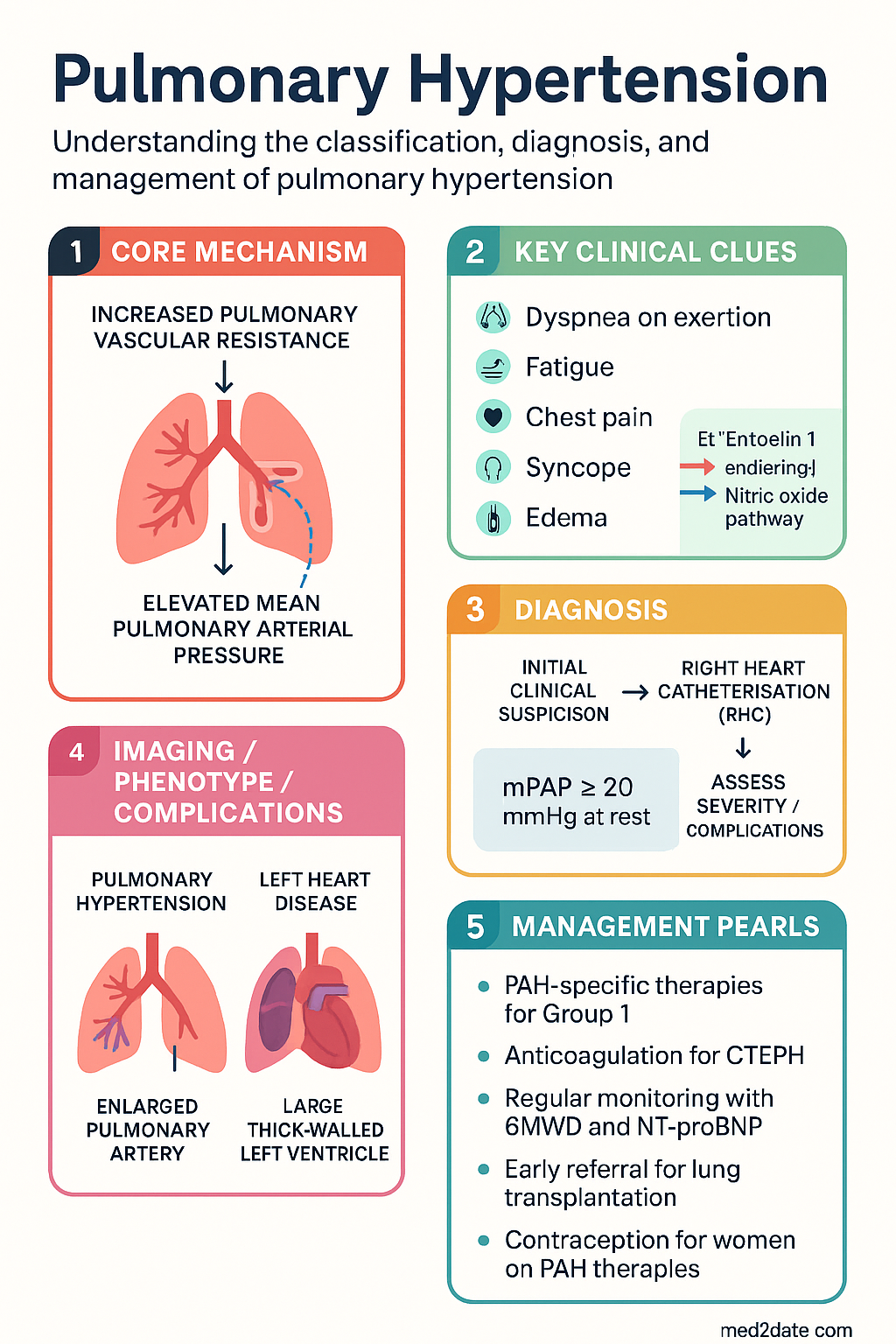
Pulmonary Hypertension clinical infographic — pathophysiology, clinical clues, diagnosis, imaging, and management
Tap or click image to enlarge — Pulmonary Hypertension: pathophysiology, clinical clues, diagnosis, imaging, and management.
Pulmonary Hypertension infographic, full size

WHO Classification of Pulmonary Hypertension (Groups 1–5)

The current Nice (6th World Symposium, 2018) WHO classification organises pulmonary hypertension into five clinical groups based on aetiology and pathophysiology. This classification guides investigation, treatment selection, and clinical trial participation.

WHO Group Name Key Subtypes & Examples Haemodynamic Profile Therapy Approach
Group 1 Pulmonary Arterial Hypertension (PAH) 1.1 Idiopathic (iPAH); 1.2 Heritable (BMPR2, ACVRL1, ENG mutations); 1.3 Drug- and toxin-induced (e.g., fenfluramine, dasatinib); 1.4 Associated with CTD (scleroderma, SLE, MCTD); 1.5 HIV infection; 1.6 Portal hypertension (portopulmonary); 1.7 Congenital heart disease (Eisenmenger); 1.8 Schistosomiasis mPAP >20 mmHg, PVR ≥3 WU, PAWP ≤15 mmHg PAH-specific therapies: ERAs, PDE5is, sGC stimulators, prostacyclin analogues
Group 1′ Pulmonary Veno-occlusive Disease (PVOD) / Pulmonary Capillary Haemangiomatosis Often heritable (EIF2AK4 biallelic mutations); rare; can mimic iPAH Pre- and post-capillary features; low DLCO PAH drugs used with caution (risk of pulmonary oedema); transplant evaluation early
Group 2 PH Due to Left Heart Disease 2.1 Heart failure with reduced EF (HFrEF); 2.2 Heart failure with preserved EF (HFpEF); 2.3 Valvular heart disease (mitral/aortic); 2.4 Congenital/acquired inflow/outflow obstruction PAWP >15 mmHg (isolated post-capillary, IpcPH); ± PVR elevation (combined pre- and post-capillary, CpcPH) Treat underlying LHD: diuretics, ACEi/ARB, device therapy; NO PAH-specific drugs
Group 3 PH Due to Lung Disease & Hypoxia 3.1 COPD; 3.2 ILD (IPF, CTD-ILD); 3.3 OHS; 3.4 Developmental lung disorders Usually post-capillary component; disproportionate PH may warrant PAH Rx discussion Oxygen therapy, optimise lung disease; PAH drugs not recommended routinely; refer for LTOT if PaO₂ <55 mmHg
Group 4 Chronic Thromboembolic PH (CTEPH) Organised thrombus with fibrotic remodelling of pulmonary vasculature post-PE mPAP >20 mmHg, PVR ≥3 WU, organised fibrotic obstruction on CTPA/RHC Pulmonary endarterectomy (PEA) — curative; BPA for inoperable; Riociguat (Adempas®) PBS-listed
Group 5 PH with Unclear &/or Multifactorial Mechanisms Haematological (chronic haemolytic anaemia, myeloproliferative); metabolic (GSD, thyroid); systemic (sarcoidosis, Histiocytosis X); others (tumour embolism, CKD/dialysis) Variable; depends on underlying condition Treat underlying cause; PAH therapy individualised in specialised centres
🚨
Common misclassification pitfall: Patients with diastolic dysfunction (HFpEF) and breathlessness may be incorrectly diagnosed as PAH. RHC with PAWP measurement is essential. Inappropriate PAH therapy in Group 2 PH can cause pulmonary oedema and haemodynamic collapse.

Pathophysiology & Haemodynamics

Normal Pulmonary Haemodynamics

The pulmonary circulation is normally a low-pressure, low-resistance system. Normal values: mPAP 14 ± 3 mmHg, PAWP 6–12 mmHg, PVR 0.3–2.0 WU, cardiac output 5–6 L/min. In PH, chronic elevation of pulmonary arterial pressures leads to right ventricular (RV) pressure overload, RV dilatation, tricuspid regurgitation, and ultimately right heart failure.

Vascular Remodelling in Group 1 PAH

PAH is characterised by a proliferative and anti-apoptotic vascular remodelling process involving all three layers of the pulmonary arterial wall:

  • Intimal: Eccentric and concentric intimal fibrosis; plexiform lesions (characteristic of iPAH)
  • Medial: Hypertrophy and hyperplasia of vascular smooth muscle cells (VSMCs)
  • Adventitial: Fibrosis and inflammatory cell infiltration
  • In-situ thrombosis: Microthrombosis in small pulmonary arteries

Key Pathobiological Pathways

Three major molecular pathways are dysregulated in PAH and serve as therapeutic targets:

Pathway 1
Prostacyclin Deficiency
Reduced prostacyclin synthase → decreased PGI₂ → loss of vasodilation and anti-proliferation. Targeted by Epoprostenol (IV), Treprostinil (SC/IV/Inhaled/Oral), Iloprost (inhaled), Selexipag (oral).
Target: IP receptor → ↑ cAMP
Pathway 2
Endothelin-1 Overproduction
↑ ET-1 → vasoconstriction, fibrosis, proliferation via ETA and ETB receptors. Targeted by Bosentan (dual), Ambrisentan (selective ETA), Macitentan (dual, tissue-penetrating).
Target: ETA/ETB receptors
Pathway 3
NO–sGC–cGMP Pathway Dysregulation
Reduced NO bioavailability → ↓ cGMP → vasoconstriction, remodelling. Targeted by Sildenafil (PDE5i, ↑cGMP), Tadalafil (PDE5i), Riociguat (sGC stimulator, directly ↑cGMP).
Target: sGC / PDE5

Haemodynamic Definitions (RHC-Based)

Parameter Definition / Threshold Significance
Pulmonary Hypertension mPAP >20 mmHg Mandatory diagnostic criterion (revised 6th WSPH 2018)
Pre-capillary PH (PAH, CTEPH) mPAP >20 mmHg, PAWP ≤15 mmHg, PVR ≥3 WU Defines Group 1 (PAH) and Group 4 (CTEPH)
Isolated post-capillary PH (IpcPH) mPAP >20 mmHg, PAWP >15 mmHg, PVR <3 WU Typical of Group 2 (LHD)
Combined pre- and post-capillary PH (CpcPH) mPAP >20 mmHg, PAWP >15 mmHg, PVR ≥3 WU Group 2 with significant pulmonary vascular disease; PAH Rx may be discussed at PH MDT
Acute vasoreactivity testing (AVT) IV Epoprostenol or Inhaled Nitric Oxide → ≥10 mmHg fall in mPAP to mPAP ≤40 mmHg, with ↑ or unchanged CO Positive test → trial of high-dose CCB therapy (limited to ~5% of iPAH)

Right Ventricular Adaptation and Failure

The RV is a thin-walled, compliant chamber adapted to low-pressure output. In PH, chronic pressure overload causes RV hypertrophy initially (adaptive), followed by dilatation, reduced contractility, and tricuspid regurgitation (maladaptive). RV failure is the most common cause of death in PAH. Biomarkers of RV strain (NT-proBNP, troponin), echocardiographic indices (TAPSE, RV S′, RVFAC, RVGLS), and cardiac MRI-derived RV volumes guide prognosis.

Investigations

Investigation of suspected pulmonary hypertension follows a structured approach: (1) confirm PH on echocardiography, (2) classify by WHO group, (3) assess severity and prognosis. All investigations should be performed at or coordinated through a specialist PH centre.

Essential & Recommended Investigations

ESSENTIAL Transthoracic Echocardiography (TTE) First-line screening. Estimates RVSP via TR jet velocity + RAP. Assesses RV size, function (TAPSE, RVFAC), LV, valvular disease, pericardial effusion. Probability categorisation (ESC 2022): unlikely (TRV <2.8 m/s), possible (2.8–3.4), high (>3.4). MBS item 55105.
ESSENTIAL Right Heart Catheterisation (RHC) Gold standard for haemodynamic diagnosis. Mandatory before PAH-specific therapy. Measures: RA, RV, PA, PAWP pressures; CO (thermodilution/Fick); PVR; acute vasoreactivity testing (AVT). Specialist centres only. Not individually MBS-itemised; bundled under cardiac catheterisation (55132).
ESSENTIAL V/Q Scan (Ventilation-Perfusion Scintigraphy) Mandatory to exclude CTEPH (Group 4) in all PH patients. Sensitivity >96% for CTEPH; a normal V/Q scan effectively excludes CTEPH. MBS item 61347 (lung perfusion scan). CTPA follows if V/Q mismatch identified.
AVAILABLE CT Pulmonary Angiography (CTPA) Complements V/Q scan. Characterises CTEPH morphology (webs, bands, stenoses, complete obstruction). Identifies lung parenchymal disease. MBS item 56808.
AVAILABLE CT Chest (HRCT) Assessment of interstitial lung disease (ILD), emphysema. Key for Group 3 PH classification. MBS item 56808.
AVAILABLE Pulmonary Function Tests (PFTs) Spirometry, DLCO, lung volumes. DLCO <45% predicted in scleroderma-PAH is a red flag; very low DLCO may suggest PVOD. MBS item 11505.
AVAILABLE 6-Minute Walk Test (6MWT) Functional capacity assessment; distance, Borg dyspnoea score, SpO₂. Used in REVEAL risk score and as a treatment response endpoint. MBS item 11506.
AVAILABLE NT-proBNP / BNP Biomarker of RV strain. Used in risk stratification (REVEAL 2.0, ESC/ERS). Serial monitoring guides treatment response. MBS item 66825.
SPECIALIST Cardiac MRI Gold standard for RV volume and function assessment. Detects pericardial effusion, myocardial fibrosis. Prognostic: RV ejection fraction, LGE. Limited availability — tertiary centres.
SPECIALIST Autoimmune Serology (ANA, ENA, dsDNA, ACA, anti-Scl-70) Screen for CTD-PAH. All iPAH patients should be screened. Scleroderma patients require annual screening echo + PFTs. Refer to rheumatology if positive.
AVAILABLE HIV Serology, Hepatitis Serology, Liver Function Exclude Group 1 associated causes. Portal hypertension screening if hepatic disease detected.
SPECIALIST Genetic Testing (BMPR2, ACVRL1, ENG, EIF2AK4) Heritable PAH screening. Offered through specialised genetics services. BMPR2 mutations in ~75% of familial PAH. Genetic counselling pre- and post-test. EIF2AK4 testing for suspected PVOD.
ℹ️
Australian PH Centres: Specialist PH diagnostic workup and RHC should be performed at designated PH centres — Royal Adelaide Hospital, St Vincent's Hospital Sydney, The Alfred Melbourne, Prince Charles Hospital Brisbane, Royal Perth Hospital, Fiona Stanley Hospital Perth. Referral guidelines: any unexplained dyspnoea with RVSP >40 mmHg or TRV >3.0 m/s.

Risk Stratification & Severity Scoring

Risk stratification in Group 1 PAH determines treatment goals and escalation. The ESC/ERS 2022 guidelines use a three-strata model (low, intermediate, high risk) based on WHO functional class, 6MWD, NT-proBNP, echocardiography, RHC, and the presence of pericardial effusion.

Low Risk
Estimated 1-Year Mortality <5%
WHO FC I–II; 6MWD >440 m; NT-proBNP <300 ng/L; RA area <18 cm²; no pericardial effusion; CI ≥2.5 L/min/m²; SvO₂ >65%
Goal: maintain low-risk status; review 3–6 monthly
Intermediate Risk
Estimated 1-Year Mortality 5–10%
WHO FC III; 6MWD 165–440 m; NT-proBNP 300–1100 ng/L; RA area 18–26 cm²; trace/small pericardial effusion; CI 2.0–2.4 L/min/m²; SvO₂ 60–65%
Goal: escalate therapy; consider adding third agent or parenteral prostacyclin
High Risk
Estimated 1-Year Mortality >10%
WHO FC IV; 6MWD <165 m; NT-proBNP >1100 ng/L; RA area >26 cm²; moderate/large pericardial effusion; CI <2.0 L/min/m²; SvO₂ <60%; signs of RVF
Goal: aggressive escalation; IV epoprostenol; assess transplant listing

REVEAL 2.0 Risk Calculator

The REVEAL 2.0 score is widely used in Australian PH centres. It incorporates WHO group, age, sex, renal function (eGFR), BMI, vital signs, 6MWD, NT-proBNP, WHO FC, RA pressure, PVR, pericardial effusion, and DLCO to generate a continuous risk score and category (low, average, moderately high, high, very high). It is validated for reassessment at follow-up visits.

⚠️
Treat-to-target approach: ESC/ERS 2022 recommend a treat-to-target strategy in PAH — aim for low-risk status at follow-up. If intermediate/high risk persists at 3–6 months despite dual combination therapy, escalate to triple therapy including parenteral prostacyclin, or refer for lung transplant assessment.

Management of Pulmonary Hypertension

General & Supportive Measures (All Groups)

  • Supervised exercise / pulmonary rehabilitation: Improves 6MWD, QoL, and WHO FC; evidence from randomised trials
  • Oxygen therapy: Maintain SpO₂ ≥90%; assess need with sleep oximetry; Long-Term Oxygen Therapy (LTOT) if PaO₂ <55 mmHg (PBS-subsidised home oxygen)
  • Diuretics: Loop diuretics (Furosemide 20–80 mg PO OD, or Bumetanide 0.5–1 mg PO OD) for RV volume overload and peripheral oedema; monitor electrolytes
  • Vaccination: Annual influenza, COVID-19 booster, pneumococcal (Prevenar 13 then Pneumovax 23), pertussis, RSV where eligible
  • Psychosocial support: PH diagnosis is associated with significant anxiety and depression; refer to psychology/support groups (Pulmonary Hypertension Association Australasia)
  • Avoid: High-altitude travel, pregnancy (mandatory contraception — see Special Populations), strenuous isometric exercise, decongestants (pseudoephedrine), smoking

Anticoagulation in PH

Anticoagulation recommendations vary by WHO group:

  • Group 1 PAH: Consider warfarin (INR 2.0–3.0) in iPAH/heritable PAH (observational data only; not RCT-proven). Generally not recommended in CTD-PAH or CHD-PAH due to bleeding risk.
  • Group 4 CTEPH: Lifelong anticoagulation is mandatory. Warfarin (INR 2.0–3.0) is preferred; DOACs are NOT recommended due to risk of organised thrombus progression. Riociguat is PBS-listed for inoperable CTEPH.
  • Groups 2, 3, 5: Anticoagulation per underlying condition indication (e.g., AF, VTE); no PH-specific benefit.

PAH-Specific Therapy — WHO Group 1 (Drug Detail)

Current Australian guidelines recommend initial dual oral combination therapy (endothelin receptor antagonist + PDE5 inhibitor or sGC stimulator) for newly diagnosed PAH, with escalation to triple therapy including parenteral prostacyclin for intermediate–high risk patients.

💊
Epoprostenol
Flolan® · Veletri® · Prostacyclin analogue (PGI₂)
Adult dose Initial: 2–4 ng/kg/min IV continuous infusion; titrate by 1–2 ng/kg/min every 15 min acutely, or 1–2 ng/kg/min every 1–2 weeks chronically. Typical maintenance: 20–40 ng/kg/min. Must NOT be stopped abruptly (rebound PH).
Paediatric dose 2–4 ng/kg/min IV; titrate to response. Used in severe paediatric PAH at specialist centres.
Route Continuous IV infusion via central venous catheter (tunnelled Hickman-type line); Flolan® requires cold-chain reconstitution; Veletri® is room-temperature stable
Key monitoring Haemodynamics at initiation (ICU/HDU setting); line infection risk; jaw pain, flushing, diarrhoea, thrombocytopenia; refrigeration requirement (Flolan®)
Renal adjustment None required; adjust loop diuretics as needed
PBS status 🔑 Authority Required (Specialist)
💊
Sildenafil
Revatio® · PDE5 inhibitor
Adult dose 20 mg PO TDS (licensed dose for PAH); some centres use 40–80 mg TDS off-label. Do NOT use 25/50/100 mg (Viagra® dosing).
Paediatric dose 0.5–1 mg/kg/dose PO TDS (max 20 mg TDS). SPRINT trial caution re higher doses in paediatric PAH.
Route Oral; suspension available for paediatric use
Key interactions Absolute contraindication with nitrates (risk of severe hypotension); caution with CYP3A4 inhibitors (ketoconazole, ritonavir — reduce dose); Riociguat contraindicated with PDE5i
Renal adjustment CrCl <30 mL/min: use with caution; max 20 mg BD
PBS status 🔑 Authority Required — PAH (WHO Group 1)
💊
Tadalafil
Adcirca® · PDE5 inhibitor
Adult dose 40 mg PO OD for PAH
Route Oral; once daily (convenient vs sildenafil TDS)
Key interactions Same as sildenafil — avoid nitrates; caution CYP3A4 inhibitors
PBS status 🔑 Authority Required — PAH
💊
Bosentan
Tracleer® · Dual endothelin receptor antagonist (ETA + ETB)
Adult dose 62.5 mg PO BD × 4 weeks (initiation), then 125 mg PO BD (maintenance)
Paediatric dose Weight <10 kg: 31.25 mg BD; 10–20 kg: 31.25 mg BD; 20–40 kg: 62.5 mg BD; >40 kg: adult dose. BREATHE-3 trial data.
Route Oral (tablets); dispersible tablet formulation available
Key monitoring Hepatotoxicity: LFTs monthly × 3 months, then every 3 months. Discontinue if ALT >5× ULN or symptomatic hepatitis. Also causes: teratogenicity (Category X — pregnancy contraindicated), peripheral oedema, anaemia (Hb monitoring), testicular atrophy.
Renal adjustment None required; contraindicated in severe hepatic impairment (Child-Pugh C)
PBS status 🔑 Authority Required — Specialist initiation
💊
Ambrisentan
Volibris® · Selective ETA receptor antagonist
Adult dose 5 mg PO OD; increase to 10 mg OD if tolerated
Route Oral
Key notes Lower hepatotoxicity risk vs Bosentan. Peripheral oedema, nasal congestion, headache. Monthly LFTs still recommended.
PBS status 🔑 Authority Required — PAH
💊
Macitentan
Opsumit® · Dual ERA (tissue-penetrating)
Adult dose 10 mg PO OD
Route Oral
Key notes SERAPHIN trial: reduced morbidity/mortality vs placebo. Lower hepatotoxicity than Bosentan. Oedema, headache, nasopharyngitis.
PBS status 🔑 Authority Required — PAH
💊
Riociguat
Adempas® · Soluble guanylate cyclase (sGC) stimulator
Adult dose 1 mg PO TDS initially; titrate by 0.5 mg TDS every 2 weeks to max 2.5 mg TDS. Maintain BP >90/50 mmHg during titration.
Route Oral
Key notes CONTRAINDICATED with PDE5 inhibitors (sildenafil, tadalafil) — risk of severe hypotension. PATENT-1 trial: improved 6MWD and PVR in PAH. CHEST-1 trial: approved for inoperable CTEPH. Concomitant smoking reduces efficacy.
PBS status 🔑 Authority Required — PAH & CTEPH
💊
Selexipag
Uptravi® · Oral prostacyclin IP receptor agonist
Adult dose 200 µg PO BD initially; titrate by 200 µg BD weekly to max 1600 µg BD (or maximum tolerated dose). Take with food.
Route Oral
Key notes GRIPHON trial: reduced composite morbidity/mortality by 40%. Jaw pain (49%), diarrhoea, headache, flushing. Can be combined with ERA + PDE5i (triple oral therapy).
PBS status 🔑 Authority Required — PAH

Treatment Algorithm — WHO Group 1 PAH (ESC/ERS 2022)

1
Initial Assessment & Risk Stratification
RHC confirmation. Assess risk category (low / intermediate / high) using ESC/ERS criteria. Rule out Group 2 (LHD) and Group 3 (lung disease) — PAH-specific Rx contraindicated in these groups.
2
Acute Vasoreactivity Testing (AVT)
RHC with IV Epoprostenol or inhaled NO. If positive (≥10 mmHg drop in mPAP to ≤40 mmHg with ↑/stable CO) → trial of high-dose CCB (Amlodipine or Nifedipine). Only ~5% of iPAH are vasoreactive; reassess at 3–12 months.
3
Initial Dual Combination Therapy (All Risk Strata)
Start ERA + PDE5i (or ERA + sGC stimulator). E.g., Macitentan 10 mg OD + Sildenafil 20 mg TDS. AMBITION trial demonstrated superiority of upfront dual combination vs sequential.
4
Reassess at 3–6 Months
WHO FC, 6MWD, NT-proBNP, echo, haemodynamics. If LOW risk achieved → maintain. If INTERMEDIATE–HIGH risk persists → escalate.
5
Triple Therapy Escalation
Add oral Selexipag (or parenteral prostacyclin — Epoprostenol IV / Treprostinil SC). If HIGH risk at presentation, consider initial triple therapy including IV Epoprostenol.
6
Lung Transplantation Referral
Refer when: (a) progressive disease on triple therapy, (b) WHO FC III–IV despite maximal medical therapy, (c) declining 6MWD / rising NT-proBNP / RV failure. Donor organ availability is limited; early referral is critical.

CTEPH (Group 4) — Specific Management

1
Lifelong Anticoagulation
Warfarin INR 2.0–3.0 is standard. DOACs are not recommended (risk of organised thrombus progression — limited data). Start immediately on diagnosis.
2
Operability Assessment (PEA)
All CTEPH patients must be assessed by a PEA surgical centre (The Alfred Melbourne, St Vincent's Sydney). PEA is potentially curative. Assessment includes CTPA, RHC, pulmonary angiography, surgical team review.
3
Pulmonary Endarterectomy (PEA)
Deep hypothermic circulatory arrest. Surgical removal of organised fibrotic thrombus from pulmonary arteries. Perioperative mortality 2–5% at experienced centres. Cure in selected patients.
4
Balloon Pulmonary Angioplasty (BPA)
For inoperable or residual PH post-PEA. Requires specialist interventional radiology. Not widely available in Australia; referral to international centres may be needed. Emerging Australian programmes at select tertiary centres.
5
Medical Therapy (Inoperable CTEPH)
Riociguat (Adempas®) 1–2.5 mg TDS — PBS Authority Required. CHEST-1 trial: improved 6MWD (+46 m) and PVR. Selexipag (GRIPHON subgroup) may also be considered. Macitentan (MERIT-1) emerging data.

Special Populations

🤰 Pregnancy
General
PH in pregnancy carries maternal mortality of 17–33%. Prevention of pregnancy is the safest strategy. Long-acting reversible contraception (LARC) — IUD (Mirena®) or subdermal implant (Implanon NXT®) — is recommended.
Sildenafil
Pregnancy category D. Risk of fetal harm in animal studies. If pregnancy occurs and continuation is elected, may be used with caution under specialist supervision.
Bosentan / Ambrisentan / Macitentan
Pregnancy category X. Absolute contraindication. Teratogenic. Discontinue before conception; reliable contraception mandatory.
Epoprostenol
Category B3. Can be continued in pregnancy at experienced PH centres (not teratogenic but haemodynamic management is critical). Planned delivery at tertiary centre with ICU.
Delivery
Vaginal delivery preferred with early epidural and assisted second stage. Caesarean only for obstetric indications. Continuous invasive haemodynamic monitoring. Avoid ergometrine (pulmonary vasoconstriction).
👶 Paediatric PH
Aetiologies
PAH-CHD (Eisenmenger syndrome), BPD-related PH, idiopathic PAH, PPHN. Classification follows paediatric Nice classification. Neonatal PH (PPHN) managed with inhaled NO and optimisation of underlying cause.
Sildenafil
0.5–1 mg/kg/dose PO TDS (max 20 mg TDS). SPRINT trial concern: higher doses (4–6 mg/kg/dose) associated with increased mortality in paediatric PAH — use licensed doses only.
Bosentan
Weight-based dosing (see drug card above). Dispersible tablet formulation available. LFT monitoring as per adults.
Epoprostenol
IV continuous infusion as per adult dosing; central line placement in children requires surgical expertise. Reassess for transition to oral therapy when feasible.
Referral
All paediatric PH should be managed at specialist paediatric centres (e.g., Sydney Children's Hospital, RCH Melbourne, Queensland Children's Hospital) with paediatric PH expertise.
👴 Elderly (≥65 years)
Diagnostic challenge
Group 2 PH (HFpEF) is most common in elderly; careful RHC interpretation (PAWP) essential to avoid misclassification as PAH.
Drug tolerability
Sildenafil — hypotension risk increased; start low (20 mg OD–BD) and titrate. Bosentan — peripheral oedema can be confused with heart failure; monitor closely. Epoprostenol — line infection risk higher; consider quality of life vs burden of IV therapy.
🫘 Renal Impairment
Sildenafil
CrCl <30 mL/min: max 20 mg BD (reduced clearance). Monitor for hypotension.
Bosentan / Macitentan / Ambrisentan
No dose adjustment required; use with caution in dialysis patients. Volume shifts during haemodialysis can exacerbate hypotension.
Riociguat
No specific renal adjustment; not studied in dialysis. Titrate with extra caution.
🫁 Hepatic Impairment
Bosentan
Contraindicated in moderate–severe hepatic impairment (Child–Pugh B/C). LFT monitoring mandatory. Causes dose-dependent hepatotoxicity.
Sildenafil
AUC increased in hepatic impairment; start at 20 mg OD–BD and titrate cautiously.
Portopulmonary HT
PAH therapy can be used in portopulmonary hypertension if pre-transplant liver assessment is favourable. Non-selective beta-blockers should be discontinued (worsen PH). Liver transplant evaluation is key.
🦠 Immunocompromised / HIV
HIV-PAH
PAH can occur in HIV (prevalence ~0.5%). PAH-specific therapies are effective. Bosentan and Sildenafil interact with antiretrovirals: ritonavir inhibits CYP3A4 → ↑ sildenafil levels (reduce to 20 mg OD); efavirnez induces CYP3A4 → ↓ bosentan levels. ART optimisation is essential.

Lung Transplantation in Pulmonary Hypertension

Lung transplantation remains the definitive treatment for selected patients with PAH or CTEPH refractory to maximal medical therapy. Bilateral lung transplantation is the preferred procedure. Heart-lung transplantation is reserved for patients with severe congenital heart disease or inoperable cardiac pathology.

Referral Criteria for Transplant Assessment

  • WHO FC III–IV on optimised PAH-specific therapy (including triple therapy with parenteral prostacyclin)
  • Declining 6MWD (<330 m) or rising NT-proBNP (>1100 ng/L) despite therapy
  • Haemodynamic deterioration: CI <2.0 L/min/m², RA pressure >15 mmHg, mPAP >50% systemic MAP
  • Refractory RV failure requiring inotropic support
  • Recurrent syncope or severe pericardial effusion
  • PVOD / pulmonary capillary haemangiomatosis — early referral recommended

Australian Transplant Centres

Centre Location Capabilities
St Vincent's Hospital Sydney, NSW Bilateral lung transplant; PH programme; PEA
The Alfred Hospital Melbourne, VIC Bilateral lung transplant; National PEA centre; advanced PH
The Prince Charles Hospital Brisbane, QLD Bilateral lung transplant; PH programme

Post-Transplant Considerations

  • Immunosuppression: Triple therapy — Tacrolimus + Mycophenolate + Prednisolone (wean to 5 mg OD by 12 months)
  • Primary graft dysfunction (PGD) is the leading cause of early mortality
  • Chronic lung allograft dysfunction (CLAD) / obliterative bronchiolitis — main cause of late graft loss
  • 5-year survival post-lung transplant: approximately 50–60%

Monitoring & Follow-Up

Patients with PAH require lifelong specialist follow-up with a treat-to-target approach. Reassessment at 3–6 month intervals guides treatment escalation decisions.

Assessment Frequency Purpose
Clinical review (WHO FC, symptoms) Every 3–6 months Risk stratification; treatment response
NT-proBNP Every 3–6 months RV strain biomarker; risk category assignment
6-Minute Walk Test Every 3–6 months Functional capacity; prognostic
Echocardiography Every 6–12 months RV size/function; TR severity; pericardial effusion
RHC (haemodynamics) Every 12–24 months (or if clinical change) Definitive haemodynamic assessment; treatment goals
LFTs (on Bosentan) Monthly × 3 months, then 3-monthly Hepatotoxicity screening
Hb (on Bosentan) Baseline, 1 month, 3-monthly Anaemia monitoring (Bosentan reduces Hb)
Pregnancy test (WCBA) Monthly (on ERA/X-category drugs) Teratogenicity prevention
Treatment goals (ESC/ERS 2022): Aim to achieve and maintain low-risk status: WHO FC I–II, 6MWD >440 m, NT-proBNP <300 ng/L, RA area <18 cm², no pericardial effusion, CI ≥2.5 L/min/m². If goals are not met at 3–6 months, escalate therapy in a stepwise fashion.

Aboriginal and Torres Strait Islander Health Considerations

Aboriginal and Torres Strait Islander Health
Epidemiology
Aboriginal and Torres Strait Islander Australians experience a higher burden of conditions leading to PH, including rheumatic heart disease (RHD — Group 2 PH), chronic lung disease (Group 3 PH), and ischaemic heart disease. RHD prevalence is up to 30 times higher in Indigenous Australians, with chronic rheumatic valvular disease (especially mitral stenosis) causing significant pulmonary hypertension. Chronic suppurative lung disease and bronchiectasis are more prevalent, contributing to Group 3 PH.
Diagnostic access
Access to echocardiography and specialist PH centres is limited in remote and very remote communities. Tele-echocardiography and visiting specialist services through the Australian Government's Outreach programs can facilitate early detection. RHC requires transfer to tertiary centres, which involves significant logistical and financial barriers, particularly from remote NT, QLD, and WA communities.
RHD and PAH
RHD-related mitral stenosis is a major cause of Group 2 PH. Secondary prevention with benzathine penicillin G (BPG) 1.2 MU IM every 3–4 weeks (PBS-listed) is essential. RHD registers (e.g., NT RHD Register) facilitate adherence monitoring. Surgical valve intervention (mitral valvuloplasty/replacement) should be considered early where feasible.
Medication access & PBS
PAH-specific therapies (Sildenafil, Bosentan, Macitentan, etc.) are Authority Required under PBS, requiring specialist initiation and documentation. In remote communities, dispensing may require coordination with Remote Area Aboriginal Health Services (RAAHS) and community pharmacies. Telehealth consultations with PH specialists can facilitate Authority approval and ongoing prescription management.
Cultural safety
Diagnosis of a chronic life-limiting condition like PAH requires culturally sensitive communication. Involving Aboriginal Health Workers (AHWs) and Aboriginal Liaison Officers (ALOs) in the care team improves understanding and engagement. Yarning-based approaches to explaining complex conditions, acknowledging family and community roles in decision-making, and providing written resources in plain language (with visual aids) are recommended. Sorry Business and cultural obligations should be accommodated in appointment scheduling.
Travel & logistics
Patients from remote communities may need to travel >500 km for PH specialist review, RHC, and advanced therapies (e.g., Epoprostenol initiation). Patient-assisted travel schemes (PATS — state/territory specific) and RFDS retrieval services are critical. Continuous IV Epoprostenol requires reliable central venous access, refrigeration, and medication supply — challenging in remote settings without home nursing support.
Lung transplantation
Transplant candidacy requires pre- and post-transplant care at metropolitan centres for 6–12 months. Barriers include family separation, housing, employment, and cultural disconnection from Country. Social work and Indigenous support services at transplant centres are essential to facilitate equitable access.
Data & closing the gap
National PH registries (e.g., ANZPHTS — Australian and New Zealand Pulmonary Hypertension Transplant Society) should include Indigenous status data to monitor disparities. The AIHW regularly reports on cardiovascular disease burden in Indigenous Australians. Closing the Gap targets for cardiovascular health are relevant to RHD-related PH prevention.

📚 References

  1. 1. Humbert M, Kovacs G, Hoeper MM, et al. 2022 ESC/ERS Guidelines for the diagnosis and treatment of pulmonary hypertension. Eur Respir J. 2023;61(1):2200879. doi:10.1183/13993003.00879-2022
  2. 2. Simonneau G, Montani D, Celermajer DS, et al. Haemodynamic definitions and updated clinical classification of pulmonary hypertension. Eur Respir J. 2019;53(1):1801913. doi:10.1183/13993003.01913-2018
  3. 3. Galiè N, Barberà JA, Frost AE, et al. Initial use of ambrisentan plus tadalafil in pulmonary arterial hypertension. N Engl J Med. 2015;373(9):834–844. doi:10.1056/NEJMoa1413687 (AMBITION trial)
  4. 4. Pulido T, Adzerikho I, Channick RN, et al. Macitentan and morbidity and mortality in pulmonary arterial hypertension. N Engl J Med. 2013;369(9):809–818. doi:10.1056/NEJMoa1213917 (SERAPHIN trial)
  5. 5. Ghofrani HA, Galiè N, Grimminger F, et al. Riociguat for the treatment of pulmonary arterial hypertension. N Engl J Med. 2013;369(4):330–340. doi:10.1056/NEJMoa1209657 (PATENT-1 trial)
  6. 6. Ghofrani HA, D'Armini AM, Grimminger F, et al. Riociguat for the treatment of chronic thromboembolic pulmonary hypertension. N Engl J Med. 2013;369(4):319–329. doi:10.1056/NEJMoa1209656 (CHEST-1 trial)
  7. 7. Sitbon O, Channick R, Chin KM, et al. Selexipag for the treatment of pulmonary arterial hypertension. N Engl J Med. 2015;373(26):2522–2533. doi:10.1056/NEJMoa1503184 (GRIPHON trial)
  8. 8. Barst RJ, Ivy DD, Gaitan G, et al. A randomized, double-blind, placebo-controlled, dose-ranging study of oral sildenafil citrate in treatment-naïve children with pulmonary arterial hypertension. Circulation. 2012;125(2):324–334. doi:10.1161/CIRCULATIONAHA.110.016667 (SPRINT trial / STARTS-1)
  9. 9. Benza RL, Gomberg-Maitland M, Elliott CG, et al. Predicting survival in patients with pulmonary arterial hypertension: the REVEAL Risk Score Calculator 2.0 and comparison with ESC/ERS-based risk assessment strategies. Chest. 2019;156(2):323–337. doi:10.1016/j.chest.2019.02.004
  10. 10. Australian Institute of Health and Welfare (AIHW). Rheumatic heart disease and acute rheumatic fever in Australia, 2017–2021. Cat. no. CVD 94. Canberra: AIHW; 2023.
  11. 11. RHDAustralia (a program of Menzies School of Health Research). RHD in Australia — an overview. Darwin: RHDAustralia; 2023. Available from: rhdaustralia.edu.au
  12. 12. Keogh AM, McNeil KD, Williams T, et al. Pulmonary hypertension in Australia and New Zealand — the ANZPHTS Registry. Intern Med J. 2009;39(3):168–175. doi:10.1111/j.1445-5994.2008.01784.x
  13. 13. McLaughlin VV, Shah SJ, Souza R, Humbert M. Management of pulmonary arterial hypertension. J Am Coll Cardiol. 2015;65(18):1976–1997. doi:10.1016/j.jacc.2015.03.540
  14. 14. Australian Commission on Safety and Quality in Health Care (ACSQHC). National Safety and Quality Health Service Standards. 2nd ed. Sydney: ACSQHC; 2021.
  15. 15. Moe GW, Howlett J, Januzzi JL, et al. N-terminal pro-B-type natriuretic peptide testing improves the management of patients with suspected acute heart failure. Circulation. 2007;115(24):3103–3110. (Referenced for NT-proBNP use in RV failure)
  16. 16. The Royal Australian College of General Practitioners (RACGP). Red Book — Guidelines for preventive activities in general practice. 10th ed. East Melbourne: RACGP; 2023. (Vaccination and chronic disease screening guidelines)