📋 Key Information Summary
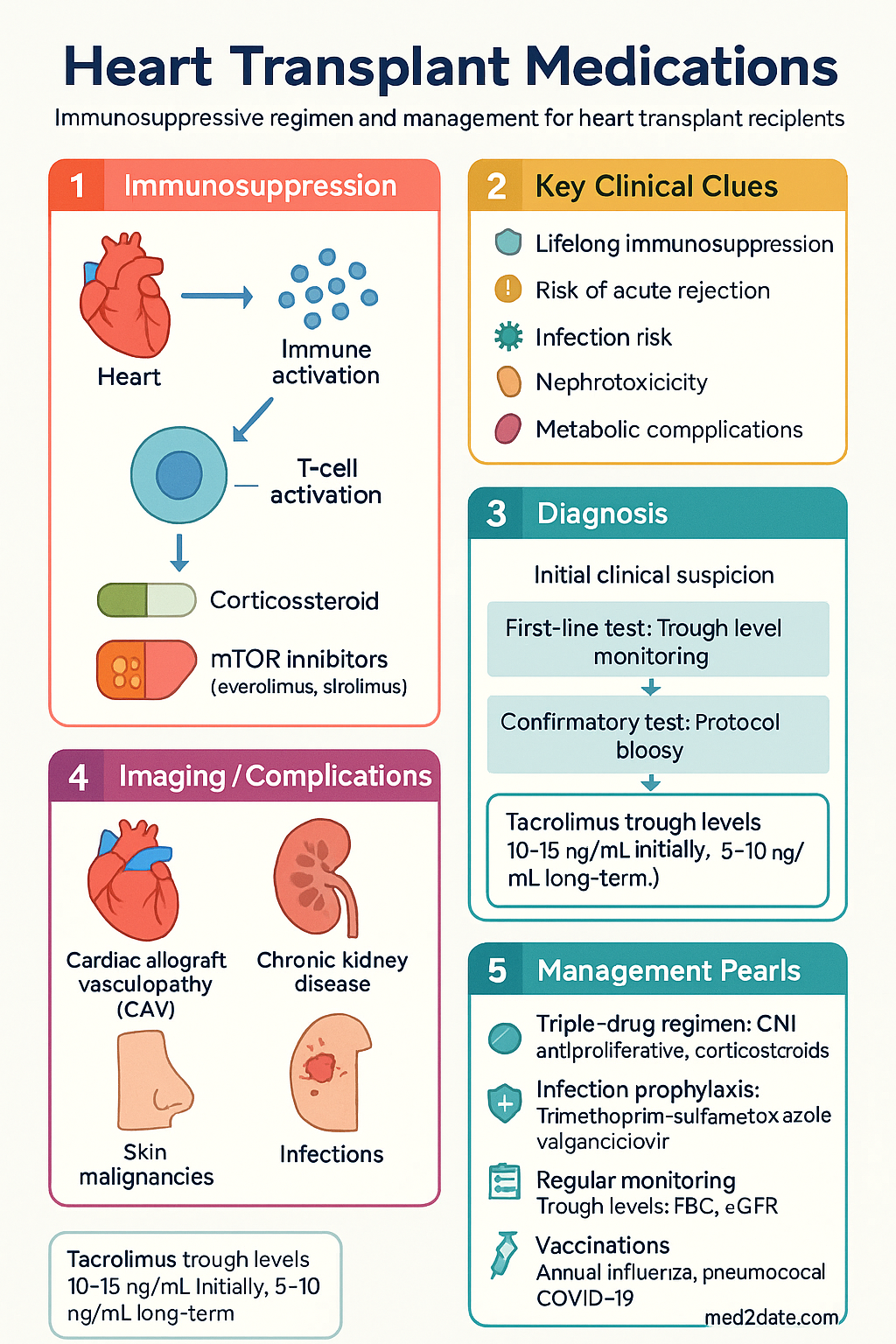
- Heart transplant recipients require lifelong triple-drug immunosuppression: a calcineurin inhibitor (CNI), an antiproliferative agent, and corticosteroids — with rapid taper of steroids where feasible.
- Tacrolimus is the preferred CNI in Australian heart transplant programmes; target trough levels are highest in the first 3 months (10–15 ng/mL) and lower at 12 months and beyond (5–10 ng/mL).
- Mycophenolate mofetil (MMF) 1 g BD is the standard antiproliferative; dose-limiting GI toxicity and cytopenias are common — monitor FBC fortnightly for the first 3 months.
- Induction therapy with basiliximab (anti-CD25) is standard at most Australian centres; ATG (thymoglobulin) is reserved for high-immunological-risk recipients.
- CNI trough levels must be checked 2–3 times weekly during dose changes and at every clinic visit; trough timing is 12 hours post-dose for tacrolimus and 12 hours post-dose for ciclosporin (C2 levels also used).
- CNI nephrotoxicity is the leading cause of chronic renal failure post-transplant — minimise concurrent nephrotoxins and consider switching to an mTOR inhibitor (everolimus/sirolimus) with reduced CNI.
- Clinically significant drug interactions are pervasive: azole antifungals, macrolide antibiotics, calcium-channel blockers, grapefruit juice, and St John's wort all alter CNI levels — review all medications at every visit.
- mTOR inhibitors (everolimus, sirolimus) provide an alternative or CNI-sparing strategy, particularly for cardiac allograft vasculopathy (CAV) or malignancy — everolimus is PBS-listed (Authority Required).
- Infection prophylaxis is mandatory: trimethoprim-sulfamethoxazole (Pneumocystis jirovecii, first 6–12 months), valganciclovir (CMV, 3–6 months based on donor/recipient serostatus), and nystatin/amphotericin (oral candidiasis, first 3 months).
- Adherence to immunosuppression is the single greatest modifiable factor for long-term graft survival; non-adherence rates in adolescents and young adults reach 30–50%.
- All heart transplant recipients must have annual influenza, pneumococcal, and COVID-19 vaccinations; live vaccines (MMR, varicella, yellow fever) are contraindicated while immunosuppressed.
- Aboriginal and Torres Strait Islander patients face additional barriers including remote access to transplant centres, specialist pharmacy services, and therapeutic drug monitoring — coordinate with local AMS and Telehealth.
- Corticosteroid-related complications (diabetes, osteoporosis, obesity) are common — implement early bone protection (calcium, vitamin D, bisphosphonates if indicated) and glycaemic monitoring.
Introduction & Australian Epidemiology
Heart transplantation remains the definitive treatment for end-stage heart failure refractory to optimal medical and device therapy. Australia performs approximately 100–120 heart transplants annually across five adult centres (St Vincent's Hospital Sydney, Alfred Hospital Melbourne, Prince Charles Hospital Brisbane, Royal Adelaide Hospital, and Fiona Stanley Hospital Perth) and two paediatric centres. Post-transplant immunosuppression is essential to prevent acute and chronic rejection, yet it simultaneously increases the risks of infection, malignancy, nephrotoxicity, and metabolic disease.
The modern immunosuppressive regimen for heart transplant recipients is built on a triple-drug backbone: a calcineurin inhibitor (CNI — tacrolimus or ciclosporin), an antiproliferative agent (mycophenolate mofetil or mycophenolic acid), and corticosteroids (prednisolone). This triple therapy targets distinct nodes of T-cell activation and proliferation, enabling lower doses of each agent and reduced individual drug toxicity. In the first 1–3 months post-transplant — the period of highest rejection risk — induction therapy with a biological agent (basiliximab or anti-thymocyte globulin) provides additional immunosuppressive intensity.
Over the past two decades, one-year survival following heart transplantation in Australia has improved to 85–90%, and five-year survival to approximately 70–75%. However, long-term outcomes are limited by cardiac allograft vasculopathy (CAV), chronic kidney disease (largely CNI-mediated), malignancy (particularly skin cancers in the Australian UV environment), and infection. Optimising the balance between adequate immunosuppression and minimisation of these complications is the central challenge of transplant pharmacotherapy.
This guideline provides a comprehensive, Australian-focused overview of the immunosuppressive and adjunctive medications used following heart transplantation, including drug-specific dosing, therapeutic drug monitoring, drug interactions, adverse-effect management, and considerations for special populations.
Induction & Maintenance Immunosuppression
Induction Therapy
Induction therapy provides intense immunosuppression in the perioperative period to reduce early acute rejection episodes and allow delayed introduction of nephrotoxic agents. Australian centres typically use one of two strategies:
Standard Maintenance Triple Therapy
Following induction, maintenance immunosuppression is commenced with a calcineurin inhibitor (tacrolimus preferred), mycophenolate mofetil, and prednisolone. The typical timeline is:
Target Trough Levels — Summary
| Time Period | Tacrolimus (ng/mL) | Ciclosporin (C0 ng/mL) | Everolimus (ng/mL) | Sirolimus (ng/mL) |
|---|---|---|---|---|
| 0–3 months | 10–15 | 200–350 | 3–8 (with reduced CNI) | 5–15 |
| 3–6 months | 8–12 | 150–250 | 3–8 | 5–15 |
| 6–12 months | 5–10 | 100–200 | 3–8 | 5–12 |
| >12 months | 5–8 | 75–150 | 3–8 | 5–12 |
Calcineurin Inhibitors (Tacrolimus, Ciclosporin) & Side Effects
Calcineurin inhibitors (CNIs) are the cornerstone of maintenance immunosuppression. They block calcineurin phosphatase, preventing nuclear translocation of NFAT and thereby inhibiting IL-2 transcription and T-cell activation. Tacrolimus is the preferred CNI in Australian heart transplant programmes due to superior efficacy in preventing acute rejection.
Side Effects of Calcineurin Inhibitors
| System | Tacrolimus | Ciclosporin | Management |
|---|---|---|---|
| Renal | Nephrotoxicity (acute & chronic); dose-dependent | Nephrotoxicity — often more pronounced | Minimise dose; avoid concurrent nephrotoxins (NSAIDs, aminoglycosides, IV contrast); consider mTOR switch |
| Neurological | Tremor, headache, paraesthesia, rarely PRES | Tremor, headache (less common) | Dose reduction; PRES requires urgent MRI and ICU admission |
| Metabolic | New-onset diabetes (NODAT) — 15–30%; hyperkalaemia; hypomagnesaemia | Dyslipidaemia, hyperuricaemia/gout, hyperkalaemia | HbA1c 3-monthly; Mg²⁺ and K⁺ monitoring; gout: colchicine (dose-adjusted), avoid allopurinol + azathioprine combination |
| Cardiovascular | Hypertension (less than ciclosporin) | Hypertension (marked, endothelin-mediated) | CCBs (amlodipine preferred — see interactions); ACEi/ARB |
| GI | Diarrhoea, nausea, abdominal pain | Gingival hyperplasia, hirsutism | Dose adjustment; gingival hygiene; ciclosporin → tacrolimus switch if intolerable |
| Haematological | TMA (thrombotic microangiopathy) — rare | TMA — more common than tacrolimus | Consider switching CNI or to mTOR inhibitor; plasmapheresis if severe |
| Malignancy | Increased risk (skin cancer, PTLD) — immunosuppression class effect | Similar risk; may have more direct tumour-promoting effect via TGF-β | Annual dermatology screening; minimise immunosuppression; consider mTOR inhibitor switch (anti-tumour properties) |
CNI Nephroprotection Strategies
- CNI minimisation: Reduce tacrolimus target trough to 3–5 ng/mL (after 12 months) with addition of an mTOR inhibitor (everolimus 1.5–3 mg/day)
- CNI withdrawal: Complete CNI cessation and switch to mTOR inhibitor-based regimen — higher rejection risk; only in selected patients with protocol biopsy surveillance
- Avoid concurrent nephrotoxins: NSAIDs, aminoglycosides, amphotericin B, high-dose trimethoprim, IV iodinated contrast (hydrate pre/post)
- Maintain adequate hydration: Dehydration precipitates acute CNI toxicity
Antiproliferative Agents & mTOR Inhibitors
Antiproliferative Agents
Antiproliferative agents inhibit lymphocyte proliferation by blocking DNA synthesis. Mycophenolate mofetil (MMF) is the first-line agent in Australian heart transplant programmes.
mTOR Inhibitors
Mechanistic target of rapamycin (mTOR) inhibitors — everolimus and sirolimus — inhibit T- and B-cell proliferation via a different mechanism to CNIs and antiproliferatives. They also possess antiproliferative effects on smooth muscle cells and fibroblasts, providing anti-fibrotic and anti-atherosclerotic properties relevant to cardiac allograft vasculopathy (CAV).
Azathioprine — TPMT/NUDT15 Pharmacogenomic Testing
Before commencing azathioprine, TPMT (thiopurine methyltransferase) and NUDT15 genotyping is recommended (MBS item available). Patients who are homozygous deficient (approximately 1 in 300 for TPMT) are at risk of life-threatening myelosuppression and require dose reduction to 10% of standard or alternative therapy.
Drug Interactions & Monitoring
Calcineurin inhibitors (especially tacrolimus) are substrates of CYP3A4 and P-glycoprotein (P-gp), making them highly susceptible to drug interactions. Clinically significant interactions can result in supra-therapeutic levels (toxicity) or sub-therapeutic levels (rejection). A systematic approach to interaction checking at every prescription is essential.
Major CNI Drug Interactions
| Interacting Drug | Effect on CNI Levels | Mechanism | Clinical Action |
|---|---|---|---|
| Fluconazole | ↑↑↑ (2–5× increase) | Potent CYP3A4 inhibition | Reduce CNI dose by 50%; check level 48–72 h after starting; recheck when stopping |
| Itraconazole, voriconazole, posaconazole | ↑↑↑ (3–10× increase) | Potent CYP3A4 inhibition | Reduce CNI dose by 66–75%; mandatory level monitoring. Avoid if possible — use alternative antifungal. |
| Erythromycin, clarithromycin | ↑↑ (2–3× increase) | CYP3A4 inhibition | Reduce CNI dose by 50%; azithromycin has minimal interaction (preferred macrolide) |
| Rifampicin | ↓↓↓ (profound decrease) | Potent CYP3A4 induction | Increase CNI dose 3–5× or consider alternative anti-TB regimen; daily level monitoring essential |
| Carbamazepine, phenytoin, phenobarbital | ↓↓ (significant decrease) | CYP3A4 induction | Avoid if possible; use levetiracetam, gabapentin, or valproate (minimal CYP3A4 interaction) as anticonvulsant alternatives |
| Amlodipine, diltiazem, verapamil | ↑ (moderate increase) | CYP3A4 inhibition (diltiazem, verapamil) or P-gp effect | Amlodipine: minimal interaction (preferred CCB). Diltiazem/verapamil: can be used therapeutically to reduce CNI dose requirement — monitor closely. |
| Grapefruit juice | ↑ (variable increase) | CYP3A4 and P-gp inhibition in gut wall | AVOID completely — advise all patients at every visit |
| St John's wort | ↓↓ (significant decrease) | Potent CYP3A4 and P-gp induction | CONTRAINDICATED — educate patients regarding herbal/complementary medicine interactions |
| Metoclopramide | ↓ (moderate decrease) | Increased GI motility reduces absorption | Separate dosing by ≥2 hours; consider domperidone as antiemetic alternative |
| Norfloxacin, ciprofloxacin | ↑ (moderate increase — ciclosporin) | CYP3A4 inhibition | Monitor CNI levels if initiating; amoxicillin/clavulanate or cephalexin preferred for empiric UTI |
Therapeutic Drug Monitoring Schedule
Consistent and timely therapeutic drug monitoring (TDM) is critical to safe CNI dosing. The following schedule is recommended for tacrolimus:
| Time Post-Transplant | Monitoring Frequency | Target Trough (ng/mL) |
|---|---|---|
| Week 1–2 (inpatient) | Daily | 10–15 |
| Week 2–4 (outpatient) | 2–3 times per week | 10–15 |
| Month 1–3 | Weekly | 10–15 |
| Month 3–6 | Fortnightly | 8–12 |
| Month 6–12 | Monthly | 5–10 |
| >12 months (stable) | Every 3 months | 5–8 |
| After any dose change or interacting drug | 48–72 hours post-change | Within target range |
Practical Tips for CNI Trough Level Collection
- Collect blood exactly 12 hours (±30 minutes) post-dose for both tacrolimus and ciclosporin trough levels
- Ensure the patient has taken their dose before the blood draw — document timing
- EDTA (purple top) tube is preferred for tacrolimus assays; lithium heparin also acceptable
- Whole blood levels (not serum) should be measured for CNIs
- Food intake, particularly high-fat meals, can affect tacrolimus absorption — advise consistent timing relative to meals
- Brand switching (generic ↔ branded tacrolimus) may alter bioavailability — recheck levels 5–7 days after any brand change
Additional Monitoring for All Immunosuppressed Patients
| Investigation | Frequency | Purpose |
|---|---|---|
| FBC + differential | Fortnightly × 3 months, then monthly | MMF/AZA-induced cytopenias; viral infection screening |
| U&E, creatinine, eGFR | Fortnightly × 3 months, then monthly → 3-monthly | CNI nephrotoxicity monitoring |
| LFTs | Monthly × 6 months, then 3-monthly | Drug-induced hepatotoxicity |
| Fasting lipids | 3-monthly (especially if on mTOR inhibitor or ciclosporin) | Post-transplant dyslipidaemia; statin therapy response |
| HbA1c / fasting glucose | 3-monthly | New-onset diabetes after transplantation (NODAT) — prevalence 15–30% |
| Magnesium, potassium, phosphate | Monthly (more frequently in first 3 months) | CNI-induced hypomagnesaemia, hyperkalaemia |
| CMV viral load (PCR) | Weekly during prophylaxis; fortnightly × 3 months after stopping | CMV reactivation/disease |
| EBV viral load | 3-monthly (especially in paediatric recipients) | PTLD risk stratification |
| Endomyocardial biopsy | Per protocol (varies by centre: weeks 1, 4, 8, 12, 26, 52; or as clinically indicated) | Acute cellular rejection surveillance (gold standard) |
| Donor-specific antibodies (DSA) | 3-monthly, or if rejection suspected | Antibody-mediated rejection (AMR) surveillance |
| Coronary angiography / CT coronary | Annual | Cardiac allograft vasculopathy (CAV) surveillance |
| Dermatology review | Annual (more frequent if history of skin cancer) | Skin cancer screening (Australian UV risk) |
Special Populations
Aboriginal and Torres Strait Islander Health Considerations
📚 References
- 1. Costanzo MR, Dipchand A, Starling R, et al. The International Society of Heart and Lung Transplantation Guidelines for the care of heart transplant recipients. J Heart Lung Transplant. 2010;29(8):914–956.
- 2. Mehra MR, Canter CE, Hannan MM, et al. The 2016 International Society for Heart Lung Transplantation listing criteria for heart transplantation: a 10-year update. J Heart Lung Transplant. 2016;35(1):1–23.
- 3. The Transplantation Society of Australia and New Zealand (TSANZ). Organ transplantation from deceased donors: policies and guidelines. TSANZ; 2023.
- 4. Zuckermann A, Wang SS, Epailly E, et al. Everolimus immunosuppression in de novo heart transplant recipients: the SHINING study. J Heart Lung Transplant. 2021;40(8):772–782.
- 5. Eisen HJ, Kobashigawa J, Starling RC, et al. Everolimus versus mycophenolate mofetil in heart transplantation: a randomized, multicenter trial. Am J Transplant. 2013;13(5):1203–1216.
- 6. Australian Commission on Safety and Quality in Health Care (ACSQHC). National Safety and Quality Health Service Standards. 2nd ed. Sydney: ACSQHC; 2021.
- 7. National Health and Medical Research Council (NHMRC). The Australian Immunisation Handbook. Australian Government Department of Health; 2023 (updated). Available at: https://immunisationhandbook.health.gov.au
- 8. Australian Institute of Health and Welfare (AIHW). Aboriginal and Torres Strait Islander health performance framework. Canberra: AIHW; 2023.
- 9. Katabathina V, Zafar AM, Prasad SR. Imaging findings in post-transplant lymphoproliferative disorder: a comprehensive review. Radiographics. 2020;40(6):1628–1647.
- 10. Razonable RR, Humar A. Cytomegalovirus in solid organ transplant recipients — guidelines of the American Society of Transplantation Infectious Diseases Community of Practice. Clin Transplant. 2019;33(9):e13512.
- 11. Barbarino JM, Staatz CE, Venkataramanan R, et al. PharmGKB summary: very important pharmacogene information for CYP3A5. Pharmacogenet Genomics. 2013;23(3):169–174.
- 12. Pharmacy Board of Australia / Australian Government Department of Health. Pharmaceutical Benefits Scheme — Schedule of Pharmaceutical Benefits. Canberra: Commonwealth of Australia; 2024. Available at: https://www.pbs.gov.au
- 13. KHANH. Royal Australian College of General Practitioners (RAC