Home Endocrinology Sick Euthyroid / Non-Thyroidal Illness Syndrome

Sick Euthyroid / Non-Thyroidal Illness Syndrome

๐Ÿ“‹ Key Information Summary

๐Ÿ“‹
  • Non-thyroidal illness syndrome (NTIS), also termed sick euthyroid syndrome or euthyroid sick syndrome, is the most common cause of abnormal thyroid function tests in hospitalised patients.
  • NTIS is a neuroendocrine adaptive response โ€” not primary thyroid disease โ€” and does not require thyroid hormone replacement in the vast majority of cases.
  • The hallmark biochemical pattern is low serum free T3 (triiodothyronine), with variable free T4 (thyroxine) and suppressed or low-normal TSH.
  • Type 3 deiodinase upregulation in peripheral tissues converts T4 to reverse T3 (rT3), driving the characteristic low-T3 / high-rT3 pattern.
  • Low-T3 syndrome is present in up to 70 % of intensive care unit admissions and correlates with illness severity and mortality.
  • Free T4 below 10 pmol/L in critically ill patients is independently associated with increased mortality; TSH < 0.1 mIU/L with low T4 raises concern for secondary hypothyroidism or drug effect.
  • Key differential diagnoses that must be excluded include central hypothyroidism, drug-induced thyroid dysfunction (amiodarone, dopamine, glucocorticoids, checkpoint inhibitors), and pre-existing but undiagnosed primary hypothyroidism.
  • Thyroid function tests should generally not be ordered in acutely unwell patients unless there are specific clinical features of thyroid disease (goitre, exophthalmos, pretibial myxoedema, tremor with tachycardia disproportionate to the clinical picture).
  • Re-testing 2โ€“3 months after acute illness recovery is the most reliable strategy to confirm or exclude true thyroid disease.
  • Levothyroxine therapy is not recommended for NTIS; the two major randomised controlled trials (TRH-analogue in critical illness and T4 replacement) showed no survival benefit and potential harm.
  • Identify and treat the underlying systemic illness aggressively โ€” this is the only proven management that normalises thyroid function.
  • In Australian Aboriginal and Torres Strait Islander populations, higher rates of chronic disease and delayed presentation may increase NTIS prevalence; culturally safe communication about "not needing thyroid tablets" is essential.
  • Medicare item 66712 (thyroid function tests) is rebatable; however, testing in the setting of acute illness often generates confounding results โ€” consider clinical justification.

๐ŸŽง Audio Brief

Why critical illness mimics thyroid failure

A short clinical audio briefing generated from this article โ€” perfect for the commute or ward round.

Introduction & Australian Epidemiology

Non-thyroidal illness syndrome (NTIS) โ€” historically termed "sick euthyroid syndrome" or "euthyroid sick syndrome" โ€” refers to a spectrum of changes in circulating thyroid hormone concentrations that occur in the context of significant systemic illness, critical illness, starvation, or major surgery, in the absence of intrinsic hypothalamicโ€“pituitaryโ€“thyroid (HPT) axis pathology. It represents an adaptive neuroendocrine response rather than a disease process per se.

NTIS is the most frequently encountered cause of abnormal thyroid function tests (TFTs) in hospitalised patients worldwide, and this is no different in the Australian context. The prevalence depends on the clinical setting and the severity of illness:

  • General medical wards: approximately 15โ€“20 % of patients with significant illness demonstrate at least one abnormal TFT consistent with NTIS.
  • Intensive care units (ICUs): prevalence rises to 50โ€“70 %, with low free T3 seen in up to 80 % of mechanically ventilated patients.
  • Post-cardiac surgery: NTIS is nearly universal in the first 48 hours following cardiopulmonary bypass.
  • Chronic kidney disease: low T3 is found in approximately 50 % of patients on maintenance haemodialysis.
  • Major burns: a nadir T3 at 3โ€“5 days post-burn is an expected finding, with recovery correlating to wound healing.

In Australia, NTIS carries particular relevance in several high-burden disease populations: sepsis (approximately 18 000 new cases per year nationally), decompensated heart failure (where low T3 is independently predictive of mortality), cirrhosis, and severe COVID-19 infection. The 2020โ€“2022 pandemic reinforced the prognostic significance of low T3 in COVID-19, with Australian ICU data mirroring international findings of an association between low free T3 and ICU mortality.

A critical clinical pitfall โ€” and the central reason for this guideline โ€” is the misidentification of NTIS as primary hypothyroidism, leading to inappropriate initiation of levothyroxine. Australian data from the Pharmaceutical Benefits Scheme (PBS) indicate that levothyroxine dispensing has increased steadily over the past decade; the extent to which NTIS contributes to unnecessary prescribing is not quantified but is widely acknowledged by endocrinologists as a significant clinical concern.
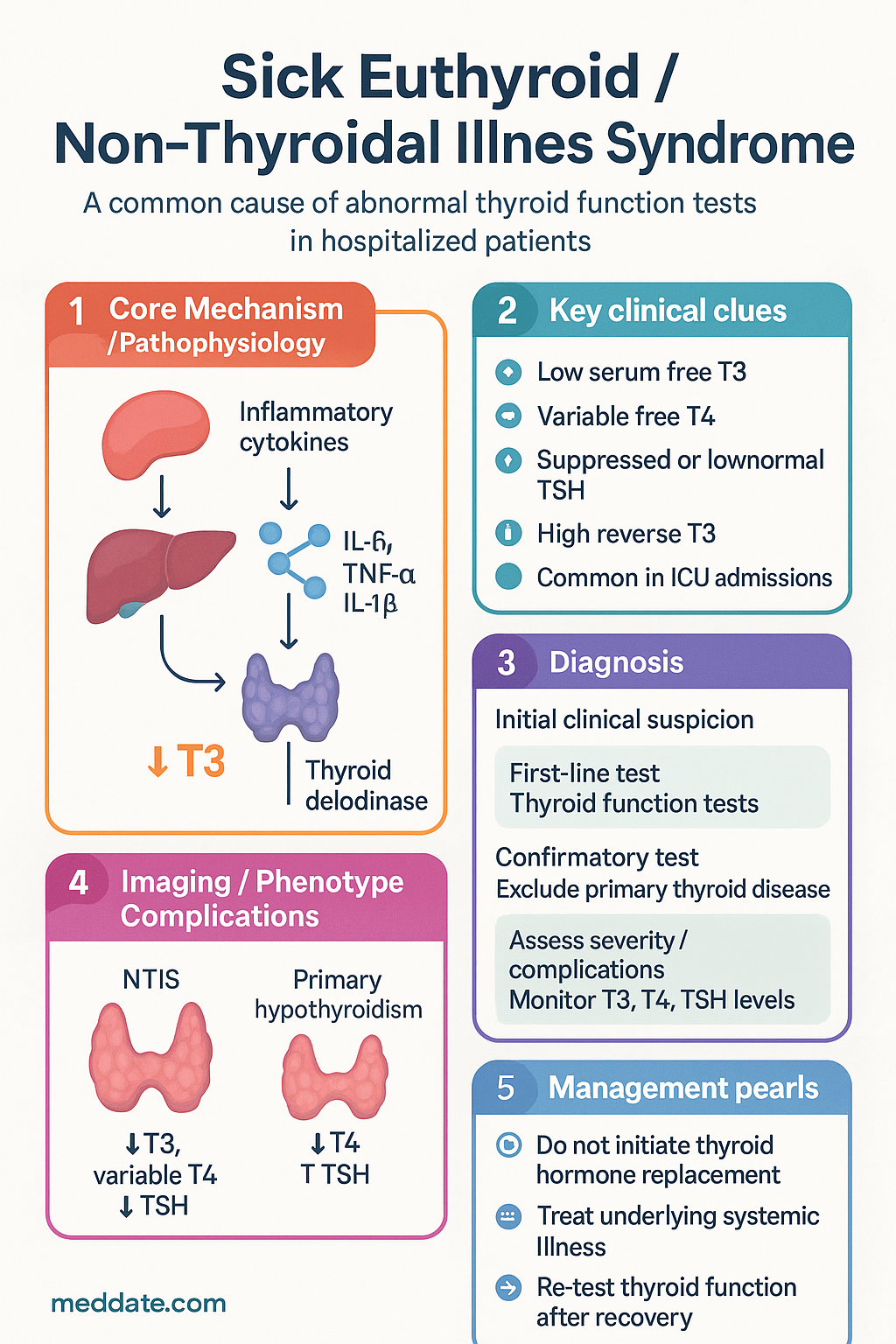
Sick Euthyroid / Non-Thyroidal Illness Syndrome clinical infographic โ€” pathophysiology, clinical clues, diagnosis, imaging, and management
Tap or click image to enlarge โ€” Sick Euthyroid / Non-Thyroidal Illness Syndrome: pathophysiology, clinical clues, diagnosis, imaging, and management.
Sick Euthyroid / Non-Thyroidal Illness Syndrome infographic, full size

Pathophysiology (Deiodinase Changes)

Understanding NTIS requires appreciation of the three iodothyronine deiodinase enzymes (DIO1, DIO2, DIO3) and their tissue-specific regulation during systemic illness.

Normal Thyroid Hormone Metabolism

The thyroid gland secretes predominantly T4 (thyroxine), a relatively inactive prohormone. Conversion to the biologically active T3 (triiodothyronine) occurs peripherally through the removal of a single iodine atom from the outer ring of T4. Approximately 80 % of circulating T3 is derived from peripheral conversion, with the remainder secreted directly by the thyroid.

Deiodinase Primary Function Key Tissues Change in NTIS
DIO1 (Type 1) Outer-ring deiodination: T4 โ†’ T3; also clears rT3 Liver, kidney, thyroid โ†“ Downregulated by IL-6, TNF-ฮฑ; reduced T3 production and rT3 clearance
DIO2 (Type 2) Outer-ring deiodination: T4 โ†’ T3 (local tissue supply) Brain, pituitary, BAT, skeletal muscle Variable โ€” โ†‘ in pituitary (driving TSH suppression), โ†“ in hypothalamus
DIO3 (Type 3) Inner-ring deiodination: T4 โ†’ rT3; T3 โ†’ T2 (inactivation) Placenta, brain, skin, many tissues during inflammation โ†‘ Upregulated โ€” central driver of low T3 and elevated rT3

The Cascade of Changes

During systemic illness, a coordinated neuroendocrine response unfolds:

  1. Peripheral deiodinase shift (hours to days): Pro-inflammatory cytokines โ€” interleukin-6 (IL-6), tumour necrosis factor-alpha (TNF-ฮฑ), and interleukin-1-beta (IL-1ฮฒ) โ€” suppress hepatic DIO1 activity while simultaneously upregulating DIO3 expression in peripheral tissues. This results in decreased conversion of T4 to T3 and increased conversion of T4 to the metabolically inactive reverse T3 (rT3). Serum T3 falls; rT3 rises.
  2. Altered thyroid hormone binding (acute phase): Inflammatory cytokines reduce the synthesis of thyroid-binding globulin (TBG), transthyretin (prealbumin), and albumin. They also modify binding affinity through desialylation and oxidation of binding proteins. This contributes to the fall in total T4 and T3, though free hormone levels may initially be preserved.
  3. Hypothalamicโ€“pituitary changes (days to weeks): In prolonged critical illness, sustained elevation of cytokines and cortisol, together with dopaminergic and somatostatinergic tone, suppresses hypothalamic TRH secretion. Pituitary TSH secretion consequently falls. Additionally, increased DIO2 activity in the pituitary locally amplifies T3 signalling, further suppressing TSH despite low circulating T3 โ€” a form of central feedback override.
  4. Tissue-level thyroid hormone transport: Expression of monocarboxylate transporter 8 (MCT8) and other thyroid hormone transporters in the brain is altered during illness, potentially contributing to intracellular thyroid hormone depletion in neural tissue despite changing circulating levels.
  5. Cortisol and NTIS: Elevated cortisol (via the parallel HPA axis activation) independently suppresses TSH and DIO1. This mechanism is distinct from, and additive to, cytokine-mediated changes.
๐Ÿ’ก
Evolutionary rationale: NTIS is thought to represent a physiological "hibernation-like" state that conserves energy and protein during illness by reducing metabolic rate. In critically ill patients, however, the adaptive advantage is debated โ€” prolonged NTIS may itself contribute to adverse outcomes through impaired cardiac function, respiratory muscle weakness, and immune dysregulation.

Clinical Patterns (Low T3, Low T4, TSH Changes)

NTIS follows a predictable temporal progression that varies with illness severity. Three broad phases have been described:

Phase 1
Early / Low T3 Syndrome
The most common and mildest pattern. Free T3 falls (typically < 3.5 pmol/L; reference 3.5โ€“6.5 pmol/L). Free T4 remains normal or low-normal. TSH is normal. rT3 is elevated. This occurs within hours of illness onset and may be the only biochemical abnormality.
Setting: General wards, post-surgery, early sepsis
Phase 2
Low T3 / Low T4 Syndrome
As illness persists and becomes more severe, free T4 also falls (frequently < 10 pmol/L; reference 10โ€“20 pmol/L). TSH may be low-normal (0.3โ€“1.0 mIU/L) or frankly suppressed (< 0.3 mIU/L). rT3 remains elevated. This pattern correlates with higher illness severity scores (APACHE II, SOFA) and increased ICU mortality.
Setting: ICU, prolonged sepsis, multi-organ dysfunction
Phase 3
Severe / Consumptive Pattern
Markedly suppressed TSH (often < 0.1 mIU/L) with low or unmeasurable free T3 and free T4. This pattern in a non-critical setting must be distinguished from central hypothyroidism or drug effects. In the ICU, it signals a grave prognosis โ€” mortality rates exceeding 50โ€“80 % have been reported when free T4 is < 5 pmol/L with TSH < 0.1 mIU/L.
Setting: ICU โ€” terminal illness, post-cardiac arrest, advanced multi-organ failure

Characteristic Biochemical Profile

Parameter NTIS Pattern Australian Reference Range (Adult)
Free T3 โ†“ Low (hallmark finding) 3.5โ€“6.5 pmol/L
Free T4 Normal โ†’ Low as severity increases 10โ€“20 pmol/L
TSH Normal โ†’ Low / Suppressed 0.4โ€“4.0 mIU/L
Reverse T3 โ†‘ Elevated 0.10โ€“0.45 nmol/L (not routinely measured in Australia)
Thyroglobulin Normal Not routinely measured
TPO Antibodies Negative (unless coincidental autoimmune thyroiditis) Negative

Conditions Associated with NTIS

  • Sepsis and septic shock
  • Acute myocardial infarction
  • Decompensated heart failure
  • Liver cirrhosis
  • Chronic kidney disease (especially stage 4โ€“5, dialysis)
  • Major trauma and burns
  • Post-cardiopulmonary bypass
  • Malignancy (especially advanced solid organ tumours)
  • Starvation, anorexia nervosa, protein-calorie malnutrition
  • Severe COVID-19 and other critical viral infections
  • Diabetic ketoacidosis
  • Bone marrow transplantation
โš ๏ธ
When NTIS predicts mortality: A persistently low free T4 (< 8 pmol/L) with suppressed TSH (< 0.1 mIU/L) after 7 or more days of critical illness is an independent predictor of mortality in ICU patients. This should prompt clinical reassessment and goals-of-care discussions, not thyroid hormone replacement.

Differentiation from True Thyroid Disease

Differentiating NTIS from genuine thyroid disease is one of the most clinically important โ€” and frequently encountered โ€” challenges in hospital medicine. Misdiagnosis leads to unnecessary treatment, missed diagnoses, or both.

Key Diagnostic Approach

1
Do Not Test Unless Indicated
Thyroid function tests should not be performed as "routine" investigations in acutely unwell patients. Testing is indicated only when clinical features suggest independent thyroid disease โ€” goitre, Graves' orbitopathy, pretibial myxoedema, tremor with disproportionate tachycardia, or known thyroid disease history.
2
Interpret in Clinical Context
An isolated low T3 with normal TSH in a septic patient is overwhelmingly NTIS. A suppressed TSH with elevated free T3 in a haemodynamically stable patient suggests thyrotoxicosis.
3
Check Thyroid Antibodies
Positive TPO or thyroglobulin antibodies suggest co-existent autoimmune thyroiditis. However, antibodies can be falsely positive in up to 15 % of the general population; negative antibodies are more informative for excluding primary thyroid disease.
4
Review Medications
Document all medications. Amiodarone (iodine load), dopamine, glucocorticoids, checkpoint inhibitors (pembrolizumab, nivolumab), lithium, and tyrosine kinase inhibitors can all alter TFTs independently.
5
Re-Test After Recovery
The definitive strategy. Repeat TFTs 2โ€“3 months after acute illness resolution. NTIS will normalise; true thyroid disease will persist or declare itself.

Differentiating NTIS from Thyroid Disease โ€” Comparison Table

Feature NTIS Primary Hypothyroidism Central Hypothyroidism
TSH Normal โ†’ Low (but usually > 0.1) โ†‘ Elevated (> 10 mIU/L typical) โ†“ Low or inappropriately normal
Free T4 Normal โ†’ Low โ†“ Low โ†“ Low
Free T3 โ†“ Low โ†“ Low โ†“ Low
Reverse T3 โ†‘ Elevated Normal or Low Normal or Low
TPO Abs Negative (unless co-existing) Often positive (Hashimoto's) Negative
TSH response to TRH Delayed but present Exaggerated Absent or blunted
Clinical context Acute/severe systemic illness Often insidious, may predate illness Pituitary/hypothalamic pathology
On recovery Normalises Persists Persists

Drugs That Alter Thyroid Function Tests

Drug Effect on TFTs Mechanism
Amiodarone โ†‘ T4, variable TSH; can cause amiodarone-induced thyrotoxicosis (AIT) type 1 or 2, or hypothyroidism Iodine excess (37 % iodine by weight); DIO1/DIO2 inhibition; direct thyroid toxicity
Glucocorticoids (high dose) โ†“ TSH (suppressed); โ†“ T3; โ†“ TBG Direct TSH suppression; hepatic DIO1 inhibition
Dopamine (IV infusion) โ†“ TSH; โ†“ T4; โ†“ T3 Dopaminergic suppression of TRH/TSH
Checkpoint inhibitors (IO) โ†“ or โ†‘ TSH; destructive thyroiditis Immune-mediated thyroid destruction
Tyrosine kinase inhibitors โ†“ T3, โ†“ T4, variable TSH DIO1/DIO3 alteration; possible direct thyroid toxicity
Heparin (in vitro effect) Spuriously โ†‘ free T4 on certain assays Heparin-activated lipase releases free fatty acids that displace T4 from TBG in vitro
๐Ÿšจ
Critical safety point: If TSH is suppressed (< 0.1 mIU/L) in a patient who is NOT critically ill, this requires urgent evaluation for thyrotoxicosis or central hypothyroidism โ€” not dismissal as NTIS. NTIS as an explanation for a TSH of < 0.1 requires a correspondingly severe clinical state.

Management

The management of NTIS is fundamentally different from the management of thyroid disease. The guiding principle is: NTIS is not a thyroid problem โ€” it is the consequence of a systemic illness.

Core Management Principles

1
Treat the Underlying Illness
Aggressive management of sepsis, heart failure, renal failure, malnutrition, or other primary pathology is the only proven strategy to resolve NTIS. Thyroid hormones normalise as the underlying condition improves. There is no specific "treatment for NTIS."
2
Do Not Initiate Levothyroxine
Multiple studies and two landmark randomised controlled trials have demonstrated no benefit โ€” and potential harm โ€” from thyroid hormone replacement in NTIS. The T4 replacement trial in critical illness showed a trend toward increased mortality. The TRH analogue trial showed no improvement in ventilator-free days or mortality. Levothyroxine is not PBS-registered for NTIS.
3
Do Not Continue Pre-Existing Levothyroxine Without Review
Patients on long-term levothyroxine who develop critical illness may have NTIS superimposed on treated hypothyroidism. Continue their usual dose โ€” do not increase it in response to "low T3." There is no evidence that dose escalation improves outcomes. Re-evaluate dose after recovery.
4
Avoid Unnecessary TFT Monitoring
Repeated TFTs during acute illness add confusion, not clarity. If TFTs are drawn and show NTIS, document "consistent with non-thyroidal illness syndrome โ€” no thyroid treatment indicated" and plan re-testing at 2โ€“3 months post-discharge.
5
Plan Outpatient Re-Testing
All patients with abnormal TFTs during acute illness should have a plan for repeat TFTs in the community 2โ€“3 months after clinical recovery. This should be documented in the discharge summary. Medicare item 66712 (thyroid function tests) is available for rebated testing.

Scenarios Requiring Thyroid Treatment Despite NTIS Overlap

In a small number of situations, genuine thyroid disease may co-exist with NTIS or be unmasked by it. Consider treatment when:

  • Known hypothyroidism on levothyroxine: Continue usual dose; do not increase.
  • New presentation of myxoedema coma: Extremely rare but life-threatening. Suspect when there is hypothermia (< 35 ยฐC), bradycardia, altered consciousness, and periorbital/oedematous features in the absence of other explanations. Manage in ICU with IV levothyroxine (loading dose 200โ€“500 micrograms IV, then 50โ€“100 micrograms IV daily) and IV hydrocortisone 100 mg stat then 50 mg 8-hourly (given before or with T4 to avoid adrenal crisis). Specialist endocrinology consultation is mandatory.
  • Thyroid storm: Differentiated from NTIS by high T3/T4, suppressed TSH, and features of thyrotoxic crisis (fever, tachycardia, delirium). Treated with carbimazole 20โ€“40 mg PO/NG (or propylthiouracil if thyroid storm โ€” 500 mg loading then 250 mg 4-hourly), propranolol, and ICU support. Not confused with NTIS if the clinical picture is carefully assessed.

Investigations โ€” What to Order and When

MBS Available Free T3 (item 66712) Low in NTIS. Available at all Australian pathology providers. Results in 24โ€“48 hours.
MBS Available Free T4 (item 66712) Normal โ†’ low in NTIS. Measured as part of standard TFT panel.
MBS Available TSH (item 66712) Normal โ†’ suppressed in NTIS. The most important discriminator when interpreted with clinical context.
MBS Available TPO / Thyroglobulin Antibodies (item 66801) To exclude coincidental autoimmune thyroiditis. Not required routinely; order when thyroid disease is a genuine differential.
Referral Reverse T3 Elevated in NTIS but not routinely available in Australian laboratories. Limited clinical utility; not recommended for routine assessment.
Specialist TRH Stimulation Test Rarely performed; available at select tertiary centres (e.g., Royal Melbourne, Westmead). Distinguishes central from NTIS-suppressed TSH. Not recommended in routine clinical practice.

Pharmacotherapy Summary โ€” Medications Referenced

๐Ÿ’Š
Levothyroxine
Oroxineยฎ ยท Eutroxsigยฎ ยท Thyroxine Sodium ยท Thyroid hormone replacement
Adult dose (hypothyroidism) 1.6 mcg/kg/day PO (typical 50โ€“200 mcg daily, fasting)
Myxoedema coma 200โ€“500 mcg IV loading, then 50โ€“100 mcg IV daily
Renal adjustment None required
Indication for NTIS NOT indicated for NTIS โ€” only for confirmed hypothyroidism or myxoedema coma
PBS status โœ” PBS General Benefit
๐Ÿ’Š
Carbimazole
Neo-Mercazoleยฎ ยท Thiamazole ยท Antithyroid agent
Adult dose (thyrotoxicosis) 15โ€“40 mg PO daily (initial); maintenance 5โ€“15 mg daily
Thyroid storm 20โ€“40 mg PO/NG stat, then 15โ€“20 mg 8-hourly
Hepatic adjustment Monitor LFTs; reduce dose if hepatotoxicity
Indication for NTIS NOT indicated for NTIS
PBS status โœ” PBS General Benefit
๐Ÿ’Š
Hydrocortisone (IV)
Solu-Cortefยฎ ยท Hydrocortisone sodium succinate ยท Glucocorticoid
Myxoedema coma adjunct 100 mg IV stat, then 50 mg IV 8-hourly
Renal adjustment None required
Note Must be given before or with IV levothyroxine in myxoedema coma to prevent adrenal crisis
PBS status โœ” PBS General Benefit
โš ๏ธ
Avoid the common pitfall: Starting levothyroxine in a critically ill patient because "the TSH is low and the T4 is low" is almost always wrong. NTIS causes this pattern. Confirm the thyroid axis is intact after recovery before committing a patient to lifelong therapy.

Special Populations

๐Ÿคฐ Pregnancy
Key consideration: TFTs in pregnancy are interpreted against trimester-specific reference ranges (TSH typically lower in first trimester). NTIS in pregnancy is uncommon but may occur with hyperemesis gravidarum (hCG-driven TSH suppression) or severe pre-eclampsia / HELLP. hCG-mediated thyrotropic effect is physiological and self-limiting.
Pre-existing hypothyroidism: Levothyroxine requirements increase by 25โ€“50 % in pregnancy. Continue usual dose and monitor TSH every 4โ€“6 weeks. Do not withhold replacement based on "NTIS concern" โ€” hypothyroidism in pregnancy carries risk of pre-eclampsia, abruption, and impaired neurodevelopment.
๐Ÿ‘ถ Paediatrics
Neonates: NTIS is seen in sick neonates (prematurity, NEC, sepsis). Low T3 and low T4 with normal/low TSH is typical. Neonatal screening (Guthrie test) may be affected โ€” repeat heel-prick or venous TFT if initial screen is abnormal in a sick infant.
Children: NTIS is less common in paediatric patients but occurs in paediatric ICU settings. The same principles apply โ€” treat the underlying illness; do not initiate levothyroxine unless congenital or acquired hypothyroidism is confirmed.
๐Ÿ‘ด Elderly (> 65 years)
Consideration: Ageing is associated with a mild rise in TSH and decline in T3. Distinguishing age-related changes, subclinical hypothyroidism, and NTIS is particularly challenging in hospitalised older adults. Non-thyroidal illness is the most common cause of abnormal TFTs in geriatric inpatients. Levothyroxine initiation in elderly patients with borderline TFTs should await recovery and outpatient re-testing.
๐Ÿซ˜ Renal Impairment
CKD stages 4โ€“5 / Dialysis: Low T3 is present in ~50 % of patients on maintenance haemodialysis. TSH may be low-normal due to uraemic suppression of TRH. Distinguishing CKD-related NTIS from true hypothyroidism is difficult; anti-TPO antibodies and TSH trend over time are the most useful discriminators. If levothyroxine is initiated for confirmed hypothyroidism, the drug itself does not require dose adjustment for renal impairment.
๐Ÿซ Hepatic Impairment
Cirrhosis: Low T3 is extremely common in cirrhosis (up to 70 % in decompensated disease). TBG synthesis is reduced. Low T3 in cirrhosis independently predicts mortality and is incorporated into some prognostic models. Treatment of the underlying liver disease (e.g., alcohol cessation, antiviral therapy, nutritional optimisation) is the appropriate approach.
๐Ÿ›ก๏ธ Immunocompromised
Key consideration: Patients on immunosuppressants (post-transplant, autoimmune disease) may have NTIS during intercurrent infections. Checkpoint inhibitor therapy (e.g., pembrolizumab, nivolumab) can cause destructive thyroiditis or hypothyroidism โ€” this is a true drug-induced thyroid disease, not NTIS, and requires thyroid hormone replacement. TFTs should be monitored every 6 weeks during checkpoint inhibitor therapy.

Aboriginal and Torres Strait Islander Health Considerations

Aboriginal and Torres Strait Islander Health
Higher chronic disease burden
Aboriginal and Torres Strait Islander Australians experience higher rates of type 2 diabetes, chronic kidney disease, cardiovascular disease, and respiratory disease โ€” all conditions associated with NTIS. Hospitalised Indigenous patients may have a higher prevalence of NTIS compared to non-Indigenous Australians, though specific NTIS prevalence data in this population are limited.
Delayed presentation
Barriers to timely healthcare access, including geographic remoteness, socioeconomic disadvantage, and systemic racism, may lead to later presentation with more severe illness โ€” increasing the likelihood and severity of NTIS. NTIS findings in this context should be interpreted as markers of illness acuity and managed accordingly.
Communication and health literacy
Explaining "your thyroid is not the problem" to a patient who has been told their thyroid tests are abnormal requires culturally safe, plain-language communication. Aboriginal Health Workers and Liaison Officers should be engaged to facilitate discussion. Avoid medical jargon; use phrases such as "your thyroid tests changed because you were very unwell โ€” they will go back to normal when you are better โ€” you don't need thyroid tablets."
Remote and rural medicine
In remote communities, TFTs may be ordered through Remote Area Health Corps or RFDS services. Follow-up testing at 2โ€“3 months post-illness is essential but logistically challenging. Telehealth endocrinology review (MBS item 91822 or 91823) is available and should be utilised. Ensure discharge summaries are transmitted to the patient's regular Aboriginal Community Controlled Health Service (ACCHS).
Avoid overdiagnosis
There is a risk that NTIS-driven abnormal TFTs lead to inappropriate lifelong levothyroxine prescriptions in Indigenous patients who may not have access to timely follow-up to confirm or refute the diagnosis. Primary care providers should document NTIS as the likely explanation and plan follow-up, rather than initiating empiric levothyroxine at discharge.
Acknowledgement
This guideline acknowledges the Traditional Custodians of Country throughout Australia and recognises their continuing connection to land, waters, and community. We pay our respects to Aboriginal and Torres Strait Islander Elders past and present, and commit to providing equitable, culturally safe healthcare.

๐Ÿ“š References

  1. 1. Van den Berghe G. Non-thyroidal illness in the ICU: a syndrome with different faces. Thyroid. 2014;24(10):1456โ€“1465.
  2. 2. Warner MH, Breslow MJ, Lubomski PJ, et al. Thyroid hormone replacement in critically ill patients with non-thyroidal illness: a randomised, double-blind, placebo-controlled trial. Lancet. 1996;348(9032):405โ€“408.
  3. 3. Van den Berghe G, de Zegher F, Baxter RC, et al. Neuroendocrinology of prolonged critical illness: effects of exogenous thyrotropin-releasing hormone and its combination with growth hormone secretagogues. J Clin Endocrinol Metab. 1998;83(2):309โ€“319.
  4. 4. Chaker L, Bianco AC, Jonklaas J, Peeters RP. Hypothyroidism. Lancet. 2017;390(10101):1550โ€“1562.
  5. 5. Fliers E, Bianco AC, Langouche L, Boelen A. Thyroid function in critically ill patients. Lancet Diabetes Endocrinol. 2015;3(10):816โ€“825.
  6. 6. Australian Institute of Health and Welfare (AIHW). Cardiovascular disease, diabetes and chronic kidney disease โ€” Australian facts: Aboriginal and Torres Strait Islander people. Cat. no. CDK 5. Canberra: AIHW; 2015.
  7. 7. Bello G, Pennisi MA, Montini L, et al. Nonthyroidal illness syndrome and prolonged mechanical ventilation in patients admitted to the ICU. Chest. 2009;135(6):1448โ€“1454.
  8. 8. Economidou F, Douka E, Tzanela M, Nanas S, Kotanidou A. Thyroid function during critical illness. Hormones (Athens). 2011;10(2):117โ€“124.
  9. 9. RACGP. Thyroid disease โ€” a guide to diagnosis and management in general practice. East Melbourne: The Royal Australian College of General Practitioners; 2023.
  10. 10. Wiersinga WM, de Graeff PA, Vรถlzke H, et al. Nonthyroidal illness syndrome. In: Feingold KR, Anawalt B, Blackman MR, et al., eds. Endotext. South Dartmouth (MA): MDText.com, Inc.; 2000โ€“2024.
  11. 11. Andersen S, Bruun NH, Pedersen KM, Laurberg P. Biologic variation is important for interpretation of thyroid function tests. Thyroid. 2003;13(11):1069โ€“1078.
  12. 12. Suรกrez-Ortegรณn MF, Beltrรกn-Anaya FO, Mosquera M, et al. Association of low T3 with mortality in COVID-19: a systematic review and meta-analysis. Eur J Endocrinol. 2022;187(4):557โ€“566.
  13. 13. Services Australia. MBS Online โ€” Medicare Benefits Schedule. Australian Government. Available at: www.mbsonline.gov.au. Accessed 2024.
co-pay for eligible patients).
Pregnancy & maternal health
Antenatal screening for thyroid disease should be integrated into Aboriginal Community Controlled Health Organisation (ACCHO) maternal health programmes. Untreated hypothyroidism in pregnancy disproportionately impacts communities with limited access to early antenatal care.
Comorbidity burden
Higher rates of diabetes, cardiovascular disease, and chronic kidney disease in Aboriginal and Torres Strait Islander communities mean hypothyroid-related dyslipidaemia and cardiovascular risk require particularly active management. Integrating thyroid function testing into chronic disease management plans (MBS Item 721) is recommended.
Iodine status
Although Australia-wide mandatory iodisation has improved status, some Aboriginal and Torres Strait Islander communities โ€” particularly in very remote areas โ€” may have borderline iodine adequacy. Urinary iodine monitoring in these communities should be maintained.

๐Ÿ“š References

  1. 1. Chaker L, Bianco AC, Jonklaas J, Peeters RP. Hypothyroidism. Lancet. 2017;390(10101):1550โ€“1562.
  2. 2. Garber JR, Cobin RH, Gharib H, et al. Clinical practice guidelines for hypothyroidism in adults: cosponsored by the American Association of Clinical Endocrinologists and the American Thyroid Association. Endocr Pract. 2012;18(6):988โ€“1028.
  3. 3. Pearce SH, Brabant G, Duntas LH, et al. 2013 ETA guideline: management of subclinical hypothyroidism. Eur Thyroid J. 2013;2(4):215โ€“228.
  4. 4. Alexander EK, Pearce EN, Brent GA, et al. 2017 guidelines of the American Thyroid Association for the diagnosis and management of thyroid disease during pregnancy and the postpartum. Thyroid. 2017;27(3):315โ€“389.
  5. 5. RACGP. Red Book: Guidelines for preventive activities in general practice. 9th ed. East Melbourne: RACGP; 2018.
  6. 6. Australian Institute of Health and Welfare (AIHW). Aboriginal and Torres Strait Islander health performance framework. Canberra: AIHW; 2023.
  7. 7. Li Y, Teng D, Shi X, et al. Prevalence of diabetes recorded in mainland China using 2018 diagnostic criteria from the American Diabetes Association: national cross sectional study. BMJ. 2020;369:m997. [TSH population reference data]
  8. 8. Ross DS. Diagnosis of and screening for hypothyroidism. In: UpToDate, Cooper DS (Ed). Wolters Kluwer; 2024. Accessed June 2024.
  9. 9. NHMRC. National evidence-based guideline: diagnosis, management and prevention of congenital hypothyroidism. Canberra: NHMRC; 2019.
  10. 10. Wiersinga WM, Duntas L, Fadeyev V, Nygaard B, Vanderpump MP. 2012 ETA guidelines: the use of L-T4 + L-T3 in the treatment of hypothyroidism. Eur Thyroid J. 2012;1(2):55โ€“71.
  11. 11. Pharmaceuticals Benefits Scheme (PBS). Levothyroxine sodium. Australian Government Department of Health. Available at: pbs.gov.au. Accessed June 2024.
  12. 12. Australian Government Department of Health. National Newborn Bloodspot Screening โ€” Congenital Hypothyroidism. Available at: www.newbornscreening.gov.au. Accessed June 2024.