Home Endocrinology Preoperative Insulin Management

Preoperative Insulin Management

📋 Key Information Summary

📋
  • Preoperative insulin management requires a structured perioperative diabetes plan agreed between the surgical team, endocrinology, anaesthetics, and the patient.
  • Type 1 diabetes patients must always receive basal insulin to prevent diabetic ketoacidosis (DKA) — never withhold all insulin perioperatively.
  • Aim for capillary blood glucose (CBG) of 6–12 mmol/L during the perioperative period; accept 6–14 mmol/L for higher-risk patients.
  • Stop metformin 24–48 hours before surgery (risk of lactic acidosis if acute kidney injury develops perioperatively).
  • SGLT2 inhibitors (e.g., empagliflozin, dapagliflozin) must be stopped at least 3 days preoperatively due to euglycaemic DKA risk.
  • For patients managed on basal-bolus insulin (e.g., Lantus® + NovoRapid®), give 100% of the usual long-acting insulin dose the evening before surgery.
  • On the morning of surgery: withhold short-acting/pre-mixed insulin if fasting; commence a variable rate insulin infusion (VRII) with 10% dextrose for Type 1 and insulin-requiring Type 2 patients.
  • Variable rate insulin infusion (VRII) using Actrapid® (soluble insulin) is the standard intraoperative approach; run 10% dextrose at 80–125 mL/hr concurrently.
  • Monitor capillary blood glucose every 1–2 hours intraoperatively and hourly for 4 hours postoperatively.
  • Transition back to subcutaneous insulin once eating and drinking — give a dose of rapid-acting insulin with the first meal, then restart the usual basal regimen 2 hours before discontinuing VRII.
  • In emergency surgery, commence VRII immediately regardless of fasting state; do not delay surgery to optimise glucose.
  • Insulin pump (CSII) patients: consult endocrinology early — pumps may continue for minor procedures but VRII is preferred for major surgery.
  • Consider preoperative HbA1c as part of surgical risk assessment; HbA1c >53 mmol/mol (7%) is associated with increased perioperative complications.
  • Aboriginal and Torres Strait Islander peoples experience disproportionately higher rates of Type 2 diabetes — ensure culturally safe perioperative planning and early multidisciplinary input.

🎧 Audio Brief

The Metabolic Tightrope of Surgery with Diabetes

A short clinical audio briefing generated from this article — perfect for the commute or ward round.

Introduction & Australian Epidemiology

Perioperative management of diabetes mellitus requires careful adjustment of insulin, oral hypoglycaemic agents, and non-insulin injectable therapies to prevent both hypoglycaemia and hyperglycaemia in the fasting and perioperative period. Poorly controlled perioperative glucose is associated with increased surgical site infections, delayed wound healing, prolonged hospital stay, cardiovascular events, and mortality.

Approximately 1.3 million Australians live with diagnosed diabetes, and an estimated 500,000 have undiagnosed Type 2 diabetes (AIHW, 2023). Up to 25–30% of patients presenting for elective surgery have either diagnosed or previously undiagnosed diabetes mellitus. The prevalence is higher among Aboriginal and Torres Strait Islander peoples, who experience Type 2 diabetes at rates 3–4 times the general population.

Perioperative hyperglycaemia (CBG >12 mmol/L) is independently associated with a two- to three-fold increase in surgical site infection rates, increased intensive care admissions, and longer length of stay. Conversely, perioperative hypoglycaemia (CBG <4 mmol/L) carries immediate risks of cardiac arrhythmias, seizures, and cerebral injury. The goal of preoperative insulin management is to maintain glucose within a safe target range while minimising both hyper- and hypoglycaemia throughout the perioperative journey.

This guideline provides a practical, evidence-based framework for the preoperative assessment and perioperative insulin management of adults with Type 1 and Type 2 diabetes undergoing elective and emergency surgery in the Australian healthcare setting.
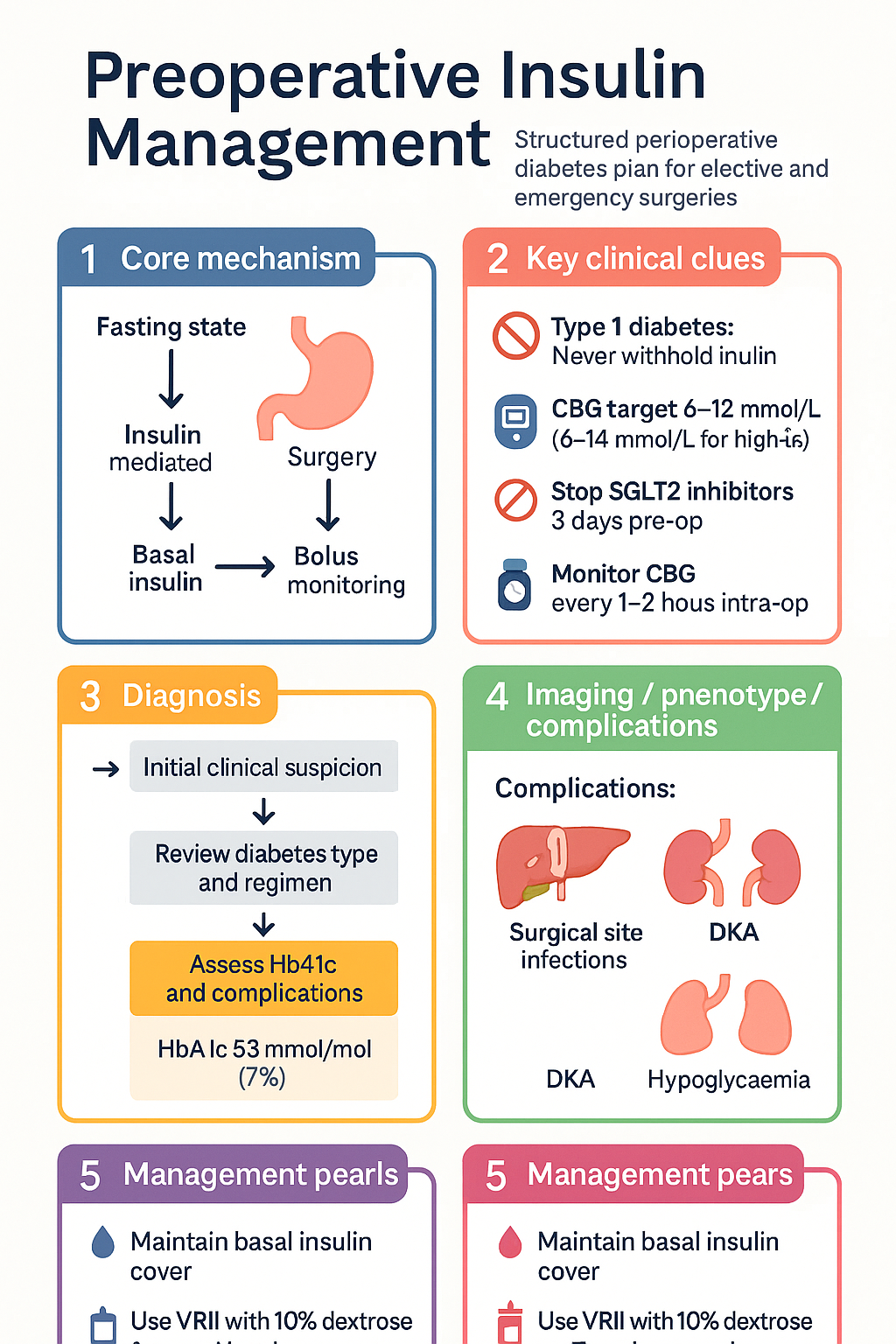
Preoperative Insulin Management clinical infographic — pathophysiology, clinical clues, diagnosis, imaging, and management
Tap or click image to enlarge — Preoperative Insulin Management: pathophysiology, clinical clues, diagnosis, imaging, and management.
Preoperative Insulin Management infographic, full size

Preoperative Assessment & Planning

All patients with diabetes presenting for surgery should undergo a structured preoperative diabetes assessment, ideally at the pre-anaesthetic clinic 2–4 weeks before the scheduled procedure. The assessment should address glycaemic control, current diabetes regimen, complications of diabetes, and a perioperative management plan.

Key Preoperative Assessment Components

1
Confirm Diabetes Type & Current Regimen
Document Type 1 vs Type 2, all current medications (insulin type and doses, oral agents, GLP-1 agonists, SGLT2 inhibitors), and self-monitoring patterns.
2
Assess Glycaemic Control
Review recent HbA1c (within 3 months). If unavailable, request preoperatively. Target HbA1c <53 mmol/mol (7%) for elective surgery. Consider deferral if HbA1c >86 mmol/mol (10%) for non-urgent procedures.
3
Screen for Complications
Autonomic neuropathy (gastroparesis, orthostatic hypotension, silent ischaemia), nephropathy (eGFR for metformin/SGLT2i safety), cardiovascular disease, retinopathy (if prone positioning planned).
4
Medication Adjustment Plan
Cease agents per protocol (see table below). Document the perioperative insulin plan in the medical record and patient handout.
5
Scheduling & List Priority
Patients with Type 1 diabetes should be placed first on the operating list where possible to minimise fasting duration and disruption to glycaemic control.

Preoperative Medication Management

Medication Day Before Surgery Morning of Surgery Rationale
Metformin Stop 24–48 hrs prior Withhold Lactic acidosis risk with AKI, contrast, hypoperfusion
SGLT2 inhibitors (empagliflozin, dapagliflozin) Stop 3 days prior Withhold Euglycaemic DKA risk
Sulfonylureas (gliclazide, glipizide) Omit evening dose if BD Withhold Hypoglycaemia risk when fasting
DPP-4 inhibitors (sitagliptin, linagliptin) Take as usual Withhold Low hypoglycaemia risk alone; withhold for simplicity
GLP-1 agonists (liraglutide, semaglutide) Take as usual Withhold Gastroparesis/aspiration risk
Basal insulin (glargine, detemir) Give 100% usual dose Withhold AM dose if BD; give usual dose if OD Maintain basal insulin cover
Short/rapid-acting insulin (aspart, lispro) Usual dose with meals Withhold if fasting No meals = no prandial insulin
Pre-mixed insulin (NovoMix 30®, Mixtard®) Evening dose as usual Give 50% of usual AM dose if fasting Provides partial basal cover during fasting
⚠️
SGLT2 inhibitor warning: Euglycaemic diabetic ketoacidosis (euDKA) can occur even with normal blood glucose levels. Ensure all SGLT2 inhibitors are ceased at least 72 hours (3 days) before any surgical procedure. If a patient taking an SGLT2 inhibitor presents for emergency surgery, commence VRII immediately and monitor ketones.

HbA1c and Surgical Risk Stratification

Low Risk
HbA1c <53 mmol/mol (7%)
Well-controlled diabetes. Proceed with planned surgery. Standard perioperative insulin protocol.
Setting: Proceed as scheduled
Moderate Risk
HbA1c 53–86 mmol/mol (7–10%)
Suboptimal control. Proceed with enhanced perioperative monitoring. Consider endocrinology input. Optimise preoperatively if time permits.
Setting: Enhanced monitoring, consider endocrine review
High Risk
HbA1c >86 mmol/mol (>10%)
Poorly controlled. Strong consideration for deferral of elective surgery. Endocrinology consultation mandatory. Risk of DKA, poor wound healing, infection.
Setting: Consider deferral; endocrine consult; HDU if proceeding

Day of Surgery Management (Variable Rate Insulin Infusion)

On the day of surgery, patients with Type 1 diabetes or insulin-treated Type 2 diabetes who are fasting require a variable rate insulin infusion (VRII) with concurrent dextrose to maintain euglycaemia. This is the gold-standard approach recommended by the Joint British Diabetes Societies (JBDS) and adopted widely across Australian hospitals.

Capillary Blood Glucose Targets

Parameter Target Action if Outside Range
Ideal CBG 6–12 mmol/L Continue current VRII rate
Acceptable CBG (higher-risk) 6–14 mmol/L Acceptable in elderly, CKD, hypoglycaemia-prone
Hypoglycaemia <4 mmol/L STOP VRII. 50 mL 50% dextrose IV or 200 mL 10% dextrose over 15 min. Recheck in 15 min.
Hyperglycaemia >14 mmol/L Increase VRII rate per protocol. Consider 10 unit IV Actrapid® stat dose if >20 mmol/L.
Critical hyperglycaemia >20 mmol/L + ketones Treat as DKA protocol. Urgent medical review.

Variable Rate Insulin Infusion (VRII) Protocol

💉
Actrapid® (Soluble Insulin) IV Infusion
Novo Nordisk · Human soluble insulin · Short-acting
Preparation 50 units Actrapid® in 49.5 mL 0.9% NaCl (= 1 unit/mL)
Starting rate 1–2 units/hr (adjust per CBG protocol below)
Route IV infusion via dedicated line (do not mix with blood products)
Renal adjustment eGFR <30: start at 0.5–1 unit/hr; increased sensitivity
PBS status ✔ PBS General Benefit
💧
Dextrose 10% IV Infusion
10% Dextrose in water · Glucose replacement
Rate 80–125 mL/hr (= 8–12.5 g glucose/hr)
Route IV via dedicated peripheral or central line
Note Run concurrently with Actrapid® infusion through a separate line or via Y-site
PBS status ✔ PBS General Benefit

VRII Rate Adjustment Table

CBG (mmol/L) Action VRII Rate Change
<4 STOP VRII. Treat hypoglycaemia. Recheck 15 min. Stop. Restart at previous rate –1 unit/hr when CBG >6
4–6 Below target — reduce insulin Decrease by 0.5–1 unit/hr
6–12 On target No change
12.1–14 Mildly elevated Increase by 0.5–1 unit/hr
14.1–20 Hyperglycaemia Increase by 1–2 units/hr
>20 Significant hyperglycaemia Increase by 2–4 units/hr. Give stat 10 units IV Actrapid®. Check ketones.

Commencing VRII — Step-by-Step

1
Confirm Fasting & Nil-By-Mouth
Patient has fasted as per anaesthetic instruction. Record time of last oral intake.
2
Check Baseline CBG
Record a pre-VRII CBG. Check blood ketones if CBG >14 mmol/L or Type 1 diabetes.
3
Commence 10% Dextrose
Start 10% dextrose at 80–125 mL/hr via dedicated IV line.
4
Commence Actrapid® Infusion
Start at 1–2 units/hr (0.5–1 unit/hr if eGFR <30 or elderly). Adjust per CBG protocol.
5
Monitor CBG Hourly
Check CBG every 1 hour intraoperatively. Adjust VRII rate per table above. Document all values.
6
Handover
Clear handover to recovery/PACU staff: current VRII rate, CBG trend, last subcutaneous insulin dose, target range.
🚨
Type 1 diabetes — never withhold all insulin: Patients with Type 1 diabetes have absolute insulin deficiency. Withholding all insulin, even briefly, can precipitate diabetic ketoacidosis within hours. Always ensure either subcutaneous basal insulin or VRII is running continuously.

Type 2 Diabetes — Diet-Controlled or Non-Insulin Agents Only

Patients with Type 2 diabetes managed on diet alone or non-insulin agents (after appropriate cessation) who are undergoing minor, short procedures may not require VRII. Monitor CBG pre-operatively, intraoperatively every 2 hours, and postoperatively. If CBG consistently >14 mmol/L, consider commencing VRII.

For major surgery or prolonged procedures in non-insulin-treated Type 2 patients, a sliding-scale insulin infusion (VRII) should be considered if CBG rises above 12 mmol/L.

Postoperative Monitoring

Postoperative glycaemic monitoring is essential to detect both hyperglycaemia (stress response, infection risk) and hypoglycaemia (reduced oral intake, ongoing insulin). The intensity of monitoring depends on the type of surgery, diabetes severity, and clinical trajectory.

Postoperative Monitoring Protocol

Phase CBG Frequency Notes
PACU / Recovery (0–4 hrs) Every 1 hour Continue VRII until tolerating oral intake
Post-anaesthetic ward (4–12 hrs) Every 2–4 hours Transition to subcutaneous insulin when eating
First postoperative day Before meals and at bedtime (QID) Resume usual diabetes regimen or modified regimen
Subsequent days QID or as clinically indicated Adjust doses based on intake and CBG pattern

Transition from VRII to Subcutaneous Insulin

⚠️
Critical transition step: When the patient is ready to eat and drink, give a dose of rapid-acting subcutaneous insulin (e.g., NovoRapid®) with the first meal. Then restart the usual basal insulin (e.g., Lantus®). Continue VRII for a minimum of 2 hours after the basal subcutaneous insulin dose to ensure adequate cover before discontinuation. Premature cessation of VRII risks rebound hyperglycaemia or DKA in Type 1 patients.

Postoperative Insulin Dose Adjustments

Postoperative insulin requirements are often higher than preoperative doses due to the stress response, corticosteroid administration, reduced mobility, and altered nutrition. Key considerations:

  • Stress hyperglycaemia: Catecholamine, cortisol, and cytokine release can increase insulin resistance by 20–50% in the first 48–72 hours postoperatively.
  • Corticosteroid-induced hyperglycaemia: If dexamethasone or hydrocortisone is used perioperatively, expect glucose peaks 4–8 hours post-dose. Consider supplemental NPH insulin or increased VRII rates to cover.
  • Reduced oral intake: Adjust prandial insulin to actual carbohydrate intake. Consider supplementary IV dextrose if oral intake is poor.
  • Restarting oral agents: Resume metformin only when eGFR is confirmed stable and >30 mL/min, no contrast nephropathy risk, and eating normally (typically 48–72 hrs postoperatively). Resume SGLT2 inhibitors only after full recovery and stable renal function.

Special Situations (Emergency Surgery, Pumps)

Emergency Surgery

Patients presenting for emergency surgery with diabetes require rapid assessment and immediate commencement of VRII. There should be no delay in surgery to optimise glucose — management proceeds concurrently with surgical preparation.

🚨
Emergency surgery protocol: Commence VRII and 10% dextrose immediately. Check blood ketones — if positive, treat as DKA concurrent with surgical management. Ensure anaesthetics and surgical teams are aware of the diabetes status. Request endocrinology consult if available.
1
Immediate CBG & Ketones
Check CBG and blood ketones on arrival. If ketones >1.5 mmol/L with hyperglycaemia, initiate DKA protocol in parallel.
2
Commence VRII Immediately
Do not wait for fasting to be established. Start Actrapid® 1–2 units/hr + 10% dextrose 100 mL/hr. Adjust per CBG protocol.
3
Fluid Resuscitation
If dehydrated or in DKA, commence 0.9% NaCl 1000 mL over 1 hour (adjust for cardiac status). Follow DKA fluid protocol if applicable.
4
Document & Handover
Clearly document preoperative insulin regimen, time of last dose, current VRII settings, and CBG trend in the anaesthetic chart and surgical notes.

Insulin Pump Therapy (Continuous Subcutaneous Insulin Infusion — CSII)

Patients using insulin pumps (e.g., Medtronic MiniMed®, Tandem t:slim®, Omnipod®) require specific perioperative planning. The decision to continue or discontinue the pump depends on the nature and duration of the procedure, patient competence, and surgical team comfort.

Scenario Recommendation Notes
Minor procedure (<2 hrs), local/regional anaesthesia Continue pump Patient remains conscious and can self-manage. Set temporary basal rate if needed.
Moderate procedure (2–4 hrs), general anaesthesia May continue pump with close monitoring Pump site must be accessible. Anaesthetist and nursing staff must be trained. Endocrinology input preferred.
Major surgery (>4 hrs), general anaesthesia Convert to VRII Disconnect pump. Commence VRII per standard protocol. Most reliable approach for prolonged or complex procedures.
Emergency surgery in pump patient Convert to VRII Disconnect pump. Commence VRII immediately. Pump settings may be unreliable in acute illness.
ℹ️
Pump patients — key safety points: If continuing the pump, ensure the infusion set and cannula are visible and accessible to the surgical team. Mark the pump site with an indelible marker. Do not place the pump under drapes where it cannot be monitored. Have a VRII protocol ready as backup if the pump malfunctions or is accidentally disconnected.

Corticosteroid-Treated Patients

Perioperative corticosteroids (e.g., dexamethasone for PONV prophylaxis, hydrocortisone for adrenal insufficiency cover) significantly impact glycaemic control. Anticipate hyperglycaemia 4–8 hours after each dose. Strategies include:

  • Supplemental NPH insulin (e.g., Protaphane® 4–8 units SC) timed to the steroid peak effect
  • Increase VRII rate by 50–100% for the 6–12 hours following a corticosteroid dose
  • Increase monitoring frequency to every 30–60 minutes in the post-steroid window
  • Document steroid dose, time, and expected glucose impact in the medical record

Investigations

The following investigations should be performed as part of preoperative diabetes assessment and perioperative monitoring:

Essential
Capillary Blood Glucose (CBG)
Bedside glucometer. Pre-operative, intraoperative (hourly), postoperative (hourly to QID). Use hospital-calibrated meters. Document all readings.
Essential
HbA1c (Glycated Haemoglobin)
MBS Item 66841. Provides 3-month glycaemic average. Request if not available within 3 months. Used for surgical risk stratification.
Available
Blood Ketones (β-hydroxybutyrate)
Bedside ketone meter. Check if CBG >14 mmol/L, Type 1 diabetes, SGLT2 inhibitor use, or clinical concern for DKA. Level >1.5 mmol/L is significant.
Essential
Serum Electrolytes, Creatinine, eGFR
MBS Item 66500. Essential for metformin safety (eGFR <30 = contraindication), insulin dose adjustment, and assessing hydration status. Check pre- and postoperatively.
Available
Blood Gas (Venous or Arterial)
pH, bicarbonate, lactate, glucose. Use if DKA suspected or haemodynamically unstable. Available in all operating theatres and ICUs.
Available
Urinalysis — Glucose & Ketones
Dipstick urinalysis as adjunct. Less reliable than blood ketones. Glycosuria suggests recent hyperglycaemia.
Consider
C-peptide & Anti-GAD Antibodies
If diabetes type is uncertain (e.g., late-onset Type 1 vs Type 2). Results not available same-day. Useful for long-term perioperative planning.

Special Populations

🤰 Pregnancy
General approach: Pregnant patients with diabetes (gestational or pre-gestational) require tighter glycaemic targets (CBG 4–7 mmol/L fasting, <7.8 mmol/L postprandial). Insulin requirements change dramatically across trimesters.
VRII in pregnancy: Use standard VRII protocol with tighter targets. Ensure continuous fetal monitoring where gestation permits. Involve obstetric and endocrine teams early.
Caesarean section: For elective LSCS, stop oral agents as per standard protocol. Commence VRII if insulin-requiring. Aim for CBG 4–7 mmol/L during the procedure. Neonatal hypoglycaemia screening is mandatory.
Consult endocrinology and obstetric anaesthetics for all pregnant diabetic patients.
👶 Paediatrics
Type 1 diabetes (children): All paediatric patients with Type 1 diabetes require VRII perioperatively if nil-by-mouth. Paediatric-specific protocols should be used — contact paediatric endocrinology.
Dextrose requirements: Children require age-adjusted maintenance IV fluids with dextrose (e.g., 5% or 10% dextrose-based solutions per NICE/Paeds fluid guidelines).
Insulin infusion: Lower starting rates (0.01–0.05 units/kg/hr). Requires dedicated paediatric nursing with hourly CBG monitoring.
All paediatric diabetes perioperative management should involve the paediatric endocrine team.
👴 Elderly (>70 years)
Targets: Accept a wider CBG range (6–14 mmol/L) to reduce hypoglycaemia risk. Hypoglycaemia in the elderly causes falls, arrhythmias, cognitive impairment, and excess mortality.
Hypoglycaemia unawareness: More common in elderly patients with longstanding diabetes. May present with confusion, falls, or stroke-like symptoms without typical adrenergic warning signs.
Starting rates: Use lower VRII starting rates (0.5–1 unit/hr). Titrate cautiously.
Avoid aggressive glucose correction. Prioritise safety over tight glycaemic control.
🫘 Renal Impairment
eGFR 30–60: Increased insulin sensitivity. Reduce VRII starting rate by 25–50%. Cease metformin if eGFR <30.
Dialysis patients: Highly variable glucose — insulin clearance altered by haemodialysis. Involve nephrology. Monitor CBG pre-, during, and post-dialysis. Dextrose-containing dialysate can cause hyperglycaemia.
Contrast nephropathy: If iodinated contrast is used perioperatively, withhold metformin for 48 hours post-contrast and resume only when eGFR confirmed stable.
Close collaboration between surgical, renal, and endocrine teams is essential.
🫁 Hepatic Impairment
Gluconeogenesis: Impaired hepatic gluconeogenesis increases hypoglycaemia risk, especially in fasting states. Start VRII at lower rates.
Insulin metabolism: Reduced hepatic insulin clearance may prolong insulin effect. Monitor CBG closely and titrate conservatively.
Metformin: Contraindicated in severe hepatic impairment (risk of lactic acidosis).
Aim for slightly higher CBG targets (8–14 mmol/L) to avoid hypoglycaemia.
🛡️ Immunocompromised
Infection risk: Hyperglycaemia further impairs immune function in already immunocompromised patients. Stricter glycaemic control (6–10 mmol/L) may be warranted.
Transplant patients: Post-transplant diabetes (NODAT) is common. Corticosteroid-sparing immunosuppression regimens may reduce perioperative glucose excursions. Coordinate with transplant team.
Chemotherapy: Glucocorticoid-containing chemotherapy regimens (e.g., dexamethasone premedication) cause marked hyperglycaemia. Plan supplemental insulin coverage.
Meticulous infection prevention and tight glycaemic control are priorities.

Aboriginal and Torres Strait Islander Health Considerations

Aboriginal and Torres Strait Islander Health

Aboriginal and Torres Strait Islander peoples experience Type 2 diabetes at 3–4 times the rate of non-Indigenous Australians, with earlier onset, more aggressive complications, and higher mortality. Perioperative diabetes management must be delivered in a culturally safe and responsive manner.

Higher prevalence
Type 2 diabetes prevalence in Aboriginal and Torres Strait Islander adults is estimated at 12–16%, compared with 5–6% in non-Indigenous Australians. An additional 5–8% may have undiagnosed diabetes (AIHW, 2023).
Earlier onset & severity
Diabetes often presents 10–20 years earlier, with higher rates of complications including diabetic kidney disease, peripheral vascular disease, and foot ulceration at the time of first surgical presentation.
Remote & rural access
Many Aboriginal and Torres Strait Islander patients live in remote or very remote communities with limited access to specialist diabetes services, endocrinologists, and pre-anaesthetic clinics. Telehealth preoperative assessments should be offered where available.
Cultural safety
Engage Aboriginal and Torres Strait Islander Health Workers and Liaison Officers in preoperative planning. Use culturally appropriate education materials. Allow time for yarning and family involvement in care planning. Respect kinship obligations and language preferences.
Medication access
Ensure insulin and glucose monitoring supplies are accessible post-discharge. The PBS Co-payment Reduction and Closing the Gap PBS co-payment measure provides reduced-cost medicines for eligible patients — confirm registration before discharge.
Discharge planning
Connect with local Aboriginal Community Controlled Health Organisations (ACCHOs) for postoperative diabetes follow-up. Provide clear written discharge plans in plain language. Arrange community nursing support where available for wound and glucose monitoring.
RACGP & NACCHO guidance: The RACGP/NACCHO National Guide to Preventive Health Assessment for Aboriginal and Torres Strait Islander People recommends HbA1c screening for all adults from age 18, and at least annually for those with diabetes. Perioperative HbA1c provides an opportunity to reassess and intensify diabetes management beyond the surgical episode.

📚 References

  1. 1. Dhatariya K, Levy N, Hall G, et al. Joint British Diabetes Societies for Inpatient Care (JBDS-IP) guidelines for the management of hyperglycaemia in adults with diabetes undergoing surgery. Diabetic Medicine. 2024;41(1):e15225.
  2. 2. Australian Institute of Health and Welfare (AIHW). Diabetes: Australian Facts. Canberra: AIHW; 2023.
  3. 3. Dhatariya K, Levy N, Kilvert A, et al. NHS Diabetes guideline for the perioperative management of the adult patient with diabetes. Diabetic Medicine. 2012;29(4):420–433.
  4. 4. Royal Australian College of General Practitioners (RACGP). General Practice Management of Type 2 Diabetes: 2016–2018. East Melbourne: RACGP; 2016.
  5. 5. Australian Commission on Safety and Quality in Health Care (ACSQHC). National Safety and Quality Health Service Standards. 2nd ed. Sydney: ACSQHC; 2021.
  6. 6. Umpierrez GE, Hellman R, Korytkowski MT, et al. Management of hyperglycaemia in hospitalized patients in non-critical care settings: an Endocrine Society clinical practice guideline. Journal of Clinical Endocrinology & Metabolism. 2012;97(1):16–38.
  7. 7. National Aboriginal Community Controlled Health Organisation (NACCHO) & RACGP. National Guide to a Preventive Health Assessment for Aboriginal and Torres Strait Islander People. 3rd ed. East Melbourne: RACGP; 2018.
  8. 8. Australian Society of Anaesthetists (ASA). PS55 Statement on the Perioperative Care of Patients with Diabetes. Sydney: ASA; 2020.
  9. 9. Gregory JM, Moore DJ. Perioperative management of insulin pump therapy. Anaesthesia. 2019;74(Suppl 1):56–63.
  10. 10. Australian Government Department of Health. Pharmaceutical Benefits Scheme — Insulin listings. Available at: pbs.gov.au. Accessed 2024.
  11. 11. Korytkowski MT, Muniyappa R, Mogo C, et al. Management of hyperglycaemia in hospitalised patients. Annals of Internal Medicine. 2023;178(1):ITC1–ITC16.
  12. 12. Aboriginal and Torres Strait Islander Health Performance Framework. Diabetes. Canberra: AIHW; 2023. Available at: aihw.gov.au.
co-pay for eligible patients).
Pregnancy & maternal health
Antenatal screening for thyroid disease should be integrated into Aboriginal Community Controlled Health Organisation (ACCHO) maternal health programmes. Untreated hypothyroidism in pregnancy disproportionately impacts communities with limited access to early antenatal care.
Comorbidity burden
Higher rates of diabetes, cardiovascular disease, and chronic kidney disease in Aboriginal and Torres Strait Islander communities mean hypothyroid-related dyslipidaemia and cardiovascular risk require particularly active management. Integrating thyroid function testing into chronic disease management plans (MBS Item 721) is recommended.
Iodine status
Although Australia-wide mandatory iodisation has improved status, some Aboriginal and Torres Strait Islander communities — particularly in very remote areas — may have borderline iodine adequacy. Urinary iodine monitoring in these communities should be maintained.

📚 References

  1. 1. Chaker L, Bianco AC, Jonklaas J, Peeters RP. Hypothyroidism. Lancet. 2017;390(10101):1550–1562.
  2. 2. Garber JR, Cobin RH, Gharib H, et al. Clinical practice guidelines for hypothyroidism in adults: cosponsored by the American Association of Clinical Endocrinologists and the American Thyroid Association. Endocr Pract. 2012;18(6):988–1028.
  3. 3. Pearce SH, Brabant G, Duntas LH, et al. 2013 ETA guideline: management of subclinical hypothyroidism. Eur Thyroid J. 2013;2(4):215–228.
  4. 4. Alexander EK, Pearce EN, Brent GA, et al. 2017 guidelines of the American Thyroid Association for the diagnosis and management of thyroid disease during pregnancy and the postpartum. Thyroid. 2017;27(3):315–389.
  5. 5. RACGP. Red Book: Guidelines for preventive activities in general practice. 9th ed. East Melbourne: RACGP; 2018.
  6. 6. Australian Institute of Health and Welfare (AIHW). Aboriginal and Torres Strait Islander health performance framework. Canberra: AIHW; 2023.
  7. 7. Li Y, Teng D, Shi X, et al. Prevalence of diabetes recorded in mainland China using 2018 diagnostic criteria from the American Diabetes Association: national cross sectional study. BMJ. 2020;369:m997. [TSH population reference data]
  8. 8. Ross DS. Diagnosis of and screening for hypothyroidism. In: UpToDate, Cooper DS (Ed). Wolters Kluwer; 2024. Accessed June 2024.
  9. 9. NHMRC. National evidence-based guideline: diagnosis, management and prevention of congenital hypothyroidism. Canberra: NHMRC; 2019.
  10. 10. Wiersinga WM, Duntas L, Fadeyev V, Nygaard B, Vanderpump MP. 2012 ETA guidelines: the use of L-T4 + L-T3 in the treatment of hypothyroidism. Eur Thyroid J. 2012;1(2):55–71.
  11. 11. Pharmaceuticals Benefits Scheme (PBS). Levothyroxine sodium. Australian Government Department of Health. Available at: pbs.gov.au. Accessed June 2024.
  12. 12. Australian Government Department of Health. National Newborn Bloodspot Screening — Congenital Hypothyroidism. Available at: www.newbornscreening.gov.au. Accessed June 2024.