📋 Key Information Summary
- Metformin remains first-line for T2DM — reduce HbA1c by ~1.0%, weight-neutral, no hypoglycaemia risk, cardiovascular benefit in UKPDS
- Sulphonylureas (gliclazide preferred) reduce HbA1c ~1.0% but carry 2–4 kg weight gain and hypoglycaemia risk; PBS-subsidised
- DPP4 inhibitors (sitagliptin, linagliptin, saxagliptin) are weight-neutral, low hypoglycaemia risk, modest HbA1c reduction ~0.5–0.8%
- GLP-1 receptor agonists (semaglutide, dulaglutide, liraglutide) provide 1.0–1.8% HbA1c reduction with significant weight loss; cardiovascular benefit proven
- SGLT2 inhibitors (empagliflozin, dapagliflozin) reduce HbA1c ~0.5–0.8% with weight loss and demonstrated heart failure and renal protection
- Choose add-on agents based on cardiovascular risk, heart failure status, CKD, weight, and hypoglycaemia risk — not HbA1c alone
- SGLT2 inhibitors or GLP-1 RAs with proven CV benefit are preferred for patients with established ASCVD, HF, or CKD regardless of HbA1c
- Monitor renal function (eGFR) before and during therapy with metformin, SGLT2 inhibitors, and DPP4 inhibitors; adjust doses accordingly
- Metformin contraindicated if eGFR <30 mL/min; dose-reduce at eGFR 30–45; SGLT2 inhibitors initiated at eGFR ≥20 for HF/CKD benefit
- HbA1c target generally <53 mmol/mol (7.0%) for most adults; individualise to <64 mmol/mol (8.0%) in elderly or comorbid patients
- Combination therapy should be dual (metformin + one agent) progressing to triple if needed; consider fixed-dose combinations for adherence
- Aboriginal and Torres Strait Islander peoples have higher T2DM prevalence, earlier onset, and greater complication burden — early combination and renal/CV-protective agents are essential
🎧 Audio Brief
Introduction & Australian Epidemiology
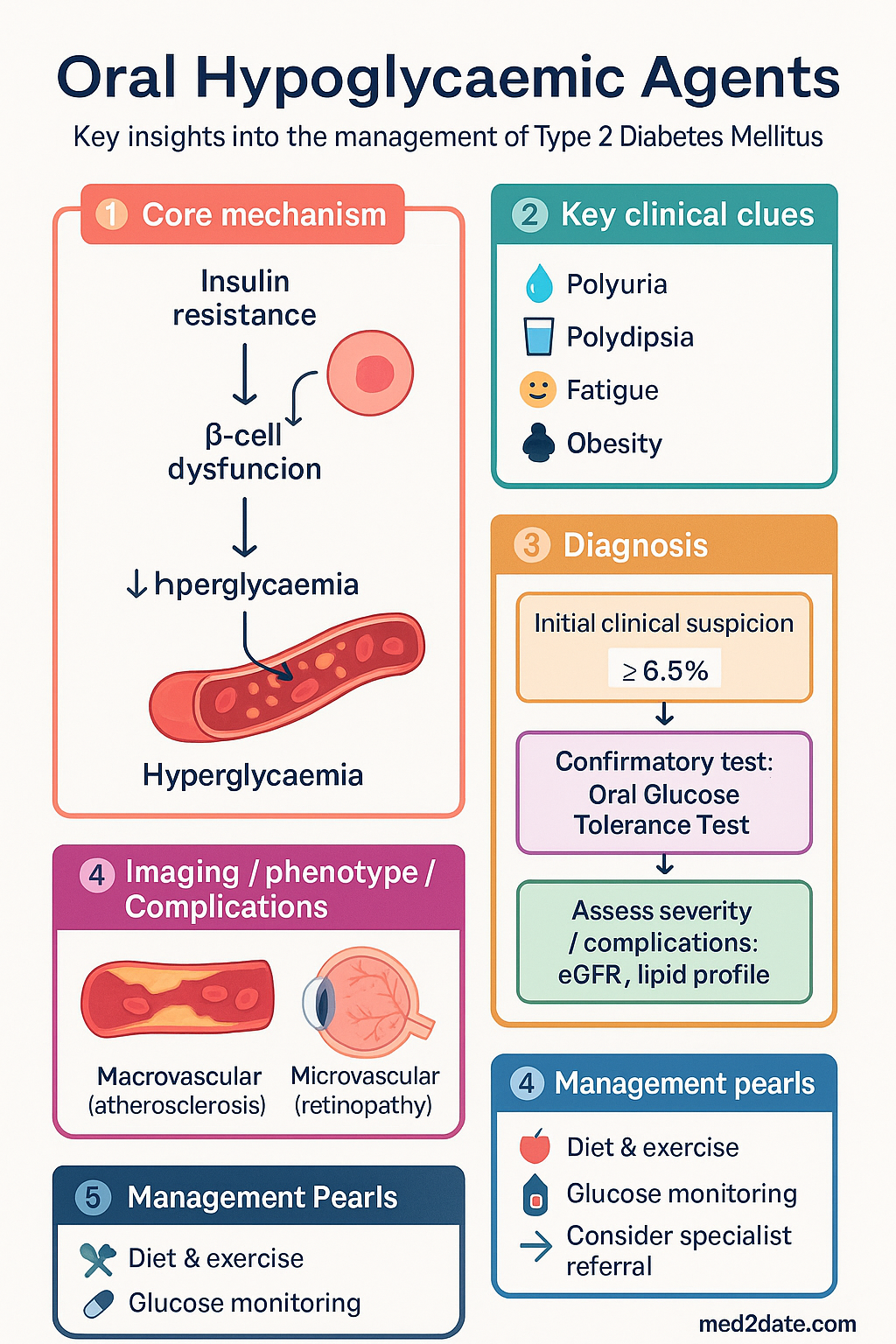
Type 2 diabetes mellitus (T2DM) affects approximately 1.3 million Australians, with prevalence continuing to rise driven by obesity, sedentary lifestyles, and ageing demographics. An estimated 280 Australians develop diabetes every day, and it remains the seventh leading cause of death nationally [1,2].
Pharmacological management of T2DM has expanded considerably beyond metformin and sulphonylureas. Contemporary oral hypoglycaemic agents and injectable therapies include dipeptidyl peptidase-4 (DPP4) inhibitors, sodium–glucose cotransporter-2 (SGLT2) inhibitors, and glucagon-like peptide-1 receptor agonists (GLP-1 RAs), each with distinct mechanisms of action, glycaemic efficacy, and non-glycaemic benefits.
Selection of therapy must be individualised. Australian guidelines — informed by the Royal Australian College of General Practitioners (RACGP) Standards for General Practice, the Australian Diabetes Society (ADS), and the Pharmaceutical Benefits Scheme (PBS) — recommend a patient-centred approach incorporating cardiovascular risk, presence of heart failure or chronic kidney disease, body weight, hypoglycaemia risk, cost, and patient preference.
The therapeutic landscape has shifted decisively towards agents with proven cardiovascular and renal outcomes. Following landmark trials (EMPA-REG OUTCOME, LEADER, SUSTAIN-6, DAPA-HF, CREDENCE), SGLT2 inhibitors and GLP-1 RAs now occupy prominent roles not only in glycaemic management but also in cardiorenal protection — often irrespective of baseline HbA1c.
Australian Epidemiology
| Metric | Data |
|---|---|
| Total diabetes prevalence (all types) | ~1.3 million diagnosed; ~500,000 undiagnosed |
| T2DM proportion | ~85–90% of all diabetes |
| ATSI prevalence | ~3× higher than non-Indigenous Australians |
| Diabetes-related hospitalisations | ~240,000 per year |
| Diabetes as underlying cause of death | ~17,000 per year (7th leading cause) |
| Annual health system cost | ~$3.4 billion direct costs |
Metformin & Sulphonylureas
Metformin
Metformin is the cornerstone first-line therapy for T2DM. It reduces hepatic glucose output, improves peripheral insulin sensitivity, and is associated with modest weight reduction or weight neutrality. The United Kingdom Prospective Diabetes Study (UKPDS) demonstrated reduced cardiovascular events in overweight patients treated with metformin [3].
Sulphonylureas
Sulphonylureas stimulate pancreatic beta-cell insulin secretion by closing ATP-sensitive potassium channels. They are effective second-line agents with reliable HbA1c reduction (~1.0%) but carry risks of hypoglycaemia and weight gain (2–4 kg). Gliclazide is the preferred sulphonylurea in Australia due to lower hypoglycaemia risk compared with glibenclamide (glyburide) [4].
DPP4 Inhibitors & GLP-1 Receptor Agonists
DPP4 Inhibitors (Gliptins)
DPP4 inhibitors block degradation of incretin hormones (GLP-1 and GIP), enhancing glucose-dependent insulin secretion and suppressing glucagon. They are weight-neutral with a low risk of hypoglycaemia and provide modest HbA1c reduction (~0.5–0.8%). They are well tolerated with a generally favourable safety profile [5].
GLP-1 Receptor Agonists
GLP-1 RAs mimic the incretin GLP-1, enhancing glucose-dependent insulin secretion, suppressing glucagon, slowing gastric emptying, and promoting satiety. They offer superior HbA1c reduction (~1.0–1.8%), significant weight loss (2–6 kg), and proven cardiovascular outcomes benefit. Semaglutide (oral and subcutaneous) and dulaglutide are PBS-listed and widely used in Australian practice [6,7].
SGLT2 Inhibitors
SGLT2 inhibitors block glucose reabsorption in the proximal renal tubule, promoting glycosuria and lowering blood glucose in an insulin-independent manner. Beyond glycaemic control, they offer significant cardiovascular, heart failure, and renal protective benefits demonstrated in landmark outcome trials [8,9,10].
Cardiorenal Benefits
| Agent | Landmark Trial | Key Outcome |
|---|---|---|
| Empagliflozin | EMPA-REG OUTCOME | 14% reduction in 3-point MACE; 35% reduction in HF hospitalisation |
| Dapagliflozin | DECLARE-TIMI 58 | 17% reduction in HF hospitalisation; 47% reduction in renal composite (DAPA-CKD) |
| Empagliflozin | EMPEROR-Reduced/Preserved | HF benefit across EF spectrum, including HFpEF |
Choosing Agents & Combination Therapy
Agent selection in T2DM is guided by patient-specific factors rather than a universal step-wise algorithm. The Australian Diabetes Society and RACGP recommend considering the following decision axes when choosing and combining agents.
Decision Framework
Agent Selection by Comorbidity
Combination Therapy — Practical Guidance
- Metformin + SGLT2i: Preferred combination for patients with ASCVD, HF, CKD, or obesity. Monitor for genital infections and volume depletion.
- Metformin + DPP4i: Well tolerated, weight-neutral, low hypoglycaemia risk. Suitable for elderly or those intolerant of GLP-1 RA GI effects.
- Metformin + GLP-1 RA: Superior HbA1c and weight outcomes. GI side effects may limit tolerance. Reduce sulphonylurea dose if adding to existing SU therapy.
- Metformin + sulphonylurea: Effective and inexpensive. Higher hypoglycaemia and weight gain risk. Consider stepping up to newer agents.
- Triple therapy: Metformin + SGLT2i + GLP-1 RA is an evidence-based triple oral/injectable combination for patients with multiple comorbidities.
- Fixed-dose combinations (FDC): Metformin + empagliflozin (Jardiamet®), metformin + sitagliptin (Janumet®) — improve adherence. Available on PBS.
- Avoid: DPP4i + GLP-1 RA (duplicative incretin mechanism); sulphonylurea + insulin without specialist input.
Monitoring
Ongoing monitoring ensures efficacy, safety, and early detection of complications. The following schedule is recommended for patients on oral hypoglycaemic agents.
Special Populations
ATSI Health Considerations
📚 References
- 1. Australian Institute of Health and Welfare (AIHW). Diabetes: Australian facts. Canberra: AIHW; 2023. Cat. no. CVD 88.
- 2. Australian Bureau of Statistics. National Health Survey: First results. Canberra: ABS; 2022.
- 3. UK Prospective Diabetes Study (UKPDS) Group. Effect of intensive blood-glucose control with metformin on complications in overweight patients with type 2 diabetes (UKPDS 34). Lancet. 1998;352(9131):854–865.
- 4. Schopman JE, Simon AC, Hoefnagel SJ, Hoekstra JB, Holleman F, Devries JH. The incidence of mild and severe hypoglycaemia in patients with type 2 diabetes mellitus treated with sulfonylureas: a systematic review and meta-analysis. Diabetes Metab Res Rev. 2014;30(1):11–22.
- 5. Nauck MA, Meininger G, Sheng D, Terranella L, Stein PP. Efficacy and safety of the dipeptidyl peptidase-4 inhibitor, sitagliptin, compared with the sulfonylurea, glipizide, in patients with type 2 diabetes inadequately controlled on metformin alone. Diabetes Care. 2007;30(2):263–269.
- 6. Marso SP, Bain SC, Consoli A, et al. Semaglutide and cardiovascular outcomes in patients with type 2 diabetes (SUSTAIN-6). N Engl J Med. 2016;375(19):1834–1844.
- 7. Gerstein HC, Colhoun HM, Dagenais GR, et al. Dulaglutide and cardiovascular outcomes in type 2 diabetes (REWIND). N Engl J Med. 2019;381(4):317–328.
- 8. Zinman B, Wanner C, Lachin JM, et al. Empagliflozin, cardiovascular outcomes, and mortality in type 2 diabetes (EMPA-REG OUTCOME). N Engl J Med. 2015;373(22):2117–2128.
- 9. Wiviott SD, Raz I, Bonaca MP, et al. Dapagliflozin and cardiovascular outcomes in type 2 diabetes (DECLARE-TIMI 58). N Engl J Med. 2019;380(4):347–357.
- 10. Heerspink HJL, Stefánsson BV, Correa-Rotter R, et al. Dapagliflozin in patients with chronic kidney disease (DAPA-CKD). N Engl J Med. 2020;383(15):1436–1446.
- 11. Australian Institute of Health and Welfare (AIHW). Diabetes in Indigenous Australians. Canberra: AIHW; 2023.
- 12. Royal Australian College of General Practitioners (RACGP). General practice management of type 2 diabetes: 2020–2023. East Melbourne: RACGP; 2020.
- 13. American Diabetes Association Professional Practice Committee. Standards of Medical Care in Diabetes—2024. Diabetes Care. 2024;47(Suppl 1):S1–S321.
- 14. Davies MJ, Aroda VR, Collins BS, et al. Management of hyperglycaemia in type 2 diabetes, 2022: a consensus report by the ADA and EASD. Diabetologia. 2022;65(12):1925–1966.