📋 Key Information Summary
- Dyslipidaemia — abnormal LDL-cholesterol, HDL-cholesterol, or triglycerides — is a leading modifiable risk factor for atherosclerotic cardiovascular disease (ASCVD) in Australia.
- Classification includes primary (genetic, e.g. familial hypercholesterolaemia) and secondary (dietary, metabolic, drug-induced) causes.
- Absolute cardiovascular risk assessment using the Australian Absolute CVD Risk Calculator (derived from the Framingham Risk Equation) should guide treatment thresholds, not LDL-C alone.
- All adults aged ≥45 years (≥30 years for Aboriginal and Torres Strait Islander peoples) should have a baseline lipid panel and CVD risk assessment.
- Lifestyle modification — Mediterranean-style diet, ≥150 min/week moderate-intensity exercise, smoking cessation, and weight management — is first-line for all patients.
- High-intensity statins (atorvastatin 40–80 mg or rosuvastatin 20–40 mg) are first-line pharmacotherapy for elevated absolute CVD risk or established ASCVD.
- Ezetimibe is the preferred second-line agent when LDL-C target is not achieved on maximum tolerated statin; PBS Authority Required.
- PCSK9 inhibitors (evolocumab, alirocumab) are PBS-listed for very high-risk patients with inadequate response to maximised oral therapy.
- Familial hypercholesterolaemia (FH) affects ~1 in 250 Australians and mandates early, aggressive LDL-C lowering; cascade screening of first-degree relatives is essential.
- LDL-C targets: <1.8 mmol/L (high risk), <1.4 mmol/L (very high risk with ASCVD), ≥50% reduction from baseline when absolute targets are not feasible.
- Statins are generally safe; baseline LFTs and CK are not routinely required but should be checked if symptoms arise (myalgia, unexplained fatigue).
- Aboriginal and Torres Strait Islander peoples experience higher rates of premature CVD and should be screened from age 30 with lower treatment thresholds.
- Pregnancy and breastfeeding are contraindications for statins and ezetimibe; bile-acid sequestrants are the only lipid-lowering agents considered safe in pregnancy.
- Combination lipid-lowering therapy (statin + ezetimibe ± PCSK9 inhibitor) is recommended in stepwise fashion when LDL-C targets are not met.
🎧 Audio Brief
Introduction & Australian Epidemiology
Dyslipidaemia is a disorder characterised by abnormal concentrations of lipoproteins in the blood, including elevated low-density lipoprotein cholesterol (LDL-C), low high-density lipoprotein cholesterol (HDL-C), elevated triglycerides (TG), or a combination of these abnormalities. It is one of the most important modifiable risk factors for atherosclerotic cardiovascular disease (ASCVD), which remains the leading cause of death in Australia, accounting for approximately 27% of all deaths annually.
According to the Australian Bureau of Statistics (ABS) National Health Survey, approximately 6.0 million Australian adults (34%) have total cholesterol levels ≥5.5 mmol/L, and an estimated 4.4 million have abnormal lipid profiles warranting clinical attention. Despite the widespread availability of effective lipid-lowering therapies, a significant treatment gap persists, with only 40–50% of high-risk Australians achieving guideline-recommended LDL-C targets.
The burden of dyslipidaemia is disproportionately borne by Aboriginal and Torres Strait Islander peoples, who experience cardiovascular mortality rates 1.5–2 times higher than non-Indigenous Australians, driven by earlier onset, higher prevalence of risk factors, and barriers to healthcare access.
Management of dyslipidaemia requires an integrated approach combining lifestyle interventions, cardiovascular risk stratification, and pharmacotherapy tailored to individual risk profiles. This guideline provides evidence-based recommendations for Australian primary care and specialist practitioners.
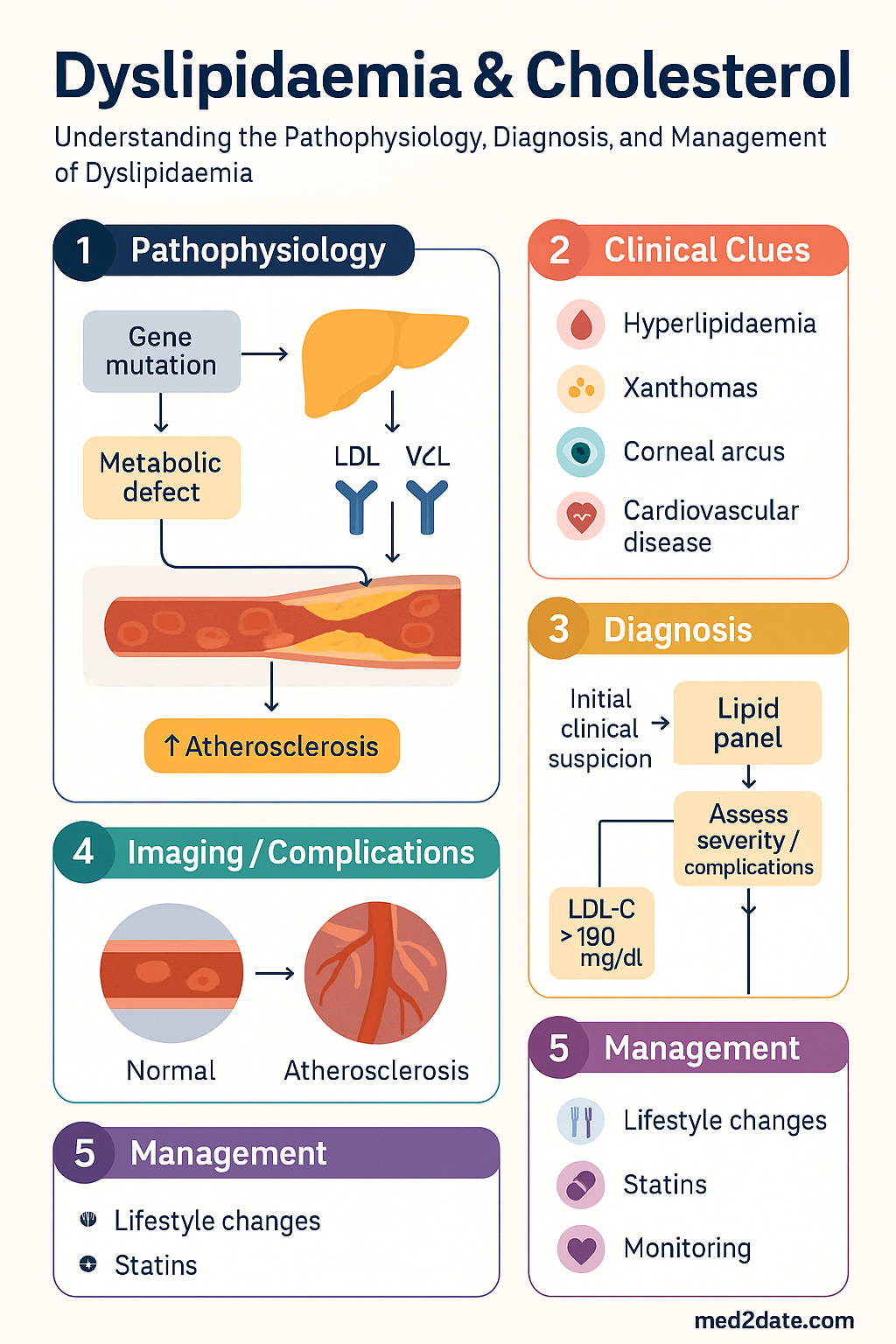
Lipid Physiology & Classification
Lipoprotein Metabolism
Lipids are transported in the bloodstream as components of lipoproteins — spherical particles comprising a hydrophobic core of cholesterol esters and triglycerides surrounded by a hydrophilic shell of phospholipids, free cholesterol, and apolipoproteins. Understanding lipoprotein metabolism is essential for rational classification and treatment of dyslipidaemia.
The two principal metabolic pathways are:
- Exogenous pathway: Dietary cholesterol and triglycerides are absorbed from the gut and incorporated into chylomicrons. Lipoprotein lipase (LPL) on capillary endothelium hydrolyses triglycerides, generating chylomicron remnants that are cleared by hepatic LDL-receptor-related protein (LRP).
- Endogenous pathway: The liver synthesises very-low-density lipoproteins (VLDL), which are progressively converted by LPL and hepatic lipase to intermediate-density lipoproteins (IDL) and then LDL. LDL delivers cholesterol to peripheral tissues and is ultimately cleared via hepatic LDL receptors. PCSK9 promotes degradation of LDL receptors, reducing LDL clearance.
Lipoprotein Classification
| Lipoprotein | Primary Lipid | Key Apolipoprotein | Role | Clinical Significance |
|---|---|---|---|---|
| Chylomicrons | Triglycerides (85%) | ApoB-48 | Transport dietary fat | Elevated in familial chylomicronaemia syndrome |
| VLDL | Triglycerides (55%) | ApoB-100 | Transport hepatic TG | Elevated in metabolic syndrome, diabetes |
| IDL | Cholesterol/TG | ApoB-100 | Intermediate particle | Elevated in familial dysbetalipoproteinaemia |
| LDL | Cholesterol (50%) | ApoB-100 | Deliver cholesterol to tissues | Primary atherogenic particle; target of therapy |
| HDL | Cholesterol (20%) | ApoA-I | Reverse cholesterol transport | Low HDL-C is an independent CVD risk factor |
| Lp(a) | Cholesterol | ApoB-100 + Apo(a) | Prothrombotic, proatherogenic | Genetically determined; emerging therapy target |
Classification of Dyslipidaemia
Dyslipidaemia may be classified by aetiology or by Fredrickson (WHO) phenotype:
| Category | Examples |
|---|---|
| Primary (genetic) | Familial hypercholesterolaemia (FH), familial combined hyperlipidaemia, familial dysbetalipoproteinaemia (Type III), familial chylomicronaemia syndrome, polygenic hypercholesterolaemia |
| Secondary (acquired) | Diabetes mellitus, hypothyroidism, nephrotic syndrome, chronic kidney disease, cholestatic liver disease, obesity, excess alcohol, drugs (corticosteroids, isotretinoin, antiretrovirals, cyclosporin) |
Cardiovascular Risk Assessment
Absolute CVD Risk Assessment
The cornerstone of dyslipidaemia management in Australia is absolute cardiovascular risk assessment rather than treatment based on isolated lipid values. The National Vascular Disease Prevention Alliance (NVDPA) recommends using the Australian Absolute CVD Risk Calculator, derived from the Framingham Risk Equation and calibrated to the Australian population.
Risk assessment should be performed for:
- All adults aged 45–79 years without known CVD
- Aboriginal and Torres Strait Islander adults aged 30–79 years
- Adults with diabetes aged ≥60 years (or ≥50 years if ATSI)
- Adults with eGFR <60 mL/min/1.73 m² or albuminuria
Risk Categories & LDL-C Targets
Risk Enhancers
- Family history of premature CVD (first-degree male <55 years, female <65 years)
- LDL-C ≥4.9 mmol/L (suggestive of familial hypercholesterolaemia)
- Triglycerides ≥2.3 mmol/L despite lifestyle measures
- Lipoprotein(a) ≥50 mg/dL (consider measurement in intermediate-risk patients)
- Coronary artery calcium (CAC) score ≥100 Agatston units (MBS item 57360 — specialist only)
- High-sensitivity CRP ≥2.0 mg/L
- Ankle-brachial index <0.9
- South Asian, Pacific Islander, or Aboriginal and Torres Strait Islander ethnicity
Pharmacological Treatment
Lifestyle Modification (All Patients)
Lifestyle intervention is the foundation of dyslipidaemia management and should be continued alongside all pharmacotherapy:
- Diet: Mediterranean-style diet rich in vegetables, fruits, legumes, whole grains, nuts, olive oil, and fish; reduce saturated fat to <7% of total energy intake; increase soluble fibre (≥10 g/day); limit alcohol to ≤2 standard drinks/day
- Exercise: ≥150 minutes/week moderate-intensity or ≥75 minutes/week vigorous-intensity aerobic activity
- Weight: Target BMI 18.5–24.9 kg/m²; waist circumference <94 cm (men), <80 cm (women)
- Smoking: Complete cessation — reduces ASCVD risk by 25–50% within 1–5 years
Statins (HMG-CoA Reductase Inhibitors)
Statins remain the first-line pharmacotherapy for elevated LDL-C. They reduce LDL-C by inhibiting hepatic cholesterol synthesis, upregulating LDL receptor expression, and increasing LDL clearance. Meta-analyses demonstrate a 22% reduction in major vascular events per 1.0 mmol/L LDL-C reduction.
Ezetimibe
PBS Authority criteria for ezetimibe: patient must be on maximum tolerated statin dose with documented intolerance or inadequate LDL-C response, OR statin-intolerant with documented trial of at least two statins. The combination tablet rosuvastatin/ezetimibe (Rosuzet®) is also PBS-listed under restricted conditions.
PCSK9 Inhibitors
PCSK9 inhibitors are monoclonal antibodies that bind and inhibit PCSK9, preventing degradation of hepatic LDL receptors and dramatically increasing LDL clearance. They are reserved for very high-risk patients with inadequate LDL-C reduction on maximised oral therapy.
PBS Authority criteria for PCSK9 inhibitors: patient must have ASCVD or FH; be on maximum tolerated statin + ezetimibe for ≥3 months; and have LDL-C persistently above target. Prescribing is restricted to cardiologists, endocrinologists, or lipid specialists.
Other Lipid-Lowering Agents
| Agent | Mechanism | Primary Effect | Dose | PBS Status |
|---|---|---|---|---|
| Fenofibrate | PPARα agonist | ↓ TG 30–50%, ↑ HDL-C 10–20% | 145 mg PO daily | ✔ PBS General Benefit |
| Bempedoic acid | ACL inhibitor (upstream of HMG-CoA) | ↓ LDL-C 15–25% | 180 mg PO daily | ⛔ Not PBS listed |
| Icosapent ethyl | Purified EPA (omega-3) | ↓ TG 20–30%, anti-inflammatory | 2 g PO BD (with food) | ⛔ Not PBS listed |
| Inclisiran | siRNA targeting PCSK9 mRNA | ↓ LDL-C 50% | 284 mg SC at 0, 3 months, then 6-monthly | ⛔ Not PBS listed (TGA approved) |
| Cholestyramine | Bile acid sequestrant | ↓ LDL-C 15–25% | 4 g PO BD–QDS | ✔ PBS General Benefit |
Stepwise Approach to LDL-C Lowering
Management of Hypertriglyceridaemia
Elevated triglycerides are independently associated with residual cardiovascular risk. Management is stratified by severity:
- Mild (1.7–2.3 mmol/L): Lifestyle modification; address metabolic syndrome, alcohol, diabetes
- Moderate (2.3–5.6 mmol/L): Lifestyle + statin first; consider fenofibrate addition if TG remains ≥2.3 mmol/L on statin (ACCORD Lipid, FIELD subanalyses)
- Severe (≥5.6 mmol/L): Priority is prevention of pancreatitis — fibrate first-line; strict dietary fat restriction (<20 g/day); consider icosapent ethyl if available; urgent investigation for familial chylomicronaemia if TG >11.3 mmol/L
Familial Hypercholesterolaemia
Overview
Familial hypercholesterolaemia (FH) is an autosomal dominant genetic disorder affecting approximately 1 in 250 Australians (heterozygous FH, HeFH) and 1 in 300,000 (homozygous FH, HoFH). It is caused by loss-of-function mutations in the LDLR (≥90%), APOB (~5–10%), or PCSK9 (<5%) genes, resulting in markedly elevated lifelong LDL-C levels and accelerated atherosclerosis.
Without treatment, men with HeFH have a 50% risk of a coronary event by age 50, and women a 30% risk by age 60. Early diagnosis and treatment can normalise life expectancy.
Diagnostic Criteria
The Dutch Lipid Clinic Network (DLCN) criteria or Simon Broome criteria are used. In Australia, DLCN score ≥6 (probable/definite FH) triggers referral and cascade screening:
| Criterion | Points |
|---|---|
| First-degree relative with premature CAD (<55 M, <65 F) | +1 |
| First-degree relative with LDL-C >95th percentile | +1 |
| Personal history of premature CAD | +2 |
| Tendon xanthoma or arcus cornealis <45 years | +6 |
| LDL-C >8.5 mmol/L | +8 |
| LDL-C 6.5–8.4 mmol/L | +5 |
| LDL-C 5.0–6.4 mmol/L | +3 |
| DNA mutation in LDLR, APOB, or PCSK9 | +8 |
Interpretation: 0–2 = unlikely; 3–5 = possible; 6–8 = probable; >8 = definite FH.
Cascade Screening
Treatment of Heterozygous FH
- LDL-C target: <2.5 mmol/L (no ASCVD) or <1.8 mmol/L (with ASCVD) or <1.4 mmol/L (very high risk); ≥50% reduction from baseline
- First-line: High-intensity statin (atorvastatin 80 mg or rosuvastatin 40 mg daily)
- Second-line: Add ezetimibe 10 mg daily
- Third-line: Add PCSK9 inhibitor (evolocumab or alirocumab) — specialist-initiated, PBS Authority
- Referral: All patients with probable/definite FH should be referred to a lipid specialist or cardiologist
- Paediatric FH: Lifestyle from age 2; statin therapy from age 8–10 years (atorvastatin 10 mg) with paediatric endocrinologist/cardiologist guidance
Treatment of Homozygous FH
Homozygous FH (HoFH) is a medical emergency in paediatrics. LDL-C is typically >13 mmol/L without treatment. Management requires:
- Maximised oral therapy (statin + ezetimibe)
- PCSK9 inhibitor (limited efficacy due to absent LDL receptors — only ~20% LDL-C reduction in HoFH)
- Lipoprotein apheresis — available at major tertiary centres (MBS item 13700); typically weekly or fortnightly
- Lomitapide (Juxtapid®) — microsomal triglyceride transfer protein inhibitor; TGA approved but not PBS listed; available via Special Access Scheme
- Evkeeza® (evinacumab) — anti-ANGPTL3 antibody; TGA registered; not yet PBS listed; ~50% LDL-C reduction in HoFH
Investigations
Baseline Lipid Profile
A fasting lipid panel (12-hour fast) is preferred but non-fasting samples are acceptable for initial screening. LDL-C may be calculated (Friedewald equation) or directly measured if triglycerides >4.5 mmol/L.
Monitoring
Post-Initiation Monitoring
Monitoring Parameters
| Parameter | When to Check | Action Threshold |
|---|---|---|
| LDL-C | 6–8 wk post-initiation; then annually | Not at target → escalate therapy |
| CK | Only if symptomatic (myalgia, weakness) | ≥5× ULN → stop statin; investigate |
| ALT/AST | Only if symptoms or pre-existing liver disease | ≥3× ULN → withhold statin; assess |
| HbA1c | Annually (statins may mildly ↑ HbA1c) | Monitor glucose if new-onset DM on statin |
| eGFR | Annually | Dose adjust rosuvastatin if eGFR <30 |
Special Populations
Aboriginal and Torres Strait Islander Health
📚 References
- 1. National Vascular Disease Prevention Alliance. Absolute cardiovascular disease risk management — quick reference guide for health professionals. 2012 (endorsed by RACGP). Available at: cvdcheck.org.au
- 2. Heart Foundation of Australia. Position statement: Lipid management — summary of evidence. Heart Foundation; 2020.
- 3. Cholesterol Treatment Trialists' (CTT) Collaboration. Efficacy and safety of more intensive lowering of LDL cholesterol: a meta-analysis of data from 170,000 participants in 26 randomised trials. Lancet. 2010;376(9753):1670–1681.
- 4. Sabatine MS, Giugliano RP, Keech AC, et al. Evolocumab and clinical outcomes in patients with cardiovascular disease (FOURIER). N Engl J Med. 2017;376(18):1713–1722.
- 5. Schwartz GG, Steg PG, Szarek M, et al. Alirocumab and cardiovascular outcomes after acute coronary syndrome (ODYSSEY OUTCOMES). N Engl J Med. 2018;379(22):2097–2107.
- 6. Baigent C, Landray MJ, Reith C, et al. The effects of lowering LDL cholesterol with simvastatin plus ezetimibe in patients with chronic kidney disease (Study of Heart and Renal Protection — SHARP). Lancet. 2011;377(9784):2181–2192.
- 7. Watts GF, Sullivan DR, Poplawski N, et al. Familial hypercholesterolaemia in Australasia: model of care, position statement and recommendations. Heart Lung Circ. 2011;20:S22.
- 8. Familial Hypercholesterolaemia Australasia Network (FHAN). Australian FH model of care. Available at: fhan.org.au
- 9. Australian Institute of Health and Welfare (AIHW). Cardiovascular disease in Aboriginal and Torres Strait Islander people. AIHW; 2023. Cat. no. CVD 87.
- 10. Royal Australian College of General Practitioners (RACGP). Guidelines for preventive activities in general practice (Red Book). 10th ed. RACGP; 2024.
- 11. Grundy SM, Stone NJ, Bailey AL, et al. 2018 AHA/ACC/AACVPR guideline on the management of blood cholesterol. J Am Coll Cardiol. 2019;73(24):e285–e350.
- 12. Mach F, Baigent C, Catapano AL, et al. 2019 ESC/EAS guidelines for the management of dyslipidaemias. Eur Heart J. 2020;41(1):111–188.
- 13. Australian Commission on Safety and Quality in Health Care (ACSQHC). Australian Atlas of Healthcare Variation Series. ACSQHC; 2023.
- 14. Pharmaceutical Benefits Scheme (PBS). Schedule of Pharmaceutical Benefits. Australian Government Department of Health. Available