Home Endocrinology Obesity

Obesity

📋 Key Information Summary

📋
  • Obesity (BMI ≥30 kg/m²) is a chronic, relapsing disease affecting 31% of Australian adults; it is driven by a neurohormonal energy-balance disorder, not simply lifestyle choice.
  • Assessment requires BMI, waist circumference (men ≥94 cm, women ≥80 cm = increased cardiometabolic risk), and systematic screening for comorbidities: type 2 diabetes, OSA, NAFLD, osteoarthritis, depression, and CVD.
  • Class I: BMI 30–34.9; Class II: 35–39.9; Class III (severe/morbid): BMI ≥40 or BMI ≥35 with significant comorbidity.
  • First-line management is a structured, multidisciplinary lifestyle programme: dietary modification (evidence supports Mediterranean, low-glycaemic-index, and high-protein diets), ≥150 min/week moderate-intensity activity, and behavioural therapy — target ≥5–10% total body weight loss.
  • Pharmacotherapy is indicated when BMI ≥30, or BMI ≥27 with ≥1 weight-related comorbidity, after lifestyle intervention alone has been insufficient (≥3 months).
  • Liraglutide 3 mg daily (Saxenda®, PBS Authority Required) and semaglutide 2.4 mg weekly (Wegovy®, PBS listing under review — currently private script) are the most effective available anti-obesity medications, achieving 8–17% weight loss in trials.
  • Phentermine (Duromine®) is PBS-listed for short-term use (≤3 months) and achieves ~5% weight loss; it is contraindicated in uncontrolled hypertension, CVD, and hyperthyroidism.
  • Orlistat (Xenical®, PBS General Benefit) is a lower-efficacy option (~3–5% weight loss) that reduces dietary fat absorption; GI side-effects limit tolerability.
  • Bariatric surgery (sleeve gastrectomy, Roux-en-Y gastric bypass) should be considered for BMI ≥40, or BMI ≥35 with comorbidities, refractory to ≥6 months of supervised medical therapy; it achieves 20–35% sustained weight loss and diabetes remission rates of 40–60%.
  • Screen all patients with BMI ≥30 for depression, binge-eating disorder, and disordered eating before initiating pharmacotherapy or surgery; psychological comorbidity requires concurrent treatment.
  • Weight regain is common after cessation of anti-obesity medications; GLP-1 receptor agonists generally require indefinite continuation to maintain benefit.
  • Aboriginal and Torres Strait Islander peoples have a higher prevalence of obesity at lower BMI thresholds; waist circumference and cardiometabolic risk should be prioritised, with culturally safe, community-led health programmes.
  • Pregnancy: discontinue liraglutide/semaglutide at least 2 months before conception; pre-conception weight loss of ≥5% improves fertility and reduces gestational complications.
  • Multidisciplinary team: GP, endocrinologist, dietitian, exercise physiologist, psychologist, bariatric surgeon as indicated — long-term follow-up is essential.

🎧 Audio Brief

Obesity is a biological disease not willpower

A short clinical audio briefing generated from this article — perfect for the commute or ward round.

Introduction & Australian Epidemiology

Obesity is a chronic, relapsing, and progressive disease characterised by abnormal or excessive adiposity that impairs health. It is now recognised as a disease entity by the World Health Organization, the Australian Medical Association, and the National Health and Medical Research Council. Obesity is not simply a consequence of poor lifestyle choices but reflects complex interactions between genetic predisposition, neurohormonal energy-balance dysregulation, environmental factors, and socioeconomic determinants of health.

In Australia, the prevalence of obesity (BMI ≥30 kg/m²) has more than doubled over the past three decades. The Australian Bureau of Statistics 2022 National Health Survey reported that 31.3% of adults aged 18 years and over were obese, and a further 35.6% were overweight. Combined, two in three Australian adults (65.6%) carry excess weight. Severe obesity (BMI ≥40) affects approximately 3.9% of adults and is increasing at the fastest rate of any BMI category.

The economic burden is substantial: obesity-related healthcare costs in Australia are estimated at AUD $11.8 billion annually, including direct medical costs and lost productivity. Obesity is the second leading modifiable risk factor for cardiovascular disease (after tobacco smoking) and is the primary driver of the type 2 diabetes epidemic, accounting for an estimated 58% of type 2 diabetes in men and 48% in women.

Obesity disproportionately affects Aboriginal and Torres Strait Islander peoples, people in regional and remote areas, those of lower socioeconomic status, and certain culturally and linguistically diverse communities. Effective management requires a chronic disease framework, multidisciplinary engagement, and long-term follow-up.

Indicator Value Source
Adult obesity prevalence (BMI ≥30) 31.3% ABS National Health Survey 2022
Overweight + obese combined 65.6% ABS National Health Survey 2022
Severe obesity (BMI ≥40) 3.9% AIHW 2023
Indigenous Australian obesity prevalence ~43% AIHW Aboriginal and Torres Strait Islander Health Performance Framework 2023
Childhood obesity (5–17 years) 8.2% ABS National Health Survey 2022
Annual healthcare cost ~AUD $11.8 billion Obesity Collective Australia 2023
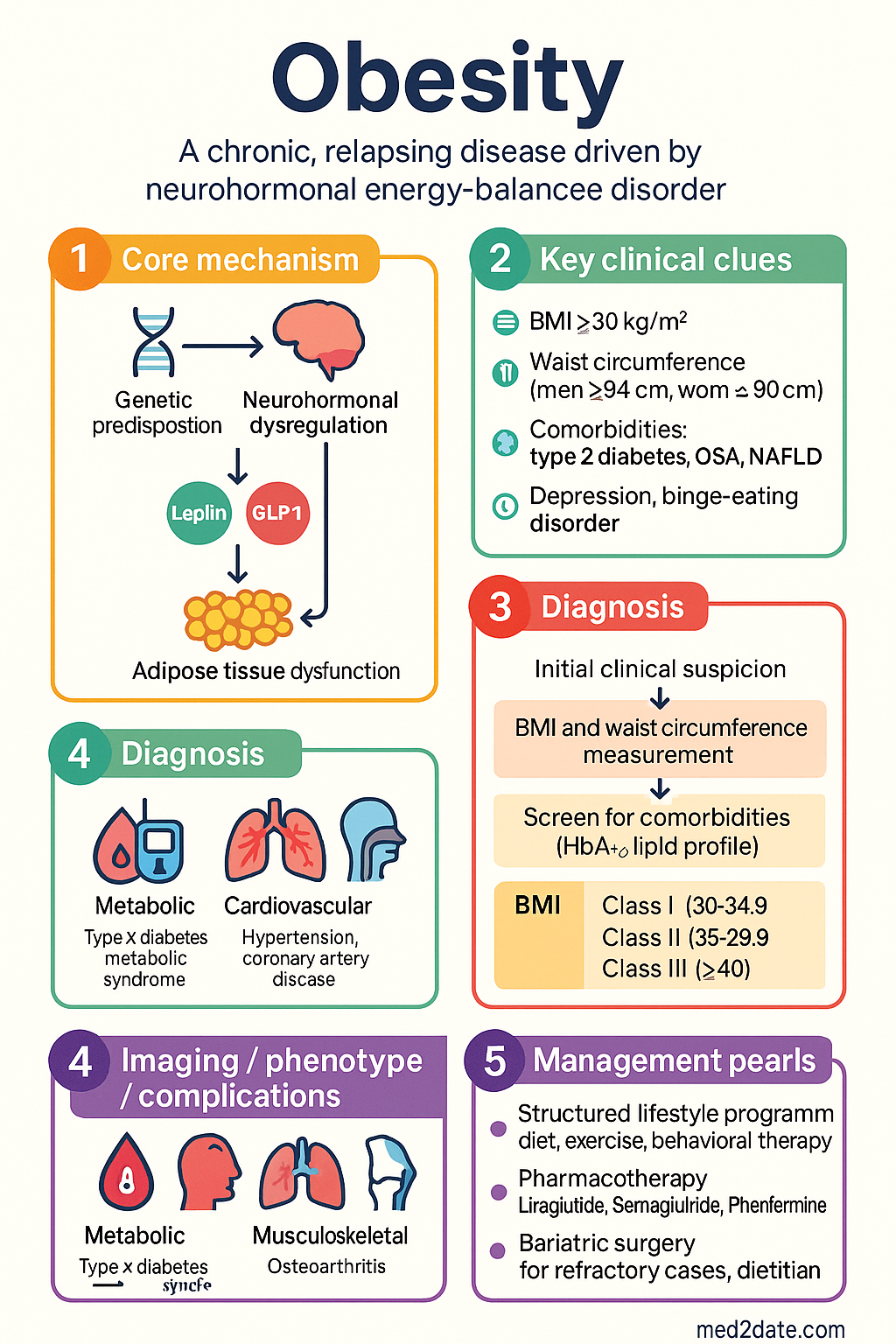
Obesity clinical infographic — pathophysiology, clinical clues, diagnosis, imaging, and management
Tap or click image to enlarge — Obesity: pathophysiology, clinical clues, diagnosis, imaging, and management.
Obesity infographic, full size

Epidemiology & Pathophysiology

Pathophysiology of Obesity

Obesity arises from sustained positive energy balance, but the regulatory mechanisms are far more complex than simple caloric arithmetic. Key pathophysiological pathways include:

  • Central appetite regulation: Hypothalamic circuits integrating signals from ghrelin (hunger-promoting), leptin (satiety), GLP-1, PYY, and cholecystokinin (postprandial satiety). In obesity, leptin resistance develops, blunting the anorexigenic signal despite hyperleptinaemia.
  • Gut–brain axis: Post-prandial incretin hormones (GLP-1, GIP, PYY) are attenuated in obesity, reducing satiety signalling and impairing glucose homeostasis.
  • Reward and hedonic pathways: Dopaminergic mesolimbic circuits drive food-seeking behaviour, particularly for calorie-dense, hyperpalatable foods. This mechanism overlaps with addiction neuroscience.
  • Adipose tissue dysfunction: Hypertrophied adipocytes produce pro-inflammatory cytokines (TNF-α, IL-6) and reduced adiponectin, promoting chronic low-grade systemic inflammation, insulin resistance, and atherogenesis.
  • Genetic susceptibility: Twin studies suggest 40–70% heritability of BMI. Monogenic obesity (e.g., MC4R deficiency, leptin gene mutations) accounts for ~5% of severe early-onset obesity; polygenic risk scores increasingly explain population-level variation.
  • Epigenetics and developmental programming: Maternal obesity, gestational diabetes, and intrauterine growth restriction alter fetal metabolic programming, increasing offspring obesity risk.
  • Microbiome: Obesity is associated with reduced gut microbial diversity and altered Firmicutes-to-Bacteroidetes ratio, influencing energy harvest and systemic inflammation.
  • Neuroendocrine drivers: Cushing syndrome, hypothyroidism, growth hormone deficiency, and hypothalamic lesions may cause or exacerbate obesity — screen when clinically indicated.
  • Medication-induced weight gain: Second-generation antipsychotics (olanzapine, clozapine), insulin, sulfonylureas, thiazolidinediones, some antidepressants (mirtazapine, TCAs), and corticosteroids are common iatrogenic contributors.

Complications of Obesity

Obesity is a major risk factor for multiple organ systems. The relative risk increases progressively with BMI class:

System Complications
Metabolic Type 2 diabetes (RR 7× at BMI 35–40), metabolic syndrome, dyslipidaemia, NAFLD/NASH
Cardiovascular Hypertension, coronary artery disease, heart failure (HFpEF), atrial fibrillation, venous thromboembolism
Respiratory Obstructive sleep apnoea, obesity hypoventilation syndrome, asthma exacerbation
Musculoskeletal Osteoarthritis (knee, hip), chronic low back pain, gout
Gastrointestinal GORD, gallstone disease, Barrett oesophagus, colorectal cancer (↑ risk)
Reproductive PCOS, infertility, erectile dysfunction, gestational diabetes, pre-eclampsia
Psychological Depression (RR 1.5–2×), binge-eating disorder, reduced quality of life, weight stigma
Cancer Endometrial, post-menopausal breast, oesophageal adenocarcinoma, renal, colorectal, pancreatic
Renal Chronic kidney disease, glomerulonephritis (obesity-related glomerulopathy), nephrolithiasis
⚠️
Weight regain is the norm, not the exception: After lifestyle intervention alone, 80% of patients regain weight within 5 years. After pharmacotherapy cessation, regain is nearly universal. Obesity should be managed as a chronic disease with indefinite treatment, analogous to hypertension or diabetes.

Assessment (BMI, Waist Circumference, Comorbidities)

Anthropometric Assessment

Every consultation with a patient who may have excess weight should include accurate anthropometric measurements using calibrated equipment.

Body Mass Index (BMI)

BMI = weight (kg) ÷ height (m²). While BMI does not distinguish between fat mass and lean mass, it remains the standard classification tool endorsed by the WHO and NHMRC.

Category BMI (kg/m²) Health Risk
Underweight <18.5 Increased
Normal weight 18.5–24.9 Low (baseline)
Overweight 25.0–29.9 Increased
Obesity Class I 30.0–34.9 High
Obesity Class II 35.0–39.9 Very high
Obesity Class III (severe) ≥40.0 Extremely high
ℹ️
BMI limitations: BMI may underestimate adiposity in older adults (sarcopenic obesity), people of Asian descent (risk begins at BMI ≥23), and athletes with high lean mass. In these populations, waist circumference and body composition assessment should supplement BMI.

Waist Circumference

Waist circumference is an independent predictor of cardiovascular risk, even in individuals with normal BMI. Measure at the midpoint between the lowest rib margin and the iliac crest, at the end of normal expiration.

Risk Category Men Women
Increased risk ≥94 cm ≥80 cm
Substantially increased risk ≥102 cm ≥88 cm

Comorbidity Screening

All patients with BMI ≥30 (or BMI ≥27 with central adiposity) should undergo systematic screening for obesity-related comorbidities:

Essential
HbA1c or fasting glucose
Screen for type 2 diabetes or pre-diabetes. Repeat annually if normal, more frequently if impaired fasting glucose detected. MBS item 66551 (HbA1c) available for patients with known diabetes; for screening, fasting glucose (MBS item 66500) is typically used.
Essential
Fasting lipid profile
Total cholesterol, LDL-C, HDL-C, triglycerides (MBS item 66509). Cardiovascular risk assessment using the Australian absolute CVD risk calculator (Framingham-based).
Essential
Liver function tests
ALT, AST, GGT, ALP (MBS item 66515). NAFLD affects ~60% of people with obesity; ALT >2× ULN warrants hepatic ultrasound and fibrosis assessment (FIB-4 index).
Available
Thyroid function (TSH)
Rule out hypothyroidism (MBS item 66722). Overt hypothyroidism causes weight gain but is rarely the sole cause of obesity; screen when clinical suspicion exists. Do not routinely treat subclinical hypothyroidism for weight loss.
Available
Uric acid
Hyperuricaemia and gout are common comorbidities of obesity (MBS item 66520).
Available
Polysomnography
Refer for sleep study if BMI ≥35 with symptoms of OSA (snoring, witnessed apnoeas, daytime somnolence, Epworth Sleepiness Scale ≥11). Bulk-billed in most public sleep units; Medicare item 12250.
Referral
Psychological assessment
Screen for depression (PHQ-9), binge-eating disorder (Binge Eating Scale), and disordered eating. Essential before bariatric surgery; recommended before pharmacotherapy.
Available
Urinary albumin-to-creatinine ratio
Screen for obesity-related glomerulopathy and diabetic nephropathy (MBS item 66922).

Secondary Causes to Exclude

Consider investigation for secondary causes when obesity is severe, early-onset, rapidly progressive, or associated with clinical features suggesting an underlying endocrinopathy:

  • Cushing syndrome: Central obesity, moon facies, proximal myopathy, striae, easy bruising — screen with 24-hour urinary free cortisol or late-night salivary cortisol, then low-dose dexamethasone suppression test.
  • Hypothyroidism: Fatigue, constipation, cold intolerance — TSH and free T4.
  • Hypothalamic obesity: History of craniopharyngioma, cranial irradiation, traumatic brain injury.
  • Monogenic obesity: Consider genetic testing in severe early-onset obesity (childhood onset, BMI >40 by age 18), hyperphagia, and family history — refer to clinical genetics.
  • Medication review: Document all medications with weight-gain potential and discuss alternatives with prescribing specialists.

Lifestyle & Pharmacological Management

Lifestyle Intervention — The Foundation of All Obesity Treatment

Lifestyle intervention should be offered to every patient with overweight or obesity. It is the mandatory first step before pharmacotherapy and remains essential before and after bariatric surgery. A clinically meaningful target is ≥5% total body weight loss over 6 months, which significantly improves glycaemic control, blood pressure, lipid profile, and liver steatosis.

Dietary Modification

  • Energy deficit: Aim for a deficit of 2,090–4,180 kJ/day (500–1,000 kcal/day) to achieve ~0.5–1 kg weight loss per week. Severe restriction (<5,000 kJ/day) is not recommended outside supervised programmes.
  • Dietary patterns with evidence: Mediterranean diet, low-glycaemic-index diet, high-protein (25–30% energy from protein), and DASH-style approaches all demonstrate efficacy. Very-low-calorie diets (VLCDs, <3,350 kJ/day) can achieve rapid loss but require medical supervision and are associated with high regain rates.
  • Australian Dietary Guidelines (NHMRC 2013): Emphasise vegetables, fruit, wholegrains, lean protein, reduced saturated fat and added sugar.
  • Referral to Accredited Practising Dietitian (APD): Strongly recommended. Medicare Chronic Disease Management (CDM) plan (MBS items 10950–10970) provides up to 5 allied health visits per year.

Physical Activity

  • Target: ≥150 minutes/week of moderate-intensity aerobic activity (brisk walking, cycling, swimming) or ≥75 minutes/week of vigorous activity, plus resistance training ≥2 sessions/week (Australian Physical Activity Guidelines, Department of Health 2021).
  • Start low, progress slowly: For sedentary patients, begin with 10–15 minutes of walking daily and increase by 10% per week.
  • Exercise physiology referral: Accredited Exercise Physiologists (AEPs) can deliver individualised programmes under Medicare CDM plans (MBS items 10953).
  • Sedentary behaviour: Reduce prolonged sitting — break up bouts >30 minutes with standing or light activity.

Behavioural Therapy

  • Cognitive behavioural therapy (CBT) addressing eating behaviours, self-monitoring (food diaries, pedometers), goal-setting, and relapse prevention is integral to sustained weight management.
  • Psychologist referral under Medicare CDM (MBS item 10968, up to 10 individual sessions per year under Better Access) for comorbid depression, binge-eating disorder, or significant psychological barriers.
  • Motivational interviewing should be the primary communication style used by all health professionals managing obesity.
Aim for ≥5% body weight loss: A 5–10% reduction in body weight produces clinically significant improvements: HbA1c ↓ 0.5–1%, systolic BP ↓ 5 mmHg, triglycerides ↓ 20%, risk of developing type 2 diabetes ↓ 58%. Greater weight loss (≥15%) is associated with diabetes remission and NASH resolution.

Pharmacological Management

Anti-obesity medications (AOMs) are indicated when BMI ≥30 kg/m², or BMI ≥27 kg/m² with at least one weight-related comorbidity (type 2 diabetes, hypertension, dyslipidaemia, OSA), AND lifestyle intervention alone has been insufficient after ≥3 months of structured engagement. Pharmacotherapy should be continued long-term; cessation almost universally leads to weight regain.

💊
Semaglutide
Wegovy® · GLP-1 receptor agonist
Mechanism GLP-1 receptor agonist — enhances satiety, delays gastric emptying, reduces appetite via hypothalamic signalling
Adult dose Weekly subcutaneous injection: start 0.25 mg × 4 weeks → 0.5 mg × 4 weeks → 1.0 mg × 4 weeks → 1.7 mg × 4 weeks → maintenance 2.4 mg/week
Efficacy STEP trials: mean weight loss 14.9–17.4% at 68 weeks vs 2.4% placebo
Key adverse effects Nausea (44%), vomiting, diarrhoea, constipation (usually transient during dose escalation); contraindicated in personal/family history of medullary thyroid carcinoma or MEN2
Renal adjustment No dose adjustment; caution in severe CKD (eGFR <30) due to GI side effects and dehydration risk
PBS status ✘ Not PBS listed for obesity — private script approximately AUD $250–$360/month. Ozempic® (semaglutide 0.5/1.0 mg) is PBS-listed for type 2 diabetes only, not approved for obesity.
💊
Liraglutide
Saxenda® · GLP-1 receptor agonist
Mechanism GLP-1 receptor agonist — daily injection, similar mechanism to semaglutide but shorter half-life
Adult dose Daily subcutaneous injection: start 0.6 mg/day, increase by 0.6 mg weekly → maintenance 3.0 mg/day
Efficacy SCALE trial: mean weight loss 8.0% at 56 weeks vs 2.6% placebo
Key adverse effects Nausea (39%), vomiting, diarrhoea, constipation, injection-site reactions; same thyroid C-cell contraindication as semaglutide
Renal adjustment No dose adjustment; caution in severe CKD
PBS status ✔ PBS Authority Required — for BMI ≥30 or BMI ≥27 with comorbidity, after failure of lifestyle measures. Requires authority approval from Services Australia.
💊
Phentermine
Duromine® · Sympathomimetic amine (Schedule 4)
Mechanism Sympathomimetic — releases noradrenaline and dopamine in the hypothalamus, suppressing appetite
Adult dose 15–30 mg oral once daily in the morning (capsule); maximum 40 mg/day. Use for ≤3 months continuous.
Efficacy Mean weight loss ~5% at 12 weeks; limited long-term safety data
Key adverse effects Tachycardia, palpitations, insomnia, dry mouth, anxiety, constipation; contraindicated in uncontrolled hypertension, CVD, hyperthyroidism, MAO inhibitor use, glaucoma
Duration Short-term use only (≤3 months); TGA-approved for this duration
PBS status ✔ PBS General Benefit — 15 mg and 30 mg capsules; low patient co-payment.
💊
Orlistat
Xenical® · Lipase inhibitor
Mechanism Inhibits gastric and pancreatic lipases, reducing dietary fat absorption by ~30%
Adult dose 120 mg oral TDS with each main meal containing fat (or within 1 hour of meal)
Efficacy Mean weight loss ~3–5% at 12 months; sustained while on treatment
Key adverse effects Steatorrhoea, flatus with oily discharge, faecal urgency, oily spotting — dose-related and related to dietary fat intake; fat-soluble vitamin malabsorption (supplement ADEK at least 2 hours apart)
Renal adjustment No adjustment; monitor in CKD for oxalate nephropathy risk
PBS status ✔ PBS General Benefit
💊
Naltrexone/bupropion
Contrave® · Opioid antagonist / noradrenaline-dopamine reuptake inhibitor
Mechanism Combination acts on hypothalamic POMC neurons — naltrexone blocks opioid-mediated auto-inhibition, bupropion stimulates POMC activity
Adult dose 1 tablet (8 mg/90 mg) daily × 1 week → BD × 1 week → 2 tablets BD (maintenance). Take with food (reduces nausea). Max 4 tablets/day (32 mg/360 mg).
Efficacy COR trials: mean weight loss 5.0–6.1% at 56 weeks
Key adverse effects Nausea (33%), constipation, headache, dizziness, insomnia, dry mouth; contraindicated with uncontrolled hypertension, seizure disorders, anorexia nervosa, bulimia, opioid use
PBS status ✘ Not PBS listed — private script approximately AUD $170–$200/month.
⚠️
GLP-1 RA supply shortage: Ozempic® (semaglutide 0.5 mg/1.0 mg) and Saxenda® have experienced intermittent supply disruptions in Australia since 2022. The TGA recommends prioritising PBS-registered patients with type 2 diabetes for Ozempic® and reserving Saxenda® for PBS-authorised obesity patients. Do not prescribe Ozempic® off-label for obesity during shortage periods. Check the TGA Medicine Shortage Database for current status.

Treatment Algorithm

1
Lifestyle Intervention
All patients: dietary modification, physical activity programme, behavioural therapy. Set ≥5% weight loss target. Reassess at 3 months. Refer to multidisciplinary team (dietitian, exercise physiologist, psychologist) via Medicare CDM.
2
Add Pharmacotherapy
If BMI ≥30 (or ≥27 + comorbidity) and <5% weight loss after ≥3 months of structured lifestyle intervention. First-line: liraglutide 3 mg daily (PBS Authority) or semaglutide 2.4 mg weekly (private). Second-line: phentermine (short-term), orlistat, or naltrexone/bupropion. Continue lifestyle measures.
3
Optimise & Escalate
At 12–16 weeks on AOM: if ≥5% weight loss achieved, continue therapy indefinitely. If inadequate response (<5% at 16 weeks), review adherence, re-evaluate dietary pattern, consider switching agent or combining with orlistat. Refer to endocrinologist or weight-management physician.
4
Consider Bariatric Surgery
If BMI ≥40 (or ≥35 + comorbidity) and inadequate response to ≥6 months supervised medical therapy (lifestyle + pharmacotherapy). Refer to bariatric surgeon for assessment. (See Bariatric Surgery section.)

Bariatric Surgery

Bariatric (metabolic) surgery is the most effective treatment for sustained, substantial weight loss and is indicated for patients with severe obesity not responding to medical therapy. In Australia, approximately 18,000–22,000 bariatric procedures are performed annually, the majority in the private sector.

Indications (NHMRC/IEF/ASMBS Criteria)

  • BMI ≥40 kg/m² (Class III obesity), OR
  • BMI ≥35 kg/m² with at least one obesity-related comorbidity (type 2 diabetes, hypertension, OSA, NAFLD/NASH, severe joint disease), OR
  • BMI ≥30 kg/m² with poorly controlled type 2 diabetes (increasingly supported by evidence — metabolic surgery criteria)
  • Failure to achieve adequate weight loss with ≥6 months of supervised medical management (lifestyle + pharmacotherapy)
  • Patient is psychologically fit and understands risks, benefits, and lifelong follow-up requirements

Surgical Procedures

Procedure Mechanism Weight Loss (% EWL) Diabetes Remission Australian Share
Sleeve gastrectomy Restrictive — ~80% gastric resection; also reduces ghrelin 60–70% 50–60% ~75–80% of procedures
Roux-en-Y gastric bypass Restrictive + malabsorptive; gastric pouch + jejunal bypass 65–75% 60–80% ~15–20% of procedures
One-anastomosis (mini) gastric bypass Restrictive + malabsorptive; long gastric tube + loop anastomosis 65–80% 60–75% Increasing; ~5% of procedures
Adjustable gastric banding Restrictive — silicone band around proximal stomach 40–50% 40–45% Declining (<3%); high reoperation/removal rate

Pre-Operative Assessment

  • Comprehensive medical assessment by bariatric physician or endocrinologist
  • Psychological evaluation — screen for depression, binge-eating disorder, substance use, unrealistic expectations; clearance required
  • Dietitian assessment and pre-operative dietary education (pre-operative liver-shrinking diet for 2–4 weeks before surgery is common)
  • Upper GI endoscopy (OGD) — screen for Barrett oesophagus, H. pylori (eradicate pre-operatively), hiatus hernia
  • Investigations: FBC, LFTs, renal function, HbA1c, lipids, iron studies, B12, folate, vitamin D, calcium, PTH, fasting insulin
  • Anaesthetic assessment — OSA management (CPAP optimisation), cardiac risk if indicated

Post-Operative Complications & Monitoring

⚠️
Lifelong micronutrient supplementation is mandatory after malabsorptive procedures (RYGB, OAGB): Daily multivitamin, iron, calcium + vitamin D, vitamin B12 (monthly IM or 1,000 µg oral daily), and thiamine (especially peri-operatively). Annual blood tests (iron studies, B12, folate, vitamin D, calcium, PTH, albumin, zinc, copper, ADEK) are essential. Deficiencies are common and can cause irreversible neurological damage (B12, thiamine).
Complication Timing Management
Staple-line leak Early (0–30 days) Emergency surgical/endoscopic intervention; CT with oral contrast
Venous thromboembolism Early; risk × 3–4 vs general surgery LMWH prophylaxis peri-operatively; extended prophylaxis for high-risk patients
Stricture (especially after RYGB) Weeks to months Endoscopic balloon dilatation
Marginal ulcer (RYGB) Months to years PPI therapy, H. pylori eradication, smoking cessation
Internal hernia (RYGB) Months to years Surgical repair; CT may be normal — high clinical suspicion needed
GORD (after sleeve gastrectomy) Ongoing PPI therapy; consider conversion to RYGB if refractory
Dumping syndrome (RYGB) After meals Dietary modification — small meals, low simple carbohydrates, separate solids/liquids
Weight regain 2–5+ years Re-engage lifestyle programme; consider adjunctive GLP-1 RA therapy; revisional surgery in select cases

Funding & Access in Australia

  • Private: Majority of procedures. Out-of-pocket costs AUD $3,000–$10,000+ after private health insurance rebate (depending on fund and level of cover).
  • Public: Limited availability; long wait lists (often >2–3 years). Available through select public bariatric centres (e.g., Austin Health, St Vincent's Melbourne, Westmead Hospital). Criteria are typically stricter (BMI ≥40 with major comorbidity, or BMI ≥50).
  • Medicare: MBS item numbers exist for bariatric surgery but do not cover the full procedural cost in the private setting. Gap payments are standard.

Special Populations

🤰 Pregnancy
GLP-1 RAs (liraglutide, semaglutide)
Contraindicated in pregnancy (Category D — animal teratogenicity data). Discontinue at least 2 months before planned conception (semaglutide has ~5-week washout; liraglutide ~3 days but longer to ensure clearance). Use reliable contraception during treatment.
Orlistat
Category B1 — not recommended in pregnancy due to theoretical fat-soluble vitamin malabsorption. Discontinue if pregnancy occurs.
Phentermine
Category B3 — not recommended. Discontinue before conception.
Bariatric surgery
Avoid pregnancy for 12–18 months post-surgery (rapid weight loss phase). Pregnancy after bariatric surgery is associated with improved maternal and fetal outcomes vs obesity without surgery.
General
Pre-conception weight loss of ≥5% improves fertility and reduces risk of gestational diabetes, pre-eclampsia, and macrosomia. Encourage weight optimisation before pregnancy. Multidisciplinary antenatal care with obstetrician, dietitian, and endocrinologist.
👶 Paediatrics
Definition
Overweight: BMI ≥85th percentile for age and sex; Obesity: BMI ≥95th percentile. Use WHO or CDC growth charts (Australian national reference data).
Prevalence
8.2% of Australian children aged 5–17 are obese (ABS 2022). Prevalence higher in boys, in lower socioeconomic areas, and among Aboriginal and Torres Strait Islander children.
Management
Family-based lifestyle intervention is first-line for all ages (dietary counselling, increased physical activity, reduced screen time <2 hours/day). Refer to paediatric dietitian and, where available, structured programmes (e.g., NSW Good for Kids, VIC Healthy Together).
Pharmacotherapy
Limited PBS options. Orlistat ≥12 years (TGA-approved). Liraglutide (Saxenda®) approved from age 12+ (≥60 kg) for adolescent obesity in some jurisdictions — check TGA/PBS status. Semaglutide adolescent trials (STEP TEENS) promising — approved in US from age 12+ but TGA approval pending. Phentermine is not recommended for children. Refer to paediatric endocrinologist.
Surgery
Bariatric surgery considered in adolescents ≥15 years, Tanner stage ≥IV, BMI ≥40 (or ≥35 with severe comorbidity), with failed medical management. Very limited access in Australia — tertiary paediatric centres only.
👴 Elderly (≥65 years)
BMI considerations
A slightly higher BMI (25–30) may be protective in the elderly (obesity paradox in heart failure and frailty). Focus on function, sarcopenia prevention, and quality of life rather than aggressive weight loss targets.
Weight loss approach
Moderate targets (3–5% weight loss) may be sufficient to improve comorbidities. Aggressive caloric restriction risks sarcopenia, falls, frailty, and micronutrient deficiency. Resistance training is essential.
Pharmacotherapy
GLP-1 RAs: use with caution (GI side effects, dehydration, renal impairment). Phentermine: generally avoided — cardiovascular risk, insomnia. Orlistat: may be used if dietary fat intake is moderate.
Surgery
Higher peri-operative risk. Individualised assessment by bariatric team. Age alone is not an absolute contraindication if functional status is good.
🫘 Renal Impairment
GLP-1 RAs
Liraglutide and semaglutide: no dose adjustment required, but use with caution in eGFR <30 — GI side effects may cause dehydration and acute kidney injury. Initiate at lower doses and monitor renal function.
Orlistat
Increased risk of oxalate nephropathy in CKD. Monitor urinary oxalate if used. Consider avoiding in eGFR <30.
Phentermine
No specific renal adjustment, but limited data in severe CKD. Use with caution.
Bariatric surgery
Can improve diabetic nephropathy and obesity-related glomerulopathy. Higher peri-operative risk in advanced CKD. Multidisciplinary planning required.
🫁 Hepatic Impairment / NAFLD
NAFLD/NASH
Obesity is the strongest risk factor for NAFLD (prevalence ~60% in obesity). Weight loss of ≥7–10% improves steatosis; ≥10% can resolve NASH and improve fibrosis. GLP-1 RAs have demonstrated histological improvement in NASH (semaglutide — phase 2 trial).
GLP-1 RAs in liver disease
Generally safe in mild-to-moderate hepatic impairment. Avoid in severe hepatic impairment (Child-Pugh C) — limited data. Semaglutide does not require hepatic dose adjustment.
Bariatric surgery
Most effective treatment for NASH resolution (80–90% steatosis resolution, 50–70% NASH resolution at 5 years). Sleeve gastrectomy preferred in cirrhosis (avoid if portal hypertension — risk of variceal bleeding).
🛡️ Immunocompromised
General principles
Obesity increases infection risk and impairs vaccine responses (e.g., influenza, COVID-19). Weight loss improves immune function. GLP-1 RAs and orlistat can generally be used. Phentermine: caution if on immunosuppressants with cardiovascular effects.
Transplant candidates
Many transplant programmes require BMI <35 (or <40) for listing. Pre-transplant weight loss is essential — intensive lifestyle programme ± GLP-1 RA ± bariatric surgery. Sleeve gastrectomy is increasingly performed as a bridge to transplant.

Aboriginal and Torres Strait Islander Health

Aboriginal and Torres Strait Islander Health Considerations
Epidemiology
Aboriginal and Torres Strait Islander adults have a significantly higher prevalence of obesity (~43% vs 31% non-Indigenous). Obesity-related chronic diseases (type 2 diabetes, CVD, CKD) are the leading contributors to the life expectancy gap. The prevalence is higher in remote communities and among women. Childhood obesity rates are approximately double those of non-Indigenous children.
BMI limitations
Standard BMI thresholds may not fully capture cardiometabolic risk. Waist circumference is a more reliable predictor of cardiovascular risk in Indigenous Australian populations. Consider risk stratification at lower BMI thresholds when central adiposity is present. The Australian Indigenous HealthInfoNet and NACCHO recommend prioritising WC and clinical assessment over BMI alone.
Access barriers
Geographic remoteness limits access to bariatric surgery, endocrinologists, dietitians, and exercise physiologists. Many remote communities have limited access to fresh healthy food (high cost, poor availability). Transport to specialist services may require RFDS retrieval, adding significant cost and logistical complexity.
Cultural safety
Weight-related conversations require cultural sensitivity — shame and stigma around body size can be significant barriers to engagement. Use strengths-based, trauma-informed approaches. Aboriginal Health Workers and Practitioners (AHW/Ps) are critical for culturally safe care delivery. Acknowledge the impact of intergenerational trauma, colonisation, and food insecurity on obesity risk.
Community-led programmes
Evidence-based community programmes such as Deadly Choices, Aboriginal Community Controlled Health Organisation (ACCHO) chronic disease management, and culturally adapted lifestyle programmes show improved engagement and outcomes. Community-controlled health services should be the preferred model of care. Engagement with local Elders and community leaders in programme design is essential.
Food security
Remote community stores are the primary food source for many Aboriginal and Torres Strait Islander peoples. Store licensing (Healthy Stores 2020 initiative), subsidised freight for fresh produce, and nutrition education delivered by AHW/Ps are essential interventions. Address social determinants: overcrowded housing limits cooking capacity; income support cycles affect food purchasing patterns.
Pharmacotherapy considerations
PBS access for liraglutide (Saxenda®) is available via Authority Required prescription. Remote area prescribing must consider cold-chain requirements for GLP-1 RA injections — verify pharmacy capacity for refrigerated storage. Oral agents (orlistat, phentermine) may be more practical in remote settings with limited cold-chain infrastructure.
Integrated care models
ACCHOs provide holistic, integrated chronic disease management. Telehealth endocrinology and dietetics consultations (MBS telehealth items) extend specialist access to remote communities. MBS Indigenous health assessments (item 715) provide a framework for comprehensive obesity screening and care planning.

📚 References

  1. 1. Australian Bureau of Statistics. National Health Survey 2022: Overweight and Obesity. Canberra: ABS; 2023.
  2. 2. Australian Institute of Health and Welfare. Overweight and Obesity: An Interactive Report.
co-pay for eligible patients).
Pregnancy & maternal health
Antenatal screening for thyroid disease should be integrated into Aboriginal Community Controlled Health Organisation (ACCHO) maternal health programmes. Untreated hypothyroidism in pregnancy disproportionately impacts communities with limited access to early antenatal care.
Comorbidity burden
Higher rates of diabetes, cardiovascular disease, and chronic kidney disease in Aboriginal and Torres Strait Islander communities mean hypothyroid-related dyslipidaemia and cardiovascular risk require particularly active management. Integrating thyroid function testing into chronic disease management plans (MBS Item 721) is recommended.
Iodine status
Although Australia-wide mandatory iodisation has improved status, some Aboriginal and Torres Strait Islander communities — particularly in very remote areas — may have borderline iodine adequacy. Urinary iodine monitoring in these communities should be maintained.

📚 References

  1. 1. Chaker L, Bianco AC, Jonklaas J, Peeters RP. Hypothyroidism. Lancet. 2017;390(10101):1550–1562.
  2. 2. Garber JR, Cobin RH, Gharib H, et al. Clinical practice guidelines for hypothyroidism in adults: cosponsored by the American Association of Clinical Endocrinologists and the American Thyroid Association. Endocr Pract. 2012;18(6):988–1028.
  3. 3. Pearce SH, Brabant G, Duntas LH, et al. 2013 ETA guideline: management of subclinical hypothyroidism. Eur Thyroid J. 2013;2(4):215–228.
  4. 4. Alexander EK, Pearce EN, Brent GA, et al. 2017 guidelines of the American Thyroid Association for the diagnosis and management of thyroid disease during pregnancy and the postpartum. Thyroid. 2017;27(3):315–389.
  5. 5. RACGP. Red Book: Guidelines for preventive activities in general practice. 9th ed. East Melbourne: RACGP; 2018.
  6. 6. Australian Institute of Health and Welfare (AIHW). Aboriginal and Torres Strait Islander health performance framework. Canberra: AIHW; 2023.
  7. 7. Li Y, Teng D, Shi X, et al. Prevalence of diabetes recorded in mainland China using 2018 diagnostic criteria from the American Diabetes Association: national cross sectional study. BMJ. 2020;369:m997. [TSH population reference data]
  8. 8. Ross DS. Diagnosis of and screening for hypothyroidism. In: UpToDate, Cooper DS (Ed). Wolters Kluwer; 2024. Accessed June 2024.
  9. 9. NHMRC. National evidence-based guideline: diagnosis, management and prevention of congenital hypothyroidism. Canberra: NHMRC; 2019.
  10. 10. Wiersinga WM, Duntas L, Fadeyev V, Nygaard B, Vanderpump MP. 2012 ETA guidelines: the use of L-T4 + L-T3 in the treatment of hypothyroidism. Eur Thyroid J. 2012;1(2):55–71.
  11. 11. Pharmaceuticals Benefits Scheme (PBS). Levothyroxine sodium. Australian Government Department of Health. Available at: pbs.gov.au. Accessed June 2024.
  12. 12. Australian Government Department of Health. National Newborn Bloodspot Screening — Congenital Hypothyroidism. Available at: www.newbornscreening.gov.au. Accessed June 2024.