📋 Key Information Summary
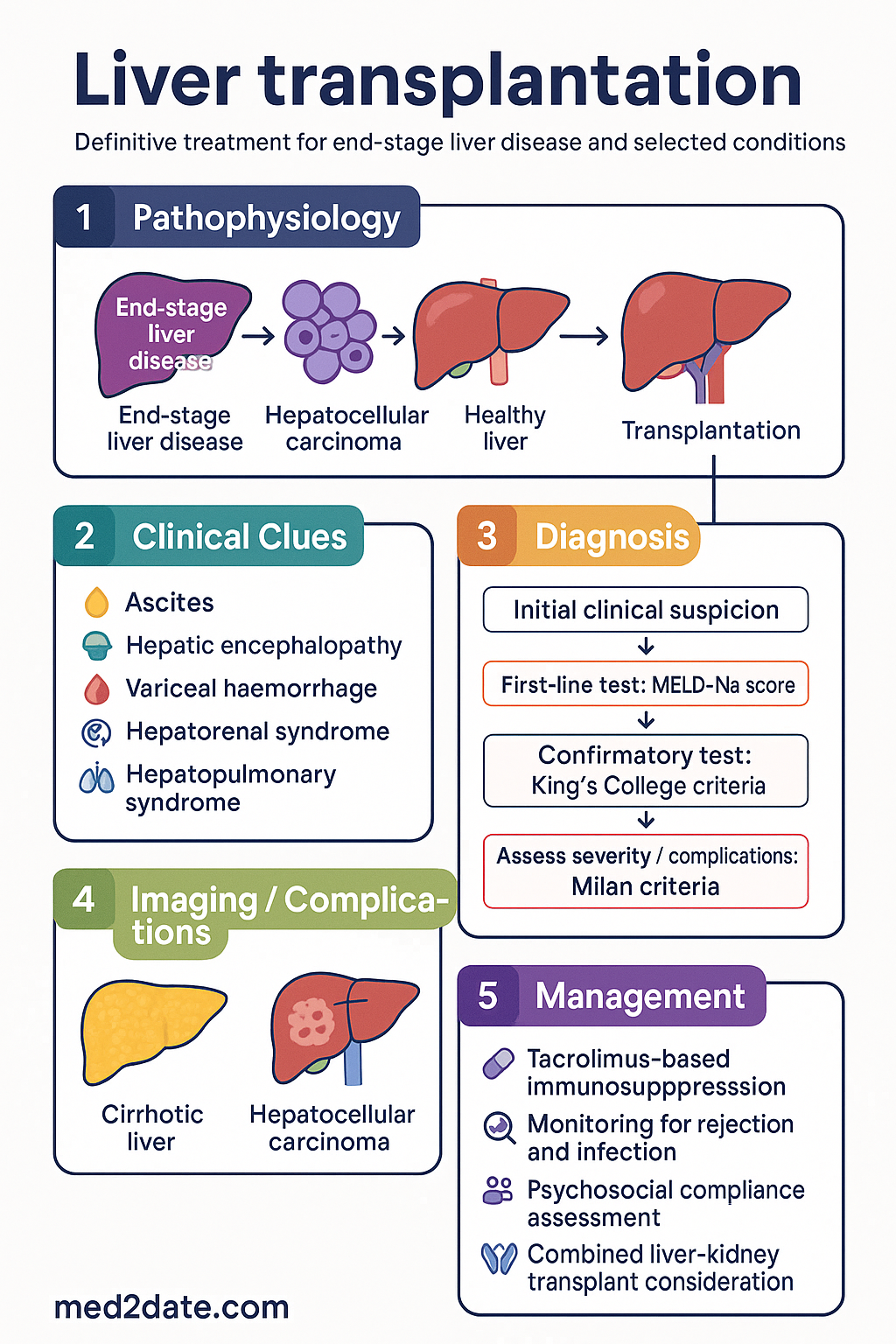
- Liver transplantation is the definitive treatment for end-stage liver disease (ESLD), acute liver failure (ALF), selected hepatocellular carcinoma (HCC), inherited metabolic disorders, and hepatopulmonary syndrome, with Australia performing approximately 550–650 liver transplants per year across six designated centres.
- MELD-Na score is the primary allocation tool in the US and has been adopted variably in Australia; wait-list priority is determined by disease severity using validated scoring systems, with national waiting times of 3–6 months.
- Acute liver failure indications follow King's College criteria — paracetamol (pH < 7.3, or all three of: INR > 6.5, creatinine > 300 µmol/L, grade III–IV encephalopathy) and non-paracetamol (INR > 6.5 regardless of encephalopathy grade, or five of six poor prognostic factors).
- HCC patients qualify for transplantation within Milan criteria (single tumour ≤ 5 cm, or up to 3 nodules each ≤ 3 cm, no macrovascular invasion, no extrahepatic spread), with MELD exception points increasing wait-list priority.
- Pre-transplant workup is multidisciplinary: cardiac (stress testing ± coronary angiography if risk factors), pulmonary (spirometry, arterial blood gas, hepatopulmonary screening with contrast echocardiography), renal (eGFR, consideration for combined liver–kidney if eGFR < 30), psychosocial assessment.
- Absolute contraindications include extrahepatic malignancy (unless disease-free ≥ 2 years), uncontrolled sepsis, severe irreversible cardiopulmonary disease, active harmful alcohol or substance use without adequate abstinence (typically ≥ 6 months), and inability to comply with lifelong immunosuppression.
- Living donor liver transplantation (LDLT) uses right or left lobe grafts; donor safety is paramount with extensive medical, anatomical (CT volumetry, MRCP), and psychosocial evaluation; small-for-size syndrome remains a key risk when graft-to-recipient body weight ratio < 0.8%.
- Recipient outcomes for LDLT are comparable to deceased donor transplantation, with one-year graft survival approximately 85–90% in Australian centres.
- Immunosuppression centres on tacrolimus-based regimens (calcineurin inhibitor + mycophenolate ± corticosteroids), with ongoing post-transplant monitoring for rejection, infection, malignancy, and metabolic complications.
- Aboriginal and Torres Strait Islander Australians face barriers to liver transplant referral, higher rates of chronic liver disease (including HBV, HCV, NAFLD), remoteness from transplant centres, and require culturally safe pathways throughout assessment and follow-up.
- Psychosocial compliance (alcohol abstinence, medication adherence, social support) is a critical determinant of post-transplant survival and is formally assessed by transplant psychiatrists/psychologists.
- Combined liver–kidney transplantation is considered when eGFR < 30 mL/min/1.73 m² or with hepatorenal syndrome type 2 unresponsive to medical therapy, with national allocation via Transplant Australia.
- Hepatopulmonary syndrome qualifies for MELD exception points when PaO₂ < 60 mmHg on room air, with intrapulmonary shunting confirmed by contrast-enhanced echocardiography.
- Post-transplant long-term survival in Australia reaches approximately 90% at one year, 80% at five years, and 65–70% at ten years for most indications, with quality-of-life improvements typically apparent within 6–12 months.
🎧 Audio Brief
Introduction & Australian Epidemiology
Liver transplantation is the definitive and potentially curative treatment for patients with end-stage liver disease (ESLD), acute liver failure (ALF), and selected hepatic malignancies. Since the first successful human liver transplant performed by Thomas Starzl in 1967, the procedure has evolved into a standardised, life-saving intervention with excellent long-term outcomes.
Australian context: Australia performs approximately 550–650 liver transplants annually across six designated transplant centres — Royal Prince Alfred Hospital (Sydney), Austin Health (Melbourne), Princess Alexandra Hospital (Brisbane), Sir Charles Gairdner Hospital (Perth), Flinders Medical Centre (Adelaide), and the Australian National Liver Transplant Unit (Sydney Children's Hospital Network for paediatric recipients). The Australian and New Zealand Liver Transplant Registry (ANZLTR) reports one-year patient survival rates of approximately 89–92%, five-year survival of 80–85%, and ten-year survival of 65–70%, reflecting outcomes comparable to leading international centres.
The national wait-list is managed by Transplant Australia, with donor organs allocated through DonateLife (organ procurement) and the Australian Organ Donor Allocation System (AODAS). Living donor liver transplantation (LDLT) has expanded the donor pool, now accounting for 15–20% of all liver transplants performed in Australia. The predominant indications in Australia are chronic liver disease (alcoholic liver disease, hepatitis C–related cirrhosis [declining with direct-acting antiviral availability], NAFLD/NASH [increasing]), HCC, ALF (paracetamol-induced and idiosyncratic drug reactions), and increasingly, inherited metabolic liver disease in the paediatric population.
Indications & Assessment
General Indications for Liver Transplantation
Liver transplantation is indicated when the predicted survival without transplant is lower than expected survival with transplant, or when the quality of life is unacceptable and transplantation offers a meaningful improvement. The following conditions represent established indications.
Decompensated Cirrhosis (Child-Turcotte-Pugh / MELD-Na / UKELD)
Decompensation events — ascites, hepatic encephalopathy, variceal haemorrhage, hepatorenal syndrome, or spontaneous bacterial peritonitis — mark the transition from compensated to decompensated cirrhosis, with one-year mortality rising from 1–5% to 20–50%. Referral for transplant assessment is recommended at the first decompensation event.
Scoring systems for prioritisation:
| Score | Components | Threshold for Listing | Notes |
|---|---|---|---|
| MELD-Na | Bilirubin, INR, creatinine, sodium (range 6–40) | ≥ 15 (3-month mortality ~ 10–20%) | Primary allocation metric in US; used in Australian triage; incorporated into AODAS |
| MELD 3.0 | Adds albumin and female sex modifier to MELD-Na | ≥ 15 | Implemented in US from 2023; reduces sex disparity; under evaluation in Australia |
| UKELD | Bilirubin, INR, creatinine, sodium | ≥ 49 (5-year mortality ≥ 50% without transplant) | UK-based; used historically in some Australian centres; regression model |
| Child-Turcotte-Pugh (CTP) | Encephalopathy grade, ascites, bilirubin, albumin, INR (Class A/B/C) | CTP Class C (score 10–15) | Older system; subjectivity in ascites/encephalopathy grading; still widely referenced |
Australian note: In Australia, MELD-Na is used alongside clinical assessment by multidisciplinary transplant teams. Patients with MELD-Na < 15 but recurrent decompensation, refractory ascites, or hepatopulmonary syndrome may still be considered for listing based on clinical judgement and MELD exception pathways.
Hepatocellular Carcinoma (HCC)
Liver transplantation remains the optimal treatment for HCC in the setting of cirrhosis, as it simultaneously removes the tumour and the underlying cirrhotic liver with its field effect for recurrence.
MELD exception for HCC: HCC patients within Milan criteria are eligible for MELD exception points (currently 28 points in the US system, with escalation to 29 at 3-month intervals if not transplanted). In Australia, allocation follows national guidelines through Transplant Australia with AODAS oversight. Expanded criteria (UCSF, Up-to-7) are used at some centres for selected patients with excellent response to locoregional therapy.
Acute Liver Failure (ALF)
ALF is defined as severe acute liver injury with encephalopathy and impaired synthetic function (INR ≥ 1.5) in the absence of pre-existing liver disease, occurring within 26 weeks of symptom onset. It carries high mortality without transplantation.
King's College Criteria for transplant listing:
| Aetiology | Criteria for "Poor Prognosis" (Transplant Listing) |
|---|---|
| Paracetamol-induced ALF |
Arterial pH < 7.3 (after fluid resuscitation, regardless of encephalopathy grade), OR all three of:
|
| Non-paracetamol ALF |
INR > 6.5 (regardless of encephalopathy grade), OR any three of the following five factors:
|
Inherited Metabolic Disease
Liver transplantation is curative for several inherited metabolic diseases where the primary enzymatic defect resides within hepatocytes. These include:
- Wilson's disease — Fulminant presentation or decompensated cirrhosis unresponsive to chelation therapy (penicillamine, trientine)
- Alpha-1 antitrypsin deficiency (PiZZ) — With decompensated cirrhosis; does not reverse pulmonary disease
- Urea cycle defects (OTC deficiency, CPS1 deficiency, citrullinaemia) — When dietary/medical management fails; restores hepatic urea cycle function
- Glycogen storage disease type I/IV — Progressive liver failure or refractory metabolic complications
- Crigler-Najjar syndrome type I — Unconjugated hyperbilirubinaemia unresponsive to phototherapy; risk of kernicterus
- Familial amyloid polyneuropathy (FAP) — Liver produces mutant transthyretin; transplantation halts systemic amyloid deposition (combined with cardiac transplant if cardiac involvement)
- Primary hyperoxaluria type 1 — Combined liver–kidney transplant corrects hepatic enzyme deficiency and replaces damaged kidneys
Hepatopulmonary Syndrome (HPS) — MELD Exception
HPS is characterised by the triad of liver disease, intrapulmonary vascular dilatation, and impaired oxygenation. Transplantation is the only effective treatment.
Diagnostic criteria:
- Intrapulmonary shunting confirmed by contrast-enhanced echocardiography (bubbles appearing in left atrium 3–6 cardiac cycles after injection) or Tc-99m macroaggregated albumin lung perfusion scan (brain uptake > 6%)
- Alveolar-arterial (A-a) gradient ≥ 15 mmHg (or ≥ 20 mmHg if age > 64 years)
- PaO₂ < 80 mmHg on arterial blood gas in room air (severe HPS: PaO₂ < 60 mmHg)
MELD exception: Patients with documented HPS and PaO₂ < 60 mmHg qualify for MELD exception points (22 points with automatic upgrade), providing priority access to transplantation given the progressive and fatal natural history of HPS.
Pre-Transplant Workup
Comprehensive multidisciplinary assessment is mandatory and typically requires 2–6 months. The evaluation is designed to confirm the indication, exclude contraindications, and optimise comorbidities before surgery.
- Transthoracic echocardiography (resting) — assess ventricular function, valvular disease, portopulmonary hypertension
- Stress testing — dobutamine stress echocardiography (preferred in cirrhosis, avoids exercise limitation) or myocardial perfusion scintigraphy
- Coronary angiography if stress test positive or significant cardiovascular risk factors (age > 50, diabetes, smoking, hypertension, family history)
- Portopulmonary hypertension screening: right heart catheteration if echo suggests pulmonary hypertension (mPAP > 25 mmHg at rest); severe PoPH (mPAP > 35 mmHg or PVR > 3 Wood units) is a relative contraindication without treatment response
- Cirrhotic cardiomyopathy screening (diastolic dysfunction, chronotropic incompetence, QTc prolongation)
- Pulmonary function tests (spirometry, DLCO)
- Arterial blood gas on room air — assess for HPS (A-a gradient, PaO₂)
- Contrast-enhanced agitated saline echocardiography — gold standard for intrapulmonary shunt detection (HPS)
- Chest CT if indicated (tobacco history, suspected interstitial lung disease)
- Exclusion of intrinsic pulmonary disease that would preclude safe surgery and mechanical ventilation
- Serum creatinine, eGFR (CKD-EPI formula), urine protein-to-creatinine ratio, urinalysis
- Hepatorenal syndrome (HRS) classification — type 1 (acute) vs type 2 (chronic); response to terlipressin/albumin or midodrine/octreotide
- Combined liver–kidney transplant considered if: eGFR < 30 mL/min/1.73 m² sustained ≥ 90 days, or HRS type 2 with eGFR < 20, or need for dialysis ≥ 6 weeks
- Renal biopsy if aetiology of kidney disease is unclear (e.g., IgA nephropathy, diabetic nephropathy vs hepatorenal)
- Formal evaluation by transplant psychiatrist or psychologist
- Substance use history — alcohol, tobacco, illicit drugs; urine drug screening
- Abstinence documentation — most Australian centres require ≥ 6 months demonstrated abstinence for alcohol-related liver disease (ALD) before listing, supported by counselling and/or Alcoholics Anonymous engagement
- Social support assessment — primary caregiver, accommodation, transportation to transplant centre
- Cognitive capacity assessment — ability to understand and comply with lifelong immunosuppression, clinic appointments, medication management
- Mental health screening (PHQ-9, GAD-7) — depression and anxiety must be optimised before listing
- Financial counselling — PBS medications, ongoing specialist costs, travel for regional/remote patients
- Viral hepatitis serology (HBV, HCV, HIV) — HCV treatment with direct-acting antivirals (DAAs) is PBS-listed and should be initiated pre-transplant if feasible
- CMV, EBV, VZV serology (IgG) — guides post-transplant prophylaxis
- Blood group and HLA typing, panel reactive antibody (PRA)
- Cross-sectional imaging (CT abdomen with contrast, MRI/MRCP if indicated) — vascular anatomy, portal vein patency, HCC staging
- Age-appropriate cancer screening — colonoscopy (age > 50 or symptomatic), mammography, cervical screening, PSA (individualised)
- Bone densitometry (DEXA) — hepatic osteodystrophy common, especially with cholestatic disease
- Dental assessment — optimise oral health to reduce post-transplant infection risk
- Nutritional assessment — sarcopenia is common and associated with worse post-transplant outcomes; dietitian involvement
Allocation & Contraindications
Liver Organ Allocation
Organ allocation aims to balance urgency (who will die soonest without a transplant) with utility (who will benefit most from the available organ). Allocation systems vary by jurisdiction.
MELD-Na — Primary Allocation Metric
MELD-Na has been the dominant allocation metric in the United States since 2016 and is used in modified form in Australia. It integrates objective laboratory values — bilirubin, INR, creatinine, and serum sodium — to predict 90-day mortality on the waiting list. The score ranges from 6 to 40.
- MELD-Na 6–14: Low wait-list mortality; transplantation may not provide survival benefit
- MELD-Na 15–20: Moderate urgency; transplantation generally provides survival benefit
- MELD-Na 21–29: High urgency; shorter expected wait time
- MELD-Na 30–40: Very high urgency; perioperative risk also increases; some centres may favour lower-MELD patients with living donor options
MELD 3.0
Introduced in the United States in January 2023, MELD 3.0 modifies MELD-Na by adding a serum albumin coefficient and applying a female sex adjustment (additional points for women, correcting for lower creatinine due to reduced muscle mass). It has reduced sex-based disparities in transplant access. MELD 3.0 is under evaluation for adoption in the Australian allocation framework through Transplant Australia.
MELD Exception Points
Not all patients with high mortality risk are captured by laboratory-based MELD scores. Exception points provide standardised priority for specific conditions:
| Condition | Exception Points | Criteria |
|---|---|---|
| HCC (within Milan) | 28 points (initial), +1 every 3 months to max 34 | Single ≤ 5 cm or up to 3 each ≤ 3 cm; AFP < 1,000 ng/mL; no vascular invasion |
| Hepatopulmonary syndrome | 22 points (automatic upgrade) | PaO₂ < 60 mmHg on ABG room air; confirmed shunt on contrast echo |
| Hilar cholangiocarcinoma | 28 points (after neoadjuvant protocol) | Selected centres only; neoadjuvant chemoRT + brachytherapy; tumour ≤ 3 cm; no intrahepatic/extrahepatic metastases |
| Cholestatic liver disease | May qualify for increased points | PBC/PSC with intractable pruritus, recurrent cholangitis, or refractory metabolic bone disease |
| Familial amyloid polyneuropathy | Varies by centre | Documented TTR mutation; progressive neuropathy; Australian centre evaluation |
Australian allocation: In Australia, the Australian Organ Donor Allocation System (AODAS) manages deceased donor liver allocation. Priority is based on clinical urgency, predicted benefit, blood group compatibility, donor-recipient size matching, and logistical factors (distance from donor hospital). Living donor transplantation bypasses the deceased donor wait-list entirely. Transplant Australia coordinates the national framework with input from the six liver transplant centres.
Contraindications to Liver Transplantation
Absolute Contraindications
- Extrahepatic malignancy — active or recently treated cancer (unless disease-free for ≥ 2 years; non-melanoma skin cancers and certain low-risk cancers excepted)
- Uncontrolled sepsis — active systemic infection not responsive to appropriate antimicrobial therapy
- Severe irreversible cardiopulmonary disease — severe coronary artery disease not amenable to revascularisation, severe irreversible pulmonary hypertension (mPAP > 35 mmHg, PVR > 3 Wood units despite therapy), severe left ventricular dysfunction (LVEF < 30%)
- Ongoing harmful alcohol or substance use — active alcohol use disorder without demonstrated abstinence (typically ≥ 6 months with engagement in addiction treatment); active illicit substance use (methamphetamine, opioids without supervised substitution therapy)
- Inability to comply with immunosuppression — severe psychiatric illness, cognitive impairment, or lack of social support precluding reliable medication adherence and follow-up
- Cholangiocarcinoma with metastases — outside the highly selected neoadjuvant protocol
- HIV with uncontrolled viraemia — though well-controlled HIV on ART with undetectable viral load is no longer an absolute contraindication at experienced centres
Relative Contraindications
- Age > 70 years — physiologic age more important than chronological; outcomes in carefully selected elderly recipients are acceptable
- Portal vein thrombosis — may require portal vein reconstruction; extensive thrombosis (cavernoma) increases surgical complexity but is no longer an absolute barrier at experienced centres
- Body mass index > 40 kg/m² — increased perioperative risk, wound complications, metabolic syndrome
- Prior abdominal surgery — increases operative complexity but is manageable
- Non-adherence to prior medical care — raises concern for post-transplant non-compliance; requires intensive psychosocial intervention and clear behavioural contracts
- Recurrent HCC beyond Milan — downstaging with locoregional therapy (TACE, ablation) may permit listing at selected centres
- Severe malnutrition/sarcopenia — nutritional optimisation before listing improves outcomes
Living Donor Liver Transplantation
Living donor liver transplantation (LDLT) involves the transplantation of a hepatic lobe from a healthy living donor to a recipient. It offers the advantage of elective timing, shorter ischaemia times, and expansion of the donor pool beyond deceased organ availability. LDLT now accounts for 15–20% of liver transplants in Australia and is the predominant form of liver transplantation in parts of Asia (Japan, Korea, India).
Donor Evaluation
The evaluation of potential living donors is rigorous and designed to protect donor safety above all else. It is conducted by an independent donor advocate team separate from the recipient's transplant team.
- Age 18–60 years (guideline range; individualised)
- ABO blood group compatibility (or ABO-incompatible protocol if applicable)
- BMI < 30 kg/m² (ideally < 28); liver steatosis assessment (MRI-PDFF or biopsy if > 10% steatosis on imaging)
- Liver function tests within normal limits; no chronic liver disease
- Hepatitis B surface antigen negative, hepatitis C antibody negative, HIV negative; adequate HBV immunity (anti-HBs > 10 IU/L)
- Normal renal function, no diabetes, no significant cardiovascular disease
- Haematology, coagulation screen, thyroid function, tumour markers (AFP, CA 19-9)
- CT volumetry with 3D reconstruction — determines total liver volume, graft volume (right or left lobe), graft-to-recipient body weight ratio (GRWR), vascular anatomy
- GRWR ≥ 0.8% required (ideal ≥ 1.0%)
- Remnant liver volume ≥ 30% of total liver volume for donor safety (≥ 35% if steatosis present)
- MRCP (magnetic resonance cholangiopancreatography) — maps biliary anatomy (anatomical variants present in 30–40% of the population)
- Portal vein variants, hepatic artery anatomy (Michels classification), hepatic venous drainage pattern
- Donor-recipient vascular compatibility assessment
- Independent assessment by transplant psychiatrist/psychologist — separate from recipient team
- Voluntary informed consent — no coercion, no financial inducement (direct or indirect)
- Assessment of motivations, understanding of risks, coping strategies
- Evaluation of social support during postoperative recovery (typically 6–12 weeks off work)
- Right to withdraw at any stage — including on the day of surgery — without disclosure to the recipient (the transplant team may state "medical reasons")
- Assessment for undisclosed coercion (family pressure, financial motivation, relationship dynamics)
Right vs Left Lobe Grafts
| Feature | Right Lobe Graft | Left Lobe Graft |
|---|---|---|
| Volume | 55–65% of total liver volume | 35–45% of total liver volume |
| Recipient | Adults; preferred for large adult recipients (GRWR ≥ 0.8%) | Paediatric recipients, small adults; suitable for adults if GRWR ≥ 0.8% |
| Donor risk | Greater donor morbidity (larger resection); remnant must be ≥ 30% | Lower donor morbidity (smaller resection); more favourable remnant margin |
| Complexity | More complex vascular/biliary reconstruction; higher risk of biliary complications | class="guideline-td">Simpler reconstruction; lower biliary complication rate|
| Australian practice | Most commonly used for adult recipients at Australian centres | Used for paediatric recipients and selected adult recipients |
Small-for-Size Syndrome (SFSS)
Small-for-size syndrome occurs when the graft volume is insufficient for the recipient's metabolic demands, leading to portal hyperperfusion and graft dysfunction.
- GRWR < 0.8% (critical threshold)
- Portal vein flow > 250 mL/min/100 g graft tissue
- Persistent portal hypertension in recipient
- Steatotic graft (> 30% macrovesicular steatosis)
Ethical Principles
LDLT is unique in medicine because a healthy individual undergoes major surgery solely to benefit another. Ethical rigour is paramount.
- Donor autonomy: Informed consent must be genuine, voluntary, and free from coercion. Donors must understand that donor hepatectomy carries a mortality risk of approximately 0.2–0.5% (right lobe) and a major morbidity rate of 5–10%.
- Non-maleficence (do no harm): The donor must not be placed at undue risk. Independent donor advocates and ethics committee review are standard in Australian centres.
- Beneficence: The transplant team must ensure the recipient will derive meaningful benefit (adequate graft function, acceptable survival).
- Confidentiality: The donor may withdraw at any time, and the reason is not disclosed to the recipient — the team may cite "medical" or "unsuitability" reasons.
- No commercialisation: Australian law (Human Tissue Act, state-based legislation) strictly prohibits payment for organ donation.
Recipient Outcomes — LDLT vs Deceased Donor
Evidence from international registries and Australian data demonstrates that LDLT recipient outcomes are comparable to, and in some series slightly better than, deceased donor liver transplantation (DDLT), primarily due to shorter cold ischaemia times and elective scheduling.
- One-year graft survival: LDLT 85–92% vs DDLT 85–90%
- One-year patient survival: LDLT 88–93% vs DDLT 87–92%
- Five-year patient survival: LDLT 78–85% vs DDLT 75–82%
- Biliary complications: Higher in LDLT (10–30%) vs DDLT (5–15%) — anastomotic strictures and leaks more common due to small duct size and segmental anatomy
- Wait-list time: LDLT allows planned surgery, reducing wait-list mortality risk
Special Populations
Aboriginal and Torres Strait Islander Health Considerations
📚 References
- 1. Organ and Tissue Authority. Australia's DonateLife Annual Report 2023. Canberra: Australian Government Department of Health and Aged Care; 2023.
- 2. Australian and New Zealand Liver Transplant Registry (ANZLTR). ANZLTR Annual Report 2022. Brisbane: ANZLTR; 2022.
- 3. Kamath PS, Wiesner RH, Malinchoc M, et al. A model to predict survival in patients with end-stage liver disease. Hepatology. 2001;33(2):464–470.
- 4. Kim WR, Mannalithara A, Heimbach JK, et al. MELD 3.0: The model for end-stage liver disease updated for the modern era. Gastroenterology. 2021;161(6):1887–1895.
- 5. O'Grady JG, Alexander GJM, Hayllar KM, Williams R. Early indicators of prognosis in fulminant hepatic failure. Gastroenterology. 1989;97(2):439–445.
- 6. Mazzaferro V, Regalia E, Doci R, et al. Liver transplantation for the treatment of small hepatocellular carcinomas in patients with cirrhosis. N Engl J Med. 1996;334(11):693–699.
- 7. European Association for the Study of the Liver (EASL). EASL Clinical Practice Guidelines: Liver transplantation. J Hepatol. 2016;64(2):433–485.
- 8. Levitsky J, Fiel MI, Pomfret EA. Living donor liver transplantation: a review of current practice. Hepatology. 2022;76(2):514–530.
- 9. Pomposelli JJ, Pomfret EA. Living donor liver transplantation. In: Busuttil RW, Klintmalm GK, eds. Transplantation of the Liver. 4th ed. Philadelphia: Elsevier; 2020:389–410.
- 10. Australian Institute of Health and Welfare (AIHW). Aboriginal and Torres Strait Islander Health Performance Framework 2020 Summary Report. Canberra: AIHW; 2020.
- 11. Mazariegos GV, Steffick DE, Horslen S, et al. Intestine transplantation in the United States, 1999–2008. Am J Transplant. 2010;10(4p2):1020–1034. (Includes liver transplant registry data.)
- 12. Adams DH, Neuberger J. Patterns of graft rejection following liver transplantation. J Hepatol. 1990;10(1):113–119.
- 13. Fallon MB, Krowka MJ, Brown RS, et al. Impact of hepatopulmonary syndrome on quality of life and survival in liver transplant candidates. Gastroenterology. 2008;135(4):1168–1175.
- 14. Dahm F, Georgiev P, Clavien PA. Small-for-size syndrome after partial liver transplantation: definition, mechanisms of disease and clinical implications. Am J Transplant. 2005;5(11):2605–2610.
- 15. McCaughan GW, Munn SR. Liver transplantation in Australia and New Zealand. Liver Transpl. 2016;22(6):830–838.