📋 Key Information Summary
- Liver disease complicates approximately 3–5% of pregnancies in Australia; the main pregnancy-specific disorders are hyperemesis gravidarum, intrahepatic cholestasis of pregnancy (ICP), HELLP syndrome, and acute fatty liver of pregnancy (AFLP).
- ICP presents with pruritus (typically palmoplantar, worse at night); bile acids >40 µmol/L indicate moderate severity and >100 µmol/L severe disease — associated with increased stillbirth risk and warrants delivery by 36–37 weeks.
- UDCA (ursodeoxycholic acid) remains first-line for ICP pruritus relief, though recent RCT data (PITCHES trial) have questioned fetal-outcome benefit; it is not PBS-listed for ICP — requires authority or private prescription.
- HELLP syndrome (haemolysis, elevated liver enzymes, low platelets) is a severe obstetric emergency; delivery is the definitive treatment regardless of gestational age, with dexamethasone to promote fetal lung maturity if preterm.
- Acute fatty liver of pregnancy (AFLP) has a high maternal mortality if undiagnosed; the Swansea criteria provide diagnostic support — urgent delivery (usually caesarean section) is required once suspected.
- Pre-existing autoimmune hepatitis (AIH) typically flares in the first 6–12 months postpartum; continue azathioprine and prednisolone throughout pregnancy — avoid mycophenolate mofetil (teratogenic).
- Chronic hepatitis B — maternal antiviral prophylaxis (tenofovir disoproxil) from week 28 is indicated when HBV DNA >200,000 IU/mL to reduce vertical transmission risk.
- Women with cirrhosis or portal hypertension face markedly increased risks of variceal haemorrhage (especially 2nd trimester onward) and adverse fetal outcomes; pre-conception variceal screening and banding is recommended.
- Hyperemesis gravidarum causes transient ALT elevation (typically <200 IU/L); management is supportive with IV fluids, anti-emetics (ondansetron, metoclopramide), and electrolyte correction.
- PBC and PSC may remain stable or worsen postpartum; UDCA is continued during pregnancy with an acceptable safety profile.
- Aboriginal and Torres Strait Islander women have higher rates of cholestasis of pregnancy and hepatitis B; culturally safe, accessible antenatal liver-screening programmes are essential.
- Any pregnant woman with jaundice, ALT >500 IU/L, coagulopathy, or encephalopathy should be referred urgently to a hepatobiliary centre — these constitute obstetric emergencies.
🎧 Audio Brief
Introduction & Australian Epidemiology
Liver disease in pregnancy encompasses disorders unique to pregnancy, pre-existing liver conditions complicated by gestation, and coincidental liver pathology. It affects approximately 3–5% of all pregnancies in Australia and accounts for significant maternal and perinatal morbidity.
Pregnancy-specific liver diseases include hyperemesis gravidarum, intrahepatic cholestasis of pregnancy (ICP), pre-eclampsia with severe features, HELLP syndrome, and acute fatty liver of pregnancy (AFLP). These conditions share the hallmark of resolution or improvement following delivery.
Pre-existing chronic liver diseases — autoimmune hepatitis (AIH), primary biliary cholangitis (PBC), primary sclerosing cholangitis (PSC), chronic viral hepatitis, and cirrhosis — interact with the physiological haemodynamic, immunological, and hormonal changes of gestation in complex ways.
Australian epidemiological data from the AIHW and state perinatal data collections indicate:
- ICP: Prevalence 0.5–1.5% of pregnancies; higher in South Asian and South American populations. Aboriginal and Torres Strait Islander women have elevated rates.
- HELLP syndrome: Occurs in 0.5–0.9% of all pregnancies and 10–20% of women with severe pre-eclampsia.
- AFLP: Rare — approximately 1 in 7,000–16,000 deliveries; maternal mortality historically 7–18% without timely delivery, now <10% with early recognition.
- Hyperemesis gravidarum: 0.3–3% of pregnancies; mild ALT elevation (usually <200 IU/L) occurs in up to 50% of severe cases.
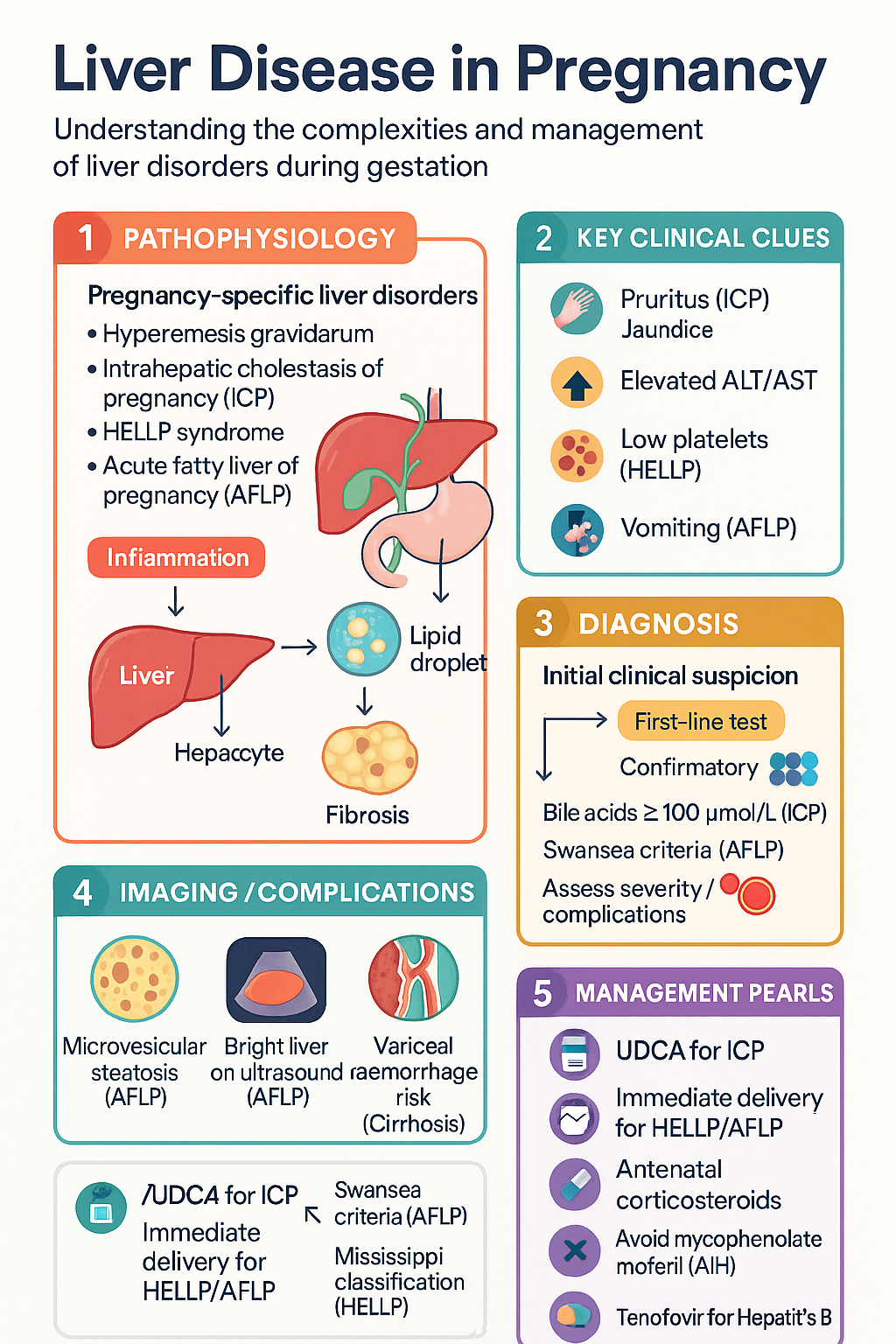
Pregnancy-Specific Liver Disorders
Hyperemesis Gravidarum
Hyperemesis gravidarum (HG) is persistent nausea and vomiting in the first half of pregnancy causing dehydration, weight loss >5% of pre-pregnancy weight, and electrolyte disturbance. Mild transaminase elevation (ALT and AST typically 50–200 IU/L) occurs in up to 50% of cases and resolves with supportive treatment.
Management
Intrahepatic Cholestasis of Pregnancy (ICP)
ICP is the most common pregnancy-specific liver disorder, characterised by pruritus without a rash and elevated serum bile acids. Onset is typically in the third trimester, though it can occur from the second trimester.
Diagnostic Criteria
- Pruritus — generalised, but predominantly palmoplantar, worse at night, without primary rash
- Elevated fasting serum bile acids >10 µmol/L (confirmatory; >14 µmol/L accepted at some labs)
- Mild transaminase elevation (ALT typically 2–10× ULN)
- Normal or mildly elevated bilirubin (<85 µmol/L in most cases)
- Exclude other causes: viral hepatitis, gallstones, drug-induced
Severity Classification
Treatment — Ursodeoxycholic Acid (UDCA)
Evidence note: The PITCHES trial (Lancet 2019) found that UDCA did not significantly reduce adverse perinatal outcomes in women with ICP, leading to debate about its continued use. However, UDCA does reliably reduce maternal pruritus and remains recommended by RCOG, ACOG, and eTG Australia. Many Australian centres continue to prescribe it for symptomatic relief and as a pragmatic approach while awaiting further evidence. Rifampicin (150–300 mg PO BD) is an alternative for refractory pruritus.
Timing of Delivery
- Mild ICP (bile acids <40 µmol/L): aim for delivery at 38–39 weeks; induction of labour acceptable
- Moderate ICP (bile acids 40–99 µmol/L): delivery at 37 weeks
- Severe ICP (bile acids ≥100 µmol/L): delivery at 36 weeks — discuss at tertiary MDT
- Antenatal corticosteroids for fetal lung maturity if delivery expected <34 weeks
- Continuous intrapartum CTG monitoring recommended in all cases of ICP
HELLP Syndrome
HELLP syndrome is a severe complication of pre-eclampsia characterised by Haemolysis, Elevated Liver enzymes, and Low Platelets. It occurs in 0.5–0.9% of all pregnancies and 10–20% of those with severe pre-eclampsia. Onset is typically after 27 weeks' gestation but can occur postpartum.
Mississippi Classification (Tennessee variant)
| Class | Platelets (×10⁹/L) | AST (IU/L) | LDH (IU/L) | Bilirubin |
|---|---|---|---|---|
| Class 1 (Severe) | <50 | ≥70 | ≥600 | Elevated |
| Class 2 (Moderate) | 50–100 | ≥70 | ≥600 | Elevated |
| Class 3 (Partial) | 100–150 | ≥40 | — | Normal |
Management
- Definitive treatment is delivery — regardless of gestational age in Class 1/2 HELLP
- Magnesium sulphate for seizure prophylaxis (as per pre-eclampsia protocol)
- IV dexamethasone 10 mg q12h × 4 doses — may stabilise maternal platelets and allow time for corticosteroid fetal lung maturation
- Antenatal corticosteroids (betamethasone 11.4 mg IM × 2, 24 h apart) if <34 weeks
- Platelet transfusion if <20 × 10⁹/L or <50 × 10⁹/L with active bleeding or planned regional anaesthesia
- Monitor for complications: hepatic rupture (rare but catastrophic), DIC, pulmonary oedema, placental abruption
- Serial LFTs, FBC, LDH, and coagulation screen q6–12h until stabilising
Acute Fatty Liver of Pregnancy (AFLP)
AFLP is a rare, life-threatening disorder of mitochondrial fatty acid β-oxidation occurring in the third trimester (typically >30 weeks). Failure in the fetal–maternal lipid metabolism unit leads to microvesicular steatosis of the liver. Maternal mortality was historically 7–18% but is now <10% with early recognition and urgent delivery. Perinatal mortality remains 7–23%.
Swansea Criteria — Diagnosis
AFLP may be diagnosed if ≥6 of the following criteria are present in the absence of another explanation:
| Domain | Criterion |
|---|---|
| Symptoms | Vomiting, abdominal pain, polydipsia/polyuria, encephalopathy |
| Biochemistry | Elevated AST or ALT (>42 IU/L), elevated bilirubin (>14 µmol/L), elevated urate (>340 µmol/L), elevated WCC (>11 × 10⁹/L) |
| Coagulation | Prolonged PT or APTT, low fibrinogen (<1.5 g/L) |
| Imaging | Ultrasound showing bright liver or CT showing low-density liver |
| Histology | Microvesicular steatosis on liver biopsy (rarely performed acutely) |
| Renal | Elevated creatinine (>150 µmol/L) |
Management
- Urgent delivery is the cornerstone — do not wait for biochemical confirmation if clinical suspicion is high
- Caesarean section under general anaesthesia is preferred if coagulopathy precludes regional block
- Aggressive supportive care: IV fluids (correct hypoglycaemia with 10% dextrose), blood products (FFP, cryoprecipitate, platelets), and N-acetylcysteine may have benefit
- Monitor for DIC, renal failure, and hepatic encephalopathy — transfer to ICU
- Most women recover hepatic function within days to weeks post-delivery
- Long-term follow-up: screen mother and infant for LCHAD (long-chain 3-hydroxyacyl-CoA dehydrogenase) deficiency — recurrence risk in future pregnancies is 25% if confirmed
Key Investigations in Pregnancy-Specific Liver Disease
Pre-existing Liver Disease in Pregnancy
Women with chronic liver disease contemplating pregnancy require pre-conception counselling, medication review, and risk stratification. The immunological shift from Th1 to Th2 dominance in pregnancy, haemodynamic changes (40–50% increase in cardiac output, 20–30% increase in hepatic blood flow), and hormonal fluctuations profoundly affect chronic liver conditions.
Autoimmune Hepatitis (AIH)
AIH is the most common autoimmune liver disease affecting women of childbearing age. Pregnancy outcomes are generally favourable when the disease is in remission at conception.
- Disease behaviour: May improve during pregnancy (Th2 shift) but frequently flares postpartum — 20–40% of women experience relapse within 3–6 months of delivery
- Pre-conception: Aim for ≥1 year of biochemical remission (normal ALT, normal IgG) before conception
- Therapy in pregnancy:
- Postpartum monitoring: LFTs at 6 weeks, 3 months, and 6 months postpartum — high index of suspicion for flare
- Breastfeeding: Azathioprine and low-dose prednisolone are considered compatible with breastfeeding
Primary Biliary Cholangitis (PBC) & Primary Sclerosing Cholangitis (PSC)
Both PBC and PSC predominantly affect women of childbearing age. Pregnancy outcomes are generally good when liver function is preserved.
PBC in Pregnancy
- UDCA (13–15 mg/kg/day) — continue during pregnancy; no teratogenicity reported in large registries; PBS-listed for PBC
- Pruritus may worsen in the third trimester — differentiate from ICP (bile acid elevation is expected in both)
- Obeticholic acid (Ocaliva®) — not recommended in pregnancy — insufficient safety data; discontinue before conception
- Fibrates (bezafibrate, fenofibrate) — limited safety data; discontinue before conception
- Cholestyramine — may be used for pruritus but can worsen fat-soluble vitamin malabsorption; supplement vitamins A, D, E, K
- Pregnancy outcomes: generally favourable in early-stage PBC (Scheuer stages I–II); higher risk of preterm delivery and low birth weight in advanced disease
PSC in Pregnancy
- UDCA — continue if already prescribed; evidence of benefit in PSC is limited but generally well tolerated in pregnancy
- Women with PSC and concurrent IBD — coordinate gastroenterology and obstetric care; flare of IBD may occur postpartum
- Screen for cholangiocarcinoma before conception if symptoms change (CA 19-9, MRCP)
- Increased risk of preterm delivery, particularly with concomitant IBD activity
Chronic Hepatitis B in Pregnancy
Australia has approximately 225,000 people living with chronic hepatitis B (CHB), with a disproportionate burden among people born overseas and Aboriginal and Torres Strait Islander peoples. Antenatal management focuses on preventing mother-to-child transmission (MTCT).
Antiviral Prophylaxis
Universal neonatal immunoprophylaxis (HepB vaccine + HBIG within 12 hours of birth) reduces MTCT to <5%. However, when maternal HBV DNA is high (>200,000 IU/mL or >6 log₁₀ IU/mL), residual transmission risk persists despite immunoprophylaxis. Third-trimester antiviral prophylaxis further reduces this risk.
Antenatal CHB Management
Cirrhosis & Portal Hypertension
Pregnancy in women with cirrhosis is increasingly recognised but remains high-risk. Maternal complications include variceal haemorrhage (occurring in 18–50% of pregnancies with known oesophageal varices), hepatic decompensation, and death. Perinatal complications include preterm delivery (up to 40%), low birth weight, and stillbirth.
Pre-conception Assessment
- Determine Child-Pugh and MELD scores — Child-Pugh A and MELD <10 carry the best prognosis
- Oesophagogastroduodenoscopy (OGD) — mandatory pre-conception screening; band all varices ≥ grade 2 (medium) before pregnancy
- Assess liver stiffness — FibroScan >20 kPa associated with increased variceal risk
- Review and optimise all medications for pregnancy safety
- Counsel on increased maternal mortality (2–18% depending on severity) and fetal risks
Antenatal Management of Portal Hypertension
- Portal venous pressure rises with the 40–50% increase in blood volume during pregnancy — variceal risk peaks in the 2nd trimester
- Repeat OGD at 20–24 weeks — band varices found; repeat as needed
- Non-selective beta-blockers (propranolol, nadolol) — may be continued for primary/secondary variceal prophylaxis; monitor for fetal bradycardia
- Avoid hepatotoxic medications; monitor LFTs and coagulation monthly
- Deliver at a tertiary centre with hepatobiliary surgery and neonatal ICU
- Active variceal haemorrhage — manage with IV terlipressin/octreotide, endoscopic banding, and transfusion; consider TIPS (transjugular intrahepatic portosystemic shunt) if refractory
Key Pre-existing Disease — Investigations
Aboriginal and Torres Strait Islander Health
📚 References
- 1. Williamson C, Geenes V. Intrahepatic cholestasis of pregnancy. Obstet Gynecol. 2014;124(1):120–133. doi:10.1097/AOG.0000000000000346
- 2. Chappell LC, Chambers J, Dixon PH, et al. Ursodeoxycholic acid versus placebo in women with intrahepatic cholestasis of pregnancy (PITCHES): a randomised controlled trial. Lancet. 2019;394(10201):849–860. doi:10.1016/S0140-6736(19)31270-X
- 3. Goel A, Jamwal KD, Ramachandran A, Balasubramanian KA, Eapen CE. Pregnancy-related liver disorders. J Clin Exp Hepatol. 2014;4(2):151–162. doi:10.1016/j.jceh.2014.03.045
- 4. Joshi D, James A, Quaglia A, Westbrook RH, Heneghan MA. Liver disease in pregnancy. Lancet. 2010;375(9714):594–605. doi:10.1016/S0140-6736(09)61495-1
- 5. Westbrook RH, Yeoman AD, Joshi D, et al. Outcomes of pregnancy in women with autoimmune hepatitis. J Autoimmun. 2012;38(2–3):J239–J244. doi:10.1016/j.jaut.2011.12.002
- 6. EASL Clinical Practice Guidelines on the management of hepatitis B virus infection. J Hepatol. 2017;67(2):370–398. doi:10.1016/j.jhep.2017.03.021
- 7. Visser E, Muirhead D, Woolley I. A guide to managing hepatitis B in pregnancy. Aust J Gen Pract. 2021;50(10):727–732. doi:10.31128/AJGP-03-21-5917
- 8. Nelson DB, Yost NP, Cunningham FG. Acute fatty liver of pregnancy: clinical outcomes and expected duration of recovery. Am J Obstet Gynecol. 2013;209(5):456.e1–456.e7. doi:10.1016/j.ajog.2013.07.006
- 9. Lau G. Management of HELLP syndrome. Aust Prescr. 2020;43(3):86–90. doi:10.18773/austprescr.2020.019
- 10. Thornton CE, Engel K, Engel MC, et al. Acute fatty liver of pregnancy: the experience of a tertiary referral centre. Aust N Z J Obstet Gynaecol. 2011;51(4):355–360. doi:10.1111/j.1479-828X.2011.01304.x
- 11. Australian Institute of Health and Welfare (AIHW). Chronic hepatitis B in Australia: national report, 2023. Canberra: AIHW; 2023.
- 12. Russ G, Lim WH, Chapman JR. Management of chronic hepatitis B virus in women of childbearing age and pregnancy. Med J Aust. 2020;212(10):483–488. doi:10.5694/mja2.50570
- 13. Westbrook RH, Dusheiko G, Williamson C. Pregnancy and liver disease. J Hepatol. 2016;64(4):933–945. doi:10.1016/j.jhep.2015.11.030
- 14. RCOG Green-top Guideline No. 43. Obstetric Cholestasis. London: Royal College of Obstetricians and Gynaecologists; 2011 (updated 2022).