📋 Key Information Summary
- Wernicke-Korsakoff Syndrome (WKS) is an acute neuropsychiatric emergency caused by thiamine (vitamin B1) deficiency, most commonly associated with chronic alcohol misuse.
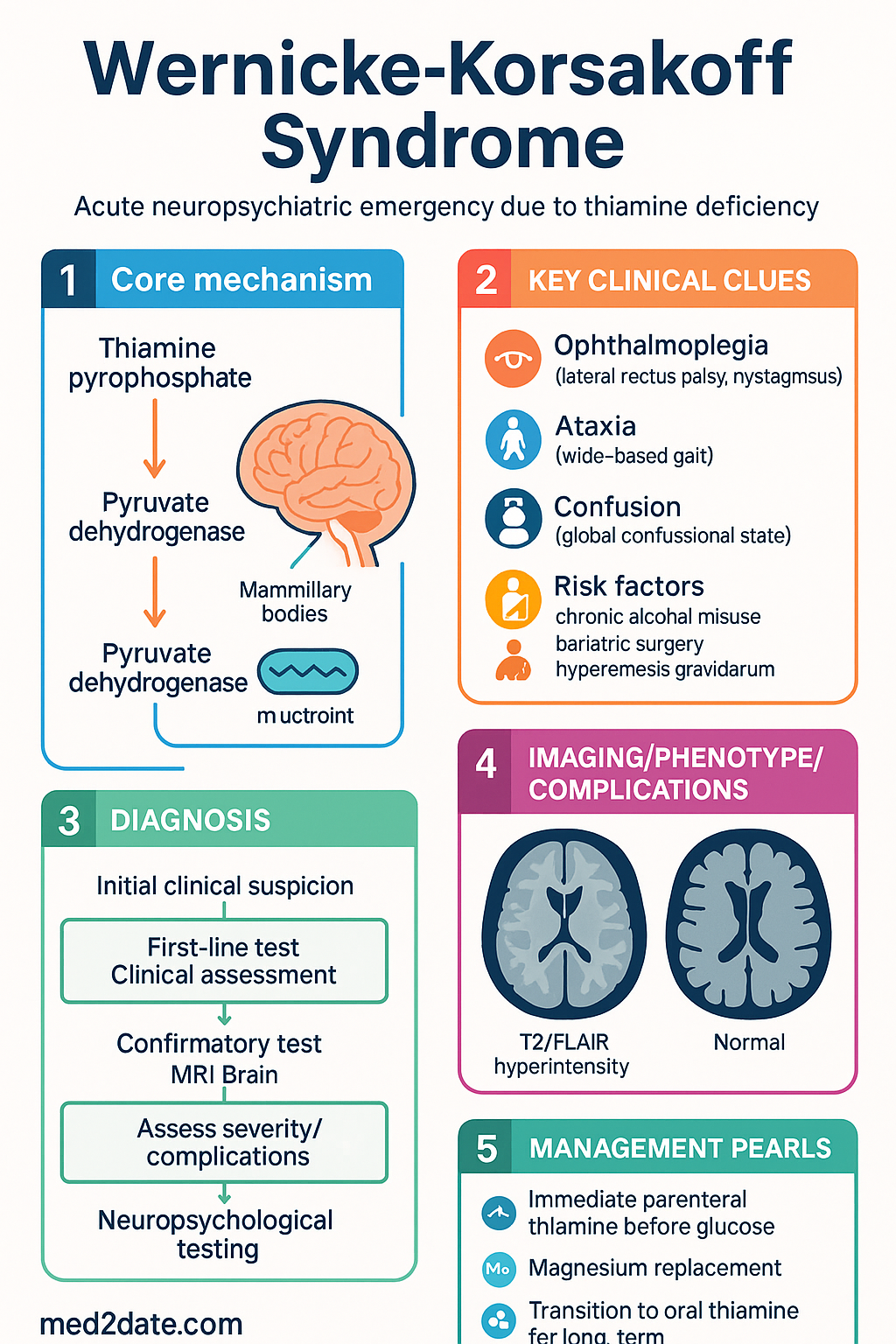
- The classic Wernicke triad comprises ophthalmoplegia (lateral rectus palsy, nystagmus), ataxia, and confusion — but all three features are present in only ~10–16% of cases.
- Korsakoff syndrome represents the chronic amnestic state: anterograde amnesia, retrograde amnesia, confabulation, and apathy — often irreversible.
- Risk factors extend beyond alcohol: hyperemesis gravidarum, bariatric surgery, malignancy/cachexia, refeeding syndrome, prolonged parenteral nutrition, and haemodialysis.
- Clinical suspicion must trigger immediate parenteral thiamine — NEVER give glucose before thiamine, as glucose loading precipitates or worsens Wernicke encephalopathy.
- First-line treatment: Pabrinex® (thiamine 500 mg IV TDS for 2–3 days), then taper to 250 mg IV/IM daily for 3–5 more days, followed by oral thiamine 100 mg TDS long-term.
- Magnesium replacement is mandatory as magnesium is an essential cofactor for thiamine-dependent enzymes; hypomagnesaemia renders thiamine therapy ineffective.
- Prophylactic thiamine (100–300 mg PO daily or 250 mg IV/IM) should be given to all at-risk patients — especially those presenting with alcohol-related illness or malnutrition.
- Korsakoff amnestic state requires prolonged oral thiamine (≥3–12 months minimum) and comprehensive rehabilitation; full recovery is uncommon.
- Pabrinex® IVHP is available on the Australian Pharmaceutical Benefits Scheme (PBS) as a restricted benefit; anaphylaxis risk necessitates administration in a setting with resuscitation capability.
- Aboriginal and Torres Strait Islander peoples experience disproportionately higher rates of alcohol-related harm and nutritional deficiency — proactive screening and culturally safe thiamine supplementation are essential.
- Diagnosis is clinical; do not delay treatment awaiting investigations. MRI may show periventricular T2/FLAIR signal abnormality around the mammillary bodies, medial thalami, and periaqueductal grey — but a normal MRI does not exclude WKS.
🎧 Audio Brief
Clinical Features & Risk Factors
Wernicke Encephalopathy — The Classic Triad
Wernicke encephalopathy (WE) is an acute, reversible neurological emergency caused by thiamine deficiency. Thiamine pyrophosphate is a cofactor for pyruvate dehydrogenase, alpha-ketoglutarate dehydrogenase, transketolase, and branched-chain ketoacid dehydrogenase. Deficiency impairs cerebral glucose metabolism, leading to neuronal injury in metabolically vulnerable regions — mammillary bodies, medial thalamus, periaqueductal grey, and floor of the fourth ventricle.
| Feature | Clinical Details | Frequency |
|---|---|---|
| Ophthalmoplegia | Lateral rectus palsy (bilateral or unilateral), horizontal nystagmus (most common sign), conjugate gaze palsies, absent pupilillary responses. Responds to thiamine within hours to days. | ~80–90% |
| Ataxia | Wide-based, staggering gait (vestibular and cerebellar dysfunction). Truncal ataxia predominates. Often persists even after ophthalmoplegia resolves. | ~60–80% |
| Confusion | Global confusional state, inattention, apathy, disorientation, impaired short-term memory. May progress to stupor or coma if untreated. | ~80–90% |
Korsakoff Syndrome — The Chronic Amnestic State
Korsakoff syndrome (KS) represents the chronic, often irreversible neuropsychiatric sequelae of inadequately treated or repeated episodes of Wernicke encephalopathy. It results from irreversible neuronal loss and gliosis in the diencephalon (mammillary bodies, anterior and dorsomedial thalamic nuclei).
| Feature | Clinical Details |
|---|---|
| Anterograde amnesia | Inability to form new memories — the hallmark of KS. Immediate recall is relatively preserved, but delayed recall is profoundly impaired. |
| Retrograde amnesia | Loss of previously formed memories, often with a temporal gradient (more recent memories more affected). |
| Confabulation | Spontaneous or provoked confabulations — plausible but fabricated accounts to fill memory gaps. Patients are typically not deliberately deceptive. |
| Apathy | Diminished spontaneous behaviour, reduced initiative, emotional blunting. Preserved procedural memory and automatic responses. |
Risk Factors for Wernicke-Korsakoff Syndrome
Investigations
Management & Prevention
Acute Management of Wernicke Encephalopathy
Pharmacotherapy — Key Medications
Management of Established Korsakoff Syndrome
Korsakoff syndrome requires prolonged treatment and multidisciplinary rehabilitation:
- Thiamine: Continue oral thiamine 100 mg TDS for a minimum of 3–12 months; many experts recommend lifelong treatment in patients with ongoing alcohol misuse.
- Alcohol cessation support: Referral to addiction medicine, consider pharmacotherapy for relapse prevention (naltrexone, acamprosate, disulfiram — all PBS-listed).
- Nutritional rehabilitation: Dietetic assessment and supplementation of other B vitamins, folate, and micronutrients. Monitor for refeeding syndrome if reintroducing nutrition.
- Cognitive rehabilitation: Neuropsychological assessment, environmental strategies (calendars, alarms, external memory aids), and occupational therapy.
- Psychiatric support: Screen for depression, anxiety, and suicidal ideation. Psychosocial engagement and supported accommodation may be required.
Prevention in At-Risk Populations
| At-Risk Population | Prevention Strategy | Setting |
|---|---|---|
| Alcohol-related presentations (ED, inpatient) | Thiamine 250 mg IV/IM immediately, then 100 mg PO TDS for ≥5 days. Continue oral supplementation on discharge. | Emergency department, acute medicine |
| Alcohol withdrawal units | Thiamine 100–300 mg PO daily as standard prophylaxis. Escalate to IV if confusion, ataxia, or ophthalmoplegia develops. | Drug and alcohol units |
| Post-bariatric surgery | Thiamine 100 mg PO daily as part of routine post-operative supplementation. Any vomiting + neurological symptoms → IV thiamine urgently. | Surgical follow-up |
| Hyperemesis gravidarum | Thiamine 100 mg PO daily prophylactically in moderate–severe HG. IV thiamine 500 mg TDS if neurological symptoms develop. | Antenatal / obstetric |
| Refeeding syndrome risk | Thiamine 200–300 mg PO daily (or 250 mg IV if unable to take orally) starting ≥30 min before first feed and continuing ≥3 days. | Nutritional rehabilitation |
| Haemodialysis patients | Thiamine 100–300 mg PO daily. Monitor nutritional status and serum thiamine periodically. | Renal dialysis units |
Aboriginal and Torres Strait Islander Health Considerations
📚 References
- 1. Galvin R, Bråthen G, Ivashynka A, et al. EFNS guidelines for diagnosis, therapy and prevention of Wernicke encephalopathy. European Journal of Neurology. 2010;17(12):1408–1418.
- 2. Thomson AD, Cook CCH, Touquet R, Henry JA. The Royal College of Physicians report on alcohol: guidelines for managing Wernicke's encephalopathy in the accident and emergency department. Alcohol and Alcoholism. 2002;37(6):513–521.
- 3. Isenberg-Grzeda E, Kutner HE, Nicolson SE. Wernicke-Korsakoff-syndrome: under-recognized and under-treated. Psychosomatics. 2012;53(6):507–516.
- 4. Royal Australasian College of Physicians. Australian guidelines to reduce health risks from drinking alcohol. Canberra: NHMRC; 2020.
- 5. Caine D, Halliday GM, Kril JJ, Harper CG. Operational criteria for the classification of chronic alcoholics: identification of Wernicke's encephalopathy. Journal of Neurology, Neurosurgery & Psychiatry. 1997;62(1):51–60.
- 6. Australian Institute of Health and Welfare (AIHW). Alcohol, tobacco & other drugs in Australia. Cat. no. PHE 228. Canberra: AIHW; 2023.
- 7. Latt N, Dore G. Thiamine in the treatment of Wernicke encephalopathy in patients with alcohol use disorders. Internal Medicine Journal. 2014;44(9):911–915.
- 8. Oudman E, Wijnia JW, Oey MJ, et al. Wernicke-Korsakoff syndrome despite no alcohol abuse: a summary of systematic reports. Journal of the Neurological Sciences. 2021;424:117419.
- 9. RHDAustralia (Program of the Menzies School of Health Research). Recommendations for the Diagnosis and Management of FASD. Version 3.0. Darwin: RHDAustralia; 2019.
- 10. Australian Commission on Safety and Quality in Health Care (ACSQHC). National Safety and Quality Health Service Standards. 2nd ed. Sydney: ACSQHC; 2021.
- 11. Sechi G, Serra A. Wernicke's encephalopathy: new clinical settings and recent advances in diagnosis and management. Lancet Neurology. 2007;6(5):442–455.
- 12. Zahr NM, Kaufman KL, Harper CG. Clinical and pathological features of alcohol-related brain damage. Nature Reviews Neurology. 2011;7(5):284–294.