Home Rheumatology Biologic DMARDs

Biologic DMARDs

📋 Key Information Summary

📋
  • Five classes of biologic DMARDs (bDMARDs) target distinct immunological pathways: TNF-α inhibitors (adalimumab, etanercept, infliximab, certolizumab, golimumab), IL-6 receptor inhibitors (tocilizumab, sarilumab), B-cell depletion (rituximab), T-cell co-stimulation blockade (abatacept), and anti-IL-17 agents (secukinumab, ixekizumab)
  • JAK inhibitors (tsDMARDs) — tofacitinib, baricitinib, upadacitinib, filgotinib — are oral targeted synthetic DMARDs with FDA/MHRA black-box warnings for increased VTE, MACE, and malignancy risk compared with anti-TNF therapy
  • Mandatory pre-treatment screening includes TB (IGRA preferred), hepatitis B (HBsAg + anti-HBc + anti-HBs), hepatitis C (anti-HCV), HIV, FBC, LFTs, fasting lipids, and vaccination status review
  • Step-up approach per PBS criteria: patients must have failed or been intolerant to at least one conventional synthetic DMARD (csDMARD) — usually methotrexate — before biologic therapy is approved for PBS Authority
  • Biosimilars are widely available in Australia for adalimumab, etanercept, infliximab, and rituximab, reducing costs and increasing access
  • Active infection is an absolute contraindication to all bDMARDs and tsDMARDs; latent TB must be treated for ≥1–2 months before initiating anti-TNF therapy
  • Live vaccines are contraindicated during bDMARD/tsDMARD therapy; all vaccinations should be updated ≥4 weeks before treatment initiation
  • Hepatitis B reactivation is a serious risk with rituximab and anti-TNF agents — antiviral prophylaxis (entecavir/tenofovir) is required for HBsAg-positive patients
  • Combination therapy with methotrexate improves efficacy and reduces immunogenicity for most bDMARDs, particularly adalimumab, infliximab, and rituximab
  • Aboriginal and Torres Strait Islander patients have higher prevalence of rheumatic disease, TB exposure, and hepatitis B — pre-screening is particularly critical in this population
  • Ongoing monitoring includes FBC, LFTs, CRP/ESR every 3 months, annual TB screening in high-risk groups, and infection surveillance at every visit
  • Choice of agent depends on disease type (RA, PsA, AS, SpA, SLE), prior treatment response, comorbidities (heart failure, demyelinating disease, hepatitis), route preference, and PBS eligibility

Introduction & Australian Epidemiology

Biologic and targeted synthetic disease-modifying antirheumatic drugs (bDMARDs and tsDMARDs) have fundamentally transformed the management of inflammatory arthritis and connective tissue diseases by targeting specific immunological pathways. Since the introduction of etanercept in 1998, an expanding armamentarium of agents now enables clinicians to personalise therapy based on disease phenotype, comorbidity profile, and patient preference.

In Australia, rheumatoid arthritis (RA) affects approximately 2% of the population, with higher prevalence in Aboriginal and Torres Strait Islander communities. Ankylosing spondylitis (AS) and psoriatic arthritis (PsA) affect 0.5–1% and 0.3–0.5% of Australians respectively. The Pharmaceutical Benefits Scheme (PBS) subsidises bDMARDs and tsDMARDs under Authority prescriptions, with mandatory prior csDMARD failure documented for RA, and specific clinical criteria for AS and PsA.

Biosimilar adoption has accelerated across Australia, with adalimumab, etanercept, infliximab, and rituximab biosimilars PBS-listed, significantly reducing healthcare expenditure. The Australian Rheumatology Association (ARA) recommends biosimilar interchange under shared decision-making with patients.

This guideline summarises the classes of biologics and JAK inhibitors available in Australia, pre-treatment screening obligations, monitoring requirements, and special population considerations aligned with current ARA, NHMRC, and international (EULAR/ACR) recommendations.
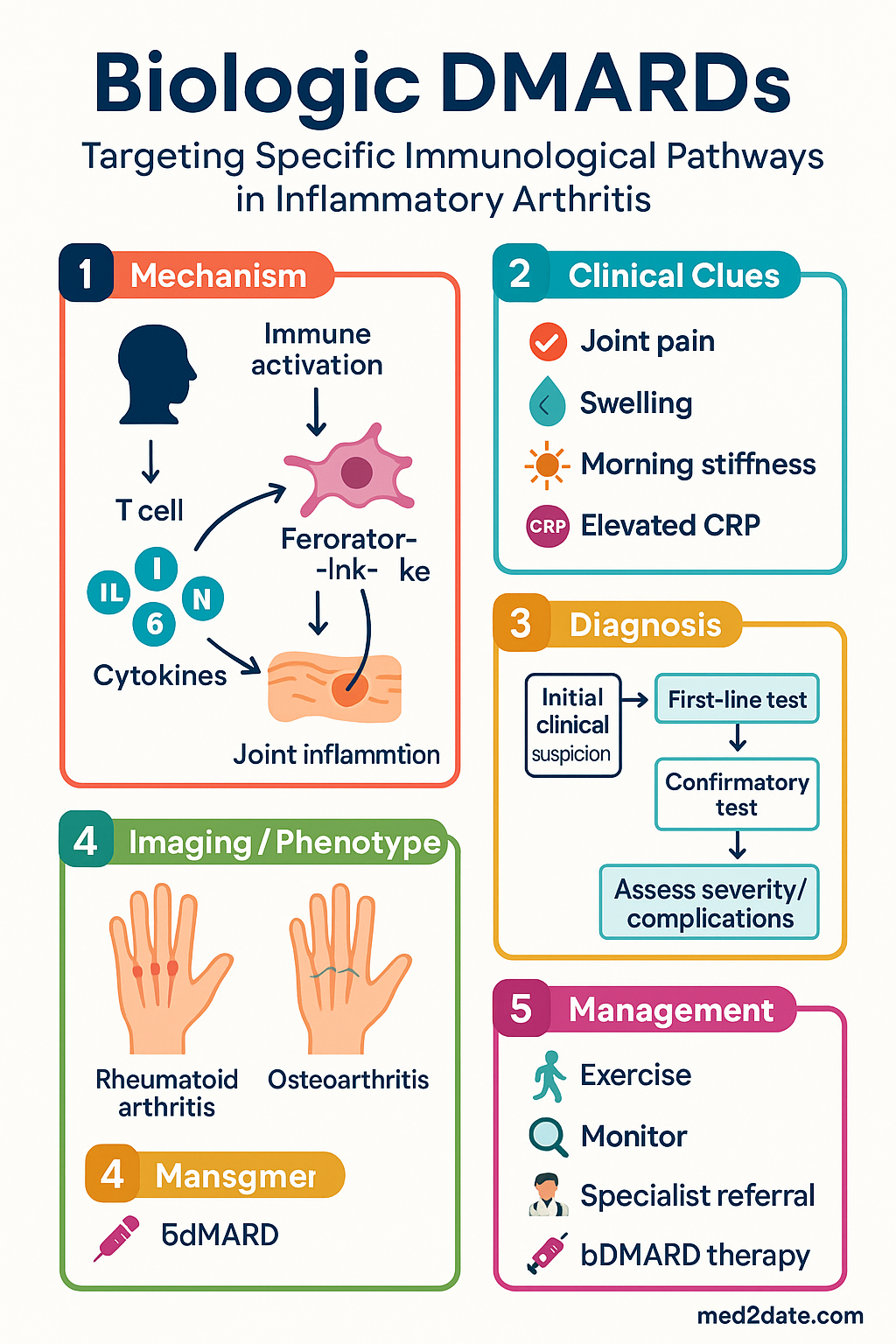
Biologic DMARDs clinical infographic — pathophysiology, clinical clues, diagnosis, imaging, and management
Tap or click image to enlarge — Biologic DMARDs: pathophysiology, clinical clues, diagnosis, imaging, and management.
Biologic DMARDs infographic, full size

Classes of Biologic DMARDs

Tumour Necrosis Factor-α Inhibitors (TNF-i)

TNF-α inhibitors remain the most widely prescribed biologics in Australia for RA, PsA, AS, and inflammatory bowel disease-associated arthritis. They neutralise TNF-α, a central pro-inflammatory cytokine driving synovial inflammation and joint destruction.

💊
Adalimumab
Humira® · Hadlima® · Hyrimoz® · Yuflyma® · TNF-α inhibitor (fully human mAb)
Adult dose 40 mg SC every 2 weeks; may increase to 40 mg weekly in RA if inadequate response
Paediatric dose JIA ≥2 yr: 20 mg (<30 kg) or 40 mg (≥30 kg) SC every 2 weeks
Renal / hepatic No dose adjustment required
PBS status ⚠ PBS Authority Required (STREAMLINED 3457)
💊
Etanercept
Enbrel® · Brenzys® · Erelzi® · TNF receptor fusion protein
Adult dose 50 mg SC weekly (or 25 mg twice weekly)
Paediatric dose JIA ≥2 yr: 0.4 mg/kg (max 25 mg) SC twice weekly or 0.8 mg/kg (max 50 mg) SC weekly
Renal / hepatic No dose adjustment; caution in severe hepatic impairment
PBS status ⚠ PBS Authority Required (STREAMLINED 3457)
💊
Infliximab
Remicade® · Renflexis® · Inflectra® · Avsola® · chimeric mAb
Adult dose 3 mg/kg IV at weeks 0, 2, 6, then every 8 weeks; dose may be increased to 10 mg/kg or interval shortened
Paediatric dose JIA ≥6 yr: 3–6 mg/kg IV at weeks 0, 2, 6, then every 8 weeks
Renal / hepatic No formal dose adjustment; avoid in moderate-severe heart failure (NYHA III/IV)
PBS status ⚠ PBS Authority Required (STREAMLINED 3457)
💊
Certolizumab pegol
Cimzia® · PEGylated Fab' fragment (no Fc region)
Adult dose 400 mg SC at weeks 0, 2, 4 (loading), then 200 mg SC every 2 weeks
Paediatric dose Not established
Renal / hepatic No dose adjustment required
PBS status ⚠ PBS Authority Required (STREAMLINED 3457)
💊
Golimumab
Simponi® · fully human mAb
Adult dose 50 mg SC monthly; RA: with methotrexate; AS/PsA: may be used as monotherapy
Paediatric dose Not established for SC; IV formulation approved for polyarticular JIA ≥2 yr (IV 80 mg/m² at weeks 0, 4, then every 8 weeks)
Renal / hepatic No dose adjustment required
PBS status ⚠ PBS Authority Required (STREAMLINED 3457)
⚠️
TNF-α inhibitors are contraindicated in: active infections (including sepsis, active TB, untreated latent TB), moderate-severe heart failure (NYHA III/IV — particularly infliximab and adalimumab), demyelinating disease (MS, optic neuritis — may exacerbate), and concurrent live vaccination.

IL-6 Receptor Inhibitors

IL-6R inhibitors block interleukin-6 signalling, a pleiotropic cytokine involved in acute-phase response, T-cell activation, and joint destruction. They are particularly useful when TNF-i therapy has failed or is contraindicated.

💊
Tocilizumab
Actemra® · anti-IL-6R mAb
Adult dose (RA) SC: 162 mg weekly; IV: 4 mg/kg every 4 weeks (may increase to 8 mg/kg)
Paediatric dose SCJIA: <30 kg: 12 mg/kg; ≥30 kg: 8 mg/kg IV every 2 weeks (systemic JIA) or every 4 weeks (polyarticular JIA)
Key caution Blunts CRP — infection may present without CRP rise; monitor FBC for neutropenia, thrombocytopaenia; LFTs for transaminitis
PBS status ⚠ PBS Authority Required (STREAMLINED 3457)
💊
Sarilumab
Kevzara® · fully human anti-IL-6R mAb
Adult dose 200 mg SC every 2 weeks; reduce to 150 mg SC every 2 weeks for neutropenia, thrombocytopaenia, or hepatic transaminase elevation
Paediatric dose Not established
Renal / hepatic No dose adjustment in renal impairment; not recommended in severe hepatic impairment
PBS status ⚠ PBS Authority Required (STREAMLINED 3457)

B-Cell Depletion — Rituximab

Rituximab is a chimeric anti-CD20 monoclonal antibody that depletes B lymphocytes. It is primarily used in refractory RA (after TNF-i failure), ANCA-associated vasculitis, and connective tissue diseases. In Australia, rituximab biosimilars (Riximyo®, Ruxience®) are PBS-listed.

💊
Rituximab
MabThera® · Riximyo® · Ruxience® · anti-CD20 mAb
Adult dose (RA) 1000 mg IV on days 1 and 15 (with methylprednisolone 100 mg IV pre-medication); repeat every 6 months based on disease activity
Adult dose (AAV) 375 mg/m² IV weekly × 4 weeks (induction); or 1000 mg IV × 2 doses (RA-dosing for maintenance)
Key cautions HBV reactivation risk — screen all patients; hypogammaglobulinaemia with repeated courses; progressive multifocal leukoencephalopathy (PML) — rare but fatal
PBS status ⚠ PBS Authority Required (STREAMLINED 3457)

T-Cell Co-stimulation Blockade — Abatacept

Abatacept (CTLA-4-Ig) selectively modulates T-cell activation by blocking the CD80/CD86:CD28 co-stimulatory signal required for full T-cell activation. It has a favourable safety profile with lower infection rates compared to other biologics in registry data.

💊
Abatacept
Orencia® · CTLA-4-immunoglobulin fusion protein
Adult dose (IV) Weight-based: <60 kg: 500 mg; 60–100 kg: 750 mg; >100 kg: 1000 mg IV at weeks 0, 2, 4, then every 4 weeks
Adult dose (SC) 125 mg SC weekly (may give single IV loading dose or start SC directly)
Paediatric dose JIA ≥6 yr: weight-based IV dosing every 4 weeks
PBS status ⚠ PBS Authority Required (STREAMLINED 3457)

Anti-IL-17 Agents

Anti-IL-17A monoclonal antibodies block interleukin-17A, a key cytokine in the IL-23/Th17 axis implicated in enthesitis, psoriasis, and axial inflammation. They are particularly effective for PsA and axial spondyloarthritis.

💊
Secukinumab
Cosentyx® · anti-IL-17A mAb
Adult dose 300 mg SC at weeks 0, 1, 2, 3, 4 (loading), then 300 mg SC every 4 weeks; PsA: may use 150 mg if no concomitant methotrexate and low disease burden
Paediatric dose Enthesitis-related arthritis ≥4 yr: weight-based
Key caution Caution in IBD (may exacerbate Crohn's); candidiasis risk; screen for TB
PBS status ⚠ PBS Authority Required (STREAMLINED 3457)
💊
Ixekizumab
Taltz® · anti-IL-17A mAb
Adult dose 160 mg SC at week 0, then 80 mg SC at weeks 2, 4, 6, 8, 10, 12, then 80 mg every 4 weeks
Paediatric dose Not established for rheumatologic indications
Key caution Similar IBD exacerbation risk as secukinumab; candidiasis; neutropenia reported
PBS status ⚠ PBS Authority Required (STREAMLINED 3457)

JAK Inhibitors (Targeted Synthetic DMARDs)

Janus kinase (JAK) inhibitors are oral small-molecule targeted synthetic DMARDs (tsDMARDs) that block intracellular signalling downstream of multiple cytokine receptors. By inhibiting JAK1, JAK2, JAK3, and/or TYK2, they modulate a broad range of immune pathways.

🚨
FDA / MHRA Black-Box Warning: All JAK inhibitors carry a class-level black-box warning for increased risk of major adverse cardiovascular events (MACE), venous thromboembolism (VTE — including pulmonary embolism), malignancy, and all-cause mortality compared with TNF-α inhibitors, based on the ORAL Surveillance trial (tofacitinib vs adalimumab/etanercept in patients ≥50 yr with ≥1 CV risk factor). These agents are generally reserved for patients who have failed or are intolerant to bDMARDs, or where bDMARDs are contraindicated.
Agent Brand JAK Selectivity Adult Dose PBS Authority
Tofacitinib Xeljanz® JAK1/3 5 mg PO BD (RA/PsA); 5 mg PO BD (UC) Streamlined 3457
Baricitinib Olumiant® JAK1/2 2 mg PO daily (RA); 4 mg PO daily if inadequate response Streamlined 3457
Upadacitinib Rinvoq® JAK1 selective 15 mg PO daily (RA/PsA/AS) Streamlined 3457
Filgotinib Jyseleca® JAK1 selective 200 mg PO daily (RA); 100 mg if ≥75 yr or eGFR 15–59 Streamlined 3457

JAK Inhibitor Risk Stratification

Standard Risk
Age <65, no CV risk factors
JAK inhibitor may be considered after bDMARD failure, with standard monitoring
Setting: Specialist rheumatology supervision
Moderate Risk
Age 50–65 with CV risk factors
JAK inhibitor after bDMARD failure only; enhanced CV risk assessment; consider anti-TNF preference per EULAR 2022
Setting: Specialist with cardiology input if needed
High Risk — Avoid if possible
Age ≥65, current smoker, CV disease, VTE history, malignancy risk
Strong preference for bDMARDs over tsDMARDs; if JAK inhibitor required, use lowest effective dose with intensive surveillance
Setting: Multidisciplinary specialist decision

JAK Inhibitor — Drug Interactions & Contraindications

  • Avoid combination with strong CYP3A4 inhibitors (ketoconazole, clarithromycin) and potent immunosuppressants (ciclosporin, azathioprine)
  • Baricitinib: reduce to 1 mg daily with OAT3 inhibitors (probenecid) — 2-fold AUC increase
  • Filgotinib: contraindicated if eGFR <15; reduce to 100 mg if eGFR 15–59 or age ≥75 yr
  • All JAK inhibitors: hold during active serious infection; do not initiate during active herpes zoster
  • Lipid monitoring essential — JAK inhibitors commonly elevate LDL and total cholesterol (up to 20%)

Pre-Biologic Screening Protocol

⚠️
Mandatory screening must be completed and documented before initiating any bDMARD or tsDMARD. Active untreated infections, including latent TB, are absolute contraindications to therapy.

Required Investigations

ESSENTIAL Tuberculosis Screening Interferon-gamma release assay (IGRA — QuantiFERON-TB Gold Plus or T-SPOT.TB) preferred over tuberculin skin test (TST) due to higher specificity, no BCG cross-reactivity. If IGRA positive → chest X-ray + clinical assessment → commence latent TB treatment (isoniazid 5 mg/kg [max 300 mg] daily for 6–9 months, or rifampicin 10 mg/kg daily for 4 months) for ≥1–2 months before bDMARD initiation. TST acceptable if IGRA unavailable (≥5 mm induration = positive in immunosuppressed/BCG-naïve).
ESSENTIAL Hepatitis B Serology HBsAg, anti-HBc (total), anti-HBs. HBsAg-positive: antiviral prophylaxis (entecavir 0.5 mg PO daily or tenofovir disoproxil 245 mg PO daily) required for rituximab and recommended for all anti-TNF therapy; monitor HBV DNA q3 months. Anti-HBc-positive / anti-HBs-positive (resolved): monitor HBV DNA, no routine prophylaxis unless rituximab — then consider prophylaxis. Susceptible (all negative): offer HBV vaccination ≥4 weeks before bDMARD.
ESSENTIAL Hepatitis C Antibody Anti-HCV; if positive → HCV RNA quantitative. Active HCV infection: consider treatment with direct-acting antivirals (DAA) before bDMARD initiation; refer to hepatologist/GP for PBS-subsidised DAA therapy.
RECOMMENDED HIV Testing Fourth-generation HIV Ag/Ab combination test. HIV-positive patients require specialist co-management with infectious diseases; bDMARDs may be used with appropriate ART and virological suppression.
ESSENTIAL Full Blood Examination Baseline FBC with differential — identify pre-existing cytopenias; contraindication if significant neutropenia (ANC <1.0 × 10⁹/L) for most bDMARDs.
ESSENTIAL Liver Function Tests ALT, AST, ALP, GGT, bilirubin, albumin. ALT >2× ULN requires evaluation before initiation; methotrexate + bDMARD combinations increase hepatotoxicity risk.
RECOMMENDED Fasting Lipid Profile Total cholesterol, LDL, HDL, triglycerides. Particularly important before JAK inhibitors (lipid-raising effect). Manage per CV risk assessment guidelines.
RECOMMENDED Vaccination Review Update all inactivated vaccines ≥2 weeks before bDMARD. Live vaccines (MMR, varicella, yellow fever, BCG, oral typhoid, live attenuated influenza) must be given ≥4 weeks before initiation and are contraindicated during therapy. Influenza (inactivated), pneumococcal (PCV20 or PCV15+PPV23), COVID-19, and zoster (Shingrix — recombinant, non-live) vaccines recommended before or during therapy.
RECOMMENDED Chest X-Ray If IGRA positive or clinical suspicion of TB. Also useful baseline in patients with respiratory comorbidities.
RECOMMENDED Renal Function eGFR / serum creatinine. Relevant for dosing adjustments of filgotinib (reduce to 100 mg if eGFR 15–59) and concomitant NSAID/DMARD use.

Pre-Screening Checklist Summary

1
TB Screening
IGRA (preferred) ± TST → CXR if positive → treat latent TB ≥1–2 months before bDMARD
2
Viral Hepatitis & HIV
HBsAg / anti-HBc / anti-HBs + anti-HCV ± HIV; antiviral prophylaxis if HBsAg+; DAA if active HCV
3
Baseline Bloods
FBC, LFTs, lipids (pre-JAKi), eGFR, CRP/ESR
4
Vaccination Update
Inactivated vaccines ≥2 wk; live vaccines ≥4 wk before; Shingrix available during therapy

Pathophysiology — Targeted Immune Pathways

Understanding the distinct immunological targets of each biologic class is essential for rational drug selection and sequencing.

Class Target Mechanism Key Cytokines Pathways Affected
Anti-TNF TNF-α (soluble + membrane-bound) Neutralise TNF-α; reduce synovial inflammation, osteoclast activation, acute-phase response TNF-α → NF-κB; IL-1, IL-6 downstream suppression
IL-6R inhibitors IL-6 receptor (α-chain) Block IL-6 classical and trans-signalling; reduce CRP, hepcidin (improve anaemia of inflammation) IL-6 → JAK/STAT3, MAPK
Rituximab CD20 on B lymphocytes B-cell depletion via ADCC, CDC, apoptosis; reduces autoantibody production and antigen presentation B-cell dependent: RF, ACPA pathogenesis
Abatacept CD80/CD86 (B7 ligands) Competitive inhibition of CD28 co-stimulation; T-cell anergy; reduces T-cell-dependent immune responses T-cell activation: IL-2, IFN-γ, TNF-α
Anti-IL-17 IL-17A Neutralise IL-17A; reduce neutrophil recruitment, osteoclastogenesis, keratinocyte activation IL-23/Th17 axis; IL-17A → CXCL1, IL-8, MMP
JAK inhibitors JAK1, JAK2, JAK3, TYK2 (intracellular) Block JAK-STAT signalling downstream of multiple cytokine receptors; broad immunomodulation IL-6, IL-12, IL-23, IFN-α/β/γ, IL-2, IL-4, IL-15, EPO, TPO

Clinical Indications & PBS Criteria

Rheumatoid Arthritis — PBS Authority Criteria

PBS-subsidised bDMARD/tsDMARD initiation requires:

  • Confirmed RA diagnosis (ACR/EULAR 2010 criteria) by a rheumatologist
  • Failure or intolerance of at least one csDMARD (typically methotrexate ≥15 mg/week for ≥3 months, or maximum tolerated dose if intolerance)
  • Moderate-to-high disease activity: DAS28-CRP ≥3.2 or DAS28-ESR ≥3.2
  • For second-line bDMARD/tsDMARD: failure of one prior bDMARD (any class)
  • Continuation authority requires demonstration of adequate response (DAS28 reduction ≥1.2 or low disease activity DAS28 <3.2) at 6 months

Ankylosing Spondylitis / Axial SpA — PBS Criteria

  • Confirmed axial SpA (modified New York criteria or ASAS classification) by a rheumatologist
  • Failure or intolerance of ≥2 NSAIDs at maximum tolerated dose for ≥4 weeks total
  • Active disease: BASDAI ≥4 on two occasions ≥4 weeks apart, AND elevated CRP or MRI evidence of active sacroiliitis

Psoriatic Arthritis — PBS Criteria

  • Confirmed PsA by a rheumatologist (CASPAR criteria)
  • Failure or intolerance of methotrexate (≥15 mg/week for ≥3 months)
  • Active disease with ≥3 tender joints AND ≥3 swollen joints

Agent Selection by Indication

RA — 1st-line bDMARD
Anti-TNF (adalimumab, etanercept, certolizumab) + methotrexate
Continue if effective at 6 months
Combination with MTX superior to monotherapy for most anti-TNF
RA — 2nd-line
Switch mechanism: tocilizumab, abatacept, rituximab, or JAK inhibitor
Reassess at 3–6 months
No strong evidence for cycling within same class
Axial SpA / AS
Anti-TNF (any) or secukinumab or ixekizumab or upadacitinib
Continue if BASDAI improvement ≥2 or ASAS40 response
Anti-IL-17 and upadacitinib now PBS-listed for AS
PsA — predominant enthesitis/dactylitis
Secukinumab or ixekizumab or anti-TNF
Reassess 3–6 months
Anti-IL-17 effective for skin + enthesitis

Monitoring During Therapy

Regular monitoring is essential to detect adverse events early, assess treatment efficacy, and guide dose optimisation.

Baseline
FBC, LFTs, lipids (pre-JAKi), eGFR, CRP/ESR, HBV/HCV serology, IGRA, vaccination status, CXR if indicated
Month 1–3
FBC + LFTs monthly for first 3 months (especially tocilizumab, methotrexate combinations, JAK inhibitors); clinical review with infection screen at each visit
Month 3–6
FBC, LFTs, CRP/ESR every 3 months; disease activity assessment (DAS28, BASDAI, PASDAS as appropriate); evaluate response for PBS continuation authority
Month 6+
FBC, LFTs, CRP/ESR every 3 months; annual TB screening if high-risk; annual lipids if on JAK inhibitor; ongoing infection vigilance at every visit; consider immunoglobulin levels if recurrent infections on rituximab
Pre-surgery
Hold bDMARD 1–2 dosing intervals (1–2 half-lives) before major surgery; JAK inhibitors: hold for ≥1 week pre-operatively; resume when wound healing confirmed and no infection

Drug-Specific Monitoring Parameters

Agent Class Key Monitoring Action Thresholds
Anti-TNF FBC, LFTs, CRP, infection surveillance Hold for serious infection; ANA/dsDNA may develop (lupus-like — rare)
Tocilizumab / Sarilumab FBC (neutrophils, platelets), LFTs, lipids ANC <0.5: hold; ANC 0.5–1.0: reduce dose; ALT >3× ULN: hold; LDL >4.0: treat per CV guidelines
Rituximab Immunoglobulins (IgG, IgA), FBC, HBV DNA if HBsAg+ IgG <4 g/L: delay next cycle; consider IVIG replacement; monitor for hypogammaglobulinaemia
JAK inhibitors FBC, LFTs, lipids (q3 months), VTE symptoms ANC <1.0: hold; Hb <8 g/dL: evaluate; LDL >4.0: statin therapy; any VTE symptoms: stop + investigate

Special Populations

🤰 Pregnancy & Breastfeeding
Certolizumab
Preferred TNF-i in pregnancy — minimal placental transfer (no Fc region). Continue through pregnancy; dose at delivery to avoid flare. Compatible with breastfeeding.
Adalimumab, Etanercept, Golimumab, Infliximab
Cross placenta via FcRn in 2nd/3rd trimester. Generally continue through pregnancy for maternal disease control — risk of flare outweighs theoretical neonatal immunosuppression. Stop by week 30–34 if possible to allow neonatal antibody clearance (adalimumab, infliximab: T½ ~2 weeks, transfer peaks 3rd trimester). Live vaccines contraindicated in infant for 6 months after last maternal dose.
Tocilizumab, Sarilumab
Limited human data — use only if essential and no alternative. Discontinue ≥4 weeks before planned conception if feasible.
Rituximab
Avoid in pregnancy if possible — depletes fetal B-cells. If given inadvertently in 1st trimester, monitor neonatal B-cells and immunoglobulins. Effective contraception required: stop 6 months before planned conception.
JAK inhibitors (all)
Contraindicated in pregnancy — teratogenic in animal studies. Effective contraception required during and for ≥4 weeks after last dose (tofacitinib, baricitinib, upadacitinib); ≥1 week for filgotinib.
👶 Paediatric Patients
Adalimumab
JIA ≥2 yr: PBS-listed. Dose by weight. Efficacy well-established.
Etanercept
JIA ≥2 yr: PBS-listed. Most experience in polyarticular JIA.
Tocilizumab
Systemic JIA (sJIA) — first-line biologic for systemic features. Polyarticular JIA: after TNF-i failure.
Abatacept
JIA ≥6 yr: after TNF-i failure.
JAK inhibitors
Not routinely approved for paediatric rheumatology in Australia; limited data in polyarticular JIA.
👴 Elderly (≥65 years)
All bDMARDs
Higher infection risk — careful pre-screening; influenza, pneumococcal, zoster vaccination essential. No routine dose reduction for age alone.
JAK inhibitors
Increased MACE and VTE risk per ORAL Surveillance. Prefer bDMARDs in elderly. Filgotinib: reduce to 100 mg if ≥75 yr. Intensive CV monitoring.
🫘 Renal Impairment
TNF-i, IL-6R, abatacept, rituximab, anti-IL-17
No dose adjustment required for renal impairment. Caution with concurrent nephrotoxic agents.
Filgotinib
Reduce to 100 mg daily if eGFR 15–59 mL/min; contraindicated if eGFR <15.
Tofacitinib
No adjustment for mild-moderate; use caution in severe impairment (limited data).
🫁 Hepatic Impairment
All bDMARDs
Avoid in severe hepatic impairment. Monitor LFTs closely, especially with concomitant methotrexate.
Sarilumab
Not recommended in severe hepatic impairment (Child-Pugh C).
HBsAg-positive patients
Antiviral prophylaxis mandatory (entecavir/tenofovir) before and during rituximab; recommended for all bDMARDs.
🛡️ Immunocompromised / High Infection Risk
Abatacept
Considered lowest infection risk among bDMARDs in registry data — preferred in patients with recurrent infections.
Rituximab
Monitor immunoglobulin levels; consider IVIG replacement if IgG <4 g/L with recurrent infections.
All classes
Avoid combination of bDMARDs with additional immunosuppressants unless specifically indicated (e.g., methotrexate + anti-TNF). Screen for latent infections (TB, HBV, HCV, HIV) before every new agent.

Aboriginal and Torres Strait Islander Health Considerations

Aboriginal and Torres Strait Islander Health
Disease burden
Aboriginal and Torres Strait Islander Australians experience a higher prevalence of rheumatic disease, including rheumatic fever/rheumatic heart disease (RHD), early-onset inflammatory arthritis, and gout. Rheumatoid arthritis prevalence is approximately 2–3× higher in ATSI populations compared to non-Indigenous Australians, with earlier onset and more aggressive disease courses reported in remote communities (AIHW 2023).
TB exposure
TB incidence in Aboriginal and Torres Strait Islander peoples is 6–8× higher than non-Indigenous Australians, particularly in the Northern Territory and Far North Queensland. Pre-biologic TB screening with IGRA is mandatory and must be interpreted in the context of higher background exposure rates. Latent TB treatment (isoniazid or rifampicin) must be completed before anti-TNF initiation.
Hepatitis B prevalence
Chronic hepatitis B affects approximately 2–6% of Aboriginal and Torres Strait Islander adults in remote areas (vs <1% non-Indigenous). Pre-biologic HBV screening is critically important. HBsAg-positive patients require antiviral prophylaxis (entecavir/tenofovir) with all bDMARDs, particularly rituximab and anti-TNF agents. HBV vaccination should be offered to all susceptible individuals before bDMARD initiation.
Geographic & access barriers
Many ATSI patients reside in remote or very remote areas with limited rheumatology specialist access. Biologics requiring IV infusion (infliximab, rituximab) may be impractical; subcutaneous agents (adalimumab, etanercept, tocilizumab SC) are preferred for home administration with telehealth rheumatology support. Cold-chain logistics for biologic storage are critical in remote areas.
Cultural safety
Engagement with Aboriginal Health Workers and Aboriginal Liaison Officers is essential for shared decision-making, treatment education, and adherence support. Use of culturally appropriate educational materials and translation services (where needed) improves treatment engagement and outcomes.
Comorbidity burden
Higher rates of diabetes, chronic kidney disease, cardiovascular disease, and obesity in ATSI populations may influence biologic choice. JAK inhibitors require particular caution given elevated CV risk profile. Renal dosing adjustments (filgotinib) are more likely needed given higher CKD prevalence.

📚 References

  1. 1. Smolen JS, Landewé RBM, Bergstra SA, et al. EULAR recommendations for the management of rheumatoid arthritis with synthetic and biological disease-modifying antirheumatic drugs: 2022 update. Ann Rheum Dis. 2023;82(1):3–18.
  2. 2. Fraenkel L, Bathon JM, England BR, et al. 2021 American College of Rheumatology Guideline for the Treatment of Rheumatoid Arthritis. Arthritis Care Res. 2021;73(7):924–939.
  3. 3. Ramiro S, Nikiphorou E, Sepriano A, et al. ASAS-EULAR recommendations for the management of axial spondyloarthritis: 2022 update. Ann Rheum Dis. 2023;82(1):19–34.
  4. 4. Gossec L, Baraliakos X, Kerschbaumer A, et al. EULAR recommendations for the management of psoriatic arthritis with pharmacological therapies: 2019 update. Ann Rheum Dis. 2020;79(6):700–712.
  5. 5. Ytterberg SR, Bhatt DL, Mikuls TR, et al. Cardiovascular and cancer risk with tofacitinib in rheumatoid arthritis. N Engl J Med. 2022;386(4):316–326.
  6. 6. Buch MH, Landewé R, Rubbert-Roth A, et al. Association between baseline