Introduction & Australian Epidemiology
Rheumatoid arthritis (RA) is a chronic, systemic autoimmune inflammatory arthritis characterised by persistent synovial inflammation, progressive joint destruction, and extra-articular manifestations. It is the most common form of inflammatory arthritis in Australia, affecting approximately 456,000 Australians (about 2.0% of the adult population), with women affected 2–3 times more frequently than men. Peak onset occurs between ages 40–60 years, though RA can develop at any age including childhood (juvenile idiopathic arthritis).
RA imposes a substantial individual and societal burden. Without early effective treatment, RA causes progressive joint damage leading to disability, reduced quality of life, premature cardiovascular disease, and mortality exceeding that of the general population. The standardised mortality ratio for RA is approximately 1.5–2.0. Australian Bureau of Statistics data consistently ranks RA among the top causes of musculoskeletal disability in Australia.
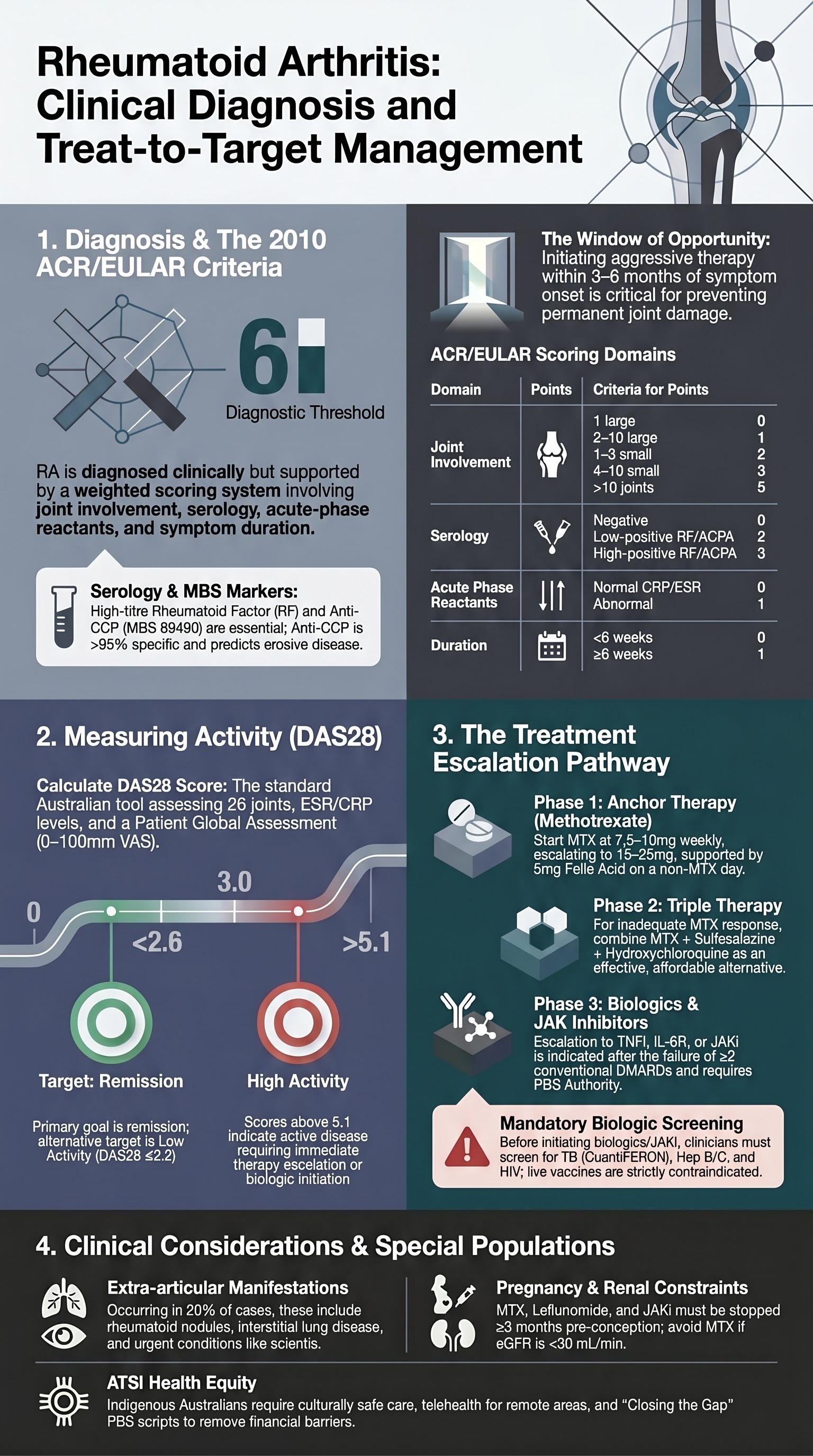
General practitioners play a critical role in early recognition of RA, prompt referral to rheumatology, shared-care monitoring of disease-modifying antirheumatic drug (DMARD) therapy, and cardiovascular risk reduction. The window of opportunity for optimal outcome is within the first 3–6 months of symptom onset.
Pathophysiology
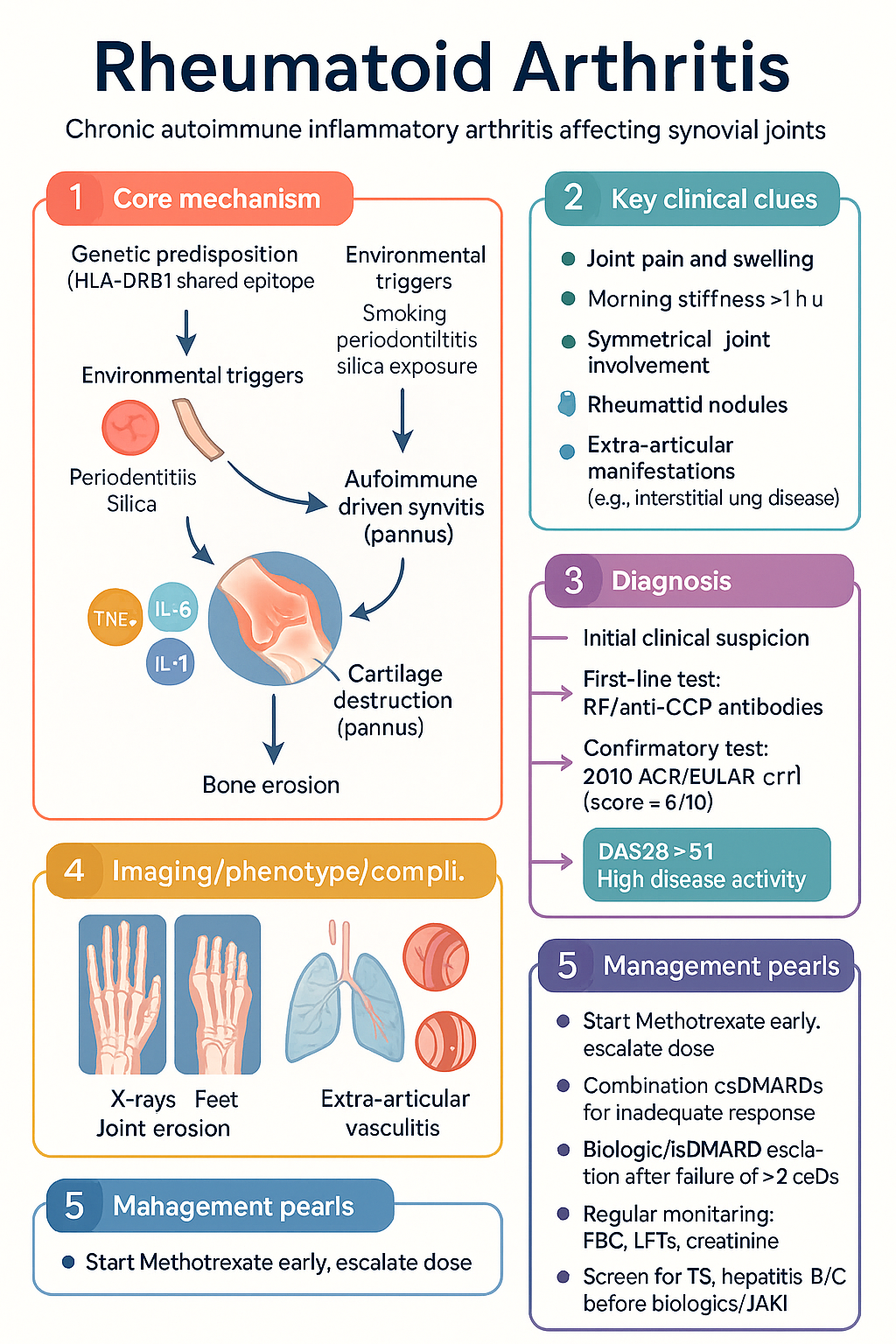
RA results from a complex interplay of genetic susceptibility and environmental triggers leading to breakdown of immunological self-tolerance. The HLA-DRB1 shared epitope alleles (particularly HLA-DRB1*04) confer the greatest genetic risk, accounting for approximately 30% of disease heritability. Other key genetic loci include PTPN22, STAT4, and CTLA4.
Immunopathogenesis
The initiating event is believed to occur at mucosal sites (lung, oral cavity, gut) where environmental exposures â most importantly cigarette smoking â trigger post-translational citrullination of proteins by the enzyme peptidylarginine deiminase (PAD4). Citrullinated proteins become neoantigens recognised by autoreactive CD4+ T cells presenting via HLA-DRB1 shared epitope molecules, driving production of anti-citrullinated protein antibodies (ACPAs/anti-CCP).
ACPAs are detectable years before clinical arthritis develops, representing a pre-clinical phase. The transition to clinical synovitis involves recruitment of inflammatory cells to synovial tissue, activation of synovial fibroblasts (FLS), and formation of the invasive pannus â a proliferating mass of activated FLS, macrophages, and T cells that erodes cartilage and bone.
Key Inflammatory Cytokines (Therapeutic Targets)
- Tumour necrosis factor-α (TNF-α): Master pro-inflammatory cytokine; activates macrophages, induces IL-1 and IL-6, stimulates osteoclastogenesis. Targeted by adalimumab, etanercept, infliximab, certolizumab, golimumab.
- Interleukin-6 (IL-6): Drives acute phase response (CRP, ESR), B-cell differentiation, osteoclast activation, and systemic features (anaemia, fatigue). Targeted by tocilizumab, sarilumab.
- Interleukin-1 (IL-1): Synergises with TNF; important in erosive disease. Targeted by anakinra (rarely used in RA).
- T-cell co-stimulation: CD80/86 on antigen-presenting cells interacts with CD28 on T cells. Abatacept (CTLA4-Ig) blocks this interaction.
- B-cell depletion: Rituximab (anti-CD20) depletes B cells, reducing ACPA production and antigen presentation.
- JAK-STAT pathway: Multiple cytokine receptors signal via JAK1, JAK2, JAK3, TYK2. JAK inhibitors (tofacitinib, baricitinib, upadacitinib, filgotinib) block intracellular signalling.
Chronic synovial inflammation drives RANKL-mediated osteoclast activation, causing periarticular and systemic bone erosion. Simultaneously, cartilage matrix degradation occurs via matrix metalloproteinases (MMPs) produced by activated FLS and macrophages.
Clinical Presentation & Diagnostic Criteria
Typical Presentation
RA classically presents with a symmetrical additive polyarthritis predominantly affecting the small joints of the hands (MCPs, PIPs, wrists) and feet (MTPs), with notable sparing of the DIPs. Hallmark features include:
- Morning stiffness: >60 minutes (often hours), improving with activity â a key distinguishing feature from osteoarthritis (which has brief gelling)
- Symmetrical joint swelling: Boggy, synovitic swelling (not bony enlargement) in â¥3 joints
- Joint tenderness: On compression of MCPs ("positive squeeze test") or MTPs
- Systemic features: Fatigue, malaise, low-grade fever, weight loss
Extra-Articular Manifestations
- Rheumatoid nodules: Firm subcutaneous nodules over pressure points (olecranon, sacrum); occur in seropositive disease
- Cardiovascular: Accelerated atherosclerosis; pericarditis; myocarditis (rare)
- Pulmonary: Interstitial lung disease (especially with anti-MDA5, anti-Jo-1); pleuritis; rheumatoid nodules
- Ocular: Keratoconjunctivitis sicca (secondary Sjögren); scleritis; episcleritis
- Haematological: Normochromic normocytic anaemia of chronic disease; Felty syndrome (RA + splenomegaly + neutropenia)
- Cervical spine: Atlantoaxial subluxation â screen pre-operatively; consider if new neurological symptoms
- Peripheral neuropathy: Compressive (carpal tunnel, tarsal tunnel) or vasculitic
ACR/EULAR 2010 Classification Criteria
The 2010 ACR/EULAR criteria (score â¥6/10) are used for classification of established RA in clinical trials but also guide diagnosis in practice:
| Domain | Category | Score |
|---|---|---|
| Joint involvement | 1 large joint | 0 |
| 2â10 large joints | 1 | |
| 1â3 small joints | 2 | |
| 4â10 small joints | 3 | |
| >10 joints (incl. â¥1 small) | 5 | |
| Serology | Negative RF AND anti-CCP | 0 |
| Low positive RF OR anti-CCP | 2 | |
| High positive RF OR anti-CCP (>3Ã ULN) | 3 | |
| Acute phase reactants | Normal CRP AND ESR | 0 |
| Abnormal CRP OR ESR | 1 | |
| Duration of symptoms | <6 weeks | 0 |
| â¥6 weeks | 1 |
Note: Seronegative RA (RF and anti-CCP negative, ~20â30% of cases) can still be diagnosed clinically in the presence of characteristic synovitis not explained by another diagnosis.
Investigations
Serology
-
Essential
Anti-cyclic citrullinated peptide antibodies (anti-CCP / ACPA)Sensitivity ~70%, specificity ~95% for RA. Positive result strongly supports RA diagnosis. Predicts erosive disease and poor prognosis. Available at all Australian pathology labs. MBS item 71155.
-
Essential
Rheumatoid factor (RF)Sensitivity ~70â80%, but low specificity (~80%). Positive in many other conditions (hepatitis C, Sjögren syndrome, SBE, healthy elderly). High-titre RF (>3à ULN) is more specific. Use in conjunction with anti-CCP.
-
Essential
Acute phase reactants: ESR and CRPBoth correlate with disease activity and are used in composite disease activity scores (DAS28-ESR, DAS28-CRP). Baseline and monitoring values guide treat-to-target decisions.
-
Essential
Full blood count (FBC)Anaemia of chronic inflammation is common (normochromic, normocytic). Thrombocytosis may reflect active disease. Leucopenia may suggest Felty syndrome. Baseline required before DMARD initiation.
-
Essential
Liver function tests (LFTs) and renal function (eGFR)Baseline required before methotrexate and leflunomide. Ongoing monitoring mandatory during DMARD therapy. Elevated transaminases may contra-indicate methotrexate.
-
Essential
ANA and ENA panelTo exclude SLE, Sjögren syndrome, and undifferentiated CTD presenting with inflammatory arthritis. Ordered at initial workup.
-
Essential
X-rays: hands and feet (PA views, bilateral)Baseline imaging to detect periarticular osteoporosis, joint space narrowing, and erosions. Early RA may show only soft tissue swelling. Annual X-rays during active disease to monitor structural progression.
-
Recommended
Musculoskeletal ultrasound (MSUS)Power Doppler ultrasound highly sensitive for detecting active synovitis and subclinical erosions before they appear on plain X-ray. Available at most Australian rheumatology practices and many radiology centres. Guides therapeutic decisions in treat-to-target strategy.
-
Recommended
Fasting lipid profile and glucoseCardiovascular risk assessment mandatory — RA carries an approximately 50% excess cardiovascular mortality risk. Baseline and annual monitoring. Required before JAK inhibitor therapy.
-
Pre-biologic workup
Hepatitis B surface antigen, HBsAb, Hepatitis C antibody, QuantiFERON-TB GoldMandatory screening before biologic DMARDs (particularly TNF inhibitors). TB reactivation risk is significant. HBV reactivation can be life-threatening with rituximab. QuantiFERON-TB preferred over TST in BCG-vaccinated individuals.
Disease Activity Assessment
Objective disease activity measurement is central to the treat-to-target approach. Australian rheumatologists use validated composite scores at every clinic visit (typically 1–3 monthly intervals during active disease, every 6 months in remission).
Poor Prognostic Factors (Warrant Aggressive Early Treatment)
- High-titre RF and/or anti-CCP (especially >3× ULN)
- Early joint erosions on X-ray or ultrasound at baseline
- High disease activity at presentation (DAS28 >5.1)
- Involvement of large joints in addition to small joints
- Elevated CRP and ESR at baseline
- Extra-articular manifestations (nodules, ILD)
- Failed to achieve remission/LDA within 3–6 months of treatment
- Current smoker (associated with worse outcomes and reduced biologic response)
Empirical (First-Line) DMARD Therapy
Triple DMARD Therapy
Combination of MTX + HCQ + SSZ (triple therapy) has demonstrated efficacy comparable to MTX + etanercept in the RACAT trial. It is a cost-effective strategy particularly in resource-limited settings and should be considered before escalation to biologics if disease activity remains moderate-high after 3–6 months of MTX monotherapy.
Biologic & Targeted Synthetic DMARD Therapy
TNF Inhibitors (First-Line Biologics)
IL-6 Receptor Inhibitors
JAK Inhibitors (Targeted Synthetic DMARDs — tsDMARDs)
Other Biologics
- Abatacept (Orencia®): T-cell co-stimulation inhibitor (CTLA4-Ig). IV or SC. PBS listed. Preferred option for seropositive RA with higher ACPA titres and in patients at risk of infection with other biologics.
- Rituximab (MabThera®): Anti-CD20 B-cell depleting mAb. IV infusion 1000 mg × 2 doses 2 weeks apart every 6–12 months. PBS listed for RA failing TNF inhibitors. Preferred in patients with prior malignancy, demyelination risk, or where B-cell depletion is desirable.
Acute Flare Management
RA flares — episodes of worsening disease activity — require prompt assessment to distinguish disease flare from infection (which can mimic flare and is life-threatening in immunosuppressed patients).
Bridging Therapies for Flare
- Corticosteroids — oral: Prednisolone 10–30 mg/day tapering over 2–6 weeks. Short courses are acceptable for flare management. Avoid long-term use due to cumulative toxicity (osteoporosis, metabolic syndrome, infection, adrenal suppression). If oral steroids required >3 months, add bisphosphonate prophylaxis.
- Corticosteroids — intra-articular (IA): Triamcinolone acetonide 20–40 mg or methylprednisolone acetate 40–80 mg. Effective for 1–3 inflamed joints. Onset within 24–48 hours. Limit to 3–4 injections per joint per year to minimise cartilage damage.
- IM methylprednisolone: 80–120 mg IM for severe polyarticular flare as bridging therapy while awaiting DMARD escalation. Effective but not a substitute for optimised DMARD therapy.
- NSAIDs: Provide symptomatic relief of pain and stiffness. No disease-modifying effect. Use cautiously given cardiovascular, renal, and GI risks. Add PPI gastroprotection. Short-term use preferable.
Monitoring Parameters
Shared-care monitoring between GPs and rheumatologists is essential. GPs should be comfortable performing and interpreting routine DMARD monitoring according to agreed protocols.
MTX Monitoring Thresholds for Dose Adjustment
- Hold MTX if ALT/AST >3× ULN — investigate cause, restart at lower dose once normalised
- Reduce MTX dose if eGFR 30–50 mL/min/1.73m² — use with caution and close monitoring
- Cease MTX if eGFR <30 mL/min/1.73m²
- Hold MTX if WBC <3.0 × 10⁹/L or platelets <100 × 10⁹/L — refer to rheumatologist
- Cease MTX 1 week before and 1 week after any live vaccine
Special Populations
Pregnancy and Breastfeeding
- RA often improves during pregnancy (especially anti-CCP positive disease) but flares postpartum are common
- Contraception counselling is essential for women of childbearing age on MTX and leflunomide (both Category X — teratogenic)
- MTX must be ceased ≥3 months before planned conception and ≥1 month (male partners ≥3 months) before conception
- Leflunomide requires washout with cholestyramine (8g TDS × 11 days) before conception; confirmed serum level <0.02 mg/L on two occasions 14 days apart
- Compatible medications in pregnancy: HCQ (continue throughout), SSZ (folic acid 5mg supplementation), prednisolone (lowest effective dose), certolizumab pegol (preferred TNF inhibitor — does not cross placenta), azathioprine
- TNF inhibitors (adalimumab, etanercept, infliximab): generally cease at 22–30 weeks gestation (certolizumab can continue throughout); infants should not receive live vaccines for 6 months after in-utero exposure to other TNF inhibitors
- Breastfeeding: HCQ, SSZ (in term infants without G6PD deficiency), and certolizumab pegol are compatible
Elderly Patients (Age ≥65 Years)
- Late-onset RA (after age 60) may present with prominent shoulder girdle involvement resembling polymyalgia rheumatica
- Higher infection risk with biologic and JAK inhibitor therapy; consider lower biologic doses and dose-reduce MTX for renal impairment
- JAK inhibitors carry increased MACE and VTE risk in patients ≥65 years with cardiovascular risk factors — reassess benefit/risk carefully
- NSAID use should be minimised; use with PPI gastroprotection; avoid in eGFR <30
- Frailty assessment and falls risk evaluation important — consider bone health with DXA and bisphosphonate where indicated
Patients with Comorbid Liver Disease
- MTX and leflunomide are contra-indicated in significant hepatic disease (Child-Pugh B/C)
- Consider HCQ + SSZ combination; rituximab may be an option as it is hepatically cleared with dose adjustment
- HBV reactivation is a serious risk with rituximab, MTX, and all biologics — ensure HBV vaccination and antiviral prophylaxis (entecavir) if HBsAg positive or past infection
Patients with Prior Malignancy
- TNF inhibitors are generally avoided within 5 years of solid organ malignancy (risk of promotion of residual disease)
- Abatacept and rituximab are preferred in patients with prior lymphoma or solid organ cancer (discuss with oncology)
- Non-melanoma skin cancers: consider rituximab or abatacept over TNF inhibitors; monitor skin closely
Patients with Cardiovascular Disease
- RA itself increases cardiovascular risk by 50–100%; treat RA effectively to reduce this systemic inflammation-driven risk
- JAK inhibitors (particularly tofacitinib/baricitinib) have increased MACE risk vs TNF inhibitors (ORAL Surveillance trial) — avoid in high CVD-risk patients aged ≥65 or with CVD risk factors
- NSAIDs and COX-2 inhibitors increase cardiovascular risk and should be minimised
- Statin therapy, aspirin (where indicated), smoking cessation, and blood pressure control are all important
Aboriginal and Torres Strait Islander Health Considerations
Aboriginal and Torres Strait Islander peoples experience a disproportionate burden of inflammatory arthritis in Australia, with higher prevalence of reactive arthritis and overlap with rheumatic fever-associated arthropathy. Access to timely rheumatology care and DMARD therapy remains inequitable, particularly in rural and remote areas. Cardiovascular comorbidity is substantially elevated, amplifying the RA-associated cardiovascular risk.
Medication Stewardship & NSQHS Standards
Appropriate use of DMARDs and biologic agents in RA requires adherence to evidence-based prescribing principles aligned with ACSQHC NSQHS Standard 4 (Medication Safety).
PBS Biologic Authority Prescribing
- Initial PBS Authority for biologic DMARDs must be obtained by a rheumatologist (or as specialist-initiated authority where permitted). GP continuation prescriptions may be issued under a written management plan.
- PBS criteria require documented inadequate response to at least 2 conventional DMARDs (including MTX at adequate dose and duration) and active disease (DAS28 >3.2 or CDAI >10).
- Switching between biologics requires demonstration of inadequate response or intolerance — each switch requires a new PBS Authority application.
- Biosimilar substitution: PBS prescriptions for adalimumab, etanercept, and infliximab may be dispensed as PBS-listed biosimilars unless "brand substitution not permitted" is endorsed. Discuss biosimilar switching with the rheumatologist.
Vaccination in Immunosuppressed RA Patients
- Annual inactivated influenza vaccine — recommended for all RA patients; administer before commencing immunosuppression where possible
- Pneumococcal vaccination: Prevenar 13 (PCV13) followed by Pneumovax 23 (PPSV23) ≥8 weeks later; PPSV23 booster at 5 years
- Herpes zoster: Shingrix (recombinant zoster vaccine) — 2 doses recommended for patients on immunosuppression aged ≥50 years (or younger if on JAK inhibitors — discuss with rheumatologist)
- COVID-19 vaccination: Primary series + boosters as per ATAGI recommendations; generally safe with all DMARDs; timing relative to rituximab infusion important (administer ≥4 weeks after last rituximab dose)
- Live vaccines (MMR, varicella, yellow fever, BCG, oral typhoid) are CONTRA-INDICATED in patients on biologics, JAK inhibitors, or high-dose corticosteroids
Methotrexate Safety (APOTHECARY Alert)
Perioperative DMARD Management
- MTX: Generally continue perioperatively (evidence supports continued use reduces flares without increasing infection risk for most elective surgeries)
- HCQ and SSZ: Continue perioperatively
- Biologic DMARDs: Withhold for 1 dosing interval before major elective surgery and restart when wound has healed (typically 2 weeks). Timing depends on the specific biologic's half-life.
- JAK inhibitors: Withhold 3–7 days pre-operatively (short half-life)
- Corticosteroids: Patients on long-term steroids (>5 mg/day prednisolone >3 months) may require stress-dose hydrocortisone perioperatively
Follow-Up, Prevention & Non-Pharmacological Management
Follow-Up Schedule
- Active disease / DMARD initiation or change: Every 4–8 weeks with disease activity assessment and monitoring bloods
- Stable remission/LDA on established therapy: Every 3–6 months with GP (monitoring bloods, blood pressure, weight) and rheumatology review every 6–12 months
- X-ray surveillance: Annual in active erosive disease; every 2 years in sustained remission
Tapering Therapy in Sustained Remission
After sustained clinical remission for ≥6 months (ideally ≥12 months), cautious tapering of biologic therapy may be considered under rheumatologist guidance. Tapering should be done in a stepwise fashion (reduce biologic dose frequency first, then consider cessation while continuing MTX). Approximately 40–50% of patients achieving remission with biologic + MTX may successfully discontinue the biologic while maintaining remission. DMARD-free remission is achievable in a minority (~10–15%) of patients.
Non-Pharmacological Interventions
- Physiotherapy: Tailored exercise programs (strengthening, aerobic, joint range-of-motion) improve function, reduce fatigue, and slow functional decline. Refer early — ideally to a physiotherapist with musculoskeletal/rheumatology experience.
- Occupational therapy: Joint protection techniques, adaptive equipment, ergonomic workplace assessment, hand splinting. Critical for preserving work capacity.
- Smoking cessation: Smoking is the most important modifiable risk factor for RA development and severity. Active smoking reduces biologic response rates. Australian Quitline (13 7848) and PBS-subsidised NRT/varenicline.
- Diet: Mediterranean-style diet may reduce inflammation and cardiovascular risk. Maintain healthy BMI — obesity worsens RA outcomes and reduces biologic response.
- Bone health: Weight-bearing exercise. Calcium (1000–1200 mg/day dietary) and vitamin D (600–800 IU/day). If on long-term corticosteroids ≥3 months, prescribe bisphosphonate (alendronate 70 mg weekly or risedronate 35 mg weekly) and supplement calcium/vitamin D.
- Cardiovascular risk management: Aggressive management of hypertension, dyslipidaemia, diabetes, and smoking. Annual fasting lipids and glucose. Consider statin therapy using NVDPA risk calculator adapted for RA (inflammatory disease approximately doubles CVD risk — consider 1.5× CVD risk multiplier).
- Psychological support: Depression and anxiety are common in RA (2–3× population rates). Screen using PHQ-9 or K10. Refer to psychologist for CBT; consider antidepressant therapy when indicated.
Patient Education Resources
- Arthritis Australia — www.arthritisaustralia.com.au — patient education booklets, exercise programs, peer support
- Rheumatology Health Professionals Australia (RHPA) — exercise videos and patient resources
- Australian Rheumatology Association (ARA) — patient information sheets on specific DMARDs and biologics
References
- 01Smolen JS, Landewé RBM, Bijlsma JWJ, et al. EULAR recommendations for the management of rheumatoid arthritis with synthetic and biological disease-modifying antirheumatic drugs: 2022 update. Ann Rheum Dis. 2023;82(1):3–18.
- 02Aletaha D, Neogi T, Silman AJ, et al. 2010 Rheumatoid arthritis classification criteria: an American College of Rheumatology/European League Against Rheumatism collaborative initiative. Ann Rheum Dis. 2010;69(9):1580–1588.
- 03Australian Bureau of Statistics. Arthritis. Australian Health Survey 2011–12. ABS cat. no. 4338.0. Canberra: ABS; 2013.
- 04Australian Rheumatology Association. Consensus statement on the management of rheumatoid arthritis in Australia. Sydney: ARA; 2020. Available at: www.rheumatology.org.au
- 05O'Dell JR, Mikuls TR, Taylor TH, et al. Therapies for active rheumatoid arthritis after methotrexate failure. N Engl J Med. 2013;369(4):307–318. (RACAT trial)
- 06Ytterberg SR, Bhatt DL, Mikuls TR, et al. Cardiovascular and cancer risk with tofacitinib in rheumatoid arthritis. N Engl J Med. 2022;386(4):316–326. (ORAL Surveillance)
- 07Sparks JA, Chang SC, Liao KP, et al. Rheumatoid arthritis and mortality among women during 36 years of prospective follow-up: results from the Nurses' Health Study. Arthritis Care Res. 2016;68(6):753–762.
- 08Bombardier C, Hazlewood GS, Akhavan P, et al. Canadian Rheumatology Association recommendations for the pharmacological management of rheumatoid arthritis with traditional and biologic disease-modifying antirheumatic drugs: Part II safety. J Rheumatol. 2012;39(8):1583–1602.
- 09Arthritis Australia. A time to move: arthritis and musculoskeletal conditions in Australia to 2020. Sydney: Arthritis Australia; 2014.
- 10van Vollenhoven RF, Østergaard M, Leirisalo-Repo M, et al. Full dose, reduced dose or discontinuation of etanercept in rheumatoid arthritis. Ann Rheum Dis. 2016;75(1):52–58.
- 11ACSQHC. National Safety and Quality Health Service Standards. 2nd ed. Sydney: Australian Commission on Safety and Quality in Health Care; 2017. Standard 4: Medication Safety.
- 12Holroyd CR, Seth R, Bukhari M, et al. The British Society for Rheumatology biologic DMARD safety guidelines in inflammatory arthritis. Rheumatology. 2019;58(2):e3–e42.