Home Rheumatology Septic Arthritis

Septic Arthritis

๐ŸŽง Septic Arthritis โ€” deep-dive podcast

๐Ÿ“‹ Key Information Summary

๐Ÿ“‹
  • Septic arthritis is a medical emergency requiring urgent joint aspiration and empirical IV antibiotics within 1 hour of clinical suspicion to prevent irreversible cartilage destruction.
  • Staphylococcus aureus (including MRSA) accounts for the majority of community-acquired and prosthetic joint infections in Australia.
  • Neisseria gonorrhoeae is the most common cause in sexually active adults under 40 years โ€” consider in all young patients with migratory polyarthralgia and tenosynovitis.
  • Arthrocentesis must be performed before antibiotics; synovial fluid is sent for cell count, Gram stain, culture, and crystal analysis.
  • Synovial fluid WBC >50,000/ยตL with >90% neutrophils is highly suggestive of septic arthritis; however, a lower count does not exclude the diagnosis.
  • Empirical IV flucloxacillin is first-line for native joint infection; add vancomycin if MRSA risk is high (healthcare-associated, Indigenous communities, recent hospitalisation).
  • Ceftriaxone plus vancomycin is recommended if N. gonorrhoeae is suspected or if there is penicillin allergy.
  • Surgical washout (arthroscopic or open) is indicated for hip septic arthritis, prosthetic joint infection, failure to improve within 48โ€“72 hours, or extensive loculation.
  • Prosthetic joint infection (PJI) requires a multidisciplinary approach involving infectious diseases and orthopaedic surgery; DAIR (debridement, antibiotics, implant retention) is appropriate if within 30 days of surgery and symptoms <3 weeks.
  • IV-to-oral switch is guided by clinical response, CRP trajectory, and organism identification โ€” total antibiotic duration for native joint infection is typically 2โ€“4 weeks.
  • Aboriginal and Torres Strait Islander peoples have higher rates of S. aureus bacteraemia and septic arthritis; remote community access, CA-MRSA prevalence, and delayed presentation must be actively managed.
  • Risk factors include age >80, diabetes mellitus, rheumatoid arthritis, immunosuppression, prosthetic joints, IV drug use, and recent intra-articular corticosteroid injection.
๐ŸŽฌ Septic Arthritis โ€” clinical explainer

Introduction & Australian Epidemiology

Septic arthritis (SA) is an infection of a native or prosthetic joint that, if untreated, leads to rapid cartilage degradation, joint destruction, sepsis, and death. It remains one of the most time-sensitive diagnoses in rheumatology and emergency medicine, with mortality rates of 10โ€“15% in native joint SA and up to 25% in elderly or immunocompromised patients.

In Australia, the incidence of native joint septic arthritis is estimated at 4โ€“10 per 100,000 population per year, with higher rates in Aboriginal and Torres Strait Islander communities and in patients over 65 years. Prosthetic joint infection complicates approximately 1โ€“2% of primary joint arthroplasties, representing a significant burden given the high volume of hip and knee replacements performed annually across Australian hospitals.

The knee is the most commonly affected native joint (50โ€“60%), followed by the hip (15โ€“20%), shoulder, and ankle. In children, the hip is the most frequently involved site. Polymicrobial infection and unusual organisms are more common in immunocompromised hosts and IV drug users.
โš ๏ธ
Time-critical: Every hour of delay in initiating treatment increases the risk of irreversible joint damage. Arthrocentesis and empirical antibiotics should be administered within 1 hour of clinical suspicion. Do not wait for imaging if joint aspiration can be performed at the bedside.
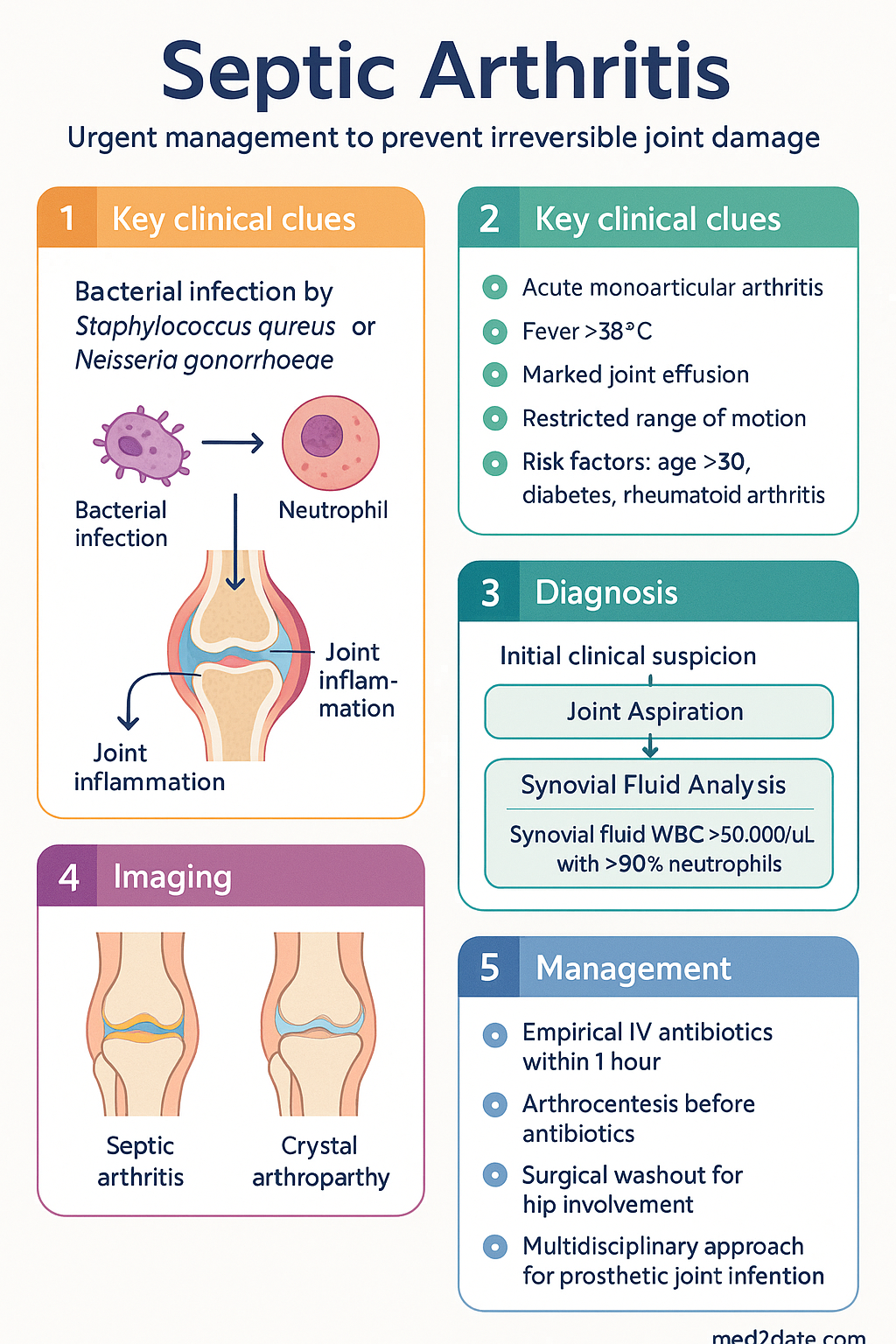
Septic Arthritis clinical infographic โ€” pathophysiology, clinical clues, diagnosis, imaging, and management
Tap or click image to enlarge โ€” Septic Arthritis: pathophysiology, clinical clues, diagnosis, imaging, and management.
Septic Arthritis infographic, full size

Risk Factors & Microbiology

Risk Factors

Category Specific Risk Factors
Host factorsAge >80 years, male sex, diabetes mellitus, chronic kidney disease, liver cirrhosis, malnutrition, obesity
ImmunosuppressionHIV/AIDS, solid organ transplant, chemotherapy, biologic DMARDs (TNF inhibitors, rituximab), systemic corticosteroids
Joint diseaseRheumatoid arthritis (3โ€“6ร— risk), crystal arthropathy (gout, CPPD), osteoarthritis, prior joint surgery
Prosthetic jointsTotal hip/knee arthroplasty, revision arthroplasty, prior PJI
IatrogenicIntra-articular corticosteroid injection (within 3 months), joint aspiration, recent arthroscopy
BehaviouralIV drug use, alcohol excess, skin ulceration/cellulitis, poor dental hygiene
HaematogenousBacteraemia from any source (endocarditis, UTI, pneumonia, skin/soft tissue infection)

Microbiology โ€” Australian Patterns

The aetiology of septic arthritis varies by patient age, immune status, joint type, and geographical context. Australian data show the following distributions:

Organism Frequency Clinical Context
Staphylococcus aureus45โ€“65%Most common overall; MSSA in community, MRSA in healthcare/remote communities
Streptococci (Groups A, B, G, S. pneumoniae)15โ€“25%Post-pharyngitis, cellulitis, pneumonia, immunocompromised, extremes of age
Neisseria gonorrhoeae5โ€“10%Most common in sexually active <40 yrs; disseminated gonococcal infection (DGI)
Gram-negative bacilli (E. coli, Pseudomonas, Klebsiella)5โ€“10%Elderly, UTI, immunocompromised, IV drug users, prosthetic joints
Polymicrobial5โ€“10%Penetrating trauma, diabetic foot, IV drug use
CA-MRSAVariableHigher prevalence in Aboriginal and Torres Strait Islander communities, Pacific Islander populations
โš ๏ธ
MRSA considerations in Australia: CA-MRSA (particularly ST93 "Queensland clone" and ST30) is prevalent in remote Aboriginal and Torres Strait Islander communities. Always consider MRSA in empirical therapy for patients from these communities, recent hospital contacts, or with known prior MRSA colonisation.

Arthrocentesis

Arthrocentesis (joint aspiration) is the single most important diagnostic procedure in suspected septic arthritis and must be performed before empirical antibiotics are commenced. It provides synovial fluid for cell count, differential, Gram stain, culture, and crystal analysis.

Key Principles

  • Aspirate the affected joint before commencing antibiotics โ€” prior antibiotic therapy significantly reduces culture yield.
  • Use aseptic technique with skin preparation (chlorhexidine 2% in 70% isopropyl alcohol).
  • Obtain at least 1โ€“2 mL of synovial fluid; send in sterile containers for culture, a purple-topped (EDTA) tube for cell count, and a plain tube or slide for crystal analysis.
  • Intra-articular needle placement may be confirmed under ultrasound guidance, especially for hip and shoulder aspiration.
  • If aspiration is not technically feasible (e.g., hip in a child), surgical washout with intra-operative cultures is appropriate.

Ultrasound-Guided Aspiration

Point-of-care ultrasound (POCUS) improves aspiration success, particularly for deep joints such as the hip and shoulder. It should be performed by a trained operator. If POCUS is unavailable and the hip is suspected, proceed to surgical aspiration under anaesthesia without delay.

โ„น๏ธ
MBS item note: Ultrasound-guided joint aspiration is covered under MBS item 55064 (diagnostic ultrasound โ€” musculoskeletal) when performed by an appropriately credentialed practitioner. Arthrocentesis itself is not separately itemised but is bundled into the procedural attendance.

Synovial Fluid Analysis

Synovial fluid analysis is critical for differentiating septic arthritis from crystal arthropathy, reactive arthritis, and other inflammatory conditions. A systematic approach includes gross appearance, cell count, Gram stain, culture, and crystal examination.

Synovial Fluid Interpretation

Parameter Normal Non-Inflammatory Inflammatory Septic
AppearanceClear, colourlessYellow, clearYellow, turbidTurbid, purulent, may be frankly purulent
ViscosityHigh (long string)HighLow (short string)Very low
WBC (cells/ยตL)<200200โ€“2,0002,000โ€“50,000>50,000 (often >100,000)
Neutrophils (%)<25%<25%50โ€“70%>75โ€“90%
Gram stainNegativeNegativeNegativePositive in 50โ€“75%
CultureNegativeNegativeNegativePositive in 60โ€“90%
CrystalsNegativeNegativeMay be present (gout/CPPD)May coexist with infection
โš ๏ธ
Critical caveat: Crystal-positive synovial fluid does NOT exclude concurrent septic arthritis. Up to 5% of patients with crystal arthropathy have coexistent infection. If clinical suspicion is high, treat empirically for septic arthritis regardless of crystal findings.

Biomarkers in Synovial Fluid

  • Synovial fluid lactate: >4 mmol/L strongly suggests septic arthritis; rapid bedside point-of-care testing is available in some Australian EDs.
  • Synovial fluid procalcitonin: Not routinely used but may support the diagnosis when serum levels are elevated (>0.5 ng/mL).
  • Synovial fluid glucose: Low synovial glucose (<50% of serum glucose) supports infection but is non-specific.

Clinical Presentation & Diagnostic Criteria

Typical Presentation

Septic arthritis classically presents with acute onset of a single hot, swollen, painful joint with markedly restricted range of motion. Systemic features including fever (>38ยฐC), rigors, and malaise are present in 50โ€“60% of adults, but absence of fever does not exclude the diagnosis.

Presentation by Pathogen

DGI
Disseminated Gonococcal Infection
Migratory polyarthralgia, pustular skin lesions, tenosynovitis. Often affects multiple small joints. Usually in young, sexually active adults. May present with low-grade fever and relatively benign appearance.
Setting: ED / Inpatient
Typical SA
Native Joint S. aureus / Streptococcal
Acute monoarticular arthritis, most often knee. Marked joint effusion, warmth, erythema, inability to weight-bear. Fever >38ยฐC in ~60%. Elevated WCC, CRP, ESR.
Setting: Inpatient โ€” IV antibiotics ยฑ surgical washout
Sepsis
Septic Arthritis with Sepsis
Haemodynamic instability, multi-joint involvement, immunocompromised host, prosthetic joint involvement, or spinal/hip septic arthritis. High mortality risk.
Setting: ICU / Surgical emergency

Diagnostic Approach

1
Clinical Suspicion
Acute monoarticular arthritis with warmth, swelling, and restricted ROM. Fever and elevated inflammatory markers increase pre-test probability.
2
Joint Aspiration
Perform arthrocentesis BEFORE antibiotics. Send for cell count, Gram stain, culture, and crystals.
3
Empirical Antibiotics
Commence IV antibiotics immediately after aspiration. See Empirical IV Antibiotics section below.
4
Surgical Consultation
Orthopaedic surgery review for hip involvement, prosthetic joints, failure to improve, or suspected compartmentalisation.

Investigations

Essential
Synovial fluid analysis โ€” cell count, differential, Gram stain, culture, crystal examination
Must be obtained before antibiotics. Culture sensitivity 60โ€“90%. Hold culture for 14 days to capture slow-growing organisms.
Essential
Blood cultures ร— 2 sets
Positive in 30โ€“50% of SA cases. Always collect before antibiotics. MBS item 69316.
Available
Serum inflammatory markers โ€” FBC, CRP, ESR, procalcitonin
CRP and ESR are almost universally elevated. Serial CRP is the best marker for treatment response. WCC is elevated in 50โ€“60%.
Available
Serum urea, electrolytes, creatinine, LFTs, lactate
Baseline renal function for drug dosing. Lactate for sepsis assessment. HEP screen and HIV testing if risk factors present.
Available
Plain radiographs (affected joint)
To exclude fracture, osteomyelitis, foreign body. Usually normal in early SA but may show joint space widening (effusion) or gas.
Referral
MRI with contrast
If osteomyelitis, sacroiliitis, or spinal involvement suspected. Highly sensitive for bone marrow oedema and soft tissue abscess. MBS item 63546.
Specialist
Nucleic acid amplification testing (NAAT) for N. gonorrhoeae
Synovial fluid or genital swab NAAT (MBS item 69380). More sensitive than culture for gonococcal infection. Available at most Australian pathology laboratories.
Available
C-reactive protein (serial)
Best single marker to monitor treatment response. Expect 50% decline by day 3โ€“5 of effective therapy. Rising CRP should prompt re-evaluation for surgical washout or treatment failure.

Empirical IV Antibiotics (eTG-Aligned)

Empirical antibiotics should be commenced within 1 hour of arthrocentesis, guided by patient risk factors, local resistance patterns, and allergy status. The following regimens are aligned with current Australian therapeutic guidelines and local antibiograms.

๐Ÿ’Š
Flucloxacillin
Staphlexยฎ ยท Generic ยท Anti-staphylococcal penicillin
Adult dose 2 g IV every 4โ€“6 hours (8โ€“12 g/day)
Paediatric dose 50 mg/kg IV every 6 hours (max 2 g/dose)
Route IV
Renal adjustment No dose adjustment required; caution in severe renal impairment (monitor levels if available)
Notes First-line for suspected MSSA. Covers most community S. aureus and streptococci. If MRSA suspected, add vancomycin.
PBS status โœ” PBS General Benefit
๐Ÿ’Š
Vancomycin
Generic ยท Glycopeptide
Adult dose 25โ€“30 mg/kg IV loading dose (max 2 g), then 15โ€“20 mg/kg IV every 8โ€“12 hours; target trough 15โ€“20 mg/L
Paediatric dose 15 mg/kg IV every 6 hours (max 1 g/dose)
Route IV infusion over โ‰ฅ60 min
Renal adjustment Dose adjust based on eGFR and therapeutic drug monitoring. Consult pharmacy.
Notes Add to flucloxacillin if MRSA risk: healthcare-associated infection, remote Indigenous communities, prior MRSA, recent hospitalisation. Also use as first-line with ceftriaxone in penicillin allergy (anaphylaxis).
PBS status โœ” PBS General Benefit
๐Ÿ’Š
Ceftriaxone
Rocephinยฎ ยท Generic ยท Third-generation cephalosporin
Adult dose 1โ€“2 g IV once daily
Paediatric dose 50โ€“80 mg/kg IV once daily (max 2 g)
Route IV infusion or slow IV push
Renal adjustment No adjustment required
Notes First-line when N. gonorrhoeae is suspected (DGI). Also used in penicillin allergy (non-anaphylaxis) as monotherapy. Combine with vancomycin for penicillin anaphylaxis.
PBS status โœ” PBS General Benefit
๐Ÿ’Š
Gentamicin
Generic ยท Aminoglycoside
Adult dose 4โ€“7 mg/kg IV once daily (extended interval, adjust by weight and renal function)
Paediatric dose 7.5 mg/kg IV once daily
Route IV infusion over 30 min
Renal adjustment Dose per nomogram based on actual body weight and eGFR. Therapeutic drug monitoring essential.
Notes Add to flucloxacillin for gram-negative cover if risk factors present (elderly, immunocompromised, UTI source). Short course only (โ‰ค5 days) to minimise nephrotoxicity.
PBS status โœ” PBS General Benefit

Empirical Regimens by Clinical Scenario

Native joint โ€” low MRSA risk
Flucloxacillin 2 g IV 4โ€“6 hourly
Until oral switch (usually 2โ€“4 weeks total)
Most common community-acquired SA
Native joint โ€” high MRSA risk
Flucloxacillin 2 g IV 4โ€“6h + Vancomycin IV 12โ€“24h
De-escalate based on culture
Remote communities, healthcare contact, prior MRSA
Suspected gonococcal SA
Ceftriaxone 1โ€“2 g IV daily
7โ€“14 days (IV then PO)
Treat chlamydia co-infection if indicated (azithromycin 1 g PO stat)
Penicillin anaphylaxis
Vancomycin IV + Ceftriaxone 1โ€“2 g IV daily
De-escalate based on culture
If non-anaphylaxis penicillin allergy: ceftriaxone alone
Gram-negative risk (elderly, IVDU)
Flucloxacillin + Gentamicin (or Piperacillin-tazobactam 4.5 g IV 8h)
De-escalate based on culture
Consider pseudomonal cover in IVDU

IV-to-Oral Switch Criteria

  • Clinical improvement: reduced pain, swelling, and fever for โ‰ฅ48 hours.
  • Falling CRP trajectory (โ‰ฅ50% reduction from peak or approaching normal).
  • Organism identified and susceptible to an oral agent.
  • Patient able to tolerate oral medications and is systemically well.
  • Oral options: flucloxacillin 1 g PO QID (MSSA), cephalexin 1 g PO QID (penicillin allergy non-anaphylaxis), TMP-SMX DS BD (MRSA), doxycycline 100 mg BD (MRSA, Gram-negatives).

Total duration: 2โ€“4 weeks for native joint SA; guided by clinical response, CRP normalisation, and organism virulence. Specialist ID review is recommended for all cases.
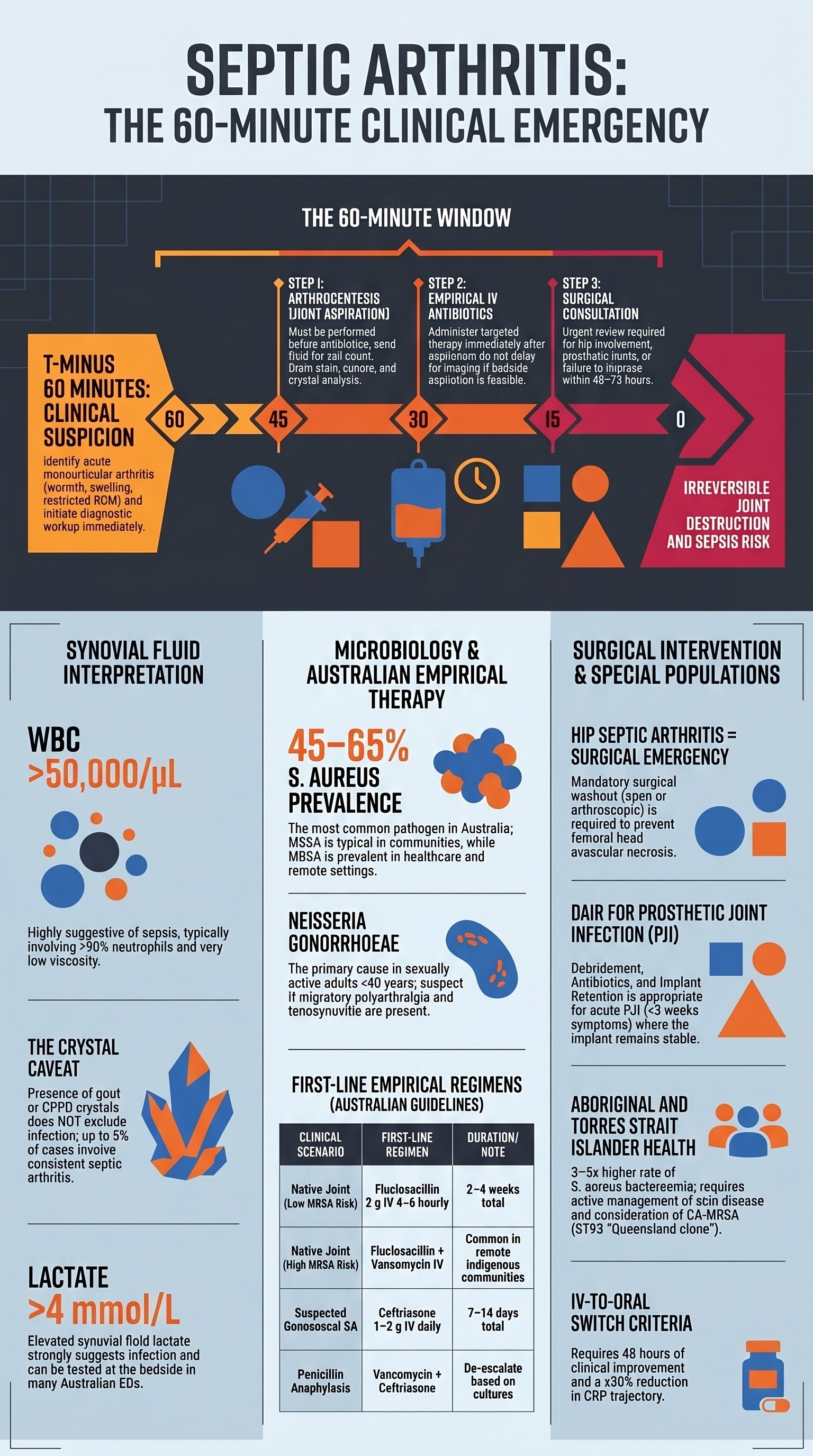
๐Ÿ–ผ๏ธ Septic Arthritis โ€” visual summary
Septic Arthritis visual summary infographic

Surgical Washout

Surgical intervention is a critical component of management for many septic arthritis cases. The goal is to decompress the joint, remove purulent material, and reduce bacterial load and inflammatory mediators that drive cartilage destruction.

Indications for Surgical Washout

  • Always: Hip septic arthritis (difficult to aspirate percutaneously, high risk of avascular necrosis).
  • Always: Prosthetic joint infection (see dedicated section below).
  • Failure of medical therapy: No clinical improvement within 48โ€“72 hours of appropriate IV antibiotics.
  • Loculated effusion: Ultrasound or CT evidence of complex, septated collection not amenable to percutaneous drainage.
  • Septic arthritis with associated osteomyelitis.
  • Post-arthroscopic or post-surgical infection.
  • Recurrent effusion reaccumulation despite serial aspiration.

Surgical Approaches

Approach Indication Advantages Considerations
Arthroscopic washout Knee, shoulder (first-line for most cases) Minimally invasive, allows direct visualisation, multiple washes possible, shorter recovery Requires specialist equipment; may not adequately clear heavily loculated collections
Open arthrotomy Hip SA, complex or late presentations, failed arthroscopic washout Thorough debridement, better access to deep structures, gold standard for hip Greater surgical morbidity, longer hospital stay, wound complications
Repeated needle aspiration Knee SA (selected cases), small effusions, patient unfit for surgery No surgical morbidity, can be performed at bedside under ultrasound Less effective for loculated collections; may require multiple procedures
๐Ÿšจ
Hip septic arthritis = surgical emergency. Do not attempt to manage hip septic arthritis with antibiotics alone. Prompt surgical washout (open or arthroscopic) is mandatory. Delay leads to avascular necrosis of the femoral head, growth plate damage in children, and irreversible disability.

Prosthetic Joint Infection (PJI)

Prosthetic joint infection (PJI) is one of the most devastating complications following total joint arthroplasty, affecting 1โ€“2% of primary replacements. Management requires a coordinated multidisciplinary team approach involving orthopaedic surgery, infectious diseases, microbiology, and pharmacy.

Classification

Early
Acute PJI
Within 3 months of surgery. Usually acute haematogenous or peri-operative inoculation. S. aureus, streptococci. Good implant stability.
Treatment: DAIR if <3 weeks symptoms
Delayed
Subacute PJI
3โ€“12 months post-surgery. Low-virulence organisms (coagulase-negative staphylococci, Cutibacterium acnes). Insidious pain and loosening.
Treatment: DAIR or one-stage exchange
Late
Chronic PJI
>12 months post-surgery. Biofilm-mediated. Implant loosening on imaging. May present as aseptic loosening that is actually infected.
Treatment: Two-stage revision (preferred in Australia)

DAIR โ€” Debridement, Antibiotics, Implant Retention

DAIR is the preferred surgical strategy for acute PJI when all of the following criteria are met:

  • Symptoms present for <3 weeks.
  • Implant is well-fixed and functional.
  • Soft tissue envelope is intact.
  • Organism is known or likely susceptible to available antibiotics.
  • No sinus tract communicating with the prosthesis.

DAIR involves thorough surgical debridement, exchange of modular components (polyethylene liner, femoral head), and copious lavage. Antibiotics are then continued for a prolonged course of 6โ€“12 weeks (typically 2โ€“6 weeks IV followed by oral completion).

Two-Stage Revision

The gold standard for chronic PJI in Australia. Stage 1: removal of all prosthetic material, thorough debridement, and insertion of an antibiotic-loaded cement spacer. Stage 2: re-implantation of a new prosthesis after 6โ€“12 weeks of targeted antibiotic therapy and confirmation of infection eradication (normalised inflammatory markers, negative cultures).

PJI Antibiotic Duration

Strategy IV Duration Total Duration Notes
DAIR (acute PJI)2โ€“6 weeks3โ€“6 monthsLonger for staphylococci; oral suppression may continue indefinitely
Two-stage revision2โ€“6 weeks (stage 1)6โ€“12 weeks (pre-reimplantation)Discontinue 2 weeks before re-implantation to assess inflammatory markers
Chronic oral suppressionN/AIndefinite (if implant retained)e.g., TMP-SMX, doxycycline, cephalexin; for patients unsuitable for revision
โš ๏ธ
Infectious diseases specialist referral is mandatory for all PJI cases. Optimal management requires access to prolonged IV therapy (outpatient parenteral antibiotic therapy โ€” OPAT), biofilm-active antibiotics (rifampicin for staphylococcal PJI), and close follow-up. Refer early to the nearest ID service.

Key PJI Antibiotics

๐Ÿ’Š
Rifampicin
Rifadinยฎ ยท Generic ยท Rifamycin
Adult dose 300โ€“450 mg PO every 12 hours (always used in combination โ€” never as monotherapy)
Paediatric dose 10 mg/kg PO every 12 hours (max 600 mg/day)
Route Oral
Renal adjustment No adjustment required
Notes Biofilm-active against staphylococci. Essential companion for staphylococcal PJI after DAIR or resection. Must be combined with another agent (ciprofloxacin, TMP-SMX, or fusidic acid) to prevent resistance emergence. Monitor LFTs.
PBS status โœ” PBS General Benefit
๐Ÿ’Š
Ciprofloxacin
Ciproxinยฎ ยท Generic ยท Fluoroquinolone
Adult dose 500โ€“750 mg PO every 12 hours
Route Oral
Renal adjustment Reduce dose if eGFR <30 mL/min
Notes Used in combination with rifampicin for staphylococcal PJI (oral switch after initial IV phase). Excellent bone and biofilm penetration. Tendon toxicity risk โ€” counsel patients.
PBS status โœ” PBS General Benefit

Special Populations

๐Ÿคฐ Pregnancy
Flucloxacillin
Category A โ€” safe in pregnancy. First-line.
Ceftriaxone
Category B1 โ€” safe; preferred for gonococcal SA in pregnancy.
Vancomycin
Category B2 โ€” use when MRSA indicated; therapeutic drug monitoring essential.
Fluoroquinolones
Category B3 โ€” avoid unless no alternative. Risk of cartilage damage.
Rifampicin
Category C โ€” avoid in first trimester if possible; use with obstetric guidance for PJI.
๐Ÿ‘ถ Paediatrics
Common organisms
S. aureus, Group A Streptococcus, Kingella kingae (children <4 yrs). K. kingae may not grow on standard culture โ€” request specific PCR if available.
Empirical regimen
Flucloxacillin 50 mg/kg IV 6-hourly. Add vancomycin if MRSA risk or critically unwell child. Consider ceftriaxone if K. kingae suspected.
Hip SA
Surgical washout mandatory in paediatric hip SA. Risk of avascular necrosis of capital femoral epiphysis.
๐Ÿ‘ด Elderly (>65 years)
Atypical presentation
May lack fever, have only mild joint signs, or present with delirium alone. Maintain a high index of suspicion.
Polymicrobial infection
More common; ensure broad-spectrum empirical cover including Gram-negative organisms.
Vancomycin dosing
Adjust for reduced renal clearance. Therapeutic drug monitoring is essential.
๐Ÿซ˜ Renal Impairment
Vancomycin
Extend dosing interval based on eGFR. TDM mandatory โ€” target trough 15โ€“20 mg/L for serious infection.
Gentamicin
Avoid if eGFR <30 unless TDM available. Extended-interval dosing with pre-dose level monitoring.
Flucloxacillin
No dose adjustment required but monitor for accumulation in severe impairment.
๐Ÿซ Hepatic Impairment
Flucloxacillin
Use with caution โ€” risk of cholestatic hepatitis (higher incidence with prolonged courses >2 weeks). Monitor LFTs.
Rifampicin
Hepatotoxic โ€” avoid in severe liver disease. Monitor LFTs fortnightly.
๐Ÿ›ก๏ธ Immunocompromised
Broader cover
Include vancomycin + anti-pseudomonal agent (piperacillin-tazobactam or meropenem) empirically. Consider fungal infection (e.g., Candida, Aspergillus) if culture-negative.
Biologic DMARDs
Hold TNF inhibitors, IL-6 inhibitors during active infection. Restart only after infection fully treated and with ID guidance.
HIV
Consider N. gonorrhoeae, S. aureus, mycobacteria, fungi. CD4 count guides differential.

Monitoring

1
Daily Clinical Assessment
Joint pain, swelling, range of motion, temperature, haemodynamic status. Document joint circumference for objective tracking.
2
CRP Trajectory
Check CRP every 24โ€“48 hours. Expect 50% reduction by day 3โ€“5 with effective therapy. Rising or plateauing CRP warrants surgical review and repeat aspiration.
3
Antibiotic TDM
Vancomycin troughs (target 15โ€“20 mg/L), gentamicin levels. Check at steady state (4th dose).
4
IV-to-Oral Review
At 48โ€“72 hours: assess clinical response, culture results, CRP trend. Switch to oral if criteria met (see above).
5
Post-Discharge Follow-Up
Rheumatology/orthopaedic review at 2 weeks, 6 weeks, and 3 months. Repeat CRP and joint assessment. Physiotherapy for joint rehabilitation.

Aboriginal and Torres Strait Islander Health Considerations

Aboriginal and Torres Strait Islander Health

Aboriginal and Torres Strait Islander peoples experience a significantly higher burden of Staphylococcus aureus bacteraemia (SAB), estimated at 3โ€“5 times the rate of the non-Indigenous population, with correspondingly higher rates of secondary septic arthritis. This disparity is driven by a complex interplay of factors that must be actively addressed in clinical management.

CA-MRSA prevalence
Community-associated MRSA (particularly ST93 "Queensland clone") is highly prevalent in remote and very remote communities. Empirical vancomycin should be included in the initial regimen for patients from these areas or with known MRSA colonisation.
Delayed presentation
Geographic isolation, limited primary healthcare access, and cultural factors may delay presentation. Patients may present with advanced disease, multi-joint involvement, or concurrent osteomyelitis. Maintain a low threshold for aspiration and broad-spectrum cover.
Skin disease burden
Scabies, impetigo, and skin sores are highly prevalent, especially in children, and serve as a portal of entry for S. aureus bacteraemia. Concurrent treatment of skin infections and environmental health measures are essential.
Healthcare access
Specialist rheumatology, orthopaedic, and infectious diseases services may be limited in remote areas. Telehealth consultation, retrieval services via RFDS, and OPAT programmes should be actively arranged.
Cultural safety
Engage Aboriginal Health Workers and Liaison Officers. Provide culturally appropriate education materials. Allow time for family consultation. Acknowledge the significance of sorry business and other cultural obligations that may affect follow-up.
Medication adherence
Complex IV-to-oral antibiotic regimens may be challenging to maintain in remote settings. Simplify where possible, involve community pharmacies, and arrange medication delivery through Section 100 (S100) remote area pharmacist schemes.
Rheumatic heart disease
RHD remains prevalent in Aboriginal and Torres Strait Islander communities. Suspected septic arthritis with concurrent RHD raises the possibility of infective endocarditis โ€” perform echocardiography and prolonged IV antibiotics are warranted.
โ„น๏ธ
Resources: RHDAustralia (rhdaustralia.org.au) provides clinical guidelines for RHD management. The Australian Institute of Health and Welfare (AIHW) publishes regular reports on S. aureus bacteraemia rates in Aboriginal and Torres Strait Islander peoples. Coordinate with local Aboriginal Community Controlled Health Organisations (ACCHOs) for ongoing care.
๐Ÿ“Š Septic Arthritis โ€” slide deck

Open slides PDF in new tab

๐Ÿ“š References

  1. 1. Mathews CJ, Coakley G. Septic arthritis: current diagnostic and therapeutic algorithm. Curr Opin Rheumatol. 2008;20(4):457โ€“462.
  2. 2. Sharff KA, Richards EP, Townes JM. Clinical management of septic arthritis. Curr Rheumatol Rep. 2013;15(6):332.
  3. 3. Ross JJ, Saltzman CL, Carling P, Shapiro DS. Pneumococcal septic arthritis: review of 190 cases. Clin Infect Dis. 2003;36(3):319โ€“327.
  4. 4. Osmon DR, Berbari EF, Berendt AR, et al. Diagnosis and management of prosthetic joint infection: clinical practice guidelines by the Infectious Diseases Society of America. Clin Infect Dis. 2013;56(1):e1โ€“e25.
  5. 5. Zimmerli W, Trampuz A, Ochsner PE. Prosthetic-joint infections. N Engl J Med. 2004;351(16):1645โ€“1654.
  6. 6. Tong SYC, Davis JS, Eichenberger E, Holland TL, Fowler VG. Staphylococcus aureus infections: epidemiology, pathophysiology, clinical manifestations, and management. Clin Microbiol Rev. 2015;28(3):603โ€“661.
  7. 7. Australian Commission on Safety and Quality in Health Care (ACSQHC). Australian Atlas of Healthcare Variation. Sydney: ACSQHC; 2018.
  8. 8. Australian Institute of Health and Welfare (AIHW). Aboriginal and Torres Strait Islander Health Performance Framework 2020 summary report. Canberra: AIHW; 2020.
  9. 9. Margaretten ME, Kohlwes J, Moore D, Bent S. Does this adult patient have septic arthritis? JAMA. 2007;297(13):1478โ€“1488.
  10. 10. Royal Australian College of General Practitioners (RACGP). Red Book: Guidelines for preventive activities in general practice. 10th ed. Melbourne: RACGP; 2018.