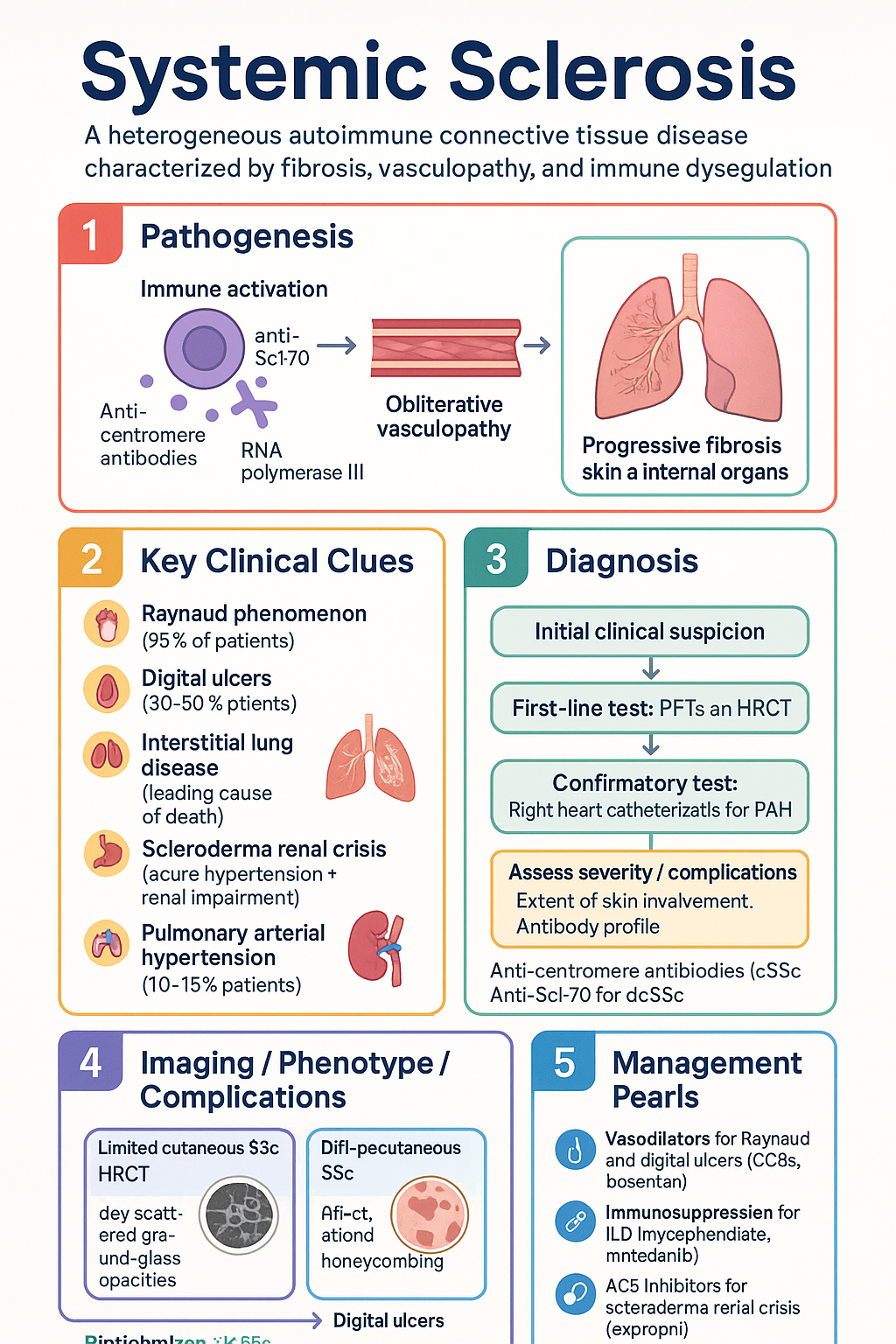
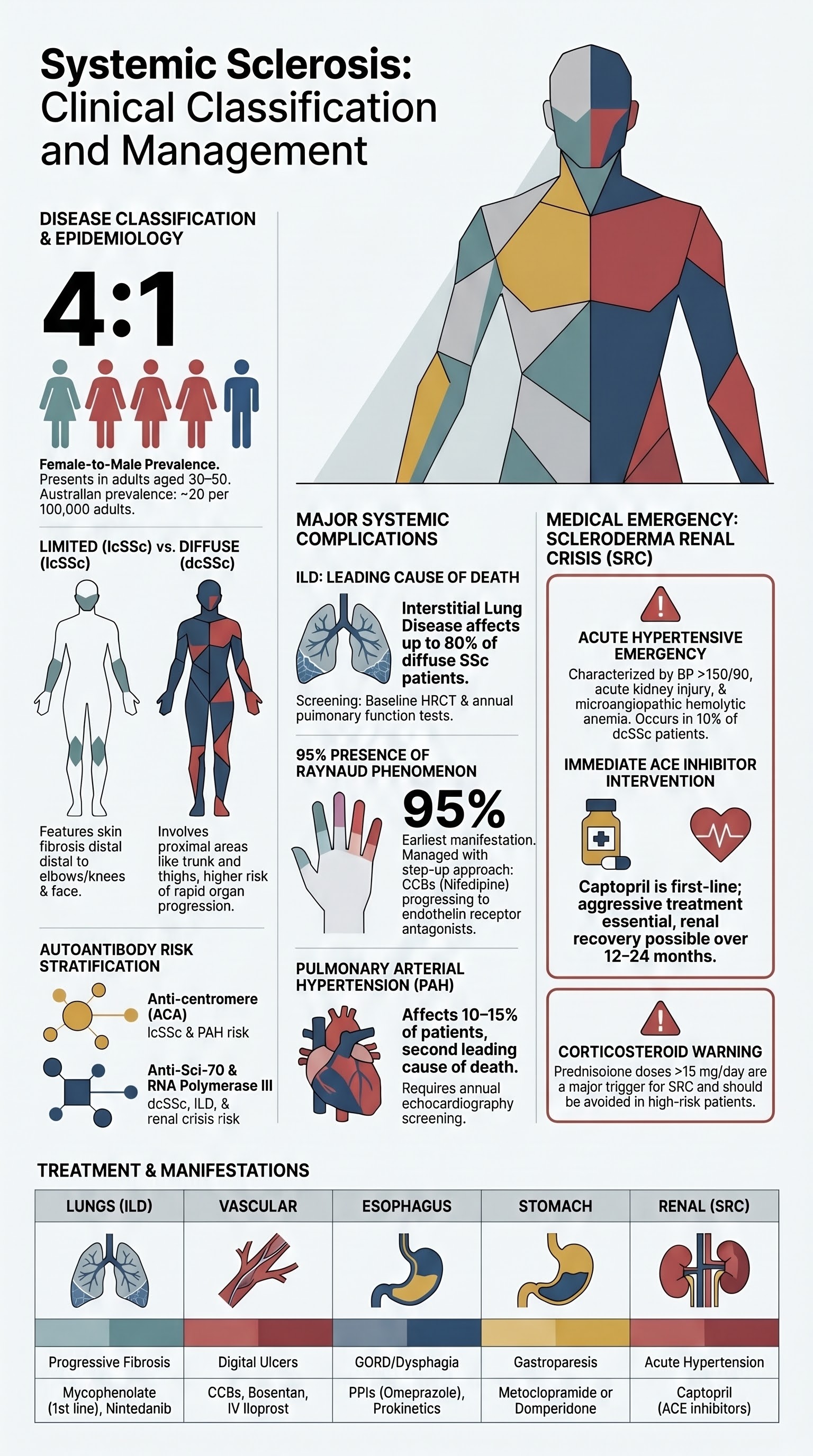
Introduction and Overview
Systemic sclerosis (SSc), also known as scleroderma, is a complex multisystem autoimmune disease characterised by three hallmark processes: vasculopathy (Raynaud phenomenon and ischaemia), immune dysregulation (autoantibodies and inflammation), and progressive tissue fibrosis affecting the skin and internal organs. SSc is the most severe connective tissue disease in terms of disease-related mortality. It predominantly affects women (female:male ~4โ6:1), typically presenting between ages 30โ50. The two main subtypes โ limited cutaneous SSc (lcSSc) and diffuse cutaneous SSc (dcSSc) โ differ in the extent of skin involvement and pattern of organ disease. Early recognition and targeted organ-based management are essential to reduce mortality from pulmonary arterial hypertension (PAH), interstitial lung disease (ILD), and scleroderma renal crisis.
| Feature | Limited Cutaneous SSc (lcSSc) | Diffuse Cutaneous SSc (dcSSc) |
|---|---|---|
| Skin involvement | Distal to elbows/knees; face | Proximal limbs, trunk, face |
| Key autoantibodies | Anti-centromere (ACA) | Anti-Scl-70 (anti-topoisomerase I); anti-RNA pol III |
| Raynaud phenomenon | Often precedes other features by years; CREST syndrome | Present; may be less prominent early |
| PAH risk | Higher โ late complication; isolated PAH | Lower โ but may occur with ILD-PAH |
| ILD risk | Less common; NSIP pattern | More common (anti-Scl-70); NSIP and UIP patterns |
| Scleroderma renal crisis | Uncommon | Higher risk โ especially anti-RNA pol III positive, early dcSSc, high-dose steroids |
| Prognosis | Generally better; 10-year survival ~80โ90% | More severe; 10-year survival ~60โ80% |
The 2013 ACR/EULAR classification criteria require a total score โฅ9 for classification. Skin thickening of the fingers extending proximal to the metacarpophalangeal joints (score 9) is sufficient alone.
Pathophysiology
SSc pathogenesis involves three interconnected processes: vasculopathy (endothelial injury and microvascular obliteration), immune activation (T and B cell dysregulation, autoantibody production), and fibroblast activation leading to progressive collagen deposition.
Key Pathogenic Mechanisms
- Vasculopathy โ endothelial injury is the earliest event; Raynaud phenomenon reflects vasospasm; intimal proliferation and luminal obliteration cause ischaemia, digital ulcers, and PAH
- Immune activation โ T cell (predominantly Th2 and Th17) and B cell infiltration in early skin disease; cytokines (TGF-ฮฒ, IL-4, IL-6, IL-13) drive fibroblast activation; autoantibodies are biomarkers rather than direct pathogenic agents
- Fibroblast activation โ TGF-ฮฒ is the master fibrogenic cytokine; myofibroblast differentiation leads to irreversible collagen deposition in skin, lungs, heart, and gastrointestinal tract
- Autoantibodies โ anti-Scl-70 (anti-topoisomerase I): associated with dcSSc and ILD; anti-centromere (ACA): associated with lcSSc and PAH; anti-RNA polymerase III: associated with dcSSc, rapid skin progression, and scleroderma renal crisis; anti-U1 RNP: overlap syndromes
Genetic and Environmental Factors
- HLA associations โ HLA-DQ7, DRB1*11:04 with anti-Scl-70; HLA-DQ2 with ACA
- Occupational exposures โ silica (strongest), organic solvents, vinyl chloride; risk factor for dcSSc
- Microchimerism โ fetal cells persisting in maternal circulation may contribute to SSc pathogenesis
Clinical Presentation
SSc presents with diverse organ manifestations. Raynaud phenomenon is usually the first symptom and may precede other features by years. Clinical assessment should systematically evaluate all organ systems.
| System | Manifestation | Clinical Notes |
|---|---|---|
| Vascular | Raynaud phenomenon (95%); digital ulcers; calcinosis; telangiectasias; gangrene | Raynaud severity graded by number/duration of attacks; nailfold capillaroscopy โ abnormal = SSc pattern; digital ulcers indicate ischaemia |
| Skin | Oedematous phase (early, puffy fingers/hands) โ indurative phase (skin thickening) โ atrophic phase; telangiectasias; salt-and-pepper pigmentation; calcinosis | Modified Rodnan Skin Score (mRSS) quantifies skin thickening (0โ51); dcSSc progresses rapidly in first 3โ5 years |
| Pulmonary | ILD (most common cause of SSc death); PAH (second most common); pleural disease | ILD: NSIP pattern in anti-Scl-70; PAH: isolated (lcSSc) or ILD-PAH; screen annually with PFTs and echocardiogram |
| Cardiac | Pericarditis; myocarditis; cardiomyopathy; conduction abnormalities; pericardial effusion | Cardiac involvement often subclinical; Holter monitoring and cardiac MRI if symptomatic |
| Renal | Scleroderma renal crisis (SRC) โ hypertensive crisis with microangiopathic haemolytic anaemia and AKI | SRC is a medical emergency; anti-RNA pol III, early dcSSc, high-dose corticosteroids are risk factors; ACE inhibitor is life-saving treatment |
| Gastrointestinal | GERD; dysphagia; gastroparesis; small bowel dysmotility (pseudo-obstruction, SIBO); constipation; faecal incontinence | GI involvement in ~90%; GERD causes Barrett oesophagus; SIBO causes malabsorption |
| Musculoskeletal | Arthralgia; inflammatory arthritis; myopathy; tendon friction rubs | Tendon friction rubs (palpable crepitus over tendons) are specific to dcSSc and predict poor prognosis |
Investigations
SSc requires comprehensive baseline assessment across all organ systems, with structured annual screening for PAH and ILD. Autoantibody profile is essential for risk stratification and predicts specific organ complications.
- EssentialANA + SSc autoantibody panel (anti-Scl-70, anti-centromere, anti-RNA pol III)ANA positive in >95% SSc. Anti-Scl-70 (anti-topoisomerase I): dcSSc, ILD, worse prognosis. Anti-centromere (ACA): lcSSc, PAH, calcinosis. Anti-RNA pol III: dcSSc, rapid skin thickening, scleroderma renal crisis. These antibodies are almost mutually exclusive โ only one major antibody typically present.
- EssentialNailfold capillaroscopySSc pattern: dilated/giant loops, avascular areas, haemorrhages. Abnormal capillaroscopy in context of Raynaud phenomenon is highly predictive of SSc โ present in early/undifferentiated SSc before other features develop. Essential for early diagnosis.
- EssentialPFTs (spirometry + DLCO) โ baseline and annualForced vital capacity (FVC) โ ILD marker; declining FVC >10% in 12 months = significant progression. DLCO โ reduced in ILD and PAH; DLCO <70% = PAH risk; DLCO/VA ratio separates ILD (both reduced) from PAH (DLCO reduced, DLCO/VA preserved).
- EssentialEchocardiogram โ baseline and annual PAH screeningEstimated RVSP >40 mmHg = further PAH evaluation. Australian guidelines (DETECT algorithm for lcSSc, ASIG algorithm for dcSSc) recommend annual screening in all SSc patients with specific cutoffs. Formal right heart catheterisation (RHC) required to confirm PAH diagnosis.
- EssentialHRCT chest โ baseline; repeat based on riskNSIP pattern most common (anti-Scl-70); UIP also seen. Extent of fibrosis on HRCT is the most reliable ILD prognostic marker. Repeat at 12 months if ILD present; baseline HRCT in all anti-Scl-70 patients.
- EssentialFBC, UEC, LFTs, ESR, CRPBaseline and 3โ6 monthly; renal function for SRC surveillance; LFTs for hepatic involvement (PBC overlap); haematological parameters.
- RecommendedECG and Holter monitorArrhythmias and conduction abnormalities in cardiac SSc; 24-hour Holter if palpitations or syncope.
- RecommendedNT-proBNPElevated NT-proBNP with dyspnoea = PAH or cardiac SSc investigation required. Useful for PAH screening algorithm.
- RecommendedModified Rodnan Skin Score (mRSS)Quantifies skin involvement โ 17 areas scored 0โ3 (total 0โ51). Useful for monitoring skin progression in dcSSc. Declining mRSS in first 3โ5 years may indicate transition to atrophic phase or treatment response.
- RecommendedUpper GI endoscopy / oesophageal manometryIndicated if significant GERD, dysphagia, or Barrett oesophagus surveillance required. Manometry for oesophageal dysmotility assessment.
Risk Stratification
Risk stratification in SSc is based on disease subtype, autoantibody profile, organ involvement, and rate of progression. The two most feared outcomes are PAH and scleroderma renal crisis.
| Risk Category | Features | Management Priority |
|---|---|---|
| Low risk | lcSSc; anti-centromere positive; stable FVC/DLCO; mRSS <10; no cardiac, renal, or significant ILD involvement | Annual PAH and ILD screening; Raynaud/digital ulcer management; self-monitoring; skin care |
| Moderate risk | dcSSc (early <5 years); anti-Scl-70 positive; declining FVC; DLCO <70%; mRSS rapidly rising; RVSP 35โ40 mmHg on echo | Aggressive ILD monitoring; consider MMF; echocardiogram 6-monthly; DETECT algorithm for PAH; rheumatology 3-monthly |
| High risk โ ILD | Progressive ILD: FVC decline >10% in 12 months; DLCO <40%; HRCT fibrosis >20% of lung volume | Commence immunosuppression (MMF or CYC) ยฑ nintedanib; pulmonology co-management; consider HSCT in selected refractory cases |
| High risk โ PAH | RVSP >40 mmHg; NT-proBNP elevated; DLCO markedly reduced; DETECT score positive; confirmed by RHC (mPAP >20 mmHg, PVR >2 Wood units) | PAH-targeted therapy; cardiology and pulmonology co-management; bosentan or sildenafil PBS-listed |
| SRC risk | dcSSc <4 years duration; anti-RNA pol III positive; rapid skin thickening; new tendon friction rubs; high-dose corticosteroids (โฅ15 mg prednisolone/day) | Avoid high-dose steroids; regular BP monitoring (2โ3 times per week at home); ACE inhibitor readiness; immediate hospital if SBP >150 or AKI |
Pharmacological Management
SSc management is organ-based โ there is no global disease-modifying therapy that reverses fibrosis. Management targets specific complications: immunosuppression for ILD, vasodilators and endothelin antagonists for PAH, ACE inhibitors for renal crisis, and proton pump inhibitors and prokinetics for GI disease.
Directed Therapy
Directed therapy in SSc addresses specific organ manifestations requiring targeted treatment.
Raynaud Phenomenon and Digital Ulcers
- Lifestyle โ warming gloves, heated gloves, hand warmers; avoid cold exposure and smoking (vasoconstrictive); avoid beta-blockers if possible
- Nifedipine modified release โ first-line pharmacological Raynaud treatment (PBS-listed for Raynaud in SSc); 20โ40 mg twice daily
- Sildenafil or other PDE-5 inhibitors โ for refractory Raynaud or digital ulcers not responding to calcium channel blockers
- Iloprost IV infusion โ for severe digital ischaemia or impending gangrene; admitted inpatient; 0.5โ2 ng/kg/min over 6 hours for 5 consecutive days; PBS-listed for critical digital ischaemia
- Bosentan โ PBS-listed for prevention of new digital ulcers in SSc with recurrent digital ulcers
- Digital sympathectomy โ surgical last resort for critical digital ischaemia; vascular surgery referral
Gastrointestinal Disease
- GERD โ high-dose PPI (omeprazole 40 mg twice daily or pantoprazole 40 mg twice daily); avoid lying flat after meals; head of bed elevation; small frequent meals
- Gastroparesis โ prokinetics (metoclopramide or domperidone 10 mg TID before meals); small frequent meals; liquid feeds if severe
- SIBO โ rotating antibiotics (metronidazole, doxycycline, rifaximin); nutritional support (dietitian); malabsorption monitoring
- Consti6 months, HRCT annually
- Progressive ILD (FVC decline โฅ5โ10% over 12 months) โ nintedanib (PBS) ยฑ MMF; or cyclophosphamide IV ร 6 followed by MMF
- Pulmonology co-management; lung transplant evaluation for end-stage ILD (FVC <50%)
- Avoid corticosteroids >15 mg/day (risk of triggering scleroderma renal crisis)
Pulmonary Arterial Hypertension
- Confirm with RHC โ do not treat based on echo alone
- WHO class II: ERA monotherapy (bosentan or macitentan) or PDE5 inhibitor monotherapy
- WHO class IIIโIV: combination therapy (ERA + PDE5 inhibitor); consider riociguat (soluble guanylate cyclase stimulator; NOT with PDE5 inhibitor); prostanoid (iloprost or epoprostenol IV) for severe or refractory PAH
- All PAH patients referred to specialist PAH centre; consider transplant evaluation for WHO class IV or refractory disease
Gastrointestinal Manifestations
- GERD โ high-dose PPI (omeprazole 40 mg twice daily or equivalent); elevate head of bed; avoid large meals and meals within 3 hours of lying down
- Dysphagia โ soft diet; prokinetics (metoclopramide, domperidone); endoscopy to assess strictures and Barrett oesophagus
- SIBO โ rotating antibiotics (rifaximin, metronidazole, ciprofloxacin); gastroenterology referral
- Gastroparesis โ prokinetics; small frequent meals; jejunal feeds if severe
Skin Fibrosis
- Immunosuppression for active inflammatory skin disease โ MMF, methotrexate, or rituximab may slow skin progression in early dcSSc
- Skin care โ intensive moisturisation; avoid extreme temperatures; physiotherapy for contractures
- Calcinosis โ no effective medical treatment; pain management; surgical excision for large/infected deposits
Non-Pharmacological Management
Non-pharmacological management is central to SSc care โ particularly for Raynaud phenomenon, skin care, contracture prevention, and nutritional support.
Raynaud and Vascular Protection
- Temperature protection โ heated gloves, hand warmers, layered clothing; battery-heated garments for severe cases
- Smoking cessation โ non-negotiable; tobacco dramatically worsens vasospasm and digital ischaemia
- Avoid vasoconstrictors โ beta-blockers, sympathomimetics, ergotamines, cocaine; decongestants
- Digital ulcer wound care โ non-adherent dressings; avoid pressure; vascular nursing input
Skin Care and Physiotherapy
- Intensive skin moisturisation โ multiple times daily; urea-based or lanolin creams; prevent dryness and cracking
- Physiotherapy โ range-of-motion exercises for hands, face, and trunk; facial stretching for microstomia; splinting for contractures
- Occupational therapy โ adaptive devices for hand weakness; splints; functional assessment
- Speech pathology referral โ if dysphagia significant; swallowing assessment
Nutrition and GI Support
- Dietary assessment โ malnutrition is common due to dysphagia, GERD, and GI dysmotility; dietitian referral
- Dental care โ microstomia impairs oral hygiene; frequent dental review; custom dental appliances
- Nutritional supplementation โ enteral feeding (jejunal if gastroparesis) for patients who cannot maintain oral nutrition
Psychological Support
- SSc has significant psychological burden โ disfigurement (skin changes, telangiectasias), disability, sexual dysfunction, pain
- Psychology referral for depression, anxiety, body image concerns, and adjustment difficulties
- Scleroderma Australia patient support resources; Arthritis Australia
Monitoring Parameters
SSc requires structured, intensive organ monitoring. The goal is early detection of ILD progression, PAH, and scleroderma renal crisis before irreversible damage occurs. Monitoring is lifelong and should be coordinated by a rheumatologist.
| Parameter | Frequency | Indication |
|---|---|---|
| PFTs (FVC + DLCO) | 6-monthly (early dcSSc / ILD); annually (stable lcSSc) | ILD and PAH surveillance; FVC decline โฅ5% = significant progression |
| Echocardiogram | Annually (all SSc) | PAH screening; right ventricular pressure estimate |
| HRCT chest | Baseline; repeat if FVC declines or symptoms worsen | ILD extent and progression; basis for treatment decisions |
| Blood pressure (home monitoring) | Daily for early dcSSc / anti-RNA pol III positive | Scleroderma renal crisis early detection |
| UEC + urinalysis | 3-monthly (early dcSSc); 6-monthly (stable) | Renal crisis surveillance; immunosuppression toxicity |
| mRSS (Rodnan skin score) | Every rheumatology visit (dcSSc) | Skin fibrosis progression and treatment response |
| FBC, LFTs, CRP | 3-monthly (on immunosuppression); 6-monthly (stable) | Immunosuppression toxicity; bosentan hepatotoxicity |
| NT-proBNP / BNP | Annually (PAH screening tool) | Elevated BNP/NT-proBNP = PAH risk; triggers formal PAH workup |
When to Refer Urgently
- Emergency: Suspected scleroderma renal crisis (acute hypertension + AKI) โ ACE inhibitor immediately; admit for monitoring and dose titration
- Respiratory: New dyspnoea, worsening PFTs, elevated echo RVSP โ urgent right heart catheterisation for PAH confirmation
- Vascular: Digital gangrene, non-healing digital ulcers โ vascular surgery ยฑ iloprost IV
- Cardiac: New pericardial effusion, cardiac failure โ cardiology; tamponade if large effusion
Special Populations
Specific groups within the SSc population require modified management.
SSc in Pregnancy
- Pregnancy in SSc is high-risk โ scleroderma renal crisis risk (especially early dcSSc), pre-eclampsia, preterm birth, and fetal growth restriction
- Pre-conception counselling โ disease should be stable for โฅ12 months; avoid pregnancy in early dcSSc or active ILD/PAH
- PAH is a contraindication to pregnancy โ maternal mortality risk >25%
- Continue low-dose aspirin for renal crisis prevention in high-risk patients; avoid high-dose steroids
- Teratogenic drugs โ MMF, bosentan, nintedanib must be stopped โฅ3 months before conception; methotrexate โฅ3 months
Undifferentiated CTD / Early SSc
- Raynaud phenomenon + positive ANA + abnormal nailfold capillaroscopy = high risk of evolution to SSc โ monitor closely
- SSc-specific autoantibody (anti-Scl-70, ACA, or anti-RNA pol III) without skin thickening = "pre-SSc" โ rheumatology follow-up and organ screening
Male SSc
- Male SSc is often more severe โ higher rates of ILD, PAH, and cardiac involvement; worse prognosis than females
- Erectile dysfunction common โ caused by vasculopathy; sildenafil is both vasodilatory (Raynaud) and erectile dysfunction treatment
Overlap Syndromes
- SSc-myositis overlap (scleromyositis) โ anti-PM-Scl antibody; treat myositis with steroids + immunosuppression; monitor cardiac and ILD
- MCTD (anti-U1 RNP) โ features of SSc, SLE, and myositis; generally better prognosis than pure SSc
Aboriginal and Torres Strait Islander Health Considerations
Systemic sclerosis in Aboriginal and Torres Strait Islander (ATSI) Australians is associated with more severe disease outcomes, predominantly due to delayed diagnosis and limited access to subspecialty care. The compounding burden of pre-existing cardiovascular disease, renal disease, and respiratory comorbidities in ATSI communities worsens SSc prognosis. PAH and ILD monitoring requires echocardiography and HRCT that may not be accessible in remote areas.
Appropriate Use of Medicine and Stewardship
Stewardship in SSc focuses on preventing the most dangerous iatrogenic complication (scleroderma renal crisis triggered by corticosteroids), avoiding drug interactions with bosentan and sildenafil, and ensuring teratogenic drugs are managed with mandatory contraception.
- High-dose corticosteroids in dcSSc: Prednisolone โฅ15 mg/day is a major precipitant of scleroderma renal crisis. Avoid unless absolutely necessary; if required, monitor BP closely and ensure ACE inhibitor availability. Do NOT use high-dose steroids for Raynaud, sicca, or skin thickening alone.
- ARBs for scleroderma renal crisis: ARBs are NOT equivalent to ACE inhibitors for SRC. Use captopril or enalapril. Do not substitute ARB even in patients intolerant of ACE inhibitor cough.
- Nitrates with sildenafil: Absolute contraindication โ fatal hypotension. Screen for concurrent nitrate use before prescribing sildenafil for PAH or Raynaud.
- Treating PAH without RHC confirmation: Echo-estimated RVSP alone is insufficient to diagnose PAH. Right heart catheterisation is mandatory before initiating PAH-specific therapy (bosentan, sildenafil). Misdiagnosis leads to inappropriate and potentially harmful treatment.
- MMF or bosentan without contraception counselling: Both are teratogenic Category D. Document contraception counselling and patient agreement before prescribing. Recommend LARCs where appropriate.
GP Role in SSc Management
- Avoid prescribing high-dose steroids (โฅ15 mg/day) โ use lowest effective dose; warn patients to seek urgent review if BP rises
- Home blood pressure monitoring โ provide patients with early dcSSc / anti-RNA pol III positive with BP machine; educate on SRC warning signs
- Medication review โ avoid vasoconstrictors (beta-blockers, nasal decongestants); check for nitrate co-prescription with PDE5 inhibitors
- Monitor immunosuppression โ FBC and LFTs 3-monthly for patients on MMF or azathioprine
- Bosentan LFT monitoring โ monthly LFTs mandatory; withhold if transaminases >3ร ULN
Follow-up and Prevention
SSc requires lifelong multidisciplinary follow-up. The two most important goals are preventing scleroderma renal crisis and detecting PAH/ILD progression before irreversible end-organ damage occurs.
References
- 01Kowal-Bielecka O, et al. Update of EULAR recommendations for the treatment of systemic sclerosis. Ann Rheum Dis. 2017;76(8):1327โ1339.
- 02Distler O, et al. Nintedanib for Systemic SclerosisโAssociated Interstitial Lung Disease (SENSCIS). N Engl J Med. 2019;380(26):2518โ2528.
- 03Tashkin DP, et al. Mycophenolate mofetil versus oral cyclophosphamide in scleroderma-related interstitial lung disease (SLS II). Lancet Respir Med. 2016;4(9):708โ719.
- 04van den Hoogen F, et al. 2013 Classification Criteria for systemic sclerosis: an American College of Rheumatology/European League Against Rheumatism collaborative initiative. Arthritis Rheum. 2013;65(11):2737โ2747.
- 05Pharmaceutical Benefits Scheme (PBS). Schedule of Pharmaceutical Benefits. Canberra: Department of Health; 2025.
- 06Therapeutic Guidelines. Rheumatology. Melbourne: Therapeutic Guidelines Ltd; 2024.