📋 Key Information Summary
- Tuberculosis is a nationally notifiable disease in Australia; cases are reported to the National Notifiable Diseases Surveillance System (NNDSS) and managed under state/territory public health legislation.
- Australia has a low TB incidence (~1,400 notifications/year), predominantly affecting overseas-born individuals, Aboriginal and Torres Strait Islander peoples in some jurisdictions, and immunocompromised populations.
- The tuberculin skin test (TST / Mantoux) and interferon-gamma release assays (IGRA; QuantiFERON-TB Gold Plus, T-SPOT.TB) are the principal screening tools for latent TB infection (LTBI); neither distinguishes active from latent disease.
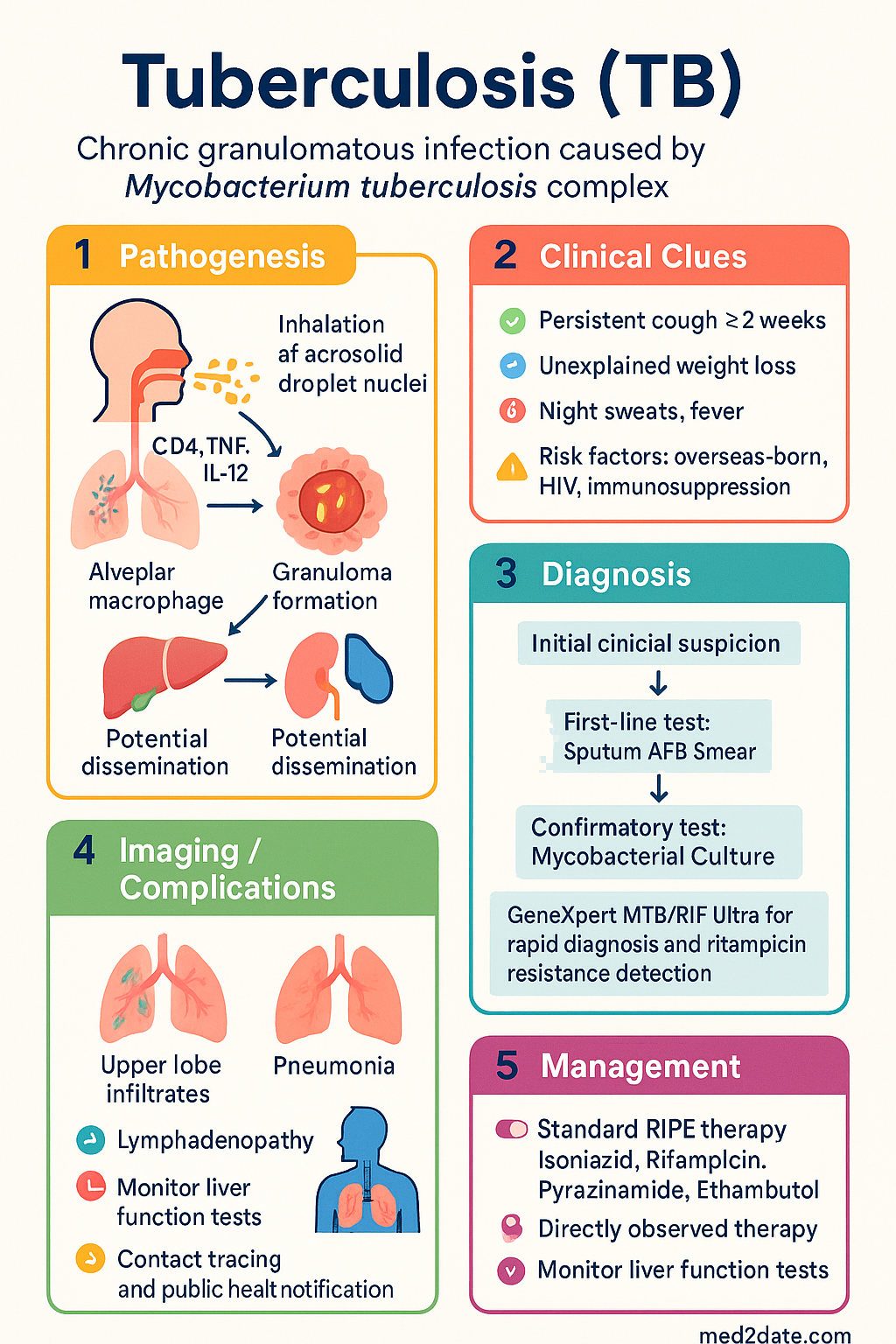
- GeneXpert MTB/RIF Ultra (MBS-listed where available) is the preferred rapid molecular test for pulmonary TB, simultaneously detecting Mycobacterium tuberculosis complex and rifampicin resistance within 2 hours.
- Three sputum specimens (early morning preferred) for acid-fast bacilli (AFB) smear, culture, and drug susceptibility testing (DST) remain the diagnostic gold standard; culture results take 2–6 weeks.
- Standard first-line treatment for drug-susceptible active TB is 2 months of isoniazid + rifampicin + pyrazinamide + ethambutol (HRZE) followed by 4 months of isoniazid + rifampicin (HR) — total 6 months (RIPE therapy).
- Directly observed therapy (DOT) is recommended for all active TB cases and is mandated in several Australian jurisdictions; video-DOT (vDOT) is an acceptable alternative.
- Multi-drug-resistant TB (MDR-TB: rifampicin ± isoniazid resistant) and extensively drug-resistant TB (XDR-TB) require specialist-led individualised regimens of 9–20 months, often including bedaquiline and linezolid under compassionate/special access schemes.
- Latent TB infection treatment is recommended for high-risk groups including contacts of active cases, recent migrants from high-incidence countries, immunosuppressed patients (especially anti-TNF therapy or transplant), and HIV-positive individuals.
- Preferred LTBI regimens: 3-month weekly isoniazid + rifapentine (3HP, 12 doses), 4-month daily rifampicin (4R), or 6–9 months daily isoniazid (6H/9H); choice depends on drug interactions, adherence potential, and liver function.
- HIV co-infection mandates early TB treatment with antiretroviral therapy (ART) initiated within 2 weeks for CD4 <50 cells/µL; monitor for immune reconstitution inflammatory syndrome (IRIS).
- Aboriginal and Torres Strait Islander peoples, particularly in the Northern Territory and Far North Queensland, have TB rates 5–8 times the national average — targeted screening, culturally safe care, and remote-area service delivery are essential.
- Hepatotoxicity monitoring: baseline and fortnightly liver function tests (LFTs) for the first 2 months of RIPE therapy; rifampicin has extensive cytochrome P450 drug interactions (especially with oral contraceptives, warfarin, antiretrovirals).
- Contact tracing is a public health priority: all close contacts of sputum smear-positive cases should be assessed within 48 hours; state/territory TB units coordinate screening and LTBI management.
Introduction & Australian Epidemiology
Tuberculosis (TB) is a chronic granulomatous infection caused by Mycobacterium tuberculosis complex (MTBC), with M. tuberculosis the principal human pathogen. Transmission occurs via inhalation of aerosolised droplet nuclei from patients with active pulmonary or laryngeal TB. The disease remains one of the leading infectious causes of death worldwide, with an estimated 10.6 million new cases and 1.3 million deaths annually (WHO Global TB Report 2023).
Australia maintains one of the lowest TB incidence rates among high-income countries, with approximately 1,300–1,500 notifications per year (incidence ~5.5 per 100,000 population). However, the epidemiology is heterogeneous:
- Overseas-born individuals account for ~85% of all TB notifications, with the highest rates among those born in the Philippines, India, Vietnam, China, Nepal, and Myanmar. The median interval between arrival and diagnosis is 5–8 years.
- Aboriginal and Torres Strait Islander peoples experience disproportionately high TB rates, particularly in the Northern Territory (15–25 per 100,000) and Far North Queensland, often in remote communities with delayed presentation and challenging service access.
- Australian-born non-Indigenous individuals account for ~7% of notifications, with occasional outbreaks in congregate settings.
- Paediatric TB (<15 years) constitutes ~5% of notifications and frequently reflects recent transmission, necessitating urgent contact tracing.
- Drug-resistant TB accounts for ~2–3% of culture-positive cases in Australia; MDR-TB remains uncommon but carries substantial morbidity and cost.
Key Australian organisations involved in TB control include state/territory TB services, the Australian Government Department of Health and Aged Care, the National Tuberculosis Advisory Committee (NTAC), the Royal Australian College of General Practitioners (RACGP), Lung Foundation Australia, and TB Alert Australia.
| Population Group | Estimated Incidence (per 100,000) | Key Risk Factors |
|---|---|---|
| Overseas-born (recent migrants) | 15–30 | High-incidence country of origin, congregate living, delayed presentation |
| Aboriginal and Torres Strait Islander | 15–25 (NT) | Remote residence, overcrowded housing, comorbidities (diabetes, smoking, harmful alcohol use) |
| Australian-born non-Indigenous | <1 | Immunosuppression, healthcare workers, outbreak exposure |
| Children (<15 years) | ~3 | Household contact with active TB, unvaccinated (BCG), malnutrition |
| People living with HIV | 20–50 | CD4 <200, unsuppressed viral load, origin from high TB/HIV burden country |
Diagnosis
Diagnosis of TB requires a combination of clinical suspicion, microbiological confirmation, and radiological assessment. The diagnostic approach differs between pulmonary TB (PTB) and extrapulmonary TB (EPTB). Early and accurate diagnosis is critical for patient outcomes and public health control.
Clinical Suspicion
Consider TB in any patient presenting with:
- Persistent cough ≥2 weeks, especially with haemoptysis
- Unexplained weight loss, night sweats, fever >2 weeks
- Chest imaging consistent with TB (upper lobe infiltrates, cavitation, lymphadenopathy)
- Risk factors: overseas-born from high-incidence country, HIV, immunosuppression, close contact with known TB case, incarceration, homelessness
Microbiological Investigations
Chest Imaging
Chest X-ray (CXR) posteroanterior and lateral views are the first-line imaging investigation. Classic findings include:
- Upper lobe infiltrates (apical and posterior segments) — most common
- Cavitary lesions — highly suggestive, associated with high bacillary burden and infectivity
- Hilar and/or mediastinal lymphadenopathy — common in paediatric TB and primary infection
- Pleural effusion — unilateral, lymphocyte-predominant exudate
- Miliary pattern — diffuse 1–3 mm nodules in disseminated TB
- Fibrotic scarring, calcified granulomas, and Ghon complexes — may indicate prior/healed TB
CT chest is indicated when CXR is equivocal, for staging extent of disease, detecting complications (bronchiectasis, aspergilloma), or evaluating mediastinal lymphadenopathy. High-resolution CT is particularly valuable in immunocompromised patients with atypical presentations.
Extrapulmonary TB (EPTB)
EPTB accounts for ~20–25% of TB cases in Australia and can affect virtually any organ. Common sites and diagnostic approaches:
| Site | Proportion of EPTB | Key Investigations |
|---|---|---|
| Lymph node (TB lymphadenitis) | ~35% | Fine-needle aspirate or excision biopsy for histology, AFB smear/culture, GeneXpert. Most common EPTB site. |
| Pleural | ~20% | Thoracentesis: exudative, lymphocyte-predominant, low glucose, high ADA (>40 U/L strongly suggestive). Pleural biopsy (closed or thoracoscopic) for histology and culture. |
| Musculoskeletal (Pott's disease / spinal TB) | ~10% | MRI spine (modality of choice — demonstrates vertebral body destruction, disc space narrowing, paravertebral abscess). CT-guided biopsy for culture. |
| Central nervous system (TB meningitis) | ~5% | Lumbar puncture: lymphocytic pleocytosis, elevated protein, low glucose (CSF:serum glucose <0.5). CSF GeneXpert (sensitivity ~50–70%), CSF culture. CT/MRI brain for hydrocephalus, basal meningeal enhancement, tuberculomas. High mortality if untreated. |
| Genitourinary | ~8% | Early-morning urine ×3 for AFB culture (sterile pyuria). CT urogram. Renal biopsy if indicated. |
| Peritoneal / abdominal | ~5% | Ascitic fluid: lymphocyte-predominant exudate, elevated ADA. Laparoscopy with peritoneal biopsy — high diagnostic yield. |
| Disseminated / miliary | ~5% | Blood cultures (in immunocompromised), bone marrow biopsy, liver biopsy, bronchoscopy with BAL. CT chest/abdomen. High mortality. |
Active TB Treatment
Treatment of drug-susceptible active TB follows a standardised regimen of two phases: an intensive phase (4 drugs for 2 months) and a continuation phase (2 drugs for 4 months), totalling 6 months. Treatment should be initiated as soon as TB is clinically suspected, without awaiting culture confirmation. All treatment must be supervised — directly observed therapy (DOT) is the standard of care in Australia.
Standard RIPE Regimen — Drug-Susceptible Pulmonary TB
Treatment Phases
Directly Observed Therapy (DOT)
DOT is the standard of care for all active TB treatment in Australia. A healthcare worker or trained designee observes the patient swallow each dose. DOT significantly improves treatment completion rates and reduces the emergence of drug resistance. Options include:
- In-person DOT: at TB clinic, hospital, GP practice, community health centre, or patient's home
- Video DOT (vDOT): real-time or asynchronous video observation via smartphone — increasingly used in Australian TB services, particularly for regional/remote patients. Validated by several Australian TB programmes.
- Family-administered therapy: accepted in some jurisdictions when formal DOT is not feasible, with regular clinical review
Monitoring During Active TB Treatment
| Parameter | Frequency | Action Thresholds |
|---|---|---|
| Liver function tests (ALT, AST, bilirubin, ALP) | Baseline, 2 weeks, then monthly (or more frequently if elevated) | Stop all hepatotoxic drugs if ALT >5× ULN, or ALT >3× ULN with symptoms (jaundice, nausea, abdominal pain). Reintroduce under specialist guidance with sequential reintroduction of agents. |
| Full blood count | Baseline, monthly | Thrombocytopenia (rifampicin — intermittent dosing more common), neutropenia (isoniazid), anaemia |
| Serum creatinine / eGFR | Baseline, then as indicated | Pyrazinamide and ethambutol require renal dose adjustment |
| Visual acuity and colour vision (Ishihara plates) | Baseline, monthly during ethambutol therapy | Discontinue ethambutol immediately if visual changes detected |
| Serum uric acid | If symptomatic (joint pain) | Pyrazinamide-induced hyperuricaemia — treat symptomatically with allopurinol if gout develops; do not routinely discontinue pyrazinamide |
| Sputum culture | Monthly until culture conversion (2 consecutive negative cultures) | Failure to convert by month 3 should prompt review of adherence, drug resistance assessment, and treatment modification |
| Weight and clinical assessment | Monthly | Dose adjustments based on weight changes; assess adherence and adverse effects |
Adherence Support
- Assign a case manager or TB nurse coordinator for every patient
- Address social determinants: housing, employment, transport, childcare, interpreter services
- Provide patient education about TB transmission, treatment rationale, and side effects
- Use blister-packed medication where available through TB services
Drug-Resistant TB
Drug-resistant TB is classified based on resistance patterns identified through phenotypic culture-based DST and/or molecular methods (GeneXpert, line probe assay, whole-genome sequencing). Australia reports ~30–50 drug-resistant TB cases annually. Management of drug-resistant TB requires specialist expertise at designated TB centres and close collaboration with a multidisciplinary team including infectious diseases physicians, respiratory physicians, TB nurses, pharmacists, and public health authorities.
Definitions
| Category | Resistance Pattern | Approx. Proportion (Australia) | Min. Treatment Duration |
|---|---|---|---|
| Mono-resistant TB | Resistance to 1 first-line agent (e.g., isoniazid mono-resistance) | ~1.5% | 6–9 months (modified regimen) |
| Poly-resistant TB | Resistance to ≥2 first-line agents (not MDR) | ~0.5% | 9–12 months |
| MDR-TB | Resistance to at least isoniazid AND rifampicin | ~1.5–2% | 9–18 months (BPaL regimen: 6–9 months) |
| Pre-XDR-TB | MDR-TB + resistance to any fluoroquinolone | <1% | 12–18 months |
| XDR-TB | MDR-TB + resistance to fluoroquinolone AND at least 1 of bedaquiline or linezolid | Rare | 18–20+ months (individualised) |
Key Medications for Drug-Resistant TB
BPaL / BPaLM Regimen (Shorter MDR-TB Regimen)
The WHO-recommended shorter regimen for MDR/RR-TB is BPaLM: Bedaquiline + Pretomanid + Linezolid + Moxifloxacin (when fluoroquinolone-susceptible) for 6 months. This represents a major advance, replacing 18–20-month injectable-containing regimens. The TB-PRACTECAL and ZeNix trials demonstrated superior efficacy and safety compared to standard-of-care longer regimens.
- BPaL (without moxifloxacin): for pre-XDR-TB or fluoroquinolone-resistant MDR-TB — 6–9 months
- BPaLM: for fluoroquinolone-susceptible MDR/RR-TB — 6 months
- All components accessed via Special Access Scheme (SAS) in Australia; cases managed at specialist TB centres with NTAC oversight
- Monthly sputum cultures throughout treatment; DST on all positive isolates
Isoniazid Mono-Resistance
For isoniazid mono-resistant TB (confirmed by DST), the recommended regimen is:
- Intensive phase (2 months): Rifampicin + Pyrazinamide + Ethambutol + Moxifloxacin (6RZE-Mfx)
- Continuation phase (4–7 months): Rifampicin + Ethambutol ± Moxifloxacin
- Total duration: 6–9 months (extend if cavitary disease or delayed culture conversion)
Latent TB Infection (LTBI)
Latent TB infection (LTBI) is defined as a state of persistent immune response to MTBC-specific antigens (detected by TST or IGRA) without evidence of active disease. Approximately 5–10% of individuals with LTBI will progress to active TB during their lifetime, with higher rates in immunocompromised populations. Treatment of LTBI is a key TB elimination strategy in Australia, targeting high-risk populations to prevent reactivation.
Indications for LTBI Treatment
Treatment of LTBI is recommended for the following groups (highest priority first):
- Close contacts of active pulmonary/laryngeal TB (especially within 2 years of exposure)
- HIV-positive individuals with positive TST/IGRA
- Patients initiating anti-TNF therapy (infliximab, adalimumab, etanercept) or other biologics with TB reactivation risk
- Transplant candidates/recipients with positive TST/IGRA
- Silicosis patients
- Children <5 years who are close contacts
- Recent migrants (<2 years) from high-incidence countries with positive TST/IGRA
- Healthcare workers with positive TST/IGRA (especially new converters)
- Patients starting immunosuppressive therapy (corticosteroids ≥15 mg/day prednisolone ≥4 weeks, chemotherapy, JAK inhibitors)
- Chronic renal failure / dialysis patients
- Diabetes mellitus with positive TST/IGRA
- Children 5–15 years with positive TST/IGRA and risk factors
- Overseas-born individuals with positive TST/IGRA (individual risk assessment)
- Prisoners and homeless individuals
- Aboriginal and Torres Strait Islander peoples in high-incidence settings
LTBI Treatment Regimens
Monitoring During LTBI Treatment
| Regimen | Baseline LFTs | Routine LFT Monitoring | Additional Monitoring |
|---|---|---|---|
| 3HP | Yes | Monthly if risk factors for hepatotoxicity; not routinely required in low-risk patients | Clinical assessment at each DOT visit (symptoms of hepatitis) |
| 4R | Yes | Monthly | FBC if symptomatic |
| 6H / 9H | Yes | Monthly in patients >35 years, alcohol use, liver disease, or concomitant hepatotoxic drugs | Visual symptoms (rare with isoniazid alone) |
Special Populations
HIV Co-Infection
TB is the leading cause of morbidity and mortality in people living with HIV globally. In Australia, ~3–5% of TB notifications have HIV co-infection. TB may present atypically in HIV (less cavitation, more mediastinal lymphadenopathy, miliary/ disseminated disease, lower sputum AFB smear positivity).
- Treatment: Standard HRZE regimen (same doses). Avoid thrice-weekly intermittent therapy — increased risk of acquired rifampicin resistance in HIV. Daily dosing essential.
- ART timing: Initiate antiretroviral therapy (ART) within 2 weeks if CD4 <50 cells/µL; within 8 weeks if CD4 ≥50. Earlier ART reduces mortality but increases IRIS risk.
- IRIS (Immune Reconstitution Inflammatory Syndrome): Occurs in 10–25% of TB/HIV co-infected patients starting ART. Manifests as paradoxical worsening (new lymphadenopathy, expanding CNS lesions, worsening respiratory symptoms) 1–4 weeks after ART initiation. Manage with continuation of TB treatment + ART; corticosteroids (prednisolone 1.5 mg/kg/day tapered over 4 weeks) for severe IRIS.
- Drug interactions: Rifampicin drastically reduces levels of protease inhibitors (PIs) — never co-administer. Use efavirenz-based ART (or dolutegravir with dose adjustment to 50 mg BD) with rifampicin. Rifabutin (150 mg three times/week) may substitute rifampicin when ART includes PIs or cobicistat.
- TB meningitis: Dexamethasone should be used in HIV-positive patients (contrary to earlier concerns, benefit demonstrated).
- Rifabutin dose with efavirenz: 450 mg PO daily (increased from standard 150 mg). ⚠ PBS Authority Required
- LTBI in HIV: Treat all HIV-positive individuals with LTBI regardless of TST/IGRA induration size. Preferred regimen: 3HP or 4R (avoid 9H if possible due to lower completion rates).
Pregnancy & Breastfeeding
Active TB in pregnancy poses significant risks to both mother and fetus (pre-term birth, low birth weight, congenital TB — rare). Treatment must not be delayed. Untreated TB carries greater risk than medication exposure.
- First-line treatment in pregnancy: Isoniazid + Rifampicin + Ethambutol for 9 months (2HRE + 7HR). Pyrazinamide is generally avoided in Australian practice during the first trimester (limited safety data, though WHO recommends its use). Pyridoxine supplementation mandatory (50 mg/day in pregnancy).
- Contraindicated agents: Aminoglycosides (streptomycin, amikacin, kanamycin) are teratogenic (ototoxicity) — absolutely contraindicated in pregnancy.
- Breastfeeding: All first-line TB drugs are compatible with breastfeeding at standard doses. Infant receives sub-therapeutic doses via breast milk — not sufficient for treatment or protection. Continue DOT during breastfeeding.
- LTBI in pregnancy: Treatment may be deferred until after delivery in low-risk LTBI (low risk of progression). In high-risk LTBI (recent contact, HIV-positive, immunosuppressed), isoniazid monotherapy is preferred — defer until after the first trimester. Avoid rifampicin/rifapentine in LTBI during pregnancy.
- Neonatal management: If mother has active TB at delivery, investigate infant (CXR, TST at 4–6 weeks if no immediate treatment indicated). If mother has untreated/infectious TB, start infant on isoniazid prophylaxis pending investigation results. BCG vaccination recommended for all infants of mothers with active TB (after excluding active TB in infant).
Children
Paediatric TB (<15 years) is predominantly paucibacillary, making microbiological confirmation challenging. Diagnosis often relies on clinical features, contact history, TST/IGRA, and imaging. Children are more likely to develop disseminated and meningeal TB.
- Treatment — drug-susceptible TB: HRZE for 2 months followed by HR for 4 months (total 6 months). Doses are weight-based (see drug cards above). Fixed-dose combination (FDC) dispersible tablets are preferred (WHO formulation) — available through TB services.
- Dose adjustments: Children metabolise drugs faster; weight-based dosing per kg is essential. Regular weight checks (monthly) for dose adjustment. Pyrazinamide 35 mg/kg (not 25 mg/kg as in adults).
- TB meningitis in children: HRZE for 2 months + HR for 10 months (total 12 months). Dexamethasone for 4 weeks in children >14 years (limited evidence in younger children but commonly used). Ethambutol can be used at 20 mg/kg despite concerns about visual monitoring — benefits outweigh risks in TB meningitis.
- LTBI in children: TST preferred over IGRA in children <5 years (IGRA sensitivity may be reduced). Treatment: 3HP (≥2 years) or 3–4 months of isoniazid + rifampicin (3HR/4HR) or 6–9H. Children <5 years who are close contacts should start empiric LTBI treatment pending TST results (consider treatment for 2–3 months, then TST — if negative, can stop).
- Adherence: DOT essential. Involve parents/caregivers. Address school attendance, psychosocial impact.
Immunosuppressed Patients
Immunosuppression increases the risk of LTBI reactivation (up to 10–15% per year with anti-TNF therapy vs 5–10% lifetime in immunocompetent). Key considerations for specific groups:
- Anti-TNF therapy (infliximab, adalimumab, etanercept, certolizumab): Screen ALL patients for LTBI (IGRA preferred) before initiating biologic therapy. Treat LTBI before or concurrent with biologic. Re-screen annually if ongoing high-risk exposure.
- Transplant recipients: Pre-transplant LTBI screening mandatory. 4R or 9H preferred (3HP has insufficient data in transplant). Post-transplant TB may present atypically — low threshold for investigation.
- Chronic corticosteroid use (≥15 mg/day prednisolone ≥4 weeks): Screen for LTBI. Consider LTBI treatment. Monitor during immunosuppression for TB reactivation.
- Haematological malignancy / chemotherapy: High risk of reactivation and disseminated TB. Screen before chemotherapy. IGRA may be falsely negative in profound immunosuppression.
- Dialysis patients: Higher LTBI prevalence; IGRA preferred (TST may be falsely negative). Consider LTBI treatment with careful hepatotoxicity monitoring.
- Drug interactions: Rifampicin and rifapentine interact with calcineurin inhibitors (tacrolimus, cyclosporin), corticosteroids, and many transplant medications — use isoniazid monotherapy for LTBI or consult transplant physician for dose adjustment with rifamycins.
Renal Impairment
- Isoniazid: No dose adjustment; give after haemodialysis on dialysis days
- Rifampicin: No dose adjustment for mild–moderate CKD
- Pyrazinamide: eGFR <30: reduce to 25 mg/kg three times/week; avoid in haemodialysis
- Ethambutol: eGFR <30: 15–25 mg/kg three times/week; dose after haemodialysis
- Streptomycin: Avoid if possible; if used, extended dosing intervals and therapeutic drug monitoring essential
- Linezolid: No dose adjustment in renal impairment but enhanced toxicity risk — monitor FBC more frequently
Hepatic Impairment
- Child-Pugh A: Standard doses with close LFT monitoring (weekly initially)
- Child-Pugh B: Avoid pyrazinamide if possible (RE regimen: rifampicin + ethambutol for 9–12 months). Close monitoring.
- Child-Pugh C: Avoid all hepatotoxic agents if possible. Regimen of rifampicin + ethambutol + fluoroquinolone ± aminoglycoside under specialist guidance. Consider hepatology referral.
- Chronic hepatitis B/C: Not a contraindication to standard TB treatment but requires baseline and frequent LFT monitoring. Antiviral therapy for chronic HBV should be initiated before or concurrent with TB treatment to reduce risk of HBV reactivation (rifampicin may interact with some antivirals).
Contact Tracing
Contact tracing is a core public health function managed by state/territory TB services. It is the most effective strategy for identifying undiagnosed active TB and LTBI in Australia.
Aboriginal and Torres Strait Islander Health Considerations
Aboriginal and Torres Strait Islander peoples experience TB rates 5–8 times higher than the non-Indigenous Australian-born population, with the highest incidence in the Northern Territory (15–25 per 100,000) and Far North Queensland. TB control in Indigenous communities requires culturally safe, community-led approaches that address the complex social determinants of health driving transmission and delayed diagnosis.
📚 References
- 1. World Health Organization. Global Tuberculosis Report 2023. Geneva: WHO; 2023. Available from: who.int
- 2. National Tuberculosis Advisory Committee (NTAC). The Strategic Plan for Tuberculosis Control in Australia Beyond 2016. Communicable Diseases Intelligence. 2017;41(4):E352–E361.
- 3. Australian Government Department of Health and Aged Care. Tuberculosis: National Notifiable Diseases Surveillance System. Canberra: DoH; 2024.
- 4. Denholm JT, McBryde ES, Eisen DP. Management of latent tuberculosis infections in Australia and New Zealand: A review of current practice. Thoracic Society of Australia and New Zealand Position Statement. Respirology. 2018;23(6):578–587.
- 5. World Health Organization. WHO Consolidated Guidelines on Tuberculosis. Module 4: Treatment — Drug-Resistant Tuberculosis Treatment, 2022 Update. Geneva: WHO; 2022.
- 6. Nahid P, Dorman SE, Alipanah N, et al. Official American Thoracic Society/Centers for Disease Control and Prevention/Infectious Diseases Society of America Clinical Practice Guidelines: Treatment of Drug-Susceptible Tuberculosis. Clin Infect Dis. 2016;63(7):e147–e95.
- 7. Australian Technical Advisory Group on Immunisation (ATAGI). Australian Immunisation Handbook. Canberra: Australian Government Department of Health; 2023. Available from: immunisationhandbook.health.gov.au
- 8. Australian Institute of Health and Welfare (AIHW). Aboriginal and Torres Strait Islander Health Performance Framework. Canberra: AIHW; 2023.
- 9. Nyang'wa BT, Berry C,";";"; et al. A 24-week, all-oral regimen for rifampin-resistant tuberculosis. N Engl J Med. 2022;387(25):2331–2343. (TB-PRACTECAL trial)
- 10. Conradie F, Diacon AH, Ngubane N, et al. Treatment of highly drug-resistant pulmonary tuberculosis. N Engl J Med. 2020;382(10):893–902. (ZeNix trial — BPaL regimen)
- 11. Sterling TR, Villarino ME, Borisov AS, et al. Three months of rifapentine and isoniazid for latent tuberculosis infection. N Engl J Med. 2011;365(23):2155–2166. (PREVENT TB / iAdhere trial)
- 12. National Tuberculosis Advisory Committee (NTAC). Guidelines for Australian Mycobacteriology Laboratories. Communicable Diseases Intelligence. 2023.
- 13. Lewinsohn DM, Leonard MK, LoBue PA, et al. Official American Thoracic Society/Infectious Diseases Society of America/Centers for Disease Control and Prevention Clinical Practice Guidelines: Diagnosis of Tuberculosis in Adults and Children. Clin Infect Dis. 2017;64(2):111–115.
- 14. World Health Organization. WHO Operational Handbook on Tuberculosis. Module 1: Prevention — Tuberculosis Preventive Treatment. Geneva: WHO; 2020.
- 15. Marais BJ, Heemskerk AD, Marais SS, et al. Standardized methods for enhanced quality and comparability of tuberculous meningitis studies. Clin Infect Dis. 2017;64(4):501–509.