Home Neurology Tension & Other Primary Headaches

Tension & Other Primary Headaches

🎧 Tension & Other Primary Headaches — deep-dive podcast

📋 Key Information Summary

📋
  • Tension-type headache (TTH) is the most common primary headache worldwide, affecting up to 70% of Australians at some point in their lives; it is subdivided into infrequent episodic, frequent episodic, and chronic TTH.
  • Simple analgesics (paracetamol, aspirin, ibuprofen, naproxen) are first-line for acute episodic TTH; limit use to <15 days/month to prevent medication-overuse headache (MOH).
  • Chronic TTH (≥15 headache days/month) requires prophylaxis — amitriptyline 10–75 mg nocte is first-line, combined with non-pharmacologic strategies (physiotherapy, cognitive-behavioural therapy, stress management).
  • Cluster headache is characterised by strictly unilateral, excruciating periorbital or temporal pain with ipsilateral autonomic features (lacrimation, rhinorrhoea, ptosis, miosis) and restlessness or agitation.
  • Acute cluster attacks respond best to high-flow oxygen (100% at 12–15 L/min via non-rebreather mask for 15–20 minutes) and/or subcutaneous sumatriptan 6 mg.
  • Verapamil is the first-line prophylactic agent for cluster headache; start at 80 mg TDS and titrate upward with mandatory ECG monitoring at each dose escalation.
  • Transitional corticosteroids (prednisolone 1 mg/kg/day, tapered over 2–3 weeks) bridge the gap while verapamil is being titrated to therapeutic doses.
  • Paroxysmal hemicrania and hemicrania continua are defined by their dramatic and absolute response to indomethacin — this is both diagnostic and therapeutic.
  • SUNCT and SUNA are rare trigeminal autonomic cephalalgias with very brief (1–600 seconds) attacks; lamotrigine is first-line preventive therapy; referral to a headache specialist is mandatory.
  • Always exclude secondary causes with urgent neuroimaging when red flags are present — new-onset headache after age 50, thunderclap onset, focal neurological signs, systemic symptoms, or papilloedema.
  • Assess headache-related disability using validated tools (HIT-6, MIDAS) and screen for medication overuse at every review.
  • Aboriginal and Torres Strait Islander populations experience higher headache burden with reduced access to specialist services; culturally safe care and telehealth pathways are essential.
🎬 Tension & Other Primary Headaches — clinical explainer

Introduction & Australian Epidemiology

Primary headaches are neurological disorders in which the headache itself is the disease, not a symptom of an underlying condition. The International Classification of Headache Disorders, 3rd edition (ICHD-3) provides the standard diagnostic framework. The three major groups of primary headache — tension-type headache, migraine, and the trigeminal autonomic cephalalgias (TACs) — account for the vast majority of presentations in Australian primary care.

In Australia, headache disorders are among the most common reasons for general practice consultation. The Australian Institute of Health and Welfare (AIHW) reports that approximately 4.9 million Australians live with chronic headache, and headache-related productivity losses exceed $35 billion annually. Tension-type headache affects an estimated 40–70% of the adult population, while cluster headache has a lifetime prevalence of approximately 0.1–0.2%. The rarer TACs — paroxysmal hemicrania, SUNCT, SUNA, and hemicrania continua — are frequently misdiagnosed, often years after onset.

This guideline addresses tension-type headache, cluster headache, and the other trigeminal autonomic cephalalgias. Migraine is covered in a separate dedicated article.
⚠️
Red flags requiring urgent neuroimaging: Thunderclap onset (peak within seconds), new headache after age 50 years, progressive worsening over weeks, headache with fever and neck stiffness, papilloedema, focal neurological deficits, headache triggered by Valsalva or positional change, headache in immunocompromised patients, or headache in a patient with known malignancy. Perform CT brain immediately (available in all Australian emergency departments) and arrange MRI where CT is non-diagnostic.
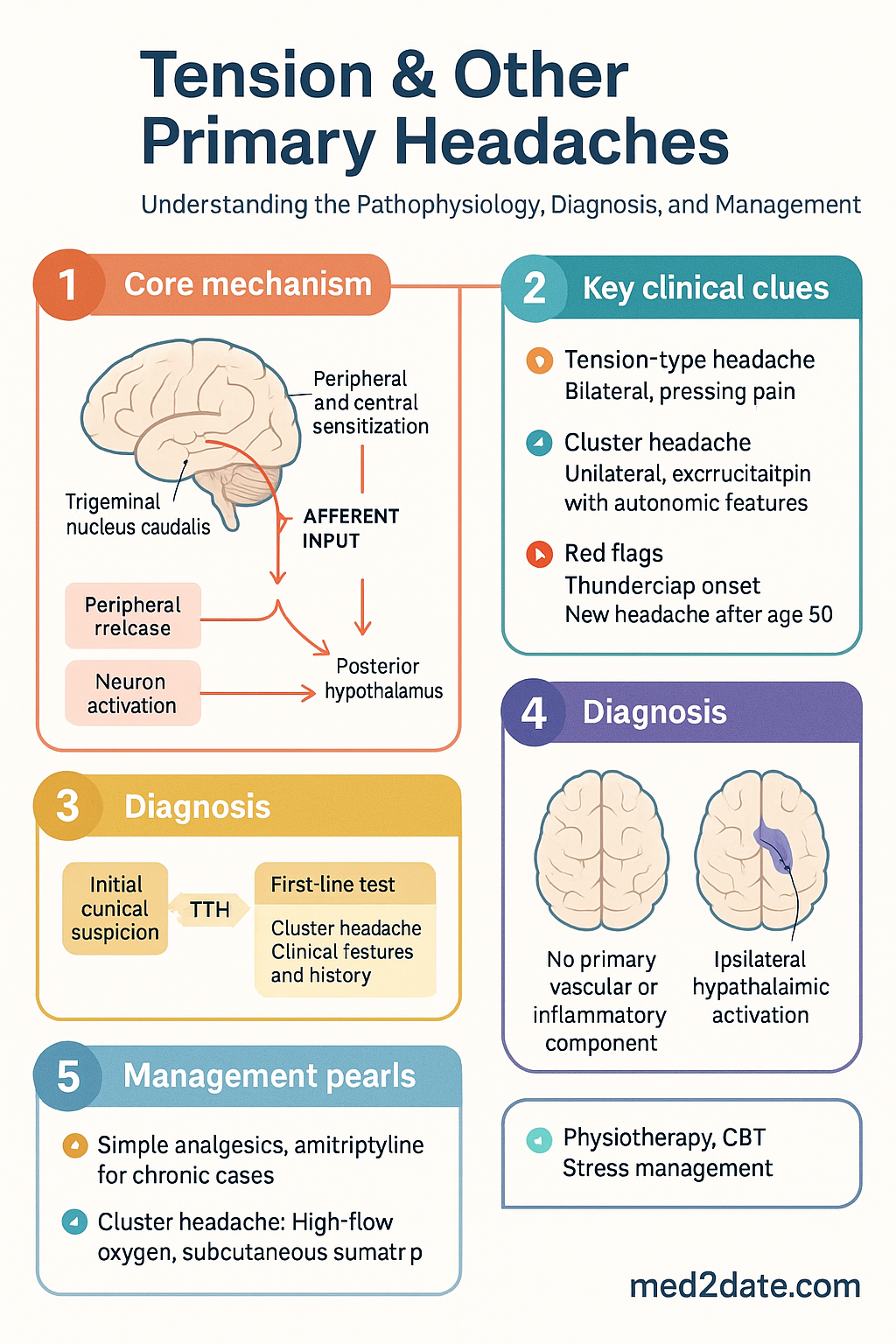
Tension & Other Primary Headaches clinical infographic — pathophysiology, clinical clues, diagnosis, imaging, and management
Tap or click image to enlarge — Tension & Other Primary Headaches: pathophysiology, clinical clues, diagnosis, imaging, and management.
Tension & Other Primary Headaches infographic, full size

Pathophysiology of Primary Headaches

Understanding the distinct pathophysiology of each primary headache type guides rational therapy and explains why treatments are not interchangeable.

Tension-Type Headache

The pathophysiology of TTH involves a combination of peripheral and central sensitisation. In episodic TTH, peripheral mechanisms predominate — increased pericranial myofascial tenderness due to sustained muscle contraction, stress, and poor posture. In chronic TTH, central sensitisation of second-order neurons in the trigeminal nucleus caudalis becomes the dominant mechanism, lowering pain thresholds and converting innocuous input into pain. There is no evidence of a primary vascular or inflammatory component, distinguishing TTH from migraine and cluster headache.

Cluster Headache & Trigeminal Autonomic Cephalalgias

The TACs share a common pathophysiological pathway involving activation of the trigeminal-autonomic reflex. Trigeminal afferents (predominantly the ophthalmic division, V1) project to the trigeminal nucleus caudalis, which connects to the superior salivatory nucleus, producing parasympathetic autonomic features (lacrimation, rhinorrhoea, conjunctival injection). In cluster headache, the posterior hypothalamus (the "pain clock") plays a pivotal role, explaining the striking circadian and circannual periodicity. Functional imaging studies demonstrate ipsilateral hypothalamic activation during attacks. Paroxysmal hemicrania and hemicrania continua appear to involve similar circuitry, though the exact anatomical substrates differ.

Tension-Type Headache

Diagnostic Criteria (ICHD-3)

Tension-type headache is classified into three subtypes based on attack frequency. All subtypes share the following core features:

Feature Requirement
Duration 30 minutes to 7 days
Character Pressing or tightening (non-pulsating)
Location Bilateral (frontal, temporal, occipital, or generalised)
Intensity Mild to moderate (not preventing daily activities)
Aggravation Not aggravated by routine physical activity
Nausea/Vomiting Absent (nausea only = exclusion criterion)
Photo-/Phonophobia Only one may be present (never both)
Infrequent Episodic
ICHD-3 Code 2.1
<1 day/month (<12 days/year). Often managed by the patient with over-the-counter analgesics. Low risk of medication overuse.
Setting: Self-care / GP advice
Frequent Episodic
ICHD-3 Code 2.2
1–14 days/month for >3 months. Significant quality-of-life impact. At risk of medication overuse and chronification. Consider prophylaxis if disability is significant.
Setting: GP management
Chronic
ICHD-3 Code 2.3
≥15 days/month for >3 months. Often coexists with central sensitisation and medication overuse. High disability. Requires combined pharmacologic and non-pharmacologic approach. Consider specialist referral.
Setting: GP ± neurologist

Non-Pharmacologic Management

Non-pharmacologic strategies are foundational in TTH management, particularly for frequent episodic and chronic subtypes. They reduce headache frequency by 30–50% and are free of adverse effects.

  • Physiotherapy: Cervical and thoracic spinal mobilisation, postural correction, and targeted stretching of the cervical flexors, upper trapezius, and suboccipital muscles. Referral to a physiotherapist experienced in headache management is recommended (Medicare Chronic Disease Management items available under GP Management Plan).
  • Cognitive-behavioural therapy (CBT): Stress management, relaxation training (progressive muscle relaxation, diaphragmatic breathing), and biofeedback. Evidence supports CBT as equivalent to pharmacotherapy for chronic TTH prevention.
  • Exercise: Regular aerobic exercise (≥150 minutes/week of moderate-intensity activity) reduces headache frequency. Exercise releases endorphins and reduces pericranial muscle tension.
  • Ergonomic assessment: Correction of workstation setup, screen positioning, and avoidance of sustained static postures (particularly relevant for office workers and students).
  • Sleep hygiene: Regular sleep–wake cycle, avoidance of excessive caffeine (≤200 mg/day), and treatment of comorbid insomnia or sleep-disordered breathing.

Acute Pharmacotherapy — Simple Analgesics

Simple analgesics are the mainstay of acute TTH treatment. They should be taken at the onset of headache for maximum effect and limited to ≤15 days/month to prevent medication-overuse headache.

💊
Paracetamol
Panadol® · Panamax® · Analgesic
Adult dose 1000 mg PO as a single dose; may repeat every 4–6 hours. Max 4 g/day.
Paediatric dose 15 mg/kg/dose PO every 4–6 hours. Max 60 mg/kg/day.
Route Oral
Renal adjustment eGFR 10–50: extend interval to every 6 hours; eGFR <10: every 8 hours. Max 2 g/day if severe hepatic impairment.
PBS status ✔ PBS General Benefit
💊
Aspirin
Aspro Clear® · Disprin® · NSAID
Adult dose 600–900 mg PO as a single dose; may repeat every 4–6 hours. Max 4 g/day.
Paediatric dose Not recommended <16 years (Reye syndrome risk).
Route Oral (soluble formulation preferred for rapid absorption)
Renal adjustment Avoid in severe renal impairment (eGFR <30). Use with caution eGFR 30–60.
PBS status ✔ PBS General Benefit
💊
Ibuprofen
Nurofen® · Brufen® · NSAID
Adult dose 200–400 mg PO as a single dose; may repeat every 6–8 hours. Max 1200 mg/day (OTC) or 2400 mg/day (prescription).
Paediatric dose 5–10 mg/kg/dose PO every 6–8 hours. Max 30 mg/kg/day.
Route Oral
Renal adjustment Avoid if eGFR <30. Short courses only if eGFR 30–60.
PBS status ✔ PBS General Benefit
💊
Naproxen
Naprosyn® · Inza® · NSAID
Adult dose 250–500 mg PO as a single dose; may repeat every 8–12 hours. Max 1000 mg/day.
Paediatric dose 5–7 mg/kg/dose PO every 12 hours. Max 15 mg/kg/day.
Route Oral
Renal adjustment Avoid if eGFR <30.
PBS status ✔ PBS General Benefit
🚨
Medication-overuse headache (MOH): Regular use of simple analgesics on ≥15 days/month or combination analgesics/triptans on ≥10 days/month for >3 months risks MOH. Counsel all patients to limit acute analgesic use. If MOH is suspected, withdrawal of the overused agent is essential — headache may worsen for 2–6 weeks before improving.

Chronic Tension-Type Headache — Prophylactic Protocols

When headache frequency reaches ≥15 days/month, or when acute analgesic overuse is developing, prophylactic therapy should be initiated alongside non-pharmacologic strategies.

💊
Amitriptyline
Endep® · Tryptanol® · TCA — First-line prophylaxis
Adult dose Start 10 mg PO nocte; increase by 10 mg every 2–4 weeks. Usual maintenance 25–75 mg nocte. Maximum 150 mg nocte.
Paediatric dose Limited data; specialist supervision required. 0.1–0.5 mg/kg/day nocte if used.
Route Oral
Duration Minimum 6–12 months once effective; taper slowly on cessation.
Renal adjustment No specific adjustment; use with caution.
Key cautions Sedation, dry mouth, constipation, urinary retention, weight gain. Avoid in significant cardiac conduction disease. Warn about drowsiness — take only at bedtime.
PBS status ✔ PBS General Benefit
💊
Venlafaxine
Efexor XR® · SNRI — Second-line prophylaxis
Adult dose Start 37.5 mg PO mane; titrate to 75–150 mg daily (modified-release). Maximum 225 mg/day.
Route Oral
Duration Minimum 6 months; taper slowly (risk of discontinuation syndrome).
Key cautions Nausea, hypertension (monitor BP), insomnia, sexual dysfunction. Avoid with MAOIs.
PBS status ✔ PBS General Benefit

Other agents with evidence in chronic TTH include mirtazapine (15–30 mg nocte, useful when coexistent insomnia or depression), and topiramate (off-label, specialist use). The combination of amitriptyline with a non-pharmacologic program (CBT + physiotherapy) is superior to either strategy alone.

Cluster Headache

Clinical Features (ICHD-3 Code 3.1)

Cluster headache is among the most severe pain conditions known to medicine. It predominantly affects males (male-to-female ratio approximately 3:1), typically begins between ages 20 and 40, and is characterised by recurrent, stereotyped bouts (clusters) of attacks.

Feature Cluster Headache
Pain quality Stabbing, drilling, excruciating (often described as "like a hot poker in the eye")
Location Strictly unilateral — orbital, supraorbital, or temporal (side usually fixed within a cluster period)
Intensity Severe to very severe; patients are restless, pace, rock, or bang their head
Duration 15–180 minutes (mean 60–90 minutes)
Frequency 1 every other day to 8 per day; often nocturnal (attacks wake patient from sleep)
Autonomic features Ipsilateral lacrimation, conjunctival injection, nasal congestion, rhinorrhoea, eyelid oedema, facial sweating, miosis, ptosis (Horner syndrome)
Behaviour Restlessness and agitation (distinguishes from migraine, where patients prefer to lie still)
Episodic Cluster
~80% of cases
Cluster periods lasting 1 week to 12 months, separated by remission periods of ≥1 month (often years). Seasonal predilection (spring, autumn).
Setting: GP with neurology guidance
Chronic Cluster
~20% of cases
Attacks recur for >1 year without remission, or remissions last <1 month. Highly debilitating. High suicidality risk. Often refractory to standard therapy.
Setting: Neurologist co-management essential
⚠️
Suicidality risk: Cluster headache has the highest rate of suicidal ideation of any primary headache disorder. The intensity of pain and chronicity of the condition may be overwhelming. Actively screen for depression and suicidal thoughts at every consultation. Provide crisis contacts (Lifeline 13 11 14, Beyond Blue 1300 22 4636).

Acute Therapy — Oxygen

🫁
High-Flow Oxygen
100% O₂ · Non-rebreather mask · First-line acute
Adult dose 100% oxygen at 12–15 L/min via non-rebreather mask for 15–20 minutes from onset of attack. Approximately 60–80% of attacks respond within 15 minutes.
Paediatric dose Same flow rate if cluster headache diagnosed in adolescents (rare).
Route Inhalation via non-rebreather mask (facilitates high FiO₂)
Renal / Hepatic Not applicable
Key notes Safe, no contraindications. Home oxygen can be prescribed through state-based home oxygen programs (e.g., NSW Health Home Oxygen Program, Victorian PAGS). Prescribe a cylinder or concentrator for home use during cluster periods. Early treatment at attack onset maximises efficacy.
PBS status ⚑ Not PBS — State home oxygen programs

Acute Therapy — Triptans

💊
Sumatriptan (subcutaneous)
Imigran® Injection · 5-HT₁B/₁D agonist — First-line acute
Adult dose 6 mg SC at onset of attack; may repeat after ≥1 hour if needed. Maximum 12 mg/24 hours (two injections).
Paediatric dose Not established for cluster headache in children.
Route Subcutaneous (self-injection with autoinjector device)
Onset Relief within 10–15 minutes in ~75% of attacks. Most effective acute abortive agent.
Key cautions Contraindicated in ischaemic heart disease, uncontrolled hypertension, cerebrovascular disease, peripheral vascular disease, hemiplegic migraine. Avoid within 24 hours of ergotamine. Warn about transient chest tightness and paraesthesiae.
PBS status ⚑ Authority Required
💊
Zolmitriptan (nasal spray)
Zomig Nasal® · 5-HT₁B/₁D agonist — Alternative acute
Adult dose 5 mg nasal spray (one spray in one nostril) at onset; may repeat after ≥2 hours. Maximum 10 mg/24 hours.
Route Intranasal
Onset Slower than SC sumatriptan (~15–30 minutes) but may be preferred by patients averse to injections.
Key cautions Same cardiovascular contraindications as sumatriptan. Bitter taste is common.
PBS status ⚑ Authority Required

Oral triptans are generally not recommended for cluster headache due to slow onset of action (attacks are too short). However, oral sumatriptan 100 mg may be useful as an adjunct when attacks are longer in duration. Intranasal sumatriptan 20 mg is another option but inferior to the SC and zolmitriptan nasal formulations.

Prophylaxis — Verapamil

💊
Verapamil
Isoptin® · Calcium channel blocker — First-line prophylaxis
Adult dose Start 80 mg PO TDS (240 mg/day). Titrate by 80 mg/day every 2 weeks based on response and tolerability. Usual effective dose 240–480 mg/day; some patients require up to 960 mg/day. Use sustained-release (SR) formulation once stable.
Paediatric dose Not established; specialist use only.
Route Oral
Duration Continue throughout the cluster period, then taper. In episodic clusters, restart at the first sign of a new cluster period.
Renal adjustment No specific dose adjustment; use with caution.
Key cautions Bradycardia, heart block (first-, second-, third-degree), hypotension, constipation, ankle oedema. Mandatory ECG at baseline and before each dose increase. Repeat ECG at each 80 mg increment. Hold if HR <50 bpm, systolic BP <90 mmHg, or new conduction abnormality.
PBS status ✔ PBS General Benefit
🚨
ECG monitoring is mandatory with verapamil for cluster headache. Cluster headache requires higher verapamil doses than used in cardiology, increasing the risk of cardiac conduction abnormalities. Perform a 12-lead ECG at baseline, before each dose escalation, and at least every 6 months during chronic use. If PR interval >0.20 seconds, second- or third-degree heart block, or new bundle branch block develops, reduce dose or discontinue and seek cardiology input.

Transitional (Bridge) Therapy — Corticosteroids

Corticosteroids provide rapid suppression of cluster attacks within 24–72 hours. They serve as a bridge while verapamil is being titrated to therapeutic doses (a process that takes 4–6 weeks).

💊
Prednisolone
Solone® · Panafcortelone® · Corticosteroid — Transitional
Adult dose 1 mg/kg/day PO (typically 60–80 mg/day) for 5–7 days, then taper over 2–3 weeks. Common regimen: 60 mg × 5 days → 50 mg × 2 days → reduce by 10 mg every 2 days until complete.
Route Oral
Duration Short course only (2–3 weeks total). Prolonged use not recommended due to adverse effects and rebound headache.
Key cautions Hyperglycaemia (monitor BGL in diabetic patients), insomnia, mood changes, GI irritation. Use PPI cover if risk factors for GI ulceration. Avoid repeated courses if possible.
PBS status ✔ PBS General Benefit

Greater occipital nerve (GON) injection — An alternative or adjunct to systemic corticosteroids. Injection of bupivacaine (0.5%, 2–3 mL) combined with triamcinolone (40 mg) at the ipsilateral greater occipital nerve provides relief in approximately 60% of patients. Duration of effect is 4–8 weeks. This procedure can be performed in primary care by an experienced GP or in a headache clinic.

Other Preventive Agents

When verapamil alone is insufficient or not tolerated:

  • Lithium carbonate (250–750 mg/day, target serum level 0.4–0.8 mmol/L): Second-line, particularly for chronic cluster headache. Requires renal and thyroid monitoring.
  • Melatonin (10–20 mg nocte): May be useful as adjunctive therapy, particularly for nocturnal attacks. Minimal side effects. Available without prescription.
  • Galcanezumab (Emgality® 300 mg SC monthly): TGA-approved for episodic cluster headache in Australia. Monoclonal anti-CGRP antibody. PBS listing: Authority Required (Specialist). Reserved for patients intolerant or refractory to verapamil.
  • Greater occipital nerve blocks: Repeated monthly during cluster periods as a non-systemic adjunct.

Other Trigeminal Autonomic Cephalalgias

The trigeminal autonomic cephalalgias (TACs) are a group of primary headache disorders characterised by unilateral trigeminal distribution pain with ipsilateral cranial autonomic features. While cluster headache is the most common TAC, several rarer entities are frequently misdiagnosed, often for years. Accurate diagnosis is critical because treatment differs fundamentally from cluster headache and migraine.

Feature Paroxysmal Hemicrania SUNCT / SUNA Hemicrania Continua
ICHD-3 code 3.2 3.3 / 3.4 3.5
Pain severity Severe, excruciating Moderate to severe Moderate baseline with severe exacerbations
Location Unilateral — orbital, supraorbital, temporal Unilateral — orbital/periorbital/temporal Unilateral — frontotemporal
Attack duration 2–30 minutes 1–600 seconds (SUNCT); variable (SUNA) Continuous (≥3 months), with fluctuations
Frequency ≥5/day (>half the time) ≥5/day (SUNCT); ≥1/day typical (SUNA) Continuous, with superimposed attacks
Autonomic features Prominent — lacrimation, rhinorrhoea, conjunctival injection, ptosis, miosis SUNCT: ≥2 autonomic features. SUNA: limited (e.g., only lacrimation or conjunctival injection) Present — ipsilateral lacrimation, conjunctival injection, nasal congestion, restlessness
Behaviour Restlessness/agitation during attacks No restlessness (brief attacks) Mild restlessness during exacerbations
Indomethacin response Absolute — diagnostic and therapeutic No response Absolute — diagnostic and therapeutic
Sex predominance F > M (2:1) M > F (SUNCT); equal (SUNA) F > M

Paroxysmal Hemicrania — Indomethacin Trial

Paroxysmal hemicrania (PH) is defined by its absolute and complete response to therapeutic doses of indomethacin. The indomethacin trial is therefore both diagnostic and therapeutic — if a patient with suspected PH does not respond to indomethacin, the diagnosis should be reconsidered.

💊
Indomethacin
Indocid® · NSAID — Diagnostic and therapeutic for PH / HC
Adult dose Start 25 mg PO TDS with food. Increase to 50 mg TDS after 3–5 days if incomplete response. Maximum 150–200 mg/day. Complete headache resolution expected within 24–72 hours at adequate dose.
Paediatric dose 1–2 mg/kg/day in divided doses (specialist supervision).
Route Oral (take with food to minimise GI adverse effects)
Duration Maintain at effective dose throughout active disease. Some patients can reduce or discontinue; many require long-term therapy.
Renal adjustment Avoid if eGFR <30 mL/min. Caution if eGFR 30–60.
Hepatic adjustment Avoid in significant hepatic impairment.
Key cautions GI ulceration/bleeding — co-prescribe PPI (omeprazole 20 mg daily). Hypertension, fluid retention, renal impairment. Avoid in aspirin-sensitive asthma. Monitor FBC, renal function every 6 months.
PBS status ✔ PBS General Benefit
💡
The indomethacin test: A positive response to indomethacin (complete or near-complete resolution of headaches within 72 hours at ≥150 mg/day) is required to confirm paroxysmal hemicrania and hemicrania continua. If the response is partial, ensure adequate dose and duration before concluding a negative result. Celecoxib is NOT an acceptable substitute — the mechanism of indomethacin's unique efficacy in these disorders is not purely COX-mediated.

SUNCT and SUNA

SUNCT (Short-lasting Unilateral Neuralgiform headache attacks with Conjunctival injection and Tearing) and SUNA (with Autonomic features) are the rarest and most challenging TACs to treat. Attacks are extremely brief (1–600 seconds) but may cluster into "jabs and jolts" occurring hundreds of times per day.

  • SUNCT requires both conjunctival injection AND tearing; SUNA may feature only one autonomic sign.
  • First-line preventive: Lamotrigine (start 25 mg/day, titrate to 100–200 mg/day over 4–6 weeks).
  • Second-line preventives: Carbamazepine (200–800 mg/day), topiramate (50–200 mg/day), gabapentin (900–2400 mg/day).
  • Acute treatment: IV lidocaine (1–2 mg/kg/hour, specialist setting only) may break prolonged exacerbations.
  • Non-pharmacologic: Greater occipital nerve blocks may provide temporary relief. Occipital nerve stimulation is under investigation.

Hemicrania Continua

Hemicrania continua (HC) is a continuous, strictly unilateral headache with superimposed exacerbations and ipsilateral autonomic features. It responds absolutely to indomethacin, similar to paroxysmal hemicrania. Distinguish from chronic migraine and new daily persistent headache by the unilateral nature and autonomic features.

  • Continuous unilateral headache for ≥3 months with fluctuations.
  • Complete response to indomethacin at standard doses (75–150 mg/day).
  • If indomethacin cannot be tolerated long-term, melatonin (9–12 mg/day), topiramate, or celecoxib may provide partial relief, but no other agent reliably reproduces the indomethacin effect.

Referral Indications

1
Uncertain Diagnosis
Any suspected TAC that does not fit clearly into cluster headache criteria should be referred for specialist confirmation. Misdiagnosis is common (average 5+ years to correct diagnosis).
2
SUNCT / SUNA
Always refer — these are rare, complex, and require specialist-initiated therapy (lamotrigine titration, consideration of IV lidocaine, surgical options).
3
Refractory Cluster Headache
Attacks persisting despite adequate verapamil dose, oxygen, and transitional steroids. Consider specialist interventions (sphenopalatine ganglion stimulation, occipital nerve stimulation, deep brain stimulation).
4
Chronic Cluster Headache
All chronic cluster headache patients should have neurologist co-management given the complexity of long-term multi-agent prophylaxis and higher morbidity.
5
Indomethacin Intolerance or Contraindication
Patients with PH or HC who cannot take indomethacin (GI, renal, or cardiovascular contraindications) require specialist guidance for alternative management.

Investigations & Red-Flag Exclusion

The diagnosis of all primary headaches is clinical. Neuroimaging is indicated only when red flags are present or the diagnosis is atypical.
Available CT Brain (non-contrast) First-line in emergency settings to exclude haemorrhage, mass lesion, hydrocephalus. Available in all Australian EDs and most regional hospitals. Sensitivity for subarachnoid haemorrhage >95% within 6 hours of onset. MBS item 56500.
Available MRI Brain (with and without contrast) Gold standard for posterior fossa lesions, pituitary pathology, cavernous sinus lesions (relevant in TACs), and demyelination. Essential when CT is non-diagnostic and clinical suspicion remains. Available in major centres; referral required in many regional areas. MBS item 63204 (requires specific indication for Medicare rebate).
Available MR Angiography / Venography Indicated if cerebral venous sinus thrombosis, arterial dissection, or vascular malformation suspected. Paired with MRI brain.
Available Blood Tests FBC, ESR, CRP — screen for giant cell arteritis (age >50 with new headache and elevated ESR/CRP). TFTs if headache associated with fatigue or weight changes. Not routinely indicated for primary headache diagnosis.
Referral Lumbar Puncture When subarachnoid haemorrhage is suspected despite negative CT, or when idiopathic intracranial hypertension (papilloedema, obscurations) is considered. Measure opening pressure.
Specialist Hypothalamic MRI (high-resolution) Specialist investigation for refractory TACs; may demonstrate posterior hypothalamic activation. Typically performed in research or tertiary headache centres only.
⚠️
Pituitary apoplexy mimic: A unilateral headache with acute onset and ipsilateral third nerve palsy (ptosis, pupillary dilation, restricted eye movements) may represent pituitary apoplexy rather than cluster headache. Urgent MRI and endocrine assessment are required. This is a neurosurgical emergency.
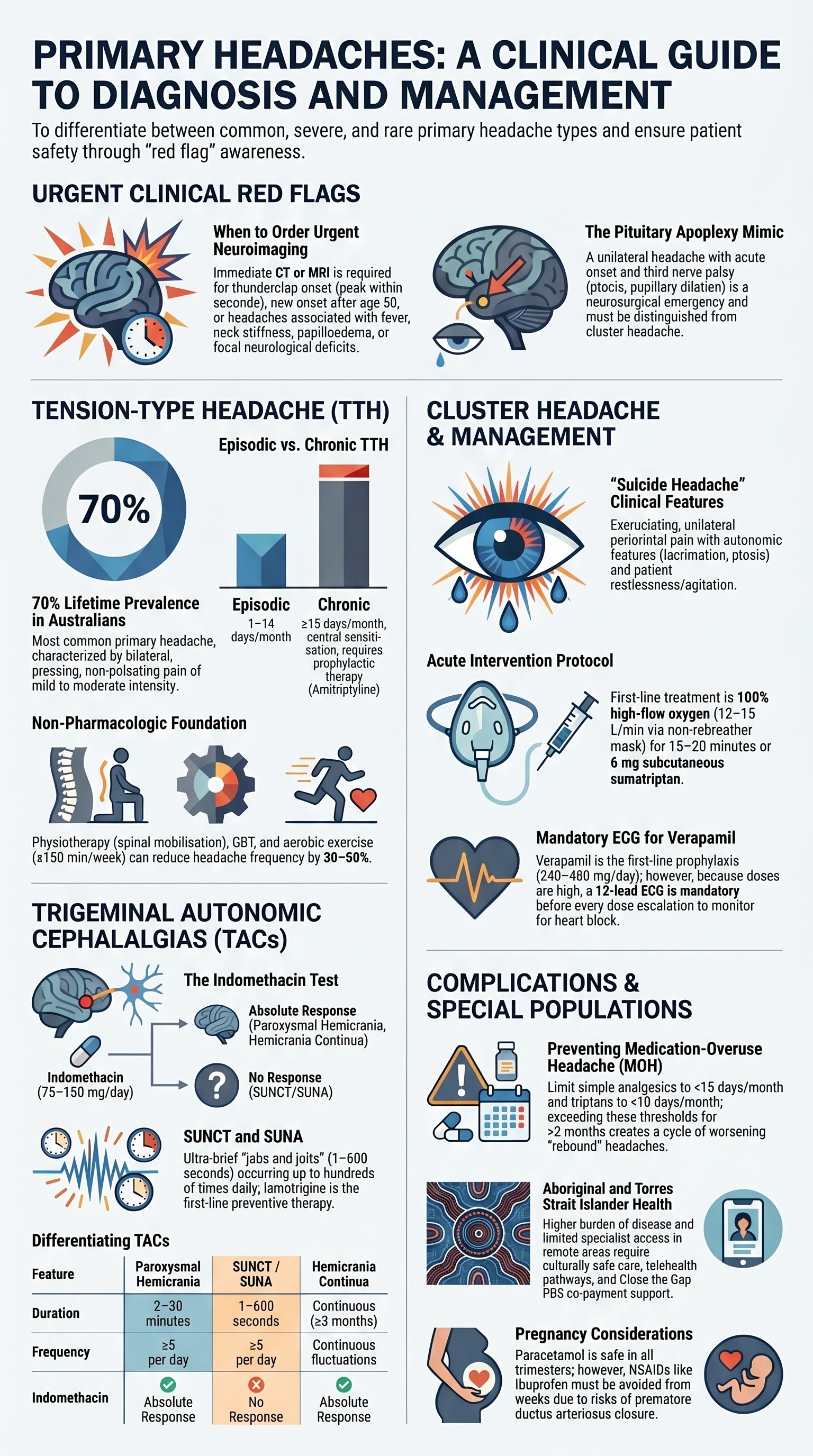
🖼️ Tension & Other Primary Headaches — visual summary
Tension & Other Primary Headaches visual summary infographic

Headache Disability & Severity Assessment

Headache-related disability guides treatment intensity and monitors response. Use validated tools at baseline and every 3–6 months:

Tool Application Scoring
HIT-6 (Headache Impact Test) All primary headaches; 6-item questionnaire 36–49: little impact; 50–55: some; 56–59: substantial; ≥60: severe impact
MIDAS (Migraine Disability Assessment) Primarily migraine/TTH; measures days lost from work, household, social activities 0–5: minimal; 6–10: mild; 11–20: moderate; ≥21: severe disability
Headache diary All headaches; tracks frequency, severity, acute medication use, triggers Essential for detecting medication overuse and monitoring prophylactic response

Monitoring & Medication-Overuse Prevention

Follow-Up Schedule

Baseline
Confirm diagnosis (ICHD-3 criteria), assess disability (HIT-6), initiate acute ± preventive treatment, commence headache diary, exclude red flags, screen for depression/anxiety.
2–4 weeks
Review headache diary. Assess acute medication frequency. Evaluate response to initial therapy. Adjust doses. Check ECG if on verapamil.
8–12 weeks
Assess prophylactic efficacy (≥50% reduction in headache days = treatment success). If chronic TTH, review amitriptyline dose and side effects. For cluster headache, confirm verapamil dose and ECG safety.
6 months
Reassess need for ongoing prophylaxis. Repeat HIT-6/MIDAS. Screen for medication overuse. If cluster headache, plan verapamil taper if in remission. Discuss long-term management plan.
12 months
Consider trial off prophylaxis if headache well controlled (taper gradually). Ongoing monitoring if chronic cluster or chronic TTH. Re-refer if new features develop.

Medication-Overuse Headache (MOH) Prevention

MOH is the most common complication of primary headache management. Prevention is always preferable to treatment.

🚨
MOH thresholds (ICHD-3 criteria):
  • Simple analgesics (paracetamol, aspirin, NSAIDs): ≥15 days/month for >3 months
  • Triptans: ≥10 days/month for >3 months
  • Combination analgesics, opioids, or ergotamines: ≥10 days/month for >3 months

Management: Complete withdrawal of the overused agent. Explain that headache will worsen for 2–4 weeks before improving. Bridge with naproxen 500 mg BD or prednisolone taper. Initiate prophylaxis (amitriptyline) simultaneously. Follow up weekly during withdrawal.

Special Populations

🤰

Pregnancy

Acute TTH: Paracetamol is safe in all trimesters. Avoid aspirin (especially third trimester — premature ductus arteriosus closure). Ibuprofen and naproxen contraindicated from 30 weeks (oligohydramnios, premature ductus closure).
Chronic TTH prophylaxis: Amitriptyline — Category C. Discuss risk–benefit. Consider dose reduction or switch to non-pharmacologic strategies. Avoid abrupt cessation if established on therapy.
Cluster headache: Oxygen is safe. Sumatriptan — Category B3 (limited human data; use only if benefit outweighs risk). Verapamil — Category C. Prednisolone — Category A (short courses acceptable).
Indomethacin: Avoid in third trimester. If PH or HC diagnosed during pregnancy, specialist management is essential.
Brexanolone and newer CGRP-targeted agents have limited pregnancy data — avoid unless specialist-directed.
👶

Paediatrics

TTH in children: Common from age 7 years. Paracetamol 15 mg/kg/dose and ibuprofen 5–10 mg/kg/dose are first-line. Limit acute analgesic use to ≤2 days/week.
Chronic TTH prophylaxis: Amitriptyline use in children is off-label and requires specialist supervision (paediatric neurologist or headache specialist). Start very low (0.1–0.25 mg/kg/day). Non-pharmacologic strategies are preferred first-line in children.
Cluster headache: Very rare before puberty. If suspected, urgent specialist referral. Case reports support verapamil use in adolescents under specialist guidance.
TACs: Extremely rare in children. Any child with suspected TAC should be referred to a paediatric neurologist.
Always consider secondary causes of headache in children (raised intracranial pressure, intracranial infection, brain tumour). Low threshold for neuroimaging.
👴

Elderly (≥65 years)

New-onset headache after age 50: Always exclude secondary causes — giant cell arteritis (ESR, CRP, temporal artery biopsy), space-occupying lesion, idiopathic intracranial hypertension.
Amitriptyline: Use with extreme caution — anticholinergic burden (confusion, urinary retention, constipation, falls). Start at 5–10 mg nocte. Beers criteria lists amitriptyline as potentially inappropriate in older adults. Consider nortriptyline or mirtazapine as alternatives.
NSAIDs: Avoid where possible — increased GI bleeding, renal impairment, cardiovascular risk. If essential, co-prescribe PPI and use lowest dose for shortest duration.
Verapamil: Higher risk of bradycardia and heart block in elderly. More frequent ECG monitoring. Consider lower starting dose (40 mg TDS).
Polypharmacy review essential. Consider drug–drug interactions with existing cardiac, anticoagulant, and antihypertensive medications.
🫘

Renal Impairment

NSAIDs (including indomethacin): Contraindicated if eGFR <30 mL/min. Caution if eGFR 30–60. Monitor renal function every 3 months during regular use.
Paracetamol: Safe in renal impairment at reduced doses (max 2 g/day in severe impairment).
Amitriptyline: No specific dose adjustment but use with caution; metabolised hepatically, excreted renally.
Lithium (refractory cluster): Requires dose adjustment and close monitoring of serum levels in renal impairment. Contraindicated if eGFR <15 mL/min.
Patients on dialysis with suspected TACs: indomethacin is contraindicated. Refer to nephrology and neurology for collaborative management.
🫀

Hepatic Impairment

Paracetamol: Maximum 2 g/day in significant hepatic impairment (Child-Pugh B or C). Avoid in acute liver failure.
NSAIDs: Avoid in Child-Pugh C (coagulopathy, fluid retention risk). Use with caution in Child-Pugh A/B.
Amitriptyline: Metabolised hepatically; reduce dose and monitor for excessive sedation in hepatic impairment.
Verapamil: Extensively metabolised hepatically; bioavailability increases significantly in hepatic impairment. Use lower doses with careful monitoring.
🛡️

Immunocompromised

Key concern: New or changed headache in an immunocompromised patient (HIV/AIDS, organ transplant, biologic therapy, chemotherapy) mandates urgent neuroimaging to exclude opportunistic infection (cerebral toxoplasmosis, cryptococcal meningitis, progressive multifocal leukoencephalopathy), CNS lymphoma, or other pathology.
Corticosteroids: Short courses are generally acceptable but consider infection risk. Coordinate with the treating specialist.
Drug interactions: Triptans metabolised by MAO-A — caution with concurrent medications. Verapamil interacts with numerous immunosuppressants (cyclosporine, tacrolimus levels increase). Always check interactions before prescribing.

Aboriginal and Torres Strait Islander Health Considerations

Aboriginal and Torres Strait Islander Health

Aboriginal and Torres Strait Islander Australians experience a higher burden of headache disorders compared to the non-Indigenous population, driven by higher rates of comorbidities (cardiovascular disease, diabetes, renal disease), psychosocial stressors, and reduced access to specialist neurological services. Culturally safe, person-centred care is essential.

Epidemiology
AIHW data indicate that Aboriginal and Torres Strait Islander Australians report headache and migraine at higher rates than non-Indigenous Australians. Chronic pain conditions, including chronic headache, are disproportionately prevalent, particularly in remote communities.
Access barriers
Specialist neurological services are concentrated in major cities. Access to neurologists, headache clinics, and neuroimaging is significantly limited in rural and remote areas. Wait times for specialist appointments may exceed 12 months in some regions. Medicare-funded telehealth consultations (phone and video) are critical for bridging this gap.
Cultural safety
Consult with Aboriginal and Torres Strait Islander health workers and liaison officers in all aspects of headache management. Understand that pain expression and health-seeking behaviour may differ across cultural contexts. Respect kinship obligations and community-based decision-making. Use the Communication Guide published by the Australian Indigenous Doctors' Association.
Pharmacological considerations
Ensure affordable access to PBS-listed medications through Close the Gap PBS co-payment measures (available to eligible Aboriginal and Torres Strait Islander patients). Oxygen therapy availability through state-based home oxygen programs must be actively facilitated, as transport and supply barriers exist in remote communities. Verify that emergency oxygen equipment is available in remote clinics and Retrieval Services (e.g., NT Retrieval Service, RFDS).
Multidisciplinary care
Engage Aboriginal Community Controlled Health Organisations (ACCHOs) in care planning. Physiotherapy, psychology, and dietetics services — important in chronic TTH management — may be available through Aboriginal Medical Services or via Outreach programs. The Royal Flying Doctor Service (RFDS) provides specialist outreach clinics in many remote communities.
Screening and prevention
Screen for medication overuse in patients using OTC analgesics, which may be the only accessible treatment. Educate about safe analgesic use and the risk of MOH. Screen for comorbid depression and anxiety, which are more prevalent and may contribute to headache chronification. Refer to mental health services through the Access to Allied Psychological Services (ATAPS) program or equivalent state-based initiatives.

Quick Reference — Acute Treatment Summary

Headache Type
First-Line Acute
Alternative Acute
First-Line Prophylaxis
Key Note
Episodic TTH
Paracetamol 1 g PO or ibuprofen 400 mg PO
Aspirin 900 mg PO or naproxen 500 mg PO
Not usually required
Limit to ≤15 days/month
Chronic TTH
As above (rescue only)
Amitriptyline 10–75 mg nocte
Combine with CBT + physiotherapy
Cluster headache (acute)
O₂ 100% 12–15 L/min × 15–20 min +/− SC sumatriptan 6 mg
Zolmitriptan 5 mg nasal
Verapamil 240–480 mg/day
ECG monitoring with verapamil. Prednisolone bridge.
Paroxysmal hemicrania
Indomethacin 25–50 mg TDS
Indomethacin (no alternative)
Indomethacin (continuation)
Absolute response = diagnostic
Hemicrania continua
Indomethacin 25–75 mg TDS
Indomethacin (no alternative)
Indomethacin (continuation)
Absolute response = diagnostic
SUNCT / SUNA
IV lidocaine (specialist)
Greater occipital nerve block
Lamotrigine 100–200 mg/day
Always refer to specialist
📊 Tension & Other Primary Headaches — slide deck

Open slides PDF in new tab

📚 References

  1. 1. Headache Classification Committee of the International Headache Society (IHS). The International Classification of Headache Disorders, 3rd edition. Cephalalgia. 2018;38(1):1–211.
  2. 2. Bendtsen L, Sacco S, Ashina M, et al. Guideline on the use of medication in tension-type headache: a European headache federation position paper. J Headache Pain. 2022;23(1):80.
  3. 3. Robbins MS, Starling AJ, Pringsheim TM, Becker WJ, Schwedt TJ. Treatment of cluster headache: the American Headache Society evidence-based guidelines. Headache. 2016;56(7):1093–1106.
  4. 4. May A, Schwedt TJ, Magis D, Pozo-Rosich P, Evers S, Wang SJ. Cluster headache. Nat Rev Dis Primers. 2018;4:18006.
  5. 5. Goadsby PJ, Cohen AS, Matharu MS. Trigeminal autonomic cephalalgias: diagnosis and treatment. Curr Neurol Neurosci Rep. 2007;7(2):117–125.
  6. 6. Cohen AS, Matharu MS, Goadsby PJ. Short-lasting unilateral neuralgiform headache attacks with conjunctival injection and tearing (SUNCT) or cranial autonomic features (SUNA) — a prospective clinical study of SUNCT and SUNA. Brain. 2006;129(Pt 10):2746–2760.
  7. 7. Antonaci F, Sjaastad O. Chronic paroxysmal hemicrania (CPH): a review of the clinical manifestations. Headache. 1989;29(10):648–656.
  8. 8. Newman LC, Lipton RB, Solomon S. Hemicrania continua: ten new cases and a review of the literature. Neurology. 1994;44(11):2111–2114.
  9. 9. Australian Institute of Health and Welfare (AIHW). Headache and migraine in Australia. Cat. no. PHE 326. Canberra: AIHW; 2023.
  10. 10. Royal Australian College of General Practitioners (RACGP). Management of headache in primary care. Melbourne: RACGP; 2023.
  11. 11. Obermann M, Holle D. Cluster headache: from pathophysiology to new treatments. Curr Pain Headache Rep. 2023;27(4):57–67.
  12. 12. Mitsikostas DD, Ashina M, Craven A, et al. European Headache Federation consensus on technical investigation for primary headache disorders. J Headache Pain. 2016;17:5.
  13. 13. Bendtsen L, Jensen R. Tension-type headache — the most common, but also the most neglected, headache disorder. Curr Opin Neurol. 2006;19(3):305–309.
  14. 14. Paemeleire K, Bhatt DK, Ahn AH, et al. Pathophysiology of trigeminal autonomic cephalalgias — a comprehensive review. Lancet Neurol. 2019;18(8):784–796.
  15. 15. National Aboriginal Community Controlled Health Organisation (NACCHO). Providing culturally safe health care for Aboriginal and Torres Strait Islander peoples. Canberra: NACCHO; 2022.