Home Neurology Headache & Migraine

Headache & Migraine

🎧 Headache & Migraine — deep-dive podcast

📋 Key Information Summary

📋
  • Red flags demand urgent action: Apply SNOOP criteria (Systemic symptoms/signs, Neurological deficit, Onset sudden, Older age new onset, Pattern change) — thunderclap headache peaking within 1 minute requires immediate CT brain ± LP to exclude subarachnoid haemorrhage (SAH).
  • Migraine is common in Australia: Affects approximately 4.9 million Australians (prevalence ~15% in women, ~7% in men); it is the second leading cause of years lived with disability globally and costs the Australian economy over $35 billion annually.
  • ICHD-3 criteria govern diagnosis: ≥5 attacks for migraine without aura (4–72 h duration, ≥2 of unilateral/pulsating/moderate-severe/aggravated by activity, plus ≥1 of nausea/vomiting or photo-/phonophobia).
  • Acute treatment ladder: Simple analgesics (aspirin 900–1000 mg or ibuprofen 400 mg) first-line; triptans (sumatriptan 50–100 mg PO or 6 mg SC) for moderate-severe attacks; combine triptan + NSAID for refractory episodes.
  • Gepants and ditans expand options: Rimegepant (PBS-listed for acute and preventive use) and lasmiditan offer alternatives for patients with cardiovascular contraindications to triptans.
  • Preventive therapy indicated when: ≥4 headache days/month, significant disability, or overuse of acute medications — topiramate, propranolol, amitriptyline, and CGRP monoclonal antibodies (erenumab, fremanezumab, galcanezumab) are first-line preventives.
  • CGRP monoclonal antibodies are PBS-listed: Available via Authority Required for chronic migraine (≥15 headache days/month, ≥8 migraine days) after failure of ≥2 oral preventives — erenumab 70–140 mg SC monthly, fremanezumab 225 mg SC monthly, galcanezumab 120 mg SC monthly.
  • OnabotulinumtoxinA (Botox®) for chronic migraine: 155–195 units across 31 injection sites every 12 weeks — PBS Authority Required after ≥2 oral preventive failures.
  • Medication overuse headache (MOH): Develops with ≥15 days/month use of acute medications — withdrawal of the offending agent is the cornerstone; bridge therapy with naproxen, prednisolone, or a transitional nerve block aids withdrawal.
  • Triptan overuse carries highest MOH risk: ≥10 days/month of triptans, ergots, opioids, or combination analgesics; ≥15 days/month for simple analgesics — MOH affects ~1–2% of the general population and up to 50% of patients in headache clinics.
  • Australian ATSI communities face disparities: Aboriginal and Torres Strait Islander peoples have higher headache prevalence, later presentation, less access to neurology and imaging, and greater use of over-the-counter analgesics — culturally safe care and GP-led management pathways are essential.
  • Safety-critical: Triptans are CONTRAINDICATED in ischaemic heart disease, uncontrolled hypertension, cerebrovascular disease, and hemiplegic/basilar migraine. Always screen for cardiovascular risk before prescribing.
🎬 Headache & Migraine — clinical explainer

Introduction & Australian Epidemiology

Headache disorders are among the most common presentations in Australian primary care. Migraine alone affects approximately 4.9 million Australians and is the leading cause of disability in Australians aged 15–49 years. The Global Burden of Disease Study (2019) ranks migraine as the second highest cause of years lived with disability worldwide. In Australia, the economic burden exceeds $35 billion per year when indirect costs (lost productivity, carer burden) are included.

Despite its prevalence, migraine remains underdiagnosed and undertreated. Fewer than 50% of Australians with migraine consult a physician, and of those who do, many receive only over-the-counter analgesia without appropriate preventive strategies. Medication overuse headache (MOH) complicates management in up to 2% of the general population and represents a significant proportion of chronic daily headache presentations.

This guideline covers the recognition of headache red flags, evidence-based diagnosis of migraine according to ICHD-3 criteria, acute and preventive pharmacotherapy available on the Australian Pharmaceutical Benefits Scheme (PBS), management of medication overuse headache, and considerations for special populations including Aboriginal and Torres Strait Islander communities.
📊
Australian burden: Migraine affects ~15% of women and ~7% of men. It is the second leading cause of disability-adjusted life-years (DALYs) in Australians aged 15–49. Less than 50% of those affected seek medical care, and only ~12% of those with chronic migraine receive appropriate preventive therapy.
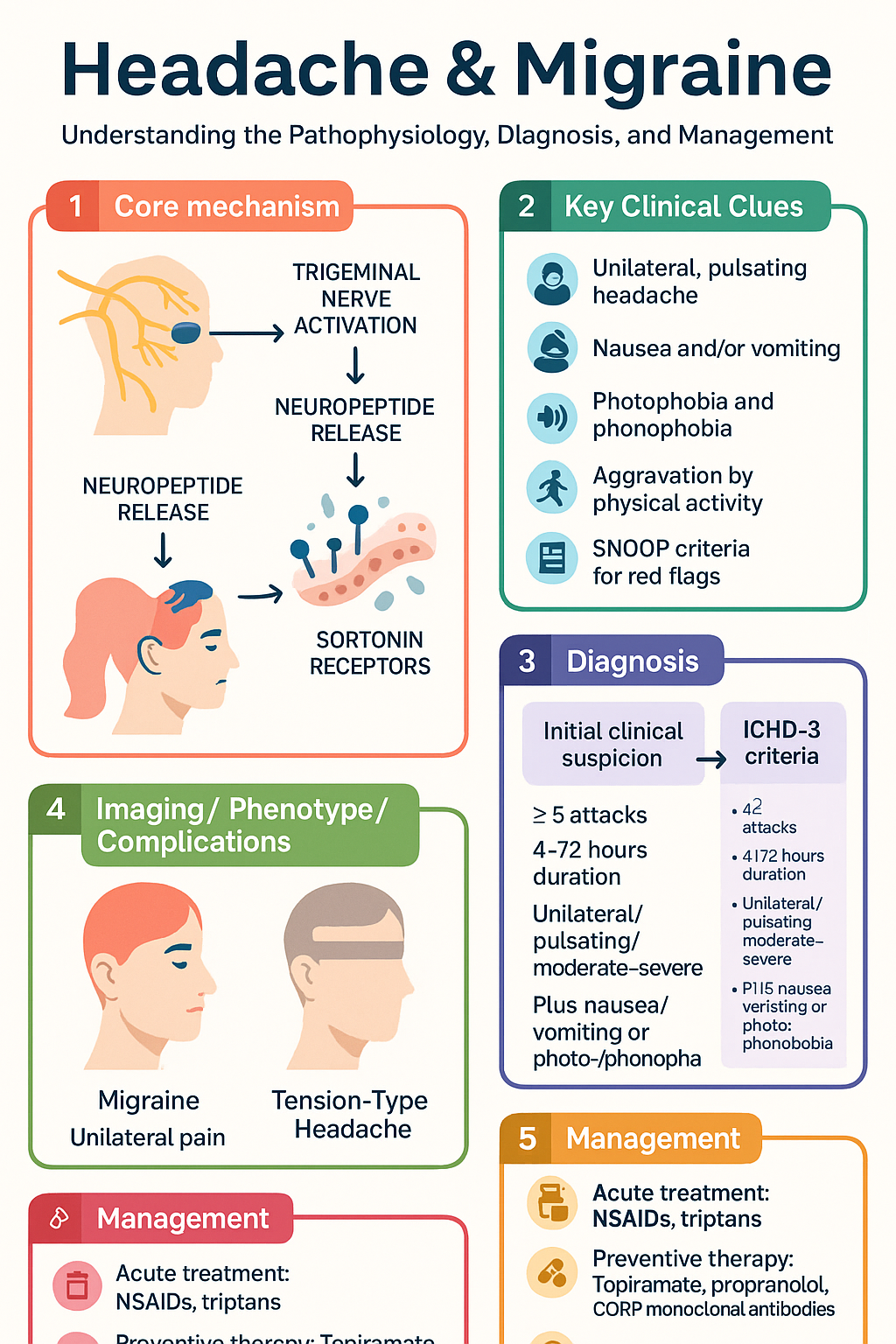
Headache & Migraine clinical infographic — pathophysiology, clinical clues, diagnosis, imaging, and management
Tap or click image to enlarge — Headache & Migraine: pathophysiology, clinical clues, diagnosis, imaging, and management.
Headache & Migraine infographic, full size

Headache Red Flags & Triage

The most critical task in headache assessment is identifying secondary causes that require urgent investigation or intervention. The SNOOP mnemonic and additional red-flag features should be systematically assessed at every presentation.

SNOOP Criteria for Headache Red Flags

Letter Criterion Examples
S — Systemic Systemic symptoms (fever, weight loss) or systemic risk factors (HIV, malignancy, immunosuppression) Fever + headache → meningitis, encephalitis, brain abscess; known malignancy → brain metastases
N — Neurological Focal neurological signs or altered mental status Hemiparesis, visual field defect, ataxia, papilloedema, confusion, personality change
O — Onset sudden Thunderclap headache — maximal intensity within 1 minute of onset Subarachnoid haemorrhage, cerebral venous sinus thrombosis, arterial dissection, pituitary apoplexy, reversible cerebral vasoconstriction syndrome (RCVS)
O — Older age New headache onset after age 50 years Giant cell arteritis (temporal arteritis), space-occupying lesion, idiopathic intracranial hypertension
P — Pattern change Progressive worsening, change in established headache pattern, or headache provoked by Valsalva/position/exertion Raised intracranial pressure (worse in morning, with bending), Chiari malformation, CSF leak (positional)
🚨
Thunderclap headache — medical emergency: A headache reaching maximal intensity within 1 minute requires immediate non-contrast CT brain (sensitivity ~95% within 6 hours of onset, declining to ~50% at 24 hours). If CT is negative or presentation is >6 hours from onset, perform lumbar puncture to look for xanthochromia. CT angiography (CTA) or digital subtraction angiography (DSA) may be needed to identify aneurysm or vascular pathology.

Additional Red-Flag Features Requiring Urgent Imaging or Referral

  • Headache with papilloedema — suspect idiopathic intracranial hypertension (IIH) or space-occupying lesion; urgent MRI/MRV and ophthalmology review
  • New headache with jaw claudication, visual disturbance, temporal tenderness, or elevated ESR/CRP in a patient >50 years — suspect giant cell arteritis (GCA); start prednisolone 1 mg/kg/day immediately, urgent rheumatology/ophthalmology referral, temporal artery biopsy
  • Headache with fever, neck stiffness, and photophobia — suspect meningitis; blood cultures + empirical antibiotics (ceftriaxone 2 g IV) immediately; do not delay for CT/LP if meningococcal disease suspected
  • Headache in immunocompromised patient (HIV, transplant, chemotherapy) — low threshold for CT/MRI and LP to exclude opportunistic infection, CNS lymphoma, or progressive multifocal leukoencephalopathy
  • New headache with seizures — urgent CT/MRI to exclude space-occupying lesion, encephalitis, or cerebral venous sinus thrombosis
  • Positional headache (worse upright, better supine) — suspect spontaneous intracranial hypotension (CSF leak); MRI brain with gadolinium, CT myelogram

When to Image — Summary Guide

Clinical Scenario Imaging Urgency
Thunderclap headache Non-contrast CT brain → LP if negative → CTA Immediate (code stroke equivalent)
First severe headache with focal neurology CT brain ± contrast, or MRI brain Urgent (within 1 hour)
Suspected meningitis Blood cultures → antibiotics → CT only if indicated before LP Immediate
New daily persistent headache (NDPH) MRI brain with contrast + MRV Within 2 weeks
Chronic migraine without red flags — typical pattern Imaging NOT routinely required N/A
Suspected GCA Temporal artery ultrasound or biopsy; urgent ophthalmology Same day
⚠️
MBS imaging items: CT brain non-contrast: MBS item 56001. MRI brain: MBS item 63001 (requires specialist referral unless accessed in public hospital). Lumbar puncture: MBS item 18330. Most urgent imaging for suspected SAH or stroke is accessed through emergency departments with no out-of-pocket cost.

Migraine Diagnosis

Migraine diagnosis is clinical, based on the International Classification of Headache Disorders, 3rd edition (ICHD-3) criteria published by the International Headache Society (IHS). No biomarker or imaging study confirms migraine — it is diagnosed by history.

ICHD-3 Diagnostic Criteria: Migraine Without Aura

📋
  • A. ≥5 attacks fulfilling criteria B–D
  • B. Headache lasting 4–72 hours (untreated or unsuccessfully treated)
  • C. Headache has ≥2 of the following: unilateral location, pulsating quality, moderate or severe pain intensity, aggravation by or causing avoidance of routine physical activity
  • D. During headache, ≥1 of: nausea and/or vomiting, photophobia and phonophobia
  • E. Not better accounted for by another ICHD-3 diagnosis

ICHD-3 Diagnostic Criteria: Migraine With Aura

📋
  • A. ≥2 attacks fulfilling criteria B and C
  • B. ≥1 of the following fully reversible aura symptoms: visual, sensory, speech/language, motor, brainstem, retinal
  • C. ≥2 of: ≥1 aura symptom spreads gradually over ≥5 minutes, ≥2 aura symptoms occur in succession, each aura symptom lasts 5–60 minutes, aura accompanied or followed within 60 minutes by headache
  • D. Not better accounted for by another ICHD-3 diagnosis

Migraine Subtypes

Subtype Definition Key Features
Episodic migraine (EM) <15 headache days/month Low-frequency EM: <4 days/month; High-frequency EM: 4–14 days/month — high-frequency EM has highest risk of progression to chronic migraine
Chronic migraine (CM) ≥15 headache days/month for >3 months, of which ≥8 are migraine days Affects ~2% of migraineurs; significant disability; associated with medication overuse, obesity, depression, sleep disorders — eligible for PBS-listed CGRP mAbs and onabotulinumtoxinA
Menstrual migraine (MM) Migraine without aura occurring on day −2 to +3 of menstruation in ≥2 out of 3 menstrual cycles Pure menstrual migraine (attacks only around menses) vs menstrually-related migraine (also at other times); perimenstrual triptan prophaxis or frovatriptan 2.5 mg BD from day −2 to +4
Hemiplegic migraine Aura with motor weakness (familial or sporadic) TRIPTANS CONTRAINDICATED; may require verapamil or lamotrigine; genetic testing for CACNA1A, ATP1A2, SCN1A
Basilar migraine Aura with ≥2 brainstem symptoms (dysarthria, vertigo, tinnitus, diplopia, ataxia, bilateral visual symptoms) TRIPTANS CONTRAINDICATED; now termed "migraine with brainstem aura" in ICHD-3
⚠️
Do not over-investigate typical migraine: In patients with a normal neurological examination and headache history consistent with ICHD-3 criteria for migraine, routine neuroimaging (CT/MRI) is not recommended. Neuroimaging is indicated only when red flags are present or the diagnosis is uncertain.

Headache Diary & Disability Assessment

Patients should maintain a headache diary for ≥8 weeks to document attack frequency, severity, duration, triggers, acute medication use, and menstrual cycle timing. Standardised tools include the Migraine Disability Assessment (MIDAS) questionnaire and the Headache Impact Test (HIT-6).

  • MIDAS score 0–5: Minimal disability — acute treatment only
  • MIDAS score 6–10: Mild disability — consider preventive therapy
  • MIDAS score 11–20: Moderate disability — offer preventive therapy
  • MIDAS score ≥21: Severe disability — initiate preventive therapy urgently

Acute Migraine Treatment

Acute migraine treatment should be stratified by attack severity. Early treatment (within 20 minutes of onset) is more effective. A stepwise approach from simple analgesics to specific anti-migraine agents is recommended.

Step 1 — Simple Analgesics (Mild to Moderate Attacks)

💊
Aspirin (soluble)
Aspro Clear® · Disprin® · NSAID / analgesic
Adult dose900–1000 mg PO dissolved in water, stat dose at onset
Paediatric doseNot recommended <16 years for migraine (Reye syndrome risk)
Route / FrequencyPO, single dose, may repeat once after 4 hours; max 3 g/day
Renal adjustmentAvoid in eGFR <30 mL/min
Hepatic adjustmentAvoid in severe hepatic impairment
PBS status✔ PBS General Benefit
💊
Ibuprofen
Nurofen® · Brufen® · NSAID
Adult dose400 mg PO at onset
Paediatric dose10 mg/kg PO (max 400 mg) for children ≥3 months, ≥5 kg
Route / FrequencyPO, single dose, may repeat TDS PRN; max 1200 mg/day (OTC) or 2400 mg/day (prescription)
Renal adjustmentAvoid in eGFR <30 mL/min
PBS status✔ PBS General Benefit

Step 2 — Triptans (Moderate to Severe Attacks)

🚨
Triptan CONTRAINDICATIONS: Ischaemic heart disease (angina, MI history), coronary artery vasospasm (Prinzmetal angina), uncontrolled hypertension, cerebrovascular disease (stroke/TIA), peripheral vascular disease, hemiplegic migraine, basilar migraine. Do NOT combine with ergotamines within 24 hours or with MAOIs. Screen cardiovascular risk factors before initiating.
💊
Sumatriptan
Imigran® · Generic · 5-HT₁B/₁D agonist (triptan)
Adult dose (PO)50–100 mg PO at onset; may repeat after 2 hours; max 300 mg/day
Adult dose (SC)6 mg SC at onset; may repeat after 1 hour; max 12 mg/day
Paediatric doseNot routinely recommended <18 years
Route / FrequencyPO, SC, or intranasal; max 2 doses per 24 hours
Renal adjustmentNo adjustment required
Hepatic adjustmentUse with caution in severe impairment
PBS status✔ PBS General Benefit (tablets); ✔ PBS General Benefit (injection)
💊
Rizatriptan
Maxalt® · Generic · 5-HT₁B/₁D agonist (triptan)
Adult dose10 mg PO (wafer or tablet) at onset; may repeat after 2 hours; max 20 mg/day
Paediatric dose6–17 years: 0.25 mg/kg (max 10 mg); limited PBS access
DurationSingle dose per attack; max 2 doses in 24 hours
InteractionReduce to 5 mg if on propranolol
PBS status✔ PBS General Benefit
💊
Eletriptan
Relpax® · Generic · 5-HT₁B/₁D agonist (triptan)
Adult dose40 mg PO at onset; may increase to 80 mg; max 160 mg/day
Paediatric doseNot recommended <18 years
NoteHigher response rates than sumatriptan in some studies; avoid with strong CYP3A4 inhibitors (ketoconazole, erythromycin)
PBS status✔ PBS General Benefit
💊
Frovatriptan
Frova® · Long-acting triptan
Adult dose2.5 mg PO at onset; may repeat after 2 hours; max 5 mg/day
Menstrual migraine prophylaxis2.5 mg PO BD starting 2 days before expected onset, continued for 6 days
NoteLongest half-life (~26 hours); lowest recurrence rates; useful for menstrual migraine
PBS status⚠ PBS Restricted Benefit

Step 3 — Combination Therapy & Refractory Acute Treatment

💡
Best evidence for combination: Sumatriptan 85 mg + naproxen sodium 500 mg (as a single combination tablet) has the highest NNT (number needed to treat) of any acute migraine therapy (~2.2 for 2-hour pain freedom). This combination is available in Australia.

Gepants (CGRP Receptor Antagonists)

💊
Rimegepant
Nurtec ODT® · Oral CGRP receptor antagonist (gepant)
Acute dose75 mg PO (ODT) at onset; max 1 dose per 24 hours
Preventive dose75 mg PO every other day
Key advantageNo vasoconstrictive effect — suitable for patients with cardiovascular contraindications to triptans
Renal adjustmentNo adjustment required (mild–moderate); avoid in severe/end-stage (eGFR <15)
Hepatic adjustmentNo adjustment required (mild–moderate); avoid in severe impairment
PBS status✘ Not PBS-listed (currently TGA-approved; PBS application pending as of 2025)

Lasmiditan (5-HT₁F Agonist — Ditan)

💊
Lasmiditan
Reyvow® · Selective 5-HT₁F agonist (ditan)
Adult dose50–200 mg PO at onset; max 1 dose per 24 hours
Key advantageNo vasoconstrictive effect — suitable for cardiovascular comorbidity
CNS side effectsDizziness, somnolence — do NOT drive for 8 hours after dose
PBS status✘ Not PBS-listed (TGA-approved 2024; PBS application pending)

Adjunctive Acute Therapies

💊
Metoclopramide
Maxolon® · Pramin® · D₂ antagonist / prokinetic / antiemetic
Adult dose10–20 mg PO/IV/IM at onset; may repeat 8-hourly; max 30 mg/day
Paediatric dose0.1–0.15 mg/kg IV/PO (max 10 mg)
NoteImproves gastric stasis enhancing oral analgesic absorption; antiemetic; risk of extrapyramidal side effects (dystonia) — more common in young adults, reduce with slow IV push
PBS status✔ PBS General Benefit
💊
Prochlorperazine
Stemetil® · Phenothiazine antiemetic
Adult dose10 mg PO/IM/IV; may repeat 6-hourly
Paediatric doseNot recommended <10 years for migraine
NoteComparable efficacy to triptans in ED studies; caution: hypotension, extrapyramidal effects
PBS status✔ PBS General Benefit
💊
Dexamethasone
Dexamethasone · Generic · Corticosteroid
Adult dose8–16 mg IV (or 4 mg PO) as single dose in ED for refractory or status migrainosus
IndicationReduces headache recurrence at 24–72 hours (NNT ~9); not first-line — use for refractory attacks or status migrainosus
PBS status✔ PBS General Benefit

Emergency Department Protocol for Refractory Migraine

1
IV Metoclopramide
10–20 mg IV over 15 min + IV normal saline rehydration
2
IV Ketorolac
30 mg IV (if no contraindications to NSAIDs)
3
IV Dexamethasone
8 mg IV — reduces 72-hour recurrence
4
IV Valproate
500–1000 mg IV over 30 min — second-line for refractory cases
5
SC/IN Sumatriptan
6 mg SC or 20 mg intranasal — if no contraindications and not yet trialled
⚠️
Opioids are NOT recommended for migraine: Opioids worsen migraine over time, increase the risk of medication overuse headache, cause central sensitisation, and have been associated with chronification of migraine. Use of opioids for acute migraine more than 2 days/month is a risk factor for progression to chronic migraine. In the ED, non-opioid pathways should be followed.

Preventive Migraine Therapy

Preventive therapy is indicated when migraine frequency is ≥4 headache days/month, when acute treatments are insufficient or contraindicated, when quality of life is significantly impacted, or when medication overuse is developing. The goal is a ≥50% reduction in headache days per month. Treatment should be initiated at a low dose and titrated slowly over 2–3 months to minimise side effects.

First-Line Oral Preventives

💊
Propranolol
Inderal® · Generic · Non-selective β-blocker
Adult doseStart 20 mg PO BD; titrate to 40–80 mg BD; max 240 mg/day
Paediatric dose1 mg/kg/day in 2–3 divided doses; titrate to effect
DurationMinimum 8 weeks at target dose before assessing efficacy; review at 6 months for trial of withdrawal
Renal adjustmentNo adjustment required
ContraindicationsAsthma (use atenolol 50–100 mg/day if needed), heart block, decompensated heart failure, Raynaud phenomenon
PBS status✔ PBS General Benefit
💊
Topiramate
Topamax® · Generic · Anticonvulsant / carbonic anhydrase inhibitor
Adult doseStart 15–25 mg PO nocte; increase by 15–25 mg weekly; target 50–100 mg BD
Paediatric doseLimited data; 1–3 mg/kg/day (specialist initiation)
DurationMinimum 8 weeks at target dose; reassess at 6 months
Renal adjustmentUse with caution; clearance reduced by ~50% in severe impairment
Key side effectsParaesthesiae (common), cognitive impairment ("dopamax"), weight loss, metabolic acidosis, nephrolithiasis (2%), angle-closure glaucoma
⚠ TeratogenicityCategory D — CONTRAINDICATED in pregnancy (cleft palate, major malformations). Must use effective contraception.
PBS status✔ PBS General Benefit
💊
Amitriptyline
Endep® · Generic · TCA (tricyclic antidepressant)
Adult doseStart 10 mg PO nocte; titrate by 10 mg every 1–2 weeks; target 25–75 mg nocte
Paediatric dose0.25–0.5 mg/kg nocte (specialist supervision)
Key side effectsSedation, dry mouth, constipation, weight gain, urinary retention — caution in elderly, cardiac disease
InteractionsSSRIs (serotonin syndrome risk), anticholinergics — avoid MAOIs within 14 days
PBS status✔ PBS General Benefit
💊
Sodium Valproate
Epilim® · Generic · Anticonvulsant / mood stabiliser
Adult doseStart 200 mg PO BD; titrate to 400–800 mg/day in divided doses
Paediatric dose10–20 mg/kg/day in 2–3 divided doses (specialist initiation)
⚠ TeratogenicityCategory D — CONTRAINDICATED in women of childbearing potential unless enrolled in the Australian Valproate Pregnancy Prevention Programme. Major malformations (neural tube defects ~10%) and neurodevelopmental effects.
Key side effectsWeight gain, tremor, hair loss, hepatotoxicity (rare), pancreatitis (rare), thrombocytopenia
MonitoringFBC, LFTs at baseline and 3-monthly; weight monitoring
PBS status✔ PBS General Benefit

CGRP Monoclonal Antibodies (PBS Authority Required)

PBS eligibility for CGRP mAbs: Authority Required for chronic migraine (≥15 headache days/month for >3 months, with ≥8 migraine days/month) where the patient has failed or is intolerant to ≥2 oral preventive medications (e.g., propranolol, topiramate, amitriptyline, valproate) at adequate doses for ≥8 weeks each. Prescriber must be a neurologist or have neurologist endorsement.
💊
Erenumab
Aimovig® · Anti-CGRP receptor mAb
Adult dose70 mg SC once monthly; may increase to 140 mg monthly if inadequate response after 3 months
OnsetResponse typically seen within 1–3 months
Key advantageNo hepatic/renal metabolism; very low side-effect profile; constipation most common (~3%)
Renal/HepaticNo dose adjustment required
PBS status⚠ PBS Authority Required — chronic migraine, ≥2 oral preventive failures
💊
Fremanezumab
Ajovy® · Anti-CGRP ligand mAb
Adult dose225 mg SC once monthly, OR 675 mg SC every 3 months (quarterly)
Key advantageFlexible dosing (monthly or quarterly); injection site reactions most common
PBS status⚠ PBS Authority Required — chronic migraine, ≥2 oral preventive failures
💊
Galcanezumab
Emgality® · Anti-CGRP ligand mAb
Loading dose240 mg SC (2 × 120 mg injections) at initiation
Maintenance dose120 mg SC once monthly
Key advantageAlso TGA-approved for episodic cluster headache; injection site pain most common side effect
PBS status⚠ PBS Authority Required — chronic migraine, ≥2 oral preventive failures

OnabotulinumtoxinA for Chronic Migraine

💊
OnabotulinumtoxinA
Botox® · Botulinum toxin type A
Adult dose155–195 units across 31 fixed injection sites (frontalis, corrugator, procerus, occipitalis, cervical paraspinal, trapezius) every 12 weeks
OnsetMay require 2–3 treatment cycles (24–36 weeks) to see full effect
Key side effectsNeck pain, headache (paradoxical in first cycle), injection site pain, ptosis (~3%)
Prescriber requirementMust be initiated by neurologist; may be administered by trained GP/specialist nurse under delegation
PBS status⚠ PBS Authority Required — chronic migraine (≥15 days/month, ≥8 migraine days), failed ≥2 oral preventives

Preventive Therapy Monitoring & Titration

Parameter Frequency Details
Headache diary Ongoing, reviewed monthly initially Track headache days, migraine days, acute medication use, MIDAS score
Efficacy assessment After 8–12 weeks at target dose ≥50% reduction in monthly migraine days = adequate response; continue for 6–12 months then trial off
FBC / LFTs Baseline, 3 months (topiramate, valproate, amitriptyline) Valproate: FBC + LFTs; Topiramate: bicarbonate (metabolic acidosis); Amitriptyline: ECG if cardiac risk
Weight Monthly for 3 months, then 3-monthly Topiramate → weight loss (beneficial in obese patients); valproate/amitriptyline → weight gain
Blood pressure / HR Baseline, 1 month, 3-monthly (β-blockers) Propranolol: hypotension, bradycardia
Pregnancy test Before each cycle (topiramate, valproate) Both Category D — must confirm effective contraception
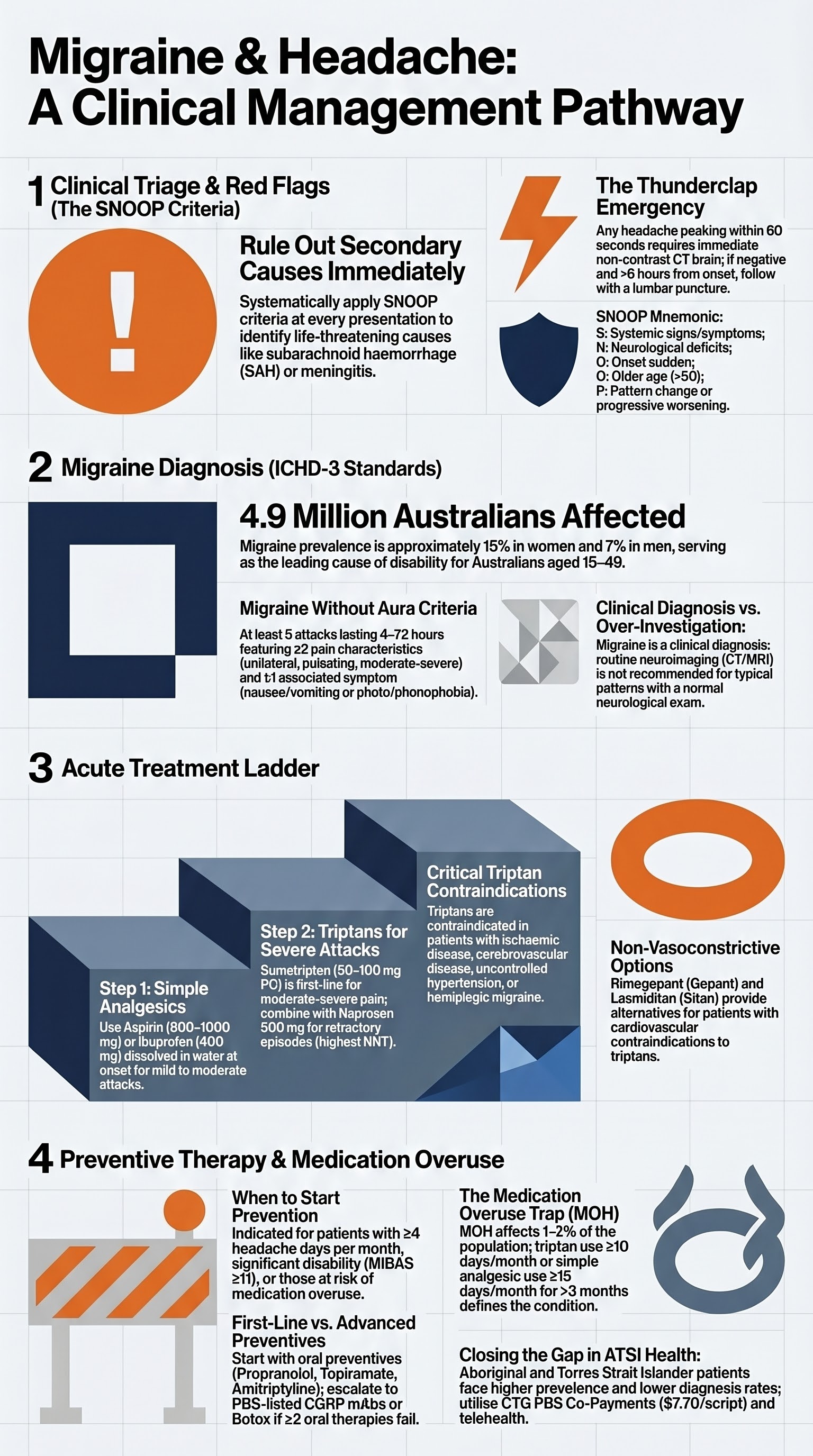
🖼️ Headache & Migraine — visual summary
Headache & Migraine visual summary infographic

Medication Overuse Headache (MOH)

Medication overuse headache (MOH) is defined by ICHD-3 as headache occurring on ≥15 days/month in a patient with a pre-existing primary headache disorder (usually migraine or tension-type headache) who has been overusing acute headache medications for >3 months. MOH affects approximately 1–2% of the general population and up to 50% of patients in tertiary headache clinics. It is the most common cause of chronic daily headache.

High-Risk Medications & Overuse Thresholds

Medication Class Overuse Threshold MOH Risk
Simple analgesics (aspirin, paracetamol, NSAIDs) ≥15 days/month for >3 months Lower
Triptans ≥10 days/month for >3 months Highest — develops most quickly (median 1.7 years)
Ergotamines ≥10 days/month for >3 months High
Opioids ≥10 days/month for >3 months High — also promotes central sensitisation
Combination analgesics (codeine + paracetamol, caffeine-containing) ≥10 days/month for >3 months High — caffeine component contributes
Gepants Not yet established; ≥18 days/month (provisional) Low (emerging data)
🚨
Codeine-containing analgesics no longer available OTC in Australia: Since February 2018, codeine-containing products require a prescription. Despite this, codeine overuse remains a significant contributor to MOH in Australia. Patients presenting with MOH involving codeine should be assessed for dependency and referred appropriately.

Withdrawal Strategy

Abrupt withdrawal is recommended for triptans, ergotamines, and simple analgesics. Gradual dose reduction over 2–4 weeks is appropriate for opioids and benzodiazepines. Patient education before withdrawal is essential to manage expectations — headache typically worsens for 1–2 weeks before improvement.

Bridge Therapy During Withdrawal

💊
Naproxen
Naprosyn® · Generic · NSAID (bridge therapy)
Adult dose500 mg PO BD for 2–4 weeks during withdrawal period
NoteUsed as temporary bridge; must also be stopped after withdrawal period to avoid new overuse
PBS status✔ PBS General Benefit
💊
Prednisolone
Solone® · Generic · Corticosteroid (bridge therapy)
Adult dose60–100 mg PO daily for 3–5 days, then taper over 1 week
NoteReduces withdrawal headache severity in the acute phase; short course only (≤2 weeks)
PBS status✔ PBS General Benefit
💊
Greater occipital nerve block
Bupivacaine 0.5% ± methylprednisolone acetate · Local anaesthetic injection
TechniqueInject 2–3 mL 0.5% bupivacaine ± 20–40 mg methylprednisolone into the greater occipital nerve (medial to occipital artery, at superior nuchal line)
FrequencySingle injection; may repeat at 4 weeks if needed
NoteProvides days to weeks of pain relief; bridges the withdrawal period; low-risk procedure in primary care
MBS itemMBS item 18360 (nerve block)
PBS status✔ PBS General Benefit

Patient Education — MOH

📝
Key messages for patients with MOH:
  • The overused medication is CAUSING the chronic headache — not treating it
  • Headache will temporarily worsen (for 1–2 weeks) after withdrawal before it improves
  • After successful withdrawal, 50–70% of patients return to episodic headache patterns
  • Restrict acute medication use to a maximum of 2 days per week (8–10 days/month)
  • Initiate or optimise preventive therapy BEFORE or SIMULTANEOUSLY with withdrawal
  • A headache diary is essential to track recovery and prevent relapse

Relapse Prevention

  • After successful withdrawal, initiate or optimise preventive therapy (CGRP mAbs have the lowest MOH risk)
  • Follow-up at 3, 6, and 12 months post-withdrawal
  • Relapse rate: ~30–40% within 4 years — regular headache diary and ongoing GP follow-up essential
  • Consider referral to headache specialist or neurologist for patients with refractory MOH
  • Address comorbidities: anxiety, depression, sleep disorders, obesity — all independent risk factors for MOH relapse

Special Populations

🤰

Pregnancy

Paracetamol Safest acute analgesic in all trimesters; 1 g PO PRN (max 4 g/day)
Sumatriptan Registry data reassuring; use if benefits outweigh risks (Category B1); consider SC injection to avoid nausea/vomiting
Metoclopramide Category A — safe in pregnancy; 10 mg PO/IV as antiemetic adjunct
⚠ AVOID Topiramate (Category D — cleft palate), sodium valproate (Category D — NTDs), aspirin >100 mg/day in third trimester, NSAIDs in third trimester (premature ductus arteriosus closure)
Propranolol Category C — may be used for prevention if benefits outweigh risks; monitor neonate for bradycardia/hypoglycaemia
CGRP mAbs Contraindicated — no human data; washout period of 4–5 months (5 half-lives) before conception
Magnesium 400–600 mg PO daily — Category A; modest evidence for prevention; may also benefit pre-eclampsia
👶

Paediatrics

Paracetamol 15 mg/kg PO 4–6-hourly (max 60 mg/kg/day); first-line acute treatment
Ibuprofen 10 mg/kg PO TDS (max 30 mg/kg/day or 2400 mg/day); effective in children ≥3 months
Sumatriptan nasal spray 10 mg (age 12–17); evidence for efficacy in adolescents; intranasal preferred due to nausea/vomiting
Propranolol First-line prevention in children; 1 mg/kg/day in 2–3 doses, titrate to 2–4 mg/kg/day
Topiramate 1–3 mg/kg/day (specialist initiation); watch for weight loss, cognitive effects, metabolic acidosis
Pizotifen 0.5–1 mg nocte; antihistamine preventive; causes weight gain and sedation — PBS-listed
⚠ AVOID Aspirin (<16 years — Reye syndrome risk), opioids, triptans in children <12 years (limited evidence)
👴

Elderly (≥65 years)

Paracetamol Preferred first-line; max 3 g/day (reduced from 4 g); dose reduce in low weight (<50 kg): max 50 mg/kg/day
Caution: New-onset headache Any new headache after age 50 requires investigation — exclude GCA (temporal arteritis), space-occupying lesion, raised ICP
Propranolol Use with caution; falls risk, bradycardia; start low (10 mg BD)
Amitriptyline Start very low (5–10 mg nocte); anticholinergic burden, falls, confusion — avoid if possible in frail elderly
Topiramate Higher cognitive side-effect risk; use cautiously; start 12.5 mg nocte
NSAIDs Minimise use — GI bleeding, renal impairment, cardiovascular risk; co-prescribe PPI if used
CGRP mAbs No dose adjustment needed; good option in elderly with cardiovascular comorbidities (no vasoconstrictive effect)
🫘

Renal Impairment

Paracetamol No dose adjustment; preferred analgesic
NSAIDs AVOID if eGFR <30 mL/min; use with caution in eGFR 30–60
Triptans No adjustment for sumatriptan or rizatriptan; caution with frovatriptan in severe impairment
Topiramate Dose reduce by ~50% if eGFR <30 mL/min; increased risk of metabolic acidosis and nephrolithiasis
Valproate No significant dose adjustment; monitor free drug levels in severe impairment
CGRP mAbs No dose adjustment required — safe in all stages of renal impairment
🫁

Hepatic Impairment

Paracetamol Reduce to max 2 g/day in chronic liver disease; avoid in acute liver failure
Valproate CONTRAINDICATED in active liver disease — hepatotoxicity risk
Sumatriptan Use with caution in severe hepatic impairment; clearance reduced
CGRP mAbs No hepatic metabolism; safe across hepatic impairment severities
NSAIDs Avoid if possible — increased GI bleeding risk, hepatorenal syndrome risk
🛡️

Immunocompromised

Low threshold for imaging CT/MRI + LP for any new/severe headache — exclude opportunistic infection (cryptococcal meningitis, toxoplasmosis, PML, CMV ventriculitis), CNS lymphoma, immune reconstitution inflammatory syndrome (IRIS)
Corticosteroids Use with caution — may worsen underlying infection; consult infectious diseases before initiating for headache
CGRP mAbs No immunosuppressive effect; safe for use in immunocompromised patients

Aboriginal and Torres Strait Islander Health

Aboriginal and Torres Strait Islander Health Considerations

Headache disorders, including migraine, are underrecognised and undertreated in Aboriginal and Torres Strait Islander communities. AIHW data indicate that First Nations Australians experience higher rates of headache-related presentations, greater use of over-the-counter analgesics, and reduced access to specialist neurology services, particularly in remote and very remote areas. Migraine prevalence in ATSI populations is estimated at 15–20%, yet fewer than 25% of those affected have received a formal migraine diagnosis.

Access to neurology & imaging
Specialist neurology services are concentrated in major cities. In remote NT, WA, and QLD communities, the nearest neurologist may be >1000 km away. Telehealth (MBS items 99200, 99203, 99212) should be maximised. MRI access is extremely limited in remote areas — CT brain (available at most regional hospitals) is used as first-line; aeromedical retrieval for suspected SAH or stroke is coordinated through Royal Flying Doctor Service (RFDS).
Analgesic overuse & MOH risk
Community stores in remote communities stock paracetamol, aspirin, and ibuprofen (low-dose paracetamol pack-size restrictions under Stronger Futures legislation in the NT). Despite these restrictions, analgesic overuse headache remains prevalent. Codeine-containing products have been prescription-only since 2018, reducing one pathway to MOH. GP-led headache education and monitoring with headache diaries are essential.
Cultural considerations in pain communication
Headache may not be the presenting complaint — patients may present with broader symptom clusters or present late when pain is severe. Culturally safe assessment requires understanding of local language, health beliefs, and the role of family and community in health decisions. Use of Aboriginal health practitioners and health workers as intermediaries improves communication and engagement.
Medication access & PBS affordability
Patients with a valid Medicare card accessing PBS prescriptions through Aboriginal Community Controlled Health Organisations (ACCHOs) may also access Closing the Gap PBS Co-Payment Program — $7.70 per script (compared to standard PBS co-payment of $31.60 in 2025). CGRP mAbs require authority approval and specialist initiation, creating a significant barrier in remote areas; telehealth neurology and visiting specialist outreach programmes should be utilised.
Comorbidities & risk factors
Higher prevalence of comorbid conditions that complicate headache management: cardiovascular disease (impacts triptan use), renal disease (impacts NSAID use), obesity, diabetes, mental health conditions (depression/anxiety independently increase migraine risk 2–5-fold), and sleep disorders. Culturally appropriate chronic disease management plans (MBS item 721) should incorporate headache as a comorbidity.
Child and adolescent migraine
Paediatric migraine is common in ATSI children but frequently unrecognised. School absence due to headache may be misattributed to behavioural issues. Community-based headache screening and education in schools should be considered. Paracetamol and ibuprofen remain first-line acute treatments; referral pathways through ACCHOs to paediatricians or telehealth paediatric neurology should be established.
💚
Recommended strategies for GPs managing headache in ATSI patients:
  • Utilise Aboriginal health practitioners and health workers for headache history-taking and patient education
  • Complete a comprehensive MBS chronic disease management plan (item 721) that includes headache
  • Access Closing the Gap PBS Co-Payment for affordable medications ($7.70/script)
  • Use telehealth neurology (MBS items 99200/99203) for specialist referral where local services are unavailable
  • Provide culturally adapted headache diaries and written patient information in local languages where available
  • Advise on non-pharmacological approaches: sleep hygiene, stress management, regular meals, hydration — relevant to community context
  • Screen for and manage comorbid mental health conditions that exacerbate migraine (MBS item 715 health assessment)
📊 Headache & Migraine — slide deck

Open slides PDF in new tab

📚 References

  1. 1. Headache Classification Committee of the International Headache Society (IHS). The International Classification of Headache Disorders, 3rd edition. Cephalalgia. 2018;38(1):1–211.
  2. 2. Steiner TJ, Stovner LJ, Jensen R, et al. Migraine remains second among the world's causes of disability, and first among young women: findings from GBD2019. J Headache Pain. 2020;21(1):137.
  3. 3. Australian Institute of Health and Welfare (AIHW). Headache and migraine in Australia. Cat. no. PHE 321. Canberra: AIHW; 2023.
  4. 4. American Headache Society. Consensus statement: The use of triptans, gepants, and ditans in acute migraine treatment. Headache. 2021;61(6):891–895.
  5. 5. Diener HC, Holle D, Solbach K, Gaul C. Medication-overuse headache: risk factors, pathophysiology and management. Nat Rev Neurol. 2016;12(10):575–583.
  6. 6. Ailani J, Burch RC, Robbins MS. The American Headache Society Consensus Statement: Update on integrating new migraine treatments into clinical practice. Headache. 2021;61(7):1021–1039.
  7. 7. Buse DC, Reed ML, Fanning KM, et al. Comorbid and co-occurring conditions in migraine and associated risk of increasing headache days and medication overuse. Headache. 2020;60(1):128–144.
  8. 8. Australian Government Department of Health and Aged Care. Pharmaceutical Benefits Scheme (PBS) — Online PBS Medicine Listings. Canberra: Commonwealth of Australia; 2025. Available at: pbs.gov.au.
  9. 9. Dodick DW, Turkel CC, DeGryse RE, et al. OnabotulinumtoxinA for treatment of chronic migraine: pooled results from the double-blind, randomised, placebo-controlled phases of the PREEMPT clinical programme. Headache. 2010;50(6):921–936.
  10. 10. Diener HC, Charles A, Goadsby PJ, Holle D. New therapeutic approaches for the prevention and treatment of migraine. Lancet Neurol. 2015;14(10):1010–1022.
  11. 11. Ashina M, Sazer D, Ashina S, et al. Migraine: epidemiology and systems of care. Lancet. 2021;397(10283):1485–1495.
  12. 12. Derry CJ, Derry S, Moore RA. Sumatriptan (all routes of administration) for acute migraine attacks in adults — overview of Cochrane reviews. Cochrane Database Syst Rev. 2014;(5):CD009108.
  13. 13. Lipton RB, Croop R, Stock EG, et al. Rimegepant, an oral calcitonin gene-related peptide receptor antagonist, for migraine. N Engl J Med. 2019;381(2):142–149.
  14. 14. Kuca B, Silberstein SD, Wietecha L, et al. Lasmiditan is an effective acute treatment for migraine: a phase 3 randomized study. Neurology. 2018;91(24):e2222–e2232.
  15. 15. Australian Government Department of Health and Aged Care. Closing the Gap PBS Co-Payment Program. Canberra: Commonwealth of Australia; 2024.
  16. 16. Royal Australian College of General Practitioners (RACGP). Guidelines for preventive activities in general practice (Red Book). 9th ed. Melbourne: RACGP; 2018.