📋 Key Information Summary
- Neurologic complications of systemic disease are common in Australian practice and require early recognition to prevent irreversible damage.
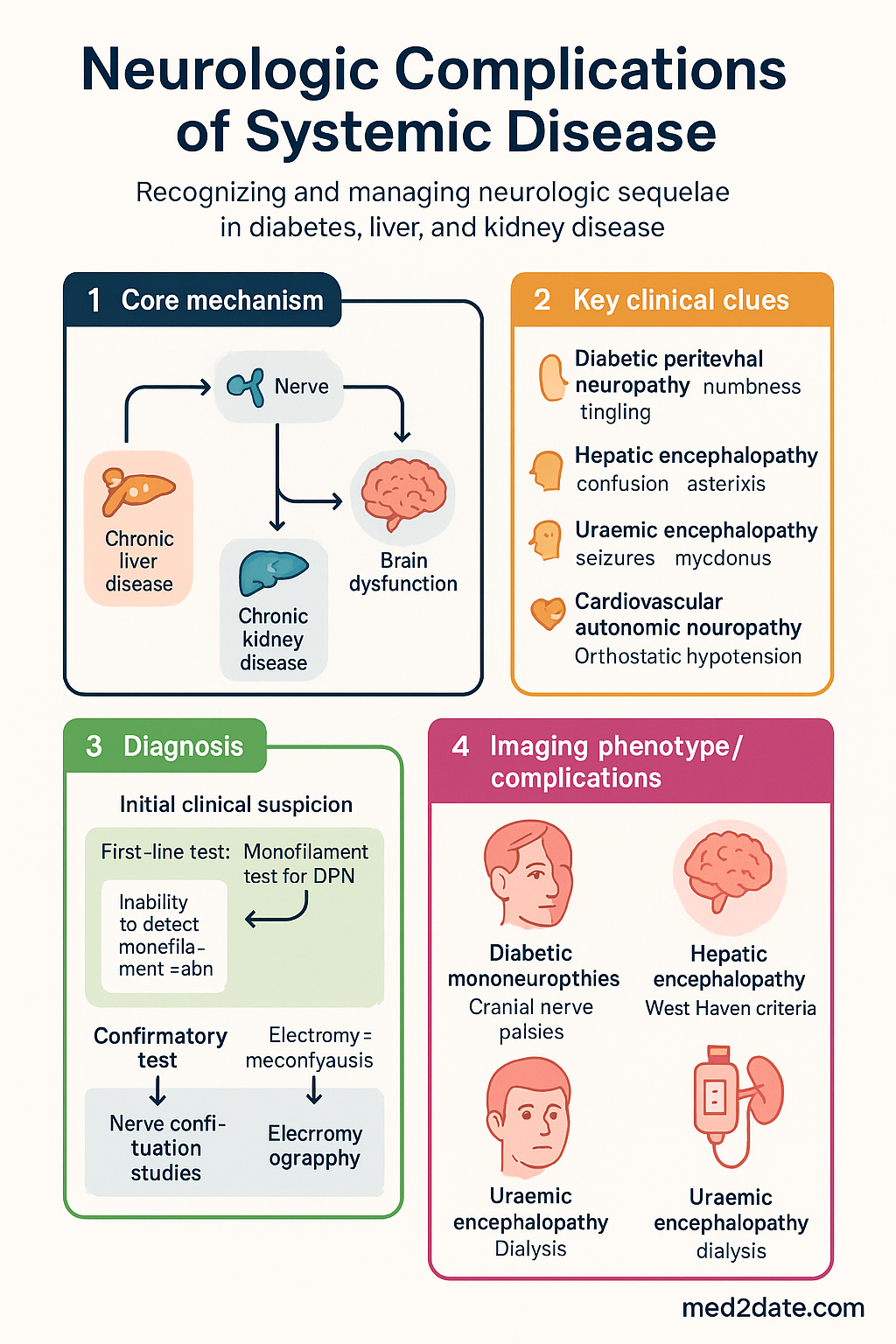
- Diabetic peripheral neuropathy affects up to 50 % of people with long-standing diabetes; annual monofilament testing (10 g Semmes-Weinstein) is the recommended screening tool in primary care (MBS Item 2517/721 for GP Management Plans).
- Diabetic autonomic neuropathy increases mortality—screen for cardiovascular autonomic neuropathy (CAN) using lying-to-standing BP and heart rate variability at diagnosis of type 2 diabetes and 5 years after type 1 diabetes onset.
- Focal diabetic mononeuropathies (cranial nerve III, VI, VII; peripheral nerve palsies) are generally self-limiting over 3–6 months but require exclusion of compressive or ischaemic causes (urgent neuroimaging if atypical features).
- Painful diabetic neuropathy: first-line agents are amitriptyline, duloxetine, or pregabalin; gabapentin and tramadol are second-line. All are PBS-listed for neuropathic pain.
- Hepatic encephalopathy (HE) is diagnosed clinically using the West Haven criteria; precipitating factors (infection, GI bleeding, constipation, electrolyte disturbance, medications) must be identified and reversed urgently.
- First-line treatment for overt HE is lactulose (titrate to 2–3 soft stools/day) plus rifaximin 550 mg BD (PBS Authority Required).
- Uraemic encephalopathy presents with asterixis, confusion, seizures, and myoclonus; definitive management is renal replacement therapy (haemodialysis/peritoneal dialysis).
- Coordinating with endocrinology, nephrology, hepatology, and neurology is essential; use GP Management Plans (MBS 721) and Team Care Arrangements (MBS 723) in the community.
- Aboriginal and Torres Strait Islander Australians experience diabetes at 3–4 times the general rate and have higher rates of renal disease, making neurologic screening critical in these populations.
- Glycaemic control (HbA1c target individualised ≤ 53 mmol/mol for most patients) is the single most effective intervention to prevent and slow progression of diabetic neuropathy.
- Thiamine deficiency (alcoholic or nutritional) should be considered in all patients with hepatic or renal disease presenting with acute confusion—administer IV thiamine 300 mg immediately if suspected.
Introduction & Australian Epidemiology
Systemic diseases — particularly diabetes mellitus, chronic kidney disease (CKD), and chronic liver disease — are among the most prevalent conditions managed in Australian primary care and hospital settings. Each carries a substantial burden of neurologic morbidity that may present insidiously or as an acute neurologic emergency.
According to the Australian Institute of Health and Welfare (AIHW), an estimated 1.3 million Australians had diagnosed diabetes in 2023, with the true prevalence including undiagnosed cases estimated at over 1.7 million. Approximately 1.7 million Australians have indicators of CKD, and chronic liver disease accounts for over 7,000 deaths annually. The neurologic complications of these conditions contribute significantly to disability, hospital admissions, and healthcare costs.
This article provides a practical clinical guide for Australian primary care physicians, emergency clinicians, and specialists managing neurologic sequelae of systemic disease. It covers diabetes-related neuropathies (peripheral, autonomic, and focal), hepatic encephalopathy, and uraemic encephalopathy, with emphasis on screening, evidence-based management, and coordination of care within the Australian health system.
Diabetes-Related Neurologic Issues
Diabetes mellitus is the most common cause of peripheral neuropathy worldwide and in Australia. Neurologic complications may affect somatic peripheral nerves (distal symmetric polyneuropathy, focal mononeuropathies, radiculoplexus neuropathy), autonomic nerves, and the central nervous system. Early identification and management of glycaemic control remain the cornerstone of prevention.
Peripheral Neuropathy — Screening and Diagnosis
Diabetic peripheral neuropathy (DPN) is predominantly a length-dependent, sensorimotor axonal polyneuropathy. The National Evidence-Based Guideline for Type 2 Diabetes (NHF/RACGP) recommends annual screening from the time of diagnosis of type 2 diabetes and from 5 years after diagnosis of type 1 diabetes.
Recommended screening tools in Australian primary care:
- 10 g Semmes-Weinstein monofilament — tested at 3 plantar sites per foot (great toe, 1st metatarsal head, 5th metatarsal head); inability to detect = abnormal.
- 128 Hz tuning fork — vibration sense at the dorsum of the great toe; diminished perception = abnormal.
- Reflex hammer — ankle reflex (absent or diminished is significant when compared with knee reflex).
- Neurothesiometer — quantitative vibration threshold testing, available in some specialist clinics.
If screening is abnormal, refer for nerve conduction studies (NCS) and electromyography (EMG) to confirm the diagnosis and characterise the neuropathy pattern. NCS are available through public hospital neurophysiology departments and private neurology practices (Medicare-rebated).
Autonomic Neuropathy
Diabetic autonomic neuropathy (DAN) affects cardiovascular, gastrointestinal, genitourinary, and sudomotor systems. Cardiovascular autonomic neuropathy (CAN) is the most clinically significant, associated with a 5-year mortality rate of up to 50 % in severe cases.
Screening for CAN:
- Lying-to-standing blood pressure measurement — a sustained drop in systolic BP ≥ 20 mmHg or diastolic BP ≥ 10 mmHg on standing indicates orthostatic hypotension.
- Heart rate response to deep breathing (heart rate variability).
- Heart rate response to Valsalva manoeuvre.
- 30:15 ratio (heart rate response to standing).
Clinical manifestations and management:
| System | Manifestation | Management |
|---|---|---|
| Cardiovascular | Orthostatic hypotension, resting tachycardia, exercise intolerance, silent myocardial ischaemia | Graduated compression stockings; midodrine 2.5–10 mg PO TDS (specialist); fludrocortisone 50–200 µg PO OD (caution: hypertension, fluid overload); patient education re silent MI |
| Gastrointestinal | Gastroparesis (nausea, vomiting, early satiety, erratic glucose control), constipation, diarrhoea | Small frequent meals; metoclopramide 10 mg PO/IV TDS (short-term; risk of tardive dyskinesia); domperidone 10 mg PO TDS (PBS); erythromycin 200–250 mg PO QDS as prokinetic |
| Genitourinary | Erectile dysfunction, neurogenic bladder, female sexual dysfunction | Sildenafil 50–100 mg PO PRN (PBS Authority Required for diabetes); tadalafil 5–20 mg PO OD; intermittent self-catheterisation for neurogenic bladder |
| Sudomotor | Anhidrosis of feet, gustatory sweating, heat intolerance | Emollients for dry skin; glycopyrrolate cream for gustatory sweating; patient education on thermoregulation |
Focal Mononeuropathies
Diabetic mononeuropathies include cranial nerve palsies (most commonly CN III, VI, VII) and peripheral nerve palsies (median nerve at the carpal tunnel, ulnar nerve at the elbow, common peroneal nerve at the fibular head). These are thought to result from ischaemic injury to the vasa nervorum.
- CN III palsy — pupil-involving in 67 % of diabetic cases (pupil-sparing is the classic teaching, but up to one-third may have some pupillary involvement). Urgent MRI/MRA is recommended to exclude posterior communicating artery aneurysm, especially if pupil is involved or atypical features are present.
- CN VII (Bell's palsy) — prednisolone 50 mg PO daily for 10 days if within 72 hours of onset (evidence from the BELL'S trial); eye protection with lubricant drops and tape at night.
- Carpal tunnel syndrome — wrist splinting at night; corticosteroid injection (MBS-rebated); surgical decompression if refractory.
- Most diabetic mononeuropathies recover spontaneously over 3–6 months; supportive care and optimisation of glycaemic control are essential.
Painful Diabetic Neuropathy — Pharmacotherapy
Renal & Hepatic Encephalopathy
Encephalopathy arising from renal failure (uraemic encephalopathy) and liver failure (hepatic encephalopathy) represents a critical neurologic complication of systemic organ failure. Both conditions are potentially reversible if precipitating factors are identified and managed promptly. These diagnoses require close coordination between general practice, emergency medicine, and specialty services (nephrology, hepatology, intensive care).
Hepatic Encephalopathy — Recognition and Classification
Hepatic encephalopathy (HE) is a spectrum of neuropsychiatric abnormalities occurring in patients with liver dysfunction and/or portosystemic shunting. It is classified according to the West Haven criteria:
Precipitating Factors of Hepatic Encephalopathy
Identifying and reversing precipitating factors is the most important initial management step. Up to 90 % of HE episodes have an identifiable precipitant.
| Category | Precipitant | Investigation / Action |
|---|---|---|
| Infection | Spontaneous bacterial peritonitis (SBP), UTI, pneumonia, cellulitis | FBC, CRP, blood cultures, ascitic tap (PMN > 250/mm³ = SBP), urinalysis, CXR |
| GI bleeding | Variceal haemorrhage, peptic ulcer | Urgent endoscopy; resuscitation; ceftriaxone 1 g IV OD for SBP prophylaxis post-bleed |
| Constipation | Increased ammonia absorption from the gut | Lactulose 20–30 mL PO 2–4 hourly until bowel action, then titrate to 2–3 soft stools/day |
| Electrolyte disturbance | Hypokalaemia, hyponatraemia, alkalosis | U&E, VBG; correct electrolytes cautiously; avoid aggressive diuresis |
| Medications | Opioids, benzodiazepines, sedatives, diuretic excess | Medication review; stop sedatives; use flumazenil 200 µg IV if benzodiazepine-related (caution in chronic liver disease) |
| Renal impairment | Hepatorenal syndrome, dehydration | Volume assessment; renal function monitoring; nephrology consultation |
| Dietary protein excess | High protein load increasing ammonia production | Avoid protein restriction (outdated practice); ensure adequate protein 1.2–1.5 g/kg/day; vegetable and dairy protein preferred |
| Portosystemic shunt | TIPS (transjugular intrahepatic portosystemic shunt) insertion | TIPS embolisation or reduction if recurrent HE; hepatology/interventional radiology input |
Hepatic Encephalopathy — Treatment
Uraemic Encephalopathy — Recognition
Uraemic encephalopathy occurs when the glomerular filtration rate falls sufficiently to allow accumulation of uraemic toxins. It is most commonly seen in patients with advanced CKD (eGFR < 15 mL/min/1.73 m²) or acute kidney injury, particularly when renal replacement therapy has not yet been initiated.
Clinical features (progressive):
- Early: Fatigue, difficulty concentrating, irritability, sleep disturbance, nausea, anorexia.
- Moderate: Asterixis (flapping tremor), confusion, disorientation, myoclonus, asterixis, hiccoughs, restlessness.
- Severe: Seizures (generalised tonic-clonic), stupor, coma, decerebrate posturing.
Uraemic Encephalopathy — Management
- Definitive treatment: Initiation or escalation of renal replacement therapy (intermittent haemodialysis or continuous renal replacement therapy in ICU). Peritoneal dialysis may be used if haemodialysis is not immediately available.
- Seizure management: IV levetiracetam 1,000–1,500 mg is preferred (renally adjusted, minimal hepatic metabolism). Alternatively, IV valproate or phenytoin. Avoid benzodiazepines as first-line in the setting of uraemic encephalopathy due to prolonged clearance.
- Electrolyte correction: Urgent treatment of hyperkalaemia (calcium gluconate 10 % 10–20 mL IV, insulin 10 units + 25 g dextrose 50 % IV, salbutamol 10–20 mg nebulised), metabolic acidosis (sodium bicarbonate if pH < 7.1), and hyperphosphataemia.
- Avoid nephrotoxins: Cease or dose-adjust all renally cleared medications (use AMH/Clinical Pharmacology databases).
- Thiamine 300 mg IV — administer immediately if there is any suspicion of nutritional deficiency (common in patients with poor oral intake, alcohol use, or prolonged vomiting).
Pathophysiology
Diabetic Neuropathy
Diabetic neuropathy results from a complex interplay of metabolic and vascular mechanisms:
- Polyol pathway activation: Hyperglycaemia drives conversion of glucose to sorbitol by aldose reductase, causing intracellular osmotic stress, depletion of myoinositol and NADPH, and reduced Na⁺/K⁺-ATPase activity — all contributing to nerve conduction slowing and demyelination.
- Advanced glycation end-products (AGEs): Non-enzymatic glycation of structural nerve proteins and basement membrane components leads to nerve fibre dysfunction, impaired axonal transport, and activation of the RAGE–NF-κB inflammatory cascade.
- Oxidative and nitrosative stress: Excess mitochondrial superoxide production leads to DNA damage, poly(ADP-ribose) polymerase (PARP) activation, and endothelial dysfunction in the vasa nervorum, resulting in endoneurial hypoxia.
- Protein kinase C (PKC) activation: Hyperglycaemia-derived diacylglycerol activates PKC, further impairing microvascular blood flow to peripheral nerves.
- Autoimmune mechanisms: T-cell mediated immune injury to dorsal root ganglia may contribute to diabetic radiculoplexus neuropathy (diabetic amyotrophy).
Hepatic Encephalopathy
The pathogenesis of HE centres on the accumulation of ammonia (NH₃) and other neurotoxins (manganese, mercaptans, short-chain fatty acids, endogenous benzodiazepines) that are normally cleared by the liver:
- Ammonia is produced by intestinal bacteria and enterocytes (glutaminase activity) and normally metabolised by hepatocytes via the urea cycle. In liver failure and portosystemic shunting, ammonia bypasses the liver and enters systemic circulation.
- In the brain, astrocytes convert ammonia and glutamate to glutamine, an osmolyte that causes astrocyte swelling, cerebral oedema, and increased intracranial pressure (especially in acute liver failure).
- Neuroinflammation amplifies ammonia toxicity: systemic inflammatory response syndrome (SIRS) and infection increase blood-brain barrier permeability and enhance cerebral ammonia uptake.
- Changes in GABAergic, serotonergic, and dopaminergic neurotransmission contribute to the spectrum of neuropsychiatric manifestations.
Uraemic Encephalopathy
Uraemic encephalopathy is caused by the accumulation of uraemic toxins — small water-soluble molecules (urea, creatinine), middle molecules (β₂-microglobulin, parathyroid hormone), and protein-bound toxins (indoxyl sulphate, p-cresyl sulphate) — that are normally excreted by the kidneys:
- These toxins disrupt the blood-brain barrier, alter neurotransmitter synthesis and release, impair neuronal energy metabolism, and promote oxidative stress.
- Secondary hyperparathyroidism and calcium-phosphate dysregulation contribute to basal ganglia calcification and movement disorders.
- Acidosis, hyponatraemia, and hyperosmolality further exacerbate cerebral dysfunction.
Clinical Presentation & Diagnostic Criteria
Diabetic Peripheral Neuropathy
The typical presentation is a length-dependent, symmetric, sensorimotor polyneuropathy:
- Symptoms begin in the feet and progress proximally in a "stocking-and-glove" distribution.
- Sensory: Numbness, tingling, burning pain (often worse at night), loss of proprioception, impaired balance.
- Motor (late): Intrinsic foot muscle wasting, claw toes, pes cavus, foot deformity predisposing to ulceration.
- Examination: Reduced/absent ankle reflexes, reduced vibration and monofilament sensation, impaired light touch and pinprick distally.
Diagnostic criteria (Toronto Consensus):
- Symptoms or signs of peripheral neuropathy in a person with diabetes.
- Abnormal nerve conduction studies (reduced amplitude, slowed conduction velocity, or both) — gold standard for confirming large-fibre neuropathy.
- Exclusion of other causes (B12 deficiency, hypothyroidism, alcohol, CIDP, vasculitis) — requires basic blood work including B12, folate, TFTs, serum protein electrophoresis, ESR/CRP.
Hepatic Encephalopathy
Diagnosis is clinical, based on the West Haven criteria applied to patients with known liver disease or portosystemic shunting:
- Asterixis (flapping tremor — positive in Grade II–III) — elicited by wrist extension with arms outstretched.
- Psychometric testing (Number Connection Test A & B, Digit Symbol Test, line tracing) for covert HE detection.
- Elevated serum ammonia — supportive but not diagnostic in isolation; levels correlate poorly with severity in chronic liver disease and may be normal in acute liver failure.
- EEG showing triphasic waves (non-specific but supportive).
- Exclude other causes: intracranial pathology (CT/MRI), sepsis, hypoglycaemia, Wernicke encephalopathy, drug intoxication, post-ictal state.
Uraemic Encephalopathy
Diagnosis requires a clinical–biochemical correlation:
- Encephalopathy in the setting of severe renal impairment (eGFR typically < 15 mL/min/1.73 m² or acute kidney injury with rising creatinine and urea).
- Elevated serum urea, creatinine, and potassium; metabolic acidosis.
- Asterixis, myoclonus, and seizures (hyper-reflexia may be present).
- Clinical improvement with renal replacement therapy is confirmatory.
Investigations
Risk Stratification & Severity Scoring
Diabetic Neuropathy Risk Stratification
| Risk Category | Findings | Review Frequency | Action |
|---|---|---|---|
| Low risk | Normal sensation, normal pulses, no deformity | Annual | Routine foot care education; monofilament and pulse assessment |
| Moderate risk | Loss of sensation (monofilament/vibration) OR absent pulses OR deformity | Every 3–6 months | Podiatry referral (MBS Item 10950); appropriate footwear; foot self-care education |
| High risk | Loss of sensation + absent pulses + deformity; or previous ulcer/amputation | Every 1–3 months | Urgent podiatry; vascular assessment; multidisciplinary foot team; consider specialist footwear/insoles |
| Active problem | Current ulcer, infection, gangrene, critical ischaemia | Continuous | Urgent referral to hospital-based multidisciplinary diabetic foot team; imaging (X-ray, MRI for osteomyelitis); IV antibiotics per eTG |
Hepatic Encephalopathy Severity — West Haven Criteria & MELD Score
The MELD (Model for End-Stage Liver Disease) score is calculated as: MELD = 3.78 × ln(bilirubin mg/dL) + 11.2 × ln(INR) + 9.57 × ln(creatinine mg/dL) + 6.43. A MELD score ≥ 15 is a threshold for considering listing for liver transplant. Patients with recurrent overt HE despite optimal medical therapy and a MELD ≥ 15 should be referred for transplant assessment.

Empirical / First-Line Therapy
Painful Diabetic Neuropathy — First-Line Approach
- Optimise glycaemic control — target HbA1c ≤ 53 mmol/mol (individualised; ≤ 48 mmol/mol if tolerated without significant hypoglycaemia). This is the only intervention proven to slow DPN progression in type 1 diabetes (DCCT/EDIC). Evidence in type 2 diabetes is less robust but supportive (UKPDS, ADVANCE).
- First-line analgesic: Amitriptyline 10–25 mg nocte (titrate to 75–150 mg), OR duloxetine 30 mg OD (titrate to 60 mg OD), OR pregabalin 75 mg BD (titrate to 300 mg BD). Choose based on comorbidities (duloxetine preferred if comorbid depression; amitriptyline if comorbid insomnia; pregabalin if TCA intolerant).
- Non-pharmacological: Foot care education, appropriate footwear, physiotherapy for balance and fall prevention, psychological support for chronic pain.
Hepatic Encephalopathy — First-Line Treatment
- Identify and treat precipitant — infection screen (ascitic tap, blood cultures, urinalysis, CXR); GI bleeding management; medication review; correct electrolytes.
- Lactulose 20–30 mL PO/NG every 2–4 hours until passage of 2–3 soft stools/day, then adjust to maintenance dose. Lactulose enema (200 mL in 800 mL water PR) if unable to take orally.
- Rifaximin 550 mg BD — add to lactulose for overt HE or if lactulose alone is insufficient. Reduces recurrence by approximately 50 % (Rifaximin Study, Bass et al. NEJM 2010).
- Nutrition: Do NOT restrict protein. Ensure 1.2–1.5 g protein/kg/day; small frequent meals; late evening snack (reduces overnight fasting catabolism). Vegetable and dairy protein may be better tolerated than animal protein.
- Avoid sedatives: Cease benzodiazepines, opioids, and antipsychotics wherever possible. If sedation absolutely required, use low-dose haloperidol (with ECG monitoring for QTc prolongation).
Uraemic Encephalopathy — First-Line Treatment
- Initiate or escalate renal replacement therapy — intermittent haemodialysis (standard) or continuous renal replacement therapy (CRRT) in haemodynamically unstable patients in ICU.
- Manage hyperkalaemia emergently: calcium gluconate 10 % 10–20 mL IV over 10 min (cardioprotection); insulin 10 units + 50 mL 50 % dextrose IV; salbutamol 10–20 mg nebulised; sodium bicarbonate 50–100 mmol IV if severe acidosis.
- Seizure management: IV levetiracetam 1,000–1,500 mg (preferred; renally adjusted) or sodium valproate 20 mg/kg IV loading. Avoid phenytoin (altered protein binding in uraemia). Lorazepam 4 mg IV for status epilepticus.
- Thiamine 300 mg IV — administer early if any nutritional concern.
Directed / Pathogen-Specific Therapy
Hepatic Encephalopathy — Second-Line and Refractory Therapy
- L-ornithine L-aspartate (LOLA): Available in some formulations; may reduce ammonia levels. 10–20 g IV infusion over 4 hours. Not PBS-listed; used as adjunct in specialist settings.
- IV albumin: 20 % human albumin solution 1–1.5 g/kg for 2–3 days in patients with decompensated cirrhosis and HE associated with SBP or large-volume paracentesis. Albumin improves effective arterial blood volume and reduces systemic inflammation.
- Branch-chain amino acids (BCAAs): Oral BCAA supplementation may be considered in patients intolerant of dietary protein. Products available on special access schemes.
- TIPS embolisation/reduction: For recurrent HE secondary to large portosystemic shunts (including post-TIPS). Interventional radiology procedure available at transplant-capable hospitals.
- Prophylactic antibiotics for SBP: Norfloxacin 400 mg PO OD (PBS) or co-trimoxazole DS PO OD for patients with ascitic protein < 15 g/L or prior SBP. Ceftriaxone 1 g IV OD for 7 days for active SBP.
Diabetic Neuropathy — Disease-Modifying Therapies
- Strict glycaemic control remains the only proven disease-modifying strategy. In type 1 diabetes, intensive insulin therapy reduced neuropathy by 60 % over 5 years (DCCT). In type 2 diabetes, multifactorial risk factor management (BP, lipids, glucose) is recommended (Steno-2 trial).
- Aldose reductase inhibitors (e.g., epalrestat) — used in Japan; not currently available on the PBS in Australia. Limited evidence of clinical benefit.
- Alpha-lipoic acid (thioctic acid): 600 mg IV OD for 3 weeks showed short-term symptom improvement in the SYDNEY and ALADIN trials. Oral supplementation (available OTC) has weaker evidence. Not PBS-listed.
- Lifestyle modification: Smoking cessation, regular exercise (improves nerve perfusion and glycaemic control), weight management, and moderate alcohol intake are essential components.
Uraemic Encephalopathy — Directed Management
- Dialysis adequacy optimisation: Target Kt/V ≥ 1.4 per haemodialysis session for patients on maintenance dialysis. Ensure regular dialysis review with nephrology (typically 3 sessions/week, 4–5 hours each).
- Manage secondary hyperparathyroidism: Phosphate binders (calcium carbonate, sevelamer), calcitriol or alfacalcidol, cinacalcet (PBS Authority Required). Severe hyperparathyroidism (parathyroid hormone > 800 pg/mL) may require parathyroidectomy.
- Erythropoiesis-stimulating agents (ESAs): Epoetin alfa (Eprex®) or darbepoetin alfa (Aranesp®) for renal anaemia (target Hb 100–120 g/L). Correcting anaemia may improve cognitive function. Both PBS-listed with Authority Required.
Monitoring
Diabetic Neuropathy Monitoring
Hepatic Encephalopathy Monitoring
Uraemic Encephalopathy Monitoring
- Pre-dialysis: U&E, creatinine, eGFR, calcium, phosphate, PTH every 1–3 months (CKD Stage 4–5); monthly if on dialysis.
- Cognitive assessment at each nephrology visit (Mini-Mental State Examination or Montreal Cognitive Assessment).
- Seizure threshold monitoring: ensure electrolytes (especially calcium, magnesium, sodium) are within range pre- and post-dialysis.
- Dialysis adequacy: Kt/V measured monthly; ensure target Kt/V ≥ 1.4.
Special Populations
Pregnancy
Paediatrics
Elderly
Renal Impairment
Hepatic Impairment
Immunocompromised
Aboriginal and Torres Strait Islander Health Considerations
Quick Reference — Common Clinical Scenarios
📚 References
- 1. Pop-Busui R, Boulton AJ, Feldman EL, et al. Diabetic neuropathy: a position statement by the American Diabetes Association. Diabetes Care. 2017;40(1):136–154.
- 2. Tesfaye S, Boulton AJ, Dyck PJ, et al. Diabetic neuropathies: update on definitions, diagnostic criteria, estimation of severity, and treatments. Diabetes Care. 2010;33(10):2285–2293.
- 3. Royal Australian College of General Practitioners (RACGP). Management of type 2 diabetes: A handbook for general practice. Melbourne: RACGP; 2020.
- 4. Vilstrup H, Amodio P, Bajaj J, et al. Hepatic encephalopathy in chronic liver disease: 2014 Practice Guideline by the American Association for the Study of Liver Diseases and the European Association for the Study of the Liver. Hepatology. 2014;60(2):715–735.
- 5. Bass NM, Mullen KD, Sanyal A, et al. Rifaximin treatment in hepatic encephalopathy. N Engl J Med. 2010;362(12):1071–1081.
- 6. Australian Institute of Health and Welfare (AIHW). Diabetes in Australia. AIHW; 2023. Available at: www.aihw.gov.au.
- 7. Australian Institute of Health and Welfare (AIHW). Chronic kidney disease in Aboriginal and Torres Strait Islander people. AIHW; 2023.
- 8. National Health and Medical Research Council (NHMRC). National evidence-based guideline for diagnosis, prevention and management of chronic kidney disease in Australia. Canberra: NHMRC; 2012.
- 9. Gruen RL, Bailie RS, Bailie RS, et al. Improving delivery of care for diabetic foot disease in Indigenous Australians. Med J Aust. 2006;185(1):15–18.
- 10. Diabetes Control and Complications Trial (DCCT) Research Group. The effect of intensive treatment of diabetes on the development and progression of long-term complications in insulin-dependent diabetes mellitus. N Engl J Med. 1993;329(14):977–986.
- 11. Gaede P, Vedel P, Larsen N, et al. Multifactorial intervention and cardiovascular disease in patients with type 2 diabetes (Steno-2 trial). N Engl J Med. 2003;348(5):383–393.
- 12. Gines P, Angeli P, Lenz K, et al. EASL clinical practice guidelines on the management of ascites, spontaneous bacterial peritonitis, and hepatorenal syndrome in cirrhosis. J Hepatol. 2010;53(3):397–417.
- 13. Lemberg A, Fernández MA, Galimberti RL. Neurological complications of chronic kidney disease. In: Handbook of Clinical Neurology. Vol 119. Elsevier; 2013:297–310.
- 14. RHDAustralia (ARF/RHD Australia). Recommendations for rheumatic fever and rheumatic heart disease. Darwin: Menzies School of Health Research; 2020. [ATSI healthcare reference for chronic disease management in Indigenous populations].
- 15. Australian Commission on Safety and Quality in Health Care (ACSQHC). National Safety and Quality Health Service Standards. 2nd ed. Sydney: ACSQHC; 2021.