Home Neurology Neuropathic Pain Syndromes

Neuropathic Pain Syndromes

🎧 Neuropathic Pain Syndromes — deep-dive podcast

📋 Key Information Summary

📋
  • Neuropathic pain affects 5–8% of Australians and arises from lesion or disease of the somatosensory nervous system; accurate diagnosis is critical because management differs fundamentally from nociceptive pain.
  • Trigeminal neuralgia (TN) presents as sudden, severe, unilateral electric-shock-like pain in V2/V3 distribution; carbamazepine 100 mg BD titrated to effect remains first-line therapy with oxcarbazepine as an alternative with better tolerability.
  • Red flags in suspected TN — young age (<40 years), bilateral symptoms, sensory loss, or persistent background pain — mandate MRI brain with trigeminal nerve protocol to exclude secondary causes such as multiple sclerosis or posterior fossa tumour.
  • Postherpetic neuralgia (PHN) develops in 10–20% of herpes zoster cases over age 50; oral antivirals (valaciclovir or famciclovir) within 72 hours of rash onset and Shingrix® vaccination are the strongest preventive strategies.
  • First-line pharmacotherapy for PHN includes gabapentin (titrated to 1800–3600 mg/day in three divided doses), pregabalin (150–600 mg/day in two divided doses), or tricyclic antidepressants (nortriptyline or amitriptyline 10–75 mg nocte).
  • Central neuropathic pain after stroke or in multiple sclerosis is under-recognised; pregabalin, duloxetine, and amitriptyline are the most evidence-supported agents, but expectations must be realistic — ≥30% pain reduction in fewer than half of patients.
  • Combination therapy (e.g., gabapentinoid + TCA or gabapentinoid + SNRI) should be considered when monotherapy provides inadequate relief after adequate titration.
  • Topical lidocaine 5% patches (Lignoderm®) are effective for localised PHN with minimal systemic effects; capsaicin 8% patches (Qutenza®) require application in a specialist or trained-practice setting.
  • All patients require monitoring for efficacy (numeric rating scale ≥30% or ≥50% reduction targets) and adverse effects — particularly sedation, dizziness, peripheral oedema (gabapentinoids) and anticholinergic burden (TCAs).
  • Aboriginal and Torres Strait Islander Australians face barriers to neuropathic pain management including remote access to specialist services, higher rates of diabetes-related neuropathy, and lower rates of zoster vaccination — culturally safe models of care are essential.
  • Referral to a pain medicine specialist or neurologist is indicated when two adequate medication trials have failed, when diagnosis is uncertain, or when interventional options (e.g., microvascular decompression for TN) are being considered.
  • Neuromodulation (spinal cord stimulation, occipital nerve stimulation) is reserved for refractory cases and requires specialist assessment; MBS item numbers apply at designated centres.
🎬 Neuropathic Pain Syndromes — clinical explainer

Introduction & Australian Epidemiology

Neuropathic pain is defined by the International Association for the Study of Pain (IASP) as pain caused by a lesion or disease of the somatosensory nervous system. It encompasses a heterogeneous group of conditions ranging from peripheral nerve injury to central lesions in the brain and spinal cord. In Australia, population-based studies estimate a prevalence of 5–8%, with significant associated morbidity, reduced quality of life, and economic burden exceeding AUD $3.5 billion annually in direct and indirect costs.

The three most clinically significant neuropathic pain syndromes encountered in Australian primary and secondary care are trigeminal neuralgia (TN), postherpetic neuralgia (PHN), and central neuropathic pain (following stroke or in the context of multiple sclerosis). Each syndrome has distinct pathophysiology, diagnostic criteria, and therapeutic pathways, yet they share common principles of pharmacological management and the need for individualised, multidisciplinary care.

This guideline synthesises current Australian (eTG, NPS MedicineWise, RACGP) and international (NICE 2013/updated 2021, EFNS, AAN) recommendations for the diagnosis and management of these three neuropathic pain syndromes in the Australian healthcare context, including PBS availability, MBS-relevant investigations, and culturally safe care for Aboriginal and Torres Strait Islander Australians.
📊
Australian burden: Approximately 1.5 million Australians live with chronic neuropathic pain. Diabetes-related peripheral neuropathy is the most common aetiology overall, but TN and PHN are the most common discrete syndromes presenting to general practice. The burden is disproportionately high in older Australians, those with diabetes, and Aboriginal and Torres Strait Islander communities.
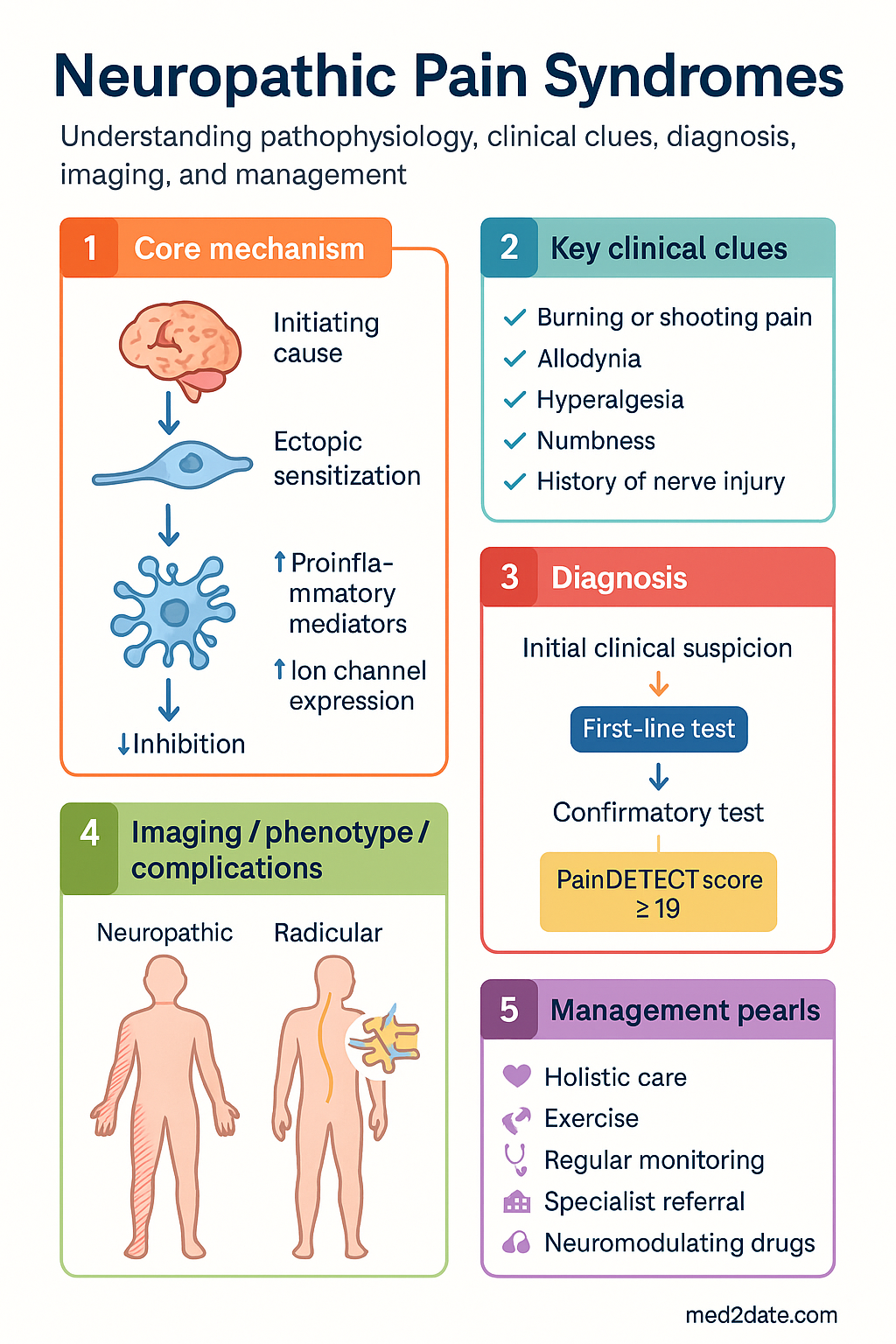
Neuropathic Pain Syndromes clinical infographic — pathophysiology, clinical clues, diagnosis, imaging, and management
Tap or click image to enlarge — Neuropathic Pain Syndromes: pathophysiology, clinical clues, diagnosis, imaging, and management.
Neuropathic Pain Syndromes infographic, full size

Trigeminal Neuralgia

Clinical Features

Trigeminal neuralgia is characterised by recurrent, unilateral, brief (lasting seconds to 2 minutes), electric-shock-like or lancinating pains in the distribution of one or more divisions of the trigeminal nerve (most commonly V2 and V3). Pain is typically triggered by innocuous stimuli — light touch, talking, chewing, brushing teeth, or exposure to wind — in a trigger zone on the face. Attacks occur in paroxysms that may cluster over hours or days, separated by refractory periods.

⚠️
Classical vs secondary TN: The International Headache Society (IHS ICHD-3) classifies classical TN as typically due to neurovascular compression of the trigeminal root (usually by the superior cerebellar artery). Secondary TN results from an identifiable underlying disease — multiple sclerosis plaque (up to 2–4% of MS patients), posterior fossa tumour, arteriovenous malformation, or demyelination. Approximately 15% of TN cases are secondary.

Diagnostic criteria (IHS ICHD-3 13.1.1):

  • At least three attacks of unilateral facial pain fulfilling criteria B and C
  • Pain occurring in one or more divisions of the trigeminal nerve, with no radiation beyond the trigeminal distribution
  • Pain has at least three of: (a) paroxysmal attacks lasting from a fraction of a second to 2 minutes, (b) severe intensity, (c) electric-shock-like, shooting, stabbing, or sharp quality, (d) precipitated by innocuous stimuli to the affected side
  • Not better accounted for by another ICHD-3 diagnosis

Red Flags Suggesting Secondary Causes

🚨
Urgent MRI required if any of:
  • Age of onset <40 years
  • Bilateral trigeminal symptoms
  • Sensory deficits on examination (decreased pinprick/light touch in trigeminal distribution)
  • Persistent aching or burning background pain between paroxysms
  • Involvement of the first division (V1) — strongly associated with secondary aetiology
  • Associated neurological signs — hearing loss, ataxia, diplopia, facial weakness
  • Known history of multiple sclerosis or other CNS disease
  • Failure to respond to adequate carbamazepine trial

Carbamazepine / Oxcarbazepine Therapy

Carbamazepine is the only medication with Level A evidence for TN and is recommended as first-line therapy by the AAN, NICE, and eTG. Oxcarbazepine has comparable efficacy with a more favourable side-effect profile and is considered an equivalent first-line option by many experts.

💊
Carbamazepine
Tegretol® · Teril® · Generic · Sodium channel blocker
Adult dose Start 100 mg PO BD; titrate by 100–200 mg every 3–7 days; usual effective dose 200–800 mg/day in 2–3 divided doses (max 1200 mg/day)
Paediatric dose 5 mg/kg/day in 2 divided doses; titrate to effect (rarely required for TN in paediatrics)
Route Oral (tablets, chewtabs, suspension)
Duration Ongoing; attempt dose reduction after 6–12 months of remission; many patients require long-term therapy
Renal adjustment No specific adjustment; use with caution
Hepatic adjustment Avoid in severe hepatic impairment; reduce dose and monitor LFTs
Key monitoring FBC at baseline, 2 weeks, then every 3 months for first year (risk of agranulocytosis ~1:125,000); LFTs, sodium; HLA-B*1502 testing recommended in patients of Southeast Asian background before initiation
PBS status ✔ PBS General Benefit
💊
Oxcarbazepine
Trileptal® · Generic · Sodium channel blocker (keto-congener of carbamazepine)
Adult dose Start 150 mg PO BD; titrate by 150–300 mg every week; usual effective dose 300–1200 mg/day in 2 divided doses (max 2400 mg/day)
Paediatric dose 8–10 mg/kg/day in 2 divided doses; titrate weekly
Route Oral (tablets, suspension)
Duration Ongoing; attempt dose reduction after 6–12 months of remission
Renal adjustment eGFR 30–50: start at 50% dose; eGFR <30: avoid or use 25% dose with monitoring
Hepatic adjustment Mild-moderate impairment: use with caution; severe: avoid
Key monitoring Sodium at baseline, 2 weeks, then every 3 months (risk of hyponatraemia ~3–8%); HLA-B*1502 testing as per carbamazepine
PBS status ✔ PBS General Benefit (epilepsy indication); ⚠ Authority Required for TN (off-label — specialist initiation recommended)

Second-Line & Adjunctive Agents for TN

💊
Baclofen
Lioresal® · Generic · GABA-B agonist
Adult dose Start 5 mg PO TDS; titrate by 5 mg every 3 days; usual dose 15–80 mg/day in 3 divided doses
Renal adjustment eGFR <30: reduce dose by 50%; avoid if eGFR <15
PBS status ✔ PBS General Benefit
💊
Lamotrigine
Lamictal® · Generic · Sodium channel modulator
Adult dose Start 25 mg PO daily for 2 weeks, then 50 mg daily for 2 weeks, then increase by 50 mg every 1–2 weeks; target 200–400 mg/day in 1–2 divided doses
Key caution Slow titration mandatory to reduce risk of Stevens-Johnson syndrome; avoid rapid dose escalation
PBS status ✔ PBS General Benefit (epilepsy indication); ⚠ Authority Required for TN

Interventional Options for Refractory TN

When pharmacotherapy fails or is not tolerated, referral to a neurosurgeon with expertise in trigeminal neuralgia is indicated. Microvascular decompression (MVD) via posterior fossa craniotomy offers the best long-term outcomes (70–80% pain-free at 5 years) for classical TN with neurovascular compression. Percutaneous procedures (balloon compression, radiofrequency thermocoagulation, glycerol rhizolysis) and stereotactic radiosurgery (Gamma Knife) are alternatives for patients unfit for open surgery, with shorter recovery but higher recurrence rates.

ℹ️
Australian access: Microvascular decompression and percutaneous procedures are available at major tertiary centres nationally (Royal Melbourne Hospital, Royal North Shore Hospital, Royal Brisbane and Women's Hospital, Sir Charles Gairdner Hospital). Gamma Knife radiosurgery is available in Sydney, Melbourne, Brisbane, and Adelaide. MBS item numbers apply for surgical interventions under neurosurgical care.

Postherpetic Neuralgia

Definition & Risk Factors

Postherpetic neuralgia (PHN) is defined as pain persisting for ≥90 days after the onset of herpes zoster (HZ) rash. It is the most common complication of herpes zoster, affecting 10–20% of all HZ patients and up to 30–50% of those over 70 years of age.

Risk Factor Association Notes
Age ≥50 years Strongest predictor; risk doubles each decade after 50 PHN rare under age 40
Severe acute pain (VAS ≥7/10) OR 3.2 for developing PHN Aggressive acute pain management may be protective
Severe rash (dermatomal haemorrhagic/vesicular) OR 2.8 Greater viral burden correlates with nerve damage
Prodromal pain before rash OR 2.1 May indicate greater neural involvement
Ophthalmic division (V1) involvement Increased risk Requires ophthalmology review regardless
Immunosuppression Variable; more severe HZ, but PHN rates uncertain HIV, transplant, chemotherapy
Female sex OR 1.3–1.5 Consistent across studies
Diabetes mellitus OR 1.5–2.0 Synergistic with pre-existing neuropathy

Prevention: Antivirals & Vaccination

Antiviral Therapy (Acute Herpes Zoster)

Oral antiviral therapy initiated within 72 hours of rash onset reduces viral replication, accelerates healing, and reduces the severity and duration of acute pain. Evidence for PHN prevention is modest but consistent.

💊
Valaciclovir
Valtrex® · Generic · Nucleoside analogue prodrug
Adult dose 1000 mg PO TDS for 7 days
Renal adjustment eGFR 30–49: 1000 mg BD; eGFR 10–29: 1000 mg daily; eGFR <10: 500 mg daily
PBS status ✔ PBS General Benefit
💊
Famciclovir
Famvir® · Generic · Nucleoside analogue
Adult dose 500 mg PO TDS for 7 days
Renal adjustment eGFR 40–59: 500 mg BD; eGFR 20–39: 500 mg daily; eGFR <20: 250 mg daily
PBS status ✔ PBS General Benefit

Herpes Zoster Vaccination

Shingrix® (recombinant zoster vaccine, adjuvanted — GSK) is the only zoster vaccine funded under the National Immunisation Program (NIP) in Australia since November 2023. It replaced Zostavax® and is recommended for all adults aged ≥65 years (NIP-funded), immunocompromised adults ≥18 years (NIP-funded), and Aboriginal and Torres Strait Islander adults ≥50 years (NIP-funded from February 2025). Two doses are administered intramuscularly, 2–6 months apart (or ≥1 month for immunocompromised individuals).

NIP eligibility (from 2025): Adults ≥65 years; Aboriginal and Torres Strait Islander adults ≥50 years; immunocompromised adults ≥18 years. Shingrix® demonstrates >90% efficacy against HZ and PHN in adults over 7 years of follow-up. It can be given to individuals with prior Zostavax® or prior HZ episode (wait ≥12 months after HZ).

First-Line Pharmacotherapy for Established PHN

Three medication classes have Level A evidence for PHN: gabapentinoids, tricyclic antidepressants (TCAs), and topical lidocaine. Selection should be individualised based on age, comorbidities, side-effect profile, and patient preference.

💊
Gabapentin
Neurontin® · Generic · Alpha-2-delta calcium channel ligand
Adult dose Start 300 mg PO daily (or 100 mg TDS) on day 1; 300 mg BD on day 2; 300 mg TDS on day 3; titrate by 300 mg every 3–5 days; target 1800–3600 mg/day in 3 divided doses
Paediatric dose Not established for PHN
Route Oral (capsules, tablets, oral solution)
Duration Minimum 8 weeks at therapeutic dose before assessing efficacy; ongoing if effective
Renal adjustment eGFR 30–59: max 600–1200 mg/day; eGFR 15–29: max 300–600 mg/day; eGFR <15: 300 mg every other day; haemodialysis: supplemental dose 200–300 mg post-dialysis
Hepatic adjustment No adjustment (not hepatically metabolised)
Key side effects Dizziness, somnolence, peripheral oedema, weight gain, ataxia
PBS status ⚠ Authority Required (neuropathic pain indication)
💊
Pregabalin
Lyrica® · Generic · Alpha-2-delta calcium channel ligand
Adult dose Start 75 mg PO BD; titrate to 150 mg BD after 3–7 days; may increase to 300 mg BD (max 600 mg/day) at 7-day intervals
Renal adjustment eGFR 30–59: 75–300 mg/day; eGFR 15–29: 25–150 mg/day; eGFR <15: 25–75 mg/day
Key side effects Dizziness, somnolence, peripheral oedema, weight gain, blurred vision; caution with driving
PBS status ⚠ Authority Required (neuropathic pain indication)
💊
Nortriptyline
Allegron® · Generic · TCA (noradrenergic-dominant)
Adult dose Start 10–25 mg PO nocte; titrate by 10–25 mg every 5–7 days; target 50–150 mg nocte (max 150 mg/day)
Key advantage Less anticholinergic than amitriptyline; preferred TCA in older adults
Key side effects Dry mouth, constipation, urinary retention, sedation, orthostatic hypotension, cardiac conduction abnormalities (avoid with QTc >470 ms)
Renal adjustment No specific adjustment; start low in CKD
PBS status ✔ PBS General Benefit
💊
Amitriptyline
Endep® · Generic · TCA (balanced serotonergic/noradrenergic)
Adult dose Start 10–25 mg PO nocte; titrate by 10–25 mg every 5–7 days; target 25–75 mg nocte (higher doses rarely needed for neuropathic pain)
Key caution Higher anticholinergic burden; avoid in older adults (>65 years) — Beers criteria; avoid with falls risk
PBS status ✔ PBS General Benefit

Topical Agents for Localised PHN

💊
Lidocaine 5% medicated plaster
Lignoderm® · Generic · Sodium channel blocker (topical)
Adult dose Apply up to 3 plasters to affected area for up to 12 hours in each 24-hour period
Key advantage Minimal systemic absorption; ideal for localised allodynia; can combine with systemic agents
PBS status ⚠ Authority Required
💊
Capsaicin 8% patch
Qutenza® · TRPV1 agonist (topical)
Adult dose Single application by trained clinician for 30–60 minutes (depending on site); may repeat every 3 months
Key notes Procedure performed in a clinic/specialist setting with topical anaesthetic pre-treatment; application-site pain is common but transient; significant reduction in pain scores demonstrated in RCTs
PBS status ✘ Not PBS-listed (cost ~AUD $250–350 per application)

Stepped Approach to PHN Management

1
Localised pain only
Lidocaine 5% patches ± simple analgesics (paracetamol, NSAIDs if no contraindication). Topical capsaicin 8% patch if lidocaine insufficient.
2
Mild–moderate generalised PHN
Gabapentin or pregabalin (first-line); or nortriptyline/amitriptyline. Continue topical agents alongside. Titrate to maximum tolerated dose over 6–8 weeks.
3
Moderate–severe or refractory PHN
Combination therapy: gabapentinoid + TCA (monitor for additive sedation); or gabapentinoid + SNRI (duloxetine or venlafaxine). Add topical lidocaine patches to affected dermatome.
4
Refractory after ≥2 adequate trials
Referral to pain medicine specialist. Consider: tramadol (short-term only), high-concentration capsaicin, interventional nerve blocks, spinal cord stimulation. Multidisciplinary pain management programme.

Central Neuropathic Pain

Overview & Aetiologies

Central neuropathic pain (CNP) arises from lesions or disease of the central somatosensory nervous system. The two most common causes in Australian clinical practice are post-stroke pain (central post-stroke pain, CPSP) and pain associated with multiple sclerosis (MS). CNP is under-recognised: prevalence estimates are 8–10% after stroke (typically thalamic) and 25–50% of MS patients report at least one pain syndrome attributable to CNS disease.

Central Post-Stroke Pain (CPSP)

  • Typically develops weeks to months after stroke (can be delayed up to 2 years)
  • Most commonly associated with thalamic (ventral posterolateral nucleus) or lateral medullary (Wallenberg syndrome) infarction
  • Characterised by constant or intermittent burning, aching, tingling, or freezing pain in the contralateral body, often with allodynia and hyperalgesia
  • Diagnosis of exclusion — must differentiate from musculoskeletal pain, spasticity-related pain, shoulder subluxation, and complex regional pain syndrome

MS-Related Central Pain

  • Often described as burning, band-like, or squeezing sensations; Lhermitte's phenomenon (electric sensation down spine on neck flexion) suggests cervical cord involvement
  • Tonic spasms — brief, painful involuntary contractions of a limb, often stereotyped and recurrent
  • Trigeminal neuralgia in a young person should always prompt investigation for MS (2–4% of MS patients)
  • Pain may coexist with spasticity, fatigue, and depression — requiring holistic management

Drug Options for Central Neuropathic Pain

Evidence for pharmacotherapy in CNP is weaker than for peripheral neuropathic pain. Most recommendations are extrapolated from PHN and painful diabetic neuropathy trials, with fewer dedicated CNP RCTs. Realistic expectations are essential.

💊
Pregabalin
Lyrica® · First-line for CPSP and MS-related pain
Adult dose Start 75 mg PO BD; titrate to 150–300 mg BD over 2–4 weeks; max 600 mg/day
Evidence RCT evidence for MS-related pain (Level B); modest evidence for CPSP. NNT ~5.6 for central pain
PBS status ⚠ Authority Required
💊
Duloxetine
Cymbalta® · SNRI
Adult dose Start 30 mg PO daily for 1 week, then 60 mg daily; may increase to 60 mg BD (max 120 mg/day) for pain indication
Evidence Level C for central pain; beneficial dual action on comorbid depression (common after stroke and in MS)
Renal adjustment eGFR <30: avoid; hepatic impairment: avoid
PBS status ✔ PBS General Benefit (MDD indication); ⚠ Authority Required for neuropathic pain
💊
Amitriptyline
Endep® · TCA
Adult dose Start 10 mg PO nocte; titrate by 10 mg weekly; target 25–75 mg nocte
Evidence Level C for central pain; may benefit CPSP but evidence is weak and conflicting
Key caution Anticholinergic effects; avoid in older adults, cognitive impairment (relevant post-stroke), falls risk, cardiac conduction disease
PBS status ✔ PBS General Benefit
💊
Carbamazepine
Tegretol® · For MS-related tonic spasms and TN in MS
Adult dose Start 100 mg PO BD; titrate to 200–600 mg BD; use lowest effective dose
Evidence Best evidence for TN in MS; Level C for tonic spasms; limited data for other central pain syndromes
PBS status ✔ PBS General Benefit
💊
Lamotrigine
Lamictal® · Sodium channel modulator
Adult dose Start 25 mg PO daily; titrate slowly over 6 weeks to 200 mg/day in 2 divided doses
Evidence One positive RCT for CPSP (Level C); may benefit MS-related pain
Key caution Slow titration mandatory; risk of SJS (higher if co-prescribed with valproate — halve starting dose); interaction with hormonal contraceptives
PBS status ✔ PBS General Benefit (epilepsy); ⚠ Authority Required for pain

Realistic Goals

⚠️
Set realistic expectations early:
  • Only 30–40% of patients with CNP achieve ≥50% pain reduction with any single agent
  • NNT for central pain syndromes ranges from 5–8 (higher than peripheral neuropathic pain)
  • Goals should include: improved function, improved sleep, reduced distress, and ability to participate in rehabilitation — not necessarily complete pain elimination
  • A ≥30% reduction in pain intensity on the numeric rating scale is considered a meaningful clinical response
  • Non-pharmacological strategies (graded motor imagery, mirror therapy, cognitive behavioural therapy, mindfulness-based stress reduction) should be integrated from the outset

Referral When Refractory

Referral to a pain medicine specialist or appropriate subspecialist neurologist should be considered when:

  • Two adequate medication trials (at maximum tolerated dose for ≥6–8 weeks each) have failed
  • Diagnostic uncertainty exists (e.g., differentiating CPSP from musculoskeletal or spasticity-related pain)
  • Significant comorbid psychiatric disease (depression, anxiety, PTSD) requires integrated management
  • Interventional neuromodulation is being considered (motor cortex stimulation for CPSP; spinal cord stimulation in selected cases)
  • Opioid dependence has developed — requires specialist pain/addiction medicine input
🏥
Australian referral pathways: Public multidisciplinary pain management programmes are available in all states and territories (typically hospital-based). Wait times vary (3–12 months). Private pain medicine specialists are accessible via the Faculty of Pain Medicine, ANZCA directory. Telehealth options through Pain Australia and state-based services can improve access for regional and remote patients. MBS telehealth items apply.

Investigations

Investigations serve three purposes in neuropathic pain: confirming the neuropathic nature of pain, identifying the underlying cause, and excluding treatable secondary aetiologies.
Essential Detailed neurological examination Dermatomal sensory testing (pinprick, light touch, vibration, temperature), motor examination, reflexes. Use DN4 or LANSS screening tool to characterise neuropathic component.
Essential MRI Brain (trigeminal nerve protocol) Indicated in all TN patients to exclude secondary cause; must include high-resolution T2 CISS/FIESTA sequences through the trigeminal root entry zone. MBS item 63074/63075. Urgent if red flags present.
Essential MRI Spine / Brain (for MS workup) When central pain is suspected or TN in a young patient. MRI with gadolinium contrast to assess for demyelinating plaques. MBS item 63074/63075/63220.
Available Nerve conduction studies / EMG Useful for confirming peripheral neuropathy in painful diabetic neuropathy or differentiating peripheral vs central causes. MBS item 11005/11010. Available at most major hospitals and private neurophysiology labs.
Available Quantitative sensory testing (QST) Assesses sensory thresholds (thermal, vibration, pressure). Primarily a research tool but available at specialist centres. Useful for characterising sensory phenotype to guide treatment.
Available HbA1c, fasting glucose Screen for diabetes as cause of peripheral neuropathy; important when neuropathic pain aetiology is uncertain. MBS item 66551.
Available B12, folate, TSH, LFTs, serum protein electrophoresis Screen for treatable causes of neuropathy (B12 deficiency, hypothyroidism, paraproteinaemia). MBS items 66551/66569.
Available FBC, ESR, CRP, ANA, ENA When vasculitic or autoimmune aetiology is suspected (mononeuritis multiplex, subacute onset).
Specialist Lumbar puncture (CSF analysis) When MS or CNS inflammatory disease suspected; oligoclonal bands, IgG index. Requires neurology referral. MBS item 14050.
Specialist HLA-B*1502 genotyping Required before carbamazepine/oxcarbazepine initiation in patients of Southeast Asian, Han Chinese, or Indian ancestry (risk of SJS/TEN). Available through pathology labs (Medicare-funded for eligible patients). MBS item 73298.
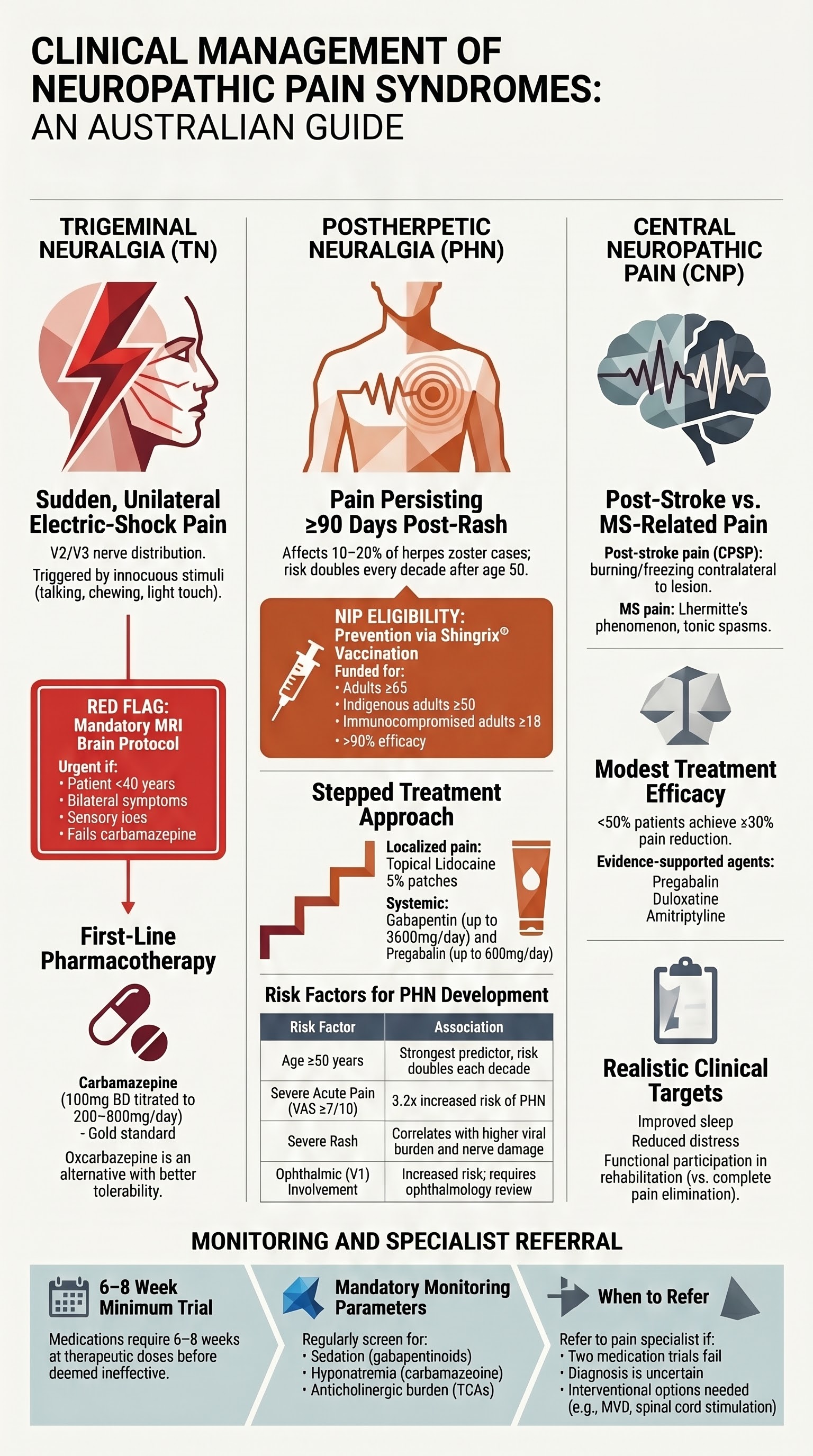
🖼️ Neuropathic Pain Syndromes — visual summary
Neuropathic Pain Syndromes visual summary infographic

Monitoring

Systematic monitoring is essential for all neuropathic pain treatments. Use a structured approach combining pain intensity scales, functional assessment, and adverse effect screening.

Parameter Tool / Method Frequency Target
Pain intensity Numeric Rating Scale (NRS 0–10) Every visit (minimum 4-weekly during titration) ≥30% reduction (meaningful); ≥50% reduction (optimal)
Functional impact Patient Global Impression of Change (PGIC); PainDETECT (for neuropathic component) 8–12 weeks after treatment initiation; then 3–6 monthly "Much improved" or "Very much improved" on PGIC
Sleep quality Pittsburgh Sleep Quality Index (PSQI) or single-item NRS Every visit Improved sleep duration and quality
Mood PHQ-9 (depression); GAD-7 (anxiety) Baseline, 3 months, then 6-monthly Screening for comorbid depression/anxiety
Adverse effects Structured questioning; falls risk assessment (elderly) Every visit Manage dose-limiting side effects; switch agent if intolerable
FBC (carbamazepine) Full blood count Baseline, 2 weeks, 4 weeks, then every 3 months for year 1, then every 6 months WCC >4.0 × 10⁹/L; neutrophils >1.5 × 10⁹/L
Sodium (oxcarbazepine, carbamazepine) Serum sodium Baseline, 2 weeks, then every 3 months for first year Na⁺ >130 mmol/L
Weight (gabapentinoids) Weight measurement; BMI calculation Every visit Monitor for weight gain >5% of baseline
ECG (TCAs) 12-lead ECG Baseline (all patients >40 years or cardiac risk factors); repeat if dose >100 mg/day PR <200 ms; QRS <100 ms; QTc <470 ms (M)/480 ms (F)
⚠️
Trial duration: A minimum of 6–8 weeks at therapeutic dose is required before concluding a medication is ineffective for neuropathic pain. Titration may take 4–8 weeks additionally. Patients should be counselled that adequate trials are a commitment of 2–3 months per agent.

Special Populations

🤰

Pregnancy

Carbamazepine Category D — teratogenicity risk (neural tube defects ~1%, facial clefts). Use only if benefits outweigh risks. Supplement with folic acid 5 mg/day pre-conceptionally. Monitor levels (protein binding changes in pregnancy).
Pregabalin / Gabapentin Category B3 — limited human data; animal studies show developmental toxicity. Avoid unless clearly indicated. Discuss risk-benefit with patient and obstetrician.
Amitriptyline / Nortriptyline Category C — neonatal withdrawal and anticholinergic effects reported. Use lowest effective dose if required. Nortriptyline preferred (less anticholinergic).
Lidocaine 5% patch Category A — minimal systemic absorption; safe for localised pain during pregnancy.
👶

Paediatrics

Gabapentin TGA-approved for neuropathic pain from 6 years. Start 2–5 mg/kg/day in 3 divided doses; titrate to 25–35 mg/kg/day (max 50 mg/kg/day). Monitor for sedation, behavioural changes.
Pregabalin Limited paediatric data for neuropathic pain (more evidence for epilepsy). Off-label use should be specialist-initiated.
Amitriptyline Used off-label in paediatric chronic pain. Start 0.1–0.2 mg/kg nocte; titrate slowly. Monitor ECG at baseline. Maximum 1–2 mg/kg/day.
Carbamazepine For paediatric TN (rare). 5 mg/kg/day in 2 divided doses; titrate. Requires specialist involvement and HLA-B*1502 testing in at-risk populations.
👴

Older Adults (>65 years)

Nortriptyline preferred over amitriptyline Lower anticholinergic burden. Start 10 mg nocte. Avoid amitriptyline in those with cognitive impairment, falls risk, constipation, or urinary retention (Beers criteria).
Gabapentinoids — start low, go slow Gabapentin 100 mg nocte, increase by 100 mg every 5–7 days. Pregabalin 25 mg BD. Higher risk of dizziness, falls, cognitive effects. Dose-adjust for renal function (common in elderly).
Carbamazepine Start 50–100 mg BD in elderly. Higher risk of hyponatraemia, ataxia, drug interactions (CYP3A4). TDM recommended (therapeutic range 20–50 micromol/L for pain). Consider oxcarbazepine (fewer interactions, but still causes hyponatraemia).
Topical agents preferred for localised pain Lidocaine 5% patches — first-line for localised PHN in older adults; no systemic side effects. Drug interactions minimal.
🫘

Renal Impairment

Gabapentin Significant renal elimination — mandatory dose adjustment. eGFR <15: 100–300 mg daily or every other day. Haemodialysis: supplemental dose 200–300 mg post-dialysis (gabapentin is dialysable).
Pregabalin Renally cleared — dose reduction required. eGFR <15: 25–75 mg daily. Dialysable — supplemental dose post-HD.
TCAs No specific renal adjustment; start at lowest dose. Active metabolites may accumulate. Monitor for QTc prolongation and anticholinergic effects.
Carbamazepine / Oxcarbazepine Carbamazepine — no major renal adjustment but monitor levels. Oxcarbazepine — dose adjust for eGFR <30. Both require sodium monitoring (risk of hyponatraemia compounded by CKD).
🫁

Hepatic Impairment

Carbamazepine / Oxcarbazepine Hepatically metabolised — avoid in severe hepatic impairment. Reduce dose and monitor LFTs in mild-moderate impairment. Risk of hepatotoxicity (rare idiosyncratic).
Duloxetine Contraindicated in hepatic impairment (hepatotoxicity risk). Choose alternative SNRI or TCA.
Gabapentin / Pregabalin Not hepatically metabolised — safe in hepatic impairment. Preferred agents in liver disease.
TCAs Hepatically metabolised — use with caution; start low, monitor. First-pass metabolism reduced, so bioavailability may increase.
🛡️

Immunocompromised

Herpes zoster risk Significantly increased HZ risk in HIV, transplant recipients, and chemotherapy patients. Intravenous aciclovir may be required for severe or disseminated HZ. PHN risk is variable — some studies suggest lower rates but greater severity.
Shingrix® vaccination NIP-funded for immunocompromised adults ≥18 years from November 2023. Two doses at ≥1 month apart. Non-live recombinant vaccine — safe in immunosuppression.
Drug interactions Carbamazepine is a potent CYP3A4 inducer — interacts with tacrolimus, cyclosporine, protease inhibitors, immunosuppressants. Pregabalin/gabapentin preferred (fewer interactions). Consult transplant physician/pharmacist.

Aboriginal and Torres Strait Islander Health

Aboriginal and Torres Strait Islander Health Considerations

Aboriginal and Torres Strait Islander Australians experience a disproportionate burden of neuropathic pain, driven by higher prevalence of diabetes (3.5 times the non-Indigenous rate), chronic kidney disease, and delayed access to specialist services. Culturally safe, community-based models of care are essential for effective neuropathic pain management.

Diabetes-related neuropathy
Type 2 diabetes prevalence in Aboriginal and Torres Strait Islander adults is ~14% (compared with ~5% non-Indigenous). Peripheral neuropathy is consequently more common and often presents at a younger age. Diabetes-related neuropathic pain management must be integrated with comprehensive diabetes care, including regular foot checks and podiatry access through Aboriginal Community Controlled Health Organisations (ACCHOs).
Remote and rural access
Many Aboriginal and Torres Strait Islander Australians live in remote and very remote areas where neurologist access is limited. Royal Flying Doctor Service (RFDS) telehealth and visiting specialist programmes provide some access. Gabapentin and pregabalin require PBS Authority approval which can be facilitated by remote GPs. FBC monitoring for carbamazepine may be challenging — consider oxcarbazepine (fewer blood monitoring requirements) or gabapentinoids as first-line in remote settings.
Zoster vaccination uptake
Shingrix® is now NIP-funded for Aboriginal and Torres Strait Islander adults ≥50 years. ACCHOs and community pharmacies play a critical role in vaccine delivery. Culturally appropriate education about the link between shingles, PHN, and vaccination is needed. Prior Zostavax® uptake was lower in Indigenous communities — proactive recall and reminder systems are recommended.
Cultural safety in pain assessment
Pain expression may differ across cultures; standard NRS scales may not capture the full impact. Use culturally validated tools where available (e.g., the Aboriginal and Torres Strait Islander Pain Assessment Tool). Language barriers may require interpreter services (contact Aboriginal Interpreter Service [AIS] in NT, or equivalent state services). Yarning-based approaches to history-taking build trust and improve accuracy of pain assessment.
Multidisciplinary and social determinants
Neuropathic pain management must be contextualised within the broader social determinants of health — housing, food security, transport, cultural connection, and intergenerational trauma. ACCHOs provide holistic, culturally safe models that integrate chronic disease management, mental health, social and emotional wellbeing, and pain management. Health practitioners should engage with local ACCHO and Aboriginal Health Workers for care coordination.
Medication access and PBS
Remote communities may face supply-chain delays for PBS medications. Closing the Gap PBS Co-Payment Measure ensures Aboriginal and Torres Strait Islander patients with, or at risk of, chronic disease pay a reduced or nil PBS co-payment at participating pharmacies (most ACCHOs participate). Ensure Section 100 supply arrangements are in place for remote communities. Gabapentin and pregabalin Authority Required approvals can be sought proactively.
📊 Neuropathic Pain Syndromes — slide deck

Open slides PDF in new tab

📚 References

  1. 1. Finnerup NB, Kuner R, Jensen TS. Neuropathic pain: from mechanisms to treatment. Physiol Rev. 2021;101(1):259-301.
  2. 2. Headache Classification Committee of the International Headache Society (IHS). The International Classification of Headache Disorders, 3rd edition. Cephalalgia. 2018;38(1):1-211.
  3. 3. Cruccu G, Di Stefano G, Truini A. Trigeminal neuralgia. N Engl J Med. 2020;383(8):754-762.
  4. 4. Bendtsen L, Zakrzewska JM, Abbott J, et al. European Academy of Neurology guideline on trigeminal neuralgia. Eur J Neurol. 2019;26(6):831-849.
  5. 5. Cohen JI. Herpes zoster. N Engl J Med. 2013;369(3):255-263.
  6. 6. Australian Technical Advisory Group on Immunisation (ATAGI). Australian Immunisation Handbook. Australian Government Department of Health. Updated 2024. Canberra: Australian Government.
  7. 7. Dworkin RH, O'Connor AB, Audette J, et al. Recommendations for the pharmacological management of neuropathic pain: an overview and literature update. Mayo Clin Proc. 2010;85(3 Suppl):S3-S14.
  8. 8. Attal N, Cruccu G, Baron R, et al. EFNS guidelines on the pharmacological treatment of neuropathic pain: 2010 revision. Eur J Neurol. 2010;17(9):1113-e88.
  9. 9. National Institute for Health and Care Excellence (NICE). Neuropathic pain in adults: pharmacological management in non-specialist settings. Clinical guideline [CG173]. Updated 2021. London: NICE.
  10. 10. Klit H, Finnerup NB, Jensen TS. Central post-stroke pain: clinical characteristics, pathophysiology, and management. Lancet Neurol. 2009;8(9):857-868.
  11. 11. Foley PL, Vesterinen HM, Laird BJ, et al. Prevalence and natural history of pain in adults with multiple sclerosis: systematic review and meta-analysis. Pain. 2013;154(5):632-642.
  12. 12. Australian Institute of Health and Welfare (AIHW). Aboriginal and Torres Strait Islander Health Performance Framework. 2023 report. Canberra: AIHW.
  13. 13. Wiffen PJ, Derry S, Bell RF, et al. Gabapentin for chronic neuropathic pain in adults. Cochrane Database Syst Rev. 2017;6(6):CD007938.
  14. 14. Derry S, Rice AS, Cole P, et al. Topical lidocaine for neuropathic pain in adults. Cochrane Database Syst Rev. 2014;(7):CD010958.
  15. 15. Moore RA, Wiffen PJ, Derry S, et al. Gabapentin for chronic neuropathic pain and fibromyalgia in adults. Cochrane Database Syst Rev. 2014;(4):CD007938.
  16. 16. Faculty of Pain Medicine, Australian and New Zealand College of Anaesthetists (FPM ANZCA). Recommended Definitions and Terminology for Persistent Pain. Melbourne: FPM ANZCA; 2020.