Home Neurology Sleep Neurology

Sleep Neurology

🎧 Sleep Neurology — deep-dive podcast

📋 Key Information Summary

📋
  • Sleep disorders are highly prevalent in neurologic patients and significantly worsen quality of life, cognitive function, and disease outcomes; always screen for sleep disturbance during neurological consultations.
  • Insomnia in neurological patients requires CBT-I as first-line therapy; short-term hypnotics (zolpidem, melatonin) may be adjunctive but carry fall and cognitive risks, particularly in the elderly and those with neurodegenerative disease.
  • Comorbid mood disorders (anxiety, depression) frequently co-exist with insomnia; address both concurrently to optimise outcomes.
  • Restless Legs Syndrome (RLS) diagnosis is clinical using IRLSSG criteria; exclude iron deficiency (ferritin <75 µg/L) and secondary causes before initiating pharmacotherapy.
  • First-line RLS pharmacotherapy: iron replacement if ferritin <75 µg/L; then α-2δ ligands (gabapentin enacarbil, pregabalin) preferred over dopamine agonists (pramipexole, ropinirole) to avoid augmentation.
  • RLS augmentation (worsening symptoms on dopaminergic therapy) is best managed by switching to an α-2δ ligand, avoiding evening caffeine, and optimising iron stores.
  • REM Sleep Behavior Disorder (RBD) is a strong prodromal marker of synucleinopathies (Parkinson disease, dementia with Lewy bodies, MSA); ≥80% conversion over 15 years.
  • RBD management centres on bedroom safety measures (padded bed rails, mattress on floor, removing weapons/sharp objects) to prevent self-injury or harm to bed partner.
  • RBD pharmacotherapy: immediate-release melatonin 2–12 mg nocte is first-line; clonazepam 0.5–2 mg nocte is second-line with caution for falls, respiratory depression, and cognitive impairment.
  • Polysomnography (PSG) is essential for RBD diagnosis (RWA ≥severity) and recommended when sleep-disordered breathing, parasomnias, or diagnostic uncertainty exists in any sleep disorder.
  • Serotonergic agents (SSRIs, SNRIs) and some antipsychotics can precipitate or mask RBD; review medications when RBD is suspected.
  • Aboriginal and Torres Strait Islander Australians experience higher rates of sleep disorders driven by chronic disease burden; culturally appropriate screening and access to sleep services remain critical gaps.
🎬 Sleep Neurology — clinical explainer

Introduction & Australian Epidemiology

Sleep disorders are among the most common yet under-recognised comorbidities in neurological practice. Disturbed sleep contributes to accelerated cognitive decline, worsened seizure control, increased falls, reduced rehabilitation gains, and higher mortality across a broad spectrum of neurological conditions including stroke, epilepsy, Parkinson disease, multiple sclerosis, and traumatic brain injury.

In Australia, approximately 33–45% of adults report inadequate sleep quality or duration. Among neurological populations, the prevalence is substantially higher: up to 60% of Parkinson disease patients experience insomnia, 50–70% exhibit RBD symptoms, and 20–30% meet criteria for restless legs syndrome. Following stroke, sleep-disordered breathing affects 50–70% of patients and insomnia is present in 30–50%. Epilepsy patients have a 2–3-fold increased prevalence of insomnia and excessive daytime sleepiness compared with the general population.

The Australian Sleep Health Foundation estimates the economic cost of inadequate sleep at $26.2 billion annually (2016–17 figures), encompassing health system costs, productivity losses, and carer burden. Access to sleep medicine services remains inequitable, with long wait times for public polysomnography (often 3–12 months) and limited specialist availability in regional and remote areas. Telehealth-based sleep medicine and home sleep testing have expanded since the COVID-19 pandemic, improving access for rural Australians.
⚠️
Screen every neurological patient for sleep disturbance. Use validated tools including the Pittsburgh Sleep Quality Index (PSQI), Epworth Sleepiness Scale (ESS), and Berlin Questionnaire for obstructive sleep apnoea risk. Untreated sleep disorders worsen neurological outcomes and quality of life.
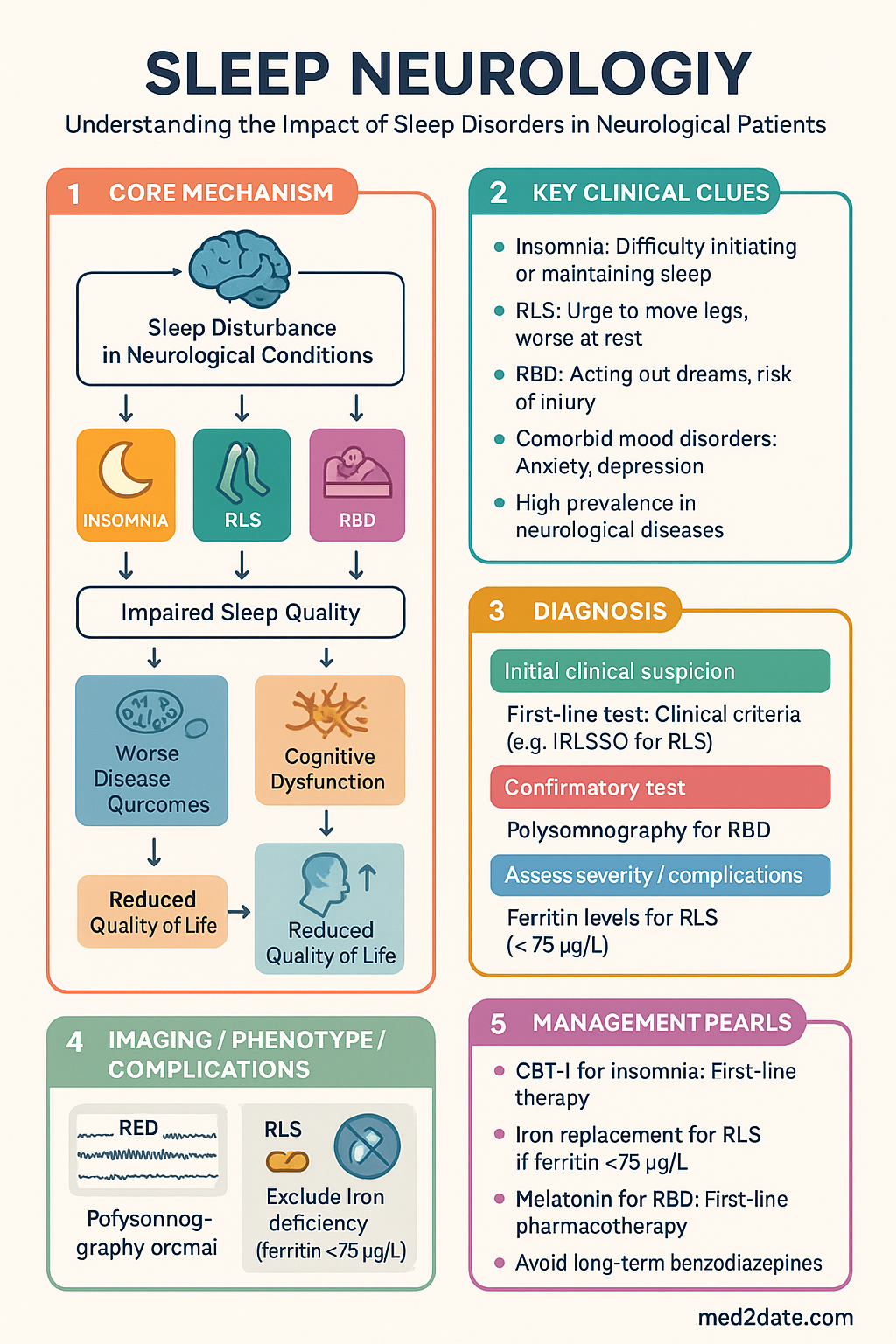
Sleep Neurology clinical infographic — pathophysiology, clinical clues, diagnosis, imaging, and management
Tap or click image to enlarge — Sleep Neurology: pathophysiology, clinical clues, diagnosis, imaging, and management.
Sleep Neurology infographic, full size

Insomnia in Neurologic Patients

Definition & Diagnostic Criteria

Insomnia disorder (DSM-5 / ICSD-3) is defined as dissatisfaction with sleep quantity or quality, with difficulty initiating sleep, maintaining sleep, or early-morning awakening, occurring ≥3 nights/week for ≥3 months, causing clinically significant distress or functional impairment, and not better explained by another sleep disorder or coexisting condition.

In neurological patients, insomnia is frequently comorbid with the primary neurological diagnosis and driven by pain, nocturia, medication effects, anxiety/depression, circadian rhythm disruption (particularly in neurodegenerative diseases), and reduced daytime activity.

Sleep Hygiene — Foundation of Management

Sleep hygiene education is a prerequisite for all patients and forms the foundation of CBT-I. Key components include:

  • Consistent wake time 7 days/week (±30 minutes), irrespective of sleep onset the previous night
  • Bed used only for sleep and sexual activity; remove screens, work materials, and food from the bedroom
  • Avoid caffeine after midday and limit total daily caffeine to <400 mg
  • Avoid alcohol within 3 hours of bedtime (fragmented sleep architecture)
  • Regular daytime exercise, preferably completed ≥4 hours before bedtime
  • Limit daytime naps to ≤30 minutes, before 14:00 (with individualisation for narcolepsy/excessive sleepiness)
  • Optimise bedroom environment: cool (18–20°C), dark, quiet; use earplugs or white noise if needed
  • Blue-light restriction (night-mode devices, amber glasses) in the 2 hours before bed — particularly important in neurodegenerative disease with circadian disruption

Cognitive Behavioural Therapy for Insomnia (CBT-I)

CBT-I is first-line treatment for chronic insomnia in all patients, including those with neurological disease. It comprises cognitive restructuring of maladaptive beliefs about sleep, stimulus control, sleep restriction, relaxation training, and sleep hygiene education. CBT-I typically requires 4–8 sessions delivered by a trained psychologist.

CBT-I is recommended as first-line treatment for chronic insomnia (Level I evidence). In Australia, Medicare provides rebatable access under GP Mental Health Treatment Plans (up to 10 sessions/year). Digital CBT-I programs (e.g., Sleepio) are also effective and may improve access in regional Australia.

Adaptations for neurological patients:

  • In Parkinson disease: shortened sleep restriction protocols, flexible scheduling to accommodate motor fluctuations and nocturnal akinesia
  • Post-stroke: address positional factors, nocturia management, spasticity-related awakening
  • Epilepsy: avoid excessive sleep deprivation (seizure trigger); moderate sleep restriction titrated carefully
  • In cognitively impaired patients: CBT-I adapted for carer-assisted delivery; simplified stimulus control and sleep hygiene components

Pharmacological Management — Cautious Hypnotic Use

Pharmacotherapy should be considered only when CBT-I is insufficient, unavailable, or when acute symptomatic relief is needed while CBT-I is commenced. Long-term hypnotic use is discouraged due to dependence, tolerance, fall risk, cognitive impairment, and rebound insomnia.

💊
Melatonin (circadin)
Circadin® · Circadian regulator
Adult dose 2 mg orally at 1–2 hours before desired bedtime; titrate to 4–6 mg if required
Paediatric dose 2–3 mg orally, 1 hour before bedtime (≥12 years; off-label use in younger children with specialist supervision)
Route Oral (prolonged-release tablet)
Renal adjustment No adjustment required
Hepatic adjustment Use with caution; reduced clearance in severe hepatic impairment
PBS status ✔ PBS General Benefit (for adults ≥55 years with insomnia)
Notes Preferred first-line pharmacological option in neurodegenerative disease; low fall risk; helpful for circadian disruption in Parkinson disease and dementia
💊
Zolpidem
Stilnox® · Generic · Non-benzodiazepine hypnotic (Z-drug)
Adult dose 5 mg orally immediately before bedtime; 10 mg only if 5 mg insufficient (max 10 mg nocte)
Paediatric dose Not recommended <18 years
Route Oral (immediate-release or sublingual)
Renal adjustment No specific adjustment; use with caution in severe renal impairment
Hepatic adjustment Reduce to 5 mg; avoid in severe hepatic impairment
PBS status ⚠ PBS Restricted Benefit
Notes Short-term use only (≤2–4 weeks). Significant risk of sleep-walking, falls, cognitive impairment, and next-day drowsiness in neurological patients. Use lowest effective dose. Avoid in dementia.
💊
Mirtazapine
Avanza® · Generic · Noradrenergic/serotonergic antidepressant
Adult dose 7.5–15 mg orally at bedtime (lower doses more sedating)
Paediatric dose Not recommended <18 years for insomnia
Route Oral
Renal adjustment No specific adjustment
Hepatic adjustment Reduce dose; use with caution in severe hepatic impairment
PBS status ✔ PBS General Benefit (for depression; off-label for insomnia)
Notes Useful when comorbid depression/anxiety and insomnia co-exist. May improve appetite and reduce nausea in neurodegenerative disease. Risk of weight gain, sedation, and rare agranulocytosis.
🚨
Avoid long-term benzodiazepines (diazepam, temazepam) in neurological patients. Increased risk of falls, cognitive decline, respiratory depression (especially with concurrent opioid/anticonvulsant use), paradoxical agitation in dementia, and dependence. Temazepam should only be used short-term (<2 weeks) when other options fail.

Comorbid Mood Disorders

Depression and anxiety are present in 30–50% of neurological patients with insomnia and perpetuate sleep disturbance through rumination, hyperarousal, and maladaptive sleep behaviours. A bidirectional relationship exists: insomnia increases depression risk 2–3-fold, and depression independently disrupts sleep architecture.

  • Screen all insomnia patients with the PHQ-9 and GAD-7
  • CBT-I is effective for insomnia with comorbid depression and should be prioritised
  • SSRIs (sertraline, escitalopram) are preferred when pharmacotherapy for depression is indicated; note that SSRIs can suppress REM sleep and may worsen RBD
  • Mirtazapine at low dose (7.5–15 mg) has dual benefit for depression and insomnia
  • Tricyclic antidepressants (amitriptyline 10–25 mg nocte) may be useful but carry anticholinergic burden — avoid in dementia, urinary retention, glaucoma
  • Refer to GP Mental Health Treatment Plan and psychologist for concurrent CBT-I and mood disorder management

Restless Legs Syndrome (RLS)

Diagnostic Criteria (IRLSSG 2014 — updated)

Diagnosis of RLS is clinical. All five essential criteria must be met:

  1. An urge to move the legs, usually accompanied by uncomfortable and unpleasant sensations in the legs (sometimes the urge occurs without discomfort; sometimes arms or other body parts are also involved)
  2. The urge to move or unpleasant sensations begin or worsen during periods of rest or inactivity such as lying or sitting
  3. The urge to move or unpleasant sensations are partially or totally relieved by movement, such as walking or stretching, at least for as long as the activity continues
  4. The urge to move or unpleasant sensations are worse in the evening or night than during the day, or only occur in the evening or night
  5. The above features are not solely accounted for by another medical or behavioural condition (e.g., myalgia, venous stasis, leg oedema, arthritis, leg cramps, positional discomfort, habitual foot tapping)
⚠️
Exclude mimics: leg cramps, positional discomfort, peripheral neuropathy, radiculopathy, akathisia (drug-induced), anxiety-related restlessness, and vascular claudication. In neurological patients, medication-induced akathisia (antipsychotics, SSRIs, antiemetics) is a common confounder.

Iron Studies & Iron Replacement

Iron deficiency is the most important reversible cause of RLS. All patients require serum ferritin, transferrin saturation (TSAT), iron studies, and full blood count. A ferritin level <75 µg/L (regardless of anaemia) warrants iron replacement; some experts recommend targeting ferritin ≥100 µg/L.

Essential Serum ferritin Target ≥75–100 µg/L. Low ferritin is the most common treatable cause of RLS.
Essential Transferrin saturation (TSAT) Assess iron loading capacity. TSAT <20% supports iron deficiency.
Essential Full blood count Exclude anaemia; microcytosis supports iron deficiency.
Available Renal function (eGFR) RLS prevalence 20–30% in CKD; consider renal dose adjustments for medications.
Available Vitamin B12, folate, thyroid function Exclude secondary causes — deficiency states and hypothyroidism.
Available Polysomnography Not routine for RLS diagnosis; consider if concurrent OSA suspected or PLMD quantification needed (item 12250 — sleep study, MBS).

Pharmacological Management — First-Line: α-2δ Ligands

Current international guidelines (AASM 2012, ERLSSG 2018, updated AAN 2023) recommend α-2δ ligands as first-line over dopamine agonists due to lower augmentation risk. Iron replacement is first-line if ferritin <75 µg/L.

💊
Gabapentin enacarbil
Horizant® · α-2δ ligand (prodrug of gabapentin)
Adult dose 600 mg orally at 17:00; titrate to 1200 mg if needed (for moderate–severe RLS)
Paediatric dose Not established for RLS
Route Oral (extended-release)
Renal adjustment eGFR 30–59: 300 mg at 17:00; eGFR 15–29: 300 mg every other day; eGFR <15: contraindicated
Hepatic adjustment No specific adjustment
PBS status ✘ Not PBS-listed (not available on PBS for RLS in Australia; pregabalin or gabapentin preferred PBS options)
💊
Pregabalin
Lyrica® · Generic · α-2δ ligand
Adult dose 75 mg orally at bedtime; titrate to 150–300 mg nocte over 1–2 weeks
Paediatric dose Not recommended <18 years
Route Oral
Renal adjustment eGFR 30–59: 25–75 mg nocte; eGFR 15–29: 25–50 mg nocte; eGFR <15: 25 mg nocte
Hepatic adjustment No specific adjustment (renal elimination)
PBS status ✔ PBS General Benefit (for neuropathic pain; off-label for RLS)
Notes No augmentation risk. May cause sedation, dizziness, weight gain, peripheral oedema. Monitor for misuse potential (Schedule 4). Efficacy for RLS demonstrated in RCTs (Allen et al., NEJM 2014).
💊
Pramipexole
Sifrol® · Generic · Dopamine D2/D3 agonist
Adult dose 0.088 mg orally (base) at 2–3 hours before bedtime; titrate to 0.18–0.54 mg nocte
Paediatric dose Not recommended <18 years
Route Oral
Renal adjustment eGFR 20–59: max 0.36 mg nocte; eGFR <20: max 0.18 mg nocte
Hepatic adjustment No specific adjustment
PBS status ✔ PBS General Benefit
Notes Second-line due to augmentation risk (up to 50% at 5 years). Start at lowest dose, use minimum effective dose, reassess every 6 months. Risk of impulse control disorders (pathological gambling, hypersexuality) — counsel patients and families.
💊
Intravenous iron polymaltose
Ferrosig® · Ferric (III) polymaltose
Adult dose Single infusion of 1000 mg IV in 250 mL normal saline over ≥15 minutes (in clinic/infusion centre); repeat as needed to achieve ferritin ≥100 µg/L
Paediatric dose 20 mg/kg IV (max 1000 mg); specialist supervision
Route Intravenous (infusion); or oral ferrous sulfate 325 mg TDS (less effective for RLS)
Renal adjustment No adjustment (preferred in CKD where oral iron poorly tolerated)
Hepatic adjustment No adjustment
PBS status ⚠ PBS Authority Required (for documented iron deficiency; ferritin <30 µg/L or ferritin 30–100 with TSAT <20%)

Augmentation Management

Augmentation is the most important complication of dopaminergic therapy for RLS, occurring in 6–50% of patients on dopamine agonists over months to years. It is characterised by:

  • Earlier onset of symptoms (advancing into the afternoon)
  • Increase in symptom intensity
  • Spread to previously unaffected body regions (arms, trunk, face)
  • Shorter latency to symptom onset with rest
  • Decreased duration of effect of the dopaminergic agent
Mild
Early Augmentation
Symptom onset 1–2 hours earlier; mild increase in severity; no new body regions involved.
Management: Optimise iron stores, reduce dose, shift dosing earlier, avoid evening caffeine/alcohol
Moderate
Progressive Augmentation
Symptom onset 2–4 hours earlier; moderate severity increase; arms involved; shorter inter-dose interval.
Management: Switch to α-2δ ligand with slow cross-taper; supplement with short-acting opioid if severe distress
Severe
Refractory Augmentation
All-day symptoms; severe intensity; widespread body involvement; pain predominant; significant sleep disruption.
Management: Rapid wean of dopamine agonist; switch to α-2δ or low-dose opioid (specialist); consider IV iron; refer to sleep neurologist
⚠️
Avoid escalating dopamine agonist doses for apparent treatment failure — always consider augmentation first. Dose escalation worsens augmentation. Use the lowest effective dose and reassess iron stores regularly.

Refractory RLS — Second-Line & Specialist Options

  • Low-dose opioids: Oxycodone 2.5–10 mg nocte or tramadol 50–200 mg nocte — reserved for refractory cases with specialist oversight; risk of dependence, respiratory depression
  • Clonazepam: 0.5–1 mg nocte — limited evidence; risk of daytime sedation, falls, dependence
  • Buprenorphine patch: Emerging evidence for severe refractory RLS; specialist initiation only
  • IV iron infusion: Even when ferritin is 75–100 µg/L, IV iron may benefit refractory patients — sleep neurologist referral recommended

REM Sleep Behavior Disorder (RBD)

Definition & Pathophysiology

REM sleep behaviour disorder is a parasomnia characterised by loss of normal REM sleep atonia, resulting in dream-enacting behaviours that may cause self-injury or harm to the bed partner. RBD may be idiopathic or symptomatic (associated with medication use, other sleep disorders, or neurological disease).

Normal REM atonia is mediated by glutamatergic neurons in the sublaterodorsal nucleus (SLD) and glycinergic/GABAergic inhibition of spinal motor neurons. In RBD, dysfunction of the SLD and pontomedullary pathways leads to REM sleep without atonia (RWA). This is most commonly caused by α-synuclein pathology in the brainstem, explaining the strong association with synucleinopathies.

Association with Synucleinopathies

Idiopathic RBD (iRBD) is now recognised as a prodromal synucleinopathy in the vast majority of cases. Longitudinal cohort studies demonstrate:

  • 81–90% conversion to a defined synucleinopathy at 14–16 years follow-up (Iranzo et al., Lancet Neurol 2013; Postuma et al., Brain 2019)
  • Annual conversion rate approximately 6–8% per year
  • Most common eventual diagnoses: Parkinson disease (PD) ~45%, dementia with Lewy bodies (DLB) ~35%, multiple system atrophy (MSA) ~10%
  • RBD is classified as a "core feature" in the DLB diagnostic criteria (McKeith et al., 2017) and a supportive biomarker for PD prodromal criteria (MDS, 2015)
🚨
Idiopathic RBD is a neurodegenerative prodrome. Patients should be counselled about the high risk of future synucleinopathy and referred for longitudinal neurology follow-up. Early identification enables planning for cognitive decline, motor impairment, and advance care directives. Emerging disease-modifying therapies (anti-α-synuclein) are entering clinical trials specifically recruiting iRBD cohorts.

Diagnostic Criteria (ICSD-3)

All four criteria must be met:

  1. Repeated episodes of sleep-related vocalisation and/or complex motor behaviours arising from REM sleep
  2. These behaviours are documented by PSG as occurring during REM sleep, or based on clinical history, are presumed to occur during REM sleep by the emergence of the abnormal behaviours from sleep
  3. PSG demonstrates REM sleep without atonia (RWA): sustained or excessive phasic EMG activity in the submentalis or flexor/extensor limb muscles during REM sleep
  4. The disturbance is not better explained by another sleep disorder, mental disorder, medication, or substance use

Polysomnography findings in RBD:

PSG Feature Finding in RBD Diagnostic Utility
REM without atonia (RWA) Excessive phasic or tonic EMG activity in submentalis or limb muscles during REM Required for diagnosis; scored per SINBAR criteria (phasic density >15.7%)
Dream-enacting behaviours Vocalisations (shouting, swearing, talking), limb jerking, punching, falling out of bed Highly characteristic; bed partner history essential
Sleep fragmentation Increased arousals, reduced sleep efficiency Common but non-specific
Comorbid OSA Coexists in 40–50% of RBD patients Must treat OSA concurrently; CPAP may unmask true RBD

Medication Review — Iatrogenic RBD

Several medication classes can precipitate or exacerbate RBD:

  • SSRIs/SNRIs (sertraline, escitalopram, venlafaxine) — most common cause of iatrogenic RBD; REM suppression effects paradoxically reduce atonia
  • Tricyclic antidepressants (amitriptyline, clomipramine)
  • MAO-B inhibitors (selegiline, rasagiline) — used in PD; may unmask or worsen RBD
  • Beta-blockers (propranolol, metoprolol) — occasional association
  • Antipsychotics (can also mimic RBD features through NREM parasomnias)

When RBD is suspected, review and, where clinically safe, reduce or discontinue causative medications. Consult the prescribing specialist (psychiatrist, cardiologist, neurologist) before changes.

Safety Measures

Non-pharmacological safety interventions are the most important component of RBD management and should be implemented for all patients before or alongside pharmacotherapy:

1
Bedroom modification
Move bed away from windows and walls. Pad bed rails and bedside furniture corners. Place mattress on the floor if recurrent falls occur. Remove sharp objects, weapons, glass, and heavy items from bedside.
2
Bed partner safety
Consider separate sleeping arrangements until symptoms controlled with medication. Bed partner reports of injury (punching, kicking) are common and a major source of morbidity.
3
Sleep environment
Install bedroom doors that cannot be locked from inside (to allow carer access). Use night lights. Ensure smoke detectors are functional (patients have been reported to get up and interact with the environment during episodes).
4
Trigger avoidance
Minimise alcohol (increases REM rebound and RBD severity). Reduce evening caffeine. Avoid sleep deprivation. Review medications (see above).

Pharmacological Management of RBD

Pharmacotherapy is indicated for frequent or injurious RBD episodes despite safety measures. Evidence is limited to case series, expert consensus, and small RCTs (no large Phase III trials exist for RBD).

💊
Melatonin (immediate-release)
Various brands · Circadian/REM atonia modulator
Adult dose 3 mg orally at bedtime; titrate to 6–12 mg over 2–4 weeks. Most patients respond at 6–12 mg.
Paediatric dose Not established for RBD (RBD is rare in children)
Route Oral (immediate-release preferred for RBD; prolonged-release less studied)
Renal adjustment No adjustment required
Hepatic adjustment Use with caution in severe hepatic impairment
PBS status ✔ PBS General Benefit (prolonged-release for ≥55 years; immediate-release often purchased OTC)
Notes First-line for RBD. Restores REM atonia via MT1/MT2 receptors. Fewer side effects than clonazepam. No respiratory depression. May take 2–4 weeks for full effect. Well tolerated in elderly, PD, and MSA.
💊
Clonazepam
Rivotril® · Generic · Benzodiazepine
Adult dose 0.25–0.5 mg orally at bedtime; titrate to 1–2 mg nocte. Most patients respond at 0.5–1 mg.
Paediatric dose Not established for RBD
Route Oral
Renal adjustment No specific adjustment; use with caution
Hepatic adjustment Reduce dose; prolonged half-life in hepatic impairment
PBS status ✔ PBS General Benefit
Notes Second-line for RBD. Effective for RBD in ~80% of patients. However, significant side-effect profile in neurological patients: falls, daytime somnolence, cognitive impairment, respiratory depression (especially concurrent OSA or neurodegenerative disease), dependence/withdrawal (including status RBD on withdrawal). Use lowest effective dose. Avoid as first-line in elderly or neurodegenerative disease.
💊
Suvorexant / Lemborexant
Belsomra® / Dayvigo® · Orexin receptor antagonists
Adult dose Suvorexant 10–20 mg orally at bedtime; Lemborexant 5–10 mg orally at bedtime
Route Oral
Renal adjustment No adjustment
Hepatic adjustment Suvorexant: avoid in severe hepatic impairment; Lemborexant: caution in severe impairment
PBS status ⚠ PBS Restricted Benefit (suvorexant for insomnia; off-label for RBD)
Notes Emerging evidence for RBD; may reduce RWA and dream-enacting behaviours. Case series and small studies only. Consider when melatonin and clonazepam have failed or are contraindicated. Expensive (not PBS-subsidised for RBD indication).

Follow-Up & Longitudinal Monitoring

  • 6-monthly clinical review: assess RBD symptom frequency/severity, injury events, medication side effects, and emerging motor/cognitive features
  • Annual screening for prodromal synucleinopathy features: olfaction (Sniffin' Sticks or UPSIT), colour vision (Farnsworth D-15), constipation assessment, orthostatic hypotension (lying/standing BP), subtle motor signs (MDS-UPDRS Part III)
  • Cognitive screening every 12 months (MoCA); referral for neuropsychological assessment if decline detected
  • DAT-SPECT (DaTscan) if parkinsonism suspected — available at major Australian nuclear medicine centres (MBS item 61393); wait times 2–8 weeks in metropolitan areas
  • Consider referral to movement disorder/neurodegenerative disease research registries (e.g., Parkinson's cohort studies at Brain and Mind Centre, Florey Institute)
🖼️ Sleep Neurology — visual summary
Sleep Neurology visual summary infographic

Investigations

Essential Polysomnography (PSG) — In-lab Gold standard for RBD diagnosis, suspected OSA, parasomnia characterisation. MBS item 12250 (level A sleep study). Available at major sleep labs; public wait 3–12 months; private 2–6 weeks. Requires specialist referral (sleep physician or respiratory/sleep neurologist).
Available Home Sleep Apnoea Testing (HSAT) MBS item 12252. Appropriate for high pre-test probability OSA screening. NOT suitable for RBD or parasomnia diagnosis. Useful in stroke patients, post-neurosurgery, or remote access settings.
Essential Serum ferritin, iron studies, TSAT Mandatory in all RLS patients. Target ferritin ≥75–100 µg/L. Also exclude iron deficiency in insomnia and RBD patients (common comorbidity in CKD, pregnancy).
Essential Full blood count, renal function, LFTs, B12, folate, TSH Screen for secondary causes of sleep disorders; guide medication selection and dose adjustment.
Available Multiple Sleep Latency Test (MSLT) For suspected narcolepsy or objective assessment of daytime somnolence. MBS item 12251. Requires preceding overnight PSG. Specialist referral.
Available Actigraphy Wrist-worn device worn 7–14 days; objectively measures rest-activity patterns, circadian rhythm, sleep efficiency. Useful in circadian disorders, insomnia (objective total sleep time), and neurodegenerative disease monitoring. Available through sleep medicine services.
Specialist DAT-SPECT (DaTscan) MBS item 61393. Nuclear medicine dopamine transporter imaging. Indicated when parkinsonism suspected in iRBD. Available at major centres (Sydney, Melbourne, Brisbane, Adelaide, Perth). Normal scan makes synucleinopathy unlikely; abnormal scan supports PD/DLB/MSA diagnosis.
Specialist Neuropsychological assessment For cognitive monitoring in iRBD or when DLB conversion suspected. Essential for baseline cognitive profiling and advance care planning. Rebatable under Medicare via neuropsychologist referral (MBS item 10004 — specialist attendance).

Special Populations

🤰

Pregnancy

Insomnia: CBT-I is preferred; sleep hygiene paramount. Melatonin is not recommended in pregnancy (limited safety data). Avoid benzodiazepines and Z-drugs (risk of neonatal sedation, floppy infant syndrome, cleft palate with first trimester use).
RLS: Prevalence increases 2–3-fold in third trimester. Iron deficiency is common — check ferritin early in pregnancy and replace orally (ferrous sulfate 325 mg TDS with vitamin C). Dopamine agonists are contraindicated. Gabapentin/pregabalin are not recommended (Category B3).
RBD: Extremely rare in pregnancy. If diagnosed, prioritise safety measures. Melatonin and clonazepam should be avoided.
Preferred: Sleep hygiene, CBT-I, oral iron for RLS. Avoid all hypnotics in first trimester.
👶

Paediatrics

Insomnia: Behavioural interventions are first-line (bedtime routines, positive reinforcement, graduated extinction in younger children). CBT-I adapted for adolescents. Melatonin (2–3 mg) may be used off-label with specialist guidance, particularly in neurodevelopmental disorders (ASD, ADHD) with circadian disruption.
RLS: Prevalence 2–4% in school-age children; often misdiagnosed as "growing pains." IRLSSG paediatric criteria available (2013). Iron replacement first-line. Avoid dopamine agonists in children.
RBD: Very rare in children. Childhood parasomnias (sleepwalking, night terrors) are NREM-based and distinct from RBD. Consider neurology referral if true RBD suspected in a child.
Melatonin 2–3 mg (off-label, specialist supervision). Avoid clonazepam, Z-drugs, dopamine agonists in children.
👴

Elderly (≥65 years)

Fall risk: All sedative-hypnotics increase fall risk. Benzodiazepines are particularly dangerous — avoid or use melatonin as first-line. Z-drugs (zolpidem) should be used at minimum dose and short duration only.
Neurodegenerative disease: Insomnia and RBD are highly prevalent in Parkinson disease and DLB. Avoid anticholinergic agents (amitriptyline, doxylamine) due to cognitive effects.
Polypharmacy: Review medications for sleep-disrupting agents (diuretics, beta-blockers, corticosteroids, SSRIs). Optimise evening dosing schedules.
RLS: α-2δ ligands preferred; start pregabalin at 25–50 mg and titrate slowly. Monitor for dizziness, peripheral oedema. Iron stores may be low despite normal ferritin ranges — consider supplementing to ferritin >100 µg/L.
Melatonin 2 mg (Circadin PBS-listed for ≥55 years). Pregabalin 25–50 mg nocte (titrate slowly). Avoid long-acting benzodiazepines.
🫘

Renal Impairment

RLS: Highly prevalent in CKD (20–30%) and dialysis populations. IV iron is first-line (oral iron poorly absorbed in CKD). Gabapentin requires dose reduction (start 100 mg post-dialysis). Pregabalin dose-adjusted by eGFR. Dopamine agonists may be used at adjusted doses.
Insomnia: Melatonin requires no renal adjustment — preferred. Avoid gabapentin/pregabalin without dose adjustment. Zolpidem caution in severe CKD (metabolite accumulation).
Dialysis patients: Uraemic RLS responds to iron supplementation and dialysis optimisation. Nocturnal haemodialysis may improve RLS. Avoid opioids if possible (accumulation risk).
Melatonin (no adjustment). Gabapentin: dose per eGFR. Pregabalin: dose per eGFR. IV iron preferred.
🫁

Hepatic Impairment

All hypnotics require caution: Benzodiazepines accumulate (prolonged half-life); avoid diazepam and long-acting agents. Zolpidem: max 5 mg in mild–moderate impairment; avoid in severe impairment.
Melatonin: Prolonged half-life in hepatic impairment; start at lowest dose.
Mirtazapine: Reduce dose; monitor LFTs.
Dopamine agonists and α-2δ ligands: Predominantly renally cleared — less hepatic concern. Gabapentin/pregabalin preferred in hepatic disease.
Melatonin 1–2 mg (caution). Pregabalin (renally cleared — preferred). Avoid long-acting benzodiazepines.
🛡️

Immunocompromised

HIV: Increased prevalence of RLS (15–30%), insomnia, and sleep-disordered breathing. Zidovudine and other antiretrovirals may contribute to RLS. Iron studies should be checked; IV iron may be needed if oral iron poorly tolerated. Melatonin is safe.
Transplant recipients: Tacrolimus and ciclosporin may disrupt sleep architecture. RLS prevalence is elevated in renal transplant recipients. Coordinate sleep management with transplant team. Drug interactions with calcineurin inhibitors should be reviewed before initiating hypnotics.
Melatonin (safe). Iron replacement (IV preferred if oral poorly tolerated). Avoid benzodiazepines if possible (infection risk, falls, cognitive effects).

Aboriginal and Torres Strait Islander Health Considerations

Aboriginal and Torres Strait Islander Health

Aboriginal and Torres Strait Islander Australians experience a significantly higher burden of sleep-related morbidity compared to non-Indigenous Australians. Chronic diseases including type 2 diabetes, chronic kidney disease, rheumatic heart disease, and obesity — all highly prevalent in Indigenous communities — are independent risk factors for obstructive sleep apnoea, restless legs syndrome, and insomnia. The AIHW reports that Indigenous Australians are 1.5–2 times more likely to report insufficient sleep, and sleep apnoea prevalence is significantly elevated, particularly in remote communities.

Rheumatic heart disease and subsequent valvular surgery may predispose to central sleep apnoea and disrupted sleep architecture. Chronic kidney disease (CKD stage 4–5) prevalence is up to 4 times higher in Indigenous Australians, directly increasing RLS prevalence. Iron deficiency is more common due to nutritional factors, parasitic infections, and chronic disease.

Culturally safe care requires acknowledging the social determinants of health (overcrowded housing, food insecurity, limited healthcare access, intergenerational trauma) that independently contribute to sleep disturbance. Screening for sleep disorders should be integrated into Indigenous health checks (MBS Item 715) and chronic disease management plans.

Access barriers
Limited sleep laboratory availability outside major cities. Long public wait times (3–12 months). Home sleep testing (HSAT) and telehealth consultations can improve access for remote communities. Fly-in/fly-out specialist services and Aboriginal Community Controlled Health Organisations (ACCHOs) should be utilised for sleep health promotion and screening.
Housing & overcrowding
Overcrowded housing in remote communities compromises sleep hygiene, disrupts circadian rhythms, and limits the feasibility of safety modifications for RBD. Noise, light pollution, and shared sleeping spaces are common. Advocacy for improved housing is a health intervention.
Iron deficiency
More prevalent due to nutritional deficiency, parasitic infection (hookworm), and chronic disease. Routine ferritin screening recommended. IV iron infusion may be required where oral iron is poorly tolerated or ferritin remains <75 µg/L despite oral replacement. Health workers should be trained in iron study collection and interpretation.
Chronic disease burden
High rates of CKD, diabetes, rheumatic heart disease, and obesity increase OSA, RLS, and insomnia risk. Integrated chronic disease management should include sleep assessment. CPAP adherence support through community health workers improves outcomes.
Cultural safety
Some sleep-related discussions (e.g., dreams, nocturnal behaviours in RBD) may carry cultural significance or sensitivity. Use culturally appropriate language and engage Aboriginal Health Workers/Practitioners in consultations. Yarning-based approaches to sleep education may be more effective than didactic models. Respect for Country, ceremony, and community obligations that affect sleep schedules.
Medication access
Remote pharmacies may have limited stock of specialist medications (pregabalin, suvorexant, gabapentin enacarbil). Ensure continuity of supply through Close the Gap PBS co-payment and Section 100 arrangements. Melatonin and iron supplements should be stocked in remote health centre formularies.
📊 Sleep Neurology — slide deck

Open slides PDF in new tab

📚 References

  1. 1. Allen RP, Picchietti DL, Garcia-Borreguero D, et al. Restless legs syndrome/Willis-Ekbom disease diagnostic criteria: updated International Restless Legs Syndrome Study Group (IRLSSG) consensus criteria. Sleep Med. 2014;15(8):860–873.
  2. 2. Winkelman JW, Armstrong MJ, Allen RP, et al. Practice guideline summary: Treatment of restless legs syndrome in adults — Report of the Guideline Development, Dissemination, and Implementation Subcommittee of the American Academy of Neurology. Neurology. 2016;87(24):2585–2593.
  3. 3. Iranzo A, Tolosa E, Gelpi E, et al. Neurodegenerative disease status and post-mortem pathology in idiopathic rapid-eye-movement sleep behaviour disorder: an observational cohort study. Lancet Neurol. 2013;12(5):443–453.
  4. 4. Postuma RB, Iranzo A, Hu M, et al. Risk and predictors of dementia and parkinsonism in idiopathic REM sleep behaviour disorder: a multicentre study. Brain. 2019;142(3):744–759.
  5. 5. Howell MJ, Schenck CH. Rapid eye movement sleep behavior disorder and neurodegenerative disease. JAMA Neurol. 2015;72(6):707–712.
  6. 6. Aurora RN, Zak RS, Maganti RK, et al. Best practice guide for the treatment of REM sleep behavior disorder (RBD). J Clin Sleep Med. 2010;6(1):85–95.
  7. 7. Mitchell UH, Obray JD, Hunsaker E, Garcia BT, Clarke TJ, Hope S. Peripheral dopamine in restless legs syndrome. Front Neurol. 2018;9:155.
  8. 8. Grigg-Damberger MM, Ralls F. Rapid eye movement sleep behavior disorder in adults with and without neurologic disease. Chest. 2014;145(5):1167–1177.
  9. 9. Trauer JM, Qian MY, Doyle JS, Rajaratnam SMW, Cunnington D. Cognitive behavioral therapy for chronic insomnia: a systematic review and meta-analysis. Ann Intern Med. 2015;163(3):191–204.
  10. 10. Australian Institute of Health and Welfare (AIHW). Sleep problems as a risk factor for chronic conditions. Cat. no. PHE 306. Canberra: AIHW; 2022.
  11. 11. Sleep Health Foundation. Awake to the cost of sleep: Inquiry into sleep health awareness in Australia. Australian Parliamentary Inquiry Submission. Sydney: Sleep Health Foundation; 2019.
  12. 12. McKeith IG, Boeve BF, Dickson DW, et al. Diagnosis and management of dementia with Lewy bodies: Fourth consensus report of the DLB Consortium. Neurology. 2017;89(1):88–100.
  13. 13. Berg D, Postuma RB, Adler CH, et al. MDS research criteria for prodromal Parkinson's disease. Mov Disord. 2015;30(12):1600–1611.
  14. 14. Garcia-Borreguero D, Silber MH, Winkelman JW, et al. Guidelines for the first-line treatment of restless legs syndrome/Willis-Ekbom disease, prevention and treatment of dopaminergic augmentation: a combined task force of the IRLSSG, EURLSSG, and the RLS-foundation. Sleep Med. 2016;21:1–11.
  15. 15. McCarter SJ, Boswell CL, St Louis EK, et al. Treatment outcomes in REM sleep behavior disorder. Sleep Med. 2013;14(3):237–242.
  16. 16. Pamphlett R, Mor D, Hng TM. Restless legs syndrome in Aboriginal Australians: a preliminary study. Aust N Z J Med. 2000;30(4):438–441.