Home Neurology Dementia & Cognitive Disorders

Dementia & Cognitive Disorders

๐ŸŽง Dementia & Cognitive Disorders โ€” deep-dive podcast

๐Ÿ“‹ Key Information Summary

๐Ÿ“‹
  • Dementia affects approximately 411,000 Australians, with numbers projected to exceed 800,000 by 2054; Aboriginal and Torres Strait Islander peoples experience dementia at 3โ€“5 times the general population rate.
  • Cognitive screening in primary care should be prompted by patient, family, or clinician concern โ€” use the MMSE (โ‰ค23/30 suggestive), MoCA (โ‰ค25/30 suggestive), or clock-drawing test as a rapid bedside screen.
  • Always exclude reversible causes of cognitive decline before diagnosing dementia: hypothyroidism, vitamin B12/folate deficiency, normal pressure hydrocephalus, neurosyphilis, and medication-related cognitive impairment (anticholinergics, benzodiazepines, opioids).
  • Delirium must be distinguished from dementia โ€” delirium has acute onset, fluctuating course, altered consciousness, and is a medical emergency requiring urgent assessment and treatment of underlying cause.
  • Alzheimer disease (AD) accounts for 60โ€“70% of dementia; vascular dementia is the second most common; dementia with Lewy bodies (DLB) and frontotemporal dementia (FTD) each account for 5โ€“10%.
  • Initial workup includes detailed collateral history, medication review, baseline bloods (B12, folate, TSH, FBC, UEC, LFTs, glucose, calcium, RPR/VDRL), and structural brain imaging (CT or MRI) when diagnosis is uncertain.
  • Cholinesterase inhibitors (donepezil, rivastigmine, galantamine) are PBS Authority Required for mild-to-moderate AD; memantine is PBS-listed for moderate-to-severe AD where cholinesterase inhibitors are not tolerated.
  • Non-pharmacological strategies โ€” cognitive stimulation therapy, physical exercise programmes, music therapy, and structured daily routines โ€” have level A evidence and should be first-line alongside pharmacotherapy.
  • Antipsychotics carry a boxed warning for increased mortality in dementia-related psychosis; use only for severe behavioural disturbance when non-pharmacological measures fail, at the lowest dose for the shortest duration.
  • Driving assessment is mandatory โ€” clinicians have a legal and ethical duty to assess fitness to drive; use the Austroads guidelines and refer for formal occupational therapy driving assessment when indicated.
  • Carer burden is substantial โ€” refer early to Dementia Australia (1800 100 500), My Aged Care (1800 200 422), and state-based carer support services; respite care should be discussed at diagnosis.
  • Advance care planning should be initiated early while the patient retains decision-making capacity, including appointment of an enduring power of attorney and health directive.
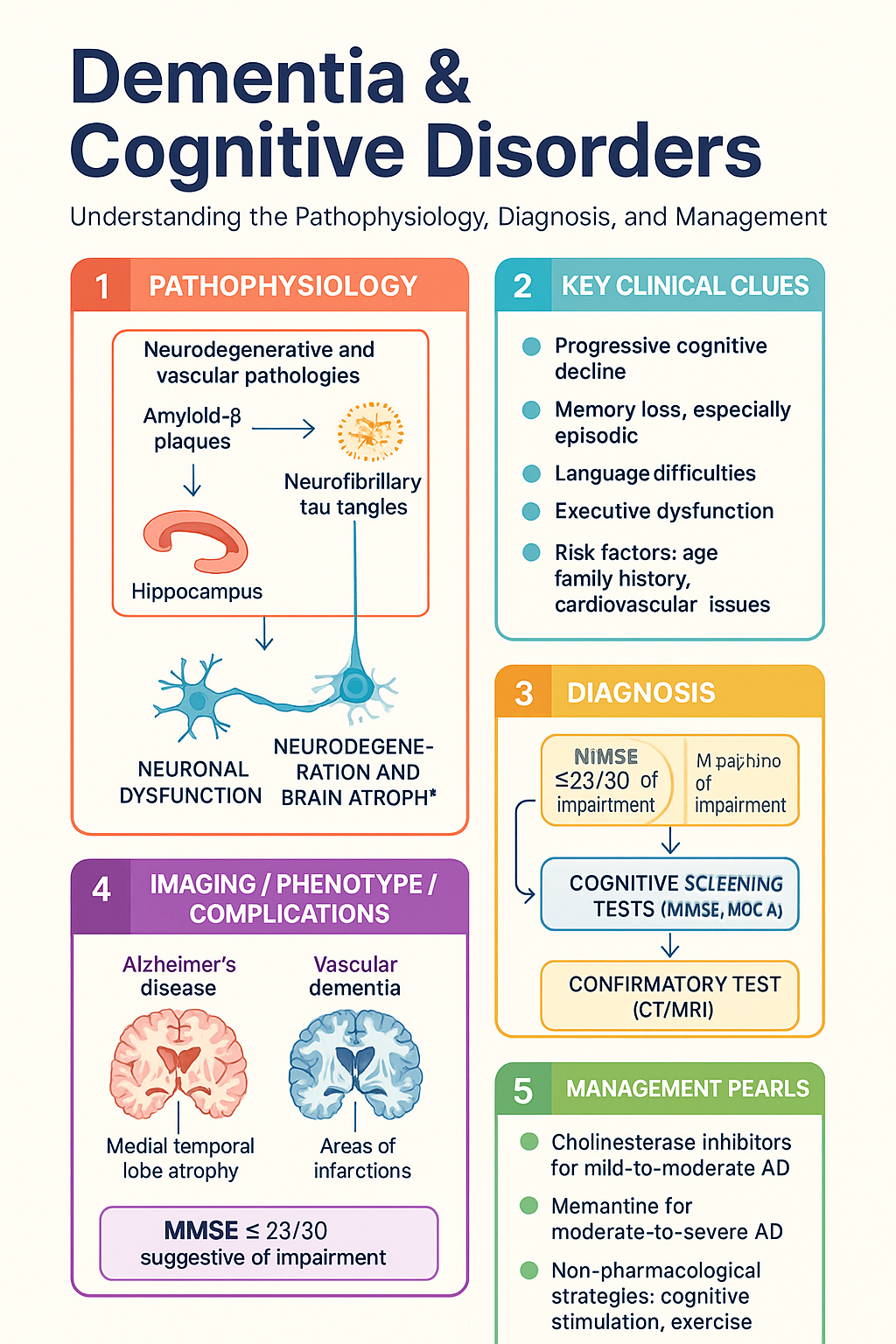
Dementia & Cognitive Disorders clinical infographic โ€” pathophysiology, clinical clues, diagnosis, imaging, and management
Tap or click image to enlarge โ€” Dementia & Cognitive Disorders: pathophysiology, clinical clues, diagnosis, imaging, and management.
Dementia & Cognitive Disorders infographic, full size
๐ŸŽฌ Dementia & Cognitive Disorders โ€” clinical explainer

Introduction & Australian Epidemiology

Dementia is a clinical syndrome characterised by progressive decline in cognitive function sufficient to interfere with daily activities and independence. It is not a single disease but rather a constellation of symptoms caused by various neurodegenerative and vascular pathologies. In Australia, dementia is the second leading cause of death and the leading cause of burden of disease among people aged 65 years and older.

According to the Australian Institute of Health and Welfare (AIHW), approximately 411,100 Australians were living with dementia in 2023, with this number projected to reach 849,300 by 2054. The total annual cost of dementia in Australia exceeds $26.6 billion, encompassing direct health costs, aged care, and informal carer contributions. Dementia is the leading cause of death in Australian women and the second leading cause overall.

Parameter Statistic
Prevalence (โ‰ฅ65 years) Approximately 1 in 10 Australians aged โ‰ฅ65; 1 in 3 aged โ‰ฅ85
Estimated Australians living with dementia (2023) ~411,100
Projected prevalence by 2054 ~849,300
Proportion in residential aged care ~52% of permanent aged care residents have dementia
ATSI prevalence ratio 3โ€“5 times higher than non-Indigenous Australians
Younger-onset dementia (<65 years) ~28,000 Australians; ~12,400 under 55 years
Annual cost >$26.6 billion (direct + indirect + informal care)

Risk factors for dementia include increasing age (strongest risk factor), family history, cardiovascular risk factors (hypertension, diabetes, obesity, physical inactivity), traumatic brain injury, depression, excessive alcohol consumption, hearing loss, social isolation, and air pollution exposure. Modifiable risk factors account for approximately 40% of dementia cases globally (Lancet Commission 2020).

โš ๏ธ
Younger-onset dementia: Approximately 28,000 Australians develop dementia before age 65. FTD and vascular aetiologies are proportionally more common in this group. Younger-onset dementia presents unique challenges regarding diagnosis (often misdiagnosed as psychiatric illness), employment, financial planning, and age-inappropriate service access. Refer to Younger Onset Dementia Key Worker programs via My Aged Care.

Cognitive Screening in Primary Care

Cognitive screening in primary care is not recommended as a universal population-level screen for all older adults (USPSTF concludes insufficient evidence for universal screening). Instead, screening should be triggered by concerns raised by the patient, a family member, carer, or the treating clinician's observation of functional decline. The RACGP Red Book recommends routine enquiry about cognition at health assessments for patients aged โ‰ฅ75 years (MBS Item 707).

When to Screen

  • Patient or informant expresses concern about memory or cognitive changes
  • Observed functional decline โ€” missed appointments, medication errors, financial mismanagement, difficulty managing household tasks
  • Annual health assessment for patients aged โ‰ฅ75 years (MBS Item 707)
  • Following an acute medical event (hospitalisation, fall, delirium episode)
  • New psychiatric presentation in an older adult (depression, anxiety, behavioural changes) โ€” consider cognitive component
  • Patients with cardiovascular risk factors or known cerebrovascular disease at increased risk of vascular cognitive impairment

Screening Instruments

Tool Score / Interpretation Time Strengths Limitations
Mini-Mental State Examination (MMSE) โ‰ค23/30 suggestive of cognitive impairment; 18โ€“23 = mild; 10โ€“17 = moderate; <10 = severe 5โ€“10 min Most widely validated; good for moderate-severe impairment; well normed Copyrighted (PAR Inc); ceiling effect in mild impairment; less sensitive to MCI; education bias
Montreal Cognitive Assessment (MoCA) โ‰ค25/30 suggestive (add 1 point if โ‰ค12 years education); sensitive to MCI 10โ€“15 min Superior sensitivity for MCI; assesses executive function; free to use (moCA test) May be too sensitive (high false positive in low education/ESL); requires training
General Practitioner Assessment of Cognition (GPCOG) Patient section: โ‰ค4/9 suggests impairment; informant section adds 6 points 5 min Designed for Australian GPs; free; includes informant component; culturally appropriate Less widely validated internationally than MMSE/MoCA
Clock Drawing Test (CDT) Various scoring systems; qualitative assessment of visuospatial and executive function 2โ€“3 min Quick; no language requirement; useful as adjunct; good for visuospatial assessment No standardised scoring; limited sensitivity when used alone
Rowland Universal Dementia Assessment Scale (RUDAS) โ‰ค22/30 suggestive of cognitive impairment 5โ€“10 min Designed for culturally and linguistically diverse populations; free; less education bias Less normative data than MMSE; may miss subtle executive dysfunction
โœ…
Australian best practice: The GPCOG was specifically developed by Brodaty et al. for Australian general practice and is freely available. The RUDAS is particularly useful in Aboriginal and Torres Strait Islander communities and for patients from culturally and linguistically diverse (CALD) backgrounds, as it is less influenced by education level and language.

Reversible Causes to Consider Before Diagnosis

Up to 5โ€“15% of suspected dementia cases may have a partially or fully reversible cause. All patients with new cognitive complaints should be evaluated for:

  • Hypothyroidism โ€” TSH and free T4; treatable with levothyroxine
  • Vitamin B12 and folate deficiency โ€” common in elderly; may cause subacute combined degeneration and cognitive impairment; check serum B12, folate, methylmalonic acid if borderline
  • Normal pressure hydrocephalus (NPH) โ€” classic triad of gait disturbance, urinary incontinence, and dementia; treatable with ventriculoperitoneal shunting; CT/MRI shows ventriculomegaly disproportionate to sulcal widening
  • Medication-related cognitive impairment โ€” anticholinergics (antihistamines, TCAs, bladder antispasmodics), benzodiazepines, opioids, antipsychotics, corticosteroids, polypharmacy
  • Depression (pseudodementia) โ€” may mimic dementia, particularly in older adults; treat depression and reassess cognition
  • Chronic subdural haematoma โ€” history of falls/anticoagulation; CT head
  • Neurosyphilis โ€” RPR/VDRL and FTA-ABS if risk factors present
  • Obstructive sleep apnoea โ€” associated with cognitive impairment; sleep study if symptomatic
  • HIV-associated neurocognitive disorder โ€” consider in at-risk populations
  • Alcohol-related brain damage โ€” chronic excessive alcohol use

Differential Diagnosis of Dementia

Accurate differentiation of dementia subtypes is critical for prognosis, treatment selection, genetic counselling, and care planning. The most common differentials are outlined below.

Alzheimer Disease (AD)

  • Accounts for 60โ€“70% of all dementia cases
  • Insidious onset with gradual progressive decline in episodic memory as the earliest and most prominent feature
  • Early: difficulty forming new memories, repeating questions, misplacing items
  • Middle: language difficulties (anomia, aphasia), visuospatial deficits, apraxia, executive dysfunction, behavioural changes
  • Late: severe global impairment, loss of ambulation, incontinence, dysphagia
  • Neuropathology: amyloid-ฮฒ plaques and neurofibrillary tau tangles; medial temporal lobe (hippocampal) atrophy on MRI
  • Risk factors: age, APOE ฮต4 allele (homozygous 8โ€“15ร— increased risk), family history, Down syndrome, cardiovascular risk factors

Vascular Dementia

  • Second most common cause (~15โ€“20%); may co-exist with AD (mixed dementia โ€” most common autopsy finding)
  • Stepwise or gradual decline; executive dysfunction, psychomotor slowing, and impaired attention often more prominent than memory loss early
  • Associated with cardiovascular risk factors: hypertension, diabetes, atrial fibrillation, smoking, hyperlipidaemia
  • Subtypes: multi-infarct dementia, strategic single-infarct dementia, subcortical vascular dementia (Binswanger disease), post-stroke dementia
  • Imaging: white matter hyperintensities, lacunar infarcts, cortical infarcts on MRI; Fazekas scale for white matter disease grading
  • Prevention focus: aggressive cardiovascular risk factor management

Dementia with Lewy Bodies (DLB)

    ๐Ÿšจ
    Safety alert โ€” DLB: Patients with DLB have severe neuroleptic sensitivity. Typical antipsychotics (haloperidol) and atypical antipsychotics (risperidone) can cause life-threatening neuroleptic malignant syndrome, marked worsening of parkinsonism, and increased mortality. Avoid these agents; if antipsychotic use is essential, use quetiapine at the lowest possible dose under specialist guidance.
  • Accounts for 5โ€“10% of dementia cases
  • Core features: fluctuating cognition with pronounced variations in attention and alertness, recurrent well-formed visual hallucinations, spontaneous parkinsonism (bradykiness, rigidity, postural instability)
  • Supportive features: REM sleep behaviour disorder (may precede dementia by years), severe neuroleptic sensitivity, systematised delusions, falls and syncope
  • DAT-SPECT (DaTSCAN) shows reduced dopamine transporter uptake in the putamen (distinguishes DLB from AD); available at nuclear medicine centres (MBS nuclear medicine items)
  • Cholinesterase inhibitors are particularly effective in DLB and may improve cognition, hallucinations, and fluctuations

Frontotemporal Dementia (FTD)

  • Accounts for 5โ€“10% of all dementia; proportionally higher in younger-onset dementia (up to 20โ€“30% of cases <65 years)
  • Behavioural variant FTD (bvFTD): personality change, disinhibition, apathy, loss of empathy, dietary changes (sweet cravings, hyperorality), stereotyped behaviours, executive dysfunction with relatively preserved memory initially
  • Primary progressive aphasias (PPA): semantic variant (loss of word meaning, face recognition), nonfluent/agrammatic variant (effortful speech, grammatical errors), logopenic variant (word-finding pauses, phonemic errors โ€” may overlap with AD pathology)
  • Imaging: bilateral frontal and/or anterior temporal lobe atrophy on MRI; often asymmetric; FFDG-PET shows frontotemporal hypometabolism
  • Often misdiagnosed as depression, psychosis, or personality disorder in early stages; frequently negative on standard cognitive screening
  • Cholinesterase inhibitors are NOT effective and may worsen behavioural symptoms in bvFTD

Depression-Related Cognitive Impairment (Pseudodementia)

  • Major depressive disorder in older adults can cause significant cognitive impairment ("depression-related cognitive dysfunction")
  • Clues: temporal relationship with mood symptoms, patient complains of memory loss and tries hard but performs poorly ("don't know" answers), affect is flat/tearful, vegetative symptoms present, relatively recent onset
  • Contrast with AD: patient often minimises difficulties, confabulates, shows less distress
  • Geriatric Depression Scale (GDS-15) is a useful adjunct; score โ‰ฅ5 suggests depression
  • Treat depression and reassess cognition at 8โ€“12 weeks; persistent cognitive deficits after mood improvement suggest comorbid neurodegeneration
  • Late-life depression may be both a prodrome and a risk factor for dementia

Delirium vs Dementia

๐Ÿšจ
Critical distinction: Delirium is a medical emergency with acute onset (hours to days), fluctuating course, altered level of consciousness (hyperactive, hypoactive, or mixed), and a reversible underlying cause. Dementia has insidious onset (months to years), gradual decline, and preserved level of consciousness until late stages. Delirium may be superimposed on pre-existing dementia โ€” this is common and often missed.
Feature Delirium Dementia
Onset Acute (hours to days) Insidious (months to years)
Course Fluctuating, often worse at night (sundowning) Gradual, progressive decline
Consciousness Altered โ€” clouded, drowsy, hyperalert Normal until late stages
Attention Markedly impaired (hallmark feature) Relatively preserved until moderateโ€“severe
Orientation Impaired for time, often place May be preserved early
Memory Impaired, especially registration Impaired, especially recall
Perception Visual hallucinations common, illusions Hallucinations less common except in DLB
Psychomotor Hyperactive, hypoactive, or mixed Usually normal early
Reversibility Usually reversible with treatment of cause Generally irreversible (except treatable causes)
Duration Days to weeks (usually <1 week) Years (progressive)

Other Important Differentials

  • Posterior cortical atrophy (PCA): Visual variant of AD; progressive visuospatial dysfunction, simultanagnosia, optic ataxia, oculomotor apraxia (Balint syndrome); patients often present to ophthalmology first
  • Progressive supranuclear palsy (PSP): Parkinsonism, vertical supranuclear gaze palsy, early falls, frontal behavioural changes
  • Corticobasal degeneration (CBD): Asymmetric parkinsonism, alien limb phenomenon, apraxia, cortical sensory loss
  • Creutzfeldt-Jakob disease (CJD): Rapidly progressive dementia, myoclonus, cerebellar signs, periodic sharp wave complexes on EEG; refer urgently to state health authority
  • HIV-associated neurocognitive disorder (HAND): Consider in at-risk populations; screen with HIV serology
  • Chronic traumatic encephalopathy (CTE): History of repetitive head impacts (contact sports, military service)

Initial Workup

A thorough initial evaluation is essential to establish the diagnosis, identify treatable causes, determine the likely aetiology, and plan management. This can largely be conducted in primary care with targeted specialist referral.

History

  • Collateral history is essential โ€” interview an informant (spouse, adult child, close friend) separately and together with the patient
  • Onset and trajectory: sudden vs gradual, stepwise vs progressive, duration of symptoms
  • Cognitive domains affected: memory (episodic, semantic), language (word-finding, comprehension), visuospatial function, executive function (planning, multitasking), attention, praxis
  • Functional impact: activities of daily living (ADLs), instrumental ADLs (IADLs) โ€” cooking, finances, medications, driving, shopping, telephone use
  • Behavioural and psychological symptoms of dementia (BPSD): agitation, aggression, wandering, sleep disturbance, depression, anxiety, apathy, hallucinations, delusions, disinhibition, sundowning
  • Past medical history: stroke, TIA, cardiovascular disease, head injury, depression, Parkinson disease, epilepsy, HIV, alcohol/substance use
  • Family history: early-onset dementia, autosomal dominant pattern (consider genetic causes: PSEN1, PSEN2, APP mutations; MAPT, GRN, C9orf72 for FTD)
  • Education level, occupational history, baseline intellectual functioning, language/cultural background

Medication Review

โš ๏ธ
Medication review is mandatory. Polypharmacy and anticholinergic burden are common, modifiable contributors to cognitive impairment in older Australians. Use the Anticholinergic Cognitive Burden (ACB) Scale to identify high-burden medications. Medications with strong anticholinergic effects should be deprescribed where possible.
Drug Class Examples Mechanism of Cognitive Harm
Anticholinergics Oxybutynin, tolterodine, solifenacin, hyoscine, promethazine, diphenhydramine, amitriptyline, doxepin Blockade of central muscarinic receptors; impaired cholinergic neurotransmission
Benzodiazepines & Z-drugs Diazepam, temazepam, oxazepam, zolpidem, zopiclone GABAergic sedation, impaired consolidation, falls risk, paradoxical agitation
Opioids Tramadol, codeine, morphine, oxycodone, fentanyl patches Sedation, confusion, constipation (anticholinergic effects of some), delirium
Antipsychotics Risperidone, olanzapine, quetiapine, haloperidol Sedation, anticholinergic effects, extrapyramidal symptoms; mortality risk in dementia
Anticonvulsants Topiramate, valproate, carbamazepine, phenytoin, levetiracetam Cognitive dulling, sedation, word-finding difficulty (topiramate)
Corticosteroids Prednisolone (high dose/chronic), dexamethasone Steroid dementia โ€” reversible cognitive impairment, mood changes, psychosis

Investigations โ€” Baseline Bloods

Essential
Full blood count (FBC)
Anaemia, macrocytosis (B12/folate deficiency, alcohol), infection, haematological malignancy
Essential
Urea, electrolytes, creatinine (UEC)
Renal failure, hyponatraemia, hypercalcaemia-related confusion
Essential
Liver function tests (LFTs)
Hepatic encephalopathy, alcohol-related liver disease, Wilson disease (young patients)
Essential
Thyroid function tests (TSH ยฑ fT4)
Hypothyroidism (reversible cause); hyperthyroidism (apathetic thyrotoxicosis in elderly)
Essential
Vitamin B12 and folate
Deficiency common in elderly; subacute combined degeneration; check methylmalonic acid if B12 borderline (200โ€“300 pmol/L)
Essential
Fasting glucose / HbA1c
Diabetes is a major risk factor for vascular dementia and AD; hypoglycaemia causes acute confusion
Essential
Calcium (adjusted)
Hypercalcaemia (malignancy, hyperparathyroidism) โ€” reversible cause of confusion
Available
RPR/VDRL + FTA-ABS (or TPHA)
Neurosyphilis โ€” if risk factors or unexplained cognitive decline in younger patient
Available
HIV serology
HIV-associated neurocognitive disorder โ€” consider in at-risk populations with consent
Available
Erythrocyte sedimentation rate (ESR) / CRP
Inflammatory, autoimmune, or infective causes; vasculitis screening
Available
Urinalysis / midstream urine (MSU)
UTI is a common precipitant of delirium in older adults
Available
Copper, caeruloplasmin (24-hour urinary copper)
Wilson disease โ€” if patient <40 years with unexplained neuropsychiatric features

Structural Neuroimaging

Brain imaging is recommended in the evaluation of most patients with suspected dementia, particularly when the diagnosis is uncertain, onset is before age 65, there are focal neurological signs, or a treatable structural cause is suspected.

Essential
CT brain (non-contrast)
Widely available; adequate for excluding space-occupying lesions, hydrocephalus, subdural haematoma, and large vessel infarcts. MBS Item 56000 (CT head). Bulk-billed in most public radiology.
Referral preferred
MRI brain (preferred)
Superior for assessing medial temporal lobe (hippocampal) atrophy (MTA scale), white matter disease (Fazekas scale), microinfarcts, and posterior fossa structures. MBS Item 63001/63007. Use coronal T1 and FLAIR sequences. Refer via specialist or memory clinic.

Specialist Investigations (When Indicated)

Specialist
FDG-PET
Frontotemporal hypometabolism (FTD), temporoparietal hypometabolism (AD). MBS Item 61359 โ€” available for FDG-PET in dementia when diagnosis uncertain (requires specialist referral). Available at major PET centres in capital cities.
Specialist
Amyloid PET (ยนโธF-florbetapir, ยนโธF-flutemetamol)
Detects amyloid plaque burden; positive in AD and some DLB; may be negative in pure vascular dementia and FTD. Available in Australia (not PBS-funded); cost ~$2,000โ€“3,000. Useful in atypical presentations and younger-onset cases to confirm AD pathology.
Specialist
DAT-SPECT (DaTSCAN)
Reduced dopamine transporter uptake in DLB and Parkinson disease dementia vs preserved uptake in AD. MBS nuclear medicine items. Available at nuclear medicine centres in capital cities.
Specialist
CSF biomarkers (Aฮฒ42, total tau, phospho-tau)
AD CSF profile: low Aฮฒ42, high total tau, high phospho-tau. Available at specialist centres; increasingly being replaced by blood-based biomarkers (plasma p-tau217, p-tau181). Useful when imaging is inconclusive.
Specialist
EEG
Periodic sharp wave complexes in CJD; triphasic waves in metabolic encephalopathy; seizure activity; may show posterior dominant rhythm slowing in AD. Not routine; order if seizures suspected or CJD considered.

Neuropsychological Testing

Formal neuropsychological assessment is performed by a clinical neuropsychologist and provides domain-specific cognitive profiling. It is not required in all cases but is valuable in the following situations:

  • Diagnostic uncertainty โ€” when screening tests are equivocal or conflicting with clinical impression
  • Mild cognitive impairment (MCI) โ€” to objectively document impairment and establish baseline for monitoring
  • Atypical presentations โ€” younger patients, suspected FTD, unusual cognitive profiles
  • Capacity assessments โ€” medicolegal, driving, financial decision-making, testamentary capacity
  • Pre- and post-treatment evaluation โ€” monitoring response to cholinesterase inhibitors
  • Medicolegal and insurance evaluations

Referral can be made via the treating GP, geriatrician, neurologist, or memory clinic. Wait times for public neuropsychology services in Australia are typically 3โ€“6 months; private neuropsychologists are available with Medicare rebate under chronic disease management plans (MBS Item 10960) or specialist referral.

๐Ÿ–ผ๏ธ Dementia & Cognitive Disorders โ€” visual summary
Dementia & Cognitive Disorders visual summary infographic

Management & Support

Management of dementia requires a multidisciplinary, patient-centred approach integrating pharmacological treatment of cognitive symptoms, management of BPSD, non-pharmacological interventions, carer support, safety planning, and advance care planning.

Pharmacological Management โ€” Cognitive Enhancement

Cholinesterase Inhibitors (ChEIs)

Cholinesterase inhibitors enhance cholinergic neurotransmission by inhibiting acetylcholinesterase. They provide modest symptomatic benefit in mild-to-moderate Alzheimer disease, DLB, and Parkinson disease dementia. They do not alter disease progression.

๐Ÿ’Š
Donepezil
Ariceptยฎ ยท Generic available ยท Acetylcholinesterase inhibitor
Indication Mild-to-moderate AD; also used in DLB and PDD
Adult dose 5 mg PO nocte for 4โ€“6 weeks, then increase to 10 mg PO nocte (maximum dose)
Paediatric dose Not indicated (paediatric dementia is rare; specialist management only)
Route / Frequency Oral, once daily at bedtime (can also be given as ODT โ€” orally disintegrating tablet)
Duration Ongoing โ€” review benefit at 3โ€“6 months; continue if stable or improved; reassess if decline
Renal adjustment No adjustment required (cleared hepatically)
Hepatic adjustment Use with caution in severe hepatic impairment (Child-Pugh C); not studied
Key side effects Nausea, diarrhoea, vomiting, anorexia (GI side effects most common); bradycardia, syncope, vivid dreams; caution with bradycardia, sick sinus syndrome, asthma, COPD, peptic ulcer disease
PBS status PBS Authority Required โ€” Initial and continuing authority for mild-to-moderate AD confirmed by specialist (geriatrician, neurologist, psychiatrist)
๐Ÿ’Š
Rivastigmine
Exelonยฎ ยท Generic available ยท Acetylcholinesterase + butyrylcholinesterase inhibitor
Indication Mild-to-moderate AD; Parkinson disease dementia
Adult dose (oral) Start 1.5 mg PO BD with food; increase to 3 mg BD after 2 weeks, then 4.5 mg BD after further 2 weeks, then 6 mg BD (maximum). Titrate slowly to improve GI tolerance.
Adult dose (transdermal patch) Start 4.6 mg/24 hours patch (apply to clean, hairless skin, rotate sites); increase to 9.5 mg/24 hours after 4 weeks; maximum 13.3 mg/24 hours. Patch has better GI tolerability than oral.
Key side effects Nausea, vomiting, diarrhoea (more common than donepezil with oral form โ€” patch better tolerated); weight loss; skin reactions with patch
PBS status PBS Authority Required โ€” Mild-to-moderate AD, confirmed by specialist
๐Ÿ’Š
Galantamine
Reminylยฎ ยท Generic available ยท Acetylcholinesterase inhibitor + nicotinic receptor modulator
Indication Mild-to-moderate AD
Adult dose Start 4 mg PO BD with food for 4 weeks; increase to 8 mg BD for 4 weeks; then 12 mg BD if needed (maximum). Extended-release: start 8 mg PO mane, titrate to 16 mg then 24 mg once daily.
Key side effects GI side effects (nausea, vomiting, anorexia, weight loss); titrate slowly. CYP2D6 and CYP3A4 interactions โ€” review concomitant medications.
Renal adjustment eGFR 30โ€“59: maximum 16 mg/day (extended release) or 12 mg BD; eGFR <30: avoid
PBS status PBS Authority Required โ€” Mild-to-moderate AD, confirmed by specialist
โš ๏ธ
Starting ChEIs โ€” Practical tips: Start low, go slow. Always prescribe with food to reduce GI side effects. Warn patients and carers about common GI side effects in the first 2โ€“4 weeks. If treatment is interrupted for >2 weeks, re-titrate from the starting dose. Do not use ChEIs in bvFTD โ€” they are ineffective and may worsen behavioural symptoms. Assess response at 3 months using a validated tool (e.g., MMSE, ADAS-Cog) and compare to baseline.

Memantine (NMDA Receptor Antagonist)

๐Ÿ’Š
Memantine
Ebixaยฎ ยท Generic available ยท NMDA receptor antagonist
Indication Moderate-to-severe AD; may be used in combination with donepezil in moderate-to-severe AD; also used off-label in DLB and vascular dementia
Adult dose Week 1: 5 mg PO mane; Week 2: 5 mg BD (10 mg/day); Week 3: 15 mg/day (10 mg mane, 5 mg nocte); Week 4+: 10 mg BD (20 mg/day maximum)
Renal adjustment eGFR 30โ€“49: maximum 10 mg/day; eGFR 5โ€“29: 5 mg/day (limited data); eGFR <5: avoid
Key side effects Generally well tolerated; dizziness, headache, constipation, somnolence; fewer GI side effects than ChEIs
PBS status PBS Authority Required โ€” Moderate-to-severe AD, confirmed by specialist; either as monotherapy (when ChEIs not tolerated) or in combination with a ChEI

Antipsychotic Use in Dementia โ€” Use with Extreme Caution

๐Ÿšจ
Black box warning: All antipsychotics carry increased risk of cerebrovascular events and mortality (1.6โ€“1.7ร— increased risk) when used in elderly patients with dementia-related psychosis. Use ONLY for severe BPSD (aggression, severe agitation, psychosis with distress) when non-pharmacological measures have failed and the patient is at immediate risk of harm to self or others. Use the lowest effective dose for the shortest possible duration (typically โ‰ค12 weeks). Document a clear target symptom, plan regular review, and attempt dose reduction or cessation every 8โ€“12 weeks.
๐Ÿ’Š
Risperidone
Risperdalยฎ ยท Atypical antipsychotic
Adult dose (BPSD) Start 0.25 mg PO BD; titrate cautiously to 0.5 mg BD if needed; maximum 1 mg BD (generally โ‰ค0.5 mg BD in frail elderly)
Duration Short-term only (โ‰ค12 weeks); attempt reduction/cessation at regular intervals
Key risks Cerebrovascular events, falls, sedation, extrapyramidal effects, QTc prolongation; avoid in DLB
PBS status PBS Authority Required โ€” For dementia-related psychosis/severe BPSD; specialist approval
๐Ÿ’Š
Quetiapine
Seroquelยฎ ยท Atypical antipsychotic
Adult dose (BPSD) Start 12.5 mg PO nocte; titrate to 25โ€“50 mg nocte; maximum 100 mg/day in frail elderly
Key advantage Preferred antipsychotic in DLB and Parkinson disease dementia (lowest risk of extrapyramidal effects among antipsychotics); use with caution under specialist guidance
Key risks Sedation, falls, orthostatic hypotension, metabolic effects, QTc prolongation
PBS status PBS Authority Required โ€” For dementia-related psychosis/severe BPSD

Non-Pharmacological Strategies

Non-pharmacological interventions should be first-line for all patients with dementia, particularly for managing BPSD. Evidence supports the following approaches:

1
Cognitive Stimulation Therapy (CST)
Structured group programme (14 sessions minimum) involving themed activities to stimulate thinking, concentration, and memory. Level A evidence for improving cognition and well-being in mild-to-moderate dementia. Available through some memory clinics and community organisations. Australian Dementia Network (ADNet) supports CST programme rollout.
2
Physical Exercise
Regular aerobic exercise (โ‰ฅ150 minutes/week moderate intensity) and resistance training improve cognition, reduce BPSD, slow functional decline, and improve mood. Refer to physiotherapist or exercise physiologist. Consider group programmes (e.g., Living Longer Living Stronger, local council programmes).
3
Music Therapy
Personalised music playlists and structured music therapy sessions reduce agitation, anxiety, and depression. Evidence from multiple RCTs supports efficacy for BPSD management. Dementia Australia supports the Music & Memory programme.
4
Structured Daily Routines & Environmental Modification
Consistent daily routines reduce confusion and anxiety. Simplify the environment, use visual cues and labels, ensure adequate lighting, reduce noise, maintain familiar objects. Occupational therapy referral for home safety assessment and modification.
5
Carer Education & Skills Training
Equip carers with communication strategies, behaviour management techniques, and self-care skills. Dementia Australia offers the Living with Dementia programme, carer education sessions, and Telephone Advisory Service (1800 100 500).
6
Occupational Therapy
Functional assessment, activity adaptation, home modification, assistive technology, and caregiver training. MBS Items under chronic disease management plans. Referral via My Aged Care for government-funded services.

BPSD Management โ€” Stepwise Approach

Step 1
Identify & Treat Triggers
Pain (trial analgesia โ€” paracetamol), constipation, infection (UTI, pneumonia), environmental factors (noise, unfamiliar surroundings), medication effects, unmet needs (hunger, thirst, toileting, loneliness, boredom)
Setting: Primary care / residential care
Step 2
Non-Pharmacological Interventions
Person-centred care, communication strategies, music therapy, aromatherapy (lavender), validation therapy, reminiscence therapy, structured activities, sensory interventions (Snoezelen rooms), doll therapy, pet therapy
Setting: Home / residential care with trained staff
Step 3
Pharmacological Management
Consider: citalopram 10 mg PO mane (for anxiety, agitation โ€” avoid >20 mg in elderly due to QTc risk); trazodone 25โ€“50 mg PO nocte (for sleep/agitation); risperidone or quetiapine at lowest dose for severe psychosis/aggression with risk of harm โ€” specialist authorisation
Setting: Specialist oversight required

Carer Support

Dementia carers experience significantly higher rates of depression, anxiety, social isolation, and physical health problems compared to the general population. The estimated 1.5 million informal dementia carers in Australia contribute over 1.9 billion hours of care annually. Early and ongoing support is essential.

  • Dementia Australia โ€” National helpline: 1800 100 500; provides counselling, education programmes (Living with Dementia, carer support groups), and advocacy services
  • My Aged Care โ€” 1800 200 422; gateway to Commonwealth-funded aged care services including home care packages, respite care, and residential aged care
  • Carer Gateway โ€” 1800 422 737; Australian Government services for carers including counselling, peer support, coaching, and respite
  • Dementia Behaviour Management Advisory Service (DBMAS) โ€” 1800 699 799; provides clinical support for carers managing BPSD in residential and community settings
  • Severe Behaviour Response Teams (SBRT) โ€” available for residential aged care facilities; rapid response for severe BPSD crises
  • Respite care โ€” Commonwealth Home Support Programme (CHSP) and Home Care Packages fund in-home respite; Centre-Based Day Respite; Residential Respite (short-term stays); discuss early and offer regularly
  • Carer mental health screening โ€” use the Zarit Burden Interview or the Depression Anxiety Stress Scales (DASS-21) at regular intervals; refer for psychological support or GP management plan (MBS Item 721)
  • State-based services โ€” each state and territory has specific dementia support services; refer to local Primary Health Network (PHN) or Local Health District (LHD) for details

Driving & Safety

๐Ÿšจ
Driving and dementia โ€” legal obligations: Under Austroads Assessing Fitness to Drive (2022 edition), all patients diagnosed with dementia must cease driving. Clinicians have a duty to inform patients that they are legally not permitted to drive and to document this discussion. While there is no mandatory reporting law in all states, clinicians in some jurisdictions (e.g., NSW, SA) may have legal protections for reporting to the relevant transport authority. The treating clinician should advise the patient and family, document the conversation, and recommend the patient notify their state/territory transport authority (e.g., VicRoads, Transport NSW, QLD TMR).
Safety Concern Assessment & Intervention
Driving All dementia = cessation of driving per Austroads guidelines; refer for OT driving assessment if diagnosis uncertain or early MCI; advise transport authority notification
Falls risk Comprehensive falls assessment; home safety OT review; medication review (sedatives, antihypertensives); exercise programme; consider hip protectors in residential care
Wandering GPS tracking devices; Safe Return / MedicAlert programmes; door alarms; secure environments; regular exercise to reduce restlessness
Medication management Webster-pak or medication dosette boxes; carer-administered medications; home medication reviews (MBS Item 900) by pharmacist; remove access to toxic medications
Financial vulnerability Appoint enduring power of attorney early while capacity remains; restrict access to large financial accounts; notify bank of diagnosis
Kitchen / home safety Remove or lock away sharp objects; auto-shutoff stove devices; smoke detectors; consider induction cooktop; hot water temperature limiters (50ยฐC per plumbing code)
Swimming / water Supervise near water; fencing of pools; discourage unsupervised swimming

Advance Care Planning

Advance care planning should be initiated early in the disease course while the patient retains decision-making capacity. This is a sensitive but critical conversation that should be revisited over time.

  • Appoint an enduring power of attorney (financial) and enduring guardian (health/lifestyle) โ€” documents vary by state and territory
  • Complete an advance care directive (ACD) documenting values, preferences for future medical treatment, and specific refusals of treatment (e.g., CPR, ICU admission, artificial nutrition)
  • Discuss goals of care โ€” comfort-focused vs life-prolonging; preferred place of care and death; cultural and spiritual preferences
  • Register the ACD with the state-based advance care planning register (e.g., Advance Care Planning Australia โ€” advancecareplanning.org.au)
  • Palliative care referral should be considered when the patient reaches moderate-to-severe dementia, with goals shifting towards comfort, dignity, and quality of life. MBS palliative care items are available.

Special Populations

๐Ÿคฐ

Pregnancy

Dementia in pregnancy is exceedingly rare; younger-onset dementia in women of childbearing age requires specialist multidisciplinary input.
Cholinesterase inhibitors and memantine are not recommended in pregnancy or breastfeeding โ€” limited safety data; teratogenicity not established but riskโ€“benefit must be carefully assessed.
Donepezil, rivastigmine, galantamine
Category B3 โ€” use only if benefit clearly outweighs risk; discuss with maternalโ€“fetal medicine specialist
Consider genetic counselling for autosomal dominant familial dementias (PSEN1, PSEN2, APP, MAPT, GRN, C9orf72) in women of childbearing age.
๐Ÿ‘ถ

Paediatrics

Childhood dementia is rare but devastating; most causes are lysosomal storage disorders (Niemann-Pick type C, neuronal ceroid lipofuscinoses, mucopolysaccharidoses, Gaucher disease type 3), leukodystrophies, mitochondrial disorders, or genetic neurodegenerative conditions.
Estimated 1 in 2,900 Australian children are born with a condition that will cause childhood dementia; approximately 900 children living with childhood dementia in Australia at any time.
Presentation: developmental regression, seizures, progressive loss of motor skills, visuospatial difficulties, behavioural changes.
Refer urgently to paediatric neurologist; genetic testing (whole exome/genome sequencing) is increasingly first-line; consider lysosomal enzyme assays.
ChEIs and memantine are not routinely indicated in paediatric dementia; treatment is disease-specific where available (e.g., enzyme replacement therapy for Gaucher, haematopoietic stem cell transplant for some conditions).
Support Childhood Dementia Initiative (childhooddementia.org.au) โ€” advocacy and research organisation.
๐Ÿ‘ด

Elderly (โ‰ฅ75 years)

Prevalence of dementia increases sharply with age: ~5% at 65โ€“69 years, ~10% at 75โ€“79, ~20% at 80โ€“84, ~30% at 85+.
Higher risk of polypharmacy, anticholinergic burden, and drug interactions โ€” perform comprehensive medication review (MBS Item 900 Home Medicines Review).
ChEIs: start at lower doses, titrate more slowly; monitor for bradycardia, GI side effects, and falls. Rivastigmine patch may be better tolerated than oral formulation.
Higher prevalence of mixed dementia (AD + vascular pathology) โ€” optimise cardiovascular risk factor management even in established dementia.
Discuss goals of care, advance care directives, and palliative care earlier rather than later.
Screen for comorbid depression (GDS-15), delirium risk (confusion assessment method), malnutrition (MUST or MST), and falls risk at every visit.
๐Ÿซ˜

Renal Impairment

Donepezil: no dose adjustment required (hepatically cleared) โ€” preferred ChEI in renal impairment.
Rivastigmine: use with caution in severe renal impairment (limited data); patch may be preferred.
Galantamine: eGFR 30โ€“59: maximum 16 mg/day (MR); eGFR <30: avoid. Available data limited.
Memantine: eGFR 30โ€“49: maximum 10 mg/day; eGFR 5โ€“29: 5 mg/day; eGFR <5: avoid. Memantine is renally cleared โ€” dose reduction essential to prevent accumulation and toxicity.
Consider uraemic encephalopathy as a reversible cause of cognitive impairment in CKD stage 4โ€“5.
๐Ÿซ

Hepatic Impairment

Donepezil: use with caution in severe hepatic impairment (Child-Pugh C); no specific dose adjustment for mild-moderate.
Rivastigmine: avoid in severe hepatic impairment (not studied).
Galantamine: maximum 8 mg BD in moderate hepatic impairment (Child-Pugh B); avoid in severe (Child-Pugh C).
Memantine: no specific hepatic adjustment (not hepatically metabolised); use with caution.
Consider hepatic encephalopathy as a reversible cause of cognitive impairment; assess with ammonia level, LFTs, liver ultrasound.
๐Ÿ›ก๏ธ

Immunocompromised

HIV-associated neurocognitive disorder (HAND): spectrum from asymptomatic neurocognitive impairment to HIV-associated dementia. Screen with HIV serology in at-risk populations; optimise ART; refer to infectious disease specialist.
Progressive multifocal leukoencephalopathy (PML): JC virus reactivation in severely immunosuppressed; presents with subacute cognitive and focal neurological deficits; MRI shows characteristic white matter lesions.
Autoimmune encephalitis (anti-NMDA receptor, anti-LGI1, anti-CASPR2): may present with cognitive decline, psychiatric symptoms, seizures; treatable with immunotherapy โ€” refer urgently to neurology.
Chronic immunosuppression (transplant recipients, autoimmune conditions): consider CNS infections (cryptococcal meningitis, CMV, HSV encephalitis) as causes of cognitive decline.

Aboriginal and Torres Strait Islander Health

Aboriginal and Torres Strait Islander Health Considerations

Dementia prevalence among Aboriginal and Torres Strait Islander peoples is 3 to 5 times higher than in non-Indigenous Australians, with onset occurring approximately 10 years earlier on average. The AIHW reports that dementia is a leading cause of the health gap between Indigenous and non-Indigenous Australians. Cardiovascular risk factors (diabetes, hypertension, rheumatic heart disease, chronic kidney disease), which are highly prevalent in Indigenous communities, contribute significantly to vascular and mixed dementia aetiologies. Head injury from interpersonal violence and alcohol-related brain injury are additional risk factors of particular relevance.

Culturally safe assessment and care are essential. The Kimberley Indigenous Cognitive Assessment (KICA) tool was specifically developed and validated for use with Aboriginal and Torres Strait Islander peoples in remote and regional settings. It includes cognitive, depression, and informant components, is freely available, and should be preferred over the MMSE or MoCA in Indigenous populations. The RUDAS is also less influenced by education and language than the MMSE and may be used as an alternative when the KICA is not available.

Remote access to specialist services
Many Aboriginal and Torres Strait Islander communities are in remote or very remote areas with limited access to geriatricians, neurologists, neuropsychologists, and memory clinics. Telehealth (MBS telehealth items) should be actively utilised; Aboriginal Community Controlled Health Services (ACCHS) are critical for coordinating care. The Northern Territory, Western Australia, and Far North Queensland have specific dementia outreach programmes through RDWA and Dementia Australia.
Cultural safety in cognitive assessment
Use culturally validated tools (KICA, RUDAS); avoid standard Western cognitive tests that may be culturally biased. Engage Aboriginal and Torres Strait Islander health workers and liaison officers (AHWs/AHPs) in assessment. Allow adequate time; use interpreters where English is not the primary language. Be aware of culturally specific ways of expressing distress and cognitive concerns. Yarning-based approaches to history-taking may be more effective than structured questioning.
Stigma and cultural understanding of dementia
Dementia may not be a familiar or accepted concept in some communities. Symptoms may be attributed to ageing, spiritual causes, or "sorry business." Education and awareness programmes must be co-designed with communities. The term "dementia" may carry stigma โ€” use community-endorsed language. Dementia Australia's Indigenous-specific resources and the Dementia Yarning education programme are available.
Family and community-based care
Care of Elders is a collective family and community responsibility in Aboriginal and Torres Strait Islander cultures. Institutional care (residential aged care) may be culturally inappropriate and is often resisted. Support should focus on keeping the person on Country, in community, with family. In-home care packages and culturally safe respite are critical. Recognise the significant carer burden on families and provide appropriate support.
Cardiovascular risk factor management
Aggressive management of modifiable cardiovascular risk factors (diabetes, hypertension, smoking, rheumatic heart disease, chronic kidney disease, obesity) is essential for dementia prevention. The Close the Gap PBS Co-payment Programme supports medication access. MBS health assessments (Items 715 for Indigenous patients) should include cognitive screening components.
Research and data
The National Aboriginal and Torres Strait Islander Dementia Study and the Australian Dementia Network (ADNet) are working to improve understanding of dementia in Indigenous populations. Data linkage through AIHW and the Australian Bureau of Statistics is essential for tracking prevalence and outcomes. Ensure culturally safe research practices and community consent.
โ„น๏ธ
MBS Item 715: Aboriginal and Torres Strait Islander health assessments (MBS Item 715) are available annually and should include cognitive assessment as a standard component. These assessments can be bulk-billed and performed by GPs, Aboriginal health workers, or practice nurses. Item 715 assessments provide an opportunity to identify cognitive decline early, screen for modifiable risk factors, and initiate referrals to appropriate services including Dementia Australia, ACCHS, and specialist outreach programmes.
๐Ÿ“Š Dementia & Cognitive Disorders โ€” slide deck

Open slides PDF in new tab

๐Ÿ“š References

  1. 1. Australian Institute of Health and Welfare (AIHW). Dementia in Australia. AIHW, Canberra; 2024. Available from: https://www.aihw.gov.au/reports/dementia/dementia-in-australia
  2. 2. Livingston G, Huntley J, Sommerlad A, et al. Dementia prevention, intervention, and care: 2020 report of the Lancet Commission. Lancet. 2020;396(10248):413โ€“446.
  3. 3. Brodaty H, Pond D, Kemp NM, et al. The GPCOG: a new screening test for dementia designed for general practice. J Am Geriatr Soc. 2002;50(3):530โ€“534.
  4. 4. Storey JE, Rowland JT, Basic D, et al. The Rowland Universal Dementia Assessment Scale (RUDAS): a multicultural cognitive assessment scale. Int Psychogeriatr. 2004;16(1):13โ€“31.
  5. 5. Loi SM, Brodaty H. Dementia in Aboriginal and Torres Strait Islander peoples. In: Dementia (5th ed). Hodder Arnold; 2023. Chapter 42.
  6. 6. Smith K, Flicker L, Lautenschlager NT, et al. High prevalence of dementia and cognitive impairment in Indigenous Australians. Neurology. 2008;71(19):1470โ€“1473.
  7. 7. Austroads. Assessing Fitness to Drive. 4th ed. Austroads, Sydney; 2022. Available from: https://austroads.com.au/safety/assessing-fitness-to-drive
  8. 8. Dementia Australia. Clinical Practice Guidelines and Principles of Care for People with Dementia. Sydney: Dementia Australia; 2016. Available from: https://www.dementia.org.au/professionals/clinical-practice-guidelines
  9. 9. McKeith IG, Boeve BF, Dickson DW, et al. Diagnosis and management of dementia with Lewy bodies: Fourth consensus report of the DLB Consortium. Neurology. 2017;89(1):88โ€“100.
  10. 10. Rascovsky K, Hodges JR, Knopman D, et al. Sensitivity of revised diagnostic criteria for the behavioural variant of frontotemporal dementia. Brain. 2011;134(9):2456โ€“2477.
  11. 11. Royal Australian College of General Practitioners (RACGP). Guidelines for Preventive Activities in General Practice (Red Book). 9th ed. Melbourne: RACGP; 2016 (updated 2023).
  12. 12. Birks JS, Harvey RJ. Donepezil for dementia due to Alzheimer's disease. Cochrane Database Syst Rev. 2018;6(6):CD001190.
  13. 13. McShane R, Westby MJ, Roberts E, et al. Memantine for dementia. Cochrane Database Syst Rev. 2019;3(3):CD003154.
  14. 14. Australian Commission on Safety and Quality in Health Care (ACSQHC). Care of People with Dementia in Acute Care Settings โ€” National Safety and Quality Health Service Standards Implementation Guide. Sydney: ACSQHC; 2023.
  15. 15. National Health and Medical Research Council (NHMRC). Clinical Practice Guidelines and Principles of Care for People with Dementia. NHMRC, Canberra; 2016.