Home Immunology B Cells

B Cells

📋 Key Information Summary

📋
  • B cells are adaptive lymphocytes central to humoral immunity, mediating antigen-specific antibody responses via the B cell receptor (BCR).
  • B cell development begins in foetal liver and transitions to bone marrow post-natally; maturation proceeds through pro-B, pre-B, immature B, and mature naïve B cell stages.
  • V(D)J recombination generates the diverse BCR repertoire; RAG-1/RAG-2 recombinases are essential — defects cause severe combined immunodeficiency (SCID).
  • Central tolerance in the bone marrow eliminates strongly self-reactive B cells via receptor editing, clonal deletion, or anergy.
  • The BCR complex comprises membrane immunoglobulin (mIg) non-covalently associated with the Igα/Igβ (CD79a/CD79b) heterodimer that transduces intracellular signals.
  • B cell activation requires antigen engagement of the BCR plus co-stimulatory signals: T-dependent activation involves CD40–CD40L interaction and cytokines; T-independent activation occurs with repetitive epitopes (TI-2) or TLR ligands (TI-1).
  • Activated B cells enter germinal centres where somatic hypermutation (AID-mediated) and class-switch recombination refine antibody affinity and isotype.
  • Differentiation yields short-lived plasmablasts (extrafollicular) and long-lived plasma cells (germinal centre-derived) plus memory B cells that provide rapid secondary responses.
  • B cell disorders encompass immunodeficiency (XLA, CVID), autoimmunity (SLE, rheumatoid arthritis), and malignancy (CLL, DLBCL, ALL).
  • Anti-CD20 therapy (rituximab, ocrelizumab) depletes B cells and is used in lymphoma, rheumatoid arthritis, MS, and ANCA vasculitis; monitor immunoglobulin levels during prolonged use.
  • Australian patients on anti-CD20 agents should complete all scheduled vaccinations ≥4 weeks prior to initiation; live vaccines are contraindicated during therapy and for 6–12 months post-treatment.
  • Aboriginal and Torres Strait Islander peoples experience higher rates of rheumatic heart disease (antibody-mediated pathology) and may face barriers to specialist immunology referral in remote regions.
  • PBS-listed B cell–targeting agents include rituximab (Authority Required for RA, lymphoma, pemphigus), ocrelizumab (Authority Required for MS), and belimumab (Authority Required for SLE).

Introduction & Australian Context

B cells are a subset of lymphocytes responsible for antibody-mediated (humoral) immunity. They originate from haematopoietic stem cells in the bone marrow, where they undergo a tightly regulated programme of gene rearrangement, selection, and maturation before emigrating to secondary lymphoid organs as naïve mature B cells. Upon encountering cognate antigen, B cells activate, proliferate, and differentiate into antibody-secreting plasma cells and memory B cells.

In Australia, disorders of B cell number or function span primary immunodeficiency (affecting approximately 1 in 10,000–50,000 Australians), autoimmune disease (rheumatoid arthritis prevalence ~2%, SLE ~0.05–0.1%), and B cell malignancies (non-Hodgkin lymphoma is the 6th most common cancer nationally, with ~6,300 new diagnoses annually per AIHW data). B cell–depleting therapies are among the most commonly prescribed immunomodulators through the Pharmaceutical Benefits Scheme (PBS).

Understanding B cell biology is foundational to rational use of targeted therapies including anti-CD20 monoclonal antibodies, BTK inhibitors, and BAFF/BLyS antagonists now listed on the PBS for specific indications.
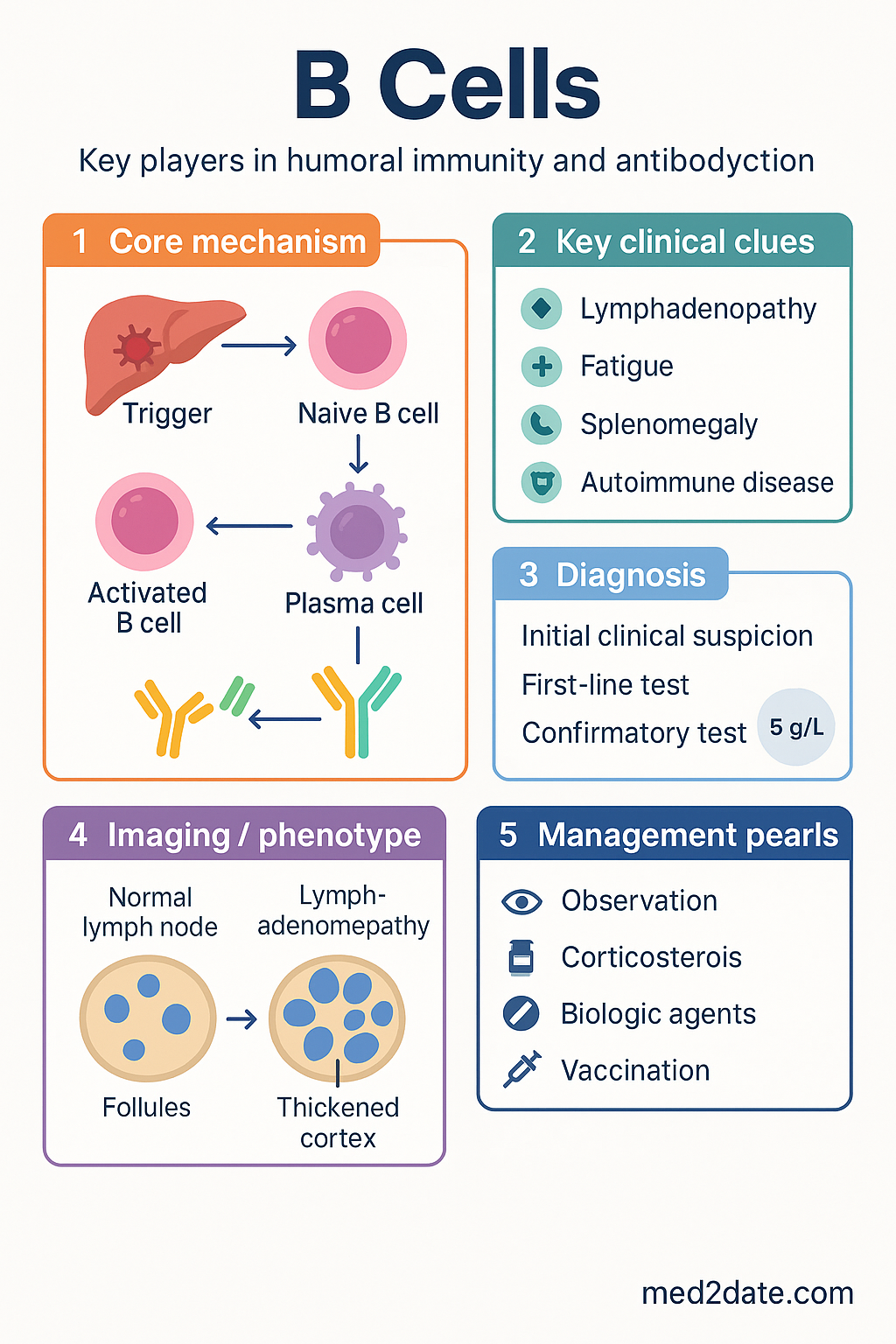
B Cells clinical infographic — pathophysiology, clinical clues, diagnosis, imaging, and management
Tap or click image to enlarge — B Cells: pathophysiology, clinical clues, diagnosis, imaging, and management.
B Cells infographic, full size

B Cell Development

Haematopoietic Origin & Bone Marrow Maturation

B lymphopoiesis begins in the foetal liver during embryonic development and shifts to the bone marrow after birth, where it continues throughout life albeit declining with age. The process is orchestrated by transcription factors (E2A, EBF1, PAX5) and cytokine signals, principally IL-7 in humans.

Stage Key Molecular Events Surface Markers
Pro-B cell D-J rearrangement of Ig heavy chain (IGH); RAG-1/RAG-2 active CD34+, CD10+, CD19+, CD79a+
Pre-B cell V-DJ rearrangement complete; μ heavy chain expressed with surrogate light chain (VpreB + λ5) as pre-BCR CD19+, CD10+, cytoplasmic μ+, pre-BCR+
Immature B cell V-J rearrangement of light chain (κ then λ); surface IgM expressed CD19+, IgM+, IgD−
Transitional B cell Emigration from marrow to spleen; BAFF-dependent survival CD19+, IgM++, CD24++, CD38++
Mature naïve B cell Co-expression of IgM and IgD via alternative mRNA splicing; quiescent, antigen-inexperienced CD19+, CD20+, IgM+, IgD+, CD27−

V(D)J Recombination

The extraordinary diversity of the B cell receptor repertoire (~1011 unique specificities) is generated by somatic recombination of variable (V), diversity (D), and joining (J) gene segments. The recombination-activating genes RAG-1 and RAG-2 recognise recombination signal sequences (RSS) flanking each segment and introduce double-strand breaks, which are resolved by non-homologous end-joining (NHEJ) machinery including Artemis, DNA-PKcs, Ku70/Ku80, and XRCC4/ligase IV.

🚨
Clinical significance: Defects in RAG-1, RAG-2, Artemis, or DNA-PKcs cause severe combined immunodeficiency (SCID) — a medical emergency presenting in early infancy with failure to thrive, opportunistic infections, and absent lymphocytes. Australian newborn screening (heel-prick TREC assay) detects most cases of T−B− NK+ SCID. Refer urgently to a paediatric immunology centre (e.g., Sydney Children's Hospital, Royal Children's Hospital Melbourne).

Central Tolerance

Immature B cells in the marrow undergo negative selection to remove autoreactive clones:

  • Receptor editing: Secondary light-chain gene rearrangement to alter specificity (preferred mechanism).
  • Clonal deletion: Apoptosis if receptor editing fails to abolish self-reactivity.
  • Anergy: Functional silencing of moderately self-reactive cells that emigrate but are non-responsive.

Failure of central tolerance contributes to autoimmune disease; in SLE, evidence of defective receptor editing has been demonstrated in Australian patient cohorts.

B Cell Receptor Structure

Membrane Immunoglobulin

The antigen-binding component of the BCR is membrane immunoglobulin (mIg), comprising two identical heavy chains and two identical light chains linked by disulphide bonds forming a Y-shaped molecule. Each chain contains a variable (V) domain responsible for antigen recognition and constant (C) domains that define isotype and effector function.

Component Structure Function
Heavy chain (membrane form) VH + 3–4 CH domains + transmembrane anchor + cytoplasmic tail Determines isotype (μ, δ, γ, α, ε); transmembrane anchor retains Ig in membrane
Light chain (κ or λ) VL + CL domain Contributes to antigen-binding site; κ:λ ratio ~2:1 in humans
Igα (CD79a) / Igβ (CD79b) Disulphide-linked heterodimer; each chain has one extracellular Ig-like domain, transmembrane region, and ITAM-containing cytoplasmic tail Signal transduction: ITAM phosphorylation by Src-family kinases (Lyn, Fyn, Blk) initiates downstream signalling

Antigen-Binding Site

The antigen-binding site (paratope) is formed by six complementarity-determining regions (CDRs) — three from the heavy chain (CDR-H1, CDR-H2, CDR-H3) and three from the light chain (CDR-L1, CDR-L2, CDR-L3). CDR-H3, encoded by the V-D-J junction, is the most hypervariable and often the dominant contributor to antigen specificity.

Co-Receptors & Accessory Molecules

BCR signalling is modulated by co-receptors that lower the activation threshold or provide inhibitory signals:

  • CD19/CD21/CD81 complex: CD21 (complement receptor 2, CR2) binds C3d-opsonised antigen, dramatically lowering the BCR activation threshold (up to 1,000–10,000 fold).
  • CD22 (Siglec-2): Inhibitory receptor containing ITIMs; recruits SHP-1 phosphatase to dampen signalling.
  • FcγRIIB (CD32B): Inhibitory Fc receptor; co-crosslinking with BCR by immune complexes triggers ITIM-mediated apoptosis or anergy — a key peripheral tolerance mechanism.

Activation Mechanisms

T-Dependent Activation

Protein antigens require T cell help for optimal B cell responses. The process involves:

1
Antigen Capture & Processing
Naïve B cells in secondary lymphoid organs bind soluble or FDC-bound antigen via BCR, internalise it, process it, and present peptide–MHC II complexes on the cell surface.
2
T–B Interaction at the T–B Border
Cognate T follicular helper (Tfh) cells recognise peptide–MHC II on the B cell. Critical co-stimulatory signals are delivered: CD40L (T cell) engages CD40 (B cell), and ICOS–ICOSL interaction provides survival signals.
3
Cytokine Signals Direct Isotype
Tfh-derived cytokines determine class-switch recombination: IL-4 → IgG1/IgE; IL-21 → IgG1/IgG3; IFN-γ → IgG2; TGF-β → IgA. This is clinically relevant in vaccine design and immunodeficiency workup.
4
Germinal Centre Entry
Activated B cells enter B cell follicles and establish germinal centres (GC), forming a dark zone (centroblasts, rapid proliferation + SHM) and a light zone (centrocytes, selection by FDC-trapped antigen and Tfh).

T-Independent Activation

Type Antigen Examples Mechanism Clinical Relevance
TI-1 LPS, CpG DNA Polyclonal B cell activation via TLR4/TLR9 at high dose; antigen-specific at low dose Adjuvant effect in vaccines; B-1 cell responses
TI-2 Capsular polysaccharides (e.g., pneumococcal, meningococcal) Extensive BCR crosslinking by repetitive epitopes; marginal zone B cells respond Children <2 years have poor TI-2 responses (immature marginal zone); conjugate vaccines circumvent this by recruiting T cell help
⚠️
Asplenic patients in Australia: Patients without a functional spleen (congenital asplenia, surgical splenectomy, sickle cell disease) have impaired marginal zone B cell responses to encapsulated organisms. Ensure pneumococcal (23vPPV and 13vPCV) and meningococcal (MenACWY + MenB) vaccination per Australian Immunisation Handbook, with boosters. Provide an asplenic patient alert card and educate on early presentation for febrile illness.

Somatic Hypermutation & Affinity Maturation

Within germinal centres, activation-induced cytidine deaminase (AID) introduces point mutations in the variable-region genes of rearranged Ig at a rate ~106 times the background somatic mutation rate. B cells bearing BCRs with higher affinity for antigen are preferentially rescued from apoptosis by Tfh cells (positive selection); low-affinity and autoreactive clones undergo apoptosis (negative selection). This iterative process, termed affinity maturation, progressively increases serum antibody affinity over the course of an immune response.

Class-Switch Recombination

AID also mediates class-switch recombination (CSR), a deletional recombination event between switch (S) regions upstream of each constant-region gene. CSR changes the heavy-chain constant region (and therefore antibody isotype) without altering antigen specificity. Deficiency of AID causes hyper-IgM syndrome type 2 (HIGM2), characterised by elevated IgM, absent IgG/IgA/IgE, recurrent sinopulmonary infections, and lymphoid hyperplasia.

Differentiation to Plasma Cells

Plasmablast & Plasma Cell Differentiation Pathways

Activated B cells differentiate into antibody-secreting cells via two principal routes:

Extrafollicular Response

Activated B cells differentiate rapidly (within 2–3 days) into short-lived plasmablasts that secrete low-affinity, mainly IgM antibodies. Provides early protection before the germinal centre response matures (~7–10 days). Driven by signals including BAFF, APRIL, and IL-21. Short-lived plasma cells undergo apoptosis within weeks.

Germinal Centre Response

B cells that successfully undergo SHM and positive selection in the GC light zone differentiate into: (1) long-lived plasma cells that home to the bone marrow survival niche (CXCL12/CXCR4, BAFF/APRIL/BCMA, IL-6) and secrete high-affinity class-switched antibodies for months to decades; and (2) memory B cells that persist in a quiescent state and mount rapid, high-affinity secondary responses upon re-encountering antigen.

Transcriptional Regulation

Plasma cell identity is controlled by a transcriptional network:

  • PAX5, BCL-6, Bach2: Maintain B cell identity and GC phenotype; suppress plasma cell differentiation.
  • BLIMP-1 (PRDM1): Master regulator of plasma cell differentiation; represses PAX5, CIITA (MHC II), and AID.
  • IRF4 (high levels): Induces BLIMP-1; essential for plasma cell commitment.
  • XBP-1: Drives the unfolded protein response (UPR) to expand the endoplasmic reticulum, enabling massive immunoglobulin secretion (up to ~10,000 molecules/second per plasma cell).

Memory B Cells

Memory B cells express high-affinity, class-switched BCRs and reside in secondary lymphoid tissues, bone marrow, and peripheral blood. Upon antigen re-encounter, they rapidly differentiate into plasmablasts without requiring the full germinal centre programme. Surface marker phenotype: CD19+, CD20+, CD27+, IgG+ or IgA+ (class-switched). The presence of somatic hypermutations in their Ig genes is a hallmark distinguishing them from naïve B cells.

B Cell Subsets & Functional Diversity

Subset Location Key Features Primary Function
Follicular (FO) B cells B cell follicles of spleen and lymph nodes CD21++, CD23++; T-dependent responses Germinal centre formation; high-affinity class-switched antibodies
Marginal zone (MZ) B cells Splenic marginal zone CD21+, CD23−; T-independent responses; rapid IgM secretion First-line defence against blood-borne encapsulated bacteria
B-1 cells Peritoneal and pleural cavities CD5+ (B-1a) or CD5− (B-1b); self-renewing; germline-encoded BCRs Natural antibodies (IgM); innate-like responses to TI antigens
Regulatory B cells (Breg) Various tissues IL-10–secreting; CD19+, CD24++, CD38++ or CD19+, CD25+, CD71+ Suppress excessive inflammation; maintain tolerance

Clinical Relevance — B Cell Disorders

B Cell Immunodeficiencies

Disorder Genetic Defect B Cell Findings Presentation
X-linked agammaglobulinaemia (XLA, Bruton's) BTK (Bruton tyrosine kinase) Absent B cells (<1%); pre-B cell arrest Males; recurrent sinopulmonary infections from 6–12 months (post-maternal IgG decline)
Common variable immunodeficiency (CVID) Heterogeneous (ICOS, TACI, BAFF-R, CD19) Low or normal B cell numbers; impaired differentiation to plasma cells; hypogammaglobulinaemia Adolescents/adults; recurrent infections, autoimmunity, granulomatous disease, increased lymphoma risk
Hyper-IgM syndromes CD40LG (X-linked), CD40, AID, UNG Elevated IgM; absent IgG, IgA, IgE; defective CSR Recurrent infections; opportunistic infections (PJP, Cryptosporidium) in CD40L/CD40 defects

B Cell Malignancies

B cell malignancies are classified by the developmental stage at which transformation occurs:

  • Precursor B-ALL: Most common childhood cancer; CD10+, CD19+, TdT+; translocations include t(12;21) ETV6-RUNX1 (good prognosis) and t(9;22) BCR-ABL1 (poor prognosis without TKI therapy).
  • CLL/SLL: Most common adult leukaemia in Australia; mature B cells co-expressing CD5 and CD23; smudge cells on blood film; prognostic factors include IGHV mutation status, del(17p)/TP53 mutation, and ZAP-70 expression.
  • Diffuse large B cell lymphoma (DLBCL): Most common aggressive NHL; R-CHOP (rituximab, cyclophosphamide, doxorubicin, vincristine, prednisolone) is first-line; PBS-subsidised rituximab.
  • Follicular lymphoma: Indolent GC-derived lymphoma; t(14;18) BCL2-IGH; watch-and-wait appropriate for asymptomatic low-burden disease.

B Cell–Mediated Autoimmunity

B cells contribute to autoimmunity through autoantibody production, antigen presentation to autoreactive T cells, and pro-inflammatory cytokine secretion (TNF-α, IL-6, lymphotoxin). Key examples in Australian clinical practice:

  • Systemic lupus erythematosus (SLE): Anti-dsDNA, anti-Smith antibodies; B cell hyperactivity; belimumab (anti-BAFF) PBS-authorised.
  • Rheumatoid arthritis (RA): Rheumatoid factor (RF), anti-CCP antibodies; rituximab PBS-authorised for methotrexate-refractory disease.
  • ANCA-associated vasculitis: Rituximab now first-line for severe GPA/MPA per RACP/ARA guidelines; PBS Authority Required.
  • Multiple sclerosis: Ocrelizumab (anti-CD20) PBS-authorised for relapsing and primary progressive MS.

Investigations

Available
Serum Immunoglobulin Quantification (IgG, IgA, IgM, IgE)
MBS Item 65070 (Immunoglobulin quantitation — 3 classes). Essential first-line test for suspected immunodeficiency. Age-adjusted paediatric reference ranges are critical. Check pre-IVIG levels for IgG trough monitoring.
Available
B Cell Subset Enumeration by Flow Cytometry
Panel: CD19, CD20, CD27, IgD, IgM, CD38, CD24. Distinguishes naïve, memory, switched memory, transitional, and plasmablast subsets. Available at major hospital immunology laboratories (e.g., SA Pathology, RCPA-accredited).
Available
Specific Antibody Responses (Post-Vaccination Titres)
Assess functional antibody responses to protein antigens (tetanus, diphtheria) and polysaccharide antigens (pneumococcal serotypes). Pre- and post-vaccination (4–6 weeks) comparison required. MBS Item 65070 applies.
Referral
Lymphocyte Proliferation Assays
Assesses T cell function (mitogens, recall antigens, alloantigens). Required if combined immunodeficiency suspected. Available at specialist immunology centres only.
Specialist
Genetic/Genomic Testing
Targeted gene panels (BTK, CD40LG, AID) or whole-exome sequencing for primary immunodeficiency. Available via public genetics services (e.g., Victorian Clinical Genetics Services, NSW Health Pathology). Genetic counselling recommended pre-test.
Available
Serum Free Light Chains (κ/λ ratio)
MBS Item 66825. Monoclonal plasma cell disorders (myeloma, AL amyloidosis). Ratio outside 0.26–1.65 warrants further workup including serum protein electrophoresis and urine Bence-Jones protein.
Available
Autoantibody Panel (RF, anti-CCP, ANA, anti-dsDNA, ANCA)
MBS Items 65060 (autoantibody screen), 65070, 69400 (ANCA). For investigation of suspected autoimmune disease mediated by B cell autoantibody production.

B Cell–Targeting Therapies

💊
Rituximab
MabThera® · Riximyo® · Anti-CD20 monoclonal antibody
Adult dose 375 mg/m² IV weekly × 4 (lymphoma) or 1,000 mg IV × 2 (RA, day 1 & 15) or 375 mg/m² IV weekly × 4 then maintenance q2–3 months (ANCA vasculitis)
Paediatric dose 375 mg/m² IV weekly × 4 (off-label in nephrotic syndrome, refractory autoimmune cytopenias)
Route IV infusion (SC formulation available for maintenance in lymphoma)
Key adverse effects Infusion reactions (premedicate with paracetamol, antihistamine, corticosteroid); HBV reactivation (screen HBsAg, anti-HBc); progressive multifocal leukoencephalopathy (rare); late-onset neutropenia; hypogammaglobulinaemia with prolonged use
PBS status Authority Required — DLBCL, FL, CLL, RA (MTX-refractory), pemphigus vulgaris, ANCA vasculitis
💊
Ocrelizumab
Ocrevus® · Anti-CD20 monoclonal antibody (humanised)
Adult dose 300 mg IV initial, then 300 mg IV at week 2, then 600 mg IV every 6 months
Indication Relapsing-remitting MS; primary progressive MS
PBS status Authority Required — Relapsing MS, primary progressive MS
💊
Belimumab
Benlysta® · Anti-BAFF/BLyS monoclonal antibody
Adult dose 10 mg/kg IV at weeks 0, 2, 4, then every 4 weeks; or 200 mg SC weekly
Indication Active SLE despite standard therapy; active lupus nephritis
PBS status Authority Required — SLE (autoantibody-positive, inadequate response to standard Rx)
💊
Ibrutinib
Imbruvica® · BTK inhibitor
Adult dose 420 mg PO daily (CLL/MCL); 560 mg PO daily (WM)
Mechanism Irreversible inhibition of Bruton tyrosine kinase; blocks BCR signalling, promotes apoptosis of malignant B cells
PBS status Authority Required — CLL/SLL (1st line with venetoclax, or relapsed), MCL, WM

Special Populations

🤰
Pregnancy
Rituximab
Category D. Crosses placenta from second trimester (FcRn-mediated). Neonatal B cell depletion reported. Avoid if possible; if essential (e.g., life-threatening ANCA vasculitis), administer before week 20 if feasible. Monitor neonatal B cells and immunoglobulins post-delivery.
Belimumab
Category B3. Limited human data. Animal studies show no teratogenicity. Use only if benefit clearly outweighs risk. Registry data collection ongoing.
Ibrutinib
Category D. Contraindicated in pregnancy. Effective contraception required during and for 1 month after therapy.
👶
Paediatrics
Immunoglobulin replacement
First-line for paediatric XLA and symptomatic CVID. IVIG 400–600 mg/kg every 3–4 weeks or SCIG 100–200 mg/kg weekly. Monitor IgG trough levels (target ≥5 g/L, ideally >7 g/L for pulmonary protection). MBS-rebated in diagnosed primary immunodeficiency.
Vaccination timing
Live vaccines (MMR, varicella) contraindicated in children on immunoglobulin replacement — defer for 8–11 months post-last IVIG dose. Inactivated vaccines may be given but response may be suboptimal; check post-vaccination titres.
🧓
Elderly
Immunosenescence
Age-related decline in naïve B cell output (thymic involution equivalent in marrow) with accumulation of age-associated B cells (ABCs; CD21−CD11c+). Reduced GC responses and vaccine efficacy. Higher risk of CLL (median age at diagnosis 70 years). Monitor for hypogammaglobulinaemia on B cell–depleting therapy.
🫘
Renal Impairment
Ibrutinib
No dose adjustment required for renal impairment (minimal renal excretion). However, monitor closely as renal disease may increase bleeding risk (ibrutinib is an irreversible BTK inhibitor affecting platelet function).
IVIG
Sucrose-containing IVIG preparations contraindicated in severe renal impairment (osmotic nephrosis risk). Use non-sucrose stabilised products. Monitor renal function during infusion.
🫁
Hepatic Impairment
Ibrutinib
Hepatic metabolism (CYP3A4). Child-Pugh A: no adjustment. Child-Pugh B: reduce to 140 mg daily. Child-Pugh C: avoid or use with extreme caution.
Rituximab
Hepatitis B reactivation is a serious risk. Screen all patients (HBsAg, anti-HBc) prior to commencing. If positive, co-administer antiviral prophylaxis (entecavir) for ≥12 months post-last rituximab dose. Monitor HBV DNA.
🛡️
Immunocompromised
Infection risk on B cell depletion
Anti-CD20 therapy depletes B cells for 6–12 months post-treatment. Monitor serum IgG levels every 3–6 months during ongoing therapy; if IgG <4 g/L, consider immunoglobulin replacement. PML (JC virus) risk — educate patients about new neurological symptoms. Ensure PJP prophylaxis where co-immunosuppressed (e.g., with high-dose corticosteroids).

Aboriginal and Torres Strait Islander Health

Aboriginal and Torres Strait Islander Health Considerations
Rheumatic Heart Disease
ATSI communities, particularly in Northern Australia (NT, QLD, WA), experience the highest rates of rheumatic heart disease (RHD) globally. RHD is an antibody-mediated post-streptococcal autoimmune process involving cross-reactive B cell responses. Penicillin prophylaxis and specialist cardiology follow-up are essential. ARF/RHD registers operate in NT (Top End), QLD (TSV), and WA (Kimberley).
Infectious Disease Burden
Higher rates of Streptococcus pyogenes skin infections and invasive pneumococcal disease in remote ATSI communities. Impaired functional antibody responses to polysaccharide vaccines in children with chronic suppurative lung disease. Ensure pneumococcal conjugate and booster schedules per Australian Immunisation Handbook with particular attention in remote communities.
Specialist Access
Immunology and haematology specialist services are concentrated in metropolitan centres. ATSI patients in remote and very remote areas may experience delays in diagnosis of primary immunodeficiency and B cell malignancies. Telehealth immunology consultations are available via the Australian Telehealth Network. Retrieval services via CareFlight (NT) or RFDS may be required.
Cultural Safety
Involve Aboriginal Health Workers and Liaison Officers in the care team. Use culturally appropriate patient education materials (e.g., from RHDAustralia). Acknowledge kinship obligations and community-based healing practices. Ensure informed consent processes are culturally appropriate and language-concordant.
Autoimmune Disease
ATSI Australians may present with more severe SLE and rheumatoid arthritis at younger ages. Barriers to specialist rheumatology/immunology referral include geographic remoteness, cost, and health system distrust. Self-administered SC therapies (e.g., SC belimumab, SCIG) may improve adherence in remote settings if nursing support is available.

📚 References

  1. 1. Murphy K, Weaver C. Janeway's Immunobiology. 10th ed. New York: Garland Science; 2022. Chapters 7–8: B cell development, activation and differentiation.
  2. 2. Pieper K, Grimbacher B, Eibel H. B-cell biology and development. J Allergy Clin Immunol. 2013;131(4):959–971.
  3. 3. Tangye SG, Ma CS, Brink R, et al. The good, the bad and the ugly — TFH cells in human health and disease. Nat Rev Immunol. 2013;13(6):412–426.
  4. 4. Australian Institute of Health and Welfare (AIHW). Cancer data in Australia. Canberra: AIHW; 2024. Cat. no. CAN 139.
  5. 5. Australasian Society of Clinical Immunology and Allergy (ASCIA). Primary Immunodeficiency (PID) Guide for Health Professionals. ASCIA, 2023. Available at: https://www.allergy.org.au
  6. 6. National Health and Medical Research Council (NHMRC). The Australian Immunisation Handbook. 12th ed. Canberra: Australian Government Department of Health; updated 2024. Available at: https://immunisationhandbook.health.gov.au
  7. 7. Royal Australasian College of Physicians (RACP). Position statement on rituximab use in ANCA-associated vasculitis. Sydney: RACP; 2022.
  8. 8. Australian Rheumatology Association (ARA). ARA clinical guidance for the management of rheumatoid arthritis. 2023. Available at: https://www.rheumatology.org.au
  9. 9. Pharmaceutical Benefits Scheme (PBS). PBS Schedule of Pharmaceutical Benefits. Australian Government Department of Health. Available at: https://www.pbs.gov.au. Accessed 2024.
  10. 10. RHDAustralia (RHD Australia). The 2020 Australian guideline for prevention, diagnosis and management of acute rheumatic fever and rheumatic heart disease. 3rd ed. Menzies School of Health Research; 2020.
  11. 11. Warnatz K, Salzer U, Rizzi M, et al. B-cell activating factor receptor deficiency is associated with an adult-onset antibody deficiency syndrome in humans. Proc Natl Acad Sci USA. 2009;106(33):13945–13950.
  12. 12. Smith KGC, Light A, O'Reilly LA, et al. bcl-2 transgene expression inhibits apoptosis in the germinal centre and reveals differences in the selection of memory B cells and bone marrow antibody-forming cells. J Exp Med. 2000;191(3):475–484.
  13. 13. Australian Commission on Safety and Quality in Health Care (ACSQHC). National Safety and Quality Health Service Standards. 2nd ed. Sydney: ACSQHC; 2021.
for PBS-listed medicines at participating pharmacies.
Cultural safety
Engagement with Aboriginal Community Controlled Health Organisations (ACCHOs) is essential. Cultural safety training for non-Indigenous clinicians, use of Aboriginal Health Workers and Liaison Officers, and incorporation of traditional healing practices alongside Western medicine improve treatment adherence and outcomes. Avoidance of eye contact, respect for gender-sensitive examination practices, and understanding of sorry business protocols are critical elements of culturally safe care.
Medication adherence
Complex DMARD regimens with frequent monitoring requirements present adherence challenges. Long-acting depot injections (e.g., methotrexate SC) may improve adherence compared to oral regimens. Community pharmacy partnerships through the Indigenous Pharmacy Programmes improve medication management.
Specific conditions
Rheumatic heart disease (RHD) requires secondary prophylaxis with benzathine penicillin G (BPG) 1.2 MU IM every 3–4 weeks for a minimum of 10 years or until age 21 (whichever is longer). RHD registers (e.g., NT RHD Register) facilitate recall and follow-up. The Australian RHD Endgame Strategy targets elimination by 2031.
Referral pathways
Referral through ACCHOs and Aboriginal Hospital Liaison Officers (AHLOs) improves engagement. The Specialist Outreach Assistance Programme provides funded specialist visits to remote communities. NT, WA, and QLD have specific rheumatology outreach programmes targeting Indigenous communities.

📚 References

  1. 1. Australian Institute of Health and Welfare (AIHW). Autoimmune disease in Australia. Cat. no. PHE 312. Canberra: AIHW; 2023.
  2. 2. Fraenkel L, Bathon JM, England BR, et al. 2021 American College of Rheumatology guideline for the treatment of rheumatoid arthritis. Arthritis Care Res. 2021;73(7):924–939.
  3. 3. Fanouriakis A, Kostopoulou M, Alber K, et al. 2019 update of the EULAR recommendations for the management of systemic lupus erythematosus. Ann Rheum Dis. 2019;78(6):736–745.
  4. 4. Chung SA, Langford CA, Maz M, et al. 2021 American College of Rheumatology/Vasculitis Foundation guideline for the management of antineutrophil cytoplasmic antibody-associated vasculitis. Arthritis Care Res. 2021;73(11):1583–1599.
  5. 5. Smolen JS, Landewé RBM, Bijlsma JWJ, et al. EULAR recommendations for the management of rheumatoid arthritis with synthetic and biological disease-modifying antirheumatic drugs: 2022 update. Ann Rheum Dis. 2023;82(1):3–18.
  6. 6. Australian Technical Advisory Group on Immunisation (ATAGI). Australian Immunisation Handbook. Australian Government Department of Health; 2024. Available from: immunisationhandbook.health.gov.au.
  7. 7. Rheumatic Heart Disease Australia (RHDAustralia). The 2020 Australian guideline for prevention, diagnosis, and management of acute rheumatic fever and rheumatic heart disease. 3rd ed. Darwin: Menzies School of Health Research; 2020.
  8. 8. Pharmaceutical Benefits Scheme (PBS). PBS Schedule. Australian Government Department of Health. Available from: pbs.gov.au. Accessed 2024.
  9. 9. Agarwal S, Cunnington J, Nossent J. Autoimmune disease in Indigenous Australians: a systematic review. Int J Rheum Dis. 2021;24(12):1487–1498.
  10. 10. Pisetsky DS. Antinuclear antibody testing — misunderstood or misused? Clin Immunol. 2023;255:109717.
  11. 11. Bertsias GK, Tektonidou M, Amoura Z, et al. Joint European League Against Rheumatism and European Renal Association–European Dialysis and Transplant Association (EULAR/ERA-EDTA) recommendations for the management of adult and paediatric lupus nephritis. Ann Rheum Dis. 2012;71(11):1771–1782.
  12. 12. Ledingham J, Deighton C; British Society for Rheumatology Standards, Audit and Guidelines Working Group. Update on the British Society for Rheumatology guidelines for prescribing TNFα blockers in adults with rheumatoid arthritis. Rheumatology. 2005;44(2):155–158.
  13. 13. National Health and Medical Research Council (NHMRC). National statement on ethical conduct in human research. Canberra: NHMRC; 2023 (updated).
for PBS-listed medicines at participating pharmacies.
Cultural safety
Engagement with Aboriginal Community Controlled Health Organisations (ACCHOs) is essential. Cultural safety training for non-Indigenous clinicians, use of Aboriginal Health Workers and Liaison Officers, and incorporation of traditional healing practices alongside Western medicine improve treatment adherence and outcomes. Avoidance of eye contact, respect for gender-sensitive examination practices, and understanding of sorry business protocols are critical elements of culturally safe care.
Medication adherence
Complex DMARD regimens with frequent monitoring requirements present adherence challenges. Long-acting depot injections (e.g., methotrexate SC) may improve adherence compared to oral regimens. Community pharmacy partnerships through the Indigenous Pharmacy Programmes improve medication management.
Specific conditions
Rheumatic heart disease (RHD) requires secondary prophylaxis with benzathine penicillin G (BPG) 1.2 MU IM every 3–4 weeks for a minimum of 10 years or until age 21 (whichever is longer). RHD registers (e.g., NT RHD Register) facilitate recall and follow-up. The Australian RHD Endgame Strategy targets elimination by 2031.
Referral pathways
Referral through ACCHOs and Aboriginal Hospital Liaison Officers (AHLOs) improves engagement. The Specialist Outreach Assistance Programme provides funded specialist visits to remote communities. NT, WA, and QLD have specific rheumatology outreach programmes targeting Indigenous communities.

📚 References

  1. 1. Australian Institute of Health and Welfare (AIHW). Autoimmune disease in Australia. Cat. no. PHE 312. Canberra: AIHW; 2023.
  2. 2. Fraenkel L, Bathon JM, England BR, et al. 2021 American College of Rheumatology guideline for the treatment of rheumatoid arthritis. Arthritis Care Res. 2021;73(7):924–939.
  3. 3. Fanouriakis A, Kostopoulou M, Alber K, et al. 2019 update of the EULAR recommendations for the management of systemic lupus erythematosus. Ann Rheum Dis. 2019;78(6):736–745.
  4. 4. Chung SA, Langford CA, Maz M, et al. 2021 American College of Rheumatology/Vasculitis Foundation guideline for the management of antineutrophil cytoplasmic antibody-associated vasculitis. Arthritis Care Res. 2021;73(11):1583–1599.
  5. 5. Smolen JS, Landewé RBM, Bijlsma JWJ, et al. EULAR recommendations for the management of rheumatoid arthritis with synthetic and biological disease-modifying antirheumatic drugs: 2022 update. Ann Rheum Dis. 2023;82(1):3–18.
  6. 6. Australian Technical Advisory Group on Immunisation (ATAGI). Australian Immunisation Handbook. Australian Government Department of Health; 2024. Available from: immunisationhandbook.health.gov.au.
  7. 7. Rheumatic Heart Disease Australia (RHDAustralia). The 2020 Australian guideline for prevention, diagnosis, and management of acute rheumatic fever and rheumatic heart disease. 3rd ed. Darwin: Menzies School of Health Research; 2020.
  8. 8. Pharmaceutical Benefits Scheme (PBS). PBS Schedule. Australian Government Department of Health. Available from: pbs.gov.au. Accessed 2024.
  9. 9. Agarwal S, Cunnington J, Nossent J. Autoimmune disease in Indigenous Australians: a systematic review. Int J Rheum Dis. 2021;24(12):1487–1498.
  10. 10. Pisetsky DS. Antinuclear antibody testing — misunderstood or misused? Clin Immunol. 2023;255:109717.
  11. 11. Bertsias GK, Tektonidou M, Amoura Z, et al. Joint European League Against Rheumatism and European Renal Association–European Dialysis and Transplant Association (EULAR/ERA-EDTA) recommendations for the management of adult and paediatric lupus nephritis. Ann Rheum Dis. 2012;71(11):1771–1782.
  12. 12. Ledingham J, Deighton C; British Society for Rheumatology Standards, Audit and Guidelines Working Group. Update on the British Society for Rheumatology guidelines for prescribing TNFα blockers in adults with rheumatoid arthritis. Rheumatology. 2005;44(2):155–158.
  13. 13. National Health and Medical Research Council (NHMRC). National statement on ethical conduct in human research. Canberra: NHMRC; 2023 (updated).