Home Immunology X-linked Agammaglobulinemia (XLA)

X-linked Agammaglobulinemia (XLA)

📋 Key Information Summary

📋
  • X-linked agammaglobulinaemia (XLA) is a primary immunodeficiency caused by pathogenic variants in the BTK (Bruton tyrosine kinase) gene on Xq22, leading to a block in B-cell maturation at the pre-B stage.
  • Affected males have a near-complete absence of mature B lymphocytes (<1 % of peripheral lymphocytes; absolute B-cell count <0.02 × 10⁹/L) and profoundly reduced serum immunoglobulins of all isotypes.
  • Onset of recurrent sinopulmonary infections typically occurs after 6 months of age once passively transferred maternal IgG has waned.
  • Encapsulated bacteria (Streptococcus pneumoniae, Haemophilus influenzae type b, Staphylococcus aureus) are the most common pathogens; enteroviral and Giardia infections also raise clinical suspicion.
  • Diagnosis requires flow-cytometric demonstration of absent/reduced CD19⁺ B cells, profoundly low IgG (<2 g/L), IgA and IgM, plus confirmation by BTK gene sequencing.
  • Immunoglobulin replacement therapy (IRT) — either intravenous (IVIG) every 3–4 weeks or subcutaneous (SCIG) weekly — is the cornerstone of lifelong management and is PBS Authority Required.
  • Target trough IgG ≥ 8–10 g/L is associated with reduced pulmonary infections; some centres aim ≥ 10 g/L in patients with bronchiectasis.
  • Live vaccines (OPV, BCG, MMR, varicella, yellow fever) are contraindicated; household contacts should not receive oral polio vaccine.
  • Annual pulmonary function testing and HRCT are recommended to monitor for bronchiectasis, the major long-term complication.
  • Haematopoietic stem cell transplantation (HSCT) is curative but generally reserved for patients with severe complications or poor IRT response; it is performed at major Australian paediatric centres (Melbourne, Sydney).
  • Carrier females are usually asymptomatic but may have skewed X-inactivation causing mild hypogammaglobulinaemia in approximately 10–15 %.
  • Genetic counselling should be offered to all families; prenatal and preimplantation genetic diagnosis are available in Australian centres.
  • ATSI communities face additional barriers to timely diagnosis and IRT access; engagement with Indigenous liaison officers and RFDS-supported SCIG programmes is essential.
  • Prognosis with early diagnosis, adequate IRT, and proactive lung surveillance has improved substantially; many patients now survive into adulthood with preserved lung function.

Introduction & Australian Epidemiology

X-linked agammaglobulinaemia (XLA; OMIM #300755), first described by Colonel Ogden Bruton in 1952, is the prototypical primary antibody deficiency. It accounts for approximately 85 % of all cases of agammaglobulinaemia and represents roughly 6–9 % of all diagnosed primary immunodeficiencies (PIDs) worldwide.

The disorder results from pathogenic variants in the BTK (Bruton tyrosine kinase) gene located on chromosome Xq22.1. Over 1 600 unique mutations have been catalogued (BTKbase, last updated 2024), with no single hotspot mutation predominating, although missense mutations in the kinase domain are the most frequently identified class.

Australian incidence: Based on data from the Australian Primary Immunodeficiency (AusPID) registry and the Australasian Society of Clinical Immunology and Allergy (ASCIA), the estimated birth prevalence of XLA in Australia is approximately 1 in 100 000–200 000 live male births. In practice, this translates to approximately 1–3 new diagnoses per year nationally. Median age at diagnosis remains 2–3 years, although early genomic testing is reducing this interval in families with known variants.

XLA affects all ethnic groups and geographic regions. There is no convincing evidence of founder effects in Australian populations, although consanguinity in some communities may elevate carrier frequency. Males of any ancestry are equally at risk.
⚠️
Key clinical trigger: Any male child presenting with ≥ 2 significant bacterial infections of the respiratory tract after 6 months of age, particularly with a family history suggestive of X-linked inheritance, should undergo immunoglobulin quantification and lymphocyte subset analysis before further invasive workup.
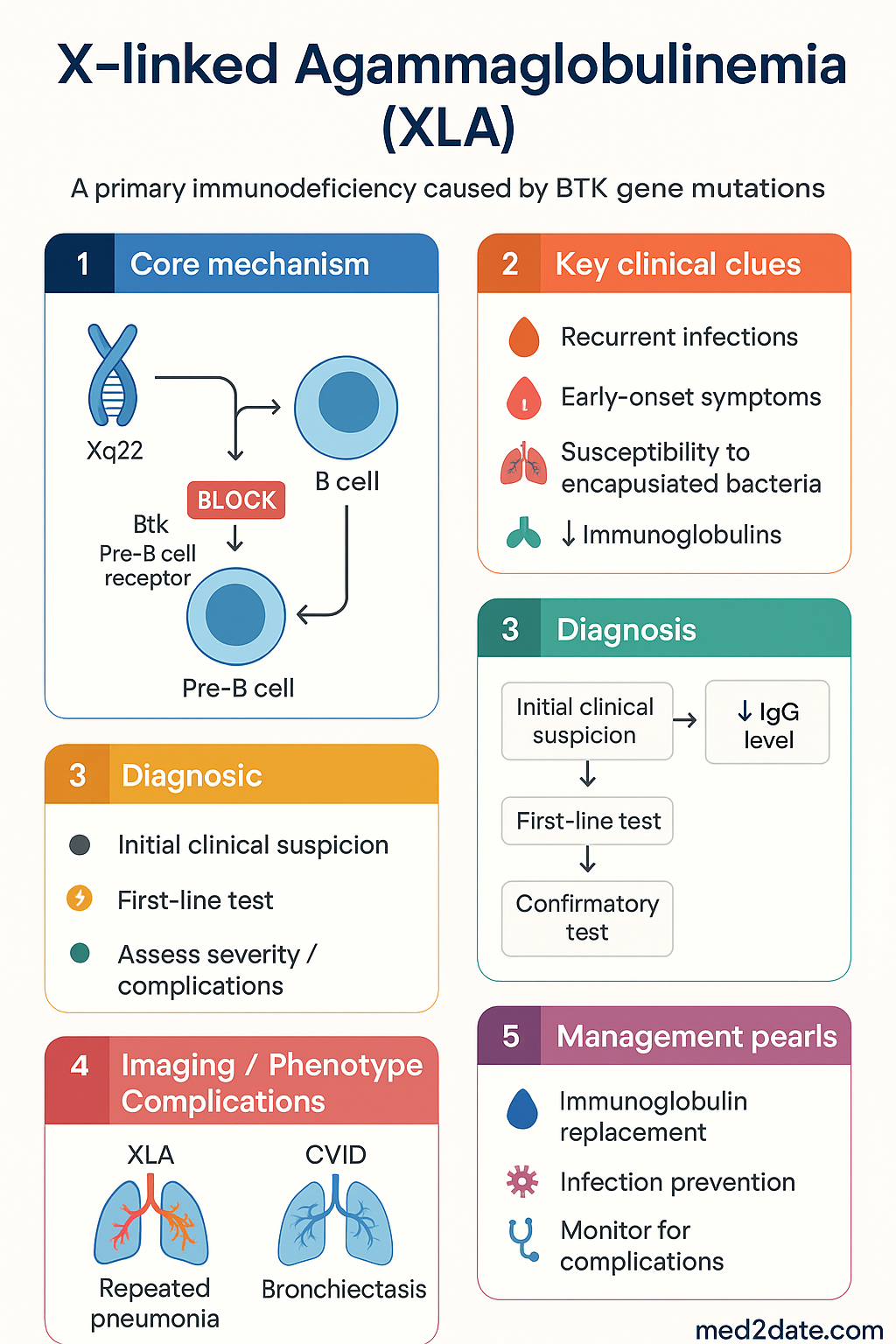
X-linked Agammaglobulinemia (XLA) clinical infographic — pathophysiology, clinical clues, diagnosis, imaging, and management
Tap or click image to enlarge — X-linked Agammaglobulinemia (XLA): pathophysiology, clinical clues, diagnosis, imaging, and management.
X-linked Agammaglobulinemia (XLA) infographic, full size

BTK Mutation & B-Cell Development

The BTK Gene and Protein

Bruton tyrosine kinase (BTK) is a 659-amino-acid non-receptor tyrosine kinase belonging to the Tec kinase family. The gene spans 37.5 kb of genomic DNA comprising 19 exons. BTK contains five functional domains:

  • PH (pleckstrin homology) domain — binds phosphatidylinositol-3,4,5-trisphosphate (PIP₃), recruiting BTK to the plasma membrane.
  • TH (Tec homology) domain — contains a zinc-finger motif involved in protein–protein interactions.
  • SH3 domain — mediates intramolecular and intermolecular interactions.
  • SH2 domain — recognises phosphotyrosine motifs on adaptor proteins.
  • Kinase (SH1) domain — catalytic domain responsible for phosphorylation of downstream substrates (PLCγ2, NF-κB pathway components).

Mutation Spectrum

Mutation Type Approximate Frequency Typical Phenotype
Missense ~40 % Variable — some residual BTK activity; milder clinical course possible
Nonsense / Frameshift ~35 % Typically classic severe XLA; absent or truncated protein
Splice-site ~15 % Variable; depends on exon skipped
Large deletions / Intron mutations ~10 % Usually severe; may escape detection by conventional Sanger sequencing

Normal B-Cell Development & the BTK Block

In healthy individuals, B-cell lymphopoiesis proceeds through ordered stages in the bone marrow:

  1. Pro-B cell → D-J then V-DJ rearrangement of the immunoglobulin heavy chain (IgH).
  2. Pre-B cell — expresses μ heavy chain with surrogate light chain (VpreB/λ5) as the pre-B-cell receptor (pre-BCR). This is the stage where BTK signalling is essential.
  3. Immature B cell — expresses surface IgM after successful light-chain rearrangement.
  4. Mature naïve B cell — co-expresses IgM and IgD; emigrates to secondary lymphoid organs.

BTK is activated downstream of the pre-BCR and BCR via Lyn/Syk kinases → BTK autophosphorylation (Y551) → PLCγ2 activation → calcium flux and NF-κB signalling. Without functional BTK, pre-B cells fail to receive survival and proliferative signals, leading to developmental arrest at the pre-B stage and subsequent apoptosis. Consequently, affected males have <1 % mature B lymphocytes in peripheral blood.

T-cell immunity is preserved because BTK is not expressed in the T-cell lineage. Therefore, delayed-type hypersensitivity responses, viral clearance (except enteroviruses), and tumour immunosurveillance by T cells remain largely intact.

ℹ️
Important distinction: The absence of B cells differentiates XLA from common variable immunodeficiency (CVID), where B cells are present but fail to differentiate into antibody-secreting plasma cells. This distinction has direct management implications.

Clinical Presentation

Typical Presentation Timeline

Birth – 6 months
Usually asymptomatic due to transplacental maternal IgG. Severe infections in this period are rare and should prompt evaluation for more severe combined immunodeficiencies.
6 – 12 months
Maternal IgG declines below protective levels. Onset of recurrent otitis media, sinusitis, and upper respiratory tract infections. Failure to respond to standard antibiotic courses.
1 – 5 years
Recurrent lower respiratory tract infections, including bacterial pneumonia and bronchitis. Non-encapsulated organisms (Pseudomonas, Staphylococcus aureus) and atypical organisms (Mycoplasma, Ureaplasma) become prominent. Chronic diarrhoea due to Giardia lamblia or enteroviruses. Parvovirus B19-related transient aplastic crisis may occur.
Late childhood / Adulthood
If undiagnosed: progressive bronchiectasis, chronic sinusitis, enteroviral meningoencephalitis, and increased lymphoma risk. With adequate IRT: markedly reduced infection burden but residual risk of bronchiectasis.

Infection Spectrum

Site Common Pathogens Notes
Upper respiratory S. pneumoniae, H. influenzae, M. catarrhalis Otitis media, sinusitis — most common initial presentation
Lower respiratory S. pneumoniae, H. influenzae, S. aureus, Pseudomonas, Mycoplasma Pneumonia → bronchiectasis if undertreated
Gastrointestinal Giardia lamblia, enteroviruses, Campylobacter Chronic diarrhoea, malabsorption
CNS Enteroviruses (esp. ECHO), Poliovaccine strains Enteroviral meningoencephalitis — high mortality if acquired
Skin / Soft tissue S. aureus, dermatophytes Pyoderma, abscess formation
Musculoskeletal Mycoplasma, Ureaplasma Septic arthritis — unusual in immunocompetent hosts
Haematological Parvovirus B19 Transient aplastic crisis; chronic pure red cell aplasia reported

Non-Infectious Complications

  • Bronchiectasis — the most significant long-term complication, occurring in 30–50 % of patients who experienced a delay in diagnosis. Irreversible once established.
  • Autoimmune disease — reported in 10–20 % of XLA patients, including inflammatory arthritis, autoimmune haemolytic anaemia, and inflammatory bowel disease.
  • Malignancy — increased risk of lymphoma (particularly Burkitt and DLBCL subtypes) and colorectal cancer in adult XLA patients.
  • Growth retardation — secondary to chronic infection and malabsorption.
  • Enteroviral dermatomyositis-like syndrome — a distinctive, often fatal manifestation of chronic enteroviral infection in untreated XLA patients.
🚨
Red flags prompting XLA workup: Any male child with ≥ 4 ear infections in 12 months, ≥ 2 serious sinus infections in 12 months, ≥ 2 months on antibiotics with little effect, ≥ 2 pneumonias in 12 months, or a family history of confirmed PID.

Diagnosis

Diagnostic Algorithm

1
Initial Immunological Screen
Serum immunoglobulins (IgG, IgA, IgM, IgE) — expect all profoundly low (IgG < 2 g/L, IgA < 0.07 g/L, IgM < 0.1 g/L). Note: IgG may still reflect maternal antibody in infants < 6 months.
2
Lymphocyte Subset Analysis (Flow Cytometry)
CD19⁺ and CD20⁺ B cells < 1 % of lymphocytes (absolute count < 0.02 × 10⁹/L). T-cell (CD3, CD4, CD8) and NK-cell (CD16/56) numbers are normal. MBS item 71132 (lymphocyte surface antigen).
3
BTK Protein Expression
Flow cytometric assessment of intracellular BTK in monocytes (monocytes express BTK and are more accessible than B cells in XLA patients who lack B cells). Absent or markedly reduced BTK protein supports the diagnosis.
4
Genetic Confirmation
BTK gene sequencing (Sanger or NGS-based panel). If no mutation found, consider deletion/duplication analysis (MLPA) and evaluation for autosomal recessive agammaglobulinaemia genes (μ heavy chain, λ5, Igα, Igβ, BLNK, PI3KCD). Genetic testing available at Australian clinical genetics laboratories (e.g., VCGS Melbourne, SA Pathology, Sonic Healthcare).

Investigations Summary

Essential
Serum immunoglobulins (IgG, IgA, IgM)
MBS item 65070 (qualitative/quantitative immunoglobulins). Expect markedly reduced all isotypes. Available at all Australian pathology labs.
Essential
Peripheral blood lymphocyte subsets
MBS item 71132. CD19/CD20 B cells near-absent. Available at major hospital immunology labs.
Available
Intracellular BTK protein expression
Research/specialised assay available at tertiary paediatric immunology centres (RCH Melbourne, Children's Hospital Westmead).
Available
BTK gene sequencing
MBS item 73288 (gene analysis, single gene). Available at VCGS, SA Pathology, Doug Hanly Moir Pathology. Turnaround ~4–8 weeks.
Available
Specific antibody responses
Pre- and post-vaccination titres to pneumococcal serotypes and tetanus. Absent response confirms functional antibody deficiency.
Referral
High-resolution CT chest (HRCT)
Baseline at diagnosis and periodically thereafter to assess for bronchiectasis. Referral to respiratory physician if abnormal.
Referral
Pulmonary function testing
Spirometry from age 5–6 years; annual thereafter. FEV₁ decline may indicate progressive bronchiectasis.

Diagnostic Criteria (IUIS 2022)

  • Definite XLA: Male with absent/reduced CD19⁺ B cells (< 2 %), profoundly low IgG + IgA + IgM, AND a pathogenic or likely pathogenic BTK variant identified.
  • Probable XLA: Male with absent B cells + profoundly low immunoglobulins + absent/abnormal BTK protein expression, WITHOUT a confirmed mutation (possible deep intronic or regulatory variant).
  • Carrier detection: Females with a family history may show non-random X-inactivation patterns; however, carrier testing by X-chromosome inactivation assay is not routinely recommended — direct mutation detection is preferred.
⚠️
Pitfall: Do not exclude XLA based on "normal" IgG levels in an infant < 6 months — maternal IgG may mask the deficiency. Repeat testing at ≥ 6 months or proceed directly to lymphocyte subsets if clinical suspicion is high.

IVIG Treatment & Prognosis

Immunoglobulin Replacement Therapy (IRT)

Lifelong immunoglobulin replacement is the standard of care for XLA and is PBS Authority Required. IRT provides passive humoral immunity, substantially reducing the frequency and severity of bacterial infections.

💉
Intragam® P (Intragam 10)
CSL Behring · Intravenous immunoglobulin · IVIG
Adult dose 400–600 mg/kg IV every 3–4 weeks. Initial rate 0.5–1 mg/kg/min, titrate to max 8 mg/kg/min as tolerated.
Paediatric dose 400–600 mg/kg IV every 3–4 weeks. Weight-based rate escalation per local protocol.
Renal adjustment Use sucrose-free preparations (Intragam® 10 contains no sucrose). Reduce infusion rate if eGFR < 30 mL/min. Monitor renal function.
PBS status ✔ PBS Authority Required
💊
Subcutaneous IG (SCIG)
Hizentra® / Subcuvia® · Subcutaneous immunoglobulin
Adult dose 100–200 mg/kg SC weekly (or equivalent cumulative monthly dose via higher-volume infusion every 2 weeks). Self-administered via infusion pump or rapid push.
Paediatric dose Same weight-based dosing; infants may require caregiver-administered infusion with play-therapy support.
Advantages Steady-state IgG levels (no trough), reduced systemic adverse reactions, home-based administration, RFDS-compatible for remote patients.
PBS status ✔ PBS Authority Required

IgG Trough Level Targets

IgG Trough Target Clinical Context
≥ 5 g/L Absolute minimum; below this level, infection risk rises sharply
≥ 8 g/L Standard target for most patients; associated with significant reduction in pneumonia
≥ 10 g/L Preferred target in patients with established bronchiectasis, structural lung disease, or refractory infections

Monitoring on IRT

  • Check IgG trough level before each infusion (for IVIG) or quarterly (for SCIG). Aim ≥ 8 g/L.
  • Annual spirometry (from age 6) and HRCT every 2–5 years or if FEV₁ declines.
  • Annual complete blood count — monitor for parvovirus-related anaemia, lymphoproliferative disease.
  • Liver function tests and hepatitis C PCR (historically relevant; modern IG products have negligible risk).
  • Document infection frequency: ≥ 3 significant bacterial infections/year despite trough ≥ 8 g/L warrants dose escalation or evaluation for complications.

Adverse Effects of IVIG

  • Common (1–15 %): Headache, chills, myalgia, flushing, back pain — usually managed by slowing infusion rate and pre-medication with paracetamol ± antihistamine.
  • Rare (<1 %): Anaphylaxis (especially in IgA-deficient patients receiving IgA-containing products), aseptic meningitis, thromboembolic events, haemolytic anaemia (anti-A/anti-B antibodies in some products), acute kidney injury (sucrose-containing products).
🚨
Vaccination warning: Live attenuated vaccines are CONTRAINDICATED in XLA patients. This includes oral polio vaccine (OPV/Sabin), BCG, MMR (unless post-HSCT with confirmed immune reconstitution), varicella, yellow fever, and live-attenuated influenza vaccine (LAIV/FluMist). Household contacts should receive inactivated polio vaccine (IPV/Salk) only.

Antibiotic Prophylaxis & Acute Infection Management

  • Long-term prophylaxis: Many immunologists recommend low-dose oral antibiotics (e.g., amoxicillin 250–500 mg PO daily in adults; 15–25 mg/kg/day in children, PBS General Benefit) or azithromycin (500 mg PO three times per week) for patients with recurrent sinopulmonary infections or bronchiectasis, per eTG Antibiotic guidelines.
  • Acute infections: Treat promptly and aggressively with appropriate antibiotics. Lower threshold for IV antibiotics and hospital admission compared to immunocompetent patients. Consider broader coverage (including atypical organisms) in respiratory infections.
  • Giardia: Metronidazole 400 mg PO TDS for 5–7 days (adults) or tinidazole 50 mg/kg (max 2 g) as a single dose. PBS General Benefit.

Curative Therapy — Haematopoietic Stem Cell Transplantation (HSCT)

HSCT can reconstitute the B-cell lineage and is potentially curative. In Australia, it is considered when:

  • Progressive bronchiectasis despite optimised IRT (trough IgG consistently ≥ 10 g/L).
  • Severe enteroviral infections unresponsive to IVIG and antiviral therapy.
  • Significant autoimmune complications.
  • A matched sibling donor (MSD) is available — outcomes with MSD HSCT are excellent (>90 % survival).

Australian centres performing HSCT for PID include the Royal Children's Hospital Melbourne, The Children's Hospital at Westmead (Sydney), and Queensland Children's Hospital (Brisbane). Referral to a paediatric immunology/transplant team is mandatory.

Emerging Therapies

  • Gene therapy: Preclinical and early-phase clinical trials are investigating lentiviral vector-mediated BTK gene transfer into haematopoietic stem cells. Not yet available in Australia outside clinical trials.
  • Small-molecule BTK modulators: Primarily studied in B-cell malignancies; potential future role in modulating residual BTK activity in hypomorphic mutations.

Prognosis

With early diagnosis and adequate immunoglobulin replacement, the prognosis for XLA has improved dramatically over the past three decades. Australian registry data indicate:

  • Patients diagnosed before 2 years of age and commenced on IRT promptly have near-normal life expectancy.
  • The strongest predictor of long-term lung health is the cumulative burden of lower respiratory tract infections before IRT commencement — reinforcing the importance of early diagnosis.
  • Patients diagnosed late (after age 5) or with delayed IRT initiation have significantly higher rates of bronchiectasis and reduced lung function.
  • Survival into the 6th and 7th decades of life has been documented in well-managed patients.
  • Quality of life is generally good, particularly with SCIG home therapy. Psychological support should be offered to adolescents transitioning to independent care.

Special Populations

👶 Paediatrics
IRT initiation Commence IVIG/SCIG as soon as diagnosis is confirmed, even in asymptomatic infants, to prevent the first serious infection.
Vaccination schedule Administer all inactivated vaccines per NIP schedule. Live vaccines contraindicated. Complete 13vPCV series before first IRT dose if possible, as post-IRT vaccine responses are blunted.
Growth & development Monitor growth centiles. Chronic infection and malabsorption may impair linear growth. Paediatric endocrinology referral if significant faltering.
School attendance With adequate IRT, most children can attend school full-time. Provide education to school staff about infection avoidance and contraindicated live vaccines (e.g., if classmate receives LAIV).
🤰 Pregnancy (Carrier Females)
Carrier screening Offer genetic testing to at-risk females. Approximately 10–15 % of carriers may have mildly reduced IgG due to skewed X-inactivation.
Prenatal diagnosis Available via CVS (10–12 weeks) or amniocentesis (15–18 weeks) for known familial BTK variants. Preimplantation genetic testing (PGT-M) is available at accredited Australian IVF centres.
Pregnancy management Carrier females with hypogammaglobulinaemia may require IRT during pregnancy. IVIG is safe in pregnancy; avoid live vaccines.
👴 Transition & Adult Care
Adolescent transition Structured transition programme from paediatric to adult immunology services. Ensure understanding of self-management, infusion schedules, and when to seek emergency care.
Malignancy surveillance Adult XLA patients have increased risk of lymphoma and GI malignancies. Maintain a high index of suspicion. Routine colonoscopy from age 40 (or 10 years before youngest affected relative) per Cancer Council guidelines.
Autoimmune monitoring Screen for inflammatory arthritis, IBD-like symptoms, and cytopenias at annual review.
🩺 Renal Impairment
IVIG selection Use sucrose-free IVIG preparations (Intragam® 10 is sucrose-free). Avoid high-concentration, high-osmolarity products. Monitor serum creatinine pre- and post-infusion if eGFR < 30.
🦠 Enteroviral Infections
High-risk scenario Enteroviral meningoencephalitis is a life-threatening complication. Maintain a low threshold for CSF PCR in any XLA patient with neurological symptoms. Pleconaril (if available via Special Access Scheme) may be considered.

ATSI Health Considerations

Aboriginal and Torres Strait Islander Health

While XLA has no known increased prevalence in Aboriginal and Torres Strait Islander populations, the higher background burden of respiratory infections in ATSI children creates diagnostic and management challenges that require culturally safe, community-centred approaches.

Diagnostic delay
ATSI children in remote communities experience higher rates of acute otitis media, pneumonia, and bronchiectasis from non-immunological causes. This may mask the underlying immunodeficiency. Maintain a high index of suspicion for PID in any ATSI child with unusually severe or refractory respiratory infections, particularly if there is a family pattern suggestive of X-linked inheritance.
IRT access
IVIG infusions require access to hospital day-stay units, which may be hundreds of kilometres from remote communities. SCIG is strongly preferred in this setting as it can be administered at home by trained family members or community health workers, and is compatible with Royal Flying Doctor Service (RFDS) remote-care programmes. PBS authority for SCIG applies equally to ATSI patients.
Cultural safety
Engage Aboriginal Health Workers (AHWs) and Indigenous liaison officers early in the diagnostic and management process. Provide culturally appropriate education materials in plain language and, where possible, in relevant Indigenous languages. Respect cultural obligations regarding gender of treating clinicians, sorry business, and connection to country.
Follow-up adherence
Distance, transport costs, family obligations, and historical mistrust of health services may reduce attendance at specialist immunology clinics. Telehealth (MBS item 91822) and outreach immunology visits via RFDS can bridge this gap. Partner with local Aboriginal Community Controlled Health Organisations (ACCHOs) to coordinate care.
Lung health
ATSI populations carry a disproportionate burden of bronchiectasis. In the context of XLA, early and aggressive lung surveillance (including annual spirometry and accessible HRCT) is critical. Coordinate with respiratory physicians experienced in Indigenous lung health. Consider higher IgG trough targets (≥ 10 g/L) given the elevated background respiratory risk.
Genetic counselling
Offer genetic counselling in a culturally safe manner. Be aware of family structures and kinship systems that may differ from non-Indigenous models. Carrier testing and prenatal diagnosis are available and should be offered without judgement, respecting individual and community decision-making processes.

📚 References

  1. 1. Bruton OC. Agammaglobulinemia. Pediatrics. 1952;9(6):722–728.
  2. 2. Conley ME, Broides A, Hernandez-Trujillo V, et al. Genetic analysis of patients with defects in early B-cell development. Immunol Rev. 2005;203:216–234.
  3. 3. Tangye SG, Al-Herz W, Bousfiha A, et al. Human inborn errors of immunity: 2022 update on the classification from the International Union of Immunological Societies Expert Committee. J Clin Immunol. 2022;42(7):1473–1507.
  4. 4. Bousfiha A, Jeddane L, Picard C, et al. The 2017 IUIS phenotypical classification for primary immunodeficiencies. J Clin Immunol. 2018;38(1):129–143.
  5. 5. Winkelstein JA, Marino MC, Lederman HM, et al. X-linked agammaglobulinemia: report on a United States registry of 201 patients. Medicine (Baltimore). 2006;85(4):193–202.
  6. 6. El-Sayed ZA, Abramova I, Aldave JC, et al. X-linked agammaglobulinemia (XLA): phenotype, diagnosis, and therapeutic challenges around the world. World Allergy Organ J. 2019;12(3):100018.
  7. 7. Australasian Society of Clinical Immunology and Allergy (ASCIA). ASCIA Primary Immunodeficiency (PID) Guide for Health Professionals. Sydney: ASCIA; 2023. Available at: www.allergy.org.au.
  8. 8. Australian Institute of Health and Welfare (AIHW). Aboriginal and Torres Strait Islander Health Performance Framework 2020: Summary report. Canberra: AIHW; 2020.
  9. 9. Chapel H, Lucas M, Lee M, et al. Common variable immunodeficiency disorders: division into distinct clinical phenotypes. Blood. 2008;112(2):277–286.
  10. 10. Hernandez-Trujillo VP, Scalchunes C, Cunningham-Rundles C, et al. Autoimmunity and inflammation in X-linked agammaglobulinemia. J Clin Immunol. 2014;34(6):627–632.
  11. 11. Quinti I, Soresina A, Agostini C, et al. Prospective study on CVID patients with adverse reactions to intravenous or subcutaneous immunoglobulin replacement. Allergy. 2018;73(1):201–208.
  12. 12. Gennery AR, Slatter MA, Bhatt J, et al. Hematopoietic stem cell transplantation in patients with primary antibody deficiency. J Allergy Clin Immunol. 2020;145(5):1453–1462.
  13. 13. National Health and Medical Research Council (NHMRC). Australian Immunisation Handbook. Canberra: Australian Government Department of Health; 2024. Available at: immunisationhandbook.health.gov.au.
  14. 14. Väliaho J, Faisal I, Ortutay C, et al. Mutation spectrum and phenotype–genotype correlation in X-linked agammaglobulinemia (BTKbase update). Hum Mutat. 2020;41(8):1402–1416.
  15. 15. RHDAustralia. Australian Guidelines for the Prevention and Control of Infection in Healthcare. Canberra: NHMRC; 2019 (updated 2024).
for PBS-listed medicines at participating pharmacies.
Cultural safety
Engagement with Aboriginal Community Controlled Health Organisations (ACCHOs) is essential. Cultural safety training for non-Indigenous clinicians, use of Aboriginal Health Workers and Liaison Officers, and incorporation of traditional healing practices alongside Western medicine improve treatment adherence and outcomes. Avoidance of eye contact, respect for gender-sensitive examination practices, and understanding of sorry business protocols are critical elements of culturally safe care.
Medication adherence
Complex DMARD regimens with frequent monitoring requirements present adherence challenges. Long-acting depot injections (e.g., methotrexate SC) may improve adherence compared to oral regimens. Community pharmacy partnerships through the Indigenous Pharmacy Programmes improve medication management.
Specific conditions
Rheumatic heart disease (RHD) requires secondary prophylaxis with benzathine penicillin G (BPG) 1.2 MU IM every 3–4 weeks for a minimum of 10 years or until age 21 (whichever is longer). RHD registers (e.g., NT RHD Register) facilitate recall and follow-up. The Australian RHD Endgame Strategy targets elimination by 2031.
Referral pathways
Referral through ACCHOs and Aboriginal Hospital Liaison Officers (AHLOs) improves engagement. The Specialist Outreach Assistance Programme provides funded specialist visits to remote communities. NT, WA, and QLD have specific rheumatology outreach programmes targeting Indigenous communities.

📚 References

  1. 1. Australian Institute of Health and Welfare (AIHW). Autoimmune disease in Australia. Cat. no. PHE 312. Canberra: AIHW; 2023.
  2. 2. Fraenkel L, Bathon JM, England BR, et al. 2021 American College of Rheumatology guideline for the treatment of rheumatoid arthritis. Arthritis Care Res. 2021;73(7):924–939.
  3. 3. Fanouriakis A, Kostopoulou M, Alber K, et al. 2019 update of the EULAR recommendations for the management of systemic lupus erythematosus. Ann Rheum Dis. 2019;78(6):736–745.
  4. 4. Chung SA, Langford CA, Maz M, et al. 2021 American College of Rheumatology/Vasculitis Foundation guideline for the management of antineutrophil cytoplasmic antibody-associated vasculitis. Arthritis Care Res. 2021;73(11):1583–1599.
  5. 5. Smolen JS, Landewé RBM, Bijlsma JWJ, et al. EULAR recommendations for the management of rheumatoid arthritis with synthetic and biological disease-modifying antirheumatic drugs: 2022 update. Ann Rheum Dis. 2023;82(1):3–18.
  6. 6. Australian Technical Advisory Group on Immunisation (ATAGI). Australian Immunisation Handbook. Australian Government Department of Health; 2024. Available from: immunisationhandbook.health.gov.au.
  7. 7. Rheumatic Heart Disease Australia (RHDAustralia). The 2020 Australian guideline for prevention, diagnosis, and management of acute rheumatic fever and rheumatic heart disease. 3rd ed. Darwin: Menzies School of Health Research; 2020.
  8. 8. Pharmaceutical Benefits Scheme (PBS). PBS Schedule. Australian Government Department of Health. Available from: pbs.gov.au. Accessed 2024.
  9. 9. Agarwal S, Cunnington J, Nossent J. Autoimmune disease in Indigenous Australians: a systematic review. Int J Rheum Dis. 2021;24(12):1487–1498.
  10. 10. Pisetsky DS. Antinuclear antibody testing — misunderstood or misused? Clin Immunol. 2023;255:109717.
  11. 11. Bertsias GK, Tektonidou M, Amoura Z, et al. Joint European League Against Rheumatism and European Renal Association–European Dialysis and Transplant Association (EULAR/ERA-EDTA) recommendations for the management of adult and paediatric lupus nephritis. Ann Rheum Dis. 2012;71(11):1771–1782.
  12. 12. Ledingham J, Deighton C; British Society for Rheumatology Standards, Audit and Guidelines Working Group. Update on the British Society for Rheumatology guidelines for prescribing TNFα blockers in adults with rheumatoid arthritis. Rheumatology. 2005;44(2):155–158.
  13. 13. National Health and Medical Research Council (NHMRC). National statement on ethical conduct in human research. Canberra: NHMRC; 2023 (updated).
for PBS-listed medicines at participating pharmacies.
Cultural safety
Engagement with Aboriginal Community Controlled Health Organisations (ACCHOs) is essential. Cultural safety training for non-Indigenous clinicians, use of Aboriginal Health Workers and Liaison Officers, and incorporation of traditional healing practices alongside Western medicine improve treatment adherence and outcomes. Avoidance of eye contact, respect for gender-sensitive examination practices, and understanding of sorry business protocols are critical elements of culturally safe care.
Medication adherence
Complex DMARD regimens with frequent monitoring requirements present adherence challenges. Long-acting depot injections (e.g., methotrexate SC) may improve adherence compared to oral regimens. Community pharmacy partnerships through the Indigenous Pharmacy Programmes improve medication management.
Specific conditions
Rheumatic heart disease (RHD) requires secondary prophylaxis with benzathine penicillin G (BPG) 1.2 MU IM every 3–4 weeks for a minimum of 10 years or until age 21 (whichever is longer). RHD registers (e.g., NT RHD Register) facilitate recall and follow-up. The Australian RHD Endgame Strategy targets elimination by 2031.
Referral pathways
Referral through ACCHOs and Aboriginal Hospital Liaison Officers (AHLOs) improves engagement. The Specialist Outreach Assistance Programme provides funded specialist visits to remote communities. NT, WA, and QLD have specific rheumatology outreach programmes targeting Indigenous communities.

📚 References

  1. 1. Australian Institute of Health and Welfare (AIHW). Autoimmune disease in Australia. Cat. no. PHE 312. Canberra: AIHW; 2023.
  2. 2. Fraenkel L, Bathon JM, England BR, et al. 2021 American College of Rheumatology guideline for the treatment of rheumatoid arthritis. Arthritis Care Res. 2021;73(7):924–939.
  3. 3. Fanouriakis A, Kostopoulou M, Alber K, et al. 2019 update of the EULAR recommendations for the management of systemic lupus erythematosus. Ann Rheum Dis. 2019;78(6):736–745.
  4. 4. Chung SA, Langford CA, Maz M, et al. 2021 American College of Rheumatology/Vasculitis Foundation guideline for the management of antineutrophil cytoplasmic antibody-associated vasculitis. Arthritis Care Res. 2021;73(11):1583–1599.
  5. 5. Smolen JS, Landewé RBM, Bijlsma JWJ, et al. EULAR recommendations for the management of rheumatoid arthritis with synthetic and biological disease-modifying antirheumatic drugs: 2022 update. Ann Rheum Dis. 2023;82(1):3–18.
  6. 6. Australian Technical Advisory Group on Immunisation (ATAGI). Australian Immunisation Handbook. Australian Government Department of Health; 2024. Available from: immunisationhandbook.health.gov.au.
  7. 7. Rheumatic Heart Disease Australia (RHDAustralia). The 2020 Australian guideline for prevention, diagnosis, and management of acute rheumatic fever and rheumatic heart disease. 3rd ed. Darwin: Menzies School of Health Research; 2020.
  8. 8. Pharmaceutical Benefits Scheme (PBS). PBS Schedule. Australian Government Department of Health. Available from: pbs.gov.au. Accessed 2024.
  9. 9. Agarwal S, Cunnington J, Nossent J. Autoimmune disease in Indigenous Australians: a systematic review. Int J Rheum Dis. 2021;24(12):1487–1498.
  10. 10. Pisetsky DS. Antinuclear antibody testing — misunderstood or misused? Clin Immunol. 2023;255:109717.
  11. 11. Bertsias GK, Tektonidou M, Amoura Z, et al. Joint European League Against Rheumatism and European Renal Association–European Dialysis and Transplant Association (EULAR/ERA-EDTA) recommendations for the management of adult and paediatric lupus nephritis. Ann Rheum Dis. 2012;71(11):1771–1782.
  12. 12. Ledingham J, Deighton C; British Society for Rheumatology Standards, Audit and Guidelines Working Group. Update on the British Society for Rheumatology guidelines for prescribing TNFα blockers in adults with rheumatoid arthritis. Rheumatology. 2005;44(2):155–158.
  13. 13. National Health and Medical Research Council (NHMRC). National statement on ethical conduct in human research. Canberra: NHMRC; 2023 (updated).