Home Immunology Hypogammaglobulinemia

Hypogammaglobulinemia

📋 Key Information Summary

📋
  • Hypogammaglobulinemia denotes a serum immunoglobulin level >2 SD below the age-matched mean, resulting in impaired humoral immunity and recurrent infections — predominantly sinopulmonary, gastrointestinal, and skin/soft tissue.
  • The most prevalent primary immunodeficiency worldwide and in Australia is Common Variable Immunodeficiency (CVID), with an estimated prevalence of 1 in 25,000.
  • X-linked Agammaglobulinemia (XLA, Bruton disease) affects approximately 1 in 200,000 male births; absent mature B cells (CD19⁺) and profoundly low all immunoglobulin isotypes.
  • Secondary causes — haematological malignancy, nephrotic syndrome, protein-losing enteropathy, immunosuppressive therapy — are more common in general practice than primary defects.
  • Suspect hypogammaglobulinemia when a patient has ≥2 significant bacterial infections per year, ≥1 episode of pneumonia per year, or an opportunistic infection with encapsulated organisms.
  • Diagnostic triad: total IgG <5 g/L, impaired specific antibody responses to protein (tetanus) and polysaccharide (pneumococcal) vaccines, and exclusion of secondary causes.
  • Immunoglobulin replacement therapy (IgRT) — either intravenous (IVIG) every 3–4 weeks or subcutaneous (SCIG) weekly — is the cornerstone of treatment, aiming for a trough IgG ≥7 g/L.
  • IVIG in Australia is available under PBS Authority Required listing; prescribers must apply through the PBS Immunoglobulin Governance Programme via the National Blood Authority (NBA).
  • SCIG is increasingly preferred in Australia, enabling self-administration and reducing hospital attendance — particularly important for patients in regional and remote areas.
  • Antibiotic prophylaxis (e.g. amoxicillin or azithromycin) is adjunctive, not a substitute for IgRT; breakthrough infections prompt re-evaluation of trough levels and adherence.
  • Monitor trough IgG every 3–6 months initially, then annually; assess lung function (spirometry, DLCO) and high-resolution CT chest for bronchiectasis at baseline and every 1–2 years.
  • Aboriginal and Torres Strait Islander peoples experience higher rates of chronic lung disease and reduced access to immunology services; early referral from rural and remote communities is critical.
  • Live vaccines (MMR, varicella, oral polio, BCG) are contraindicated in patients with severe hypogammaglobulinemia; all household contacts should receive standard immunisations including influenza and pneumococcal vaccines.

Introduction & Australian Epidemiology

Hypogammaglobulinemia is characterised by low levels of one or more classes of serum immunoglobulins, leading to impaired humoral immunity and increased susceptibility to recurrent bacterial, viral, and fungal infections. It may arise as a primary (inherited) immunodeficiency or develop secondary to haematological, renal, gastrointestinal, or iatrogenic causes.

In Australia, the Australasian Society of Clinical Immunology and Allergy (ASCIA) estimates that primary immunodeficiencies affect approximately 1 in 1,200 to 1 in 2,000 individuals, though significant under-diagnosis persists. CVID is the most frequently diagnosed symptomatic primary antibody deficiency in adults, with onset typically in the second to fourth decade. XLA presents in infancy and early childhood, typically after the waning of maternal IgG at 6–9 months of age.

The AIHW National Hospital Morbidity Database shows that infections attributable to immune deficiency contribute to substantial hospitalisations, particularly in paediatric and elderly populations. Referral pathways through state-based immunology centres (e.g. Royal Adelaide Hospital Immunology, Westmead Hospital Immunology, Alfred Health Immunology, Royal Melbourne Hospital) facilitate access to specialist investigation and IgRT governance.
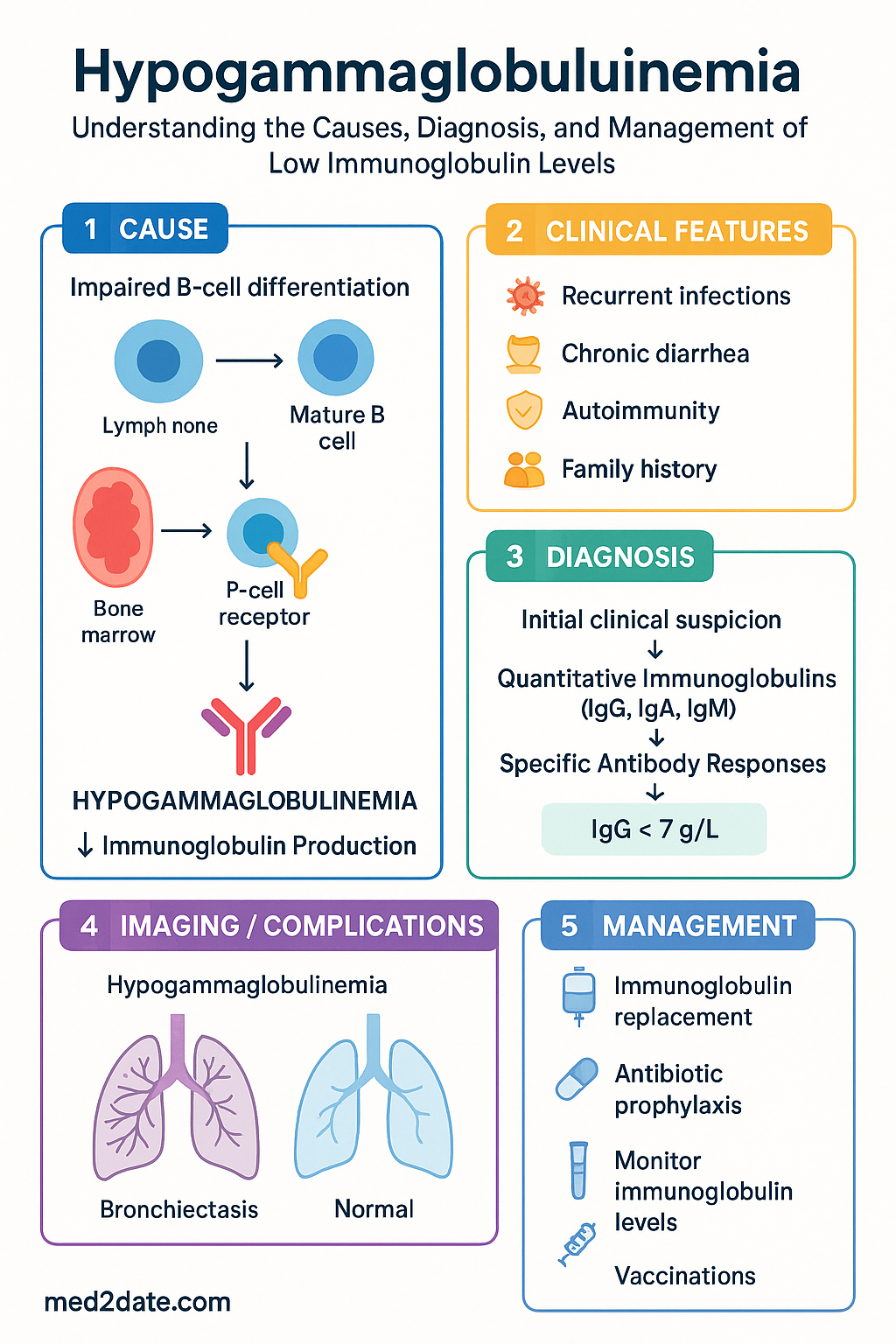
Hypogammaglobulinemia clinical infographic — pathophysiology, clinical clues, diagnosis, imaging, and management
Tap or click image to enlarge — Hypogammaglobulinemia: pathophysiology, clinical clues, diagnosis, imaging, and management.
Hypogammaglobulinemia infographic, full size

Causes of Hypogammaglobulinemia

Primary (Inherited) Causes

Condition Inheritance Key Defect Typical Onset Immunoglobulin Pattern
Common Variable Immunodeficiency (CVID) Usually sporadic; some autosomal dominant/recessive (ICOS, TACI, BAFF-R, CD19 mutations) Impaired B-cell differentiation; reduced class-switched memory B cells 2nd–4th decade (peak 20–40 years) ↓ IgG ± ↓ IgA and/or ↓ IgB
X-linked Agammaglobulinemia (XLA / Bruton) X-linked recessive (BTK gene, Xq22) Block in pre-B to mature B-cell transition; absent mature B cells 6–9 months (post-maternal IgG waning) ↓↓↓ IgG, IgA, IgM (all isotypes)
X-linked Hyper-IgM Syndrome X-linked (CD40LG / CD40L) Defective T-cell CD40L–B-cell CD40 interaction; failed class switching 1–2 years ↓ IgG, ↓ IgA, ↑↑ IgM
Selective IgA Deficiency Polygenic / multifactorial Failed IgA class switching Often asymptomatic; diagnosed at any age ↓↓ IgA (<0.07 g/L); normal IgG, IgM
Transient Hypogammaglobulinemia of Infancy (THI) Not inherited; developmental delay in IgG production Delayed maturation of IgG synthesis 6 months – 3 years (self-resolving by 3–5 years) ↓ IgG (IgA, IgM often normal)
Hyper-IgM Syndrome (AID, UNG defects) Autosomal recessive Defective somatic hypermutation and class-switch recombination Early childhood ↓ IgG, ↓ IgA, ↑ IgM
Good Syndrome Not inherited; associated with thymoma B-cell lymphopenia and hypogammaglobulinemia with thymic tumour 4th–6th decade ↓ IgG ± ↓ IgA, IgM; low B cells

Secondary (Acquired) Causes

Secondary hypogammaglobulinemia is considerably more common than primary immunodeficiency in general practice. The following table summarises major acquired aetiologies:

Category Examples Mechanism
Haematological malignancy CLL, multiple myeloma, non-Hodgkin lymphoma Malignant clone displaces normal B cells; excess Ig catabolism
Protein loss Nephrotic syndrome, protein-losing enteropathy (e.g. Ménétrier disease), severe burns Urinary or GI loss exceeds hepatic synthesis rate
Immunosuppressive therapy Rituximab (anti-CD20), high-dose corticosteroids, mycophenolate, cyclophosphamide B-cell depletion or suppression of Ig synthesis
Anti-epileptic medications Carbamazepine, phenytoin, valproate Idiopathic suppression of IgA and/or IgG
Chronic infections HIV, CMV, EBV, congenital rubella Direct B-cell infection or immune dysregulation
Prematurity Premature neonates <32 weeks Inadequate transplacental IgG transfer
Malnutrition Severe protein-calorie malnutrition Substrate deficiency for Ig synthesis
⚠️
Clinical pearl: Always exclude secondary causes (particularly CLL, myeloma, and rituximab use) before diagnosing a primary immunodeficiency. Serum protein electrophoresis (SPEP) and free light chain assay should be performed in any adult with new-onset hypogammaglobulinemia.

Clinical Features

The clinical presentation of hypogammaglobulinemia depends on the severity of Ig deficiency, the specific isotype(s) affected, and the underlying aetiology. Patients with primary antibody deficiency typically present in childhood (XLA, THI) or early adulthood (CVID), while secondary causes may present at any age.

Infectious Manifestations

Site Common Infections Typical Organisms
Respiratory (upper) Recurrent otitis media, sinusitis, mastoiditis Streptococcus pneumoniae, Haemophilus influenzae (non-typeable)
Respiratory (lower) Community-acquired pneumonia (≥1/year), bronchiectasis S. pneumoniae, H. influenzae, Moraxella catarrhalis, Pseudomonas aeruginosa (late-stage bronchiectasis)
Gastrointestinal Chronic diarrhoea, malabsorption, Giardia lamblia infection Giardia lamblia, Campylobacter, norovirus, rotavirus (prolonged)
Skin / Soft tissue Cellulitis, abscesses, infected eczema Staphylococcus aureus, streptococci, Gram-negatives
CNS Bacterial meningitis (encapsulated organisms) S. pneumoniae, H. influenzae type b, Neisseria meningitidis
Septicaemia Bacteraemia, sepsis Encapsulated organisms; Gram-negatives (XLA)

Non-Infectious Manifestations (particularly in CVID)

  • Autoimmune disease: Immune thrombocytopenia (ITP), autoimmune haemolytic anaemia (AIHA), rheumatoid arthritis, pernicious anaemia, vitiligo — occur in 20–30% of CVID patients
  • Granulomatous-lymphocytic infiltrative disease (GLILD): Non-caseating granulomas in lungs, liver, spleen, and lymph nodes mimicking sarcoidosis
  • Splenomegaly: Present in 25–30% of CVID; may be massive
  • Enteropathy: Coeliac-like villous atrophy, inflammatory bowel disease-like features, nodular lymphoid hyperplasia
  • Bronchiectasis: Develops in 30–50% of CVID patients if IgRT is delayed; irreversible structural lung damage
  • Malignancy: Increased risk of lymphoma (especially non-Hodgkin), gastric cancer (associated with Helicobacter pylori and achlorhydria)
🚨
Red flags requiring urgent immunology referral: Any child with >4 ear infections/year, >2 pneumonia episodes/year, failure to thrive with recurrent infections, family history of primary immunodeficiency, or any patient with an opportunistic infection (e.g. Pneumocystis jirovecii, disseminated BCG, persistent oral candidiasis in an immunocompetent-appearing host).

Diagnosis

Stepwise Diagnostic Approach

1
Clinical Suspicion
Red-flag infections as above. Use the Jeffrey Modell Foundation "10 Warning Signs" as a screening tool. For adults: ≥2 significant infections/year with encapsulated organisms should prompt immunoglobulin quantification.
2
Quantitative Immunoglobulins (IgG, IgA, IgM)
First-line test. MBS item 69383 (immunoglobulin quantification — IgG, IgA, IgM). Values >2 SD below age-matched reference range confirm hypogammaglobulinemia. Repeat to confirm (transient nadir may follow infection).
3
Specific Antibody Responses
Pre- and post-vaccination titres to tetanus toxoid (protein antigen) and 23-valent pneumococcal polysaccharide (Pneumovax® 23). Non-protective titres after vaccination confirm functional antibody deficiency. MBS items for serology available.
4
Lymphocyte Subsets (Flow Cytometry)
CD3⁺ (T cells), CD19⁺/CD20⁺ (B cells), CD4⁺/CD8⁺ ratio, NK cells. Absent B cells (CD19⁺ <1%) in XLA; reduced class-switched memory B cells (CD27⁺IgD⁻IgM⁻) in CVID. Available at major hospital immunology laboratories.
5
Exclude Secondary Causes
FBC with film (CLL, lymphoma), serum protein electrophoresis (SPEP) and immunofixation (myeloma), urine Bence-Jones protein / free light chains, HIV serology, renal function and urinalysis (nephrotic syndrome), faecal α₁-antitrypsin (protein-losing enteropathy), medication review (rituximab, carbamazepine).
6
Genetic Testing
Targeted gene panels (BTK for XLA, CD40LG for X-linked Hyper-IgM) or whole-exome sequencing for complex phenotypes. Performed at specialised genetic laboratories (e.g. Victorian Clinical Genetics Services, SA Pathology). Essential for definitive diagnosis in paediatric presentations and genetic counselling.

Investigations Summary

Essential
Quantitative IgG, IgA, IgM
MBS 69383 — available at all NATA-accredited labs. Repeat at 4–6 week interval to confirm persistence.
Essential
Specific antibody titres (pre/post pneumococcal & tetanus)
MBS serology items — measure 4–6 weeks post Pneumovax® 23. Protective tetanus titre >0.1 IU/mL.
Available
Lymphocyte subsets by flow cytometry
Major hospital immunology labs (Royal Adelaide, Westmead, Alfred, QCH). Include CD19⁺, CD27⁺ memory B-cell panel.
Available
Serum protein electrophoresis (SPEP) + immunofixation
MBS item — available at all NATA-accredited labs. Essential to exclude myeloma/CLL.
Referral
Genetic testing (BTK, CD40LG, targeted panel)
Via specialist immunology/genetics service. TGA-recognised labs. 4–12 week turnaround.
Specialist
High-resolution CT chest (HRCT) + spirometry
Baseline assessment for bronchiectasis. Medicare-rebatable. Repeat every 1–2 years or if new respiratory symptoms.

Risk Stratification & Severity Scoring

Severity of hypogammaglobulinemia correlates with the degree of IgG reduction, functional antibody impairment, and clinical infection burden. Risk stratification guides urgency of IgRT initiation and monitoring intensity.

Mild
Partial Antibody Deficiency
IgG 3–7 g/L; intact specific antibody responses; ≤2 upper respiratory tract infections/year; no organ damage.
Setting: GP surveillance; immunisation optimisation; antibiotic PRN; consider IgRT if infections escalate.
Moderate
Significant Hypogammaglobulinemia
IgG <3 g/L or impaired specific antibody responses; recurrent sinopulmonary infections (≥3/year); early bronchiectasis; GI infections (giardiasis).
Setting: Specialist immunology referral; initiate IgRT; antibiotic prophylaxis; HRCT baseline; lung function monitoring.
Severe
Severe Combined or Profound Deficiency
IgG <1 g/L; absent B cells (XLA); opportunistic infections (PJP, disseminated BCG, chronic enteroviral meningoencephalitis); established bronchiectasis; autoimmunity; GLILD.
Setting: Tertiary immunology centre; urgent IgRT; prophylactic antibiotics; multidisciplinary management (respirology, gastroenterology, haematology).

Empirical Antibiotic Therapy

While immunoglobulin replacement therapy (IgRT) is the definitive treatment, antibiotics play a critical adjunctive role. All patients should receive prompt empirical antibiotics for acute infections, and many require long-term prophylaxis.

Acute Infection Management

Clinical Scenario First-Line Agent Second-Line / Allergy Alternative Duration
Acute bacterial sinusitis / otitis media Amoxicillin 500 mg PO TDS (adults) or 45 mg/kg/day PO BD (paediatric) Amoxicillin-clavulanate 875/125 mg PO BD (adults); if penicillin allergy: azithromycin 500 mg day 1 then 250 mg days 2–5 (adults) or 10 mg/kg day 1 then 5 mg/kg days 2–5 (paediatric) 10–14 days (longer course than immunocompetent)
Community-acquired pneumonia Amoxicillin 1 g PO TDS (mild–moderate) OR benzylpenicillin 1.2 g IV 4–6 hourly (severe) Ceftriaxone 1–2 g IV daily; add azithromycin 500 mg PO/IV daily if atypical co-infection suspected; if severe penicillin allergy: moxifloxacin 400 mg PO/IV daily 10–14 days (oral step-down when clinically improving)
Bronchiectasis exacerbation Amoxicillin 1 g PO TDS (if not known Pseudomonas) OR ciprofloxacin 500–750 mg PO BD (Pseudomonas suspected/confirmed) Co-trimoxazole 960 mg PO BD; or meropenem 1 g IV TDS (hospitalised severe exacerbation) 14 days
Giardiasis Tinidazole 2 g PO single dose (adults) or 50 mg/kg (max 2 g) single dose (paediatric) Metronidazole 400 mg PO TDS for 10 days (adults); nitazoxanide for refractory cases Single dose (tinidazole) or 10 days (metronidazole)

Antibiotic Prophylaxis

Long-term prophylactic antibiotics are recommended for patients with recurrent infections despite adequate IgRT, established bronchiectasis, or chronic sinopulmonary disease. Regimens should be guided by local AMR patterns and sputum culture results.

💊
Amoxicillin
Amoxil® · Generic · Beta-lactam
Adult prophylactic dose 500 mg PO daily or BD
Paediatric dose 20–40 mg/kg/day PO divided BD (max 500 mg/dose)
Renal adjustment eGFR 10–30: 500 mg BD → 500 mg daily; eGFR <10: 500 mg daily
PBS status ✔ PBS General Benefit
💊
Azithromycin
Zithromax® · Zmax® · Macrolide
Adult prophylactic dose 500 mg PO three days per week (e.g. Mon/Wed/Fri) or 250 mg PO daily
Paediatric dose 10 mg/kg (max 500 mg) three days per week
Renal adjustment Not required (primarily hepatic elimination)
PBS status ✔ PBS General Benefit
⚠️
ECG monitoring: Azithromycin prolongs QT interval. Obtain baseline ECG before initiating long-term prophylaxis; avoid concurrent QT-prolonging agents (fluoroquinolones, ondansetron, amiodarone). Reassess ECG at 1–2 months.

Immunoglobulin Replacement Therapy (IgRT)

Immunoglobulin replacement therapy is the definitive treatment for clinically significant hypogammaglobulinemia. In Australia, IgRT is governed by the National Blood Authority (NBA) Immunoglobulin Governance Programme, and prescription requires PBS Authority approval.

🚨
PBS Authority requirement: All immunoglobulin products in Australia are classified as PBS Authority Required. Prescribers must submit a PBS Immunoglobulin Request form (NBA form) with supporting documentation (diagnosis, IgG levels, infection history). Approval is required before dispensing. Contact the Immunoglobulin Governance Programme: 13 000 BLOOD (13 000 25 663).

IVIG Products Available in Australia

💉
Intragam® 10% (CSL Behring)
10% liquid IV formulation · Australian-manufactured
Adult dose 400–600 mg/kg IV every 3–4 weeks; initial infusion 0.5–1 mL/kg/hr, titrate to max 8 mL/kg/hr
Paediatric dose 400–600 mg/kg IV every 3–4 weeks; adjusted infusion rate by weight
Renal adjustment Use sucrose-free products in renal impairment (Intragam® 10% is sucrose-free); monitor renal function
PBS status 🔒 PBS Authority Required
💉
Privigen® 10% (CSL Behring)
10% liquid IV formulation · L-proline stabilised
Adult dose 400–600 mg/kg IV every 3–4 weeks; initial 0.5 mg/kg/min, titrate to max 8 mg/kg/min
Paediatric dose 400–600 mg/kg IV every 3–4 weeks
Renal adjustment Sucrose-free; use cautiously in severe renal impairment; rate ≤4 mg/kg/min
PBS status 🔒 PBS Authority Required
💉
Flebogamma® DIF 5% (Grifols)
5% liquid IV formulation · Dual inactivation / nanofiltration
Adult dose 300–600 mg/kg IV every 3–4 weeks; initial 0.5 mL/kg/hr, titrate to max 6 mL/kg/hr
Paediatric dose 300–600 mg/kg IV every 3–4 weeks
Renal adjustment Sucrose-free; safe in renal impairment
PBS status 🔒 PBS Authority Required

Subcutaneous Immunoglobulin (SCIG)

SCIG is increasingly preferred in Australia due to the convenience of home self-administration, steady-state IgG levels, reduced systemic adverse effects, and improved quality of life — particularly for patients in regional and remote areas far from infusion centres.

💉
Hizentra® 20% (CSL Behring)
20% liquid SC formulation · Proline-stabilised
Adult dose 100–200 mg/kg SC weekly (or 200–400 mg/kg fortnightly); dose = previous IVIG dose × 1.37 (conversion factor)
Paediatric dose 100–200 mg/kg SC weekly
Administration Rapid push (up to 25 mL/site/hr) or pump infusion; 1–4 needle sites per session
PBS status 🔒 PBS Authority Required
💉
Cuvitru® 20% (Takeda / Shire)
20% liquid SC formulation · L-arginine-stabilised
Adult dose 100–200 mg/kg SC weekly (or equivalent extended-interval dosing)
Administration Up to 60 mL/site; pump infusion recommended
PBS status 🔒 PBS Authority Required

IgRT Dosing Principles

  • Target trough IgG ≥7 g/L: The primary therapeutic goal. Higher troughs (≥8–10 g/L) may be needed for patients with bronchiectasis, GLILD, or chronic lung disease.
  • Starting dose: 400–600 mg/kg every 3–4 weeks (IV) or 100–200 mg/kg weekly (SC). Adjust based on trough levels and clinical response.
  • Trough monitoring: Measure serum IgG immediately before the next scheduled dose. Check every 3–6 months initially, then at least annually once stable.
  • IV to SC conversion: Multiply previous monthly IVIG dose by 1.37 and divide into weekly SC doses. Equivalent steady-state IgG levels are typically achieved.
  • Lifelong therapy: IgRT is lifelong for primary antibody deficiency. Discontinuation is associated with recurrent infections and bronchiectasis progression.

Adverse Effects of IgRT

Adverse Effect Frequency Management
Headache, myalgia, fever, chills Common (5–15% of infusions) Reduce infusion rate; pre-medicate with paracetamol, antihistamine ± hydrocortisone
Anaphylaxis / anaphylactoid Rare (<1:10,000) Stop infusion immediately; IM adrenaline 0.01 mg/kg (max 0.5 mg adults, 0.3 mg child); switch product or route to SC
Aseptic meningitis Uncommon (1–3%) Slow infusion rate; IV fluids; paracetamol/ibuprofen; may resolve with SCIG conversion
Thromboembolic events (DVT, PE, stroke) Rare (risk factors: age >65, immobility, hyperviscosity, high infusion rate) Slow infusion rate; hydrate; consider low-molecular-weight heparin prophylaxis in high-risk patients
Haemolysis (passive anti-A/anti-B) Rare; more common with high-dose IVIG Check FBC and haptoglobin post-infusion; monitor for delayed haemolysis (days 1–10)
Local site reactions (SCIG) Common initially (15–30%); diminishes with time Rotate sites; warm product to room temperature; use hyaluronidase if persistent
SCIG advantage in Australia: The National Blood Authority supports transition to home-based SCIG where clinically appropriate. State immunology services provide SCIG training programmes. Home delivery of SCIG products is coordinated through the national supply chain. For patients in remote and very remote areas, SCIG eliminates the need for frequent hospital visits.

Monitoring

Lifelong monitoring is essential to ensure adequate IgG trough levels, detect complications early (bronchiectasis, autoimmunity, lymphoproliferative disease), and optimise quality of life.

Every 3–6 months (first 1–2 years)
  • Trough serum IgG (target ≥7 g/L)
  • Infection diary review (frequency, severity, organisms)
  • FBC, CRP/ESR, liver function, renal function
  • Adherence assessment (especially SCIG self-administration)
Annually (ongoing)
  • Trough serum IgG
  • Spirometry (FEV₁, FVC) and DLCO
  • Sputum culture (including mycobacterial culture if new infiltrates)
  • Hepatitis B surface antibody (re-immunise if waning)
  • Review antibiotic prophylaxis regimen
  • Assessment for autoimmune complications (FBC, Coombs test, thyroid function)
  • Nutritional status and growth (paediatric patients)
Every 1–2 years or as indicated
  • High-resolution CT chest (HRCT) — for bronchiectasis surveillance
  • Lymphocyte subsets if new cytopenias or lymphoproliferative features
  • Gastroscopy with duodenal biopsy (if GI symptoms or malabsorption)
  • Ultrasound abdomen (splenomegaly, lymphadenopathy)
As clinically indicated
  • Lung function testing during acute exacerbations
  • CT neck/chest/abdomen/pelvis if suspected lymphoma or GLILD
  • Bone densitometry (DEXA) if chronic corticosteroid use
  • Ophthalmology review if retinal complications suspected

Special Populations

🤰 Pregnancy
IgRT in pregnancy
IgRT (both IVIG and SCIG) is safe and recommended throughout pregnancy. IgG crosses the placenta in the third trimester — maternal IgRT contributes to passive protection of the neonate. Dose adjustment is generally not required, though pharmacokinetic changes may necessitate increased frequency or dose. Continue monitoring trough levels each trimester.
Antibiotics in pregnancy
Amoxicillin (Category A) is preferred for prophylaxis. Avoid tetracyclines and fluoroquinolones. Azithromycin (Category B1) may be used if penicillin allergy. Avoid metronidazole in the first trimester (Category B2); safe in second and third trimesters.
👶 Paediatrics
THI management
Transient hypogammaglobulinemia of infancy usually resolves by age 3–5 years. Monitor IgG every 6 months. IgRT is only indicated if the child has significant recurrent infections; it is not given prophylactically based on low levels alone.
XLA
Begin IgRT as soon as diagnosis is confirmed. Avoid live vaccines entirely. Ensure household contacts are fully immunised (including live vaccines like varicella and rotavirus — discuss with immunologist). Monitor growth and development.
Vaccination
Inactivated vaccines are safe but may not elicit protective responses. Live vaccines (MMR, varicella, BCG, oral polio, rotavirus) are contraindicated in severe primary antibody deficiency. Post-vaccination serology may not be interpretable in patients on IgRT (passive antibodies confound results).
🧓 Elderly
IgRT considerations
Elderly patients have higher risk of thromboembolic events with IVIG. Ensure adequate hydration; infuse slowly; consider SCIG as an alternative. New-onset hypogammaglobulinemia in elderly patients must always exclude CLL and myeloma (SPEP, FBC, bone marrow biopsy if indicated).
Polypharmacy
Review concurrent medications — rituximab, mycophenolate, azathioprine, and corticosteroids may contribute to secondary hypogammaglobulinemia. Renal impairment is common; adjust amoxicillin and co-trimoxazole doses accordingly.
🫘 Renal Impairment
IgRT selection
Avoid IVIG products containing sucrose (risk of osmotic nephropathy). Use sucrose-free formulations (Intragam® 10%, Privigen®). Infuse slowly (≤4 mg/kg/min). Monitor serum creatinine before and 48 hours after infusion. SCIG avoids the renal risks associated with IVIG and may be preferred in CKD.
Antibiotic adjustment
Amoxicillin: reduce dose if eGFR <30. Co-trimoxazole: avoid if eGFR <15 (hyperkalaemia risk). Ciprofloxacin: reduce dose if eGFR <30. Azithromycin: no adjustment required.
🫁 Hepatic Impairment
IgRT
No specific dose adjustment for IgRT in hepatic impairment. Monitor for fluid overload during IVIG infusion in patients with portal hypertension and ascites. Hepatic protein synthesis impairment may coexist; liver function monitoring is recommended.
Antibiotic adjustment
Amoxicillin: generally safe. Avoid erythromycin and clarithromycin (CYP3A4 interaction). Azithromycin: minimal hepatic metabolism — preferred macrolide. Co-trimoxazole: use cautiously; monitor LFTs. Avoid metronidazole in severe hepatic impairment.
🛡️ Immunocompromised (Beyond Hypogammaglobulinemia)
Secondary immunodeficiency from biologics
Rituximab (anti-CD20) causes profound B-cell depletion and hypogammaglobulinemia in 15–30% of patients with prolonged use. Monitor IgG before each rituximab cycle. Consider prophylactic IgRT (PBS Authority) if IgG <4 g/L with recurrent infections. This is an increasingly common indication for IgRT in Australia.
SOT recipients
Post-transplant hypogammaglobulinemia (IgG <4 g/L) is associated with increased CMV, BK virus, and bacterial infections. IgRT reduces infection risk in this setting. Discuss with transplant infectious disease team.

Aboriginal and Torres Strait Islander Health Considerations

Aboriginal and Torres Strait Islander Health
Burden of disease
Aboriginal and Torres Strait Islander peoples experience significantly higher rates of chronic respiratory disease, bronchiectasis, and pneumonia compared with non-Indigenous Australians (AIHW 2023). The underlying causes of hypogammaglobulinemia may be under-recognised in this context, as recurrent respiratory infections are common and may not trigger immunological investigation.
Diagnostic delay
Access to specialist immunology services is limited in remote and very remote communities. The nearest immunology centre may be hundreds or thousands of kilometres away. Telehealth immunology consultations via the Australian Telehealth Network can facilitate earlier assessment, but require reliable internet connectivity and interpreter services.
IgRT access
SCIG is the preferred modality for patients in remote areas, as it eliminates the need for monthly hospital attendance for IVIG infusions. The National Blood Authority SCIG home therapy programme provides training and product delivery. Community health workers and Aboriginal Health Workers can be trained to support SCIG administration.
Infection epidemiology
Pneumococcal disease rates are 3–6 times higher in Aboriginal and Torres Strait Islander children. Chronic suppurative lung disease and bronchiectasis are disproportionately prevalent. Early identification of underlying immunodeficiency in children with recurrent lower respiratory tract infections could prevent irreversible lung damage.
Cultural safety
Engagement with Aboriginal Community Controlled Health Organisations (ACCHOs) is essential for culturally safe care. Immunology referrals should be initiated through the patient's primary healthcare provider within an ACCHO where possible. Interpreter services (e.g. Aboriginal Interpreter Service) should be offered for all consultations. Yarning-based approaches to explaining chronic disease management improve engagement and adherence.
NHMRC / RHDAustralia guidance
Follow RHDAustralia and NHMRC guidelines for management of bronchiectasis in Aboriginal and Torres Strait Islander peoples. The Lung Foundation Australia "Bronchiectasis Toolbox" includes culturally appropriate resources. Ensure pneumococcal and influenza vaccination is up to date, including the funded 13vPCV and 23vPPV programmes for Aboriginal and Torres Strait Islander adults aged ≥50 years.

📚 References

  1. 1. Australasian Society of Clinical Immunology and Allergy (ASCIA). Primary Immunodeficiency (PID) Guide for Health Professionals. ASCIA; 2024. Available at: https://www.ascia.org.au
  2. 2. National Blood Authority (NBA). National Policy on the Supply and Use of Human Immunoglobulin. Australian Government; 2023. Available at: https://www.blood.gov.au/ig
  3. 3. Bonilla FA, Khan DA, Ballas ZK, et al. Practice parameter for the diagnosis and management of primary immunodeficiency. J Allergy Clin Immunol. 2015;136(5):1186–1205.e78.
  4. 4. Seidel MG, Kindle G, Gathmann B, et al. The European Society for Immunodeficiencies (ESID) Registry working definitions for the clinical diagnosis of inborn errors of immunity. J Allergy Clin Immunol Pract. 2019;7(6):1763–1770.
  5. 5. Chapel H, Lucas M, Lee M, et al. Common variable immunodeficiency disorders: division into distinct clinical phenotypes. Blood. 2008;112(2):277–286.
  6. 6. Bruton OC. Agammaglobulinemia. Pediatrics. 1952;9(6):722–728.
  7. 7. Bousfiha AA, Jeddane L, Picard C, et al. The 2022 update of IUIS phenotypical classification for human inborn errors of immunity. J Clin Immunol. 2022;42(5):1008–1020.
  8. 8. Pharmaceutical Benefits Scheme (PBS). Immunoglobulin — Authority Required. Australian Government Department of Health; 2024. Available at: https://www.pbs.gov.au
  9. 9. Jolles S, Bernatowska E, de Gracia J, et al. Efficacy and safety of Hizentra® in patients with primary immunodeficiency after a dose-equivalent switch from intravenous or subcutaneous replacement therapy. Clin Immunol. 2011;141(1):90–102.
  10. 10. Australian Institute of Health and Welfare (AIHW). Aboriginal and Torres Strait Islander Health Performance Framework 2023 Summary Report. Canberra: AIHW; 2023.
  11. 11. Chang C, Roberts S, Shetty AK, et al. Management of bronchiectasis in Aboriginal and Torres Strait Islander peoples: an evidence review. Lung Foundation Australia. 2022.
  12. 12. Lucas M, Lee M, Lortan J, Lopez-Granados E, Misbah S, Chapel H. Infection outcomes in patients with common variable immunodeficiency disorders: relationship to immunoglobulin therapy over 22 years. J Allergy Clin Immunol. 2010;125(6):1354–1360.e4.
  13. 13. Peters L, Bousfiha A, de Vries E, et al. International Consensus Document (ICON): common variable immunodeficiency. J Clin Immunol. 2016;36(Suppl 1):34–41.
  14. 14. National Health and Medical Research Council (NHMRC). The Australian Immunisation Handbook. 11th ed. Australian Government Department of Health; 2022 (updated 2024). Available at: https://immunisationhandbook.health.gov.au
  15. 15. Kainulainen L, Nikoskelainen J, Vuorinen T, et al. Viruses and bacteria in bronchial samples from patients with primary hypogammaglobulinemia. Am J Respir Crit Care Med. 1999;159(4):1199–1204.
for PBS-listed medicines at participating pharmacies.
Cultural safety
Engagement with Aboriginal Community Controlled Health Organisations (ACCHOs) is essential. Cultural safety training for non-Indigenous clinicians, use of Aboriginal Health Workers and Liaison Officers, and incorporation of traditional healing practices alongside Western medicine improve treatment adherence and outcomes. Avoidance of eye contact, respect for gender-sensitive examination practices, and understanding of sorry business protocols are critical elements of culturally safe care.
Medication adherence
Complex DMARD regimens with frequent monitoring requirements present adherence challenges. Long-acting depot injections (e.g., methotrexate SC) may improve adherence compared to oral regimens. Community pharmacy partnerships through the Indigenous Pharmacy Programmes improve medication management.
Specific conditions
Rheumatic heart disease (RHD) requires secondary prophylaxis with benzathine penicillin G (BPG) 1.2 MU IM every 3–4 weeks for a minimum of 10 years or until age 21 (whichever is longer). RHD registers (e.g., NT RHD Register) facilitate recall and follow-up. The Australian RHD Endgame Strategy targets elimination by 2031.
Referral pathways
Referral through ACCHOs and Aboriginal Hospital Liaison Officers (AHLOs) improves engagement. The Specialist Outreach Assistance Programme provides funded specialist visits to remote communities. NT, WA, and QLD have specific rheumatology outreach programmes targeting Indigenous communities.

📚 References

  1. 1. Australian Institute of Health and Welfare (AIHW). Autoimmune disease in Australia. Cat. no. PHE 312. Canberra: AIHW; 2023.
  2. 2. Fraenkel L, Bathon JM, England BR, et al. 2021 American College of Rheumatology guideline for the treatment of rheumatoid arthritis. Arthritis Care Res. 2021;73(7):924–939.
  3. 3. Fanouriakis A, Kostopoulou M, Alber K, et al. 2019 update of the EULAR recommendations for the management of systemic lupus erythematosus. Ann Rheum Dis. 2019;78(6):736–745.
  4. 4. Chung SA, Langford CA, Maz M, et al. 2021 American College of Rheumatology/Vasculitis Foundation guideline for the management of antineutrophil cytoplasmic antibody-associated vasculitis. Arthritis Care Res. 2021;73(11):1583–1599.
  5. 5. Smolen JS, Landewé RBM, Bijlsma JWJ, et al. EULAR recommendations for the management of rheumatoid arthritis with synthetic and biological disease-modifying antirheumatic drugs: 2022 update. Ann Rheum Dis. 2023;82(1):3–18.
  6. 6. Australian Technical Advisory Group on Immunisation (ATAGI). Australian Immunisation Handbook. Australian Government Department of Health; 2024. Available from: immunisationhandbook.health.gov.au.
  7. 7. Rheumatic Heart Disease Australia (RHDAustralia). The 2020 Australian guideline for prevention, diagnosis, and management of acute rheumatic fever and rheumatic heart disease. 3rd ed. Darwin: Menzies School of Health Research; 2020.
  8. 8. Pharmaceutical Benefits Scheme (PBS). PBS Schedule. Australian Government Department of Health. Available from: pbs.gov.au. Accessed 2024.
  9. 9. Agarwal S, Cunnington J, Nossent J. Autoimmune disease in Indigenous Australians: a systematic review. Int J Rheum Dis. 2021;24(12):1487–1498.
  10. 10. Pisetsky DS. Antinuclear antibody testing — misunderstood or misused? Clin Immunol. 2023;255:109717.
  11. 11. Bertsias GK, Tektonidou M, Amoura Z, et al. Joint European League Against Rheumatism and European Renal Association–European Dialysis and Transplant Association (EULAR/ERA-EDTA) recommendations for the management of adult and paediatric lupus nephritis. Ann Rheum Dis. 2012;71(11):1771–1782.
  12. 12. Ledingham J, Deighton C; British Society for Rheumatology Standards, Audit and Guidelines Working Group. Update on the British Society for Rheumatology guidelines for prescribing TNFα blockers in adults with rheumatoid arthritis. Rheumatology. 2005;44(2):155–158.
  13. 13. National Health and Medical Research Council (NHMRC). National statement on ethical conduct in human research. Canberra: NHMRC; 2023 (updated).
for PBS-listed medicines at participating pharmacies.
Cultural safety
Engagement with Aboriginal Community Controlled Health Organisations (ACCHOs) is essential. Cultural safety training for non-Indigenous clinicians, use of Aboriginal Health Workers and Liaison Officers, and incorporation of traditional healing practices alongside Western medicine improve treatment adherence and outcomes. Avoidance of eye contact, respect for gender-sensitive examination practices, and understanding of sorry business protocols are critical elements of culturally safe care.
Medication adherence
Complex DMARD regimens with frequent monitoring requirements present adherence challenges. Long-acting depot injections (e.g., methotrexate SC) may improve adherence compared to oral regimens. Community pharmacy partnerships through the Indigenous Pharmacy Programmes improve medication management.
Specific conditions
Rheumatic heart disease (RHD) requires secondary prophylaxis with benzathine penicillin G (BPG) 1.2 MU IM every 3–4 weeks for a minimum of 10 years or until age 21 (whichever is longer). RHD registers (e.g., NT RHD Register) facilitate recall and follow-up. The Australian RHD Endgame Strategy targets elimination by 2031.
Referral pathways
Referral through ACCHOs and Aboriginal Hospital Liaison Officers (AHLOs) improves engagement. The Specialist Outreach Assistance Programme provides funded specialist visits to remote communities. NT, WA, and QLD have specific rheumatology outreach programmes targeting Indigenous communities.

📚 References

  1. 1. Australian Institute of Health and Welfare (AIHW). Autoimmune disease in Australia. Cat. no. PHE 312. Canberra: AIHW; 2023.
  2. 2. Fraenkel L, Bathon JM, England BR, et al. 2021 American College of Rheumatology guideline for the treatment of rheumatoid arthritis. Arthritis Care Res. 2021;73(7):924–939.
  3. 3. Fanouriakis A, Kostopoulou M, Alber K, et al. 2019 update of the EULAR recommendations for the management of systemic lupus erythematosus. Ann Rheum Dis. 2019;78(6):736–745.
  4. 4. Chung SA, Langford CA, Maz M, et al. 2021 American College of Rheumatology/Vasculitis Foundation guideline for the management of antineutrophil cytoplasmic antibody-associated vasculitis. Arthritis Care Res. 2021;73(11):1583–1599.
  5. 5. Smolen JS, Landewé RBM, Bijlsma JWJ, et al. EULAR recommendations for the management of rheumatoid arthritis with synthetic and biological disease-modifying antirheumatic drugs: 2022 update. Ann Rheum Dis. 2023;82(1):3–18.
  6. 6. Australian Technical Advisory Group on Immunisation (ATAGI). Australian Immunisation Handbook. Australian Government Department of Health; 2024. Available from: immunisationhandbook.health.gov.au.
  7. 7. Rheumatic Heart Disease Australia (RHDAustralia). The 2020 Australian guideline for prevention, diagnosis, and management of acute rheumatic fever and rheumatic heart disease. 3rd ed. Darwin: Menzies School of Health Research; 2020.
  8. 8. Pharmaceutical Benefits Scheme (PBS). PBS Schedule. Australian Government Department of Health. Available from: pbs.gov.au. Accessed 2024.
  9. 9. Agarwal S, Cunnington J, Nossent J. Autoimmune disease in Indigenous Australians: a systematic review. Int J Rheum Dis. 2021;24(12):1487–1498.
  10. 10. Pisetsky DS. Antinuclear antibody testing — misunderstood or misused? Clin Immunol. 2023;255:109717.
  11. 11. Bertsias GK, Tektonidou M, Amoura Z, et al. Joint European League Against Rheumatism and European Renal Association–European Dialysis and Transplant Association (EULAR/ERA-EDTA) recommendations for the management of adult and paediatric lupus nephritis. Ann Rheum Dis. 2012;71(11):1771–1782.
  12. 12. Ledingham J, Deighton C; British Society for Rheumatology Standards, Audit and Guidelines Working Group. Update on the British Society for Rheumatology guidelines for prescribing TNFα blockers in adults with rheumatoid arthritis. Rheumatology. 2005;44(2):155–158.
  13. 13. National Health and Medical Research Council (NHMRC). National statement on ethical conduct in human research. Canberra: NHMRC; 2023 (updated).