📋 Key Information Summary
- BRAF/MEK inhibition: Dabrafenib + trametinib (Tafinlar® + Mekinist®) is the standard combination for BRAF V600-mutated melanoma and NSCLC; vemurafenib + cobimetinib is an alternative BRAF/MEK pair
- EGFR inhibitors: Osimertinib (Tagrisso®) is the preferred first-line EGFR TKI for EGFR exon 19 deletion / L858R-mutated NSCLC in Australia, offering CNS penetration and T790M coverage
- ALK inhibitors: Alectinib (Alecensa®) is first-line for ALK-rearranged NSCLC; lorlatinib (Lorbrena®) is used after progression on second-generation agents
- CDK4/6 inhibitors: Palbociclib (Ibrance®), ribociclib (Kisqali®), and abemaciclib (Verzenio®) combined with endocrine therapy are standard for HR+/HER2− advanced breast cancer
- mTOR inhibitors: Everolimus (Afinitor®) is PBS-listed for renal cell carcinoma, breast cancer, and neuroendocrine tumours; temsirolimus is IV alternative for poor-risk RCC
- Immunotherapy checkpoint inhibitors: Anti-PD-1 agents (nivolumab, pembrolizumab) and anti-CTLA-4 (ipilimumab) are registered across melanoma, NSCLC, RCC, and multiple other tumour types; dual checkpoint blockade (nivo + ipi) is standard for unresectable melanoma
- Mandatory molecular testing: All NSCLC patients must have comprehensive molecular profiling (EGFR, ALK, ROS1, BRAF, PD-L1, KRAS G12C) before commencing systemic therapy; melanoma requires BRAF V600 testing for targeted therapy eligibility
- Immune-related adverse events (irAEs): Affect 60–80% of patients on combination checkpoint inhibitors; early recognition and corticosteroid therapy are essential; endocrine irAEs may be permanent
- PBS access: Most targeted agents listed as Authority Required or Section 100 (Highly Specialised Drugs) — prescribe through oncology pharmacies with PBS authority approval
- Pharmacogenomic considerations: HLA-B*57:01 testing not applicable to these agents; DPYD testing recommended before fluoropyrimidine backbone if used concurrently; UGT1A1 genotyping for irinotecan combinations
- Drug interactions: CYP3A4 inhibitors/inducers significantly affect palbociclib, ribociclib, and many TKIs; always perform interaction checks before prescribing; avoid concurrent strong CYP3A4 inhibitors with CDK4/6 inhibitors
- Pregnancy and contraception: All targeted agents and checkpoint inhibitors are teratogenic — effective contraception required during treatment and for specified washout periods post-therapy
Introduction & Australian Epidemiology
Novel targeted therapies and immunotherapeutic agents have transformed the management of multiple solid organ and haematological malignancies over the past two decades. These agents exploit specific oncogenic driver mutations (BRAF, EGFR, ALK, ROS1) or harness the host immune system (anti-PD-1, anti-CTLA-4) to selectively kill tumour cells with improved therapeutic indices compared with conventional cytotoxic chemotherapy.
In Australia, targeted therapies and immune checkpoint inhibitors now represent first-line standard of care across melanoma, non-small-cell lung cancer (NSCLC), renal cell carcinoma (RCC), breast cancer, and an expanding list of other tumour types. The following epidemiological data highlight the scale of these indications:
- Melanoma: Australia has the highest incidence of melanoma worldwide (~16,000 new cases/year; age-standardised rate ~36 per 100,000). Approximately 45–50% of cutaneous melanomas harbour BRAF V600 mutations, making BRAF/MEK inhibitor therapy relevant to ~7,000 patients annually. Checkpoint inhibitors are used in both adjuvant and metastatic settings (Melanoma Institute Australia, 2024)
- NSCLC: Lung cancer accounts for ~13,000 new diagnoses annually in Australia. In non-squamous NSCLC, EGFR mutations are present in ~15% of patients (higher in never-smokers and patients of East Asian ancestry), ALK rearrangements in ~5%, ROS1 in ~1–2%, and BRAF V600E in ~1–2%. PD-L1 expression ≥50% is found in ~25–30% of patients (Lung Foundation Australia, 2024)
- Breast cancer: ~20,000 new diagnoses annually; HR+/HER2− subtype represents ~70% of metastatic breast cancer — the primary indication for CDK4/6 inhibitors
- Renal cell carcinoma: ~4,500 new cases annually; mTOR inhibitors (everolimus) and checkpoint inhibitors are key treatment modalities
- MBS item 73338 covers PD-L1 testing (immunohistochemistry) for NSCLC, and MBS item 73341 covers comprehensive genomic profiling for NSCLC via NGS panels
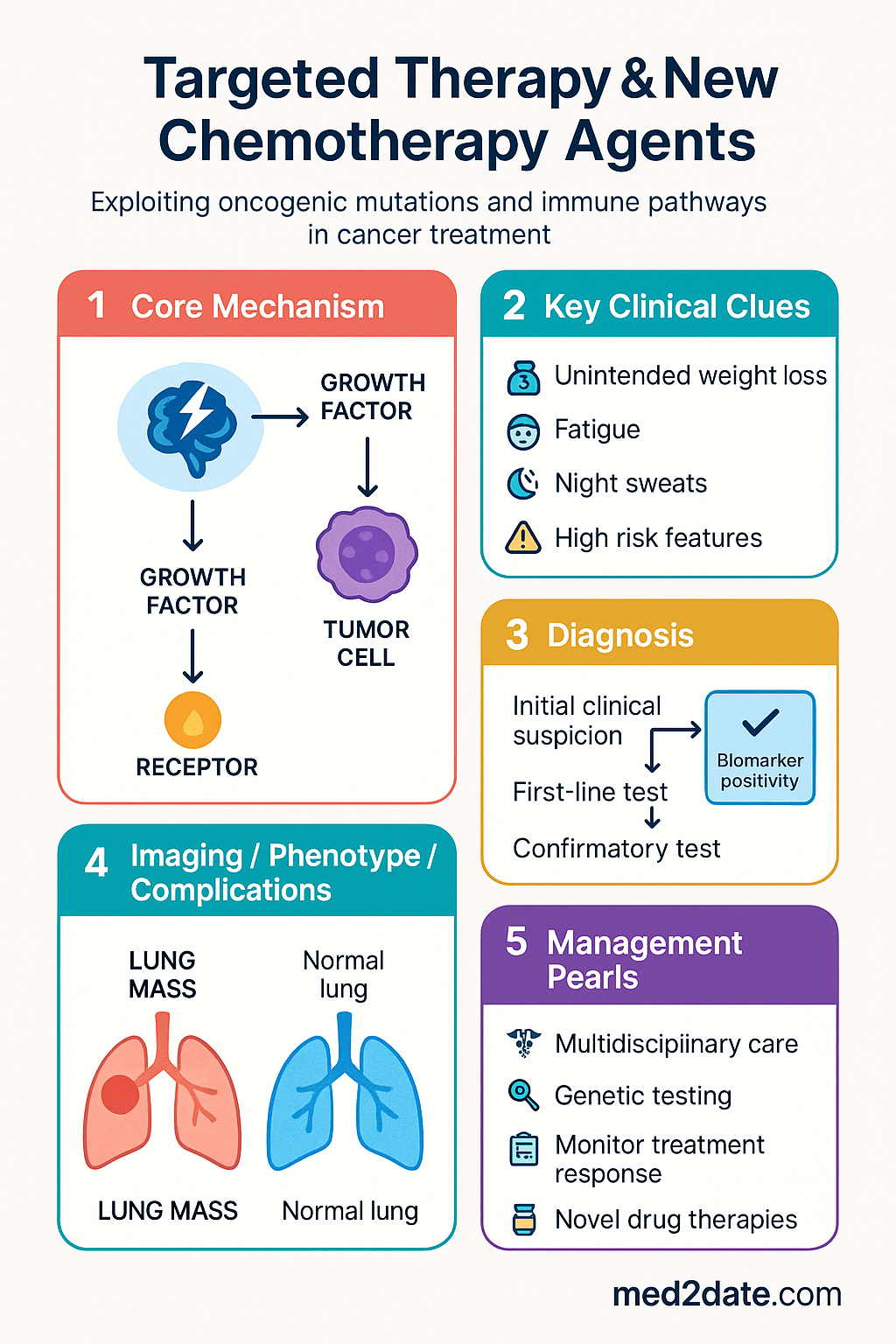
Pathophysiology & Molecular Targets
Targeted therapies exploit specific molecular alterations that drive tumour growth and survival. Understanding these pathways is essential for appropriate patient selection and sequencing of therapies.
| Target | Pathway | Key Cancers | Prevalence in Australia |
|---|---|---|---|
| BRAF V600E/K | MAPK/ERK signalling → constitutive cell proliferation | Melanoma, NSCLC, CRC, thyroid, hairy cell leukaemia | Melanoma ~45%; NSCLC ~1–2%; CRC ~8–10% |
| EGFR activating mutations | EGFR tyrosine kinase → PI3K/AKT + RAS/MAPK | NSCLC (adenocarcinoma) | NSCLC ~15% (higher in never-smokers, East Asian descent) |
| ALK rearrangement | ALK fusion protein → constitutive kinase activity | NSCLC (adenocarcinoma, younger patients) | NSCLC ~5% |
| CDK4/6 overactivity | Cyclin D–CDK4/6 → Rb phosphorylation → G1/S transition | HR+/HER2− breast cancer | ~70% of metastatic breast cancers |
| mTOR activation | PI3K/AKT/mTOR → protein synthesis, metabolism, angiogenesis | RCC, breast cancer, NET, TSC | RCC ~4,500 cases/year |
| PD-1/PD-L1 axis | Tumour PD-L1 binds T-cell PD-1 → immune evasion | Melanoma, NSCLC, RCC, HNSCC, urothelial, others | PD-L1 ≥50% in ~25–30% NSCLC |
| CTLA-4 | Inhibitory checkpoint → suppresses T-cell priming | Melanoma, RCC (in combination) | Used in combination regimens |
BRAF & MEK Inhibitors
Concurrent BRAF and MEK inhibition is standard of care for BRAF V600-mutated tumours. Monotherapy BRAF inhibitors are no longer recommended due to paradoxical MAPK pathway activation and higher rates of cutaneous squamous cell carcinoma (cuSCC). Combination therapy improves overall survival, progression-free survival, and reduces cutaneous toxicity.
Approved Indications in Australia
- Unresectable or metastatic BRAF V600-mutated melanoma (adjuvant and metastatic)
- BRAF V600E-mutated NSCLC (dabrafenib + trametinib)
- BRAF V600E-mutated anaplastic thyroid cancer
- BRAF V600E-mutated CRC (encorafenib + cetuximab — different mechanism)
First-Line Combination: Dabrafenib + Trametinib
Alternative BRAF/MEK Combinations
Common Toxicities — BRAF + MEK Combination
| Toxicity | Incidence | Management |
|---|---|---|
| Pyrexia / rigors | ~50–60% | Withhold dabrafenib when fever ≥38.5°C; antipyretics; rule out infection; resume at same or reduced dose when afebrile >24h |
| Rash / dermatitis | ~30–40% | Emollients, topical corticosteroids; dose reduction if grade ≥3 |
| Fatigue | ~40–50% | Supportive care; dose reduction if persistent grade 3 |
| Diarrhoea | ~20–30% | Loperamide; dose reduction of trametinib for grade ≥3 |
| Peripheral oedema | ~20% | Compression, elevation; diuretics if symptomatic |
| LVEF reduction | ~7–10% | Baseline and 1-monthly echocardiography; withhold trametinib if LVEF drops ≥10% from baseline and below lower limit of normal |
| Uveitis | ~1–5% | Ophthalmology referral; topical steroids; may require treatment interruption |
EGFR & ALK Inhibitors
Epidermal growth factor receptor (EGFR) tyrosine kinase inhibitors (TKIs) and anaplastic lymphoma kinase (ALK) inhibitors have transformed first-line treatment of advanced NSCLC in patients with actionable driver mutations. Molecular testing is mandatory before initiating systemic therapy in all non-squamous NSCLC.
EGFR Tyrosine Kinase Inhibitors
Three generations of EGFR TKIs are available in Australia. Osimertinib, a third-generation TKI, is now the preferred first-line agent based on the FLAURA trial demonstrating superior PFS, overall survival, and CNS efficacy.
ALK Inhibitors
ALK rearrangements are detected by immunohistochemistry (IHC) with confirmatory fluorescence in situ hybridisation (FISH) or next-generation sequencing (NGS). Alectinib is the preferred first-line agent based on the ALEX trial.
EGFR/ALK Sequencing Algorithm
mTOR & CDK4/6 Inhibitors
The PI3K/AKT/mTOR pathway and the cyclin D–CDK4/6–Rb axis are critical regulators of cell proliferation and survival. Inhibitors of these pathways are integral to the management of HR+/HER2− metastatic breast cancer and renal cell carcinoma.
CDK4/6 Inhibitors in HR+/HER2− Breast Cancer
CDK4/6 inhibitors combined with endocrine therapy (aromatase inhibitor or fulvestrant) are standard first-line treatment for pre-/post-menopausal women with HR+/HER2− advanced breast cancer. All three available agents have demonstrated significant PFS benefit; ribociclib and abemaciclib have also demonstrated overall survival benefit.
mTOR Inhibitors
Immunotherapy Checkpoint Inhibitors (Anti-PD-1 & Anti-CTLA-4)
Immune checkpoint inhibitors (ICIs) have revolutionised cancer treatment by releasing the brakes on anti-tumour immunity. Anti-PD-1 agents (nivolumab, pembrolizumab) and anti-CTLA-4 (ipilimumab) are registered across an expanding range of malignancies in Australia.
Available Agents
Immune-Related Adverse Events (irAEs)
irAEs are the primary toxicity of checkpoint inhibitor therapy and result from T-cell-mediated autoimmune attack on normal tissues. Early recognition and management are critical. Combination regimens (nivo + ipi) have substantially higher irAE rates than monotherapy.
irAE Management by Organ System
| Organ System | Incidence (mono/combo) | Key Management | Notes |
|---|---|---|---|
| Thyroiditis | 10–20% / 20–30% | Thyroxine replacement for hypothyroidism; monitor TSH q4–6 weeks; beta-blockers for transient thyrotoxicosis phase | Often permanent; rarely requires ICI cessation |
| Hypophysitis | 1–5% / 5–10% (higher with ipi) | Hormone replacement (hydrocortisone, thyroxine, testosterone/oestradiol, desmopressin); MRI pituitary | Usually permanent endocrine dysfunction; educate re: sick-day rules for adrenal insufficiency |
| Colitis | 1–4% / 10–15% | Prednisolone 1–2 mg/kg; infliximab 5 mg/kg if refractory to 3 days IV steroids; vedolizumab as alternative | Colonoscopy for persistent grade ≥2; hold ICI until ≤grade 1 |
| Hepatitis | 1–5% / 10–15% | Prednisolone 1–2 mg/kg; mycophenolate 500–1000 mg BD if steroid-refractory (avoid infliximab — hepatotoxicity risk) | Monitor LFTs each infusion; exclude viral hepatitis, drug causes |
| Pneumonitis | 1–3% / 5–10% | Prednisolone 1–2 mg/kg; if refractory → infliximab, mycophenolate, or cyclophosphamide; CT chest if symptomatic | High mortality if missed; lower threshold for CT in smokers, pre-existing lung disease |
| Myocarditis | <1% / 1–2% | ICU admission; IV methylprednisolone 1 g/day × 3 days; consider abatacept, alemtuzumab, or ATG; troponin + ECG at each infusion | Rare but high mortality (~50%); most common with combo ipi + nivo; early troponin monitoring critical |
| Skin (rash, vitiligo) | 30–40% / 40–50% | Emollients, topical steroids for mild; systemic steroids for grade ≥2; dermatology referral for blistering | Vitiligo associated with better tumour response in melanoma |
Pre-Treatment Workup Before Checkpoint Inhibitors
Monitoring
Ongoing monitoring requirements vary by agent class. The following provides a consolidated monitoring schedule.
| Test | Frequency | Agents | Action Threshold |
|---|---|---|---|
| FBC + differential | Every 2 weeks × 2 cycles, then monthly | CDK4/6 inhibitors, everolimus, temsirolimus, BRAF/MEK | ANC <1.0: hold CDK4/6; platelets <50: hold and reassess |
| LFTs (ALT, AST, bilirubin) | Before each infusion (ICIs); monthly (TKIs) | All agents | ALT >3× ULN: hold ICI, consider steroids; ALT >5× ULN: prednisolone 1–2 mg/kg |
| TSH, free T4 | Every 4–6 weeks for first 6 months on ICI, then q3 months | Checkpoint inhibitors | TSH >10 or symptomatic hypothyroidism → start thyroxine; continue ICI |
| Troponin + ECG | Before each cycle (combination ICI); baseline + day 15 (monotherapy) | Checkpoint inhibitors (esp. ipilimumab combinations) | Any troponin elevation or new ECG abnormality → hold ICI, cardiology review, echo |
| Echocardiogram / LVEF | Baseline, 1 month, then q3 months | Trametinib, other MEK inhibitors | LVEF drop ≥10% from baseline and below LLN → hold trametinib; repeat echo in 2 weeks |
| Lipid profile | Baseline, 1 month, then q3 months | Lorlatinib, everolimus, temsirolimus | Initiate statin therapy; consider lipid-lowering agent for LDL >3.5 mmol/L |
| ECG (QTc) | Baseline, cycle 2 day 1, and as clinically indicated | Ribociclib, osimertinib, crizotinib | QTc >480 ms → hold; QTc >500 ms or increase >60 ms → discontinue permanently |
| Fasting glucose, HbA1c | Baseline, q4–6 weeks (ICI); q3 months (mTOR) | Checkpoint inhibitors (endocrine irAE), everolimus | New-onset diabetes → check cortisol, C-peptide; may be autoimmune (ICI); manage per standard protocols |
| Dermatology review | Every 2–3 months | BRAF + MEK inhibitors | Any new or changing skin lesion → biopsy; SCC risk reduced but not eliminated with MEK combination |
| CT chest/abdomen/pelvis | Every 8–12 weeks (response assessment) | All agents | Pseudoprogression (ICI): may see initial tumour enlargement before response; continue ICI if patient clinically well and no rapid decline |
| Brain MRI | Every 6 months or if new neurological symptoms | EGFR/ALK TKIs (CNS-penetrant agents); melanoma on ICI | New CNS lesions → consider local therapy (SRS) if oligoprogression; assess if continuing systemic therapy appropriate |
Special Populations
Aboriginal and Torres Strait Islander Health Considerations
Aboriginal and Torres Strait Islander peoples experience significantly poorer cancer outcomes compared with non-Indigenous Australians, driven by later stage at diagnosis, barriers to accessing treatment, and higher rates of comorbid disease. The following considerations are essential when prescribing targeted therapies and checkpoint inhibitors.
📚 References
- 1. Robert C, Grob JJ, Stroyakovskiy D, et al. Five-year outcomes with dabrafenib plus trametinib in metastatic melanoma. N Engl J Med. 2019;381(7):626–636.
- 2. Ramalingam SS, Vansteenkiste J, Planchard D, et al. Overall survival with osimertinib in untreated, EGFR-mutated advanced NSCLC. N Engl J Med. 2020;382(1):41–50.
- 3. Peters S, Camidge DR, Shaw AT, et al. Alectinib versus crizotinib in untreated ALK-positive non-small-cell lung cancer. N Engl J Med. 2017;377(9):829–838.
- 4. Shaw AT, Bauer TM, de Marinis F, et al. First-line lorlatinib or crizotinib in advanced ALK-positive lung cancer. N Engl J Med. 2020;383(21):2018–2029.
- 5. Finn RS, Martin M, Rugo HS, et al. Palbociclib and letrozole in advanced breast cancer. N Engl J Med. 2016;375(20):1925–1936.
- 6. Slamon DJ, Neven P, Chia S, et al. Overall survival with ribociclib plus fulvestrant in advanced breast cancer. N Engl J Med. 2020;382(6):514–524.
- 7. Johnston SRD, Harbeck N, Hegg R, et al. Abemaciclib combined with endocrine therapy for the treatment of HR+/HER2− node-positive early breast cancer (monarchE). J Clin Oncol. 2020;38(34):3987–3998.
- 8. Larkin J, Chiarion-Sileni V, Gonzalez R, et al. Five-year survival with nivolumab and ipilimumab in advanced melanoma. N Engl J Med. 2019;381(16):1535–1546.
- 9. Brahmer JR, Lacchetti C, Schneider BJ, et al. Management of immune-related adverse events in patients treated with immune checkpoint inhibitor therapy: ASCO Clinical Practice Guideline. J Clin Oncol. 2018;36(17):1714–1768.
- 10. Motzer RJ, Tannir NM, McDermott DF, et al. Nivolumab plus ipilimumab versus sunitinib in advanced renal cell carcinoma. N Engl J Med. 2018;378(14):1277–1290.
- 11. Australian Institute of Health and Welfare. Cancer in Aboriginal & Torres Strait Islander people of Australia. AIHW; 2023. Cat. no. CAN 123.
- 12. Conroy T, Desseigne F, Ychou M, et al. FOLFIRINOX versus gemcitabine for metastatic pancreatic cancer. N Engl J Med. 2011;364(19):1817–1825.
- 13. National Health and Medical Research Council. National Statement on Ethical Conduct in Human Research. NHMRC; 2023 (updated).
- 14. Cancer Council Australia. Clinical Practice Guidelines for the Management of Melanoma. Cancer Council Australia; 2024.
- 15. Lindeman NI, Cagle PT, Aisner DL, et al. Updated molecular testing guideline for the selection of lung cancer patients for treatment with targeted tyrosine kinase inhibitors: CAP/IASLC/AMP guideline. Arch Pathol Lab Med. 2018;142(3):321–346.
- 16. Pharmaceutical Benefits Scheme. Australian Government Department of Health. Available at: https://www.pbs.gov.au. Accessed 2024.