Home Oncology Pancreatic Cancer

Pancreatic Cancer

📋 Key Information Summary

📋
  • Pancreatic cancer — predominantly pancreatic ductal adenocarcinoma (PDAC) — has one of the worst prognoses of any solid malignancy, with an overall 5-year survival rate of approximately 10–13% in Australia.
  • In Australia, approximately 4400 new cases are diagnosed annually; incidence is rising by ~1% per year. PDAC is the third leading cause of cancer-related death nationally.
  • Key modifiable risk factors include smoking (2–3× risk), chronic pancreatitis, type 2 diabetes mellitus (especially new-onset), obesity, and heavy alcohol use.
  • Non-modifiable risk factors include age >60 years, male sex, family history (≥2 first-degree relatives), and hereditary syndromes (Peutz–Jeghers, BRCA1/2, Lynch syndrome, FAMMM).
  • At diagnosis, only 15–20% of patients are candidates for surgical resection (borderline resectable or resectable disease), which remains the only curative option.
  • Whipple procedure (pancreaticoduodenectomy) for head/uncinate tumours; distal pancreatectomy ± splenectomy for body/tail lesions. Operative mortality at high-volume centres is <5%.
  • FOLFIRINOX (oxaliplatin, irinotecan, 5-FU, leucovorin) is the preferred first-line regimen for fit patients with good performance status (locally advanced, metastatic, or adjuvant).
  • Gemcitabine + nab-paclitaxel is an alternative first-line option, particularly for patients with ECOG 1–2 or significant comorbidity.
  • Adjuvant therapy with modified FOLFIRINOX is standard of care after R0/R1 resection for fit patients; 6 months of treatment.
  • CA 19-9 is the most useful serum tumour marker for monitoring response, but is unreliable for screening and can be falsely normal in Lewis antigen-negative individuals (~5–10% of population).
  • Multidisciplinary team (MDT) review at a high-volume pancreatic centre is mandatory for all cases to optimise staging accuracy and treatment planning.
  • Aboriginal and Torres Strait Islander peoples have higher incidence and later-stage presentation; culturally safe, timely access to specialist services and imaging is critical.
  • Pancreatic enzyme replacement therapy (PERT) is essential for patients with exocrine insufficiency to optimise nutrition and quality of life.
  • Early integration of palliative care improves symptom burden and may extend survival in advanced disease.

Introduction & Australian Epidemiology

Pancreatic cancer predominantly presents as pancreatic ductal adenocarcinoma (PDAC) and carries a very poor prognosis due to late diagnosis, limited surgical resectability, and inherent chemoresistance. It is among the most lethal of all solid organ malignancies, with an overall 5-year survival rate of approximately 10–13% in Australia — a figure that has improved only modestly over the past two decades.

In Australia, pancreatic cancer accounts for approximately 4,400 new diagnoses per year, making it the twelfth most common cancer but the third leading cause of cancer death (after lung and colorectal cancers). Age-standardised incidence has been rising by approximately 1% per year. The median age at diagnosis is 72 years, and males are affected slightly more frequently than females (ratio ~1.2:1).

The disease is characterised by an aggressive biological course, with early perineural and vascular invasion, early metastasis, and a dense desmoplastic stroma that impedes drug delivery. Most patients (80–85%) present with locally advanced or metastatic disease that precludes curative surgical resection.

Epidemiological Feature Detail
Annual new cases (Australia) ~4,400 (2024 AIHW estimate)
Age-standardised incidence ~13 per 100,000 per year
Median age at diagnosis 72 years
5-year overall survival 10–13%
Surgically resectable at diagnosis 15–20%
Deaths per year (Australia) ~3,500
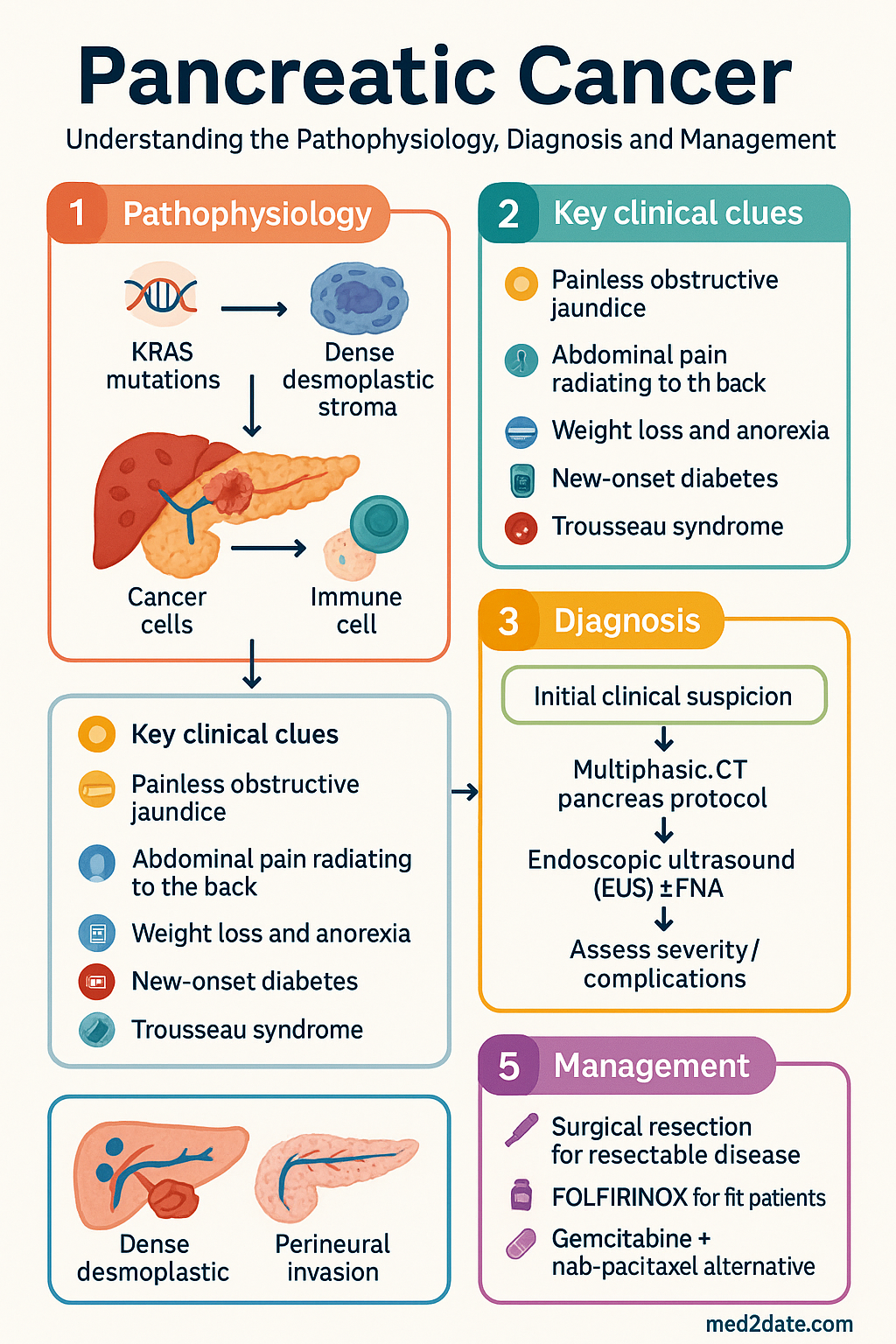
Pancreatic Cancer clinical infographic — pathophysiology, clinical clues, diagnosis, imaging, and management
Tap or click image to enlarge — Pancreatic Cancer: pathophysiology, clinical clues, diagnosis, imaging, and management.
Pancreatic Cancer infographic, full size

Epidemiology & Risk Factors

Modifiable Risk Factors

  • Cigarette smoking: The most well-established modifiable risk factor, conferring a 2–3-fold increased risk. Risk declines after cessation but persists for up to 10–15 years. Responsible for approximately 20–25% of all pancreatic cancers.
  • Chronic pancreatitis: Confers a 2–6-fold increased risk, with risk rising with duration. Both hereditary and alcohol-related chronic pancreatitis are associated.
  • Type 2 diabetes mellitus: Long-standing T2DM increases risk by 1.5–2-fold. New-onset diabetes (<3 years) in patients over 50 may be a presenting feature or early consequence of pancreatic cancer.
  • Obesity: BMI >30 kg/m² is associated with a 20–50% increased risk, likely mediated by chronic inflammation and insulin resistance.
  • Heavy alcohol consumption: Dose-dependent risk, particularly in the context of chronic pancreatitis.
  • Dietary factors: High intake of processed and red meat, low fruit and vegetable consumption — evidence is moderate.

Non-Modifiable & Hereditary Risk Factors

Risk Factor / Syndrome Gene(s) Lifetime Risk Surveillance Consideration
Peutz–Jeghers syndrome STK11 30–50% EUS/MRI from age 30
Familial atypical multiple mole melanoma (FAMMM) CDKN2A 15–20% EUS/MRI from age 40
BRCA1/2 mutations BRCA1, BRCA2 3–5% Consider if family history
Hereditary pancreatitis PRSS1, SPINK1 40–50% EUS/MRI from age 40
Lynch syndrome MLH1, MSH2, MSH6, PMS2 2–4% As per Lynch surveillance
Familial pancreatic cancer (≥2 FDRs) Multiple 6–8× EUS/MRI from age 50 or 10 years before index case
⚠️
Screening: There is no population-based screening programme for pancreatic cancer in Australia. Surveillance with endoscopic ultrasound (EUS) and/or MRI is recommended for high-risk individuals (hereditary syndromes, ≥2 affected first-degree relatives) via specialised centres.

Pathology & Clinical Features

Histological Subtypes

Subtype Frequency Key Features
Pancreatic ductal adenocarcinoma (PDAC) 85–90% Dense desmoplasia, perineural invasion, KRAS mutations in >90%
Intraductal papillary mucinous neoplasm (IPMN) with invasive carcinoma 3–5% Mucinous cystic precursor; main-duct type higher risk
Pancreatic neuroendocrine tumour (pNET) 3–5% Better prognosis; functional vs non-functional
Acinar cell carcinoma 1–2% Lipase hypersecretion syndrome possible
Pancreatoblastoma <1% Predominantly paediatric; good prognosis if resected

Clinical Presentation

Pancreatic cancer is frequently asymptomatic in early stages, and symptoms typically appear only when the tumour has reached a size sufficient to cause local effects or metastatic complications. Common presenting features include:

  • Painless obstructive jaundice: Classical presentation for head of pancreas tumours — progressive deepening jaundice with dark urine, pale stools, and pruritus.
  • Abdominal pain: Epigastric or left upper quadrant, often radiating to the back. Typically insidious, constant, and worsened by eating or recumbency.
  • Weight loss and anorexia: Profound, often >10% body weight, driven by tumour cachexia and exocrine insufficiency.
  • New-onset diabetes: Up to 1% of new-onset diabetes in patients >50 years is attributable to occult pancreatic cancer.
  • Steatorrhoea: Secondary to pancreatic exocrine insufficiency (maldigestion).
  • Trousseau syndrome: Migratory superficial thrombophlebitis or deep vein thrombosis — occurs in 5–10% of PDAC patients.
  • Courvoisier sign: Palpable, non-tender gallbladder in the setting of jaundice — more suggestive of periampullary malignancy than gallstone obstruction.
  • Depression: New-onset depression in elderly patients without prior psychiatric history may precede cancer diagnosis by months.
ℹ️
Clinical pearl: New-onset diabetes in a patient >50 years with concurrent unexplained weight loss should prompt investigation for pancreatic pathology, including CT pancreas protocol and CA 19-9.

Investigations & Staging

Initial Investigations

Essential
Multiphasic CT pancreas protocol
Arterial and portal venous phases. Gold-standard for local staging, vascular involvement assessment, and resectability classification. MBS item 57314/57320.
Essential
CA 19-9 serum tumour marker
Elevated in ~80% of PDAC. Not useful for screening. Note: falsely normal in Lewis antigen-negative individuals (~5–10%). Pre-operative baseline essential for post-operative monitoring.
Available
Liver function tests, bilirubin, coagulation
Obstructive pattern (conjugated hyperbilirubinaemia, elevated ALP/GGT). INR if jaundiced for vitamin K optimisation.
Available
Full blood count, serum albumin, CRP
Nutritional status assessment. Elevated CRP/low albumin suggest poor prognosis (Glasgow Prognostic Score).
Available
Endoscopic ultrasound (EUS) ± FNA
Superior to CT for small lesions (<2 cm), vascular invasion detail, and tissue diagnosis. Essential for borderline resectable cases and IPMN characterisation. MBS item 30467.
Referral
MRI/MRCP abdomen
Useful for liver metastasis detection (superior to CT), biliary anatomy definition, and IPMN surveillance.
Referral
PET-CT (FDG)
Not routine. May be useful for indeterminate CT findings, staging equivocal cases, or suspected recurrence.
Specialist
Germline genetic testing
Recommended for all PDAC patients — BRCA1/2, PALB2, ATM, Lynch panel. Guides therapy (platinum sensitivity, olaparib eligibility) and family cascade screening.
Specialist
Tumour molecular profiling
KRAS/NRAS, MSI/MMR status, NTRK fusions. Guides targeted therapy (pembrolizumab for MSI-H, larotrectinib/entrectinib for NTRK fusion).

Resectability Classification (NCCN/International Consensus)

Resectable
Clear margins anticipated
No arterial contact (coeliac axis, SMA, CHA). Venous contact <180° without contour irregularity.
Upfront surgery or neoadjuvant approach at MDT discretion
Borderline Resectable
R0 resection uncertain
SMA/CHA contact <180°; coeliac axis contact <180° (body/tail); venous contact >180° with contour irregularity or thrombosis with suitable proximal/distal vessel.
Neoadjuvant therapy recommended → restage → surgery if responsive
Locally Advanced / Unresectable
Arterial encasement >180° or unreconstructable venous involvement
SMA or coeliac axis contact >180°; aortic invasion; unreconstructable SMV/portal vein occlusion.
Systemic chemotherapy; surgical conversion rare but possible

TNM Staging (AJCC 8th Edition)

Stage T N M Median Survival
IA T1 (<2 cm) N0 M0 >36 months (if resected)
IB T2 (2–4 cm) N0 M0 20–30 months (if resected)
IIA/IIB T3 (>4 cm) / any T N0 / N1 M0 12–20 months (if resected)
III T4 (coeliac/SMA >180°) Any N M0 9–12 months
IV Any T Any N M1 3–6 months

Management — Surgery & Chemotherapy

Surgical Management

Surgical resection remains the only potentially curative treatment for pancreatic cancer. All patients should be discussed at a high-volume multidisciplinary team (MDT) meeting at a centre performing ≥20 pancreatic resections per year.

1
Resectable Disease
Upfront surgery (pancreaticoduodenectomy, distal pancreatectomy, or total pancreatectomy) followed by adjuvant chemotherapy. Neoadjuvant approach increasingly adopted for body/tail tumours.
2
Borderline Resectable Disease
Neoadjuvant therapy (FOLFIRINOX ± chemoradiotherapy) for 4–6 months, then restage. Proceed to surgery if no progression and favourable vascular anatomy on restaging CT.
3
Locally Advanced / Metastatic
Systemic chemotherapy as primary treatment. Surgical resection rarely indicated except in highly selected cases of excellent response to neoadjuvant therapy.
Procedure Indication Key Considerations
Pancreaticoduodenectomy (Whipple) Head / uncinate / ampullary tumours Pancreaticojejunostomy reconstruction. Pylorus-preserving (ppWhipple) vs classic. Operative mortality <5% at high-volume centres.
Distal pancreatectomy ± splenectomy Body / tail tumours Spleen preservation (Warshaw technique) if no vascular involvement. Laparoscopic approach acceptable at experienced centres.
Total pancreatectomy Diffuse IPMN, multifocal disease Brittle insulin-dependent diabetes (Type 3c DM). Lifelong PERT mandatory. Significant morbidity.
⚠️
Biliary stenting: Pre-operative ERCP with plastic stent is recommended for patients with significant jaundice (bilirubin >250 µmol/L) or cholangitis, planned for surgery within 2–4 weeks. Metal stents are preferred for palliative indications or longer waits.

Chemotherapy Regimens

Systemic therapy is the cornerstone of treatment for locally advanced and metastatic pancreatic cancer, and is mandatory as adjuvant therapy after resection. Regimen selection depends on performance status, comorbidities, and molecular profile.

💊
FOLFIRINOX (modified)
Oxaliplatin + Irinotecan + 5-Fluorouracil + Leucovorin · Preferred 1st-line for fit patients
Adult dose Oxaliplatin 85 mg/m² IV D1, Irinotecan 150 mg/m² IV D1 (reduced from 180), Leucovorin 400 mg/m² IV D1, 5-FU 2400 mg/m² CIV 46h. q14 days × 12 cycles (adjuvant) or until progression (metastatic).
Setting ECOG 0–1; LVEF >50%; adequate organ function
Key toxicities Neutropenia (30–45%), febrile neutropenia, diarrhoea, peripheral neuropathy, fatigue
Renal adjustment No dose reduction for CrCl >30 mL/min. Avoid if CrCl <20 mL/min.
PBS status ✔ PBS General Benefit
💊
Gemcitabine + nab-Paclitaxel
Gemzar® + Abraxane® · Alternative 1st-line / ECOG 1–2
Adult dose Gemcitabine 1000 mg/m² IV D1,8,15 + nab-paclitaxel 125 mg/m² IV D1,8,15. q28 days (1 cycle = 3 weeks on, 1 week off). Continue until progression.
Setting ECOG 0–2; patients not suitable for FOLFIRINOX
Key toxicities Neutropenia, peripheral neuropathy (nab-pax), fatigue, alopecia
Renal adjustment Dose reduce gemcitabine if CrCl 30–60 mL/min. Avoid if CrCl <30 mL/min.
PBS status ⚠ PBS Authority Required
💊
Gemcitabine monotherapy
Gemzar® · Palliative / poor performance status
Adult dose 1000 mg/m² IV weekly × 7 (cycle 1), then weekly × 3 every 28 days (subsequent cycles). Continue until progression or intolerance.
Setting ECOG 2; patients unable to tolerate combination therapy
Key toxicities Myelosuppression, flu-like symptoms, hepatotoxicity
Renal adjustment Dose reduce if CrCl 30–60 mL/min. Avoid if CrCl <30 mL/min.
PBS status ✔ PBS General Benefit
💊
Olaparib (maintenance)
Lynparza® · PARP inhibitor · Germline BRCA1/2 mutated
Adult dose 300 mg PO BD. Continue until progression. Initiated after ≥16 weeks of platinum-based chemotherapy without progression (POLO trial).
Setting Germline BRCA1/2 mutation + metastatic disease + no progression on 1st-line platinum
Key toxicities Nausea, fatigue, anaemia, thrombocytopenia, myelodysplastic syndrome (rare)
Renal adjustment 150 mg BD if CrCl 11–51 mL/min. Not recommended if CrCl <11 mL/min.
PBS status ✘ Authority Required — Restricted

Second-Line Therapy

Prior Regimen Second-Line Option Notes
Gem/nab-pax → progression FOLFOX (5-FU + oxaliplatin + leucovorin) or liposomal irinotecan + 5-FU + leucovorin (NAPOLI-1) Liposomal irinotecan: 70 mg/m² IV q14d + 5-FU 2400 mg/m² CIV 46h + LV 400 mg/m² IV. PBS restricted.
FOLFIRINOX → progression Gemcitabine + nab-paclitaxel If not previously used. Limited benefit expected.
Any → MSI-H/dMMR tumour Pembrolizumab 200 mg IV q21d ~1–2% of PDAC. Check MSI/MMR on all patients. Tissue-agnostic PBS listing.
Any → NTRK fusion Larotrectinib 100 mg PO BD or Entrectinib 600 mg PO OD Extremely rare. Tissue-agnostic approval.

Adjuvant Therapy After Resection

Standard of care: Modified FOLFIRINOX for 6 months (12 cycles) is the preferred adjuvant regimen for fit patients (ECOG 0–1) after R0/R1 resection (PRODIGE 24 trial). Gemcitabine + capecitabine (ESPAC-4) or gemcitabine alone remain alternatives for patients not fit for FOLFIRINOX.

Radiation Therapy

The role of radiation therapy in pancreatic cancer is evolving and remains controversial. Current Australian practice includes:

  • Borderline resectable: Neoadjuvant chemoradiotherapy (e.g., capecitabine-based) may improve R0 resection rates.
  • Locally advanced: Consolidation chemoradiotherapy after 4–6 months of systemic therapy if no distant progression (LAP07 trial showed limited benefit).
  • Positive margins (R1): Adjuvant radiotherapy may be considered at MDT discretion.
  • Stereotactic body radiotherapy (SBRT): Emerging role for locally advanced disease; limited availability in Australia.

Supportive & Palliative Care

Early palliative care integration is recommended from the time of diagnosis for all patients with unresectable disease, and should be offered alongside active treatment for resectable cases.

  • Pancreatic enzyme replacement therapy (PERT): Essential for patients with exocrine insufficiency. Pancreatin (Creon®) 25,000–75,000 units lipase with meals and snacks, titrated to symptoms. PBS listed.
  • Pain management: WHO analgesic ladder. Coeliac plexus neurolysis (EUS-guided) for refractory pain — superior analgesia and reduced opioid requirement.
  • Nutritional support: Early dietitian involvement. Oral nutritional supplements. Consider nasojejunal feeding or PEG only in selected surgical patients.
  • Thromboprophylaxis: LMWH (e.g., enoxaparin 40 mg SC OD) recommended for ambulatory patients on chemotherapy due to high VTE risk. Low threshold for investigation of new symptoms.
  • Psychosocial support: Cancer Council support services, counselling, advance care planning.
💊
Pancreatin (Creon®)
Creon® 25000 · Exocrine pancreatic insufficiency
Adult dose 25,000–75,000 units lipase with meals; 10,000–25,000 units with snacks. Titrate to stool consistency and weight.
Route Oral — swallow whole or sprinkle on acidic food. Do NOT crush.
PBS status ✔ PBS General Benefit

Monitoring & Follow-Up

Post-Resection Surveillance

Every 3 months (Years 1–2)
Clinical review, CA 19-9, CT chest/abdomen/pelvis. Dietitian review. PERT optimisation. Diabetic management (Type 3c DM monitoring).
Every 6 months (Years 3–5)
Clinical review, CA 19-9, CT abdomen/pelvis. Transition to shared care if stable.
Annually (After 5 years)
Clinical review. Continue PERT if indicated. Annual CA 19-9 and CT at clinician discretion.

During Chemotherapy

  • FBC, LFTs, renal function before each cycle.
  • CA 19-9 every 2–3 months (serial trends more informative than single values).
  • CT restaging every 8–12 weeks or with clinical suspicion of progression.
  • Neurotoxicity assessment (oxaliplatin — dose reduce or discontinue at grade 2 persistent neuropathy).
  • Assess ECOG performance status at each cycle; consider dose modification or treatment break if declining.

Special Populations

👴 Elderly
Median age at diagnosis is 72 years — most patients are elderly.
Modified FOLFIRINOX can be considered in fit elderly (ECOG 0–1) with dose modifications; geriatric assessment recommended.
Gemcitabine monotherapy or gemcitabine + nab-paclitaxel with dose reduction is preferred for frail elderly.
Surgical resection should not be denied based on age alone — physiological fitness is the key determinant.
Assess polypharmacy, nutritional status, cognitive function, and social supports before initiating treatment.
🫘 Renal Impairment
FOLFIRINOX: Avoid if CrCl <20 mL/min. No modification for CrCl >30.
Gemcitabine: Dose reduce if CrCl 30–60 mL/min. Avoid if CrCl <30.
Olaparib: 150 mg BD if CrCl 11–51 mL/min.
Capecitabine: Dose reduction required in mild-moderate renal impairment.
Ensure adequate hydration with cisplatin-based regimens (rarely used in PDAC).
🫁 Hepatic Impairment
Obstructive jaundice is common — distinguish from hepatic dysfunction due to metastases.
Correct INR with vitamin K before surgery if obstructive coagulopathy.
Irinotecan is metabolised hepatically — avoid in significant hepatic impairment (bilirubin >3× ULN).
Oxaliplatin is safe in mild-moderate hepatic impairment.
Metastatic liver disease with deranged LFTs: dose reduce or consider gemcitabine monotherapy.
🛡️ Immunocompromised
Standard chemotherapy regimens can be used with careful blood count monitoring.
G-CSF prophylaxis (filgrastim) for high-risk patients or those with prior febrile neutropenia.
Post-splenectomy vaccination (pneumococcal, meningococcal, Hib, influenza) required if distal pancreatectomy with splenectomy.
Antimicrobial prophylaxis as per institutional protocol.

Aboriginal and Torres Strait Islander Health

Aboriginal and Torres Strait Islander Health Considerations
Incidence & Outcomes
Aboriginal and Torres Strait Islander Australians have higher incidence rates of pancreatic cancer and poorer survival outcomes compared to non-Indigenous Australians. Later-stage at presentation is common, partly due to barriers in accessing timely diagnostic services.
Risk Factor Prevalence
Higher rates of smoking, type 2 diabetes, and obesity in many Indigenous communities — all major modifiable risk factors for pancreatic cancer. Culturally appropriate chronic disease management programmes are essential.
Access to Specialist Care
Geographic isolation, particularly in remote and very remote communities, creates significant barriers to accessing pancreatic surgery centres, MDT review, and chemotherapy services. Telehealth has improved access but limitations remain for complex surgical planning.
Diagnostic Delays
Delays in CT imaging access, gastroenterology referrals, and EUS availability contribute to later-stage diagnosis. Embedding cancer care pathways in Aboriginal Community Controlled Health Organisations (ACCHOs) may reduce diagnostic intervals.
Cultural Safety
Culturally safe communication about diagnosis, prognosis, and treatment options is paramount. Involve Aboriginal Health Workers and Liaison Officers. Consider family and kinship structures in decision-making. Respect sorry business and other cultural obligations. Cancer Council resources available in language.
Palliative Care
Palliative care services in remote areas are often limited. Community-based palliative care models, including partnerships with ACCHOs and Remote Area Health Corps, can improve end-of-life care. Spiritually and culturally appropriate dying-on-country options should be explored.

📚 References

  1. 1. Australian Institute of Health and Welfare (AIHW). Cancer data in Australia: pancreatic cancer. Canberra: AIHW; 2024. Available from: https://www.aihw.gov.au/reports/cancer/cancer-data-in-australia
  2. 2. Conroy T, Desseigne F, Ychou M, et al. FOLFIRINOX versus gemcitabine for metastatic pancreatic cancer. N Engl J Med. 2011;364(19):1817–1825. doi:10.1056/NEJMoa1011923
  3. 3. Conroy T, Hammel P, Hebbar M, et al. FOLFIRINOX or gemcitabine as adjuvant therapy for pancreatic cancer. N Engl J Med. 2018;379(25):2395–2406. doi:10.1056/NEJMoa1809775
  4. 4. Von Hoff DD, Ervin T, Arena FP, et al. Increased survival in pancreatic cancer with nab-paclitaxel plus gemcitabine. N Engl J Med. 2013;369(18):1691–1703. doi:10.1056/NEJMoa1304369
  5. 5. Golan T, Hammel P, Reni M, et al. Maintenance olaparib for germline BRCA-mutated metastatic pancreatic cancer. N Engl J Med. 2019;381(4):317–327. doi:10.1056/NEJMoa1903387
  6. 6. National Comprehensive Cancer Network (NCCN). NCCN Clinical Practice Guidelines in Oncology: Pancreatic Adenocarcinoma. Version 2.2024. Available from: https://www.nccn.org/professionals/physician_gls/pdf/pancreatic.pdf
  7. 7. Royal Australasian College of Surgeons (RACS). Guidelines for the management of pancreatic cancer in Australia and New Zealand. Melbourne: RACS; 2021.
  8. 8. Cancer Council Australia. Pancreatic cancer — clinical practice guidelines for the management of pancreatic cancer. Sydney: Cancer Council Australia; 2021. Available from: https://www.cancer.org.au/clinical-guidelines/pancreatic-cancer
  9. 9. Neoptolemos JP, Palmer DH, Ghaneh P, et al. Comparison of adjuvant gemcitabine and capecitabine with gemcitabine monotherapy in patients with resected pancreatic cancer (ESPAC-4): a multicentre, open-label, randomised, phase 3 trial. Lancet. 2017;389(10073):1011–1024. doi:10.1016/S0140-6736(17)30046-8
  10. 10. Royal Australian College of General Practitioners (RACGP). Guidelines for preventive activities in general practice. 10th ed. East Melbourne: RACGP; 2024.
  11. 11. Australian Institute of Health and Welfare (AIHW). Aboriginal and Torres Strait Islander health performance framework 2023: summary report. Canberra: AIHW; 2023.
  12. 12. Tempero MA, Malafa MP, Al-Hawary M, et al. Pancreatic adenocarcinoma, version 2.2021, NCCN clinical practice guidelines in oncology. J Natl Compr Canc Netw. 2021;19(4):439–457.
  13. 13. Department of Health and Aged Care, Australian Government. Medicare Benefits Schedule (MBS) — Diagnostic imaging items. Canberra; 2024. Available from: http://www.mbsonline.gov.au
for PBS-listed medicines at participating pharmacies.
Cultural safety
Engagement with Aboriginal Community Controlled Health Organisations (ACCHOs) is essential. Cultural safety training for non-Indigenous clinicians, use of Aboriginal Health Workers and Liaison Officers, and incorporation of traditional healing practices alongside Western medicine improve treatment adherence and outcomes. Avoidance of eye contact, respect for gender-sensitive examination practices, and understanding of sorry business protocols are critical elements of culturally safe care.
Medication adherence
Complex DMARD regimens with frequent monitoring requirements present adherence challenges. Long-acting depot injections (e.g., methotrexate SC) may improve adherence compared to oral regimens. Community pharmacy partnerships through the Indigenous Pharmacy Programmes improve medication management.
Specific conditions
Rheumatic heart disease (RHD) requires secondary prophylaxis with benzathine penicillin G (BPG) 1.2 MU IM every 3–4 weeks for a minimum of 10 years or until age 21 (whichever is longer). RHD registers (e.g., NT RHD Register) facilitate recall and follow-up. The Australian RHD Endgame Strategy targets elimination by 2031.
Referral pathways
Referral through ACCHOs and Aboriginal Hospital Liaison Officers (AHLOs) improves engagement. The Specialist Outreach Assistance Programme provides funded specialist visits to remote communities. NT, WA, and QLD have specific rheumatology outreach programmes targeting Indigenous communities.

📚 References

  1. 1. Australian Institute of Health and Welfare (AIHW). Autoimmune disease in Australia. Cat. no. PHE 312. Canberra: AIHW; 2023.
  2. 2. Fraenkel L, Bathon JM, England BR, et al. 2021 American College of Rheumatology guideline for the treatment of rheumatoid arthritis. Arthritis Care Res. 2021;73(7):924–939.
  3. 3. Fanouriakis A, Kostopoulou M, Alber K, et al. 2019 update of the EULAR recommendations for the management of systemic lupus erythematosus. Ann Rheum Dis. 2019;78(6):736–745.
  4. 4. Chung SA, Langford CA, Maz M, et al. 2021 American College of Rheumatology/Vasculitis Foundation guideline for the management of antineutrophil cytoplasmic antibody-associated vasculitis. Arthritis Care Res. 2021;73(11):1583–1599.
  5. 5. Smolen JS, Landewé RBM, Bijlsma JWJ, et al. EULAR recommendations for the management of rheumatoid arthritis with synthetic and biological disease-modifying antirheumatic drugs: 2022 update. Ann Rheum Dis. 2023;82(1):3–18.
  6. 6. Australian Technical Advisory Group on Immunisation (ATAGI). Australian Immunisation Handbook. Australian Government Department of Health; 2024. Available from: immunisationhandbook.health.gov.au.
  7. 7. Rheumatic Heart Disease Australia (RHDAustralia). The 2020 Australian guideline for prevention, diagnosis, and management of acute rheumatic fever and rheumatic heart disease. 3rd ed. Darwin: Menzies School of Health Research; 2020.
  8. 8. Pharmaceutical Benefits Scheme (PBS). PBS Schedule. Australian Government Department of Health. Available from: pbs.gov.au. Accessed 2024.
  9. 9. Agarwal S, Cunnington J, Nossent J. Autoimmune disease in Indigenous Australians: a systematic review. Int J Rheum Dis. 2021;24(12):1487–1498.
  10. 10. Pisetsky DS. Antinuclear antibody testing — misunderstood or misused? Clin Immunol. 2023;255:109717.
  11. 11. Bertsias GK, Tektonidou M, Amoura Z, et al. Joint European League Against Rheumatism and European Renal Association–European Dialysis and Transplant Association (EULAR/ERA-EDTA) recommendations for the management of adult and paediatric lupus nephritis. Ann Rheum Dis. 2012;71(11):1771–1782.
  12. 12. Ledingham J, Deighton C; British Society for Rheumatology Standards, Audit and Guidelines Working Group. Update on the British Society for Rheumatology guidelines for prescribing TNFα blockers in adults with rheumatoid arthritis. Rheumatology. 2005;44(2):155–158.
  13. 13. National Health and Medical Research Council (NHMRC). National statement on ethical conduct in human research. Canberra: NHMRC; 2023 (updated).
for PBS-listed medicines at participating pharmacies.
Cultural safety
Engagement with Aboriginal Community Controlled Health Organisations (ACCHOs) is essential. Cultural safety training for non-Indigenous clinicians, use of Aboriginal Health Workers and Liaison Officers, and incorporation of traditional healing practices alongside Western medicine improve treatment adherence and outcomes. Avoidance of eye contact, respect for gender-sensitive examination practices, and understanding of sorry business protocols are critical elements of culturally safe care.
Medication adherence
Complex DMARD regimens with frequent monitoring requirements present adherence challenges. Long-acting depot injections (e.g., methotrexate SC) may improve adherence compared to oral regimens. Community pharmacy partnerships through the Indigenous Pharmacy Programmes improve medication management.
Specific conditions
Rheumatic heart disease (RHD) requires secondary prophylaxis with benzathine penicillin G (BPG) 1.2 MU IM every 3–4 weeks for a minimum of 10 years or until age 21 (whichever is longer). RHD registers (e.g., NT RHD Register) facilitate recall and follow-up. The Australian RHD Endgame Strategy targets elimination by 2031.
Referral pathways
Referral through ACCHOs and Aboriginal Hospital Liaison Officers (AHLOs) improves engagement. The Specialist Outreach Assistance Programme provides funded specialist visits to remote communities. NT, WA, and QLD have specific rheumatology outreach programmes targeting Indigenous communities.

📚 References

  1. 1. Australian Institute of Health and Welfare (AIHW). Autoimmune disease in Australia. Cat. no. PHE 312. Canberra: AIHW; 2023.
  2. 2. Fraenkel L, Bathon JM, England BR, et al. 2021 American College of Rheumatology guideline for the treatment of rheumatoid arthritis. Arthritis Care Res. 2021;73(7):924–939.
  3. 3. Fanouriakis A, Kostopoulou M, Alber K, et al. 2019 update of the EULAR recommendations for the management of systemic lupus erythematosus. Ann Rheum Dis. 2019;78(6):736–745.
  4. 4. Chung SA, Langford CA, Maz M, et al. 2021 American College of Rheumatology/Vasculitis Foundation guideline for the management of antineutrophil cytoplasmic antibody-associated vasculitis. Arthritis Care Res. 2021;73(11):1583–1599.
  5. 5. Smolen JS, Landewé RBM, Bijlsma JWJ, et al. EULAR recommendations for the management of rheumatoid arthritis with synthetic and biological disease-modifying antirheumatic drugs: 2022 update. Ann Rheum Dis. 2023;82(1):3–18.
  6. 6. Australian Technical Advisory Group on Immunisation (ATAGI). Australian Immunisation Handbook. Australian Government Department of Health; 2024. Available from: immunisationhandbook.health.gov.au.
  7. 7. Rheumatic Heart Disease Australia (RHDAustralia). The 2020 Australian guideline for prevention, diagnosis, and management of acute rheumatic fever and rheumatic heart disease. 3rd ed. Darwin: Menzies School of Health Research; 2020.
  8. 8. Pharmaceutical Benefits Scheme (PBS). PBS Schedule. Australian Government Department of Health. Available from: pbs.gov.au. Accessed 2024.
  9. 9. Agarwal S, Cunnington J, Nossent J. Autoimmune disease in Indigenous Australians: a systematic review. Int J Rheum Dis. 2021;24(12):1487–1498.
  10. 10. Pisetsky DS. Antinuclear antibody testing — misunderstood or misused? Clin Immunol. 2023;255:109717.
  11. 11. Bertsias GK, Tektonidou M, Amoura Z, et al. Joint European League Against Rheumatism and European Renal Association–European Dialysis and Transplant Association (EULAR/ERA-EDTA) recommendations for the management of adult and paediatric lupus nephritis. Ann Rheum Dis. 2012;71(11):1771–1782.
  12. 12. Ledingham J, Deighton C; British Society for Rheumatology Standards, Audit and Guidelines Working Group. Update on the British Society for Rheumatology guidelines for prescribing TNFα blockers in adults with rheumatoid arthritis. Rheumatology. 2005;44(2):155–158.
  13. 13. National Health and Medical Research Council (NHMRC). National statement on ethical conduct in human research. Canberra: NHMRC; 2023 (updated).