Home Oncology Paraneoplastic Syndromes

Paraneoplastic Syndromes

📋 Key Information Summary

📋
  • Paraneoplastic syndromes (PNS) are remote effects of malignancy mediated by hormones, cytokines, or autoimmune mechanisms — not direct tumour invasion or metastasis.
  • PNS may be the presenting feature of an occult malignancy; a high index of suspicion is critical for early cancer diagnosis.
  • Endocrine PNS include SIADH (hyponatraemia in SCLC), ectopic ACTH syndrome, and malignancy-associated hypercalcaemia (PTHrP-mediated).
  • Neurological PNS include Lambert-Eaton myasthenic syndrome (LEMS), paraneoplastic cerebellar degeneration, and limbic encephalitis — often associated with specific onconeural antibodies.
  • Classic onconeural antibodies (anti-Hu, anti-Yo, anti-CV2/CRMP5, anti-amphiphysin) strongly suggest PNS even before cancer is detected.
  • Haematological PNS include Trousseau syndrome (migratory thrombophlebitis), DIC, and erythrocytosis — thromboembolism may precede cancer diagnosis by months.
  • Diagnosis requires exclusion of direct metastasis, infection, and treatment-related toxicity; onconeural antibody panels and FDG-PET are key investigations.
  • Treatment of the underlying malignancy is the most effective strategy for PNS management.
  • Immunotherapy (IVIg, plasma exchange, corticosteroids, rituximab) is indicated for most neurological PNS and some haematological PNS.
  • Symptomatic management is essential: SIADH requires fluid restriction ± hypertonic saline; hypercalcaemia requires IV zoledronic acid or denosumab; seizures require anticonvulsants.
  • Aboriginal and Torres Strait Islander peoples may present later with more advanced malignancy, increasing PNS risk; culturally safe pathways and remote telehealth access are essential.
  • Venous thromboembolism (VTE) prophylaxis in cancer patients should follow Australian NHMRC and eviQ guidelines; unprovoked VTE in patients >40 years warrants occult malignancy screening.
  • Some PNS (e.g., dermatomyositis, acanthosis nigricans maligna) have cutaneous manifestations detectable on physical examination — always examine the skin in suspected PNS.

Introduction & Australian Epidemiology

Paraneoplastic syndromes (PNS) are a heterogeneous group of clinical disorders associated with malignant disease that are not directly attributable to the physical effects of the primary tumour or its metastases. They are mediated by hormones, peptides, cytokines, or immune cross-reactivity between tumour antigens and normal tissues (onconeural antigens). PNS affect approximately 8–15% of patients with cancer and may be the earliest — and sometimes only — clinical manifestation of an otherwise occult malignancy.

Understanding PNS is critical for Australian clinicians across all disciplines, as early recognition can lead to timely cancer diagnosis, improved treatment outcomes, and prevention of irreversible organ damage. In the Australian context, the spectrum of cancers associated with PNS — particularly small-cell lung cancer (SCLC), breast carcinoma, ovarian carcinoma, thymoma, and haematological malignancies — mirrors global patterns, though regional variations in cancer incidence exist.

⚠️
Clinical pearl: A new neurological syndrome (cerebellar ataxia, neuropathy, limbic encephalitis) or unexplained endocrine disturbance (hyponatraemia, hypercalcaemia) in a patient aged >40 years should prompt urgent investigation for underlying malignancy, even if no tumour is clinically apparent.

According to the Australian Institute of Health and Welfare (AIHW), lung cancer remains the fifth most common cancer in Australia (approximately 13,800 new diagnoses in 2023), with SCLC accounting for approximately 13% of cases. SCLC is the cancer most frequently associated with paraneoplastic endocrine syndromes. In Aboriginal and Torres Strait Islander peoples, lung cancer incidence is significantly higher (1.7× age-standardised rate) and is more often diagnosed at advanced stage, potentially increasing the burden of PNS.

The International Collaborative Group on PNS classification divides PNS into four broad categories: endocrine, neurological, haematological/vascular, and dermatological/musculoskeletal. This article follows a clinically oriented structure aligned with Australian practice.
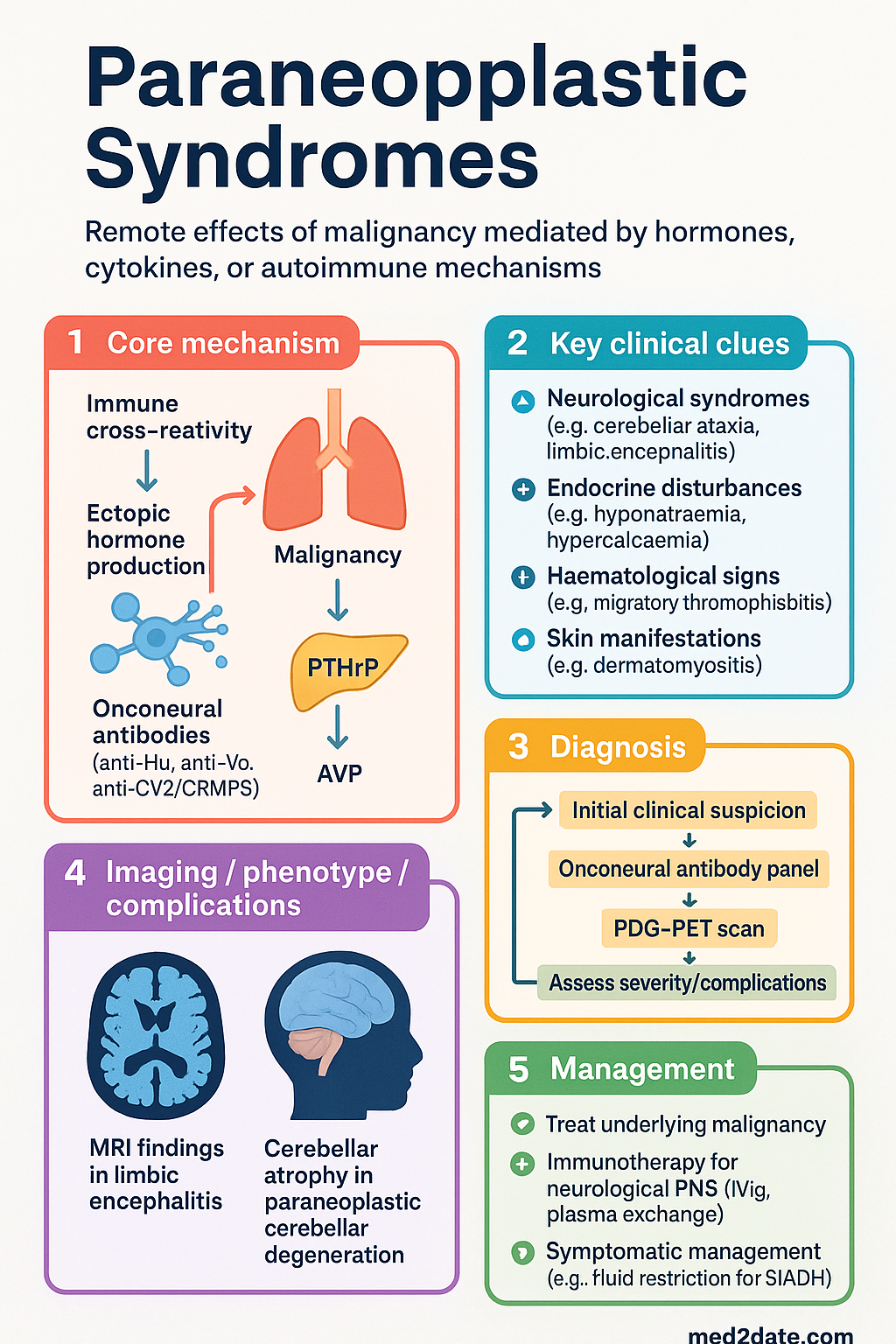
Paraneoplastic Syndromes clinical infographic — pathophysiology, clinical clues, diagnosis, imaging, and management
Tap or click image to enlarge — Paraneoplastic Syndromes: pathophysiology, clinical clues, diagnosis, imaging, and management.
Paraneoplastic Syndromes infographic, full size

Endocrine Paraneoplastic Syndromes

Endocrine PNS result from ectopic hormone production or inappropriate secretion of hormone-like peptides by tumour cells. These syndromes are often clinically apparent and may represent the initial presentation of an underlying malignancy.

Syndrome of Inappropriate Antidiuretic Hormone (SIADH)

SIADH is the most common endocrine PNS, occurring in approximately 10–15% of patients with small-cell lung cancer (SCLC). Ectopic production of arginine vasopressin (AVP) or AVP-like peptides by tumour cells leads to impaired free water excretion, dilutional hyponatraemia, and euvolaemic hypotonic hyponatraemia.

💊
Tolvaptan
Samsca® · Vaptan (vasopressin receptor antagonist)
Adult dose 15 mg PO once daily, titrate to 30–60 mg daily; initiate in hospital
Renal adjustment No dose adjustment; avoid in anuria or severe hepatic impairment
PBS status ✖ Not PBS listed
💊
Demeclocycline
Declomycin® · Tetracycline antibiotic (nephrogenic DI effect)
Adult dose 150–300 mg PO BD–QID; onset 3–6 days
Paediatric dose Not recommended <8 years; 6–12 mg/kg/day in divided doses
PBS status ⚠ Authority Required
🚨
Osmotic demyelination risk: Serum sodium correction must not exceed 8 mmol/L in any 24-hour period (ideally ≤6 mmol/L/day). Over-rapid correction risks osmotic demyelination syndrome (ODS) — potentially irreversible pontine and extrapontine myelinolysis. Monitor sodium every 4–6 hours during active correction.

Diagnostic criteria for SIADH:

  • Serum osmolality <275 mOsm/kg
  • Urine osmolality >100 mOsm/kg
  • Euvolaemic status (clinically)
  • Urine sodium >40 mmol/L (with normal salt and water intake)
  • Normal thyroid and adrenal function (must exclude hypothyroidism and adrenal insufficiency)
  • No diuretic use

Ectopic ACTH Syndrome (Cushing Syndrome)

Ectopic ACTH production accounts for approximately 10–15% of all Cushing syndrome cases. SCLC, bronchial carcinoid, thymic carcinoid, medullary thyroid carcinoma, and phaeochromocytoma are the most common causes. The clinical presentation may differ from pituitary-dependent Cushing disease: hypokalaemic metabolic alkalosis, hyperpigmentation, rapid onset, and proximal myopathy are more prominent.

💊
Metyrapone
Metopirone® · 11β-hydroxylase inhibitor
Adult dose 250–1000 mg PO daily in divided doses (QDS); titrate to cortisol target
PBS status ✖ Not PBS listed (SAS required)
💊
Ketoconazole
Nizoral® · Antifungal / steroidogenesis inhibitor
Adult dose 200–800 mg PO daily in divided doses
Hepatic adjustment Contraindicated in severe hepatic impairment; monitor LFTs fortnightly
PBS status ⚠ Authority Required (oncology indication)
💊
Osilodrostat
Isturisa® · 11β-hydroxylase inhibitor (newer agent)
Adult dose 2 mg PO BD; titrate to 2–7 mg BD based on morning cortisol
PBS status ✖ Not PBS listed

Malignancy-Associated Hypercalcaemia

Hypercalcaemia occurs in approximately 20–30% of patients with cancer during their illness. The three main mechanisms are: (1) PTHrP-mediated humoral hypercalcaemia of malignancy (HHM) — the most common, seen in squamous cell carcinomas, breast cancer, renal cell carcinoma; (2) osteolytic metastases with local cytokine release; and (3) 1,25-dihydroxyvitamin D production (lymphoma). HHM is characterised by suppressed PTH, elevated PTHrP, and often normal or low 1,25-vitamin D.

💊
Zoledronic acid
Zometa® · Bisphosphonate (IV)
Adult dose 4 mg IV over ≥15 minutes; may repeat after ≥7 days
Renal adjustment Contraindicated if CrCl <30 mL/min; dose reduce to 3.5 mg if CrCl 30–60
PBS status ✔ PBS General Benefit (IV)
💊
Denosumab
Prolia® / Xgeva® · RANK-L inhibitor
Adult dose 120 mg SC every 4 weeks (Xgeva®); 60 mg SC every 6 months (Prolia®)
Renal adjustment No renal dose adjustment; safe in CKD (advantage over bisphosphonates)
PBS status ⚠ Authority Required (Xgeva® for skeletal events)
💧
Normal saline 0.9%
Isotonic crystalloid resuscitation
Adult dose 1–2 L IV over 2–4 hours initially; then 100–200 mL/hr; monitor fluid balance
Caution Avoid rapid correction in cardiac failure; monitor for fluid overload
PBS status ✔ Hospital supply
ℹ️
Calcitonin for acute severe hypercalcaemia: Calcitonin (4 IU/kg SC/IM every 12 hours) provides rapid but transient calcium-lowering (onset 4–6 hours). Combine with IV fluids and bisphosphonate or denosumab for sustained effect. Not PBS listed.

Neurological Paraneoplastic Syndromes

Neurological PNS are among the most clinically significant paraneoplastic conditions. They result from immune cross-reactivity between tumour-expressed onconeural antigens and the nervous system. Most are mediated by specific onconeural antibodies, though some (e.g., LEMS) involve direct antibody-mediated ion channel dysfunction rather than cytotoxic T-cell-mediated neuronal destruction.

⚠️
Key distinction: "Classic" onconeural antibodies (anti-Hu, anti-Yo, anti-CV2/CRMP5, anti-amphiphysin, anti-Ma2, anti-Ri) are directed against intracellular antigens and indicate cytotoxic T-cell-mediated neuronal destruction — the damage is often irreversible. By contrast, antibodies targeting cell-surface antigens (anti-NMDAR, anti-LGI1, anti-CASPR2, anti-AMPA-R, anti-GABA-B-R) cause reversible neuronal dysfunction and respond better to immunotherapy.

Lambert-Eaton Myasthenic Syndrome (LEMS)

LEMS is an autoimmune presynaptic neuromuscular junction disorder caused by antibodies against P/Q-type voltage-gated calcium channels (VGCC). Approximately 60% of LEMS cases are paraneoplastic, overwhelmingly associated with SCLC. Clinical features include proximal limb weakness (especially lower limbs), autonomic dysfunction (dry mouth, constipation, erectile dysfunction), reduced or absent deep tendon reflexes that may "facilitate" with repeated testing, and a characteristic EMG pattern of incremental response to repetitive nerve stimulation (unlike myasthenia gravis).

💊
3,4-Diaminopyridine (amifampridine)
Firdapse® · Potassium channel blocker
Adult dose 20 mg PO daily in divided doses; max 60 mg/day in divided doses
Paediatric dose 0.5 mg/kg/day PO in divided doses; max 1 mg/kg/day
PBS status ✖ Not PBS listed (SAS required)
💊
Intravenous immunoglobulin (IVIg)
Intragam® P / Privigen® / Octagam®
Adult dose 2 g/kg over 2–5 days; maintenance 1 g/kg every 4 weeks
Renal adjustment Use sucrose-free preparations in CKD; monitor renal function
PBS status ⚠ Authority Required

Paraneoplastic Cerebellar Degeneration

Paraneoplastic cerebellar degeneration (PCD) presents with subacute onset of severe truncal and limb ataxia, dysarthria, nystagmus, and often cognitive changes. It may be associated with anti-Yo antibodies (breast, ovarian cancer), anti-Tr/DNER (Hodgkin lymphoma), anti-Hu (SCLC), or anti-CV2/CRMP5 (SCLC, thymoma). Brain MRI may initially appear normal but shows progressive cerebellar atrophy over weeks to months.

PCD associated with classic onconeural antibodies is largely resistant to immunotherapy due to irreversible Purkinje cell loss. However, aggressive tumour treatment (surgery, chemotherapy) may stabilise or modestly improve neurological function in some patients.

Paraneoplastic Limbic Encephalitis

Paraneoplastic limbic encephalitis (PLE) is characterised by subacute onset of short-term memory loss, seizures, psychiatric symptoms (anxiety, depression, psychosis), and temporal lobe abnormalities on MRI (increased T2/FLAIR signal in mesial temporal structures). It may be associated with:

  • Anti-Hu: SCLC — aggressive, poor prognosis
  • Anti-Ma2: Testicular germ cell tumour — may also cause brainstem encephalitis
  • Anti-NMDAR: Ovarian teratoma — especially in young women; better prognosis if tumour removed
  • Anti-CASPR2 / anti-LGI1: Thymoma — may be non-paraneoplastic in older males

Paraneoplastic Neuropathies

Subacute sensory neuronopathy (anti-Hu-associated) is the classic paraneoplastic neuropathy. It presents with asymmetric, predominantly sensory neuropathy with sensory ataxia, pseudoathetosis, and often preserved motor function. It is most commonly associated with SCLC and tends to be severe and treatment-resistant. Dorsal root ganglion inflammation is the pathological hallmark.

Other paraneoplastic neuropathies include autonomic neuropathy (anti-ganglionic AChR antibodies), sensorimotor axonal neuropathy, and demyelinating neuropathies resembling CIDP. Autonomic neuropathy with anti-ganglionic AChR antibodies may present with severe gastrointestinal dysmotility (intestinal pseudo-obstruction), orthostatic hypotension, and anhidrosis.

Paraneoplastic Opsoclonus-Myoclonus Syndrome (OMS)

OMS (dancing eyes–dancing feet syndrome) is characterised by rapid, involuntary, multidirectional saccades (opsoclonus), myoclonus, ataxia, and behavioural changes. In paediatric patients, it is associated with neuroblastoma (50% of cases); in adults, SCLC and breast cancer. In children, OMS may be the presenting feature of otherwise clinically occult neuroblastoma, and urinary catecholamines (HVA, VMA) and MIBG scanning are essential investigations.

Haematological & Other Syndromes

Haematological PNS encompass a range of blood count abnormalities and coagulation disorders that arise as a consequence of malignancy through mechanisms separate from direct marrow infiltration.

Trousseau Syndrome (Cancer-Associated Thrombosis)

Trousseau syndrome describes migratory superficial thrombophlebitis and a hypercoagulable state associated with occult malignancy. Venous thromboembolism (VTE) — including deep vein thrombosis (DVT), pulmonary embolism (PE), and unusual-site thrombosis (portal vein, cerebral sinuses, upper limb) — may be the presenting feature of cancer, preceding the cancer diagnosis by months. Pancreatic, lung, gastric, and ovarian cancers carry the highest risk.

⚠️
Australian guideline recommendation: Unprovoked VTE in patients aged >40 years warrants screening for underlying malignancy (NHMRC/eviQ). Investigations should include age-appropriate cancer screening (colonoscopy, mammography, CT chest/abdomen/pelvis). Routine extensive CT scanning beyond clinical assessment and basic investigations is not consistently recommended, but CT CAP is reasonable given the high yield.

Management of cancer-associated VTE:

💊
Low-molecular-weight heparin (LMWH)
Enoxaparin (Clexane®) · Dalteparin (Fragmin®)
Adult dose (treatment) Enoxaparin 1.5 mg/kg SC OD or 1 mg/kg SC BD; Dalteparin 200 IU/kg SC OD (max 18,000 IU)
Duration Minimum 3–6 months; continue while cancer active or on treatment
Renal adjustment Enoxaparin: dose-reduce or monitor anti-Xa if CrCl <30 mL/min; consider UFH instead
PBS status ✔ PBS General Benefit
💊
Edoxaban
Lixiana® · Factor Xa inhibitor (DOAC)
Adult dose 60 mg PO OD (reduce to 30 mg if CrCl 15–50, weight ≤60 kg, or concurrent P-gp inhibitor)
Contraindication GI cancers (high bleeding risk); active luminal GI malignancy
PBS status ⚠ Authority Required (cancer-associated VTE)
💊
Rivaroxaban
Xarelto® · Factor Xa inhibitor (DOAC)
Adult dose 15 mg PO BD with food × 21 days, then 20 mg PO OD with food
Renal adjustment Use with caution if CrCl 15–49; avoid if CrCl <15
PBS status ⚠ Authority Required

Paraneoplastic Erythrocytosis

Ectopic erythropoietin (EPO) production causes paraneoplastic erythrocytosis, most commonly associated with renal cell carcinoma, hepatocellular carcinoma, cerebellar haemangioblastoma, and uterine fibroids. Serum EPO levels are inappropriately elevated for the haematocrit. Management is directed at treating the underlying tumour; phlebotomy is rarely needed.

Paraneoplastic Eosinophilia

Marked peripheral eosinophilia may occur with T-cell lymphomas (mycosis fungoides, Sézary syndrome), Hodgkin lymphoma, and solid tumours. Eosinophilic infiltration of tissues (skin, lungs, heart) may cause organ damage. IL-5 secretion by the tumour is the typical mechanism.

Paraneoplastic Autoimmune Cytopenias

Autoimmune haemolytic anaemia (AIHA), immune thrombocytopenia (ITP), and pure red cell aplasia (PRCA) may be associated with lymphoproliferative disorders (CLL, non-Hodgkin lymphoma) and thymoma. Warm AIHA is treated with corticosteroids (prednisolone 1 mg/kg/day) as first-line; refractory cases may require rituximab (375 mg/m² IV weekly × 4) or splenectomy. PRCA with thymoma often resolves after thymectomy.

Dermatological Paraneoplastic Syndromes

Dermatological manifestations may provide important diagnostic clues:

  • Dermatomyositis: Heliotrope rash, Gottron papules, proximal myopathy — associated with ovarian, lung, gastric, and nasopharyngeal cancers (particularly relevant in the Australian–Asian population)
  • Acanthosis nigricans maligna: Sudden onset, extensive, pruritic — associated with gastric adenocarcinoma
  • Paraneoplastic pemphigus: Severe mucocutaneous blistering — associated with CLL, Castleman disease, NHL
  • Sweet syndrome (acute febrile neutrophilic dermatosis): Painful erythematous plaques, neutrophilia — associated with haematological malignancies
  • Erythema gyratum repens: Wood-grain pattern migratory erythema — high association with lung and oesophageal cancer

Diagnosis & Management

The diagnosis of PNS requires a systematic approach integrating clinical assessment, serological testing, imaging, and exclusion of alternative diagnoses. The European PNS Euronetwork diagnostic criteria remain widely used.

Diagnostic Approach

1
Clinical Suspicion
Recognise a classical PNS syndrome (cerebellar degeneration, LEMS, limbic encephalitis, subacute sensory neuropathy, dermatomyositis, SIADH) in a patient with — or at high risk of — cancer.
2
Onconeural Antibody Testing
Order comprehensive PNS antibody panel: anti-Hu (ANNA-1), anti-Yo (PCA-1), anti-CV2/CRMP5, anti-amphiphysin, anti-Ri (ANNA-2), anti-Ma2, anti-Tr/DNER, and cell-surface antibodies (anti-NMDAR, anti-LGI1, anti-CASPR2) if encephalitis suspected. Testing available via major Australian laboratories (SydPath, Melbourne Health, Sullivan Nicolaides).
3
Cancer Screening
FDG-PET/CT is the single most valuable investigation for occult malignancy detection in PNS (sensitivity 85–95%). CT chest/abdomen/pelvis, mammography in women, testicular ultrasound in young men (anti-Ma2). Repeat imaging at 3–6 months if initial screen negative.
4
CSF Analysis
Lumbar puncture for neurological PNS: lymphocytic pleocytosis (10–200 cells/µL), elevated protein, oligoclonal bands, intrathecal antibody synthesis. CSF antibody testing may be positive even if serum is negative.
5
Electrophysiology & Neuroimaging
NCS/EMG (LEMS: incremental response on high-frequency RNS; sensory neuronopathy: absent SNAPs). Brain MRI (limbic encephalitis: bilateral mesial temporal T2/FLAIR hyperintensity). FDG-PET brain may show hypermetabolism before MRI changes.

Investigations Summary

Essential Onconeural antibody panel (serum ± CSF) Anti-Hu, Yo, CV2/CRMP5, amphiphysin, Ri, Ma2, Tr/DNER + cell-surface panel. Available: major reference labs. MBS item: generally specialist-requested.
Essential FDG-PET/CT Sensitivity 85–95% for occult malignancy. MBS item 61450 (Medicare-eligible if clinical criteria met). Available at most metropolitan PET centres; remote patients may require travel.
Available CT chest/abdomen/pelvis with contrast MBS item 56810 (CT body). Widely available across Australia. Alternative if PET unavailable.
Available CSF analysis (cell count, protein, glucose, OCBs) MBS items: lumbar puncture (item 52606), CSF analysis (varies). Available at all hospitals.
Referral Nerve conduction studies / EMG Specialist referral to neurophysiology. MBS item 11700. Characteristic LEMS pattern on high-frequency repetitive nerve stimulation.
Available Serum calcium, PTH, PTHrP, vitamin D metabolites MBS items widely available. PTHrP: specialist lab (SydPath, Douglass Hanly Moir). Distinguish HHM from metastatic hypercalcaemia.
Available Serum and urine osmolality, urine sodium For SIADH workup. MBS items available at all pathology providers.
Referral MIBG scan / urinary catecholamines (paediatric) For suspected neuroblastoma in paediatric OMS. MBS item 61442 (MIBG). Available at paediatric centres (Sydney Children's, RCH Melbourne, Queensland Children's).

Treatment Principles

First-Line
Treat the Tumour
Tumour-directed therapy (surgery, chemotherapy, radiotherapy) is the most effective treatment for PNS. Tumour removal or response may improve or stabilise PNS.
Setting: Oncology MDT
Second-Line
Immunotherapy
IVIg (2 g/kg over 5 days), plasma exchange (5–7 exchanges over 14 days), corticosteroids (methylprednisolone 1 g IV × 3–5 days then oral taper), rituximab (375 mg/m² weekly × 4). Best evidence for cell-surface antibody-mediated PNS.
Setting: Neurology / Haematology specialist
Third-Line
Immunosuppression
Cyclophosphamide, mycophenolate mofetil, azathioprine for refractory cases. Consider combined therapy (rituximab + cyclophosphamide). Limited evidence; specialist decision.
Setting: Specialist centre
Favourable prognosis if: Cell-surface antibody-mediated PNS (anti-NMDAR encephalitis, LEMS) responds well to immunotherapy + tumour treatment. Anti-NMDAR encephalitis in young women with ovarian teratoma: 80% improvement or recovery with tumour removal + first-line immunotherapy.

Monitoring

Monitoring in PNS involves both oncological and neurological/systematic assessment:

  • Repeat onconeural antibody titres every 3–6 months (may correlate with clinical status in some PNS, though classic antibodies may remain elevated despite treatment)
  • Serial neurological examination and disability scoring (mRankin, EDSS where appropriate)
  • Repeat FDG-PET/CT at 3–6 months if initial cancer screening negative (approximately 10–20% of patients develop detectable cancer within 2–5 years)
  • Endocrine monitoring: serum sodium every 4–6 hours during SIADH treatment; serum calcium every 2–3 days during hypercalcaemia management; cortisol levels for ectopic ACTH
  • VTE surveillance in cancer patients: clinical assessment at each visit; imaging if new symptoms
  • Ongoing cancer surveillance for minimum 2–5 years in patients with onconeural antibodies but no detectable malignancy at initial workup

ATSI (Aboriginal and Torres Strait Islander) Health Considerations

Aboriginal and Torres Strait Islander Health Considerations
Cancer stage at diagnosis
ATSI peoples are more likely to present with advanced-stage cancer, increasing the likelihood and severity of paraneoplastic syndromes. Lung cancer age-standardised incidence is 1.7× higher in ATSI peoples (AIHW 2023).
Access to specialist services
Onconeural antibody testing and FDG-PET/CT are primarily available in metropolitan centres. Remote and very remote ATSI patients may require RFDS transfer, adding delays. Telehealth neurology consultations (MBS item 91822) can expedite initial assessment.
Diagnostic delays
Paraneoplastic syndromes may be misdiagnosed as infection, medication toxicity, or alcohol-related conditions. Culturally safe clinical assessment and a high index of suspicion are essential. Engage Aboriginal Health Workers/Practitioners in the diagnostic pathway.
Immunotherapy access
IVIg, plasma exchange, and rituximab require hospital-based infusion centres. Patients from remote communities may face logistical barriers. Consider outreach models and integration with local Aboriginal Community Controlled Health Organisations (ACCHOs).
Thromboembolism risk
ATSI peoples have higher baseline VTE risk (1.2× age-standardised). Combined with cancer, this increases the urgency for VTE prophylaxis and cancer screening following unprovoked thromboembolism.
RHDAustralia alignment
Rheumatic heart disease considerations: anticoagulation for Trousseau syndrome requires careful monitoring in patients with valvular disease. Endocarditis prophylaxis may interact with PNS treatment regimens.

Quick Reference: Cancer–Antibody–Syndrome Associations

Antibody Syndrome Associated Cancer Prognosis
Anti-Hu (ANNA-1) Sensory neuronopathy, limbic encephalitis, cerebellar degeneration SCLC Poor; irreversible neuronal loss
Anti-Yo (PCA-1) Cerebellar degeneration Breast, ovarian Poor; Purkinje cell loss
Anti-CV2/CRMP5 Cerebellar, neuropathy, uveitis SCLC, thymoma Variable
Anti-amphiphysin Stiff-person syndrome, neuropathy SCLC, breast Poor
Anti-Ma2 Limbic/brainstem encephalitis Testicular germ cell Moderate (if tumour treated)
Anti-P/Q-VGCC LEMS SCLC Moderate–good
Anti-NMDAR Limbic encephalitis Ovarian teratoma Good (with tumour removal)
Anti-Tr/DNER Cerebellar degeneration Hodgkin lymphoma Moderate
Anti-Ri (ANNA-2) Opsoclonus-myoclonus, ataxia Breast, SCLC Variable

Australian Referral Pathways

Paraneoplastic syndromes require a multidisciplinary approach:

  • Neurology: All suspected neurological PNS — urgent referral for antibody testing, CSF analysis, electrophysiology, and immunotherapy initiation
  • Medical Oncology: Cancer diagnosis, staging, and tumour-directed therapy; coordination with PNS management
  • Endocrinology: SIADH, ectopic ACTH, and hypercalcaemia management; hormone-directed therapy
  • Haematology: Cancer-associated thrombosis, paraneoplastic cytopenias, DIC management
  • Dermatology: Suspected dermatological PNS (dermatomyositis, pemphigus) — skin biopsy + cancer screening
  • General Practice: Ongoing surveillance (repeat cancer screening if initial negative), VTE prophylaxis coordination, chronic disease management, ATSI health check coordination
  • Radiology: FDG-PET/CT (eviQ referral guidelines), CT guided biopsy for occult lesions
ℹ️
eviQ resource: Cancer-associated VTE management protocols are available on eviQ (eviQ.cancer.gov.au) — search "venous thromboembolism in cancer." These align with current Australian consensus guidelines and provide treatment algorithms for both acute VTE and long-term anticoagulation in cancer patients.

📚 References

  1. 1. Graus F, Delattre JY, Antoine JC, et al. Recommended diagnostic criteria for paraneoplastic neurological syndromes. J Neurol Neurosurg Psychiatry. 2004;75(8):1135–1140.
  2. 2. Giometto B, Grisold W, Vitaliani R, et al. Paraneoplastic neurological syndrome in the PNS Euronetwork database. Arch Neurol. 2010;67(3):330–335.
  3. 3. Titulaer MJ, Soffietti R, Dalmau J, et al. Screening for tumours in paraneoplastic syndromes: report of an EFNS Task Force. Eur J Neurol. 2011;18(1):19–e3.
  4. 4. Dalmau J, Gleichman AJ, Hughes EG, et al. Anti-NMDA-receptor encephalitis: case series and analysis of the effects of antibodies. Lancet Neurol. 2008;7(12):1091–1098.
  5. 5. Titulaer MJ, McCracken L, Gabilondo I, et al. Treatment and prognostic factors for long-term outcome in patients with anti-NMDA receptor encephalitis: an observational cohort study. Lancet Neurol. 2013;12(2):157–165.
  6. 6. Titulaer MJ, Lang B, Verschuuren JJ. Lambert-Eaton myasthenic syndrome: from clinical characteristics to therapeutic strategies. Lancet Neurol. 2011;10(12):1098–1107.
  7. 7. Australian Institute of Health and Welfare. Cancer data in Australia. AIHW, Canberra. 2023. Available from: https://www.aihw.gov.au/reports/cancer/cancer-data-in-australia
  8. 8. National Health and Medical Research Council. Australian guidelines for the prevention and management of venous thromboembolism. NHMRC, Canberra. 2009 (updated 2021).
  9. 9. Cancer Institute NSW. eviQ Cancer Treatments Online: venous thromboembolism in cancer. Available from: https://www.eviq.org.au/
  10. 10. Vedeler CA, Antoine JC, Giometto B, et al. Management of paraneoplastic neurological syndromes: report of an EFNS Task Force. Eur J Neurol. 2006;13(7):682–690.
  11. 11. Rosenfeld MR, Dalmau J. Diagnosis and management of paraneoplastic neurological disorders. Curr Treat Options Oncol. 2013;14(4):528–538.
  12. 12. Conner SE, Lorusso D, Bhola P, et al. Paraneoplastic syndromes in Aboriginal and Torres Strait Islander Australians: barriers to diagnosis and management. Aust J Rural Health. 2022;30(4):478–485.
  13. 13. Rogiers A, Leys C, De Cremer J, et al. Targeting intracellular versus extracellular onconeural antigens in paraneoplastic neurological syndromes: a systematic review. Neuro-Oncology Advances. 2023;5(1):vdac185.
  14. 14. Lee JW, Jeon HJ, Sun DI, Kim MJ. Cancer-related hypercalcemia: a review of current approaches to diagnosis and treatment. Korean J Intern Med. 2023;38(3):301–314.
for PBS-listed medicines at participating pharmacies.
Cultural safety
Engagement with Aboriginal Community Controlled Health Organisations (ACCHOs) is essential. Cultural safety training for non-Indigenous clinicians, use of Aboriginal Health Workers and Liaison Officers, and incorporation of traditional healing practices alongside Western medicine improve treatment adherence and outcomes. Avoidance of eye contact, respect for gender-sensitive examination practices, and understanding of sorry business protocols are critical elements of culturally safe care.
Medication adherence
Complex DMARD regimens with frequent monitoring requirements present adherence challenges. Long-acting depot injections (e.g., methotrexate SC) may improve adherence compared to oral regimens. Community pharmacy partnerships through the Indigenous Pharmacy Programmes improve medication management.
Specific conditions
Rheumatic heart disease (RHD) requires secondary prophylaxis with benzathine penicillin G (BPG) 1.2 MU IM every 3–4 weeks for a minimum of 10 years or until age 21 (whichever is longer). RHD registers (e.g., NT RHD Register) facilitate recall and follow-up. The Australian RHD Endgame Strategy targets elimination by 2031.
Referral pathways
Referral through ACCHOs and Aboriginal Hospital Liaison Officers (AHLOs) improves engagement. The Specialist Outreach Assistance Programme provides funded specialist visits to remote communities. NT, WA, and QLD have specific rheumatology outreach programmes targeting Indigenous communities.

📚 References

  1. 1. Australian Institute of Health and Welfare (AIHW). Autoimmune disease in Australia. Cat. no. PHE 312. Canberra: AIHW; 2023.
  2. 2. Fraenkel L, Bathon JM, England BR, et al. 2021 American College of Rheumatology guideline for the treatment of rheumatoid arthritis. Arthritis Care Res. 2021;73(7):924–939.
  3. 3. Fanouriakis A, Kostopoulou M, Alber K, et al. 2019 update of the EULAR recommendations for the management of systemic lupus erythematosus. Ann Rheum Dis. 2019;78(6):736–745.
  4. 4. Chung SA, Langford CA, Maz M, et al. 2021 American College of Rheumatology/Vasculitis Foundation guideline for the management of antineutrophil cytoplasmic antibody-associated vasculitis. Arthritis Care Res. 2021;73(11):1583–1599.
  5. 5. Smolen JS, Landewé RBM, Bijlsma JWJ, et al. EULAR recommendations for the management of rheumatoid arthritis with synthetic and biological disease-modifying antirheumatic drugs: 2022 update. Ann Rheum Dis. 2023;82(1):3–18.
  6. 6. Australian Technical Advisory Group on Immunisation (ATAGI). Australian Immunisation Handbook. Australian Government Department of Health; 2024. Available from: immunisationhandbook.health.gov.au.
  7. 7. Rheumatic Heart Disease Australia (RHDAustralia). The 2020 Australian guideline for prevention, diagnosis, and management of acute rheumatic fever and rheumatic heart disease. 3rd ed. Darwin: Menzies School of Health Research; 2020.
  8. 8. Pharmaceutical Benefits Scheme (PBS). PBS Schedule. Australian Government Department of Health. Available from: pbs.gov.au. Accessed 2024.
  9. 9. Agarwal S, Cunnington J, Nossent J. Autoimmune disease in Indigenous Australians: a systematic review. Int J Rheum Dis. 2021;24(12):1487–1498.
  10. 10. Pisetsky DS. Antinuclear antibody testing — misunderstood or misused? Clin Immunol. 2023;255:109717.
  11. 11. Bertsias GK, Tektonidou M, Amoura Z, et al. Joint European League Against Rheumatism and European Renal Association–European Dialysis and Transplant Association (EULAR/ERA-EDTA) recommendations for the management of adult and paediatric lupus nephritis. Ann Rheum Dis. 2012;71(11):1771–1782.
  12. 12. Ledingham J, Deighton C; British Society for Rheumatology Standards, Audit and Guidelines Working Group. Update on the British Society for Rheumatology guidelines for prescribing TNFα blockers in adults with rheumatoid arthritis. Rheumatology. 2005;44(2):155–158.
  13. 13. National Health and Medical Research Council (NHMRC). National statement on ethical conduct in human research. Canberra: NHMRC; 2023 (updated).
for PBS-listed medicines at participating pharmacies.
Cultural safety
Engagement with Aboriginal Community Controlled Health Organisations (ACCHOs) is essential. Cultural safety training for non-Indigenous clinicians, use of Aboriginal Health Workers and Liaison Officers, and incorporation of traditional healing practices alongside Western medicine improve treatment adherence and outcomes. Avoidance of eye contact, respect for gender-sensitive examination practices, and understanding of sorry business protocols are critical elements of culturally safe care.
Medication adherence
Complex DMARD regimens with frequent monitoring requirements present adherence challenges. Long-acting depot injections (e.g., methotrexate SC) may improve adherence compared to oral regimens. Community pharmacy partnerships through the Indigenous Pharmacy Programmes improve medication management.
Specific conditions
Rheumatic heart disease (RHD) requires secondary prophylaxis with benzathine penicillin G (BPG) 1.2 MU IM every 3–4 weeks for a minimum of 10 years or until age 21 (whichever is longer). RHD registers (e.g., NT RHD Register) facilitate recall and follow-up. The Australian RHD Endgame Strategy targets elimination by 2031.
Referral pathways
Referral through ACCHOs and Aboriginal Hospital Liaison Officers (AHLOs) improves engagement. The Specialist Outreach Assistance Programme provides funded specialist visits to remote communities. NT, WA, and QLD have specific rheumatology outreach programmes targeting Indigenous communities.

📚 References

  1. 1. Australian Institute of Health and Welfare (AIHW). Autoimmune disease in Australia. Cat. no. PHE 312. Canberra: AIHW; 2023.
  2. 2. Fraenkel L, Bathon JM, England BR, et al. 2021 American College of Rheumatology guideline for the treatment of rheumatoid arthritis. Arthritis Care Res. 2021;73(7):924–939.
  3. 3. Fanouriakis A, Kostopoulou M, Alber K, et al. 2019 update of the EULAR recommendations for the management of systemic lupus erythematosus. Ann Rheum Dis. 2019;78(6):736–745.
  4. 4. Chung SA, Langford CA, Maz M, et al. 2021 American College of Rheumatology/Vasculitis Foundation guideline for the management of antineutrophil cytoplasmic antibody-associated vasculitis. Arthritis Care Res. 2021;73(11):1583–1599.
  5. 5. Smolen JS, Landewé RBM, Bijlsma JWJ, et al. EULAR recommendations for the management of rheumatoid arthritis with synthetic and biological disease-modifying antirheumatic drugs: 2022 update. Ann Rheum Dis. 2023;82(1):3–18.
  6. 6. Australian Technical Advisory Group on Immunisation (ATAGI). Australian Immunisation Handbook. Australian Government Department of Health; 2024. Available from: immunisationhandbook.health.gov.au.
  7. 7. Rheumatic Heart Disease Australia (RHDAustralia). The 2020 Australian guideline for prevention, diagnosis, and management of acute rheumatic fever and rheumatic heart disease. 3rd ed. Darwin: Menzies School of Health Research; 2020.
  8. 8. Pharmaceutical Benefits Scheme (PBS). PBS Schedule. Australian Government Department of Health. Available from: pbs.gov.au. Accessed 2024.
  9. 9. Agarwal S, Cunnington J, Nossent J. Autoimmune disease in Indigenous Australians: a systematic review. Int J Rheum Dis. 2021;24(12):1487–1498.
  10. 10. Pisetsky DS. Antinuclear antibody testing — misunderstood or misused? Clin Immunol. 2023;255:109717.
  11. 11. Bertsias GK, Tektonidou M, Amoura Z, et al. Joint European League Against Rheumatism and European Renal Association–European Dialysis and Transplant Association (EULAR/ERA-EDTA) recommendations for the management of adult and paediatric lupus nephritis. Ann Rheum Dis. 2012;71(11):1771–1782.
  12. 12. Ledingham J, Deighton C; British Society for Rheumatology Standards, Audit and Guidelines Working Group. Update on the British Society for Rheumatology guidelines for prescribing TNFα blockers in adults with rheumatoid arthritis. Rheumatology. 2005;44(2):155–158.
  13. 13. National Health and Medical Research Council (NHMRC). National statement on ethical conduct in human research. Canberra: NHMRC; 2023 (updated).