Home Oncology Melanoma

Melanoma

📋 Key Information Summary

📋
  • Melanoma is the most common cancer in Australians aged 15–39 years, with the highest incidence worldwide.
  • Australia recorded ~18,200 new melanoma cases in 2024; age-standardised rate ≈ 49 per 100,000.
  • Major risk factors include UV radiation exposure, fair skin, naevus phenotype, family history, and germline CDKN2A mutations.
  • The ABCDE mnemonic (Asymmetry, Border irregularity, Colour variation, Diameter >6 mm, Evolving change) remains the clinical standard for early detection.
  • TNM staging (8th AJCC edition) guides prognosis; sentinel lymph node biopsy (SLNB) is standard of care for primary tumours >1 mm Breslow thickness.
  • Stage I–IIC (localised) disease: surgical excision with appropriate margins (0.5–2 cm) is curative in the majority.
  • Stage III (regional) disease: adjuvant immunotherapy (nivolumab) or BRAF/MEK-targeted therapy (dabrafenib + trametinib) significantly reduce recurrence risk.
  • Stage IV (metastatic) disease: combination immunotherapy (nivolumab + ipilimumab) or BRAF/MEK inhibition if BRAF V600-mutated.
  • Immunotherapy-related adverse events (irAEs) require prompt recognition; endocrine, hepatic, and colonic toxicities are most common.
  • Aboriginal and Torres Strait Islander Australians have higher late-stage presentation rates and reduced access to specialist melanoma services, particularly in remote settings.
  • All patients require lifelong UV protection counselling, regular skin surveillance, and structured follow-up schedules.
  • Key PBS-listed melanoma agents: pembrolizumab, nivolumab, ipilimumab, dabrafenib, trametinib, vemurafenib, and encorafenib — all Authority Required or PBS-listed under Section 100 for specified indications.

Introduction & Australian Epidemiology

Melanoma arises from the malignant transformation of melanocytes and is distinguished by its capacity for early lymphatic and haematogenous dissemination. In Australia, melanoma represents the third most commonly diagnosed cancer overall and remains a leading cause of cancer death in young and middle-aged adults. When detected at an early stage, surgical excision alone achieves cure rates exceeding 95%; however, metastatic disease historically carried a median survival of less than one year prior to the advent of immunotherapy and molecular-targeted agents.

Australia's melanoma burden is unparalleled globally, driven by a predominantly fair-skinned population, high ambient UV index, and outdoor lifestyle. National data from the Australian Institute of Health and Welfare (AIHW) demonstrate that melanoma incidence has continued to rise among both sexes, while mortality rates have plateaued owing to improved surveillance and therapeutic advances.

⚠️
Safety alert: Australia has the highest age-standardised melanoma incidence in the world — approximately 18,200 new diagnoses and 1,300 deaths per year. All Australian clinicians must maintain a high index of suspicion for pigmented lesions.
Parameter Value
New cases (2024 est.)~18,200
Deaths (2024 est.)~1,300
5-year relative survival (all stages)92% (men), 95% (women)
Age-standardised incidence~49 per 100,000
Lifetime risk (men)1 in 14
Lifetime risk (women)1 in 23
Median age at diagnosis64 years
Most common site (men / women)Trunk / Lower limb
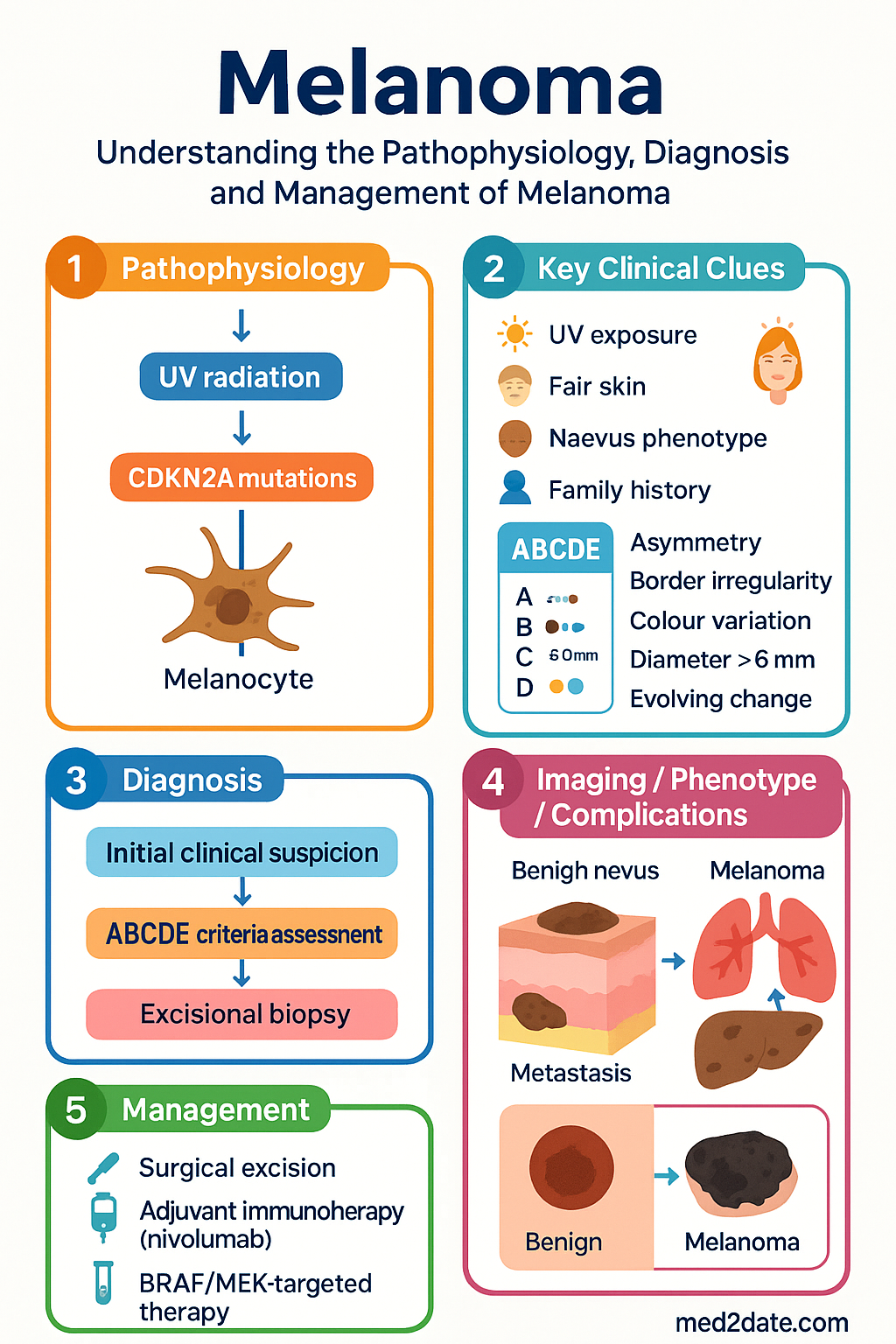
Melanoma clinical infographic — pathophysiology, clinical clues, diagnosis, imaging, and management
Tap or click image to enlarge — Melanoma: pathophysiology, clinical clues, diagnosis, imaging, and management.
Melanoma infographic, full size

Epidemiology & Risk Factors

Environmental Risk Factors

  • Ultraviolet radiation (UVR): The dominant environmental risk factor. Intermittent high-intensity sun exposure and sunburn in childhood/adolescence confer the greatest risk. Occupational and cumulative UVR exposure is also relevant.
  • Geographic variation: Residents of Queensland face the highest state-level incidence (ASR ~72 per 100,000 in males) compared to Tasmania (~35 per 100,000).
  • Solarium exposure: Artificial UV exposure before age 35 increases melanoma risk by 59%. Solariums have been banned in all Australian states and territories since 2016.
  • Latitude and altitude: Higher UV-B flux at lower latitudes and higher altitudes increases cumulative dose.

Host Risk Factors

  • Skin phenotype: Fitzpatrick skin types I and II (always burn, rarely tan) carry the highest risk.
  • Naevus phenotype: Greater than 50 common naevi, or presence of atypical (dysplastic) naevi, significantly elevate risk.
  • Freckling: Extensive facial or body freckling is an independent risk marker.
  • Family history: First-degree relative with melanoma confers a two- to three-fold increased risk. Familial melanoma syndromes (CDKN2A, CDK4, BAP1 germline mutations) account for approximately 5–10% of cases.
  • Personal history: Prior melanoma or non-melanoma skin cancer significantly increases future melanoma risk.
  • Immunosuppression: Organ transplant recipients and patients on chronic immunosuppressive therapy have a 2–3-fold elevated risk with more aggressive biology.

Other Associations

  • Congenital melanocytic naevi: Giant congenital naevi (>20 cm) carry a 5–10% lifetime risk of malignant transformation.
  • Xeroderma pigmentosum: Autosomal recessive DNA repair defect — melanoma risk increased >2000-fold.
  • Non-cutaneous melanoma: Mucosal and uveal melanoma have distinct risk profiles unrelated to UV exposure.

Pathology & ABCDE Classification

Histological Subtypes

Accurate histopathological subtyping is critical for prognosis, staging, and treatment planning. The four principal subtypes of cutaneous melanoma are:

Subtype Frequency Typical Location Key Features Prognosis
Superficial spreading melanoma (SSM)~60–70%Trunk, limbsFlat, irregular, variable pigment; radial growth phaseGood if thin
Nodular melanoma (NM)~15–30%Trunk, head & neckRapid vertical growth; may be amelanoticWorse (thicker at Dx)
Lentigo maligna melanoma (LMM)~5–10%Sun-damaged faceLarge, flat, slow-growing; elderly patientsGood (slow invasion)
Acral lentiginous melanoma (ALM)~5%Soles, palms, subungualHigher proportion in darker skin types; less UV-relatedOften diagnosed late

The ABCDE Mnemonic

The ABCDE criteria provide a structured framework for clinical assessment of pigmented lesions:

A
Asymmetry
One half of the lesion does not match the other half. Benign naevi are typically symmetric.
B
Border irregularity
Edges are ragged, notched, scalloped, or poorly defined rather than smooth and round.
C
Colour variation
Multiple colours present — shades of brown, black, red, white, or blue within the same lesion.
D
Diameter > 6 mm
Melanomas are typically larger than 6 mm at diagnosis, though smaller melanomas do occur.
E
Evolving
Any change in size, shape, colour, elevation, or new symptoms (itching, bleeding). The single most important criterion.
🔴
Evolving is the most important criterion. Any change in a pre-existing naevus — even if ABCDE criteria are not fully met — warrants urgent dermatoscopic assessment and possible excision biopsy. Nodular melanomas may fail ABCDE screening; maintain a low threshold for excision of any new or changing nodular lesion.

Histopathological Reporting (Structured)

Every melanoma histopathology report in Australia should include the following data elements as recommended by the Royal College of Pathologists of Australasia (RCPA):

  • Breslow thickness (mm) — measured from the granular layer or ulcer base
  • Ulceration status (present or absent)
  • Mitotic rate (per mm²) — particularly important for thin melanomas
  • Clark level of invasion (I–V)
  • Margins — peripheral and deep excision clearance
  • Lymphovascular invasion
  • Microsatellitosis
  • Tumour-infiltrating lymphocytes (TILs) — brisk, non-brisk, absent
  • Regression (present or absent, percentage)
  • Neurotropism

Staging & Sentinel Lymph Node Biopsy

AJCC 8th Edition TNM Staging

The American Joint Committee on Cancer (AJCC) 8th edition TNM system, adopted universally in Australia, remains the current standard for melanoma staging. Staging incorporates tumour thickness, ulceration, mitotic rate, nodal status, and distant metastases.

ℹ️
Per AJCC 8th edition: Microsatellites, in-transit metastases, and satellite deposits are classified as N-category (N2c or N3) rather than M-category. This change reflects the improved prognosis of locoregional disease compared with distant metastases.

T Stage (Primary Tumour)

T Stage Breslow Thickness Ulceration
TisMelanoma in situ
T1a≤0.8 mmNo ulceration, mitosis <1/mm²
T1b≤0.8 mm with ulceration/↑ mitotic rate OR 0.8–1.0 mmVariable
T2a1.0–2.0 mmNo ulceration
T2b1.0–2.0 mmUlcerated
T3a2.0–4.0 mmNo ulceration
T3b2.0–4.0 mmUlcerated
T4a>4.0 mmNo ulceration
T4b>4.0 mmUlcerated

Stage Grouping (Summary)

Stage Key Features 10-Year Survival (approx.)
0 (In situ)Epidermis only~99%
IA–IBThin melanoma ≤1 mm, no ulceration~95–98%
IIA–IICThicker, ± ulceration, no nodal involvement~65–88%
IIIA–IIICRegional lymph node involvement~40–78%
IVDistant metastases (M1a–M1d)~10–25%

Sentinel Lymph Node Biopsy (SLNB)

SLNB is the gold-standard staging procedure for clinically node-negative melanoma and is the most significant prognostic factor for recurrence in intermediate-thickness melanoma.

Indications for SLNB in Australia

  • Standard indication: Melanoma >1 mm Breslow thickness (T2–T4), clinically node-negative
  • Selective indication: T1b melanoma (0.8–1.0 mm, or ≤0.8 mm with ulceration or mitotic rate ≥1/mm²) — discuss at multidisciplinary team (MDT) meeting
  • Consideration for thin melanomas: T1a (≤0.8 mm, no adverse features) — SLNB generally not recommended
  • Not routinely indicated: In-situ melanoma, clinically palpable nodal disease (proceed directly to therapeutic lymph node dissection)

Procedure Overview

  • Technique: Intradermal injection of Technetium-99m-labelled nanocolloid (± vital blue dye) around the primary tumour or biopsy scar
  • Lymphoscintigraphy: Performed pre-operatively to identify the sentinel node basin(s)
  • Intra-operative detection: Handheld gamma probe guides dissection; blue dye assists visual identification
  • Histopathological assessment: Serial sectioning with H&E ± immunohistochemistry (S-100, HMB-45, Melan-A, SOX-10)
  • MBS item: Lymphoscintigraphy and SLNB are covered under MBS items; refer to current MBS schedule for item numbers
Key MSLT-II finding: The MSLT-II trial demonstrated that observation with ultrasound surveillance, rather than completion lymph node dissection (CLND), is acceptable for patients with positive SLNB, provided close surveillance is undertaken. CLND no longer mandatory but may be considered in selected cases.

Treatment — Surgery, BRAF Inhibitors & Immunotherapy

Surgical Management

Surgery remains the cornerstone of curative-intent treatment for localised and regional melanoma.

Wide Local Excision (WLE) — Recommended Margins

Tumour Category Recommended Margin Evidence
In situ melanoma5 mmConsensus guidelines
Invasive ≤1 mm Breslow1 cmWHO Melanoma Programme trial
1–2 mm Breslow1–2 cmUK Melanoma Study Group; Intergroup Melanoma Surgical Trial
>2 mm Breslow2 cmMelanoma Intergroup Trial; Swedish/UK trial
Lentigo maligna (head/neck)5–10 mm (as feasible)Consider staged excision or Mohs for cosmetically sensitive sites

Surgical Considerations

  • Diagnostic biopsy: Excisional biopsy preferred for lesions ≤15 mm; incisional/punch biopsy acceptable for large lesions or cosmetically sensitive sites.
  • SLNB timing: Ideally performed at the time of WLE (within the same anaesthetic) to reduce morbidity.
  • Reconstruction: Refer to plastic surgery or head & neck surgery for complex defects; margins must not be compromised for cosmetic reasons.
  • In-transit/satellite metastases: May be managed with surgical excision, intralesional therapy (e.g., talimogene laherparepvec), or regional perfusion.

Adjuvant Systemic Therapy — Stage III (Resected)

Adjuvant therapy is recommended for patients with completely resected stage III melanoma (and selected high-risk stage IIC) to reduce recurrence risk. Treatment decisions are guided by BRAF mutation status, toxicity profile, and patient preference.

Immunotherapy — Adjuvant Setting

💊
Nivolumab
Opdivo® · PD-1 inhibitor
Adult dose 240 mg IV every 2 weeks OR 480 mg IV every 4 weeks for 12 months
Paediatric dose Not established for adjuvant melanoma in children <12 years
Key toxicities Thyroiditis, hepatitis, colitis, pneumonitis, hypophysitis
PBS status ✔ PBS General Benefit — adjuvant Stage IIIB–IV
💊
Pembrolizumab
Keytruda® · PD-1 inhibitor
Adult dose 200 mg IV every 3 weeks OR 400 mg IV every 6 weeks for 12 months
Key evidence KEYNOTE-054: significant RFS benefit in stage III resected melanoma
PBS status ✔ PBS General Benefit — adjuvant Stage IIIB–IV

BRAF/MEK-Targeted Therapy — Adjuvant Setting

💊
Dabrafenib + Trametinib
Tafinlar® + Mekinist® · BRAF + MEK inhibitor combination
Adult dose Dabrafenib 150 mg PO BD + Trametinib 2 mg PO OD for 12 months
Eligibility BRAF V600-mutated tumour; resected stage III melanoma
Key toxicities Pyrexia, arthralgia, fatigue, photosensitivity, retinal vein occlusion (rare)
Renal adjustment Dabrafenib: no specific adjustment; Trametinib: caution if CrCl <30 mL/min
PBS status ✔ PBS General Benefit — adjuvant BRAF-mutant Stage III
💊
Vemurafenib + Cobimetinib
Zelboraf® + Cotellic® · BRAF + MEK inhibitor combination
Adult dose Vemurafenib 960 mg PO BD + Cobimetinib 60 mg PO OD (21/28-day cycle)
Key toxicities Photosensitivity, QTc prolongation, rash, diarrhoea
PBS status ✔ PBS Authority Required
⚠️
BRAF testing is mandatory. All patients with stage IIC–IV melanoma must have BRAF mutation testing (V600E, V600K) performed on the primary tumour or metastatic biopsy. Testing turnaround in major Australian centres is typically 7–14 working days. Avoid empiric immunotherapy delays while awaiting results — discuss at MDT if urgency exists.

Metastatic (Stage IV) Systemic Therapy

Treatment of stage IV melanoma is guided by performance status, disease burden, BRAF mutation status, prior therapy, and patient preference. All patients should be discussed at a multidisciplinary melanoma team meeting.

First-Line Immunotherapy — BRAF Wild-Type or Unselected

💊
Nivolumab + Ipilimumab
Opdivo® + Yervoy® · PD-1 + CTLA-4 combination
Adult dose Nivolumab 1 mg/kg + Ipilimumab 3 mg/kg IV every 3 weeks × 4 cycles → Nivolumab 480 mg IV every 4 weeks (maintenance)
Key evidence CheckMate-067: median OS 72.1 months (Nivo+Ipi) vs 36.9 months (Nivo alone)
Key toxicities Grade 3–4 irAEs in ~55%: colitis, hepatitis, endocrinopathies, nephritis
PBS status ✔ PBS General Benefit — unresectable Stage III/IV melanoma

First-Line Targeted Therapy — BRAF V600-Mutated

💊
Dabrafenib + Trametinib
Tafinlar® + Mekinist®
Adult dose Dabrafenib 150 mg PO BD + Trametinib 2 mg PO OD
Key evidence COMBI-d/v: median OS 25.9 months; 5-year OS ~35%
PBS status ✔ PBS General Benefit — unresectable/metastatic BRAF-mutant melanoma
💊
Encorafenib + Binimetinib
Braftovi® + Mektovi® · BRAF + MEK inhibitor combination
Adult dose Encorafenib 450 mg PO OD + Binimetinib 45 mg PO BD
Key evidence COLUMBUS: PFS 14.9 months vs 7.3 months (vemurafenib monotherapy)
PBS status ✔ PBS Authority Required

Immunotherapy-Related Adverse Events (irAEs) — Management Principles

Grade 1
Mild
Diarrhoea <4/day, mild rash, TSH only abnormality. Monitor closely.
Continue immunotherapy with monitoring
Grade 2
Moderate
Diarrhoea 4–6/day, moderate colitis, LFTs 3–5× ULN, symptomatic thyroiditis.
Hold immunotherapy; oral prednisolone 0.5–1 mg/kg/day
Grade 3–4
Severe / Life-threatening
Colitis with perforation risk, hepatitis (LFTs >10× ULN), myocarditis, severe pneumonitis.
Permanently discontinue; IV methylprednisolone 1–2 mg/kg/day; consider infliximab or mycophenolate
🔴
Immune-related myocarditis is rare (<1%) but carries mortality up to 50%. Any patient presenting with new-onset chest pain, dyspnoea, or troponin elevation on checkpoint inhibitor therapy requires immediate cardiology review and temporary suspension of immunotherapy.

Other Therapeutic Modalities

  • Isolated limb infusion/perfusion: Available at major tertiary centres for unresectable in-transit metastases of the limbs (e.g., Austin Health, Peter MacCallum Cancer Centre, Melanoma Institute Australia).
  • Intralesional therapy: Talimogene laherparepvec (T-VEC, Imlygic®) — available for unresectable cutaneous/in-transit lesions; PBS-listed under authority.
  • Radiation therapy: Adjuvant radiotherapy for high-risk nodal basins (e.g., extracapsular extension) or palliative RT for symptomatic bone/brain metastases.
  • Stereotactic radiosurgery (SRS): Preferred for limited brain metastases (1–4 lesions) — available at major neurosurgical centres.

Special Populations

🤰 Pregnancy
Melanoma diagnosis in pregnancy:
Melanoma is the most common malignancy in pregnancy. Surgery is safe in all trimesters. Sentinel lymph node biopsy can be performed with Tc-99m (low-dose) — avoid blue dye (anaphylaxis risk). Avoid immunotherapy and BRAF/MEK inhibitors during pregnancy — teratogenic potential. Multidisciplinary obstetric-oncology team essential.
Post-partum:
Systemic therapy may be commenced post-partum if indicated. Breastfeeding contraindicated during immunotherapy or targeted therapy.
👶 Paediatrics
Paediatric melanoma:
Rare in pre-pubertal children. Spitzoid melanocytic tumours may be diagnostically challenging — discuss at specialist MDT. Paediatric melanoma tends to present at more advanced stages. Treatment guided by adult protocols but with age-adjusted drug dosing where applicable.
👴 Elderly (>75 years)
Comorbidity-adjusted management:
Higher rates of nodular and desmoplastic subtypes. Comorbidity burden may limit surgical and systemic therapy options. Immunotherapy remains effective but irAE rates may be higher. Single-agent PD-1 inhibitor preferred over combination if frail. Palliative pathways should be discussed early.
🦠 Immunocompromised
Transplant recipients & immunosuppressed patients:
Melanoma risk elevated 2–3× in solid organ transplant recipients. Immunosuppression modification should be discussed with transplant team. Checkpoint inhibitors carry risk of graft rejection — specialist involvement essential. Reduced immunosuppression may be considered on a case-by-case basis.
🫘 Renal Impairment
Immunotherapy:
PD-1 inhibitors (nivolumab, pembrolizumab) can be used in renal impairment without dose adjustment. Monitor for immune-related nephritis. Trametinib: use with caution if CrCl <30 mL/min. No dose adjustment for dabrafenib in mild-moderate renal impairment.
🫁 Hepatic Impairment
Checkpoint inhibitors:
PD-1 inhibitors may be used in Child-Pugh A–B cirrhosis with careful monitoring. Avoid ipilimumab in severe hepatic impairment (Child-Pugh C). BRAF/MEK inhibitors: vemurafenib contraindicated in severe hepatic impairment; dabrafenib and encorafenib require dose reduction in moderate impairment.

Aboriginal and Torres Strait Islander Health Considerations

Aboriginal and Torres Strait Islander Health
Incidence pattern
Although overall melanoma incidence is lower in Aboriginal and Torres Strait Islander Australians compared with non-Indigenous Australians, there is a higher proportion of acral lentiginous melanoma and melanoma in atypical locations (soles, subungual). Late-stage presentation is significantly more common, resulting in poorer survival outcomes.
Survival disparity
AIHW data demonstrate that Aboriginal and Torres Strait Islander Australians have a 1.5–2× higher melanoma mortality rate compared with non-Indigenous Australians, driven primarily by advanced-stage at presentation and reduced access to timely surgical intervention.
Remote access barriers
Residents of remote and very remote communities face significant barriers including: limited dermatology and surgical oncology specialist availability; long distances to tertiary melanoma centres; delayed pathology reporting; reduced access to immunotherapy infusion centres. Telehealth dermatology and store-and-forward dermoscopy are expanding but remain unevenly distributed.
Cultural safety
Engagement with Aboriginal Health Workers and Aboriginal Community Controlled Health Organisations (ACCHOs) is essential for culturally safe care. Skin checks should be integrated into routine health assessments. Language-appropriate education about UV protection and skin awareness is critical.
Systemic therapy access
PBS-listed immunotherapy agents require infusion in hospital settings. Patients from remote communities may need to relocate for treatment periods of 6–12 months. Financial support (Patient Assisted Travel Scheme, Isolated Patients Travel and Accommodation Assistance Scheme) should be actively facilitated.
Screening programmes
Population-based melanoma screening is not currently funded in Australia. However, targeted skin cancer screening programmes within ACCHOs and through outreach dermatology services have demonstrated improved early detection rates. Support for community-level skin check programmes is recommended.

Follow-Up & Surveillance

Structured Follow-Up Schedule

Stage Years 1–3 Years 3–5 Years 5+
Stage 0–I6–12 monthly clinical review + full skin examAnnualAnnual (lifelong)
Stage II3–6 monthly clinical review + imaging as indicated6–12 monthlyAnnual
Stage III (resected)3–4 monthly clinical review + CT/PET as indicated6 monthlyAnnual
Stage IV (on treatment)Per treatment protocol — imaging every 12 weeksIndividually tailoredOngoing oncology follow-up

Surveillance Imaging

  • CT chest/abdomen/pelvis: Recommended for stage IIC–III at baseline and as clinically indicated during follow-up. Not routinely recommended for stage I–IIA.
  • PET-CT: Useful for equivocal CT findings or restaging in metastatic disease. Not recommended for routine surveillance of stage I–II disease.
  • Brain MRI: Recommended at baseline for stage IIIC–IV; repeat if neurological symptoms develop. Consider routine surveillance brain MRI in stage IIIC (3–6 monthly for 2 years).
  • LDH: Serum lactate dehydrogenase is a component of M1 staging and useful for serial monitoring in stage IV disease, though sensitivity is limited.

Patient Education & Self-Surveillance

  • Teach patients whole-body skin self-examination using ABCDE criteria and photography
  • Advise strict sun protection: SPF 50+ broad-spectrum sunscreen, UPF 50+ clothing, broad-brimmed hats, shade-seeking between 10:00–14:00
  • Consider total body photography (dermoscopy-guided) for patients with multiple naevi or high-risk phenotype
  • Psychosocial screening for melanoma-related anxiety and fear of recurrence (validated tools: FACT-M, Melanoma Concerns Questionnaire)

📚 References

  1. 1. Gershenwald JE, Scolyer RA, Hess KR, et al. Melanoma staging: evidence-based changes in the American Joint Committee on Cancer eighth edition cancer staging manual. CA Cancer J Clin. 2017;67(6):472–492.
  2. 2. Australian Institute of Health and Welfare (AIHW). Cancer data in Australia. Canberra: AIHW; 2024. Available from: https://www.aihw.gov.au/reports/cancer/cancer-data-in-australia
  3. 3. Larkin J, Chiarion-Sileni V, Gonzalez R, et al. Five-year survival with nivolumab and ipilimumab in advanced melanoma. N Engl J Med. 2019;381(16):1535–1546.
  4. 4. Long GV, Hauschild A, Santinami M, et al. Adjuvant dabrafenib plus trametinib in stage III BRAF-mutated melanoma. N Engl J Med. 2017;377(19):1813–1823.
  5. 5. Eggermont AMM, Blank CU, Mandala M, et al. Adjuvant pembrolizumab versus placebo in resected stage III melanoma. N Engl J Med. 2018;378(19):1789–1801.
  6. 6. Faries MB, Thompson JF, Cochran AJ, et al. Completion dissection or observation for sentinel-node metastasis in melanoma. N Engl J Med. 2017;376(23):2211–2222.
  7. 7. Cancer Council Australia Melanoma Guidelines Working Party. Clinical practice guidelines for the diagnosis and management of melanoma. Sydney: Cancer Council Australia; 2018 (updated 2023). Available from: https://wiki.cancer.org.au/australiawiki/index.php?oldid=212982
  8. 8. Royal College of Pathologists of Australasia (RCPA). Structured pathology reporting of melanoma. RCPA; 2023. Available from: https://www.rcpa.edu.au/
  9. 9. Dummer R, Ascierto PA, Gogas HJ, et al. Encorafenib plus binimetinib versus vemurafenib or encorafenib in patients with BRAF-mutant melanoma (COLUMBUS): a multicentre, open-label, randomised phase 3 trial. Lancet Oncol. 2018;19(5):603–615.
  10. 10. Robert C, Ribas A, Schachter J, et al. Pembrolizumab versus ipilimumab in advanced melanoma (KEYNOTE-006): post-hoc 5-year results from an open-label, multicentre, randomised, controlled, phase 3 study. Lancet Oncol. 2019;20(9):1239–1251.
  11. 11. National Health and Medical Research Council (NHMRC). Clinical practice guidelines for the management of melanoma in Australia and New Zealand. Canberra: NHMRC; 2008.
  12. 12. Australian Commission on Safety and Quality in Health Care (ACSQHC). National Safety and Quality Health Service Standards. 2nd edition. Sydney: ACSQHC; 2017.
  13. 13. Conus P, Kipfer S, Gelpke H, et al. Immune checkpoint inhibitor-related endocrinopathies. Lancet Diabetes Endocrinol. 2018;6(2):115–127.
  14. 14. Baade PD, Youlden DR, Coory MD, et al. Survival estimates for Aboriginal and Torres Strait Islander people diagnosed with cancer in Queensland. Med J Aust. 2011;194(10):520–524.
for PBS-listed medicines at participating pharmacies.
Cultural safety
Engagement with Aboriginal Community Controlled Health Organisations (ACCHOs) is essential. Cultural safety training for non-Indigenous clinicians, use of Aboriginal Health Workers and Liaison Officers, and incorporation of traditional healing practices alongside Western medicine improve treatment adherence and outcomes. Avoidance of eye contact, respect for gender-sensitive examination practices, and understanding of sorry business protocols are critical elements of culturally safe care.
Medication adherence
Complex DMARD regimens with frequent monitoring requirements present adherence challenges. Long-acting depot injections (e.g., methotrexate SC) may improve adherence compared to oral regimens. Community pharmacy partnerships through the Indigenous Pharmacy Programmes improve medication management.
Specific conditions
Rheumatic heart disease (RHD) requires secondary prophylaxis with benzathine penicillin G (BPG) 1.2 MU IM every 3–4 weeks for a minimum of 10 years or until age 21 (whichever is longer). RHD registers (e.g., NT RHD Register) facilitate recall and follow-up. The Australian RHD Endgame Strategy targets elimination by 2031.
Referral pathways
Referral through ACCHOs and Aboriginal Hospital Liaison Officers (AHLOs) improves engagement. The Specialist Outreach Assistance Programme provides funded specialist visits to remote communities. NT, WA, and QLD have specific rheumatology outreach programmes targeting Indigenous communities.

📚 References

  1. 1. Australian Institute of Health and Welfare (AIHW). Autoimmune disease in Australia. Cat. no. PHE 312. Canberra: AIHW; 2023.
  2. 2. Fraenkel L, Bathon JM, England BR, et al. 2021 American College of Rheumatology guideline for the treatment of rheumatoid arthritis. Arthritis Care Res. 2021;73(7):924–939.
  3. 3. Fanouriakis A, Kostopoulou M, Alber K, et al. 2019 update of the EULAR recommendations for the management of systemic lupus erythematosus. Ann Rheum Dis. 2019;78(6):736–745.
  4. 4. Chung SA, Langford CA, Maz M, et al. 2021 American College of Rheumatology/Vasculitis Foundation guideline for the management of antineutrophil cytoplasmic antibody-associated vasculitis. Arthritis Care Res. 2021;73(11):1583–1599.
  5. 5. Smolen JS, Landewé RBM, Bijlsma JWJ, et al. EULAR recommendations for the management of rheumatoid arthritis with synthetic and biological disease-modifying antirheumatic drugs: 2022 update. Ann Rheum Dis. 2023;82(1):3–18.
  6. 6. Australian Technical Advisory Group on Immunisation (ATAGI). Australian Immunisation Handbook. Australian Government Department of Health; 2024. Available from: immunisationhandbook.health.gov.au.
  7. 7. Rheumatic Heart Disease Australia (RHDAustralia). The 2020 Australian guideline for prevention, diagnosis, and management of acute rheumatic fever and rheumatic heart disease. 3rd ed. Darwin: Menzies School of Health Research; 2020.
  8. 8. Pharmaceutical Benefits Scheme (PBS). PBS Schedule. Australian Government Department of Health. Available from: pbs.gov.au. Accessed 2024.
  9. 9. Agarwal S, Cunnington J, Nossent J. Autoimmune disease in Indigenous Australians: a systematic review. Int J Rheum Dis. 2021;24(12):1487–1498.
  10. 10. Pisetsky DS. Antinuclear antibody testing — misunderstood or misused? Clin Immunol. 2023;255:109717.
  11. 11. Bertsias GK, Tektonidou M, Amoura Z, et al. Joint European League Against Rheumatism and European Renal Association–European Dialysis and Transplant Association (EULAR/ERA-EDTA) recommendations for the management of adult and paediatric lupus nephritis. Ann Rheum Dis. 2012;71(11):1771–1782.
  12. 12. Ledingham J, Deighton C; British Society for Rheumatology Standards, Audit and Guidelines Working Group. Update on the British Society for Rheumatology guidelines for prescribing TNFα blockers in adults with rheumatoid arthritis. Rheumatology. 2005;44(2):155–158.
  13. 13. National Health and Medical Research Council (NHMRC). National statement on ethical conduct in human research. Canberra: NHMRC; 2023 (updated).
for PBS-listed medicines at participating pharmacies.
Cultural safety
Engagement with Aboriginal Community Controlled Health Organisations (ACCHOs) is essential. Cultural safety training for non-Indigenous clinicians, use of Aboriginal Health Workers and Liaison Officers, and incorporation of traditional healing practices alongside Western medicine improve treatment adherence and outcomes. Avoidance of eye contact, respect for gender-sensitive examination practices, and understanding of sorry business protocols are critical elements of culturally safe care.
Medication adherence
Complex DMARD regimens with frequent monitoring requirements present adherence challenges. Long-acting depot injections (e.g., methotrexate SC) may improve adherence compared to oral regimens. Community pharmacy partnerships through the Indigenous Pharmacy Programmes improve medication management.
Specific conditions
Rheumatic heart disease (RHD) requires secondary prophylaxis with benzathine penicillin G (BPG) 1.2 MU IM every 3–4 weeks for a minimum of 10 years or until age 21 (whichever is longer). RHD registers (e.g., NT RHD Register) facilitate recall and follow-up. The Australian RHD Endgame Strategy targets elimination by 2031.
Referral pathways
Referral through ACCHOs and Aboriginal Hospital Liaison Officers (AHLOs) improves engagement. The Specialist Outreach Assistance Programme provides funded specialist visits to remote communities. NT, WA, and QLD have specific rheumatology outreach programmes targeting Indigenous communities.

📚 References

  1. 1. Australian Institute of Health and Welfare (AIHW). Autoimmune disease in Australia. Cat. no. PHE 312. Canberra: AIHW; 2023.
  2. 2. Fraenkel L, Bathon JM, England BR, et al. 2021 American College of Rheumatology guideline for the treatment of rheumatoid arthritis. Arthritis Care Res. 2021;73(7):924–939.
  3. 3. Fanouriakis A, Kostopoulou M, Alber K, et al. 2019 update of the EULAR recommendations for the management of systemic lupus erythematosus. Ann Rheum Dis. 2019;78(6):736–745.
  4. 4. Chung SA, Langford CA, Maz M, et al. 2021 American College of Rheumatology/Vasculitis Foundation guideline for the management of antineutrophil cytoplasmic antibody-associated vasculitis. Arthritis Care Res. 2021;73(11):1583–1599.
  5. 5. Smolen JS, Landewé RBM, Bijlsma JWJ, et al. EULAR recommendations for the management of rheumatoid arthritis with synthetic and biological disease-modifying antirheumatic drugs: 2022 update. Ann Rheum Dis. 2023;82(1):3–18.
  6. 6. Australian Technical Advisory Group on Immunisation (ATAGI). Australian Immunisation Handbook. Australian Government Department of Health; 2024. Available from: immunisationhandbook.health.gov.au.
  7. 7. Rheumatic Heart Disease Australia (RHDAustralia). The 2020 Australian guideline for prevention, diagnosis, and management of acute rheumatic fever and rheumatic heart disease. 3rd ed. Darwin: Menzies School of Health Research; 2020.
  8. 8. Pharmaceutical Benefits Scheme (PBS). PBS Schedule. Australian Government Department of Health. Available from: pbs.gov.au. Accessed 2024.
  9. 9. Agarwal S, Cunnington J, Nossent J. Autoimmune disease in Indigenous Australians: a systematic review. Int J Rheum Dis. 2021;24(12):1487–1498.
  10. 10. Pisetsky DS. Antinuclear antibody testing — misunderstood or misused? Clin Immunol. 2023;255:109717.
  11. 11. Bertsias GK, Tektonidou M, Amoura Z, et al. Joint European League Against Rheumatism and European Renal Association–European Dialysis and Transplant Association (EULAR/ERA-EDTA) recommendations for the management of adult and paediatric lupus nephritis. Ann Rheum Dis. 2012;71(11):1771–1782.
  12. 12. Ledingham J, Deighton C; British Society for Rheumatology Standards, Audit and Guidelines Working Group. Update on the British Society for Rheumatology guidelines for prescribing TNFα blockers in adults with rheumatoid arthritis. Rheumatology. 2005;44(2):155–158.
  13. 13. National Health and Medical Research Council (NHMRC). National statement on ethical conduct in human research. Canberra: NHMRC; 2023 (updated).