Home Oncology Chemotherapy Drugs & Mechanisms

Chemotherapy Drugs & Mechanisms

📋 Key Information Summary

📋
  • Chemotherapy drugs target rapidly dividing cells through four principal mechanisms: DNA alkylation, antimetabolite activity, mitotic inhibition, and topoisomerase interference.
  • Alkylating agents (e.g., cyclophosphamide, ifosfamide, temozolomide) form covalent bonds with DNA bases, causing cross-links and strand breaks that prevent replication.
  • Platinum compounds (cisplatin, carboplatin, oxaliplatin) form intrastrand and interstrand DNA cross-links; carboplatin dosing uses the Calvert formula (Dose = Target AUC × [GFR + 25]) and requires auc-calculator.com or validated institutional tools.
  • Antimetabolites (methotrexate, 5-fluorouracil, gemcitabine, capecitabine, cytarabine) mimic nucleotide precursors, disrupting DNA and RNA synthesis; leucovorin rescue is mandatory with high-dose methotrexate.
  • Antitumour antibiotics (doxorubicin, epirubicin, bleomycin, mitomycin) intercalate DNA or generate free radicals; anthracycline cumulative dose limits (doxorubicin ≤450–550 mg/m²) are critical for cardiomyopathy prevention.
  • All chemotherapy in Australia is Authority Required on the PBS and dispensed through hospital or S100 pharmacies (not community PBS); prescribing requires oncology subspecialist authorisation.
  • CINV prophylaxis follows MASCC/ESMO guidelines: NK1-receptor antagonist + 5-HT3 antagonist + dexamethasone for high-emetogenic regimens; olanzapine as fourth agent for refractory emesis.
  • Tumour lysis syndrome prophylaxis with rasburicase or allopurinol, aggressive IV hydration, and electrolyte monitoring is essential for high-burden haematological malignancies.
  • Dose modifications are mandatory for renal impairment (carboplatin, methotrexate, cisplatin), hepatic impairment (anthracyclines, taxanes, vinca alkaloids), and obesity (use actual body weight per eviQ protocols).
  • Extravasation management requires immediate cessation, aspiration, and institution-specific antidote protocols (dexrazoxane for anthracyclines, hyaluronidase for vinca alkaloids).
  • Pharmacogenomic testing for DPYD (before fluoropyrimidines), UGT1A1 (before irinotecan), and TPMT/NUDT15 (before thiopurines) is increasingly standard in Australian oncology centres.
  • Aboriginal and Torres Strait Islander patients experience higher cancer mortality and later-stage diagnoses; culturally safe care, teleoncology access, and navigator programmes are essential to reduce disparities.

Introduction & Australian Epidemiology

Chemotherapy remains a cornerstone of systemic anticancer therapy in Australia. Cytotoxic agents work by exploiting the heightened proliferative rate of malignant cells, targeting DNA integrity, nucleotide synthesis, and mitotic machinery. While targeted therapies and immunotherapy have transformed treatment paradigms for many cancers, conventional chemotherapy retains central roles in curative regimens (e.g., testicular germ cell tumours, childhood acute lymphoblastic leukaemia), adjuvant and neoadjuvant settings (breast, colorectal, and oesophagogastric cancers), and palliative care.

In 2024, an estimated 162,000 new cancer diagnoses are expected in Australia, with over 51,000 cancer-related deaths annually (Australian Institute of Health and Welfare, AIHW). Chemotherapy is administered to approximately 250,000 patients per year across public and private facilities. Australia's Pharmaceutical Benefits Scheme (PBS) and Section 100 Highly Specialised Drugs (HSD) Programme subsidise chemotherapy through hospital-based authority prescribing, ensuring broad access but requiring specialist oncologist initiation and ongoing review.

Australian chemotherapy prescribing is guided by eviQ (Cancer Institute NSW) protocols, which provide evidence-based, consensus-reviewed treatment regimens with dose calculations, cycle scheduling, and toxicity management. These protocols align with international standards from ESMO, ASCO, and NCCN but are adapted for Australian drug availability, PBS listing status, and local antimicrobial resistance patterns.
⚠️
Safety alert: All chemotherapy agents in Australia are classified as Hazardous Drugs under Safe Work Australia guidelines. Handling requires Biological Safety Cabinets (Class II BSC), closed-system drug transfer devices (e.g., PhaSeal®, ChemoLock®), and staff trained in Safe Handling of Cytotoxic Drugs per Cancer Council Australia recommendations.
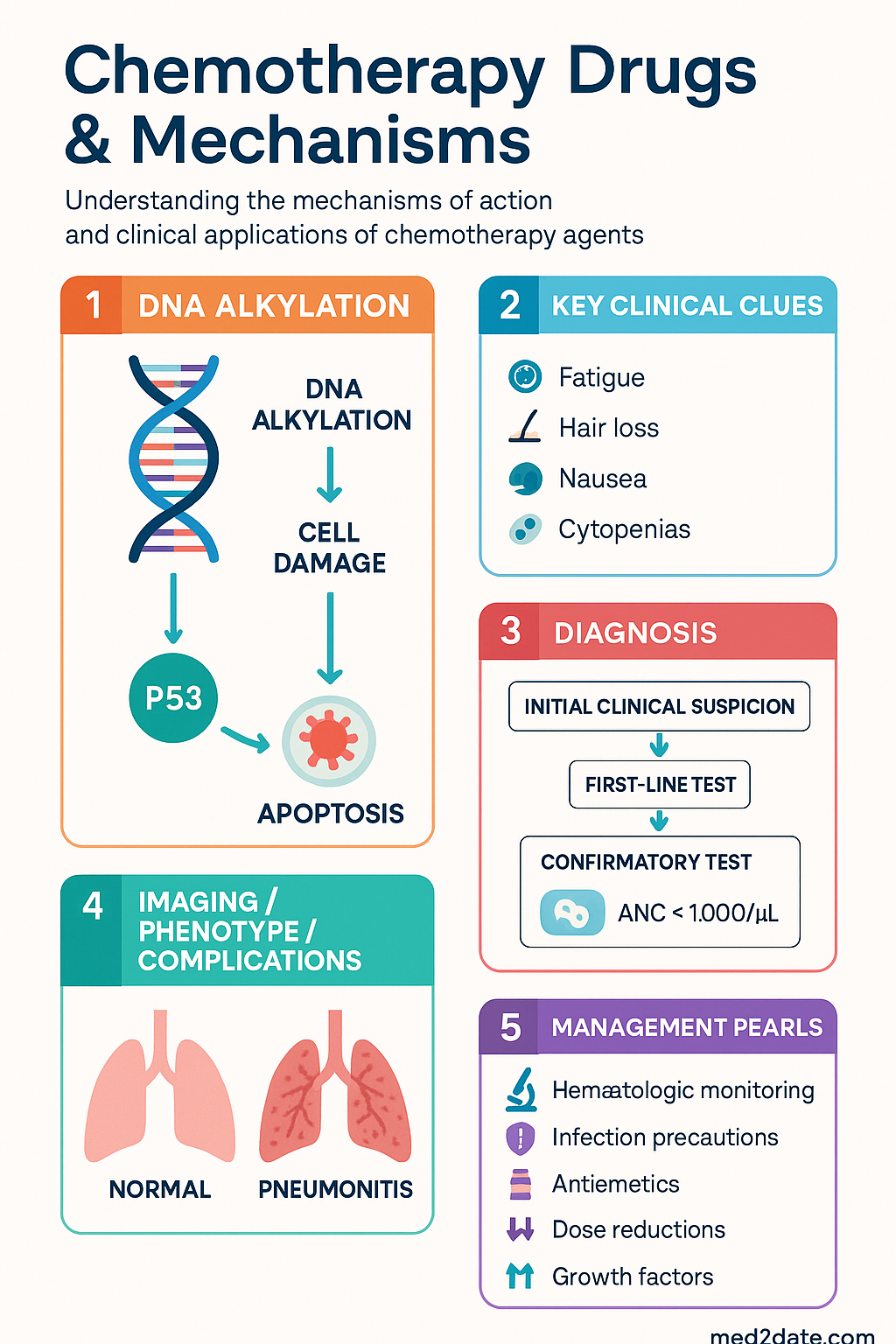
Chemotherapy Drugs & Mechanisms clinical infographic — pathophysiology, clinical clues, diagnosis, imaging, and management
Tap or click image to enlarge — Chemotherapy Drugs & Mechanisms: pathophysiology, clinical clues, diagnosis, imaging, and management.
Chemotherapy Drugs & Mechanisms infographic, full size

Drug Classifications & Mechanisms

Chemotherapy drugs are classified by their mechanism of action into broad pharmacological groups. Understanding these mechanisms is essential for predicting toxicities, designing combination regimens, selecting supportive care, and identifying resistance patterns.

Major Mechanism-Based Classifications

Class Primary Mechanism Cell-Cycle Specificity Key Australian Examples
Alkylating agents DNA cross-linking and strand breaks via covalent alkylation of guanine N7 position Cell-cycle non-specific (CCNS) Cyclophosphamide, ifosfamide, temozolomide, bendamustine, chlorambucil
Platinum compounds Intrastrand and interstrand DNA cross-links; adduct formation inhibits transcription and replication CCNS Cisplatin, carboplatin, oxaliplatin
Antimetabolites Competitive inhibition of nucleotide synthesis enzymes or incorporation into DNA/RNA as fraudulent nucleotides Cell-cycle specific (S-phase) Methotrexate, 5-fluorouracil (5-FU), capecitabine, gemcitabine, cytarabine, pemetrexed, clofarabine
Antitumour antibiotics DNA intercalation (anthracyclines), free radical generation, topoisomerase II inhibition CCNS (anthracyclines); varies by agent Doxorubicin, epirubicin, daunorubicin, bleomycin, mitomycin C, actinomycin D
Topoisomerase inhibitors Stabilisation of topoisomerase–DNA cleavage complexes, preventing religation of DNA strands S-phase / G2-phase Irinotecan (topo I), topotecan (topo I), etoposide (topo II)
Mitotic inhibitors Tubulin binding: stabilise (taxanes) or destabilise (vinca alkaloids) microtubules, blocking mitotic spindle formation M-phase Paclitaxel, docetaxel, nab-paclitaxel, vincristine, vinblastine, vinorelbine
Corticosteroids Lymphocyte apoptosis, anti-inflammatory, tumour lysis in lymphoid malignancies Variable Dexamethasone, prednisolone, methylprednisolone
Enzymes Depletion of essential amino acids for tumour cell metabolism CCNS Asparaginase (E. coli-derived, pegylated — calaspargase pegol)

Cell-Cycle Specificity & Clinical Implications

Cell-cycle non-specific (CCNS) agents such as alkylating drugs and anthracyclines kill cells regardless of proliferative state, making them effective against slow-growing tumours. Cell-cycle specific (CCS) agents like antimetabolites and vinca alkaloids require cells to be actively cycling; prolonged exposure (e.g., continuous 5-FU infusion) may be more effective than bolus dosing. This distinction informs schedule design and explains why tumours with low growth fractions (e.g., some adenocarcinomas) may respond poorly to CCS agents alone.

Combination Chemotherapy Rationale

Most Australian regimens combine agents with non-overlapping mechanisms and toxicities to maximise tumour kill (Goldie–Coldman hypothesis) and minimise resistance emergence. Standard examples include CHOP (cyclophosphamide, doxorubicin, vincristine, prednisolone) for aggressive lymphomas and FOLFOX (5-FU, leucovorin, oxaliplatin) for colorectal cancer.

Alkylating Agents & Platinum Drugs

Alkylating agents and platinum compounds share the ability to form covalent adducts with DNA, blocking replication and transcription. They are cell-cycle non-specific, providing activity against both rapidly dividing and quiescent tumour cells.

Alkylating Agents

These drugs transfer alkyl groups to DNA bases (primarily guanine at the O6 and N7 positions), leading to mono-adducts, intrastrand cross-links, and interstrand cross-links. Resistance develops through increased DNA repair (e.g., MGMT overexpression for temozolomide), glutathione conjugation, and drug efflux pumps.

💊
Cyclophosphamide
Endoxan® · Nitrogen mustard · Prodrug requiring hepatic CYP2B6 activation
Adult dose 500–1500 mg/m² IV per cycle (regimen-dependent); oral 50–200 mg/day for maintenance
Paediatric dose 10–50 mg/kg IV or 2–5 mg/kg/day PO (ALL maintenance); dose per eviQ protocol
Route IV bolus / short infusion; oral
Key toxicity Haemorrhagic cystitis (acrolein metabolite) — co-prescribe MESNA (2-mercaptoethane sulfonate); myelosuppression; gonadotoxicity; secondary malignancy risk
Renal adjustment Dose reduce by 25% if CrCl <10 mL/min; HD patients require post-dialysis dosing
PBS status ⚠ Authority Required — HSD (S100)
💊
Ifosfamide
Holoxan® · Nitrogen mustard isomer · Requires CYP activation + MESNA
Adult dose 1.2–2.4 g/m²/day IV × 3–5 days per cycle; continuous infusion 5 g/m² over 24h (sarcoma)
Paediatric dose 1.8–3 g/m²/day × 2–5 days (sarcoma protocols); dose per eviQ
Route IV infusion with concurrent and post-infusion MESNA
Key toxicity Haemorrhagic cystitis (more severe than cyclophosphamide); encephalopathy (10–30%); nephrotoxicity (proximal tubular Fanconi syndrome)
PBS status ⚠ Authority Required — HSD (S100)
💊
Temozolomide
Temodal® · Imidazotetrazine · Oral alkylating agent; crosses BBB
Adult dose 75 mg/m²/day PO concurrent with RT (Stupp protocol); adjuvant 150–200 mg/m²/day × 5/28 days × 6 cycles
Paediatric dose 100–200 mg/m²/day × 5 days per 28-day cycle (CNS tumours)
Route Oral (capsules); take fasting, on empty stomach
Key toxicity Myelosuppression (nadir days 21–28); lymphopenia and CD4 depletion; nausea; hepatotoxicity (rare)
PBS status ⚠ Authority Required — HSD (S100)

Platinum Compounds

Platinum drugs form aquated metabolites that create 1,2-intrastrand d(GpG) and d(ApG) cross-links, distorting the DNA double helix and triggering apoptotic signalling through p53-dependent and -independent pathways. Resistance mechanisms include enhanced nucleotide excision repair (NER), decreased drug uptake (CTR1), increased glutathione/metallothionein conjugation, and tolerance of DNA damage.

💊
Cisplatin
DBL Cisplatin · First-generation platinum · High emetogenicity
Adult dose 50–100 mg/m² IV per cycle (regimen-dependent); aggressive pre/post-hydration with 1–2 L NaCl 0.9% + KCl + MgSO₄
Paediatric dose 60–100 mg/m² IV (germ cell, osteosarcoma, medulloblastoma); hyperhydration protocol essential
Route IV infusion over 1–6 hours with mandatory hydration protocol
Key toxicity Nephrotoxicity (dose-limiting; cumulative, may be irreversible); severe nausea/vomiting (highly emetogenic); ototoxicity (high-frequency hearing loss, tinnitus); peripheral neuropathy (cumulative, dose-dependent); hypomagnesaemia, hypokalaemia
Renal adjustment Contraindicated if CrCl <60 mL/min unless critical indication; reduce dose or substitute carboplatin
PBS status ⚠ Authority Required — HSD (S100)
💊
Carboplatin
DBL Carboplatin · Second-generation · Better tolerated; Calvert dosing
Adult dose Dose (mg) = Target AUC × (GFR + 25); typically AUC 5–6 for solid tumours, AUC 7 for adjuvant ovarian; maximum GFR capped at 125 mL/min for Calvert formula
Paediatric dose AUC 5–7 per Calvert formula (medulloblastoma, germ cell); or 400–560 mg/m² flat dosing in some protocols
Route IV infusion over 30–60 minutes; no mandatory hydration required
Key toxicity Thrombocytopenia (dose-limiting, nadir day 14–21); neutropenia; mild-moderate nausea (moderate emetogenicity); peripheral neuropathy (less than cisplatin); hypersensitivity reactions (10–30% after 6+ cycles)
Renal adjustment Calvert formula inherently adjusts for GFR; accurate GFR measurement (⁵¹Cr-EDTA or ⁹⁹ᵐTc-DTPA) essential
PBS status ⚠ Authority Required — HSD (S100)
💊
Oxaliplatin
DBL Oxaliplatin · Diaminocyclohexane platinum · No nephrotoxicity
Adult dose 85 mg/m² IV every 2 weeks (FOLFOX4/FOLFOX6 for colorectal cancer); 130 mg/m² q3w (XELOX)
Route IV infusion over 2 hours; dilute in 250–500 mL D5W (not NaCl — chloride displacement inactivates drug)
Key toxicity Acute cold-triggered peripheral neuropathy (pharyngolaryngeal dysesthesia); cumulative sensory neuropathy (dose-limiting, may be irreversible >850 mg/m² cumulative dose); mild myelosuppression; low emetogenicity compared to cisplatin
Renal adjustment Limited data for CrCl <30 mL/min; use with caution
PBS status ⚠ Authority Required — HSD (S100)
🚨
Critical nephrotoxicity prevention: Cisplatin requires mandatory pre-hydration (1–2 L NaCl 0.9% with KCl 20 mmol/L and MgSO₄ 1–2 g) over 2–4 hours before infusion, and post-infusion hydration over 4–6 hours. Monitor serum creatinine, electrolytes (Mg²⁺, K⁺), and urine output before each cycle. Cisplatin is contraindicated if CrCl <60 mL/min — substitute carboplatin using the Calvert formula.

Antimetabolites & Antitumour Antibiotics

Antimetabolites

Antimetabolites are structural analogues of physiological nucleotides or cofactors. They are predominantly S-phase active and exert cytotoxicity by inhibiting nucleotide biosynthesis enzymes or by being incorporated into DNA/RNA, causing chain termination and strand breaks. Schedule design (continuous infusion vs bolus) profoundly affects efficacy and toxicity profiles.

💊
Methotrexate
DBL Methotrexate · Folate antagonist · Dihydrofolate reductase inhibitor
Adult dose Low-dose: 15–25 mg PO/SC weekly (autoimmune); intermediate/high-dose: 1–12 g/m² IV with leucovorin rescue (lymphoma, osteosarcoma); IT: 12–15 mg (ALL CNS prophylaxis)
Paediatric dose ALL consolidation: 2–5 g/m² IV with leucovorin rescue; IT dosing age-adjusted (e.g., <1 yr: 6 mg; 1–2 yr: 8 mg; 2–3 yr: 10 mg; ≥3 yr: 12 mg)
Route Oral, SC, IV infusion, intrathecal
Key toxicity Mucositis; myelosuppression; hepatotoxicity (fibrosis with chronic use); nephrotoxicity (crystal precipitation — alkalinise urine to pH >7, hydrate aggressively with 3 L/m²/day); neurotoxicity (leucoencephalopathy with high-dose/IT)
Renal adjustment High-dose contraindicated if CrCl <60 mL/min; low-dose use with caution and enhanced monitoring if eGFR 15–59
PBS status ✔ PBS General Benefit (low-dose oral for autoimmune); Authority Required — HSD (S100) for oncology
💊
5-Fluorouracil (5-FU)
DBL 5-FU · Pyrimidine analogue · Thymidylate synthase inhibitor
Adult dose FOLFOX/FOLFIRI: 400 mg/m² bolus + 2400 mg/m² continuous infusion over 46 hours q2w; DCF: 1000 mg/m²/day CI × 5 days; various regimen-dependent schedules
Route IV bolus or continuous infusion (preferred); avoid in DPD deficiency
Key toxicity Mucositis (dose-limiting for bolus); diarrhoea; myelosuppression; hand-foot syndrome (palmar-plantar erythrodysesthesia); coronary vasospasm (rare, acute); DPD deficiency → life-threatening toxicity in 3–5%
Pharmacogenomics DPYD testing recommended before first dose (RANZCO endorsed). DPYD*2A, c.2846A>T, c.1679T>G variants confer severe toxicity risk. Heterozygous: 50% dose reduction; homozygous: contraindicated.
PBS status ⚠ Authority Required — HSD (S100)
💊
Capecitabine
Xeloda® · Oral fluoropyrimidine prodrug · Converted to 5-FU in tumour
Adult dose 1000–1250 mg/m² PO BD × 14 days, q21 days (monotherapy); 800–1000 mg/m² BD × 14 days q21 days (combination with oxaliplatin — XELOX)
Route Oral; take within 30 minutes of a meal
Key toxicity Hand-foot syndrome (most common dose-limiting toxicity); diarrhoea; mucositis; hyperbilirubinaemia (Gilbert's-like, usually reversible); same DPD deficiency risk as IV 5-FU
Renal adjustment CrCl 30–51 mL/min: reduce starting dose to 75%; CrCl <30: avoid
PBS status ⚠ Authority Required — HSD (S100)
💊
Gemcitabine
Gemzar® · Cytidine analogue · DNA chain termination after incorporation
Adult dose 1000–1250 mg/m² IV on days 1, 8, 15 q28d (pancreatic); 1000–1250 mg/m² days 1, 8 q21d (NSCLC, bladder); with cisplatin: 1000 mg/m² days 1, 8, 15 q28d or days 1, 8 q21d
Route IV infusion over 30 minutes
Key toxicity Myelosuppression (neutropenia, thrombocytopenia); flu-like symptoms; transient transaminase elevation; pulmonary toxicity (rare but potentially fatal — capillary leak syndrome); peripheral oedema; radiation recall
PBS status ⚠ Authority Required — HSD (S100)

Antitumour Antibiotics

This class encompasses anthracyclines (intercalating DNA topoisomerase II poisons) and non-anthracycline agents (bleomycin, mitomycin). They are potent cytotoxins with distinctive organ-specific toxicities that mandate careful cumulative dose tracking and organ function monitoring.

💊
Doxorubicin
DBL Doxorubicin · Anthracycline · Topoisomerase II inhibitor + free radical generation
Adult dose 60–75 mg/m² IV q21d (single agent); 50 mg/m² q21d (CHOP, R-CHOP); dose-dense regimens with G-CSF support: 60–75 mg/m² q14d; liposomal: 20–50 mg/m² q21–28d
Route IV bolus or slow push via central line; liposomal (Caelyx®) IV over 30–60 min
Key toxicity Cumulative cardiomyopathy (risk >5% above 550 mg/m²; 1–2% at 400 mg/m²); myelosuppression; alopecia (near-universal); severe tissue necrosis on extravasation; nausea/vomiting (moderate-high); red-orange urine discolouration
Cardiac monitoring Baseline and serial echocardiography (LVEF) or MUGA scan; hold if LVEF <50% or drops >10% from baseline; dexrazoxane cardioprotection may be considered above 300 mg/m² cumulative dose
PBS status ⚠ Authority Required — HSD (S100)
💊
Epirubicin
DBL Epirubicin · 4'-epimer of doxorubicin · Less cardiotoxic at equi-effective doses
Adult dose 60–120 mg/m² IV q21d (breast: FEC 100 = 100 mg/m²; EC q21d); hepatic dysfunction: reduce >5× ULN bilirubin by 75%, 1.5–5× ULN by 50%
Route IV bolus via central line
Key toxicity Cumulative cardiotoxicity (lower threshold: risk >5% above 900 mg/m²); myelosuppression; alopecia; nausea; extravasation injury
PBS status ⚠ Authority Required — HSD (S100)
💊
Bleomycin
DBL Bleomycin · Glycopeptide · Free radical generation, DNA strand scission
Adult dose BEACOPP: 10 mg/m² IV days 8, 15 per cycle; ABVD: 10 units/m² IV days 1, 15; cumulative lifetime limit: 400 units total (pulmonary fibrosis risk escalates sharply above this)
Route IV, IM, or SC
Key toxicity Pulmonary fibrosis (dose-limiting; 10% incidence, 1% mortality; risk ↑ with age >70, cumulative dose >400 units, renal impairment, supplemental O₂, concurrent chest RT); hypersensitivity (1%); Raynaud's phenomenon; mucocutaneous reactions
Monitoring Serial pulmonary function tests (DLCO); CT chest if symptoms; test dose recommended (1–2 units SC first administration to check for anaphylaxis)
Renal adjustment Clearance is renal — reduce dose by 50% if CrCl 10–50 mL/min; avoid if CrCl <10
PBS status ⚠ Authority Required — HSD (S100)

Toxicity Profiles & Management

Effective chemotherapy delivery requires proactive toxicity prevention, early recognition, and evidence-based management. Australian practice follows eviQ supportive care guidelines, ASCO/MASCC recommendations, and the Australian Commission on Safety and Quality in Health Care (ACSQHC) Standards for medication safety.

Chemotherapy-Induced Nausea and Vomiting (CINV)

CINV remains one of the most distressing chemotherapy side-effects. Emetogenic risk classification drives prophylaxis intensity:

Low Risk
<10% emesis rate
Agents: vinca alkaloids, etoposide, taxanes (some), bleomycin
Prophylaxis: Dexamethasone 4–8 mg PO/IV on day 1 ± metoclopramide PRN
Moderate Risk
30–90% emesis rate
Agents: carboplatin (AUC ≥4), oxaliplatin, irinotecan, cyclophosphamide <1500 mg/m², doxorubicin, 5-FU
Prophylaxis: 5-HT₃ antagonist (ondansetron 8 mg IV or palonosetron 0.25 mg IV) + dexamethasone 8–12 mg day 1, 8 mg days 2–3 ± NK₁ antagonist for carboplatin/oxaliplatin
High Risk
>90% emesis rate
Agents: cisplatin, cyclophosphamide ≥1500 mg/m², AC regimen, dacarbazine
Prophylaxis: NK₁ RA (fosaprepitant 150 mg IV or aprepitant 125/80/80 mg PO days 1–3) + palonosetron 0.25 mg IV day 1 + dexamethasone 12 mg day 1, 8 mg days 2–4. Add olanzapine 5–10 mg PO days 1–4 for refractory emesis.

Myelosuppression & Febrile Neutropenia

Myelosuppression is the most common dose-limiting toxicity of conventional chemotherapy. Australian management follows eviQ and ASCO/ESMO guidelines:

🚨
Febrile neutropenia is an oncological emergency. Definition: temperature ≥38.0°C (single reading) or ≥38.3°C sustained >1 hour, with ANC <0.5 × 10⁹/L (or <1.0 × 10⁹/L with predicted decline to <0.5 within 48 hours). Immediate blood cultures (peripheral + central line if present), empirical broad-spectrum IV antibiotics (e.g., piperacillin-tazobactam 4.5 g IV 6-hourly or meropenem 1 g IV 8-hourly for high-risk patients) within 60 minutes of triage. Do NOT delay antibiotics for imaging or other investigations.

G-CSF (filgrastim, pegfilgrastim) prophylaxis: Indicated when febrile neutropenia risk is ≥20% per regimen, or ≥10% with additional risk factors (age >65, poor performance status, prior FN, extensive prior therapy, hepatic/renal impairment, open wounds, active infection). Pegfilgrastim (Neulasta®) 6 mg SC on day 2 of each cycle (not day 1 — risk of neutrophil-trapping in bone marrow). Australian PBS: Authority Required for pegfilgrastim.

Organ-Specific Toxicity Monitoring

Organ System Causative Agents Monitoring Management
Cardiac Anthracyclines, trastuzumab, 5-FU (coronary spasm), cyclophosphamide (high-dose) Echo/MUGA at baseline, at 200–300 mg/m² cumulative, and every 2–4 cycles thereafter; troponin if symptomatic Dexrazoxane (cardioprotectant) above 300 mg/m² doxorubicin; switch to liposomal doxorubicin; cardiology referral for LVEF <50% or symptomatic HF; ACEi/β-blocker for cardiotoxicity
Renal Cisplatin, methotrexate (crystal nephropathy), ifosfamide Serum Cr, eGFR, electrolytes (Mg²⁺, K⁺, PO₄³⁻) before each cycle; urine output monitoring during cisplatin infusion Aggressive IV hydration; urine alkalinisation (pH >7) for HD methotrexate; MESNA for ifosfamide; dose reduction or substitute carboplatin
Pulmonary Bleomycin, gemcitabine, busulfan, methotrexate Serial DLCO/FEV₁ for bleomycin; CT chest if new dyspnoea or dry cough; avoid FiO₂ >0.3 during GA if prior bleomycin Stop causative agent; prednisolone 0.5–1 mg/kg/day for bleomycin pneumonitis; supportive O₂ (avoid high-flow if possible with bleomycin history)
Hepatic Methotrexate (fibrosis), 6-mercaptopurine, gemcitabine (transient), busulfan LFTs at baseline and each cycle; liver biopsy for methotrexate (cumulative dose >1.5 g if risk factors) Dose reduction; withhold if bilirubin >3× ULN; folate supplementation with methotrexate; avoid alcohol
Neurological Cisplatin, oxaliplatin, vincristine, paclitaxel, ifosfamide, high-dose cytarabine Neurological examination each cycle; NCS for platinum neuropathy if symptomatic; oxaliplatin cumulative dose tracking Dose reduction or stop if grade ≥2 peripheral neuropathy; duloxetine 30–60 mg/day (evidence-based for CIPN); calcium/magnesium infusion for oxaliplatin (controversial)

Tumour Lysis Syndrome (TLS)

TLS is a metabolic emergency occurring within 6–72 hours of cytotoxic therapy initiation, most common in high-grade haematological malignancies (Burkitt lymphoma, ALL, AML with high WBC). Cairo–Bishop criteria define TLS: two or more of uric acid >8 mg/dL (0.48 mmol/L), potassium >6 mmol/L, phosphate >1.5 mmol/L, calcium <1.75 mmol/L, or Cr >1.5× ULN, within 3 days before to 7 days after therapy.

⚠️
TLS prevention: Aggressive IV hydration (3 L/m²/day NaCl 0.9%) starting 24–48 hours pre-chemotherapy. Rasburicase (Fasturtec®) 0.2 mg/kg IV (first-line for high-risk TLS — rapidly reduces uric acid by oxidative degradation; contraindicated in G6PD deficiency). Allopurinol 100–300 mg/day PO for intermediate-risk patients. Monitor U&E, uric acid, phosphate, calcium, LDH every 6–8 hours during high-risk period.

Extravasation

Chemotherapy extravasation can cause severe tissue necrosis. Immediate management includes: (1) stop infusion, (2) aspirate residual drug through the cannula if possible, (3) do NOT apply pressure, (4) mark extravasation area, (5) institute site-specific antidote protocols:

  • Anthracyclines (vesicant): Dexrazoxane 1000 mg/m² IV within 6 hours (day 1), then 1000 mg/m² days 2, 3; or dimethyl sulfoxide (DMSO) 50% topical application every 8 hours × 7 days
  • Vinca alkaloids (vesicant): Hyaluronidase 150 units SC × 5 injections around extravasation site; warm compresses; do NOT apply cold (worsens tissue damage)
  • Non-vesicant agents (irritant): Cold compresses; elevation; standard wound care

Pharmacogenomic Considerations in Australia

Pharmacogenomic testing is increasingly integrated into Australian oncology practice to personalise chemotherapy dosing and prevent life-threatening toxicities:

Gene Drug Risk Recommendation
DPYD 5-FU, capecitabine Severe/fatal myelosuppression, mucositis, neurotoxicity Test for *2A, c.2846A>T, c.1679T>G. Heterozygous: 50% dose reduction. Homozygous/compound het: contraindicated. RANZCO-endorsed.
UGT1A1 Irinotecan Severe diarrhoea and neutropenia with *28/*28 genotype *28 homozygous: reduce starting dose by ≥30%. Consider testing if expected to receive prolonged courses.
TPMT / NUDT15 6-mercaptopurine, azathioprine Severe myelosuppression in poor metabolisers (0.3% TPMT, higher NUDT15 in East Asian populations) Test before first dose. TPMT/NUDT15 deficient: start at 10% of standard dose or consider alternative. TPMT heterozygous: 50–70% dose.
CYP2D6 Tamoxifen (prodrug to endoxifen) Poor metabolisers have reduced endoxifen levels and potentially reduced efficacy Consider aromatase inhibitor (post-menopausal) or CYP2D6 testing to guide therapy choice.

Special Populations

🤰 Pregnancy & Lactation
General principle: Chemotherapy is contraindicated in the first trimester (organogenesis; 3–12 weeks' gestation). Second/third trimester: selected agents may be used for life-threatening maternal malignancy (e.g., anthracycline-based regimens in breast cancer, CHOP for lymphoma) with obstetric and neonatal team involvement.
Contraindicated agents: Methotrexate (teratogenic; abortifacient), cyclophosphamide (teratogenic first trimester), retinoids, thalidomide/lenalidomide. Must confirm negative pregnancy test before each cycle.
Breastfeeding: Absolute contraindication during active chemotherapy (drugs excreted in breast milk; immunosuppressive risk to neonate).
Fertility preservation: Counsel all patients of reproductive age before commencing chemotherapy. Options: sperm cryopreservation, oocyte/embryo cryopreservation, ovarian suppression with GnRH agonist (goserelin — PBS-listed). Refer to fertility specialist pre-treatment.
👶 Paediatric Patients
Dosing: Most paediatric chemotherapy is dosed by body surface area (m²) using the Mosteller or Dubois formula. Infants <10 kg may use weight-based (mg/kg) dosing per COG/ANZCHOG protocols. BSA should be calculated on actual body weight; use adjusted body weight for obese paediatric patients per institutional policy.
Key considerations: Higher risk of delayed CNS toxicity (methotrexate, cytarabine); vincristine peripheral neuropathy may present as constipation or jaw pain in young children; asparaginase-associated thrombosis requires antithrombin monitoring in ALL.
Supportive care: All paediatric chemotherapy should be delivered in tertiary paediatric centres (e.g., Sydney Children's Hospital, RCH Melbourne, QCH Brisbane) with ANZCHOG-affiliated multidisciplinary teams. Clinical trials (ANZCHOG, COG) should be offered when available.
👴 Elderly Patients (≥70 years)
Assessment: Use Comprehensive Geriatric Assessment (GA) tools (e.g., CARG risk calculator, CRASH score) to predict chemotherapy toxicity risk beyond ECOG performance status alone. Evaluate comorbidities, polypharmacy, functional status, cognition, social supports, falls risk.
Dose modifications: Consider reduced-intensity regimens (e.g., R-mini-CHOP for DLBCL in patients >80; dose-reduced FOLFOX for colorectal cancer). Avoid bleomycin in patients >70 (high pulmonary toxicity). Increased risk of anthracycline cardiotoxicity with advancing age.
Supportive care: Mandatory G-CSF prophylaxis for moderate-to-high emetogenic regimens; renal function monitoring (Cockcroft–Gault may overestimate GFR in low muscle mass elderly — use CKD-EPI); fall prevention strategies; medication reconciliation for drug interactions (e.g., warfarin + fluoropyrimidines).
🫘 Renal Impairment
Dose-adjusted agents: Carboplatin (Calvert formula inherently adjusts), methotrexate (contraindicated HD if CrCl <60), cisplatin (contraindicated if CrCl <60), bleomycin (reduce 50% if CrCl 10–50), capecitabine (reduce 75% if CrCl 30–51). Dialysis: many drugs are not dialysable but require post-HD dosing scheduling with pharmacist input.
Agents safe in renal impairment: Doxorubicin, vincristine, etoposide, temozolomide, cyclophosphamide (with caution) — generally no dose adjustment required.
🫁 Hepatic Impairment
Dose-adjusted agents: Anthracyclines: bilirubin >51 µmol/L (3× ULN) reduce by 75%; bilirubin 26–51 µmol/L reduce by 50%. Vinca alkaloids: bilirubin 26–51 reduce by 50%, >51 reduce by 75%. Taxanes: severe hepatic impairment — avoid or significant dose reduction. 5-FU: less hepatically metabolised — generally no adjustment.
Key principle: Use Child–Pugh score and serum bilirubin/albumin to guide dosing. Avoid hepatotoxic combinations. Involve hepatologist for patients with pre-existing liver disease receiving systemic chemotherapy.
🛡️ Immunocompromised Patients
Infection prophylaxis: Antifungal: fluconazole or posaconazole (AML/ALL induction) for prolonged neutropenia. Antiviral: aciclovir 400 mg BD (HSV/VZV prophylaxis) — PBS-listed. PJP: trimethoprim-sulfamethoxazole 480 mg PO 3×/week or 960 mg MWF for patients on prolonged corticosteroids or regimens with significant T-cell depletion (e.g., temozolomide).
Vaccination: Annual influenza vaccination (inactivated); COVID-19 vaccination per ATAGI guidance (may have reduced response during chemotherapy). Live vaccines contraindicated during and for 3–6 months after chemotherapy. Household contacts should receive live vaccines (e.g., varicella, MMR, rotavirus) — safe for immunocompetent contacts.

Aboriginal and Torres Strait Islander Health

Aboriginal and Torres Strait Islander Health Considerations
Cancer burden
Aboriginal and Torres Strait Islander Australians experience 14% higher cancer incidence and 40% higher cancer mortality than non-Indigenous Australians (AIHW 2023). Cancers are often diagnosed at later stages, reducing curative treatment options. Lung, liver, head and neck, and cervical cancers are disproportionately prevalent.
Treatment disparities
Indigenous Australians are 20–40% less likely to receive optimal cancer treatment (surgery, chemotherapy, radiotherapy) even after adjusting for stage and comorbidity. This reflects systemic barriers including geographic remoteness, healthcare system distrust, transport and accommodation costs, and cultural safety deficits within oncology services.
Geographic access
Many Aboriginal and Torres Strait Islander patients live in remote or very remote areas where chemotherapy must be delivered via visiting medical oncology services, teleoncology, or patient-assisted travel schemes (PATS in WA, IPTAAS in NSW, QHPTSS in QLD). Centralised chemotherapy delivery in major centres causes prolonged separation from family and Country, which is culturally distressing and contributes to treatment abandonment.
Cultural safety
Oncology services must embed Aboriginal Health Workers (AHWs) and Aboriginal Liaison Officers (ALOs) in multidisciplinary cancer care teams. Yarning-based communication, family-centred decision-making, respect for Sorry Business and cultural obligations, acknowledgement of traditional healing alongside Western medicine, and avoidance of shame-based or paternalistic language are essential. Use the Australian Government's Cultural Respect Framework for cancer care.
Comorbidity burden
Higher prevalence of diabetes, chronic kidney disease, rheumatic heart disease, and hepatitis B among Aboriginal and Torres Strait Islander patients affects chemotherapy tolerance and dosing. Renal impairment (eGFR <60) is more prevalent, requiring dose adjustment for carboplatin, methotrexate, and cisplatin. Hepatitis B screening is essential before rituximab or other immunosuppressive chemotherapy (risk of HBV reactivation).
Support programmes
Refer to Indigenous-specific cancer support: Cancer Council Australia's Aboriginal and Torres Strait Islander cancer information resources; Tackling Indigenous Smoking and Cancer programs; McGrath Foundation Breast Care Nurses in Indigenous communities; Palliative Care Australia's Indigenous palliative care resources. Advocate for patient-assisted travel, accommodation support (e.g., Cancer Council lodges), and Centrelink financial assistance during treatment.

📚 References

  1. 1. Cancer Institute NSW. eviQ Cancer Treatments Online. Sydney: Cancer Institute NSW; 2024. Available from: https://www.eviq.org.au
  2. 2. Australian Institute of Health and Welfare (AIHW). Cancer data in Australia. Cat. no. CAN 143. Canberra: AIHW; 2024.
  3. 3. National Health and Medical Research Council (NHMRC). Clinical practice guidelines for the management of melanoma in Australia and New Zealand. Canberra: NHMRC; 2018 (updated 2023).
  4. 4. Roila F, Molassiotis A, Herrstedt J, et al. 2016 MASCC and ESMO guideline update for the prevention of chemotherapy- and radiotherapy-induced nausea and vomiting and of nausea and vomiting in advanced cancer patients. Ann Oncol. 2016;27(suppl 5):v119–v133.
  5. 5. National Comprehensive Cancer Network (NCCN). NCCN Clinical Practice Guidelines in Oncology: Prevention and Treatment of Cancer-Related Infections. Version 2.2024. Plymouth Meeting, PA: NCCN; 2024.
  6. 6. Pharmaceutical Benefits Scheme (PBS). Schedule of Pharmaceutical Benefits. Australian Government Department of Health and Aged Care. Canberra; 2024. Available from: https://www.pbs.gov.au
  7. 7. Calvert AH, Newell DR, Gumbrell LA, et al. Carboplatin dosage: prospective evaluation of a simple formula based on renal function. J Clin Oncol. 1989;7(11):1748–1756.
  8. 8. Australian Commission on Safety and Quality in Health Care (ACSQHC). National Safety and Quality Health Service Standards. 2nd ed. Sydney: ACSQHC; 2021.
  9. 9. Dean L. Fluorouracil therapy and DPYD genotype. In: Pratt VM, Scott SA, Pirmohamed M, et al., editors. Medical Genetics Summaries. Bethesda (MD): National Center for Biotechnology Information; 2012 (updated 2023).
  10. 10. Cancer Council Australia. Optimal care pathway for Aboriginal and Torres Strait Islander people with cancer. 2nd ed. Melbourne: Cancer Council Australia; 2022.
  11. 11. Lyman GH, Kuderer NM, Crawford J, et al. American Society of Clinical Oncology 2023 update of the guideline for the use of granulocyte colony-stimulating factor. J Clin Oncol. 2023;41(24):4003–4025.
  12. 12. Cairo MS, Bishop M. Tumour lysis syndrome: new therapeutic strategies and classification. Br J Haematol. 2004;127(1):3–11.
  13. 13. Hershman DL, Lacchetti C, Dworkin RH, et al. Prevention and management of chemotherapy-induced peripheral neuropathy in survivors of adult cancers: ASCO clinical practice guideline. J Clin Oncol. 2014;32(18):1941–1967.
  14. 14. Safe Work Australia. Guide for handling cytotoxic drugs and related waste. Canberra: Safe Work Australia; 2023.
  15. 15. Australian and New Zealand Children's Haematology/Oncology Group (ANZCHOG). ANZCHOG clinical trials and supportive care guidelines. Sydney: ANZCHOG; 2024.
for PBS-listed medicines at participating pharmacies.
Cultural safety
Engagement with Aboriginal Community Controlled Health Organisations (ACCHOs) is essential. Cultural safety training for non-Indigenous clinicians, use of Aboriginal Health Workers and Liaison Officers, and incorporation of traditional healing practices alongside Western medicine improve treatment adherence and outcomes. Avoidance of eye contact, respect for gender-sensitive examination practices, and understanding of sorry business protocols are critical elements of culturally safe care.
Medication adherence
Complex DMARD regimens with frequent monitoring requirements present adherence challenges. Long-acting depot injections (e.g., methotrexate SC) may improve adherence compared to oral regimens. Community pharmacy partnerships through the Indigenous Pharmacy Programmes improve medication management.
Specific conditions
Rheumatic heart disease (RHD) requires secondary prophylaxis with benzathine penicillin G (BPG) 1.2 MU IM every 3–4 weeks for a minimum of 10 years or until age 21 (whichever is longer). RHD registers (e.g., NT RHD Register) facilitate recall and follow-up. The Australian RHD Endgame Strategy targets elimination by 2031.
Referral pathways
Referral through ACCHOs and Aboriginal Hospital Liaison Officers (AHLOs) improves engagement. The Specialist Outreach Assistance Programme provides funded specialist visits to remote communities. NT, WA, and QLD have specific rheumatology outreach programmes targeting Indigenous communities.

📚 References

  1. 1. Australian Institute of Health and Welfare (AIHW). Autoimmune disease in Australia. Cat. no. PHE 312. Canberra: AIHW; 2023.
  2. 2. Fraenkel L, Bathon JM, England BR, et al. 2021 American College of Rheumatology guideline for the treatment of rheumatoid arthritis. Arthritis Care Res. 2021;73(7):924–939.
  3. 3. Fanouriakis A, Kostopoulou M, Alber K, et al. 2019 update of the EULAR recommendations for the management of systemic lupus erythematosus. Ann Rheum Dis. 2019;78(6):736–745.
  4. 4. Chung SA, Langford CA, Maz M, et al. 2021 American College of Rheumatology/Vasculitis Foundation guideline for the management of antineutrophil cytoplasmic antibody-associated vasculitis. Arthritis Care Res. 2021;73(11):1583–1599.
  5. 5. Smolen JS, Landewé RBM, Bijlsma JWJ, et al. EULAR recommendations for the management of rheumatoid arthritis with synthetic and biological disease-modifying antirheumatic drugs: 2022 update. Ann Rheum Dis. 2023;82(1):3–18.
  6. 6. Australian Technical Advisory Group on Immunisation (ATAGI). Australian Immunisation Handbook. Australian Government Department of Health; 2024. Available from: immunisationhandbook.health.gov.au.
  7. 7. Rheumatic Heart Disease Australia (RHDAustralia). The 2020 Australian guideline for prevention, diagnosis, and management of acute rheumatic fever and rheumatic heart disease. 3rd ed. Darwin: Menzies School of Health Research; 2020.
  8. 8. Pharmaceutical Benefits Scheme (PBS). PBS Schedule. Australian Government Department of Health. Available from: pbs.gov.au. Accessed 2024.
  9. 9. Agarwal S, Cunnington J, Nossent J. Autoimmune disease in Indigenous Australians: a systematic review. Int J Rheum Dis. 2021;24(12):1487–1498.
  10. 10. Pisetsky DS. Antinuclear antibody testing — misunderstood or misused? Clin Immunol. 2023;255:109717.
  11. 11. Bertsias GK, Tektonidou M, Amoura Z, et al. Joint European League Against Rheumatism and European Renal Association–European Dialysis and Transplant Association (EULAR/ERA-EDTA) recommendations for the management of adult and paediatric lupus nephritis. Ann Rheum Dis. 2012;71(11):1771–1782.
  12. 12. Ledingham J, Deighton C; British Society for Rheumatology Standards, Audit and Guidelines Working Group. Update on the British Society for Rheumatology guidelines for prescribing TNFα blockers in adults with rheumatoid arthritis. Rheumatology. 2005;44(2):155–158.
  13. 13. National Health and Medical Research Council (NHMRC). National statement on ethical conduct in human research. Canberra: NHMRC; 2023 (updated).
for PBS-listed medicines at participating pharmacies.
Cultural safety
Engagement with Aboriginal Community Controlled Health Organisations (ACCHOs) is essential. Cultural safety training for non-Indigenous clinicians, use of Aboriginal Health Workers and Liaison Officers, and incorporation of traditional healing practices alongside Western medicine improve treatment adherence and outcomes. Avoidance of eye contact, respect for gender-sensitive examination practices, and understanding of sorry business protocols are critical elements of culturally safe care.
Medication adherence
Complex DMARD regimens with frequent monitoring requirements present adherence challenges. Long-acting depot injections (e.g., methotrexate SC) may improve adherence compared to oral regimens. Community pharmacy partnerships through the Indigenous Pharmacy Programmes improve medication management.
Specific conditions
Rheumatic heart disease (RHD) requires secondary prophylaxis with benzathine penicillin G (BPG) 1.2 MU IM every 3–4 weeks for a minimum of 10 years or until age 21 (whichever is longer). RHD registers (e.g., NT RHD Register) facilitate recall and follow-up. The Australian RHD Endgame Strategy targets elimination by 2031.
Referral pathways
Referral through ACCHOs and Aboriginal Hospital Liaison Officers (AHLOs) improves engagement. The Specialist Outreach Assistance Programme provides funded specialist visits to remote communities. NT, WA, and QLD have specific rheumatology outreach programmes targeting Indigenous communities.

📚 References

  1. 1. Australian Institute of Health and Welfare (AIHW). Autoimmune disease in Australia. Cat. no. PHE 312. Canberra: AIHW; 2023.
  2. 2. Fraenkel L, Bathon JM, England BR, et al. 2021 American College of Rheumatology guideline for the treatment of rheumatoid arthritis. Arthritis Care Res. 2021;73(7):924–939.
  3. 3. Fanouriakis A, Kostopoulou M, Alber K, et al. 2019 update of the EULAR recommendations for the management of systemic lupus erythematosus. Ann Rheum Dis. 2019;78(6):736–745.
  4. 4. Chung SA, Langford CA, Maz M, et al. 2021 American College of Rheumatology/Vasculitis Foundation guideline for the management of antineutrophil cytoplasmic antibody-associated vasculitis. Arthritis Care Res. 2021;73(11):1583–1599.
  5. 5. Smolen JS, Landewé RBM, Bijlsma JWJ, et al. EULAR recommendations for the management of rheumatoid arthritis with synthetic and biological disease-modifying antirheumatic drugs: 2022 update. Ann Rheum Dis. 2023;82(1):3–18.
  6. 6. Australian Technical Advisory Group on Immunisation (ATAGI). Australian Immunisation Handbook. Australian Government Department of Health; 2024. Available from: immunisationhandbook.health.gov.au.
  7. 7. Rheumatic Heart Disease Australia (RHDAustralia). The 2020 Australian guideline for prevention, diagnosis, and management of acute rheumatic fever and rheumatic heart disease. 3rd ed. Darwin: Menzies School of Health Research; 2020.
  8. 8. Pharmaceutical Benefits Scheme (PBS). PBS Schedule. Australian Government Department of Health. Available from: pbs.gov.au. Accessed 2024.
  9. 9. Agarwal S, Cunnington J, Nossent J. Autoimmune disease in Indigenous Australians: a systematic review. Int J Rheum Dis. 2021;24(12):1487–1498.
  10. 10. Pisetsky DS. Antinuclear antibody testing — misunderstood or misused? Clin Immunol. 2023;255:109717.
  11. 11. Bertsias GK, Tektonidou M, Amoura Z, et al. Joint European League Against Rheumatism and European Renal Association–European Dialysis and Transplant Association (EULAR/ERA-EDTA) recommendations for the management of adult and paediatric lupus nephritis. Ann Rheum Dis. 2012;71(11):1771–1782.
  12. 12. Ledingham J, Deighton C; British Society for Rheumatology Standards, Audit and Guidelines Working Group. Update on the British Society for Rheumatology guidelines for prescribing TNFα blockers in adults with rheumatoid arthritis. Rheumatology. 2005;44(2):155–158.
  13. 13. National Health and Medical Research Council (NHMRC). National statement on ethical conduct in human research. Canberra: NHMRC; 2023 (updated).