Home Oncology Breast Cancer

Breast Cancer

📋 Key Information Summary

📋
  • Breast cancer is the most commonly diagnosed cancer in Australian women, with approximately 20,000 new cases annually; lifetime risk ≈ 1 in 7 women by age 85.
  • Molecular subtyping — ER/PR status, HER2 status, and Ki-67 — drives all treatment decisions and must be assessed on every invasive breast cancer specimen.
  • Luminal A (ER+/PR+/HER2−/low Ki-67) is the most common subtype (~60%) and carries the best prognosis with endocrine therapy alone in early-stage disease.
  • Triple-negative breast cancer (TNBC) accounts for ~15% and has the highest recurrence risk; neoadjuvant chemotherapy with pembrolizumab is now standard of care for early-stage TNBC ≥ 2 cm or node-positive.
  • HER2-positive disease (~15–20%) requires dual HER2 blockade with trastuzumab + pertuzumab; T-DXd (Enhertu®) is PBS-listed for metastatic HER2-low disease.
  • BRCA1/2 germline testing should be offered to all patients diagnosed < 50 years, those with TNBC at any age, and those with a significant family history; results alter surgical and systemic therapy options.
  • Surgical options include breast-conserving surgery (BCS) + radiotherapy or mastectomy; BCS with clear margins has equivalent overall survival to mastectomy for most early-stage cancers.
  • Sentinel lymph node biopsy (SLNB) is the standard axillary staging procedure; axillary dissection is avoided when ≤ 2 positive sentinel nodes in BCS patients receiving whole-breast radiotherapy (after Z0011 trial data).
  • Oncotype DX® (21-gene recurrence score) is PBS/Medicare-funded to guide chemotherapy decisions in ER+/HER2−/node-negative early breast cancer (MBS item 71538).
  • Adjuvant endocrine therapy: tamoxifen 20 mg daily (5–10 years) for premenopausal; aromatase inhibitor (letrozole 2.5 mg or anastrozole 1 mg daily) for postmenopausal women. Ovarian function suppression (goserelin) + AI is an option for high-risk premenopausal patients.
  • CDK4/6 inhibitors — ribociclib (Kisqali®) and abemaciclib (Verzenio®) — are PBS Authority Required for adjuvant treatment of high-risk HR+/HER2− early breast cancer and for metastatic HR+/HER2− disease.
  • Bone health monitoring (DEXA, fracture risk) is essential for patients on aromatase inhibitors; denosumab (Prolia®) is PBS-listed for AI-induced bone loss.
  • Aboriginal and Torres Strait Islander women have lower incidence but significantly higher mortality (1.7× age-standardised death rate), driven by later-stage diagnosis, reduced access to screening, and systemic barriers to timely treatment.
  • BreastScreen Australia offers free biennial mammography for women aged 50–74; participation in ATSI communities remains suboptimal and requires culturally safe engagement strategies.
  • Multidisciplinary team (MDT) review is mandatory for all new breast cancer diagnoses in Australia (NHMRC Level IV recommendation) and should occur within 2 weeks of histological diagnosis.

Introduction & Australian Epidemiology

Breast cancer is the most commonly diagnosed malignancy in Australian women and the second most common cause of cancer-related death in women after lung cancer. In 2024, an estimated 20,973 new cases will be diagnosed in Australia, accounting for approximately 28% of all female cancers. The age-standardised incidence rate has risen modestly over the past two decades to ~130 per 100,000 women, largely reflecting increased mammographic screening and population ageing.

The five-year relative survival rate for breast cancer in Australia has improved markedly from 72% in the 1980s to approximately 91.8% (2015–2019), driven by earlier detection through BreastScreen Australia and advances in systemic therapy. Despite this, approximately 3,200 Australian women die from breast cancer each year.

The decision to treat — and how to treat — is driven by three key molecular features: oestrogen receptor (ER) and progesterone receptor (PR) status, human epidermal growth factor receptor 2 (HER2) overexpression, and increasingly by genomic profiling such as the 21-gene recurrence score (Oncotype DX®) and Ki-67 proliferation index. BRCA1/2 germline mutation status further refines surgical and systemic therapy strategies, particularly in younger women and those with triple-negative disease.

ℹ️
Breast cancer is notifiable to state and territory cancer registries. The Australian Institute of Health and Welfare (AIHW) maintains the national cancer data collection that underpins epidemiological surveillance.

Australian Incidence by Key Demographics

Demographic Group Approx. Annual Cases Median Age at Dx 5-Year Survival Notes
All Australian women 20,973 61 years 91.8% ~1 in 7 lifetime risk by age 85
Women < 40 years ~800 34 years 88% Often higher-grade, more aggressive subtypes
ATSI women ~350 53 years ~79% 1.7× age-standardised mortality vs non-Indigenous
Men ~200 69 years 84% ~1% of all breast cancers; mostly ER+
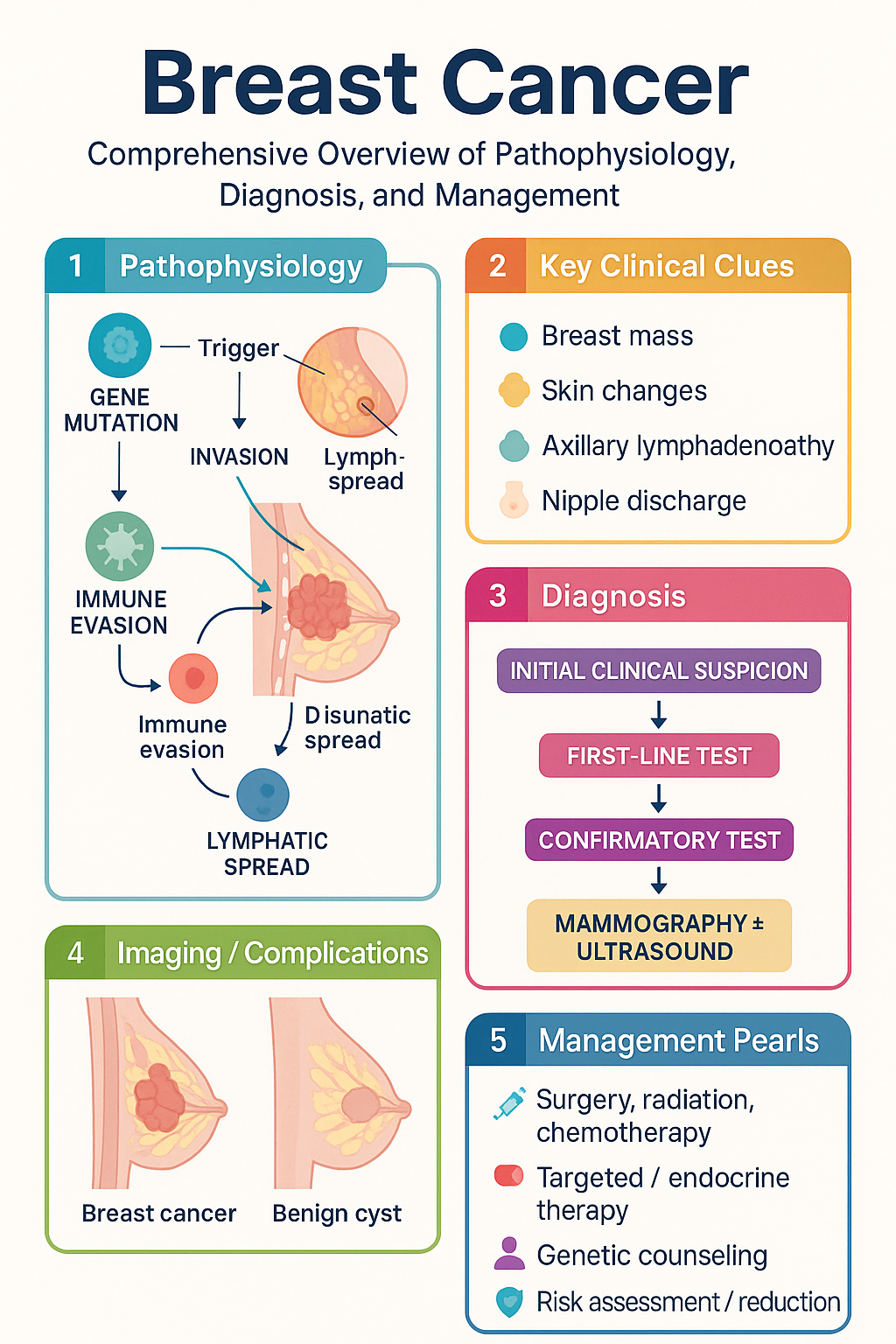
Breast Cancer clinical infographic — pathophysiology, clinical clues, diagnosis, imaging, and management
Tap or click image to enlarge — Breast Cancer: pathophysiology, clinical clues, diagnosis, imaging, and management.
Breast Cancer infographic, full size

Epidemiology & Risk Factors

Risk factors for breast cancer are broadly categorised as non-modifiable (intrinsic) and modifiable (extrinsic). Risk assessment tools validated in Australian populations include the Tyrer-Cuzick (IBIS) model and the Breast Cancer Risk Assessment Tool (BCRAT/Gail model). Referral to a familial cancer clinic (MBS item 73281) is recommended when lifetime risk exceeds 20%.

Non-Modifiable Risk Factors

  • Sex: Female sex is the strongest risk factor (~99% of cases occur in women).
  • Age: Incidence rises sharply after age 50; median age at diagnosis in Australia is 61 years.
  • Family history: First-degree relative with breast cancer confers a 1.5–2× relative risk. Two or more first-degree relatives increase risk to 3–4×.
  • Germline pathogenic variants: BRCA1 (chromosome 17q21) and BRCA2 (chromosome 13q12) account for ~5% of all breast cancers. Lifetime risk: BRCA1 = 60–70%, BRCA2 = 45–55%. Other high-penetrance genes include TP53 (Li-Fraumeni), PTEN (Cowden), CDH1, and STK11 (Peutz-Jeghers). Moderate-penetrance genes include PALB2, CHEK2, ATM.
  • Reproductive factors: Early menarche (<12 years), late menopause (>55 years), nulliparity, and first full-term pregnancy after age 30 increase risk via prolonged oestrogen exposure.
  • Dense breast tissue: BI-RADS density categories C and D increase risk 1.5–2× and reduce mammographic sensitivity. Consider supplemental MRI for very dense breasts in high-risk women.
  • Prior chest radiotherapy: Mantle field radiotherapy for Hodgkin lymphoma before age 30 confers a cumulative absolute risk of ~20–30% by age 50.
  • Prior breast pathology: Atypical ductal hyperplasia (ADH) confers a 4× relative risk; atypical lobular hyperplasia (ALH) 4×; lobular carcinoma in situ (LCIS) 8–10×.

Modifiable Risk Factors

  • Obesity (postmenopausal): BMI ≥ 30 kg/m² increases postmenopausal breast cancer risk by 20–40% via peripheral aromatisation of androgens in adipose tissue. Maintaining a healthy weight (BMI 18.5–24.9) is recommended (NHMRC Level III-2 evidence).
  • Alcohol consumption: Each 10 g/day of alcohol (≈ 1 standard drink) increases relative risk by ~7–10%. The Cancer Council Australia recommends women limit intake to ≤ 2 standard drinks per day.
  • Physical inactivity: ≥ 150 minutes/week of moderate-intensity exercise reduces breast cancer risk by 20–30% (meta-analysis; WHO recommendation).
  • Menopausal hormone therapy (MHT): Combined oestrogen–progestogen MHT increases breast cancer risk (HR 1.26 for <5 years; HR 1.99 for >15 years — Million Women Study). Oestrogen-only MHT (post-hysterectomy) has a smaller risk increase. Risk returns to baseline within 5 years of cessation.
  • Combined oral contraceptive pill: Small increase in relative risk (RR 1.20) during use; risk normalises 10 years after cessation.

Risk Reduction Strategies

💊
Tamoxifen (chemoprevention)
Nolvadex-D® · Generic · Selective oestrogen receptor modulator
Dose 20 mg PO daily × 5 years
Indication Chemoprevention in women with 5-year risk ≥ 1.67% (BCRAT) or lifetime risk ≥ 20% (Tyrer-Cuzick)
Risk reduction ~50% reduction in ER+ breast cancer (IBIS-I trial)
Key AEs Hot flushes, VTE (0.7%/yr), endometrial cancer (RR 2.4)
PBS status ✔ PBS General Benefit
💊
Anastrozole (chemoprevention)
Arimidex® · Generic · Aromatase inhibitor
Dose 1 mg PO daily × 5 years (postmenopausal only)
Indication Chemoprevention in postmenopausal women at increased risk (IBIS-II trial)
Risk reduction ~53% reduction in breast cancer incidence vs placebo
Key AEs Arthralgia (35%), osteoporosis, fracture risk, hypercholesterolaemia
PBS status ✔ PBS General Benefit

Referral Criteria to Familial Cancer Service

  • Breast cancer diagnosed < 40 years of age
  • Bilateral breast cancer, first diagnosed < 50 years
  • Male breast cancer at any age
  • Triple-negative breast cancer diagnosed < 60 years
  • Ovarian cancer at any age
  • ≥ 2 first- or second-degree relatives with breast/ovarian cancer on same side of family
  • Known family pathogenic BRCA1/2 or other high-penetrance variant
  • Ashkenazi Jewish ancestry with any first-degree relative with breast/ovarian cancer
  • Lifetime risk ≥ 20% on validated risk assessment model

Pathology & Molecular Subtypes

Histopathological assessment of every breast cancer must include: tumour type and grade (Nottingham/Bloom-Richardson), ER/PR status (Allred scoring), HER2 status (IHC ± FISH/CISH), Ki-67 proliferation index, and lymphovascular invasion. These data drive molecular subtyping, which is the primary determinant of systemic therapy.

Intrinsic Molecular Subtypes (Clinical Surrogates)

Subtype ER PR HER2 Ki-67 % of Cases Prognosis Key Therapy
Luminal A + + Low (<20%) ~60% Best Endocrine therapy ± radiotherapy; chemo often omitted
Luminal B (HER2−) + +/− High (≥20%) ~10–15% Intermediate Endocrine + chemotherapy; Oncotype DX guides chemo decision
Luminal B (HER2+) + +/− + Any ~5% Intermediate Chemo + dual HER2 blockade + endocrine therapy
HER2-enriched + High ~10% Intermediate (improved with HER2 therapy) Chemo + dual HER2 blockade (trastuzumab + pertuzumab)
Triple-negative / Basal-like High ~15% Worst (without pCR) NACT + pembrolizumab if PD-L1 CPS ≥10; capecitabine if residual disease post-NACT
⚠️
HER2-low (IHC 1+ or IHC 2+/FISH−) is now a clinically actionable category. Trastuzumab deruxtecan (T-DXd / Enhertu®) is PBS Authority Required for metastatic HER2-low breast cancer after prior chemotherapy (DESTINY-Breast04 trial). All pathology reports must now report HER2-low status.

Histological Types

  • Invasive ductal carcinoma (NST): ~70–75% of invasive breast cancers.
  • Invasive lobular carcinoma: ~10–15%; often ER+, may be occult on mammography; frequent multifocality.
  • Mucinous, tubular, cribriform: Low-grade special types with excellent prognosis (>95% 10-year survival).
  • Inflammatory breast cancer: ~1–3%; presents with erythema, oedema, peau d'orange; T4d staging; requires neoadjuvant chemotherapy.
  • Ductal carcinoma in situ (DCIS): Non-invasive; accounts for ~20% of screen-detected cancers. Graded low/intermediate/high; comedo necrosis increases progression risk.

Genomic Profiling (Australian Context)

🧬
Oncotype DX® (21-gene Recurrence Score)
Genomic Health · Prognostic/Predictive assay
Indication ER+/HER2−/node-negative early breast cancer to guide adjuvant chemotherapy decision
MBS item 71538 — Medicare-funded genomic test for breast cancer
Result interpretation RS < 16: endocrine alone (TAILORx). RS 16–25: chemo benefit if ≤50 yrs (TAILORx subgroup). RS ≥ 26: chemotherapy recommended (RxPONDER: also consider if 1–3 nodes+)
PBS status ✔ MBS-funded (item 71538)

Staging & Investigations

Staging follows the AJCC 8th edition TNM classification, incorporating both anatomic staging (tumour size, nodal status, distant metastases) and prognostic staging (incorporating grade, ER/PR, HER2, and genomic assay results). The Australian Cancer Database staging distribution shows that approximately 50% of breast cancers are diagnosed at Stage I, 30% at Stage II, 10% at Stage III, and 5–6% at Stage IV (de novo metastatic).

TNM Classification (AJCC 8th Edition — Key Categories)

Category Definition Clinical Implication
T1 ≤ 20 mm BCS generally suitable; SLNB standard
T2 21–50 mm BCS if tumour-to-breast ratio favourable; consider NACT if borderline
T3 > 50 mm NACT often recommended to downstage; mastectomy or BCS post-NACT
T4 Chest wall/skin involvement (a–d) Inflammatory (T4d) requires NACT; modified radical mastectomy
N0 No regional node metastasis SLNB negative → no further axillary surgery
N1 1–3 ipsilateral axillary nodes If BCS + RT: may avoid ALND (ACOSOG Z0011 criteria)
N2 4–9 ipsilateral axillary nodes ALND + regional nodal irradiation
M1 Distant metastases Stage IV; systemic therapy ± palliative surgery/radiotherapy

Required Investigations

Essential
Diagnostic mammography + ultrasound (bilateral)
MBS item 59303 (mammogram), 55062 (breast US). Biennial screening via BreastScreen Australia for women 50–74 (free programme).
Essential
Core needle biopsy (image-guided)
14G core biopsy minimum; must obtain ER/PR, HER2, Ki-67. Vacuum-assisted biopsy (VAB) for microcalcification. MBS item 31356 (biopsy).
Essential
Histopathology report (full)
Tumour type, grade (Nottingham), ER/PR (Allred), HER2 IHC ± FISH, Ki-67, LVI, margins. Report should state HER2-low status (IHC 0 vs 1+ vs 2+/FISH−).
Available
Oncotype DX® (21-gene assay)
MBS item 71538. Indicated for ER+/HER2−/node-negative (or 1–3 nodes with RxPONDER criteria). Not indicated for TNBC or HER2+.
Available
PET/CT (staging for Stage III or suspected metastatic)
MBS item 61436 (PET for breast cancer staging). Superior sensitivity for distant metastases. Not recommended for routine Stage I–II.
Available
CT chest/abdomen/pelvis + bone scan (conventional staging)
MBS items 56804/56805 (CT) + 61344 (bone scan). Used when PET/CT not available or for baseline in Stage III.
Available
Breast MRI
MBS item 63464 (MRI breast — restricted). Indications: high-risk screening (BRCA), assessment of extent in dense breasts, occult primary, axillary metastasis with unknown breast primary. Not for routine staging.
Referral
Germline BRCA1/2 + panel testing
Medicare-funded if meets criteria (MBS item 73293 — targeted). Refer to familial cancer clinic (MBS 73281). NGS panel testing available privately.

Prognostic Staging (AJCC 8th — ER+/HER2− Example)

Stage IA
T1 N0 M0, Grade 1, RS < 16
Small tumour, low grade, low genomic risk. Endocrine therapy alone usually sufficient.
Setting: Adjuvant — Surgery + RT + Endocrine
Stage IIB
T2 N1 M0, Grade 2, RS 16–25
Moderate tumour, nodal involvement. Chemo decision guided by age and Oncotype DX. Consider CDK4/6i in HR+/HER2−.
Setting: Adjuvant — Surgery + Chemo (if indicated) + RT + Endocrine + CDK4/6i
Stage IIIC
Any T, N3 M0
≥ 10 axillary nodes, or ipsilateral internal mammary + axillary, or ipsilateral supraclavicular nodes. High risk of recurrence.
Setting: Neoadjuvant → Surgery → Adjuvant systemic + RT (comprehensive nodal fields)

Treatment: Surgery, Chemotherapy, Hormonal & HER2 Therapy

Treatment of breast cancer in Australia is guided by molecular subtype, stage, genomic profiling results, and patient factors. All cases must be discussed at a multidisciplinary team (MDT) meeting before treatment commencing. The following sections detail each modality.

Surgical Management

Surgical options for early breast cancer are equivalent in overall survival when combined with appropriate adjuvant therapy. The choice between breast-conserving surgery (BCS) and mastectomy is guided by tumour-to-breast ratio, multifocality, patient preference, and radiotherapy access.

Procedure Indication Key Considerations
Breast-conserving surgery (BCS/lumpectomy) Tumour ≤ 3–4 cm (or downstaged with NACT); favourable tumour-to-breast ratio; unifocal disease Must be followed by whole-breast radiotherapy (WBRT 40–50 Gy / 15–25 fractions). Margins ≥ 2 mm for invasive disease (SSO-ASTRO consensus). Equivalent OS to mastectomy (NSABP B-06, 20-year data).
Mastectomy (simple/modified radical) Large tumour relative to breast; multicentric disease; contraindication to RT; patient preference; inflammatory breast cancer (T4d) Immediate reconstruction is safe and does not delay adjuvant therapy. Skin-sparing and nipple-sparing mastectomy are oncologically safe for selected cases.
Sentinel lymph node biopsy (SLNB) Clinically node-negative (cN0) early breast cancer — standard of care Dual tracer (Tc-99m + blue dye) recommended. If ≤ 2 positive sentinel nodes + BCS + planned WBRT → axillary dissection can be omitted (ACOSOG Z0011).
Axillary lymph node dissection (ALND) ≥ 3 positive sentinel nodes; mastectomy without RT; clinically node-positive (cN+) at presentation; post-NACT with residual axillary disease Higher risk of lymphoedema (~20%). Pre-operative axillary US with FNA of suspicious nodes helps identify cN+ patients.
Bilateral risk-reducing mastectomy BRCA1/2 carriers; strong family history; contralateral risk reduction after unilateral cancer in high-risk carriers Reduces breast cancer risk by ~90% in BRCA carriers. Discuss with familial cancer service and psychologist. No survival benefit demonstrated for contralateral prophylactic mastectomy in non-carriers.
⚠️
Oncofertility: All women of reproductive age (< 45 years) must be offered fertility preservation counselling before commencing chemotherapy or endocrine therapy. GnRH agonist (goserelin/Zoladex®) co-administration during chemotherapy reduces the risk of premature ovarian insufficiency. Refer to a fertility specialist (MBS item 13200).

Chemotherapy

Chemotherapy regimens in breast cancer are guided by molecular subtype, stage, and genomic profiling. The decision to use chemotherapy in ER+/HER2−/node-negative disease should incorporate Oncotype DX recurrence score results (MBS item 71538).

Adjuvant / Neoadjuvant Regimens (Early Breast Cancer)

💊
AC → T (Dose-Dense)
Adriamycin® + Cyclophosphamide → Paclitaxel (Taxol®)
Regimen AC: Doxorubicin 60 mg/m² + Cyclophosphamide 600 mg/m² IV q2w × 4 → then Paclitaxel 175 mg/m² IV q2w × 4 (with G-CSF support)
Indication High-risk early breast cancer: ≥ 4 nodes+, T > 5 cm, TNBC, HER2+, high Oncotype DX RS ≥ 26
Key AEs Neutropaenia, cardiotoxicity (cumulative doxorubicin > 450 mg/m²), neuropathy (paclitaxel), alopecia
PBS status ✔ PBS General Benefit
💊
TC (Docetaxel + Cyclophosphamide)
Docetaxel (Taxotere®) + Cyclophosphamide
Regimen Docetaxel 75 mg/m² + Cyclophosphamide 600 mg/m² IV q3w × 4 cycles
Indication Intermediate-risk early breast cancer; anthracycline-sparing option; lower cardiotoxicity
Key AEs Febrile neutropaenia (15%), fluid retention, nail changes
PBS status ✔ PBS General Benefit
💊
Carboplatin + Pembrolizumab (NACT for TNBC)
Carboplatin (Paraplatin®) + Pembrolizumab (Keytruda®)
Regimen Pembrolizumab 200 mg IV q3w + Paclitaxel 80 mg/m² weekly + Carboplatin AUC 5 q3w × 4 → Pembrolizumab + AC q3w × 4 (KEYNOTE-522 regimen)
Indication Early-stage TNBC (≥ T2 or N+). PD-L1 testing (CPS) is NOT required for neoadjuvant use in TNBC — treat all early TNBC with this regimen
pCR rate 64.8% (KEYNOTE-522) vs 51.2% chemo alone. EFS benefit sustained at 5 years.
Key AEs Immune-related AEs (thyroiditis, hepatitis, pneumonitis, colitis), neutropaenia, thrombocytopaenia
PBS status ✔ PBS Authority — Pembrolizumab for TNBC NACT
💊
Capecitabine (adjuvant post-NACT)
Xeloda® · Antimetabolite (fluoropyrimidine)
Dose 1000 mg/m² PO BD, days 1–14, q3w × 6 cycles (CREATE-X regimen)
Indication Residual invasive disease after NACT for TNBC (non-pCR). Significant DFS benefit.
Renal adjustment Reduce dose if CrCl 30–50 mL/min. Contraindicated if CrCl < 30 mL/min.
PBS status ✔ PBS General Benefit

Endocrine (Hormonal) Therapy

Endocrine therapy is the cornerstone of treatment for ER-positive breast cancer (≥ 1% Allred score). Duration is 5–10 years depending on risk. Choice of agent depends on menopausal status.

💊
Tamoxifen
Nolvadex-D® · Generic · SERM
Adult dose 20 mg PO daily × 5–10 years
Indication Premenopausal women — standard adjuvant endocrine therapy. Also used in men with breast cancer (20 mg daily).
Key AEs Hot flushes, VTE (0.7%/yr), endometrial hyperplasia/cancer (RR 2.4), menstrual irregularity
Renal/Hepatic No renal adjustment. Caution in severe hepatic impairment.
PBS status ✔ PBS General Benefit
💊
Letrozole
Femara® · Generic · Aromatase inhibitor
Adult dose 2.5 mg PO daily × 5–10 years (postmenopausal)
Indication Postmenopausal women — standard first-line adjuvant endocrine therapy. Switching strategy: tamoxifen 2–3 yr → AI to complete 5–10 yr is also standard.
Key AEs Arthralgia (35%), osteoporosis/fractures, hypercholesterolaemia, vaginal dryness
Renal No dose adjustment for mild-moderate renal impairment. Use with caution if CrCl < 10 mL/min.
PBS status ✔ PBS General Benefit
💊
Goserelin (Ovarian Function Suppression)
Zoladex® · GnRH agonist
Adult dose 3.6 mg SC implant q28 days (or 10.8 mg q12 weeks) × 5 years
Indication Premenopausal women with high-risk ER+ breast cancer (SOFT/TEXT trials). OFS + AI superior to tamoxifen alone in high-risk premenopausal patients. Also for fertility preservation during chemo.
Key AEs Menopausal symptoms, bone density loss, mood changes
PBS status ✔ PBS General Benefit
💊
Fulvestrant
Faslodex® · Selective oestrogen receptor degrader (SERD)
Adult dose 500 mg IM (gluteal) on days 1, 15, 29 then q28 days
Indication Metastatic HR+/HER2− breast cancer: monotherapy (FALCON) or combined with CDK4/6i (MONALEESA-3, PALOMA-3, MONARCH 2)
PBS status ✔ PBS Authority Required

CDK4/6 Inhibitors (Adjuvant & Metastatic HR+/HER2−)

CDK4/6 inhibitors have transformed the treatment of HR+/HER2− breast cancer. In Australia, ribociclib and abemaciclib are PBS-listed for adjuvant use in high-risk early breast cancer and for metastatic disease.

💊
Ribociclib
Kisqali® · CDK4/6 inhibitor
Adult dose 600 mg PO daily (3 weeks on / 1 week off) + endocrine therapy × 3 years (adjuvant) or until progression (metastatic)
Adjuvant indication High-risk HR+/HER2− early breast cancer (NATALEE trial: Stage II–III, including N0 with high-risk features). Absolute iDFS benefit 3.1% at 3 years.
Metastatic indication HR+/HER2− metastatic breast cancer + AI or fulvestrant (MONALEESA-2, -3, -7). OS benefit demonstrated.
Key AEs Neutropaenia (60%), hepatotoxicity (LFT monitoring q2w × 2 months then q4w), QTc prolongation (ECG at baseline, day 15), fatigue
PBS status ✔ PBS Authority Required (adjuvant + metastatic HR+/HER2−)
💊
Abemaciclib
Verzenio® · CDK4/6 inhibitor
Adult dose 150 mg PO BD (continuous) + endocrine therapy × 2 years (adjuvant) or until progression (metastatic)
Adjuvant indication High-risk HR+/HER2− early breast cancer (monarchE trial: ≥ 4 nodes, or 1–3 nodes + Grade 3 or tumour ≥ 5 cm). Absolute iDFS benefit 6.4% at 4 years.
Key AEs Diarrhoea (80% — start loperamide prophylaxis), neutropaenia (40%), hepatotoxicity (LFT monitoring), fatigue, VTE
PBS status ✔ PBS Authority Required (adjuvant + metastatic HR+/HER2−)

HER2-Targeted Therapy

HER2-positive breast cancer (~15–20%) requires anti-HER2 therapy in combination with chemotherapy for both early-stage and metastatic disease. Dual HER2 blockade with trastuzumab + pertuzumab has become standard of care.

💊
Trastuzumab
Herceptin® · Biosimilars available · Anti-HER2 mAb
Adult dose Loading: 8 mg/kg IV → Maintenance: 6 mg/kg IV q3w × 12 months (adjuvant). Subcutaneous: 600 mg SC q3w (Herceptin SC®).
Indication HER2+ early breast cancer (adjuvant × 12 months) and metastatic disease. Combine with chemotherapy (TH or AC→TH).
Key AEs Cardiotoxicity (LVEF monitoring q3 months during adjuvant; withhold if LVEF < 50% or drops > 10% from baseline). Infusion reactions.
PBS status ✔ PBS Authority Required (HER2+ breast cancer)
💊
Pertuzumab
Perjeta® · Anti-HER2 mAb (different epitope)
Adult dose Loading: 840 mg IV → Maintenance: 420 mg IV q3w. Combined with trastuzumab + docetaxel (THP) or in adjuvant setting with trastuzumab.
Neoadjuvant indication HER2+ early breast cancer — dual HER2 blockade (trastuzumab + pertuzumab) with chemotherapy achieves higher pCR rates (CLEOPATRA, APHINITY, NeoSphere).
PBS status ✔ PBS Authority Required
💊
Trastuzumab deruxtecan (T-DXd)
Enhertu® · Antibody-drug conjugate (HER2-directed)
Adult dose 5.4 mg/kg IV q3w (until progression or unacceptable toxicity)
Metastatic HER2+ indication After prior anti-HER2 therapy (DESTINY-Breast03: superior PFS vs T-DM1).
Metastatic HER2-low indication IHC 1+ or IHC 2+/FISH− — after prior chemotherapy (DESTINY-Breast04: OS benefit). Endocrine therapy if HR+.
Key AEs Interstitial lung disease / pneumonitis (12–15%) — monitor with CT; nausea (75%); neutropaenia. MANDATORY lung monitoring protocol.
PBS status ✔ PBS Authority Required (metastatic HER2+ and HER2-low)
🚨
Cardiotoxicity monitoring (trastuzumab): Baseline echocardiogram (LVEF) required before initiating trastuzumab. Repeat echocardiogram every 3 months during adjuvant treatment. Hold trastuzumab if LVEF < 50% or declines ≥ 10% from baseline. Anthracycline–trastuzumab sequential regimens (AC→TH) are standard; concurrent anthracycline + trastuzumab is contraindicated (cardiotoxicity synergy). MBS item 55122 (echocardiogram).

Radiotherapy

Radiotherapy is an essential component of breast-conserving therapy and is also indicated post-mastectomy in high-risk disease. Hypofractionated regimens are now standard of care in Australia.

Regimen Schedule Indication
Hypofractionated WBRT 40 Gy / 15 fractions over 3 weeks Standard after BCS (START-A/B trials). Equivalent cosmesis and tumour control to conventional fractionation.
Ultra-hypofractionated 26 Gy / 5 fractions over 1 week FAST-Forward trial. Increasingly adopted in Australia for selected patients.
Boost to tumour bed 10–16 Gy / 5–8 fractions Age < 50 years, Grade 3, close/positive margins, extensive intraductal component
Post-mastectomy RT (PMRT) 40 Gy / 15 fractions + chest wall + regional nodes T ≥ 5 cm, ≥ 4 positive nodes, positive margins, T4 disease. Consider if 1–3 nodes (EBCTCG meta-analysis: OS benefit).

Metastatic Breast Cancer — Systemic Therapy by Subtype

HR+/HER2− Metastatic
1st-line: CDK4/6i + AI or fulvestrant
2nd-line: Alpelisib + fulvestrant (PIK3CA-mutated) or everolimus + exemestane
3rd-line: Chemotherapy (capecitabine, eribulin, paclitaxel)
Continue until progression or intolerance
T-DXd if HER2-low after ≥ 1 line chemo
HER2+ Metastatic
1st-line: THP (docetaxel + trastuzumab + pertuzumab)
2nd-line: T-DXd (Enhertu®)
3rd-line: T-DM1 (Kadcyla®) or tucatinib + capecitabine + trastuzumab (brain mets)
Continue anti-HER2 beyond progression
Tucatinib regimen for active brain metastases (HER2CLIMB)
Triple-Negative Metastatic
PD-L1 CPS ≥ 10: Pembrolizumab + chemotherapy (IMpassion130 / KEYNOTE-355)
BRCA-mutated: Olaparib (Lynparza®) or talazoparib (Talzenna®)
General: Paclitaxel, capecitabine, eribulin, sacituzumab govitecan
Until progression or toxicity
Sacituzumab govitecan (Trodelvy®) PBS-listed for mTNBC after ≥ 2 prior lines

Supportive & Survivorship Care

  • Bone health: DEXA scan at baseline for all patients commencing aromatase inhibitors (MBS item 12312). Denosumab (Prolia®) 60 mg SC q6 months is PBS-listed for AI-induced osteoporosis. Calcium 1000 mg + Vitamin D 800 IU daily recommended.
  • Lymphoedema management: Compression garments, physiotherapy, self-monitoring. Early intervention with manual lymphatic drainage. Lymphoedema risk after ALND: ~20%; after SLNB: ~5%.
  • Psychosocial support: Cancer Council Australia (13 11 20), McGrath Breast Care Nurses, BCNA (Breast Cancer Network Australia). Screening for distress recommended at each visit (NCCN Distress Thermometer).
  • Exercise: ≥ 150 min/week moderate-intensity exercise improves cancer-related fatigue, quality of life, and may reduce recurrence (COSMO trial, meta-analyses). Refer to accredited exercise physiologist (MBS item 10953 under GPMP).
  • Surveillance post-treatment: Clinical examination q3–6 months for 2 years, then q6–12 months for 3 years, then annually. Annual mammography (bilateral). No routine CT/bloods unless symptoms (ASCO guidelines).

Special Populations

🤰 Pregnancy-Associated Breast Cancer (PABC)
Incidence ~1 in 3,000 pregnancies; most common cancer in pregnancy. Median age 33 years.
Diagnosis Ultrasound is safe. Mammography with abdominal shielding delivers < 0.01 Gy to foetus (safe). MRI without gadolinium in 2nd/3rd trimester. Core biopsy safe.
Surgery BCS or mastectomy safe in all trimesters. SLNB with Tc-99m (low dose, safe). Avoid blue dye (anaphylaxis risk).
Chemotherapy Anthracycline-based (AC, FAC, FEC) safe in 2nd and 3rd trimesters. Taxanes safe in 2nd/3rd trimester (emerging data). NO chemotherapy in 1st trimester (teratogenicity risk).
Contraindicated Endocrine therapy, trastuzumab, pertuzumab, CDK4/6 inhibitors, radiotherapy, and bisphosphonates are contraindicated in pregnancy.
👶 Young Women (< 40 years)
Biology More likely to be higher-grade, ER−, HER2+, TNBC, and BRCA-mutated. Worse stage-for-stage prognosis than older women.
Fertility Mandatory fertility preservation counselling. GnRH agonist (goserelin) during chemo reduces POI risk. Embryo/oocyte cryopreservation before treatment (MBS item 13200).
Endocrine therapy OFS (goserelin) + aromatase inhibitor is preferred over tamoxifen alone for high-risk premenopausal women (SOFT/TEXT). Total endocrine therapy duration: 5–10 years.
Genetic testing All women < 40 should be referred for germline BRCA1/2 testing (MBS item 73293). Results may guide surgical decisions (mastectomy vs BCS, contralateral risk-reducing surgery).
👵 Elderly (≥ 70 years)
Surgery BCS + RT or primary endocrine therapy alone (if ER+, low-risk, frail). Trials (CALGB 9343, PRIME II) support omission of RT in selected elderly with small ER+ tumours on endocrine therapy.
Chemotherapy Use with caution. Geriatric assessment tools (CARG, CRASH) help predict toxicity. TC (docetaxel + cyclophosphamide) preferred over AC→T if chemotherapy indicated.
Comorbidity Competing mortality risks may outweigh breast cancer–specific mortality in frail elderly. Shared decision-making essential.
🫘 Renal Impairment
Chemotherapy Capecitabine: reduce dose if CrCl 30–50 mL/min; contraindicated if < 30 mL/min. Carboplatin: Calvert formula (target AUC 5–6). Cyclophosphamide: no significant adjustment.
Endocrine therapy Tamoxifen: no renal adjustment. Aromatase inhibitors: no significant adjustment (caution if CrCl < 10 mL/min).
Bisphosphonates Zoledronic acid: contraindicated if CrCl < 30 mL/min. Denosumab: safe in renal impairment (no dose adjustment) — preferred agent.
🫁 Hepatic Impairment
Tamoxifen Caution in severe hepatic impairment. Active metabolites are hepatically cleared.
Anthracyclines Doxorubicin: reduce dose by 50% if bilirubin 1.5–3 mg/dL; avoid if > 3 mg/dL.
Taxanes Paclitaxel: reduce dose in severe hepatic impairment. Docetaxel: avoid if bilirubin > ULN and/or transaminases > 1.5× ULN with alk phos > 2.5× ULN.
🛡️ Immunocompromised / Autoimmune
Checkpoint inhibitors Pembrolizumab (for TNBC) may exacerbate pre-existing autoimmune conditions. Discuss risk-benefit with immunologist if active autoimmune disease. Monitor immune-related AEs closely.
Chemotherapy Standard regimens generally used. Enhanced infection precautions. G-CSF primary prophylaxis if high risk of febrile neutropaenia.

Aboriginal and Torres Strait Islander Health Considerations

Aboriginal and Torres Strait Islander Women & Breast Cancer

While age-standardised incidence of breast cancer is lower in Aboriginal and Torres Strait Islander women compared with non-Indigenous Australian women (~105 vs 130 per 100,000), mortality is significantly higher — the age-standardised death rate is 1.7 times that of non-Indigenous women. This disparity is driven by later-stage diagnosis, lower participation in BreastScreen Australia, reduced access to optimal treatment, and the compounding effects of socioeconomic disadvantage and geographic remoteness.

Screening participation
BreastScreen participation among ATSI women aged 50–74 is ~38% vs ~54% nationally. Culturally safe engagement, Aboriginal Health Worker support, and community-based recruitment strategies are needed to improve uptake.
Stage at diagnosis
ATSI women are 1.5× more likely to be diagnosed at Stage III/IV. Delayed presentation due to fear, cultural factors, and geographic barriers to diagnostic services contribute to later staging.
Treatment access
ATSI women have lower rates of surgery (especially BCS, which requires accessible radiotherapy), adjuvant chemotherapy, and anti-HER2 therapy. Teleoncology services can bridge some gaps in remote areas.
Geographic remoteness
ATSI women in remote/very remote areas may travel > 500 km for surgical and radiotherapy services. Patient-assisted travel schemes (PATS) are available in all states/territories but are often underutilised.
Cultural safety
Ensure culturally appropriate care: use Aboriginal interpreters (available via TIS National), involve Aboriginal Health Workers/Liaison Officers, accommodate sorry business and family obligations, and consider yarning-based communication styles in clinical consultations.
Comorbidities
Higher rates of diabetes, cardiovascular disease, chronic kidney disease, and obesity in ATSI populations may impact treatment tolerance and survivorship. Integrated chronic disease management through Aboriginal Community Controlled Health Organisations (ACCHOs) is essential.
Key actions to reduce disparities: (1) Partner with local Aboriginal Health Services for culturally safe screening promotion. (2) Offer flexible appointment scheduling and transport support. (3) Use teleoncology for MDT participation and chemotherapy supervision in remote settings. (4) Ensure all ATSI patients are identified in medical records (AIHW standard). (5) Refer to McGrath Breast Care Nurses with experience in ATSI health. (6) Advocate for system-level change through Cancer Australia's National Cancer Control Indicators.

📚 References

  1. 1. Australian Institute of Health and Welfare (AIHW). Cancer data in Australia 2024. Cat. no. CAN 141. Canberra: AIHW; 2024.
  2. 2. Cancer Australia. National breast cancer staging — clinical practice guidelines. Surry Hills, NSW: Cancer Australia; 2023.
  3. 3. Sparano JA, Gray RJ, Makower DF, et al. Adjuvant chemotherapy guided by a 21-gene expression assay in breast cancer. N Engl J Med. 2018;379(2):111–121. (TAILORx trial)
  4. 4. Kalinsky K, Barlow WE, Gralow JR, et al. 21-gene assay to inform chemotherapy benefit in node-positive breast cancer. N Engl J Med. 2021;385(25):2336–2347. (RxPONDER trial)
  5. 5. Schmid P, Cortes J, Pusztai L, et al. Pembrolizumab for early triple-negative breast cancer. N Engl J Med. 2020;382(9):810–821. (KEYNOTE-522 trial)
  6. 6. Slamon DJ, Neven P, Chia S, et al. Overall survival with ribociclib plus fulvestrant in advanced breast cancer. N Engl J Med. 2022;386(10):942–950. (MONALEESA-3 trial)
  7. 7. Johnston SRD, Toi M, O'Shaughnessy J, et al. Abemaciclib plus endocrine therapy for high-risk early breast cancer. N Engl J Med. 2023;389(22):2026–2038. (monarchE final analysis)
  8. 8. Slamon D, Lipatov O, Nowecki Z, et al. Ribociclib plus endocrine therapy in early breast cancer. N Engl J Med. 2024;390(12):1080–1091. (NATALEE trial)
  9. 9. Modi S, Saura C, Yamashita T, et al. Trastuzumab deruxtecan in previously treated HER2-positive breast cancer. N Engl J Med. 2020;382(7):610–621. (DESTINY-Breast03 trial)
  10. 10. Modi S, Jacot W, Yamashita T, et al. Trastuzumab deruxtecan in previously treated HER2-low advanced breast cancer. N Engl J Med. 2022;387(1):9–20. (DESTINY-Breast04 trial)
  11. 11. Giuliano AE, Ballman KV, McCall L, et al. Effect of axillary dissection vs no axillary dissection on 10-year overall survival among women with invasive breast cancer and sentinel node metastasis: the ACOSOG Z0011 (Alliance) randomized clinical trial. JAMA. 2017;318(10):918–926.
  12. 12. Haviland JS, Owen JR, Dewar JA, et al. The UK Standardisation of Breast Radiotherapy (START) trials of radiotherapy hypofractionation for treatment of early breast cancer: 10-year follow-up results of two randomised controlled trials. Lancet Oncol. 2013;14(11):1086–1094.
  13. 13. Brunt AM, Haviland JS, Wheatley DA, et al. Hypofractionated breast radiotherapy for 1 week versus 3 weeks (FAST-Forward): 5-year efficacy and late normal tissue effects results from a multicentre non-inferiority randomised trial. Lancet. 2020;395(10237):1613–1626.
  14. 14. Pagani O, Regan MM, Walley BA, et al. Adjuvant exemestane with ovarian suppression in premenopausal breast cancer. N Engl J Med. 2014;371(2):107–118. (SOFT/TEXT combined analysis)
  15. 15. Cancer Australia. National Aboriginal and Torres Strait Islander cancer framework. Surry Hills, NSW: Cancer Australia; 2020.
  16. 16. Australian Government Department of Health and Aged Care. BreastScreen Australia — monitoring report 2024. Canberra: AIHW; 2024.
  17. 17. Robson M, Im SA, Senkus E, et al. Olaparib for metastatic breast cancer in patients with a germline BRCA mutation. N Engl J Med. 2017;377(6):523–533. (OlympiAD trial)
  18. 18. National Health and Medical Research Council (NHMRC). Clinical practice guidelines for the management of early breast cancer. 2nd ed. Canberra: NHMRC; 2001 (with updates via Cancer Australia).
  19. 19. Cardoso F, Kyriakides S, Ohno S, et al. Early breast cancer: ESMO Clinical Practice Guidelines for diagnosis, treatment and follow-up. Ann Oncol. 2019;30(8):1194–1220.
  20. 20. Bardia A, Hurvitz SA, Tolaney SM, et al. Sacituzumab govitecan in metastatic triple-negative breast cancer. N Engl J Med. 2021;384(16):1529–1541. (ASCENT trial)
for PBS-listed medicines at participating pharmacies.
Cultural safety
Engagement with Aboriginal Community Controlled Health Organisations (ACCHOs) is essential. Cultural safety training for non-Indigenous clinicians, use of Aboriginal Health Workers and Liaison Officers, and incorporation of traditional healing practices alongside Western medicine improve treatment adherence and outcomes. Avoidance of eye contact, respect for gender-sensitive examination practices, and understanding of sorry business protocols are critical elements of culturally safe care.
Medication adherence
Complex DMARD regimens with frequent monitoring requirements present adherence challenges. Long-acting depot injections (e.g., methotrexate SC) may improve adherence compared to oral regimens. Community pharmacy partnerships through the Indigenous Pharmacy Programmes improve medication management.
Specific conditions
Rheumatic heart disease (RHD) requires secondary prophylaxis with benzathine penicillin G (BPG) 1.2 MU IM every 3–4 weeks for a minimum of 10 years or until age 21 (whichever is longer). RHD registers (e.g., NT RHD Register) facilitate recall and follow-up. The Australian RHD Endgame Strategy targets elimination by 2031.
Referral pathways
Referral through ACCHOs and Aboriginal Hospital Liaison Officers (AHLOs) improves engagement. The Specialist Outreach Assistance Programme provides funded specialist visits to remote communities. NT, WA, and QLD have specific rheumatology outreach programmes targeting Indigenous communities.

📚 References

  1. 1. Australian Institute of Health and Welfare (AIHW). Autoimmune disease in Australia. Cat. no. PHE 312. Canberra: AIHW; 2023.
  2. 2. Fraenkel L, Bathon JM, England BR, et al. 2021 American College of Rheumatology guideline for the treatment of rheumatoid arthritis. Arthritis Care Res. 2021;73(7):924–939.
  3. 3. Fanouriakis A, Kostopoulou M, Alber K, et al. 2019 update of the EULAR recommendations for the management of systemic lupus erythematosus. Ann Rheum Dis. 2019;78(6):736–745.
  4. 4. Chung SA, Langford CA, Maz M, et al. 2021 American College of Rheumatology/Vasculitis Foundation guideline for the management of antineutrophil cytoplasmic antibody-associated vasculitis. Arthritis Care Res. 2021;73(11):1583–1599.
  5. 5. Smolen JS, Landewé RBM, Bijlsma JWJ, et al. EULAR recommendations for the management of rheumatoid arthritis with synthetic and biological disease-modifying antirheumatic drugs: 2022 update. Ann Rheum Dis. 2023;82(1):3–18.
  6. 6. Australian Technical Advisory Group on Immunisation (ATAGI). Australian Immunisation Handbook. Australian Government Department of Health; 2024. Available from: immunisationhandbook.health.gov.au.
  7. 7. Rheumatic Heart Disease Australia (RHDAustralia). The 2020 Australian guideline for prevention, diagnosis, and management of acute rheumatic fever and rheumatic heart disease. 3rd ed. Darwin: Menzies School of Health Research; 2020.
  8. 8. Pharmaceutical Benefits Scheme (PBS). PBS Schedule. Australian Government Department of Health. Available from: pbs.gov.au. Accessed 2024.
  9. 9. Agarwal S, Cunnington J, Nossent J. Autoimmune disease in Indigenous Australians: a systematic review. Int J Rheum Dis. 2021;24(12):1487–1498.
  10. 10. Pisetsky DS. Antinuclear antibody testing — misunderstood or misused? Clin Immunol. 2023;255:109717.
  11. 11. Bertsias GK, Tektonidou M, Amoura Z, et al. Joint European League Against Rheumatism and European Renal Association–European Dialysis and Transplant Association (EULAR/ERA-EDTA) recommendations for the management of adult and paediatric lupus nephritis. Ann Rheum Dis. 2012;71(11):1771–1782.
  12. 12. Ledingham J, Deighton C; British Society for Rheumatology Standards, Audit and Guidelines Working Group. Update on the British Society for Rheumatology guidelines for prescribing TNFα blockers in adults with rheumatoid arthritis. Rheumatology. 2005;44(2):155–158.
  13. 13. National Health and Medical Research Council (NHMRC). National statement on ethical conduct in human research. Canberra: NHMRC; 2023 (updated).
for PBS-listed medicines at participating pharmacies.
Cultural safety
Engagement with Aboriginal Community Controlled Health Organisations (ACCHOs) is essential. Cultural safety training for non-Indigenous clinicians, use of Aboriginal Health Workers and Liaison Officers, and incorporation of traditional healing practices alongside Western medicine improve treatment adherence and outcomes. Avoidance of eye contact, respect for gender-sensitive examination practices, and understanding of sorry business protocols are critical elements of culturally safe care.
Medication adherence
Complex DMARD regimens with frequent monitoring requirements present adherence challenges. Long-acting depot injections (e.g., methotrexate SC) may improve adherence compared to oral regimens. Community pharmacy partnerships through the Indigenous Pharmacy Programmes improve medication management.
Specific conditions
Rheumatic heart disease (RHD) requires secondary prophylaxis with benzathine penicillin G (BPG) 1.2 MU IM every 3–4 weeks for a minimum of 10 years or until age 21 (whichever is longer). RHD registers (e.g., NT RHD Register) facilitate recall and follow-up. The Australian RHD Endgame Strategy targets elimination by 2031.
Referral pathways
Referral through ACCHOs and Aboriginal Hospital Liaison Officers (AHLOs) improves engagement. The Specialist Outreach Assistance Programme provides funded specialist visits to remote communities. NT, WA, and QLD have specific rheumatology outreach programmes targeting Indigenous communities.

📚 References

  1. 1. Australian Institute of Health and Welfare (AIHW). Autoimmune disease in Australia. Cat. no. PHE 312. Canberra: AIHW; 2023.
  2. 2. Fraenkel L, Bathon JM, England BR, et al. 2021 American College of Rheumatology guideline for the treatment of rheumatoid arthritis. Arthritis Care Res. 2021;73(7):924–939.
  3. 3. Fanouriakis A, Kostopoulou M, Alber K, et al. 2019 update of the EULAR recommendations for the management of systemic lupus erythematosus. Ann Rheum Dis. 2019;78(6):736–745.
  4. 4. Chung SA, Langford CA, Maz M, et al. 2021 American College of Rheumatology/Vasculitis Foundation guideline for the management of antineutrophil cytoplasmic antibody-associated vasculitis. Arthritis Care Res. 2021;73(11):1583–1599.
  5. 5. Smolen JS, Landewé RBM, Bijlsma JWJ, et al. EULAR recommendations for the management of rheumatoid arthritis with synthetic and biological disease-modifying antirheumatic drugs: 2022 update. Ann Rheum Dis. 2023;82(1):3–18.
  6. 6. Australian Technical Advisory Group on Immunisation (ATAGI). Australian Immunisation Handbook. Australian Government Department of Health; 2024. Available from: immunisationhandbook.health.gov.au.
  7. 7. Rheumatic Heart Disease Australia (RHDAustralia). The 2020 Australian guideline for prevention, diagnosis, and management of acute rheumatic fever and rheumatic heart disease. 3rd ed. Darwin: Menzies School of Health Research; 2020.
  8. 8. Pharmaceutical Benefits Scheme (PBS). PBS Schedule. Australian Government Department of Health. Available from: pbs.gov.au. Accessed 2024.
  9. 9. Agarwal S, Cunnington J, Nossent J. Autoimmune disease in Indigenous Australians: a systematic review. Int J Rheum Dis. 2021;24(12):1487–1498.
  10. 10. Pisetsky DS. Antinuclear antibody testing — misunderstood or misused? Clin Immunol. 2023;255:109717.
  11. 11. Bertsias GK, Tektonidou M, Amoura Z, et al. Joint European League Against Rheumatism and European Renal Association–European Dialysis and Transplant Association (EULAR/ERA-EDTA) recommendations for the management of adult and paediatric lupus nephritis. Ann Rheum Dis. 2012;71(11):1771–1782.
  12. 12. Ledingham J, Deighton C; British Society for Rheumatology Standards, Audit and Guidelines Working Group. Update on the British Society for Rheumatology guidelines for prescribing TNFα blockers in adults with rheumatoid arthritis. Rheumatology. 2005;44(2):155–158.
  13. 13. National Health and Medical Research Council (NHMRC). National statement on ethical conduct in human research. Canberra: NHMRC; 2023 (updated).